
Chef Juliette
John Dory (St. Pierre)
John Dory has the delicacy of sole and the firmness of turbot. A light flouring, a quick butter sauté, and nut-brown beurre noisette show exactly why looks never mattered.
A cooking platform built around craft, culture, and the stories behind what we eat.
Created by Chef Juliette
Based on No. 870, Filets de Soles Clarence, from Le Guide Culinaire (1907) by Auguste Escoffier
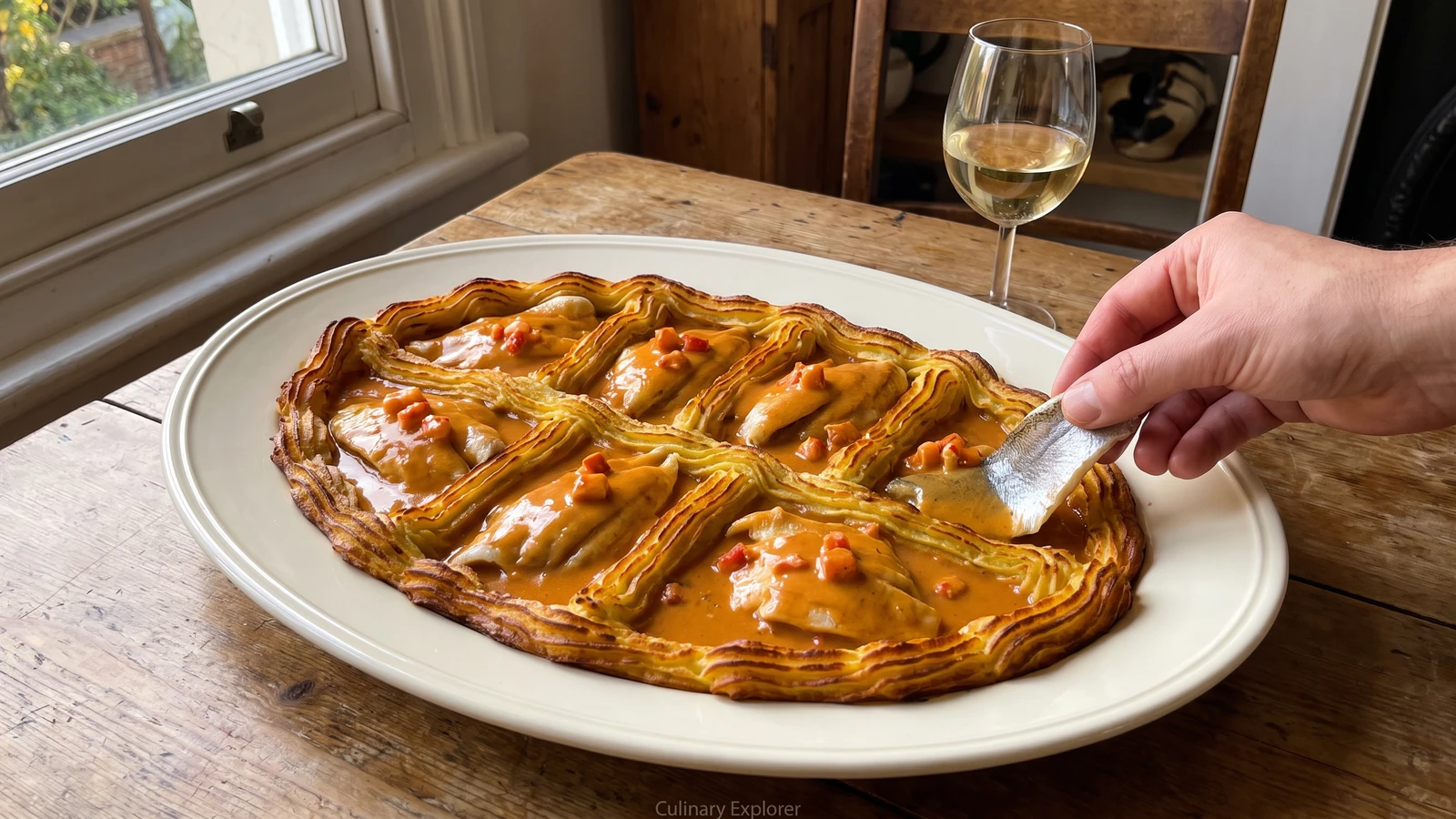
Eight folded sole fillets, gently poached and tucked inside bronzed Duchesse scrollwork, each cloaked with curried sauce Américaine and lobster dice while the potatoes remain sharply defined.
Filets de Soles Clarence (Clarence-style sole fillets) teaches the difficult grace of keeping several rich preparations distinct on one platter. The one true thing to know before touching a pan is that the Duchesse scroll is architecture: brown it before poaching the sole, then put sauce on the fish and nowhere else. Once the scrollwork is flooded, the dish loses its definition.
The original formula assumed a saucier on staff, a stock never off the fire, another pair of hands shaping potatoes, a whole lobster passing through the sauce station, and a salamander waiting to gild the platter. At home, two raw shell-on lobster tails flavor one saucepan of sauce Américaine au curry (curried American sauce), good prepared fish fumet supplies the foundation, and a hot oven with a brief broiler finish replaces the salamander. The tails are the practical change: they provide enough meat and shell for four without asking one cook to dispatch and dismantle a live lobster. One cook, one stove, one evening.
The brigade's excess quantity and divided labor are scaffolding, so they go. Folded sole, lobster-built sauce, eight piped Duchesse divisions, and immaculate scrollwork are the dish, so they stay. When it reaches the table, you should see butter-gold potato ridges, ivory fish, and a glossy coral sauce studded with lobster. Your decisive step is assembly: drain every fillet thoroughly and spoon the sauce with restraint, fish only, scrollwork untouched.
Filets de Soles Clarence belongs to the Parisian grand-kitchen repertory rather than a regional household table, combining poached sole, Duchesse potatoes, lobster, and a named sauce as a composed service platter. Sauce américaine is a French lobster-shell sauce, not an imported American condiment; cooks have long debated its relationship to the name armoricaine, which invokes Armorica and the Breton coast. The Clarence garnish preserves the grand-kitchen habit of naming an entire composition, and its defining discipline is visual as well as culinary: sauce coats the fish while the gilded potato scroll remains clean.
Quantity
2 tails, about 6 ounces (170 g) each
shells snipped lengthwise
Quantity
3 tablespoons (45 ml / 42 g)
Quantity
1/2 cup (120 ml / 75 g)
finely chopped
Quantity
1/3 cup (80 ml / 50 g)
finely chopped
Quantity
1/4 cup (60 ml / 35 g)
finely chopped
Quantity
1 clove
lightly crushed
Quantity
1 1/2 teaspoons (7.5 ml / 4 g)
Quantity
1 tablespoon (15 ml / 16 g)
Quantity
1/4 cup (60 ml / 57 g)
Quantity
1/2 cup (120 ml / 118 g)
Quantity
1/2 cup (120 ml / 120 g)
Quantity
2 cups (475 ml / 475 g)
Quantity
1
Quantity
1/8 teaspoon (0.6 ml / 0.25 g)
Quantity
1 tablespoon (15 ml / 14 g)
Quantity
1 tablespoon (15 ml / 8 g)
Quantity
2 tablespoons (30 ml / 28 g)
cubed
Quantity
5 medium, about 2 pounds (900 g)
peeled and cut into even chunks
Quantity
5 tablespoons (75 ml / 70 g)
Quantity
3
Quantity
1/4 teaspoon (1.25 ml / 0.5 g)
Quantity
1
Quantity
1 tablespoon (15 ml / 15 g)
Quantity
8 fillets, about 3 ounces (85 g) each
trimmed to an even shape
Quantity
1 1/2 cups (355 ml / 355 g)
Quantity
1 tablespoon (15 ml / 14 g)
Quantity
2 teaspoons (10 ml / 12 g), plus more for the potato water
divided
Quantity
1/2 teaspoon (2.5 ml / 1 g)
divided
| Ingredient | Quantity |
|---|---|
| raw shell-on lobster tailsshells snipped lengthwise | 2 tails, about 6 ounces (170 g) each |
| unsalted butter for the sauce base | 3 tablespoons (45 ml / 42 g) |
| yellow onionfinely chopped | 1/2 cup (120 ml / 75 g) |
| carrotfinely chopped | 1/3 cup (80 ml / 50 g) |
| shallotfinely chopped | 1/4 cup (60 ml / 35 g) |
| garliclightly crushed | 1 clove |
| mild curry powder | 1 1/2 teaspoons (7.5 ml / 4 g) |
| tomato paste | 1 tablespoon (15 ml / 16 g) |
| Cognac | 1/4 cup (60 ml / 57 g) |
| dry white wine | 1/2 cup (120 ml / 118 g) |
| canned crushed tomatoes | 1/2 cup (120 ml / 120 g) |
| fish fumet for the sauce | 2 cups (475 ml / 475 g) |
| bouquet garni of parsley stems, thyme, and bay leaf | 1 |
| cayenne pepper | 1/8 teaspoon (0.6 ml / 0.25 g) |
| softened unsalted butter for the beurre manié | 1 tablespoon (15 ml / 14 g) |
| all-purpose flour | 1 tablespoon (15 ml / 8 g) |
| cold unsalted butter for finishing the saucecubed | 2 tablespoons (30 ml / 28 g) |
| floury potatoespeeled and cut into even chunks | 5 medium, about 2 pounds (900 g) |
| unsalted butter for the Duchesse potatoes | 5 tablespoons (75 ml / 70 g) |
| large egg yolks | 3 |
| freshly grated nutmeg | 1/4 teaspoon (1.25 ml / 0.5 g) |
| large egg for gilding | 1 |
| water for gilding | 1 tablespoon (15 ml / 15 g) |
| skinless sole filletstrimmed to an even shape | 8 fillets, about 3 ounces (85 g) each |
| fish fumet for poaching | 1 1/2 cups (355 ml / 355 g) |
| unsalted butter for the platter and poaching pan | 1 tablespoon (15 ml / 14 g) |
| fine sea saltdivided | 2 teaspoons (10 ml / 12 g), plus more for the potato water |
| ground white pepperdivided | 1/2 teaspoon (2.5 ml / 1 g) |
Melt the 3 tablespoons butter in a 3-quart saucepan over medium-low heat. Add the onion, carrot, shallot, and garlic with a small pinch of the measured salt, then cook for 7 to 9 minutes until tender and fragrant without taking color. Stir in the curry powder for 30 seconds, just until its aroma opens, then add the tomato paste and cook until it darkens slightly. Set in the lobster tails and turn them through the butter for 2 minutes. Take the pan off the heat, pour in the measured Cognac from a cup, then return the pan to medium heat and scrape the bottom. No flambé is needed in a home kitchen. Add the wine and reduce it by half.
Add the crushed tomatoes, 2 cups fish fumet, bouquet garni, cayenne, and a pinch of white pepper. Bring the liquid just to a simmer and cook the lobster tails until their meat is opaque and reaches 145°F (63°C), usually 6 to 9 minutes after the simmer begins. Lift out the tails. When they can be handled, remove the meat, cut it into neat 1/4-inch dice, cover, and keep it cold. Crack the empty shells into several pieces, return them to the pan, and simmer gently for 20 minutes. Strain through a fine sieve, pressing firmly on the shells and vegetables, then reduce the liquid until about 1 1/2 cups remain and the lobster aroma is full but not harsh.
Knead the softened tablespoon of butter and the flour together to make a beurre manié, a paste used to bind a finished sauce. Bring the strained sauce to a gentle simmer and whisk in the beurre manié a small piece at a time, stopping when the sauce lightly coats the back of a spoon. Simmer for 3 minutes to cook out the flour, then taste for salt, curry, and cayenne. Off the heat, whisk in the 2 tablespoons cold butter until the sauce gleams. If it becomes too thick, loosen it with fish fumet one spoonful at a time. If the finishing butter separates, put a teaspoon of cold fumet in a clean pan and whisk in the sauce gradually. Ça se rattrape. Hold the sauce over barely warm water without adding the lobster dice yet.
Put the potatoes in a pot of cold salted water, bring to a steady simmer, and cook for 18 to 22 minutes, until a knife passes through without resistance. Drain thoroughly and return them to the dry pot over low heat for 1 to 2 minutes, shaking gently, until the surface moisture has vanished. Pass them through a potato ricer while hot. Work in the 5 tablespoons butter, then the egg yolks, nutmeg, 3/4 teaspoon salt, and a pinch of white pepper. Mix only until smooth. The Duchesse must hold a firm ridge from the spoon; if it slumps, let it cool for 10 minutes before piping. The butter will firm and the pattern will recover.
Heat the oven to 425°F (220°C) with the broiler ready for the finish. Lightly butter a large oval broiler-safe serving platter. Fit a piping bag with a large grooved or open-star tube and fill it with the warm Duchesse. Pipe a broad outer oval, then one lengthwise scroll and three crosswise scrolls inside it, creating eight divisions large enough to hold the folded fillets. Beat the whole egg with the tablespoon of water. Gild the potatoes by brushing the raised ridges lightly with this egg wash, which gives them their golden sheen under heat. Bake for 12 to 15 minutes, then broil for 1 to 2 minutes until the ridges are butter-gold. Watch without wandering. If egg wash collects in the grooves, touch it away with a dry brush before baking or the design will blur.
While the scrollwork browns, lay out the sole fillets with their smoother presentation sides down. Season lightly with salt and white pepper, then fold each fillet in half so the thinner tail end lies inside and the smooth surface faces outward. The parcels should be compact but not compressed. Keep them cold until the platter is browned, because the source sequence matters here: the architecture must be finished before the delicate fish enters the poaching liquid.
Lower the oven to 200°F (95°C) and keep the browned platter warm. Butter a wide sauté pan and arrange the folded fillets in one snug layer. Add the 1 1/2 cups hot fish fumet, which should come about halfway up their sides, and cover with a buttered parchment round or a tight lid. Hold the liquid at the barest tremble for 5 to 8 minutes, until the fish is pearly, separates in moist flakes, and reaches 145°F (63°C). Do not boil. If the fumet begins bubbling hard and the fillets tighten, pull the pan off the burner at once and let the residual heat finish them under the cover. Ça se rattrape, provided you move quickly.
Warm the sauce Américaine gently. Fold in the lobster dice and leave them only long enough to heat through, about 1 minute. Never let the finished sauce boil, because the butter can separate and the lobster will toughen. Lift the sole fillets from their fumet with a slotted fish slice and rest them briefly on a clean folded towel, blotting the undersides. A wet fillet releases poaching liquid onto the platter and sends the sauce where it does not belong.
Set one drained fillet inside each of the eight Duchesse divisions. Spoon about 2 tablespoons of sauce Américaine over each fillet, distributing the lobster dice evenly and stopping before the sauce reaches the potato ridges. If a drop lands on the scrollwork, lift it immediately with the corner of a clean damp cloth. The browned grooves can still be saved. Carry the platter directly to the table while the potatoes remain crisp at their edges and the sauce is glossy. À table!
1 serving (about 550g)
Culinary guides, cultural storytelling, and the editorial depth that makes cooking meaningful.
Discover Culinary ExplorerChef Juliette
John Dory has the delicacy of sole and the firmness of turbot. A light flouring, a quick butter sauté, and nut-brown beurre noisette show exactly why looks never mattered.

Chef Juliette
Fresh haddock proves its delicacy in the meunière pan: a fine flour crust, moist pearly flakes, and beurre noisette sharpened with lemon and parsley, ready from one skillet in half an hour.

Chef Juliette
Éperlans à l’Anglaise turns small fish into a lesson in disciplined coating: boned smelts under a close, crisp crumb, pan-fried in clarified butter and finished with bright, half-melted maître d’hôtel butter.

Chef Juliette
Tiny smelts, shallot, mushrooms, white wine, gratin sauce, and fine bread raspings meet a fierce oven, where the fish must turn tender in the same breath the buttered crust bronzes.