Chef Juliette
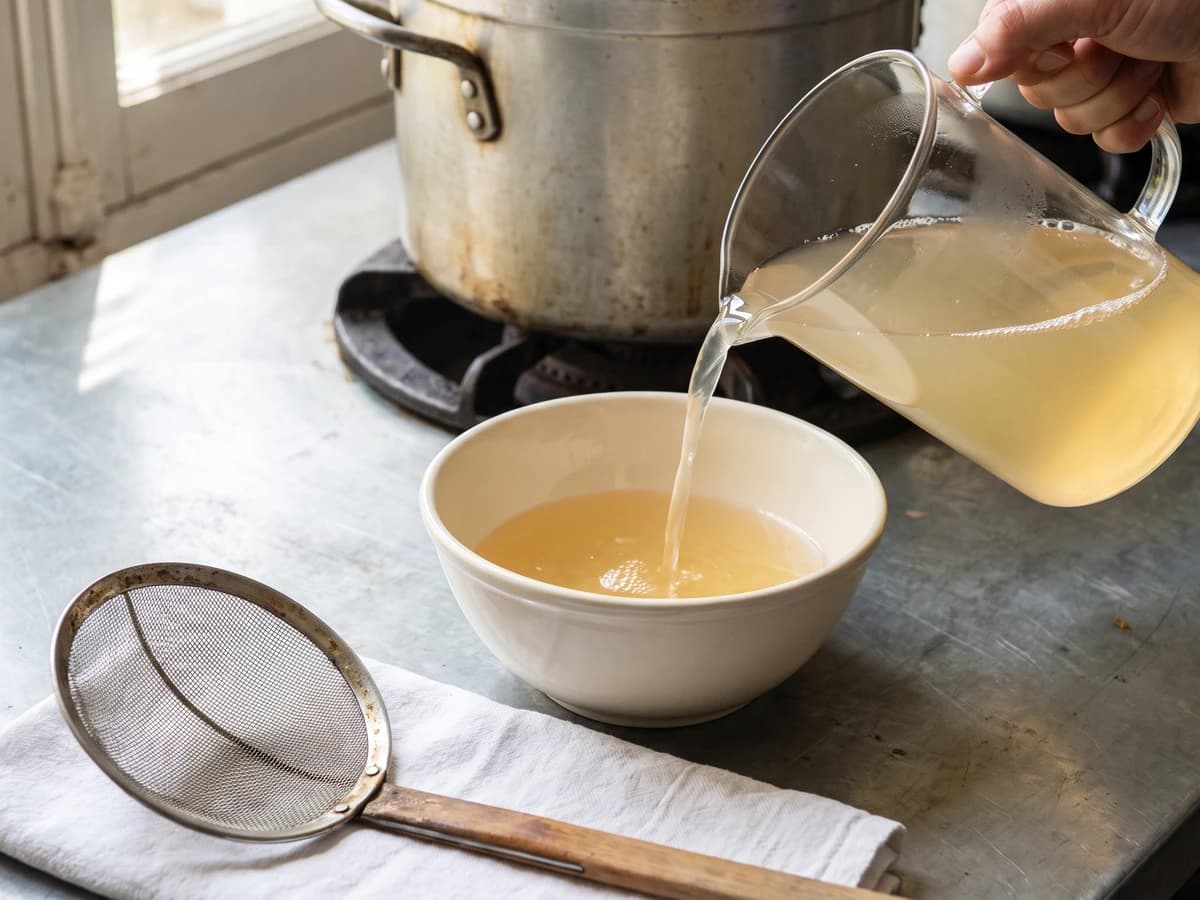
Ordinary or White Consommé
Beef shin, lean beef, and fowl begin in cold water and rise slowly toward a tremble. Skim before the boil, and you learn the quiet discipline that gives every clear French broth its backbone.
A cooking platform built around craft, culture, and the stories behind what we eat.
Created by Chef Juliette
Based on No. 86, Oyster Sauce, from Le Guide Culinaire (1907) by Auguste Escoffier
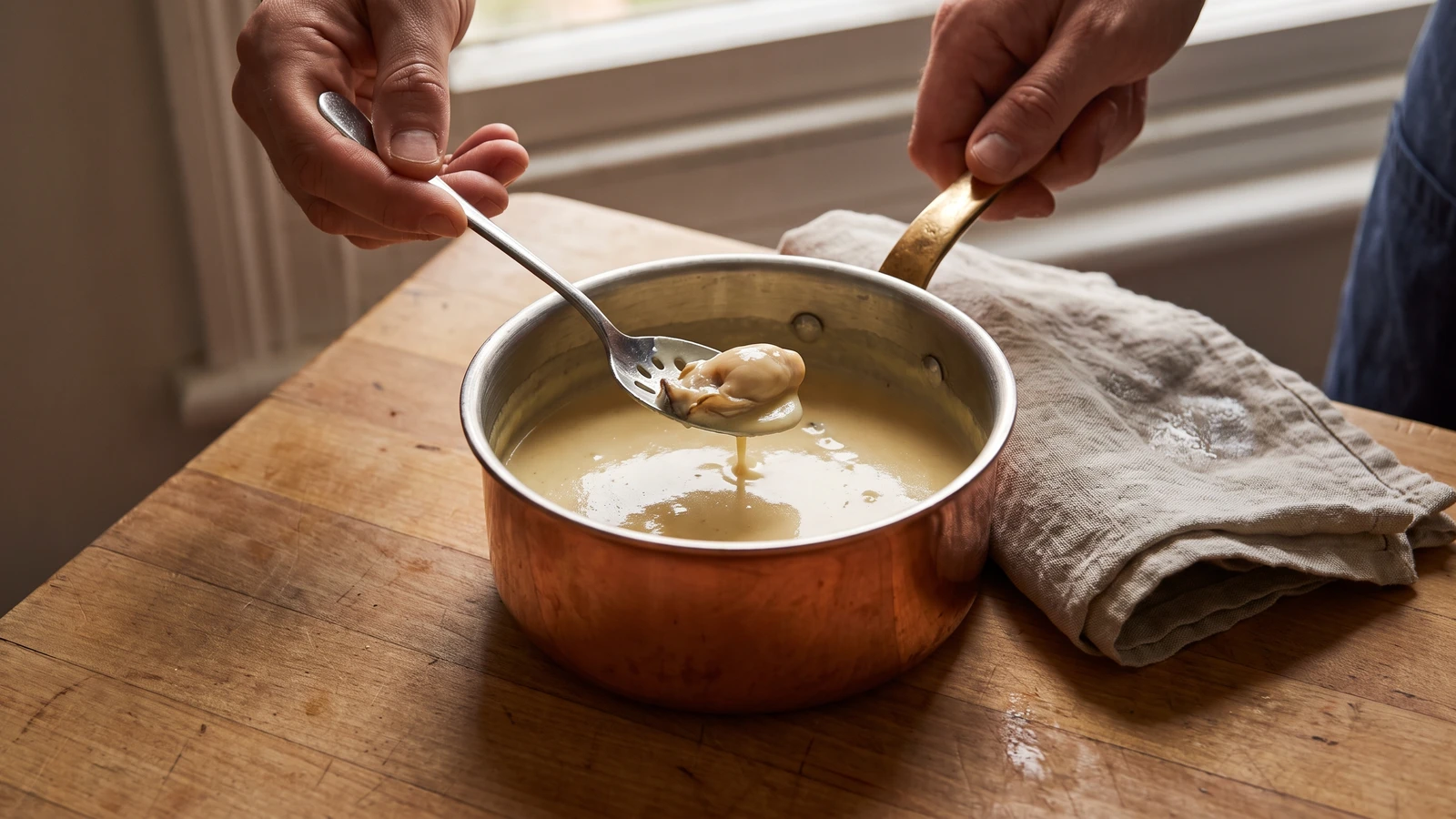
An ivory Normande Sauce sharpened with concentrated oyster liquor and finished with twelve oysters, barely poached until plump: a grand sauce translated to one pan with its delicacy intact.
Sauce aux huîtres (oyster sauce) teaches concentration without violence. Oyster liquor must reduce enough to give the Normande Sauce a clean maritime depth, while the oysters themselves receive scarcely any cooking. Know this before touching the pan: a lively reduction strengthens the liquor, but a lively poach ruins the oysters.
The original entry assumed a saucier on staff and a pint of finished Normande Sauce waiting beside stock that never left the fire. At home, the Normande Sauce remains a finished component, exactly as the book keeps it, while a small nonreactive saucepan and damp linen handle the rest. The book's batch already suits a generous dinner table, so its proportion stays intact: two cups of Normande Sauce, one-half cup of reduced oyster liquor, twelve oysters. One cook, one stove, one evening.
Holding pans and repeated reheating were brigade scaffolding, so they go. The linen-strained reduction and the barely poached, neatly trimmed oysters are the dish, so they stay. Reserve a spoonful of cool Normande Sauce before you begin, because an overheated emulsion can be rebuilt, ça se rattrape. Most of all, watch the oysters: lift them the instant their edges begin to curl.
Sauce aux huîtres belongs to the grand-kitchen family of Normande Sauce derivatives, rooted in Normandy's coastal larder of fish, oysters, butter, and cream. The oysters serve as garnish and seasoning at once: their liquor is concentrated into the sauce while their flesh is poached separately to preserve its tenderness. Despite its plain English gloss, this is not a bottled table condiment but a warm classical sauce served with poached or baked fish.
Quantity
2 cups (480 ml / about 500 g)
prepared and finished according to its own recipe
Quantity
1 cup (240 ml / 240 g), reduced to ½ cup (120 ml / about 125 g)
strained
Quantity
12 (about 8 oz / 225 g drained)
kept in their liquor
| Ingredient | Quantity |
|---|---|
| finished Normande Sauceprepared and finished according to its own recipe | 2 cups (480 ml / about 500 g) |
| fresh oyster liquorstrained | 1 cup (240 ml / 240 g), reduced to ½ cup (120 ml / about 125 g) |
| large shucked oysterskept in their liquor | 12 (about 8 oz / 225 g drained) |
Dampen a square of clean muslin or lint-free linen and lay it inside a fine-mesh sieve over a bowl. Drain the oysters, collecting 1 cup (240 ml) of their liquor, then pass the liquor through the linen without pressing on any grit. Keep the oysters cold. Spoon 2 tablespoons of the measured Normande Sauce into a separate bowl and leave it cool; this is your repair portion if the finished sauce overheats.
Pour the strained liquor into a small, wide saucepan and warm it over medium-low heat until the surface barely trembles. Add the oysters in one layer and poach for 30 to 60 seconds, turning once, just until they plump and their mantle edges begin to curl. Lift them immediately with a slotted spoon. If the liquor starts bubbling hard, pull the pan from the heat before proceeding; boiling toughens an oyster, and tenderness is the one thing no later sauce can restore.
Return the poaching liquor to medium-high heat and reduce it briskly until exactly ½ cup (120 ml) remains, about 5 to 8 minutes. Pour it into a measuring cup to check, then strain the reduced liquor through a fresh piece of damp linen. If you reduce it slightly too far, add only enough hot water to restore the ½-cup measure. Ça se rattrape. Do not add salt; reduction has already concentrated every grain of the sea.
Once the oysters are cool enough to handle, inspect each one for shell fragments. With small kitchen scissors, neaten any ragged mantle edge and remove a hard adductor nub if one remains, keeping the plump centre whole. Cover the trimmed oysters while you finish the sauce.
Put the remaining Normande Sauce in a clean saucier and warm it slowly over low heat until it is loose, glossy, and hot without simmering. Whisk in the warm reduced oyster liquor in three additions, allowing the sauce to regain its body after each. If it turns oily or grainy, take it off the heat. Whisk a teaspoon of the broken sauce into the reserved cool Normande Sauce, then rebuild the emulsion with the rest, first by spoonfuls and then in a thin stream. Ça se rattrape. Never let the finished sauce boil.
Take the sauce from the heat and fold in the trimmed oysters gently. Leave them in the sauce for one minute, only long enough to warm through, then transfer everything to a warmed sauceboat. Serve at once with poached or baked sole, turbot, brill, or another firm white fish. À table!
1 serving (about 105g)
Culinary guides, cultural storytelling, and the editorial depth that makes cooking meaningful.
Discover Culinary ExplorerChef Juliette
Beef shin, lean beef, and fowl begin in cold water and rise slowly toward a tremble. Skim before the boil, and you learn the quiet discipline that gives every clear French broth its backbone.
Chef Juliette
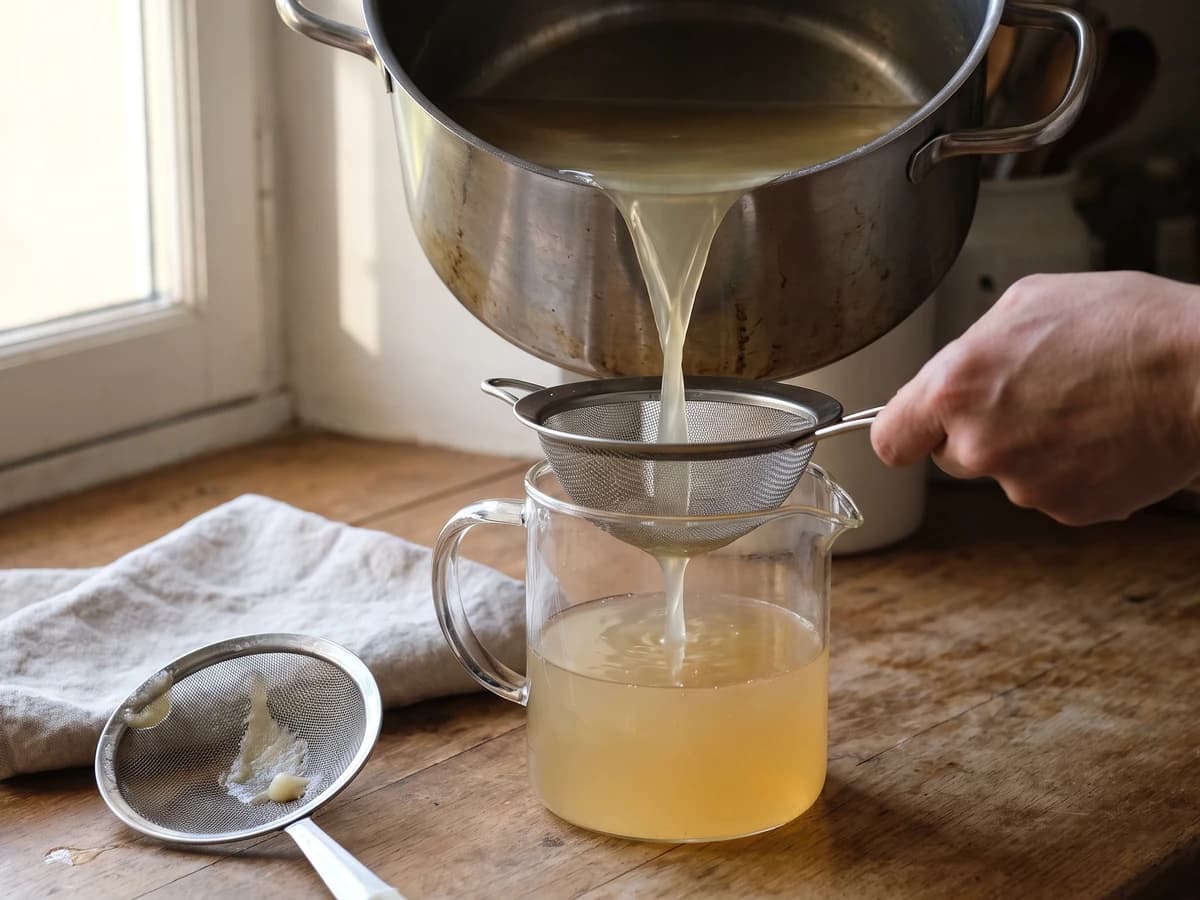
Break the veal bones small, then give them eight hours at a bare tremble. This pale, gelatinous fond becomes the quiet foundation beneath velouté, blanquette, and every sauce that must stay light.
Chef Juliette
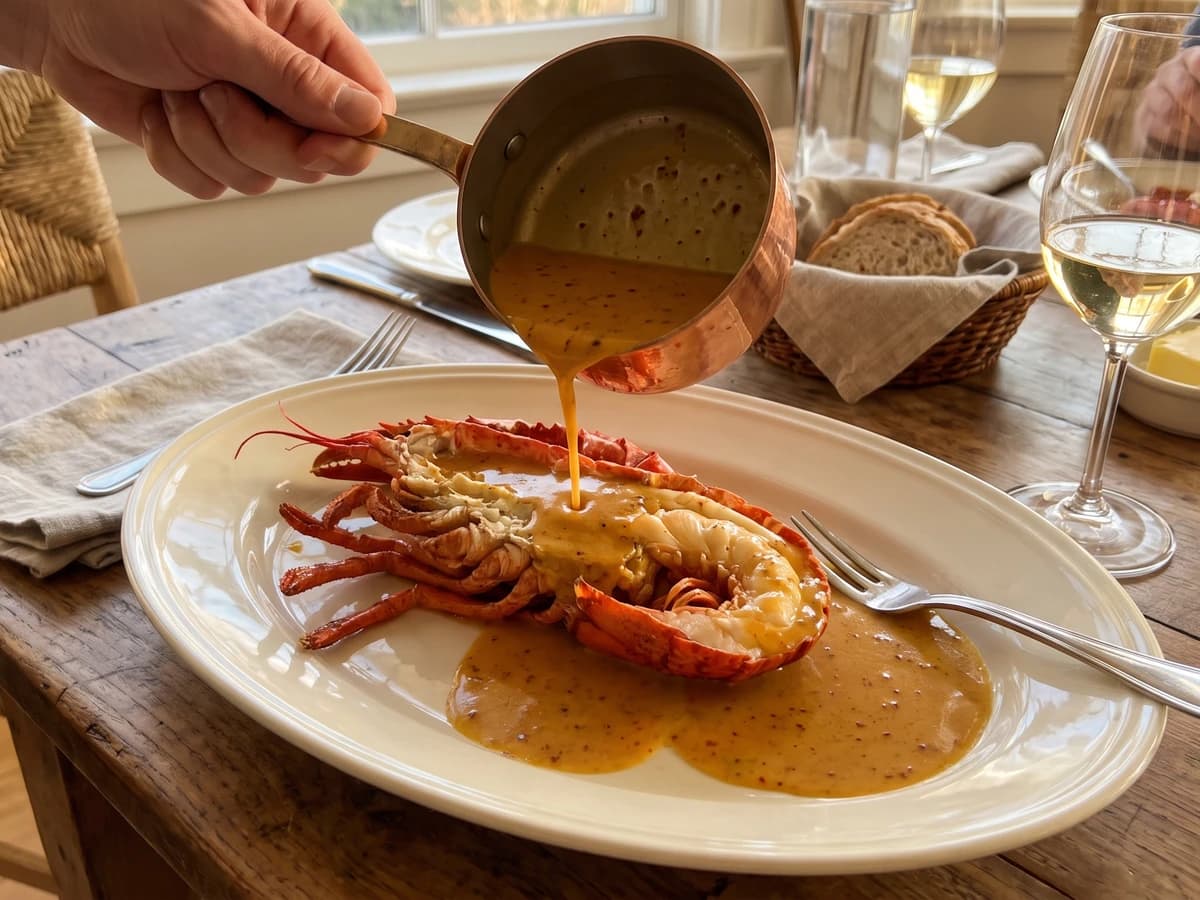
Sauce Orientale concentrates lobster-rich American Sauce with curry, then folds in cream away from the fire: a glossy, gently spiced derivative made for lobster, crayfish, and firm fish.
Chef Juliette
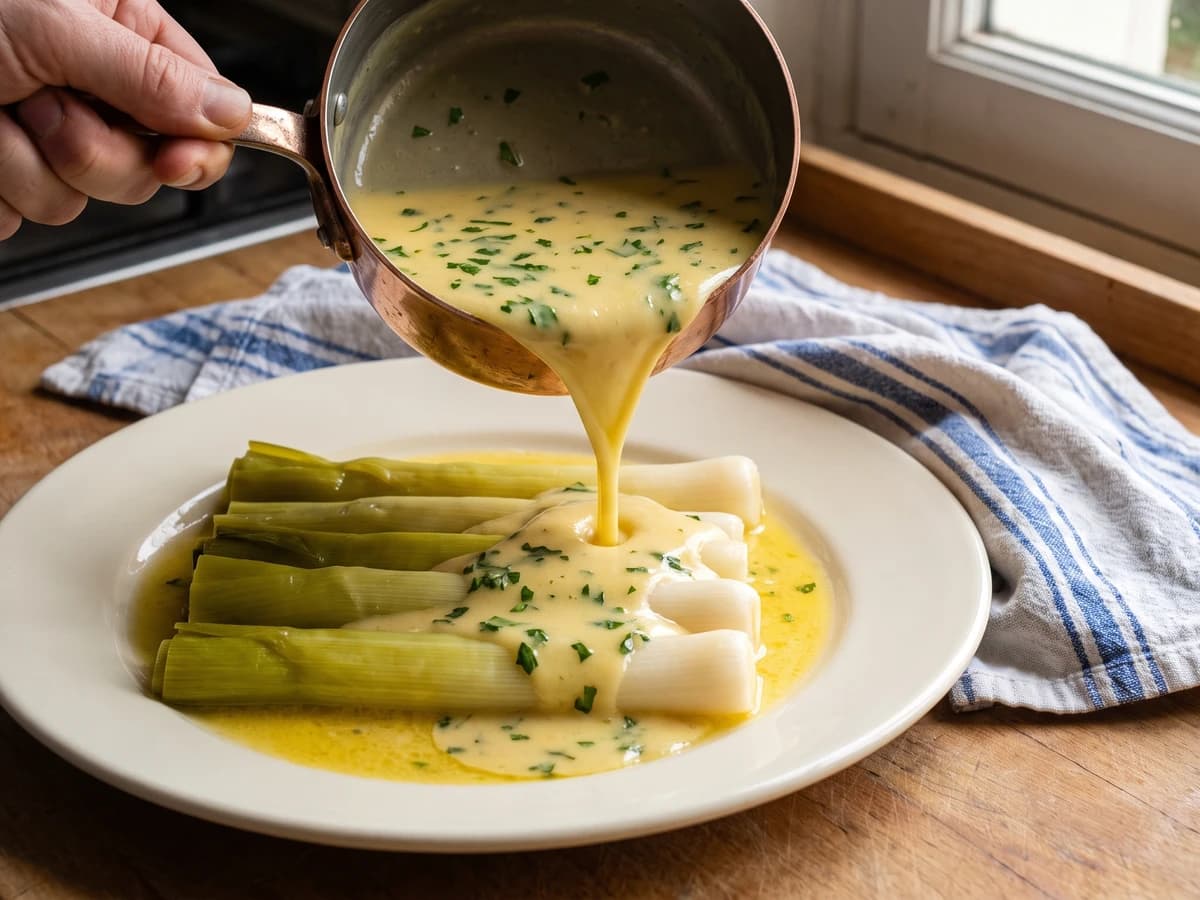
An old lesson in sauce families: Sauce Allemande takes mushroom liquor, then butter, lemon, and parsley, becoming a glossy Poulette for sheep's trotters, leeks, cauliflower, and anything needing gentle richness with a bright edge.