
Chef Juliette
John Dory (St. Pierre)
John Dory has the delicacy of sole and the firmness of turbot. A light flouring, a quick butter sauté, and nut-brown beurre noisette show exactly why looks never mattered.
A cooking platform built around craft, culture, and the stories behind what we eat.
Created by Chef Juliette
Based on No. 851, Sole à la Provençale, from Le Guide Culinaire (1907) by Auguste Escoffier
Sole à la Provençale brings olive-oil poached fish, garlic-bright tomato sauce, and duxelles-filled vegetables to one generous platter, teaching the quiet art of reducing poaching liquor without overcooking the sole.
Sole à la Provençale (sole with Provençal tomato sauce) teaches one clean principle: poach gently, then reduce boldly, but never with the fish still in the pan. The sole should stay pearly and supple while its fumet, a concentrated fish essence, olive oil, and crushed garlic condense into the sauce around it. Remove the fish the moment it is done. That is the one true thing to know before you touch the pan.
The book's kitchen assumed a fumet never off the fire, a saucier holding Provençale sauce and duxelles ready, enough hands to stuff the garnishes, and a salamander or fierce upper oven waiting at service. At home, make one compact tomato sauce and one pan of duxelles, use that duxelles in both the tomatoes and mushroom caps, and let the upper rack of a hot oven replace the salamander. The brigade's parallel labor is scaffolding and can go. The gentle poach, the reduced cooking liquor, and the separately baked garnish are the dish, so they stay. One cook, one stove, one evening.
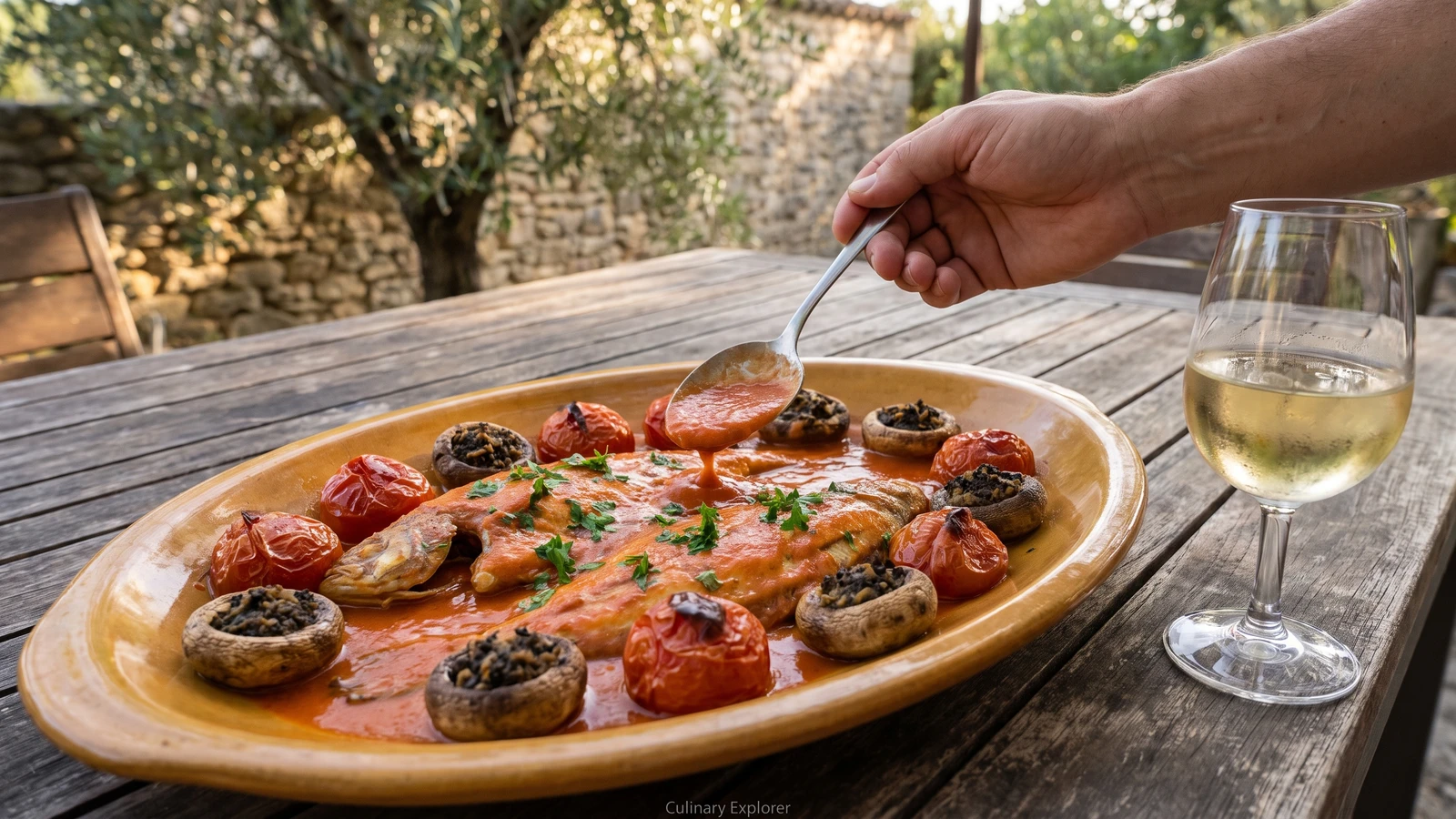
The finished platter is generous rather than fussy: two whole soles beneath a glossy red sauce, ringed with tomatoes and mushrooms whose dark filling tastes deeply of butter and shallot. Have the sauce and garnishes ready before the sole goes into the oven; once the fish is poached, the reduction must be quick and the serving immediate.
The à la Provençale treatment belongs to Provence, where tomatoes, olive oil, garlic, and parsley form a distinct southern larder rather than a general idea of rustic France. Classical kitchens carried that flavor grammar onto sole, then made the presentation more formal with duxelles-stuffed tomatoes and mushrooms arranged around the fish. The title names the treatment more than the fish's birthplace, because Dover sole is closely tied to Channel and Atlantic waters while its sauce points decisively south.
Quantity
2, about 1¼ pounds / 565 g each (2½ pounds / 1.13 kg total)
skinned, gutted, heads removed, and fins trimmed
Quantity
3 teaspoons (15 ml / 18 g)
divided
Quantity
½ teaspoon (2.5 ml / 1 g)
divided
Quantity
¾ cup plus 1 tablespoon (190 ml / 190 g)
Quantity
4 tablespoons (60 ml / 54 g)
Quantity
2 pea-sized pieces (¼ teaspoon / 1 g)
well crushed
Quantity
4 tablespoons (60 ml / 54 g)
divided
Quantity
¾ cup (180 ml / 120 g)
finely chopped
Quantity
2 cloves
finely chopped
Quantity
2 tablespoons (30 ml / 34 g)
Quantity
1 can, about 3 cups (710 ml / 800 g)
drained lightly and roughly chopped
Quantity
1
Quantity
8, about 1¼ pounds / 570 g total
Quantity
8, about 6 ounces / 170 g total
stems removed and reserved
Quantity
5 cups (1.2 L / 340 g)
finely chopped
Quantity
½ cup (120 ml / 80 g)
finely chopped
Quantity
3 tablespoons (45 ml / 42 g)
Quantity
1 clove
finely grated
Quantity
⅓ cup loosely packed (80 ml / 20 g)
roughly chopped
| Ingredient | Quantity |
|---|---|
| large whole Dover soleskinned, gutted, heads removed, and fins trimmed | 2, about 1¼ pounds / 565 g each (2½ pounds / 1.13 kg total) |
| fine sea saltdivided | 3 teaspoons (15 ml / 18 g) |
| ground white pepperdivided | ½ teaspoon (2.5 ml / 1 g) |
| fish fumet | ¾ cup plus 1 tablespoon (190 ml / 190 g) |
| extra-virgin olive oil for poaching | 4 tablespoons (60 ml / 54 g) |
| garlic for poachingwell crushed | 2 pea-sized pieces (¼ teaspoon / 1 g) |
| extra-virgin olive oil for the sauce and garnishesdivided | 4 tablespoons (60 ml / 54 g) |
| yellow onionfinely chopped | ¾ cup (180 ml / 120 g) |
| garlic for the Provençale saucefinely chopped | 2 cloves |
| tomato paste | 2 tablespoons (30 ml / 34 g) |
| whole peeled tomatoesdrained lightly and roughly chopped | 1 can, about 3 cups (710 ml / 800 g) |
| bouquet garni of parsley stems, thyme, and bay | 1 |
| small firm tomatoes | 8, about 1¼ pounds / 570 g total |
| medium button mushroomsstems removed and reserved | 8, about 6 ounces / 170 g total |
| cremini mushroomsfinely chopped | 5 cups (1.2 L / 340 g) |
| shallotsfinely chopped | ½ cup (120 ml / 80 g) |
| unsalted butter | 3 tablespoons (45 ml / 42 g) |
| garlic for the duxellesfinely grated | 1 clove |
| flat-leaf parsleyroughly chopped | ⅓ cup loosely packed (80 ml / 20 g) |
Warm 3 tablespoons of the additional olive oil in a wide saucepan over medium-low heat. Add the onion with a pinch of salt and cook for 7 to 9 minutes, stirring often, until soft and translucent without browning. Add the 2 chopped garlic cloves and tomato paste, stir for 1 minute, then add the canned tomatoes and bouquet garni. Simmer uncovered for 20 to 25 minutes, stirring occasionally, until the sauce is concentrated and a spoon drawn across the pan leaves a trail that closes slowly. Discard the bouquet garni and season with salt and white pepper. If the sauce catches, transfer the unburnt portion immediately to a clean pan without scraping the bottom, then loosen it with a spoonful of water. Ça se rattrape.
Finely chop the reserved mushroom stems and combine them with the chopped cremini mushrooms. Melt the butter in a 12-inch skillet over medium heat, add the shallots, and cook until translucent. Raise the heat, add all the chopped mushrooms with a pinch of salt, and cook for 12 to 15 minutes, stirring frequently. They will flood the pan with liquid before turning dark and gathering into a fragrant paste. This is duxelles, finely chopped mushrooms cooked until dry. Add the grated garlic for the final minute. If the duxelles still glistens with loose water, keep cooking before you stuff anything; flour would only make it dull.
Heat the oven to 400°F (200°C), with racks in the upper and middle positions. Cut a shallow lid from each small tomato, scoop out the seeds and wet pulp, season the cavities lightly, and leave them upside down for 10 minutes. Brush the tomatoes and mushroom caps with the remaining 1 tablespoon olive oil. Fill each with duxelles, mounding it slightly without packing it hard, then arrange them upright on a rimmed baking sheet. Slide the sheet onto the upper rack and give the garnishes a 10-minute head start before the sole enters the oven.
Season the sole on both sides and inside the cavities with the remaining salt and white pepper, then lay them side by side in a shallow roasting dish. Warm the fish fumet, 4 tablespoons olive oil, and crushed pea-sized pieces of garlic in a small pan just until the liquid begins to tremble. Pour it around the fish and cover the surface with a sheet of parchment. Set the dish on the middle rack while the garnishes continue above it. Poach for 14 to 18 minutes, until the flesh lifts cleanly from the central bone and the thickest part reaches 140 to 145°F (60 to 63°C). A hard boil tightens sole quickly, so give it another minute if needed rather than raising the heat.
Lift the sole carefully onto a warmed oval platter with two wide spatulas and cover loosely. Strain the cooking liquor into a wide saucepan, pressing nothing through, then boil briskly for 4 to 6 minutes until reduced by about half and intensely fragrant. Whisk as it reduces so the fumet and olive oil begin to bind. If it looks oily instead of glossy, take it off the heat and whisk in 1 tablespoon of hot water. Ça se rattrape. Whisk the reduced liquor gradually into the warm Provençale sauce, then simmer only until the sauce naps the back of a spoon. Do not return the fish to the pan.
Check the stuffed tomatoes and mushrooms after 24 to 28 minutes total. The tomato skins should be gently wrinkled, the mushroom caps tender, and the duxelles browned at its highest points. If they color before the fish is ready, move the tray to the lower rack. If they remain pale, give them another 2 minutes at the top of the oven while the cooking liquor reduces.
Taste the Provençale sauce and correct the seasoning, then spoon it generously over the sole so the fish is coated but its shape remains visible. Finish with parsley concassée, meaning roughly chopped parsley, and arrange the duxelles-stuffed tomatoes and mushrooms in a ring around the platter. Serve at once, lifting the fillets cleanly from the central bones at the table. À table!
1 serving (about 550g)
Culinary guides, cultural storytelling, and the editorial depth that makes cooking meaningful.
Discover Culinary ExplorerChef Juliette
John Dory has the delicacy of sole and the firmness of turbot. A light flouring, a quick butter sauté, and nut-brown beurre noisette show exactly why looks never mattered.

Chef Juliette
Fresh haddock proves its delicacy in the meunière pan: a fine flour crust, moist pearly flakes, and beurre noisette sharpened with lemon and parsley, ready from one skillet in half an hour.

Chef Juliette
Éperlans à l’Anglaise turns small fish into a lesson in disciplined coating: boned smelts under a close, crisp crumb, pan-fried in clarified butter and finished with bright, half-melted maître d’hôtel butter.

Chef Juliette
Tiny smelts, shallot, mushrooms, white wine, gratin sauce, and fine bread raspings meet a fierce oven, where the fish must turn tender in the same breath the buttered crust bronzes.