Chef Juliette
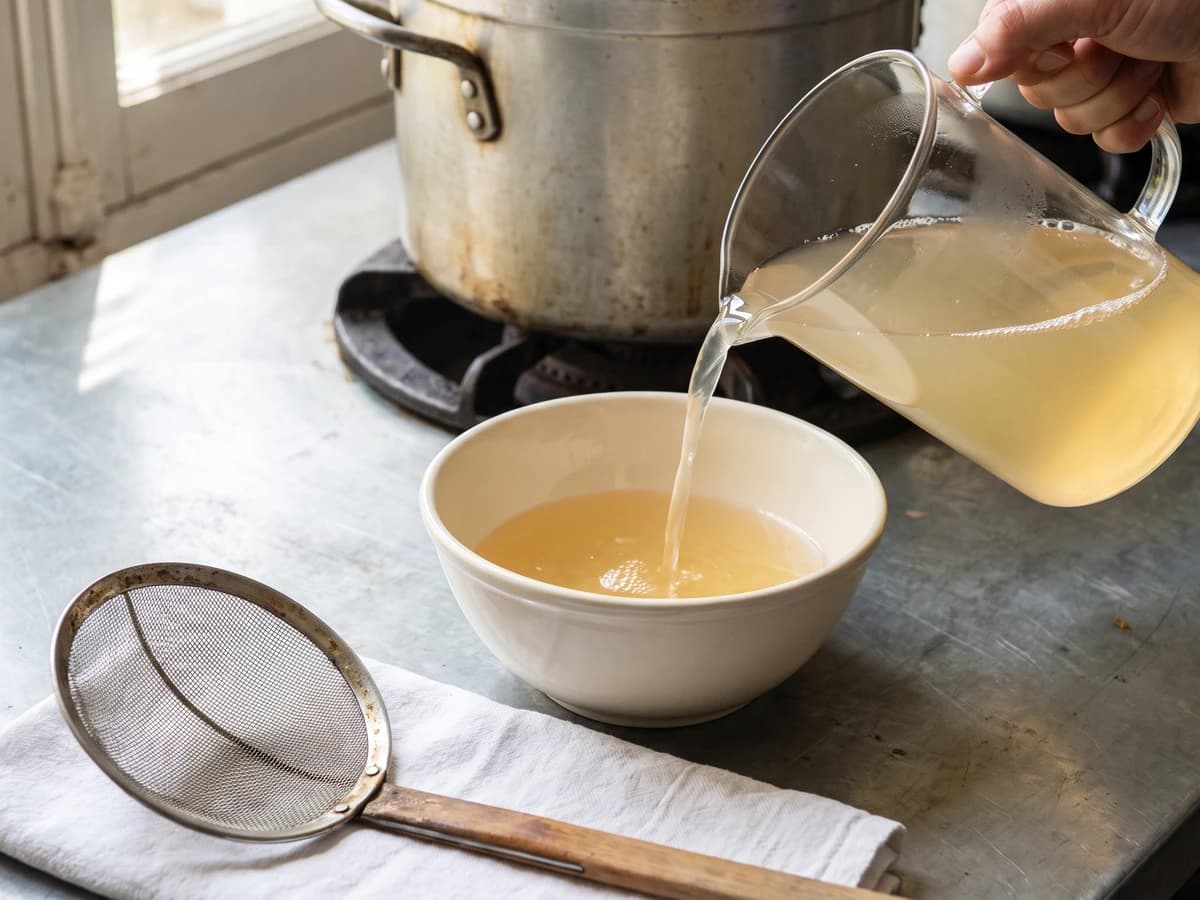
Ordinary or White Consommé
Beef shin, lean beef, and fowl begin in cold water and rise slowly toward a tremble. Skim before the boil, and you learn the quiet discipline that gives every clear French broth its backbone.
A cooking platform built around craft, culture, and the stories behind what we eat.
Created by Chef Juliette
Based on No. 85, Hungarian Sauce, from Le Guide Culinaire (1907) by Auguste Escoffier
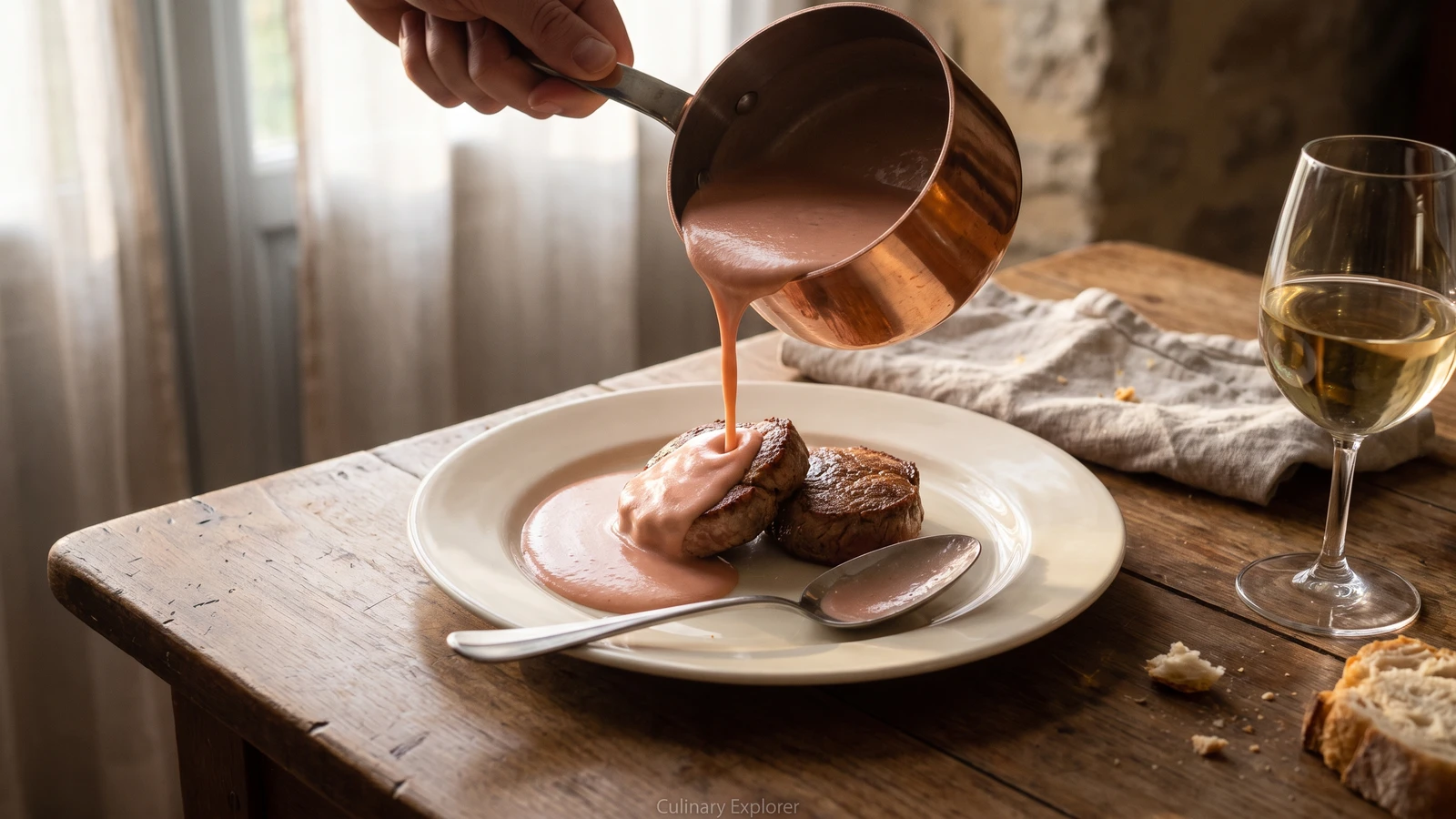
Sweet paprika gives this classical velouté derivative its tender pink color, while onion, reduced white wine, and a final monter au beurre build a sauce for veal, lamb, poultry, eggs, or fish.
Sauce Hongroise (Hungarian sauce) teaches one exact lesson: color is flavor discipline. Its tender pink must come from sweet paprika alone. Let the onions brown, scorch the spice, or correct the hue with tomato, and you've left the sauce before the velouté reaches the pan.
The original formula assumed a saucier, Ordinary Velouté or Lenten Velouté waiting beside a stockpot that never went cold, and a tammy cloth for straining. Here, the velouté remains a finished component, the sauce is made in one saucepan, and a fine-mesh sieve replaces the tammy honestly. The proportions are expressed as a roughly two-quart home batch, large enough for a dinner party with a little unbuttered base to freeze. One cook, one stove, one evening.
The stocked sauce station was brigade scaffolding and can go. The method cannot: soften the onion without color, reduce the wine by two-thirds, simmer five minutes with the velouté, strain, then mount with real butter. Keep the onion and paprika pale and fragrant in that first pan. That is the step that decides the sauce.
Sauce hongroise belongs to the classical French sauce kitchen, particularly the grand Parisian repertoire, rather than to a single Hungarian regional table. In French culinary naming, à la hongroise commonly announces paprika; here the spice is carried by butter, onion, white wine, and velouté, then softened to a tender pink. The sauce moved easily from the sauce station to bourgeois tables because its velouté base could be matched to meat, poultry, fish, eggs, or meatless service without changing the defining method.
Quantity
1/2 cup (120 ml / 75 g)
finely chopped
Quantity
2 tablespoons (30 ml / 28 g)
for softening the onion
Quantity
1/2 teaspoon (2.5 ml / 3 g), plus more as needed
Quantity
2 teaspoons (10 ml / 5 g)
Quantity
2 cups (475 ml / 475 g)
Quantity
1 small
Quantity
8 cups (1.9 L / approximately 2 kg)
Quantity
1 cup (240 ml / 227 g)
cut into small cubes
Quantity
Up to 1/4 cup (60 ml / 60 g)
only for adjustment or rescue
| Ingredient | Quantity |
|---|---|
| yellow onionfinely chopped | 1/2 cup (120 ml / 75 g) |
| unsalted butterfor softening the onion | 2 tablespoons (30 ml / 28 g) |
| fine salt | 1/2 teaspoon (2.5 ml / 3 g), plus more as needed |
| sweet paprika | 2 teaspoons (10 ml / 5 g) |
| dry white wine | 2 cups (475 ml / 475 g) |
| bouquet garni of parsley stems, thyme, and bay leaf | 1 small |
| Ordinary Velouté or Lenten Velouté | 8 cups (1.9 L / approximately 2 kg) |
| cold unsalted buttercut into small cubes | 1 cup (240 ml / 227 g) |
| cold water (optional)only for adjustment or rescue | Up to 1/4 cup (60 ml / 60 g) |
Have the finished Ordinary Velouté or Lenten Velouté ready before beginning. Choose Ordinary Velouté for lamb, veal, or poultry, and Lenten Velouté for fish or meatless service; eggs may take either according to the rest of the plate. Keep it warm enough to pour but below a simmer.
Melt the 2 tablespoons butter in a heavy saucepan over low heat. Add the onion, salt, and paprika, then cook gently for 5 to 7 minutes, stirring often, until the onion is completely soft and translucent. Neither onion nor paprika should brown. If the pan begins catching, lift it from the heat and stir in 1 tablespoon of the measured wine. Ça se rattrape. Paprika that has turned bitter from scorching cannot be hidden, so stop it before it reaches that point.
Pour in the remaining white wine, scraping the pan clean, and add the bouquet garni. Bring the liquid to a steady but controlled simmer and reduce it by two-thirds, from 2 cups to about 2/3 cup, for roughly 10 to 12 minutes. The onions should remain soft and pale beneath the rosy liquid. Remove and discard the bouquet garni.
Whisk in the Ordinary Velouté or Lenten Velouté gradually so the wine reduction disperses evenly. Bring the sauce to a moderate simmer and cook for exactly 5 minutes, stirring along the bottom and into the corners. It should coat a spoon lightly while remaining fluid enough to pour; a hard boil dulls the paprika and reduces the sauce too aggressively.
Set a fine-mesh sieve over a clean heatproof bowl and press the sauce through with the back of a ladle, then scrape the smooth sauce clinging beneath the sieve into the bowl. This replaces the traditional tammy. Do not blend it, since a blender whips in air and makes the color look chalky rather than tender pink.
Return the strained sauce to a clean saucepan and warm it gently. Take the pan off the heat and monter au beurre, finish by whisking in cold butter, adding the cubes a few at a time until each disappears and the sauce becomes glossy. Do not boil after this point. If butter begins pooling at the surface, whisk 1 tablespoon cold water in a clean bowl, add a spoonful of the broken sauce, and rebuild it gradually with the remainder. Ça se rattrape.
Taste and correct the salt, then examine the consistency and color. The sauce should nap the back of a spoon in a smooth veil and show an even, tender pink owed entirely to paprika, with no tomato, cream, or coloring. If it has tightened, whisk in cold water a teaspoon at a time. Spoon it over lamb, veal, poultry, eggs, or fish and serve at once. À table!
1 serving (about 60g)
Culinary guides, cultural storytelling, and the editorial depth that makes cooking meaningful.
Discover Culinary ExplorerChef Juliette
Beef shin, lean beef, and fowl begin in cold water and rise slowly toward a tremble. Skim before the boil, and you learn the quiet discipline that gives every clear French broth its backbone.
Chef Juliette
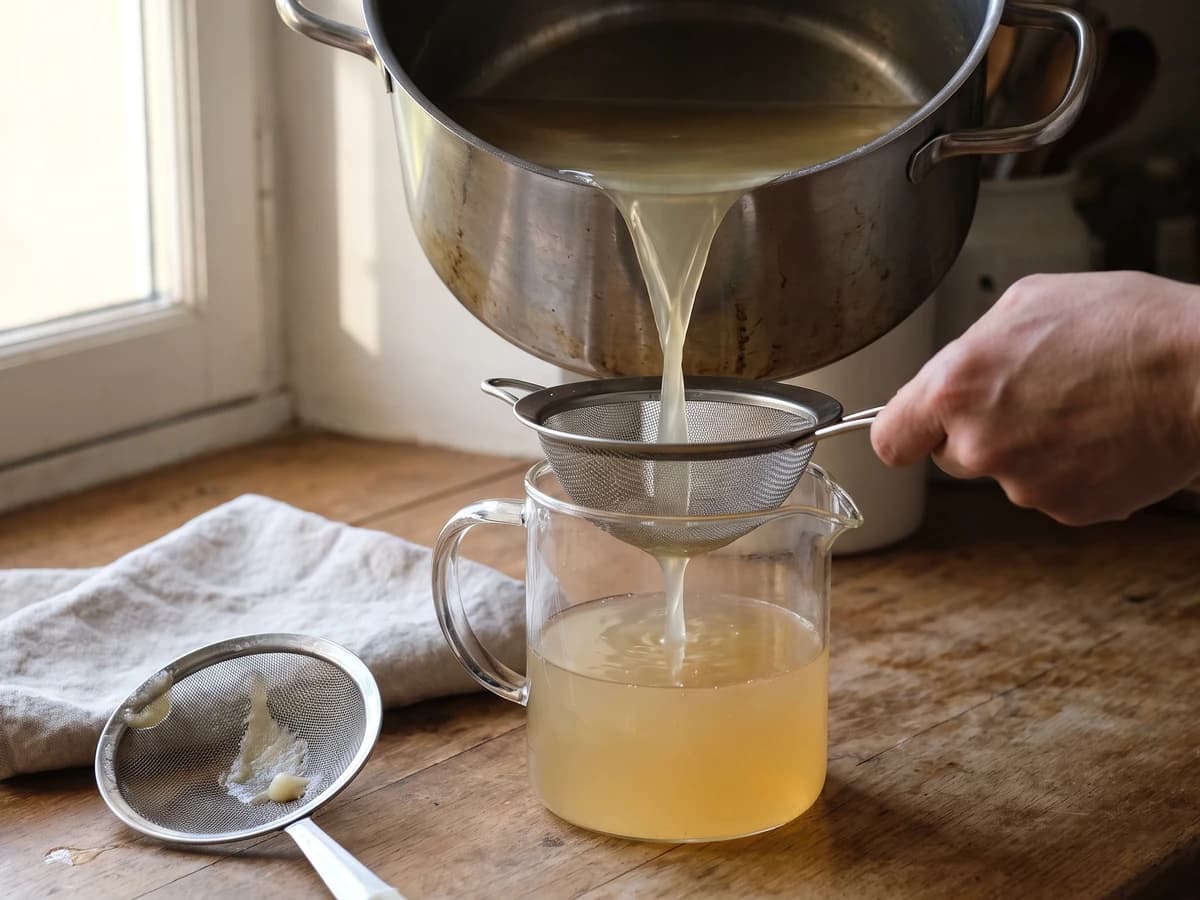
Break the veal bones small, then give them eight hours at a bare tremble. This pale, gelatinous fond becomes the quiet foundation beneath velouté, blanquette, and every sauce that must stay light.
Chef Juliette
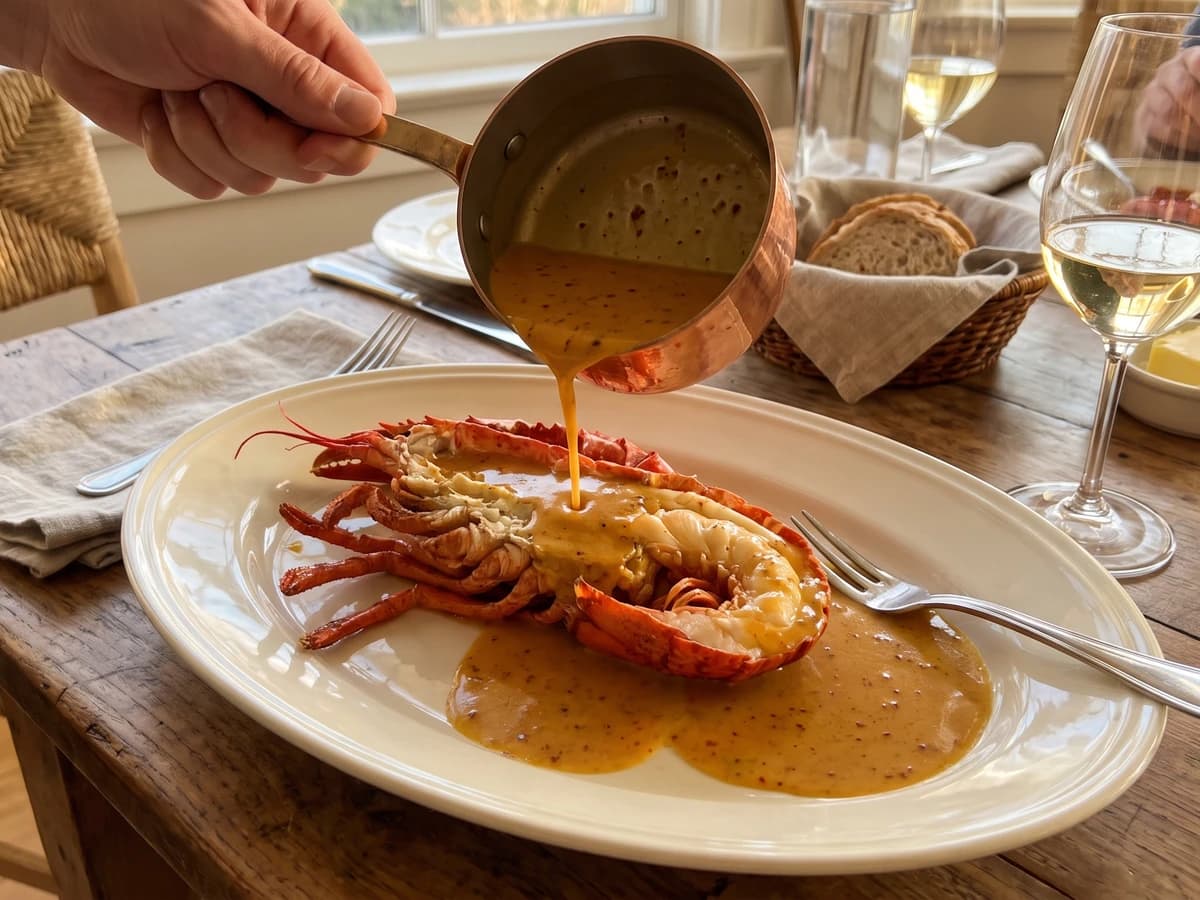
Sauce Orientale concentrates lobster-rich American Sauce with curry, then folds in cream away from the fire: a glossy, gently spiced derivative made for lobster, crayfish, and firm fish.
Chef Juliette
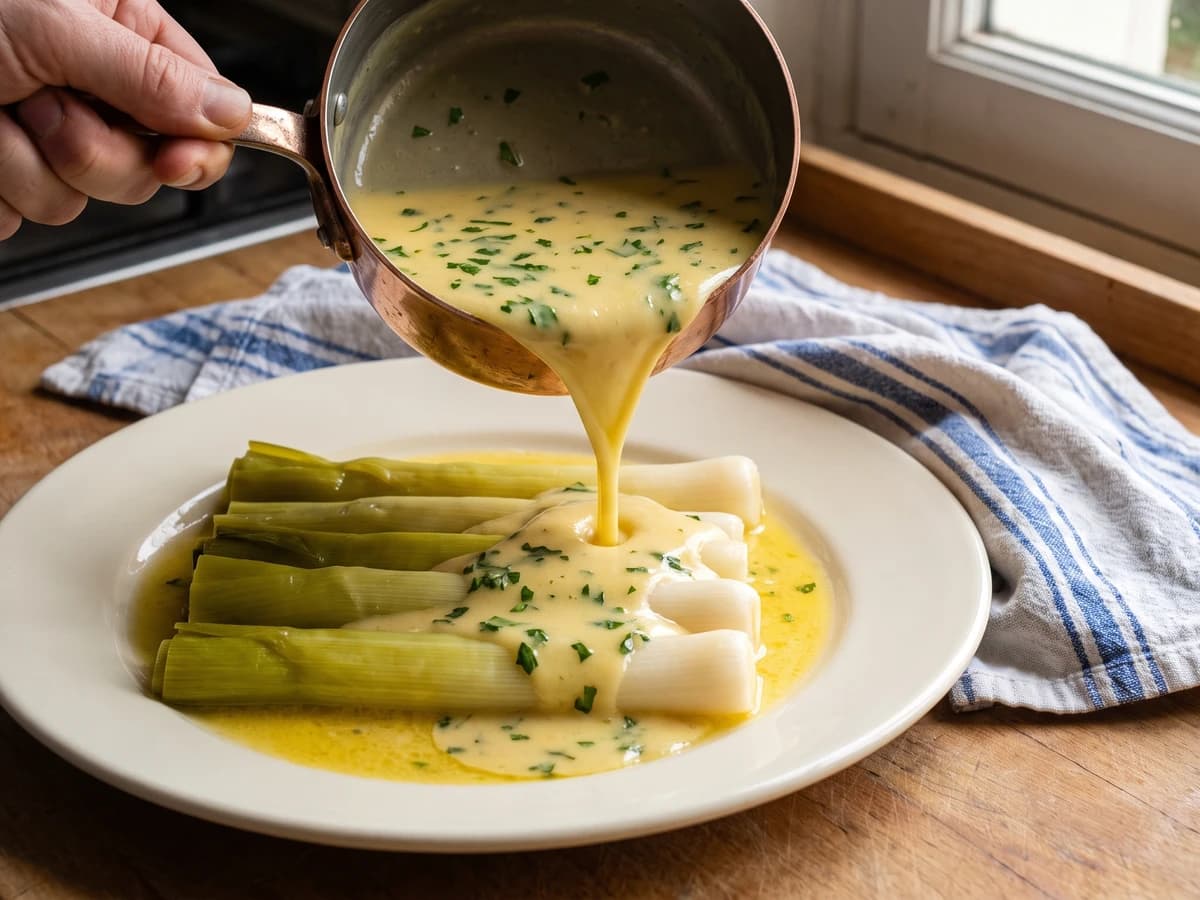
An old lesson in sauce families: Sauce Allemande takes mushroom liquor, then butter, lemon, and parsley, becoming a glossy Poulette for sheep's trotters, leeks, cauliflower, and anything needing gentle richness with a bright edge.