Culinary Explorer

A cooking platform built around craft, culture, and the stories behind what we eat.
Discover Culinary Explorer
Sole Meunière à l’Orange

Sole Meunière à l’Orange

Created by Chef Juliette

Based on No. 848, Sole Meunière à l’Orange, from Le Guide Culinaire (1907) by Auguste Escoffier

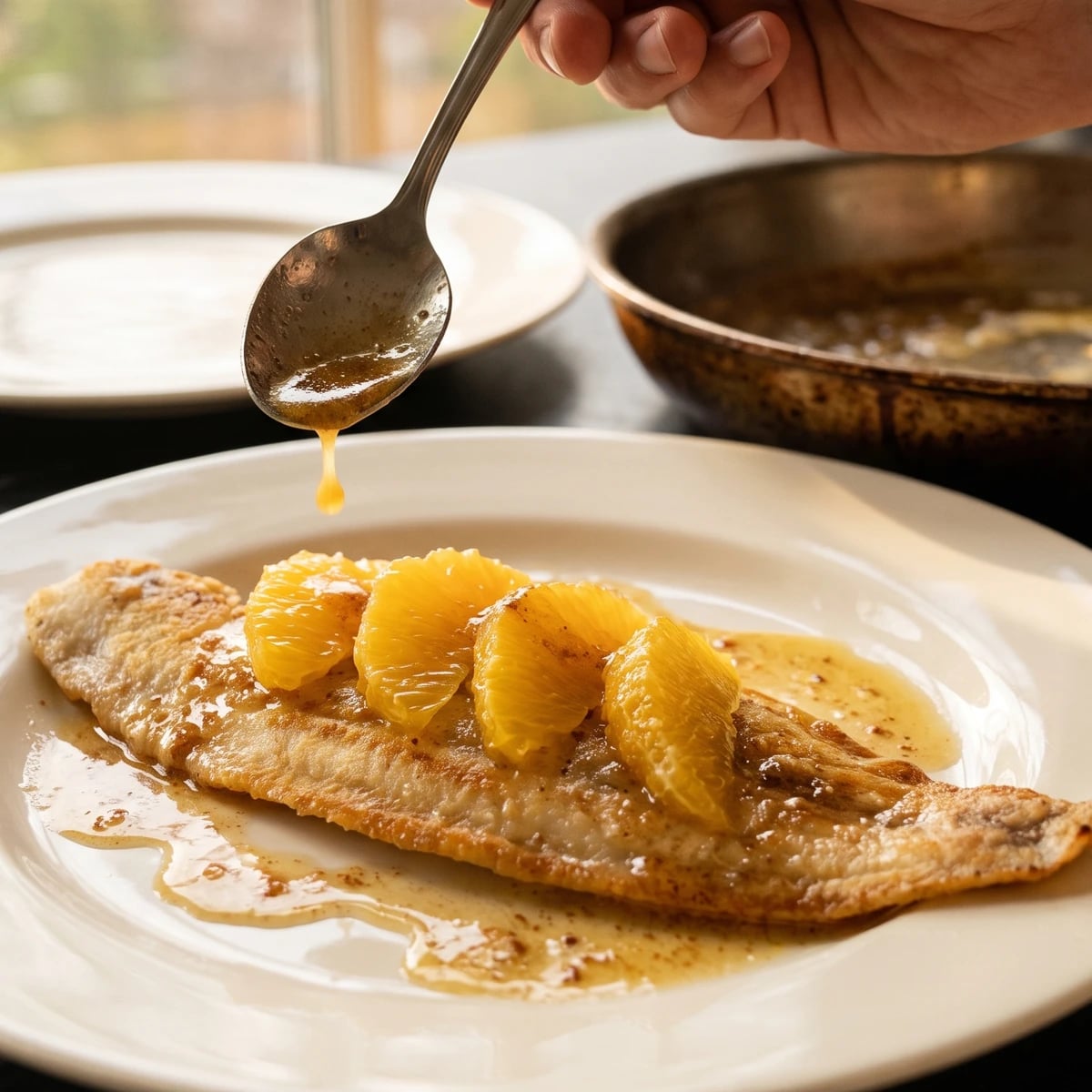
Sole meunière à l’orange makes timing visible: crisp-edged fish, bare orange sections, and lightly browned butter meeting on a warm plate, then reaching the table before the gloss can settle.

Main Dishes
French
Dinner Party
Date Night
25 min
Active Time
15 min cook40 min total
Yield4 servings

Sole meunière à l’orange (flour-dusted sole with orange and lightly browned butter) teaches one true thing: timing is an ingredient. The sole must leave the pan delicate and gold, the orange must be bare of every scrap of pith and membrane, and the butter must meet both while it still smells of toasted hazelnuts. Wait, and the crust softens. Serve at once, and bitter-sweet citrus cuts through the butter without diminishing it.

The terse classical entry assumed a poissonnier cooking the fish, a commis peeling the orange, warm plates waiting, and a saucier free to brown the finishing butter at precisely the right moment. It called for neither the stock never off the fire nor the salamander, because neither belongs in this preparation. At home, four individual fillets, orange suprêmes prepared first, and one wide skillet used in two quick batches give the same result. The extra hands were brigade scaffolding and can go. The flour-dusting, butter cooking, bare orange, lightly browned finish, and immediate service are the dish and must stay. One cook, one stove, one evening.

Set out the orange and warm the plates before you flour the sole. Once the fish touches the butter, you do not pause. That readiness is the step that decides everything.

Sole meunière belongs to the Channel-facing tables of Normandy and northern France, and to the Paris bistros that made flour-dusted, butter-cooked sole a measure of a cook’s restraint. Meunière means “in the manner of the miller’s wife,” a reference to the veil of flour on the fish, not the name of a separate sauce. The orange garnish is a grand-kitchen variation: the fruit is stripped of peel, pith, membrane, and pips, then laid on the cooked sole before lightly browned butter is poured over both.

The technique, the tradition, and the story behind every dish.

Discover Culinary Explorer

Ingredients

skinless sole fillets

Quantity

4 fillets, 5 to 6 ounces (140 to 170 g) each

pin bones removed and surfaces patted dry

medium sweet oranges

Quantity

2 medium

peeled to the pulp, sectioned between the membranes, and thoroughly pipped

all-purpose flour

Quantity

½ cup (120 ml / 60 g)

fine sea salt

Quantity

1 teaspoon (5 ml / 6 g)

divided

finely ground white pepper

Quantity

¼ teaspoon (1.25 ml / 0.5 g)

unsalted butter

Quantity

¾ cup (180 ml / 170 g)

divided, with ¼ cup reserved for rescue if needed

Equipment Needed

  • 12-inch (30 cm) heavy skillet
  • Thin flexible fish spatula
  • Sharp paring knife
  • Shallow dish for flour
  • Four warmed dinner plates
  • Instant-read thermometer, optional

Instructions

  1. 1

    Prepare plates and orange

    Warm four oven-safe dinner plates in a 200°F (95°C) oven for about 10 minutes. If the plates cannot face the oven, fill them with hot water and dry them just before serving. To peler à vif, or peel to the bare pulp, slice a cap from each end of an orange, stand it upright, and cut away the peel and white pith by following the curve of the fruit. Hold it over a bowl and cut alongside each membrane to release clean suprêmes, sections free of membrane. Remove every pip, drain the sections, and keep them at room temperature.

    Cut deeply enough to expose the orange flesh all around. Any white pith left behind brings blunt bitterness and keeps the finishing butter from coating the fruit cleanly.
  2. 2

    Dry and flour sole

    Pat the fillets very dry on both sides, then season them evenly with the salt and white pepper. Spread the flour in a shallow dish. Dredge each fillet immediately before it goes into the skillet, then shake it gently until only a thin, even veil remains. That veil is meunière. Flour the fish too early and it drinks surface moisture, turning gummy rather than crisp.

  3. 3

    Cook the sole

    Heat a wide, heavy skillet over medium-high heat. Add 2 tablespoons (30 ml / 28 g) of the butter and swirl as it foams. When the foam begins to subside and the milk solids show the first pale-gold flecks, lay in two fillets, presentation side down, without crowding. Cook for 1½ to 2 minutes, until the lower surface is evenly golden and releases when nudged with a thin spatula. Turn carefully and cook the second side for 45 to 90 seconds, until the thickest part is opaque and reaches about 140 to 145°F (60 to 63°C). Transfer the fillets to the warm plates and repeat with another 2 tablespoons (30 ml / 28 g) of butter. If a fillet clings, give it another 10 seconds rather than scraping; the flour crust releases when it has properly set.

    Keep the first pair warm for only the few minutes needed to cook the second. Covering them traps moisture and softens the meunière crust.
  4. 4

    Lay on orange

    Place one sole fillet on each warmed plate, presentation side up. Lay four or five orange suprêmes in a neat, slightly overlapping row along the length of each fillet, following the source entry’s sequence exactly: cooked and dished sole first, bare orange second, browned butter last. Keep the plates beside the stove. From this point, nothing waits.

  5. 5

    Brown butter and serve

    Wipe the skillet completely clean so stray flour cannot burn. Add 4 tablespoons (60 ml / 57 g) of butter and cook over medium heat, swirling continuously, until the foam becomes fine and the milk solids turn pale hazelnut. This is a light beurre noisette, butter browned only until nutty and gold. Remove the skillet one shade before it looks finished, because its heat will carry it further, then spoon the butter and its golden flecks over both the sole and the orange. If it turns black or smells acrid, do not pour it over the fish. Ça se rattrape: discard it, wipe the skillet, and repeat with the reserved ¼ cup (60 ml / 57 g) of butter. Carry the plates directly to the table. À table!

Chef Tips

  • Ask for skinless sole fillets of even thickness. Dover sole has the firm, fine-grained flesh the method rewards; lemon sole or flounder can stand in honestly, though both are softer and may need a gentler turn.
  • Choose fragrant sweet oranges that feel heavy for their size. The fruit is served almost bare, so a dry or fibrous orange has nowhere to hide. Navel oranges are convenient because they usually carry few pips, but inspect every section.
  • Butter is both cooking fat and finish here. Use fresh unsalted butter, keep the heat attentive, and wipe the flour residue from the skillet before making the beurre noisette. Dark flour specks can make perfectly browned butter taste burnt.
  • A dry, saline white wine suits the butter and citrus, Muscadet is particularly good. Pour it before the fish enters the skillet, because once cooking begins the sole deserves your full attention.
  • No parsley, lemon, cream, or stock is added. Those finishes belong to other preparations. This entry’s character comes from sole, orange, flour, and lightly browned butter, and adding more only muddies its clean argument.

Advance Preparation

  • The oranges can be peeled à vif and sectioned up to 4 hours ahead. Cover and chill them, then bring them to room temperature for 20 minutes and drain them well before cooking.
  • The sole can be checked for pin bones, patted dry, and held uncovered in the refrigerator for up to 2 hours. This keeps the surface dry. Season and flour it only when the skillet is ready.
  • Measure the flour, salt, pepper, and butter before guests sit down. Keep the rescue portion of butter cold and separate; if it is not needed, it simply returns to the refrigerator.
  • The cooked dish cannot be held or reheated without losing the meunière crust. Complete every other part of dinner first, then give the sole the final 15 minutes.

Frequently Asked Questions

Nutrition Information

1 serving (about 220g)

Calories
375 calories
Total Fat
26 g
Saturated Fat
15 g
Trans Fat
1 g
Unsaturated Fat
9 g
Cholesterol
135 mg
Sodium
715 mg
Total Carbohydrates
14 g
Dietary Fiber
2 g
Sugars
6 g
Protein
21 g

Note: Chef personas and recipes are created with AI assistance. Cook with care: follow safe food-handling practices, check doneness with a thermometer when needed, and adapt for allergies and your kitchen.

Where cooking meets culture.

Culinary guides, cultural storytelling, and the editorial depth that makes cooking meaningful.

Discover Culinary Explorer

More from Fish - Soles

Browse the full collection