
Chef Juliette
Sole Alice
A whole-poached sole teaches the discipline of gentle heat: tender fillets, oysters barely set, and a white fumet sauce bound with biscotte crumbs and mounted with cold butter just before it reaches the table.
A cooking platform built around craft, culture, and the stories behind what we eat.
Created by Chef Juliette
Based on No. 845, Sole Meunière aux Cèpes, from Le Guide Culinaire (1907) by Auguste Escoffier
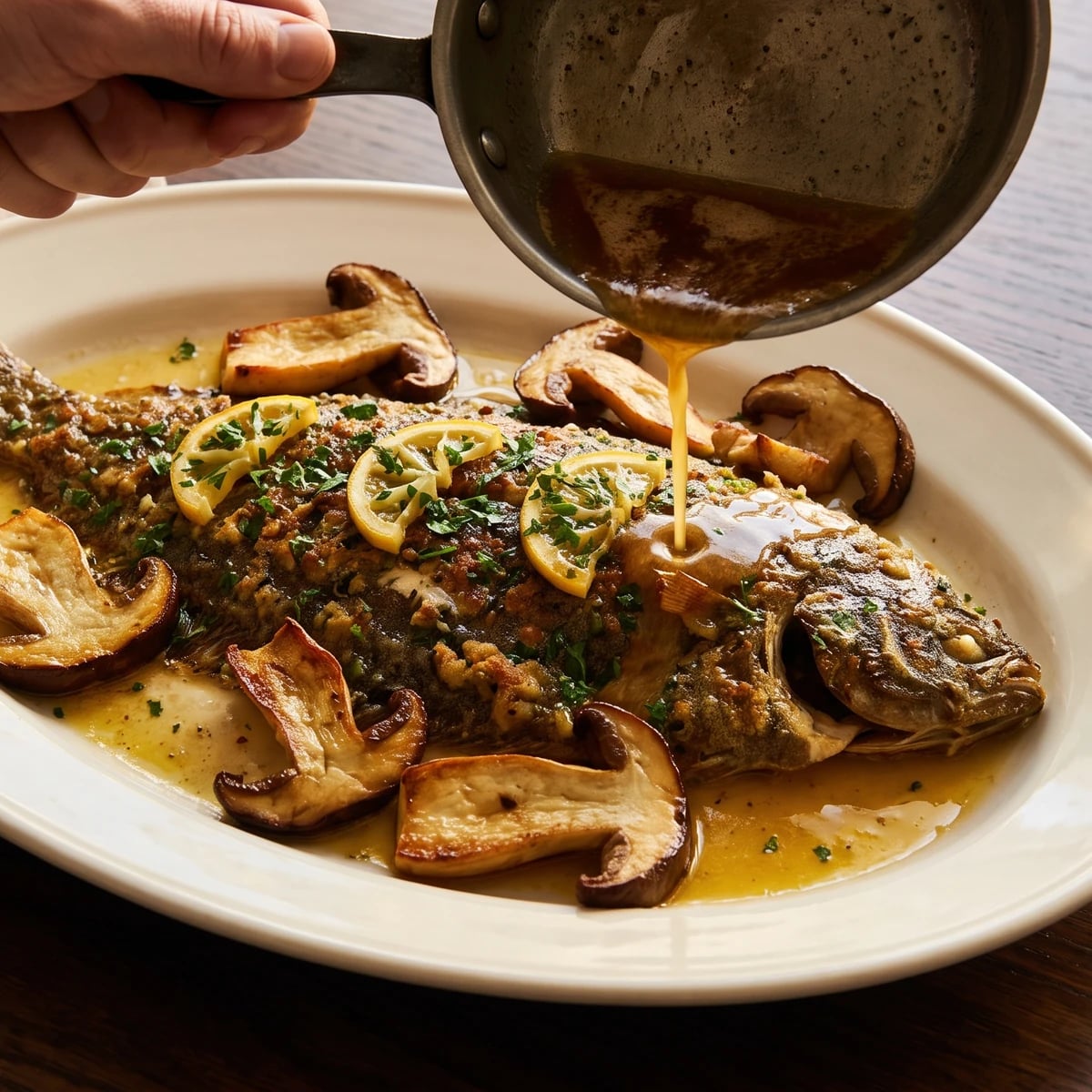
Whole sole bronzed under a whisper of flour, dressed with lemon, parsley, and beurre noisette, then ringed with cèpes frizzled hard in butter. Timing, not ornament, makes this dinner-party fish magnificent.
Sole Meunière aux Cèpes (sole in browned butter with porcini mushrooms) teaches timing more sternly than complexity. The sole wants a dry surface, a whisper of flour, and butter hot enough to bronze it before the delicate flesh dries. The cèpes want room and fierce heat so their slices frizzle at the edges rather than collapse into their own water. The one true thing is simple: have everything cut, measured, and warm before the fish meets the pan, because meunière waits for no one.
The terse brigade formula assumed a fish cook on the sole, another hand frizzling the cèpes at the final second, and warm dishes waiting, while the kitchen around them had its saucier, a stockpot never off the fire, and a salamander overhead. This dish actually calls on none of that last scaffolding. At home, two wide skillets and warm platters replace the separate hands. I have scaled it to two large whole sole feeding four, because four little fish would force a home cook into drying batches. The separate stations can go; the last-minute mushrooms, lemon, parsley, and butter must stay. One cook, one stove, one evening.
When it lands correctly, the fish wears a thin bronze crust, the beurre noisette foams over the parsley and lemon, and the cèpes form a dark, buttery border while remaining distinctly themselves. Dry the sole thoroughly and shake off every spare grain of flour. That ghost-thin coat is the step that matters most before the pan.
Sole meunière belongs to Channel and Atlantic fish cookery, and Parisian dining rooms carried it into classical service because flour and butter showed the fish plainly rather than disguising it. Its name points to the miller's flour dusting, not to a separate sauce. Cèpes are gathered across wooded France and prized especially in Périgord and the Southwest; their border here is a classical garnish joining sea and forest, not a claim that the meunière method began there.
Quantity
2, each 1 to 1¼ pounds (450 to 570 g)
heads and side fins removed and skinned on both sides
Quantity
4 loosely packed cups (1 L / 300 g)
cleaned, trimmed, and sliced ¼ inch (6 mm) thick
Quantity
½ cup (120 ml / 60 g)
Quantity
½ cup (120 ml / 110 g)
Quantity
10 tablespoons (150 ml / 142 g)
divided
Quantity
2 teaspoons (10 ml / 12 g)
divided
Quantity
½ teaspoon (2.5 ml / 1 g)
divided
Quantity
3 tablespoons (45 ml / 45 g)
Quantity
¼ cup (60 ml / 15 g)
finely chopped
Quantity
1
cut into wedges
| Ingredient | Quantity |
|---|---|
| whole Dover soleheads and side fins removed and skinned on both sides | 2, each 1 to 1¼ pounds (450 to 570 g) |
| fresh cèpes (Boletus edulis, porcini)cleaned, trimmed, and sliced ¼ inch (6 mm) thick | 4 loosely packed cups (1 L / 300 g) |
| all-purpose flour | ½ cup (120 ml / 60 g) |
| clarified butter | ½ cup (120 ml / 110 g) |
| cold unsalted butterdivided | 10 tablespoons (150 ml / 142 g) |
| fine sea saltdivided | 2 teaspoons (10 ml / 12 g) |
| freshly ground black pepperdivided | ½ teaspoon (2.5 ml / 1 g) |
| fresh lemon juice | 3 tablespoons (45 ml / 45 g) |
| flat-leaf parsleyfinely chopped | ¼ cup (60 ml / 15 g) |
| lemoncut into wedges | 1 |
Warm two oval platters in a 200°F (95°C) oven, then switch the oven off. Brush the cèpes clean, trim away any spongy or damaged portions, and slice them evenly. Pat the sole dry inside and out with towels, paying particular attention to the cavities and the flesh beside the backbone. Set out the flour, seasonings, lemon juice, parsley, butter, two spatulas, and the serving wedges now. Once the fish starts, there is no useful pause.
Season both sides of the sole with 1½ teaspoons of the salt and ¼ teaspoon of the pepper. Spread the flour on a tray and pass each fish through it, coating both sides and the edges. Lift and shake firmly until only a thin, even veil remains. Flour the fish only when the clarified butter is nearly ready; flour left sitting absorbs moisture and becomes paste instead of crust.
Divide the clarified butter between two wide skillets and heat over medium-high until it shimmers. Lay one sole in each pan, best-looking side down, and cook without nudging for 4 to 5 minutes, until the underside is evenly golden and releases cleanly. Turn each fish with two wide spatulas, then cook the second side for 3 to 4 minutes, tilting the pan and spooning hot butter over the thicker flesh beside the backbone. The fish is ready when the flesh is opaque, separates readily beside the bone, and reaches 145°F (63°C) at its thickest point. Turn the sole presentation side up onto the warm platters and leave them uncovered. If a fish clings, don't pry and tear it. Give it another 30 seconds; if the flour looks pale and pasty, raise the heat slightly, spoon hot butter over it, and let the crust set. Ça se rattrape.
Pour the used fat from one skillet and wipe away any browned flour that might burn. Set the pan over high heat and add 3 tablespoons (45 ml / 43 g) of the unsalted butter. When the foam is lively, add the cèpes in one layer and leave them untouched for 2 minutes. Toss, then cook for another 2 to 3 minutes until deeply browned, glossy, and curled slightly at the edges. Season with the remaining ½ teaspoon salt and ¼ teaspoon pepper only after they have colored. If the mushrooms flood the pan, keep them uncovered over high heat and spread them out; once the water boils away, the butter will begin frying them again. Ça se rattrape. Transfer the cèpes to the warm edges of the platters.
Put 6 tablespoons (90 ml / 85 g) of the unsalted butter in a small, light-colored saucepan over medium heat. Let it foam, swirling rather than stirring, until the foam becomes fine and the milk solids turn hazelnut brown with a warm, nutty aroma. This is beurre noisette, butter taken precisely to hazelnut color. If it darkens too quickly, pull the pan from the heat and whisk in the final cold tablespoon (15 ml / 14 g) of butter to stop the cooking. If the solids have gone black and smell acrid, begin again; burnt butter does not become noble through optimism.
Drizzle the lemon juice evenly over the sole and scatter on the parsley. Pour the hot beurre noisette over the fish so it froths against the lemon and herbs. Arrange the frizzled cèpes in a generous border around each sole rather than covering the crust, and add the lemon wedges. Carry the platters straight to the table, lift the fillets from the bones there, and spoon over every last drop of butter. À table!
1 serving (about 300g)
Culinary guides, cultural storytelling, and the editorial depth that makes cooking meaningful.
Discover Culinary Explorer
Chef Juliette
A whole-poached sole teaches the discipline of gentle heat: tender fillets, oysters barely set, and a white fumet sauce bound with biscotte crumbs and mounted with cold butter just before it reaches the table.

Chef Juliette
Sole poached at a tremble in fumet, napped with ivory Mornay, scattered with Gruyère and Parmesan, then glazed gold under the broiler: one quiet lesson in sauce, restraint, and heat.

Chef Juliette
Sole Mornay des Provençaux teaches the decisive French gratin: poach the fish gently, reduce its fumet honestly, nap it with sauce vin blanc, then glaze the cheese before the sole can overcook.

Chef Juliette
Champagne-poached sole under glossy velouté, with crisp julienne of sole at each side: a celebration dish that teaches reduction, mounting with butter, and timing the garnish at the last possible moment.