
Chef Juliette
John Dory (St. Pierre)
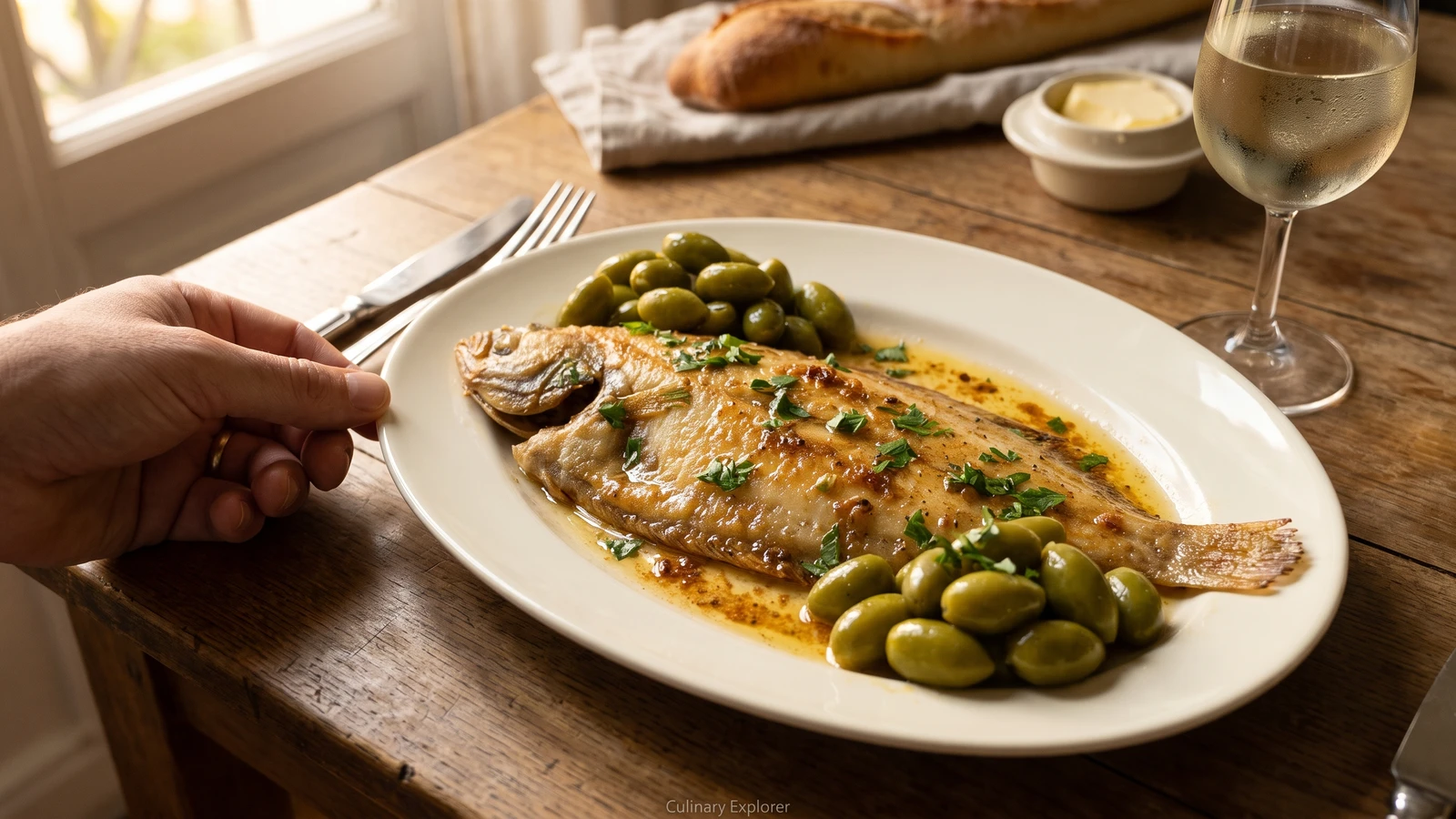
John Dory has the delicacy of sole and the firmness of turbot. A light flouring, a quick butter sauté, and nut-brown beurre noisette show exactly why looks never mattered.
A cooking platform built around craft, culture, and the stories behind what we eat.
Created by Chef Juliette
Based on No. 843, Sole Meunière aux Concombres, otherwise Doria, from Le Guide Culinaire (1907) by Auguste Escoffier
Whole sole, floured at the last moment and fried in butter, meets olive-shaped cucumber cooked gently with salt and sugar, a Doria lesson in dry fish, quiet heat, and exact timing.
Sole Meunière aux Concombres, dite Doria (sole meunière with butter-glazed cucumber), teaches one true thing: the crust exists only when the fish is dry, the flour goes on late, and the pan is ready. Miss that sequence and the coating turns pasty before the butter can bronze it. Keep it, and the sole emerges delicate beneath a fine golden shell, ready for beurre noisette and two neat heaps of pale jade cucumber.
The source entry assumes a poissonnier, the fish cook, with several pans hot, a second pair of hands turning cucumbers, and a plate carried the instant the butter is poured. Unlike preparations that called for a saucier, stock never off the fire, or a salamander, Doria needs none of them. Its brigade scaffolding was quantity and synchronized service, so this version reduces the work to four small soles, two pan batches, a paring knife, and warm plates. The flour, real butter, cucumber, salt, and pinch of sugar remain because they are the dish. One cook, one stove, one evening.
Turning the cucumber isn't disposable ornament here; it is what Doria means. The pieces needn't match like soldiers, but their olive shape lets them cook evenly while holding a plump centre. Before you touch the pan, dry the soles thoroughly and wait to flour them until the clarified butter is hot. That is the step that decides everything.
Within the classical Paris repertoire, à la Doria is a garnish designation for cucumber turned into olive shapes and cooked gently in butter, here attached to sole prepared meunière. The name does not make the dish Genoese, nor does Doria name a separate sauce; it tells the dining room what will appear at the ends of the fish. The combination passed naturally from the professional fish station to bourgeois dinner tables because its foundation requires only a skillet, though those orderly cucumber olives still reveal the discipline of the brigade.
Quantity
4 (8 to 10 oz / 225 to 280 g each)
cleaned, headed, fin frills trimmed, and skinned on both sides
Quantity
2 (about 1⅓ lb / 600 g total)
peeled, seeded, and turned into about 40 olive shapes
Quantity
½ cup (120 ml / 60 g)
for dredging
Quantity
6 tablespoons (90 ml / 85 g)
for frying
Quantity
8 tablespoons (120 ml / 113 g)
divided
Quantity
2 teaspoons (10 ml / 12 g)
divided
Quantity
½ teaspoon (2.5 ml / 1 g)
Quantity
1 teaspoon (5 ml / 4 g)
Quantity
3 tablespoons (45 ml / 45 g)
Quantity
¼ cup (60 ml / 15 g)
finely chopped
| Ingredient | Quantity |
|---|---|
| small whole Dover solescleaned, headed, fin frills trimmed, and skinned on both sides | 4 (8 to 10 oz / 225 to 280 g each) |
| medium seedless cucumberspeeled, seeded, and turned into about 40 olive shapes | 2 (about 1⅓ lb / 600 g total) |
| all-purpose flourfor dredging | ½ cup (120 ml / 60 g) |
| clarified butterfor frying | 6 tablespoons (90 ml / 85 g) |
| unsalted butterdivided | 8 tablespoons (120 ml / 113 g) |
| fine sea saltdivided | 2 teaspoons (10 ml / 12 g) |
| ground white pepper | ½ teaspoon (2.5 ml / 1 g) |
| granulated sugar | 1 teaspoon (5 ml / 4 g) |
| fresh lemon juice | 3 tablespoons (45 ml / 45 g) |
| flat-leaf parsleyfinely chopped | ¼ cup (60 ml / 15 g) |
Peel the cucumbers, split them lengthwise, and scrape out the watery seeds with a teaspoon. Cut the firm flesh into about 40 plump batons, each roughly 1½ inches long. With a small paring knife, round both ends and shave the sides into five or six curved facets, making little olive shapes. Aim for equal thickness rather than perfect geometry, since equal pieces finish cooking together. Keep the trimmings for a chilled soup or salad.
Melt 4 tablespoons of the unsalted butter in a wide sauté pan over medium-low heat. Add the turned cucumbers, ½ teaspoon of the salt, and the sugar, tossing until every piece shines with butter. Cover and cook gently for 6 to 8 minutes, turning them twice, until the edges are tender but the centres retain a slight bite. They should remain pale jade, not brown. If the cucumber releases a puddle, uncover the pan and let the liquid reduce until butter coats the pieces again. If the butter begins colouring before they are tender, lower the heat and add 1 tablespoon (15 ml / 15 g) water. Ça se rattrape. Cover and keep them warm off the heat.
Heat the oven to 200°F (95°C), place a wire rack over a sheet pan, and warm four oval plates. Dry each sole thoroughly, including the cavities and the flesh beside the backbone. Season both sides with the remaining 1½ teaspoons salt and the white pepper. Spread the flour in a wide dish, dredge each fish lightly, and knock off every loose patch. Flour only the soles going directly into the pan. If the coating turns gummy while it waits, brush it off, dry the fish again, and dredge anew. The rescue is simple; frying wet paste is not.
Heat a 14-inch heavy skillet over medium-high heat and add 3 tablespoons of the clarified butter. When the butter shimmers, lay in two soles with the former dark-skin side down, leaving space between them. Cook without shifting them for 3 to 4 minutes, until the flour forms a fine golden crust and the fish releases without persuasion. Turn each sole with two broad spatulas, then cook the second side for 2 to 3 minutes. The flesh should just lift from the centre bone at the thickest point. Transfer the fish to the rack and hold it in the low oven for no more than 8 minutes. Wipe away loose, dark flour, add the remaining clarified butter, and cook the second pair. If two fish cannot lie flat in your skillet, use two skillets rather than crowding one.
Wipe one skillet clean and return it to medium heat. Add the remaining 4 tablespoons unsalted butter and swirl as it melts, foams, and then quiets. Watch the milk solids beneath the foam: when they turn hazelnut brown and the butter smells toasted, remove the pan from the heat at once. This is beurre noisette, butter taken precisely to the hazelnut stage, and it supplies the meunière finish. If the colour races, pour the butter immediately into a cool heatproof cup so the skillet cannot carry it farther. Stir in the lemon juice carefully, followed by the parsley.
Lay one sole lengthwise on each warm plate. Spoon the cucumbers into two little heaps at the ends of each fish, five pieces near the head end and five near the tail, rather than scattering them over the crust. Pour the hot beurre noisette over the soles, letting a little collect beneath them while the cucumber keeps its clean butter glaze. Carry the plates straight to the table. À table!
1 serving (about 250g)
Culinary guides, cultural storytelling, and the editorial depth that makes cooking meaningful.
Discover Culinary ExplorerChef Juliette
John Dory has the delicacy of sole and the firmness of turbot. A light flouring, a quick butter sauté, and nut-brown beurre noisette show exactly why looks never mattered.

Chef Juliette
Fresh haddock proves its delicacy in the meunière pan: a fine flour crust, moist pearly flakes, and beurre noisette sharpened with lemon and parsley, ready from one skillet in half an hour.

Chef Juliette
Éperlans à l’Anglaise turns small fish into a lesson in disciplined coating: boned smelts under a close, crisp crumb, pan-fried in clarified butter and finished with bright, half-melted maître d’hôtel butter.

Chef Juliette
Tiny smelts, shallot, mushrooms, white wine, gratin sauce, and fine bread raspings meet a fierce oven, where the fish must turn tender in the same breath the buttered crust bronzes.