
Chef Juliette
John Dory (St. Pierre)
John Dory has the delicacy of sole and the firmness of turbot. A light flouring, a quick butter sauté, and nut-brown beurre noisette show exactly why looks never mattered.
A cooking platform built around craft, culture, and the stories behind what we eat.
Created by Chef Juliette
Based on No. 839, Sole Portugaise, from Le Guide Culinaire (1907) by Auguste Escoffier
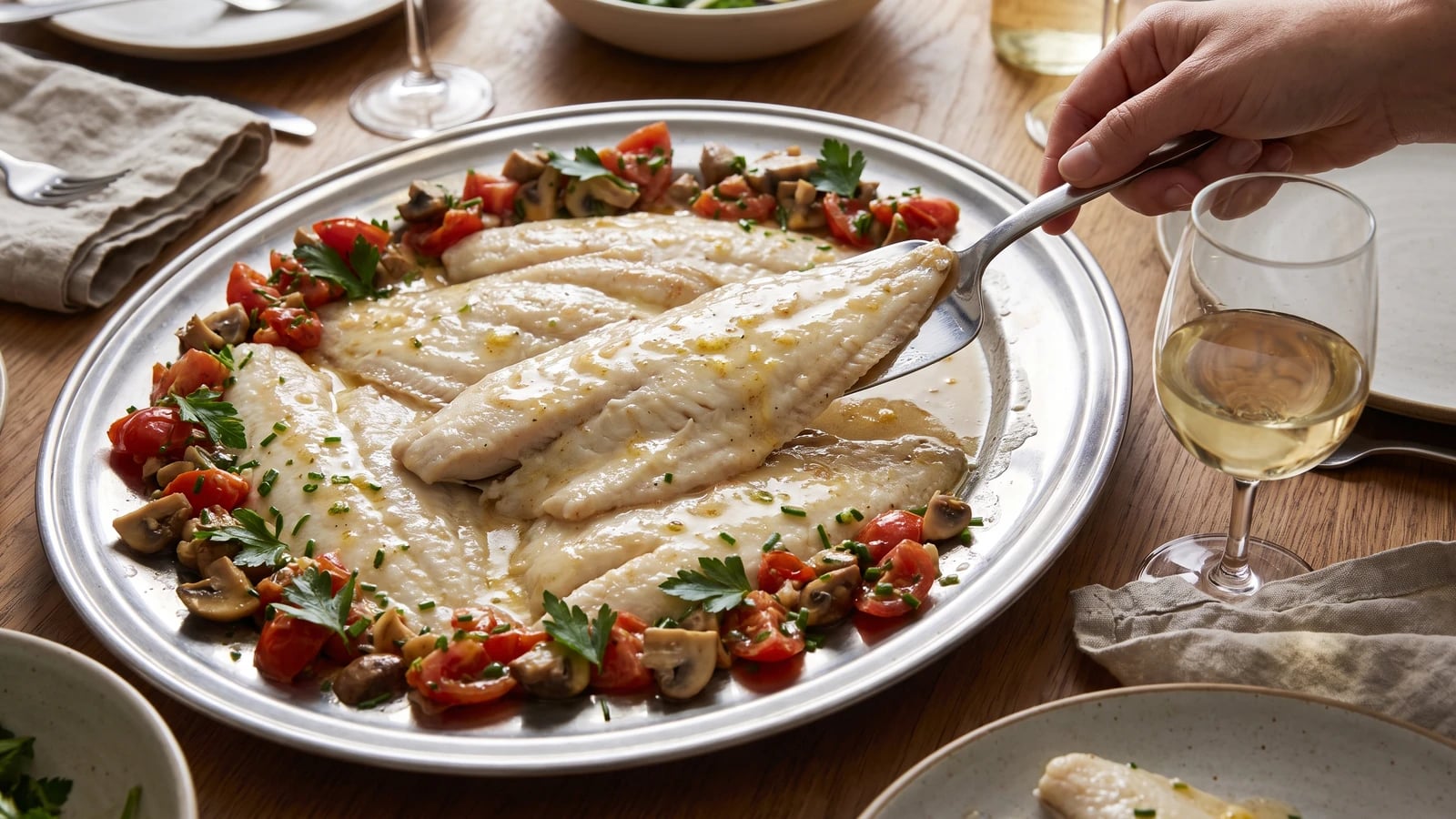
Sole Portugaise teaches disciplined composition: tender fish, an ivory sauce, and a buttered tomato-mushroom ring kept distinct, then flashed beneath the broiler until the sauce catches a delicate glaze.
Sole Portugaise (sole with a buttered tomato-mushroom garnish and white-wine sauce) teaches composition, not decoration. The fish must stay tender, the sauce must cling in an ivory gloss, and the tomato, mushroom, and chive garnish must remain a separate, savory ring. The one true thing to know before touching a pan is this: cook the garnish nearly dry, then keep the sauce off it. If those elements blur together, the dish loses both its color and its logic.
The book's entry assumed a saucier at arm's reach with sauce au vin blanc, the white-wine sauce, fish stock never off the fire, portion soles moving through a brigade, and a salamander fierce enough to glaze them in seconds. Here the poaching liquor becomes the sauce's foundation, a small pale roux gives it body, cream and yolk enrich it, and cold butter finishes it; the household broiler replaces the salamander. Eight fillets serve four because they fit a home platter and poach evenly. The separate sauce station and holding pans were brigade scaffolding, so they go. The shallow poach, butter-cooked garnish, strict separation, and rapid glaze are the dish, so they stay. One cook, one stove, one evening.
This is precise food, not fussy food. Have the platter ready, the broiler fierce, and the garnish warm before the sole leaves its liquor, because the clock starts as soon as the fish is drained. The step that decides Sole Portugaise is the final assembly: a clean border between pale sauce and red garnish, followed by a glaze so quick the sole has no time to dry.
Sole Portugaise belongs to the Parisian grand-kitchen canon rather than to a particular Portuguese household tradition. In classical French menu language, à la Portugaise became a garnish signal for tomato; here mushrooms and chives broaden the garnish while the sequence of wine poach, sauce, and rapid glaze carried the dish from professional service to the bourgeois dinner table. The name describes French culinary shorthand, not a claim that Portuguese cooks prepared sole in this exact fashion.
Quantity
8 (about 1½ lb / 680 g total)
pin bones removed
Quantity
10 tablespoons (150 ml / 142 g)
divided as directed; keep 5 tablespoons cold
Quantity
1¼ teaspoons (6 ml / 7 g)
divided
Quantity
¼ teaspoon (1 ml / 0.5 g)
divided
Quantity
¾ cup (180 ml / 178 g)
Quantity
1 cup (240 ml / 240 g)
Quantity
2 medium (about 12 oz / 340 g before trimming)
peeled, seeded, pressed dry, and finely diced
Quantity
2 cups (475 ml / 170 g)
finely minced
Quantity
1 tablespoon (15 ml / 3 g)
finely chopped
Quantity
1 tablespoon (15 ml / 4 g)
finely chopped
Quantity
1 tablespoon (15 ml / 8 g)
Quantity
⅓ cup (80 ml / 80 g)
Quantity
1
Quantity
2 tablespoons (30 ml / 30 g)
for rescuing or loosening the sauce
| Ingredient | Quantity |
|---|---|
| skinless Dover sole filletspin bones removed | 8 (about 1½ lb / 680 g total) |
| unsalted butterdivided as directed; keep 5 tablespoons cold | 10 tablespoons (150 ml / 142 g) |
| fine sea saltdivided | 1¼ teaspoons (6 ml / 7 g) |
| ground white pepperdivided | ¼ teaspoon (1 ml / 0.5 g) |
| dry white wine | ¾ cup (180 ml / 178 g) |
| unsalted fish fumet or good fish stock | 1 cup (240 ml / 240 g) |
| ripe tomatoespeeled, seeded, pressed dry, and finely diced | 2 medium (about 12 oz / 340 g before trimming) |
| white button mushroomsfinely minced | 2 cups (475 ml / 170 g) |
| fresh chivesfinely chopped | 1 tablespoon (15 ml / 3 g) |
| flat-leaf parsleyfinely chopped | 1 tablespoon (15 ml / 4 g) |
| all-purpose flour | 1 tablespoon (15 ml / 8 g) |
| heavy cream | ⅓ cup (80 ml / 80 g) |
| large egg yolk | 1 |
| cold water (optional)for rescuing or loosening the sauce | 2 tablespoons (30 ml / 30 g) |
Heat the oven to 325°F (165°C) with a rack in the middle. Butter a 13 by 9-inch (33 by 23 cm) shallow ovenproof dish with 1 tablespoon of the butter. Pat the sole dry, season both sides with ¾ teaspoon of the salt and half the white pepper, then arrange the fillets in one layer, overlapping only their tapered ends. Make the concassée (peeled, seeded, finely chopped tomato): score the tomatoes, lower them into boiling water for 20 seconds, cool them, peel, halve, and remove the seeds. Press the halves cut-side down on a clean towel before dicing. This pressing is not cosmetic; loose tomato juice would turn the garnish into a stew.
Melt 1½ tablespoons of butter in a 10-inch (25 cm) skillet over medium heat. Add the minced mushrooms and ¼ teaspoon salt, then cook for 6 to 8 minutes, stirring often, until their water has evaporated and they smell deeply savory. Transfer them to a bowl. Melt another 1½ tablespoons of butter in the skillet, add the concassée, and cook for 4 to 6 minutes, until glossy but nearly dry. Return the mushrooms, fold in the chives, and keep the garnish warm. If liquid gathers beneath it, keep cooking uncovered until it disappears; flour does not belong here.
Warm the white wine and fish fumet together just to a bare tremble, then pour them around the sole, not directly over it. Lay a sheet of parchment on the surface and poach in the oven for 6 to 9 minutes. The liquid should barely move. The fillets are ready when their centers have turned opaque and the thickest one reaches 135 to 140°F (57 to 60°C); the final glaze will carry them safely to 145°F (63°C). Lift the sole onto the center of a broiler-safe platter in four overlapping pairs and cover loosely with parchment. Strain and save every drop of the poaching liquid.
While the fish poaches, melt 1 tablespoon butter in a 2-quart (2 L) saucepan. Whisk in the flour and cook for about 90 seconds without letting the roux color, then take it off the heat. Strain the cuisson, the poaching liquor, into the wiped garnish skillet and boil briskly until reduced to ¾ cup (180 ml). Whisk the hot cuisson gradually into the roux, return the saucepan to gentle heat, and simmer for 3 minutes. It should coat a spoon lightly, not sit on it like paste. If the sauce has lumps, pass it through the fine sieve and carry on.
Whisk the cream and egg yolk together in a bowl, then temper them with one-third of the hot sauce. Return everything to the saucepan and whisk over very low heat until the sauce is nappé, thick enough to coat the back of a spoon, about 1 to 2 minutes. Never let it boil. Remove from the heat and whisk in the remaining 5 tablespoons of cold butter, one small piece at a time. If the sauce turns grainy or oily, stop. Ça se rattrape: put 1 tablespoon cold water in a clean bowl, whisk in a spoonful of sauce until smooth, then add the rest gradually. Loosen an over-thick sauce with more cold water, a teaspoon at a time, and season with the remaining salt and white pepper.
Heat the broiler to high and set its rack 5 to 6 inches (13 to 15 cm) below the element. Rewarm the garnish if necessary, then spoon it in a generous ring around the sole, leaving a narrow clean border between fish and garnish. Nap the fillets with the sauce au vin blanc, stopping precisely at their edges. If sauce falls onto the garnish, wipe it away and replace that small patch before glazing. Broil for 45 to 75 seconds, watching without interruption, until the sauce gleams and takes a few pale-gold freckles. This must be quick; deep browning means dry sole.
As the platter leaves the broiler, scatter the chopped parsley over the tomato and mushroom garnish only. Carry the Sole Portugaise straight to the table while the sauce is glossy and the garnish remains distinct. À table!
1 serving (about 310g)
Culinary guides, cultural storytelling, and the editorial depth that makes cooking meaningful.
Discover Culinary ExplorerChef Juliette
John Dory has the delicacy of sole and the firmness of turbot. A light flouring, a quick butter sauté, and nut-brown beurre noisette show exactly why looks never mattered.

Chef Juliette
Fresh haddock proves its delicacy in the meunière pan: a fine flour crust, moist pearly flakes, and beurre noisette sharpened with lemon and parsley, ready from one skillet in half an hour.

Chef Juliette
Éperlans à l’Anglaise turns small fish into a lesson in disciplined coating: boned smelts under a close, crisp crumb, pan-fried in clarified butter and finished with bright, half-melted maître d’hôtel butter.

Chef Juliette
Tiny smelts, shallot, mushrooms, white wine, gratin sauce, and fine bread raspings meet a fierce oven, where the fish must turn tender in the same breath the buttered crust bronzes.