Chef Juliette
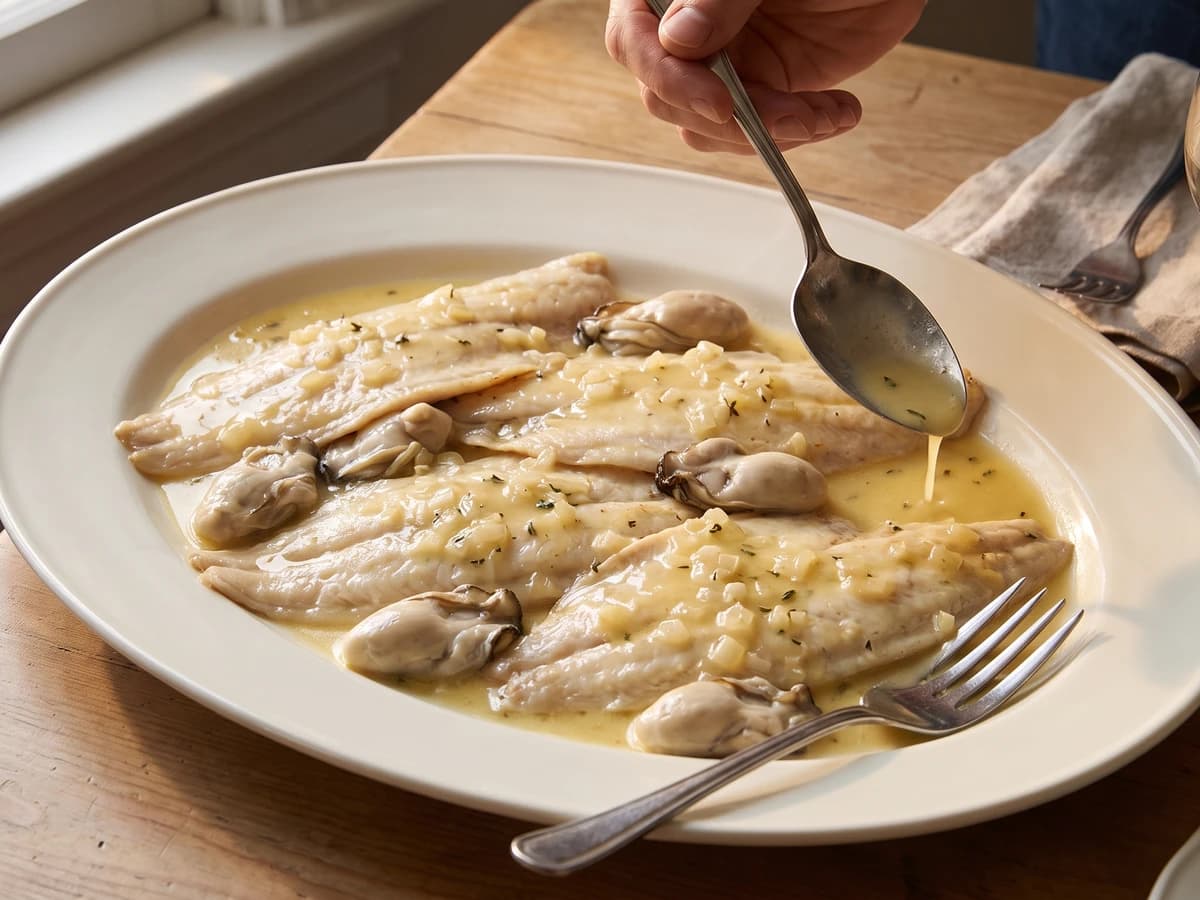
Sole Alice
A whole-poached sole teaches the discipline of gentle heat: tender fillets, oysters barely set, and a white fumet sauce bound with biscotte crumbs and mounted with cold butter just before it reaches the table.
A cooking platform built around craft, culture, and the stories behind what we eat.

Created by Chef Juliette
Based on No. 820, Sole Mornay des Provençaux, from Le Guide Culinaire (1907) by Auguste Escoffier
Sole Mornay des Provençaux teaches the decisive French gratin: poach the fish gently, reduce its fumet honestly, nap it with sauce vin blanc, then glaze the cheese before the sole can overcook.
Sole Mornay des Provençaux (sole glazed with white-wine sauce and cheese) teaches one clean sequence: poach gently, reduce honestly, nap the fish completely, then glaze fast. The one true thing to know before you touch a pan is that the glaze finishes the sole; it must never be asked to cook it. Pull the fillets while their centres are still barely translucent, and the broiler gives you tender fish beneath an ivory sauce and a freckled gold crown.
The source assumed a saucier on staff, fish fumet never off the fire, individual sole portions, and a salamander fierce enough to colour cheese in seconds. Here, eight skinless fillets feed four from one broad skillet; a small roux and the reduced poaching liquor build sauce vin blanc on the spot; a fully heated domestic broiler supplies the final blast. The fillets replace brigade-portioned whole fish because they fit a home pan and transfer without tearing. One cook, one stove, one evening.
The brigade's separate poaching, sauce, holding, and glazing stations were scaffolding, so they become one pan and one serving dish. The fumet poach, reduction, roux, real cream and butter, liberal cheese, and quick glaze are the dish, so none of them moves. The decisive step is the last one: have the broiler blazing before the sauce touches the sole, because waiting under weak heat is how tenderness disappears.
Sole Mornay des Provençaux belongs to Paris, specifically the table of the Frères Provençaux near the Palais-Royal, where the house served sole through the disciplined sequence of fumet poaching, sauce vin blanc, grated cheese, and a fierce final glaze. Despite Provençaux in the name, the preparation is not a Provençal fish dish: there is no tomato, garlic, or olive oil, and the title records the Paris restaurant rather than a southern larder. Its journey into the classical canon preserved a dining-room specialty as a compact working formula, proof that a house dish could travel by technique alone.
Quantity
8 fillets, about 3 oz (85 g) each / 1½ lb (680 g) total
pin bones removed
Quantity
1¼ teaspoons (6 ml / 7 g)
divided
Quantity
¼ teaspoon (1.25 ml / 0.6 g)
divided
Quantity
6 tablespoons (90 ml / 85 g)
divided
Quantity
1¾ cups (420 ml / 420 g)
divided
Quantity
¾ cup (180 ml / 180 g)
Quantity
2 tablespoons (30 ml / 16 g)
Quantity
¾ cup (180 ml / 180 g)
Quantity
1¼ cups (300 ml / 125 g)
finely grated
| Ingredient | Quantity |
|---|---|
| skinless sole filletspin bones removed | 8 fillets, about 3 oz (85 g) each / 1½ lb (680 g) total |
| fine sea saltdivided | 1¼ teaspoons (6 ml / 7 g) |
| finely ground white pepperdivided | ¼ teaspoon (1.25 ml / 0.6 g) |
| cold unsalted butterdivided | 6 tablespoons (90 ml / 85 g) |
| unsalted fish fumetdivided | 1¾ cups (420 ml / 420 g) |
| dry white wine | ¾ cup (180 ml / 180 g) |
| all-purpose flour | 2 tablespoons (30 ml / 16 g) |
| heavy cream | ¾ cup (180 ml / 180 g) |
| Gruyèrefinely grated | 1¼ cups (300 ml / 125 g) |
Heat the oven to 325°F (165°C) with a rack about 5 inches (13 cm) below the broiler element. Use 1 tablespoon of the measured butter to coat a 12-inch ovenproof skillet, a shallow gratin dish, and one side of a sheet of parchment cut to fit the skillet. Grate the Gruyère finely now; once the fish is poached, the work must move without a pause.
Season the fillets with most of the salt and half the white pepper. Fold each fillet in half with the former skin side inward, tucking the narrow tail underneath, then arrange them in one snug layer in the skillet. Add 1½ cups (360 ml / 360 g) of the fish fumet, reserving the rest cold, and dot the fish with 2 tablespoons of butter. Bring the liquid only to a tremble on the stovetop, cover buttered-side down with the parchment, and place the skillet in the oven for 5 to 8 minutes. Remove the fillets when they are opaque around the edges but faintly translucent at the thickest point, about 130 to 135°F (54 to 57°C); the glaze will finish them. Lift them carefully into the buttered gratin dish, arranging two fillets per serving and leaving them uncovered.
Pour the poaching liquor through a fine-mesh sieve into a heatproof jug, then return it to the skillet and add the white wine. Boil briskly until reduced to 1 cup (240 ml), about 8 to 12 minutes. Taste near the end: the reduction should be distinctly savoury but not salty. Pour it back into the jug and keep it hot.
Switch the oven to high broil so the element is fully heated before glazing. In the emptied skillet, melt 2 tablespoons of butter over medium-low heat, stir in the flour, and cook the roux for 90 seconds without letting it colour. Whisk in the hot reduction by thirds, making each addition smooth before adding the next, then add the cream and simmer gently for 3 to 5 minutes. The sauce is ready when it coats the back of a spoon and a finger drawn through it leaves a clean path. Season with the remaining salt and white pepper, remove from the heat, and whisk in the final tablespoon of cold butter.
Tilt the gratin dish and spoon away any liquid released by the waiting fish; a wet base thins the sauce. Pour the hot sauce vin blanc evenly over the fillets, napping every exposed surface and letting a little pool between the portions. Shower the Gruyère liberally from edge to edge. The cheese stays on top, exactly as the source directs; it is not stirred into the sauce.
Place the dish beneath the fully heated broiler and watch it continuously. Glaze for 1 to 3 minutes, rotating the dish once if needed, until the Gruyère has melted into a thin gold crust, darker at the high points, and the sauce bubbles around the rim. Check that the thickest portion of fish has reached at least 145°F (63°C) and flakes cleanly; if the cheese colours first, switch the oven back to 325°F (165°C) and give the fish another minute rather than burning the top. Bring the gratin dish directly to the table and serve at once. À table!
1 serving (about 320g)
Culinary guides, cultural storytelling, and the editorial depth that makes cooking meaningful.
Discover Culinary ExplorerChef Juliette
A whole-poached sole teaches the discipline of gentle heat: tender fillets, oysters barely set, and a white fumet sauce bound with biscotte crumbs and mounted with cold butter just before it reaches the table.
Chef Juliette
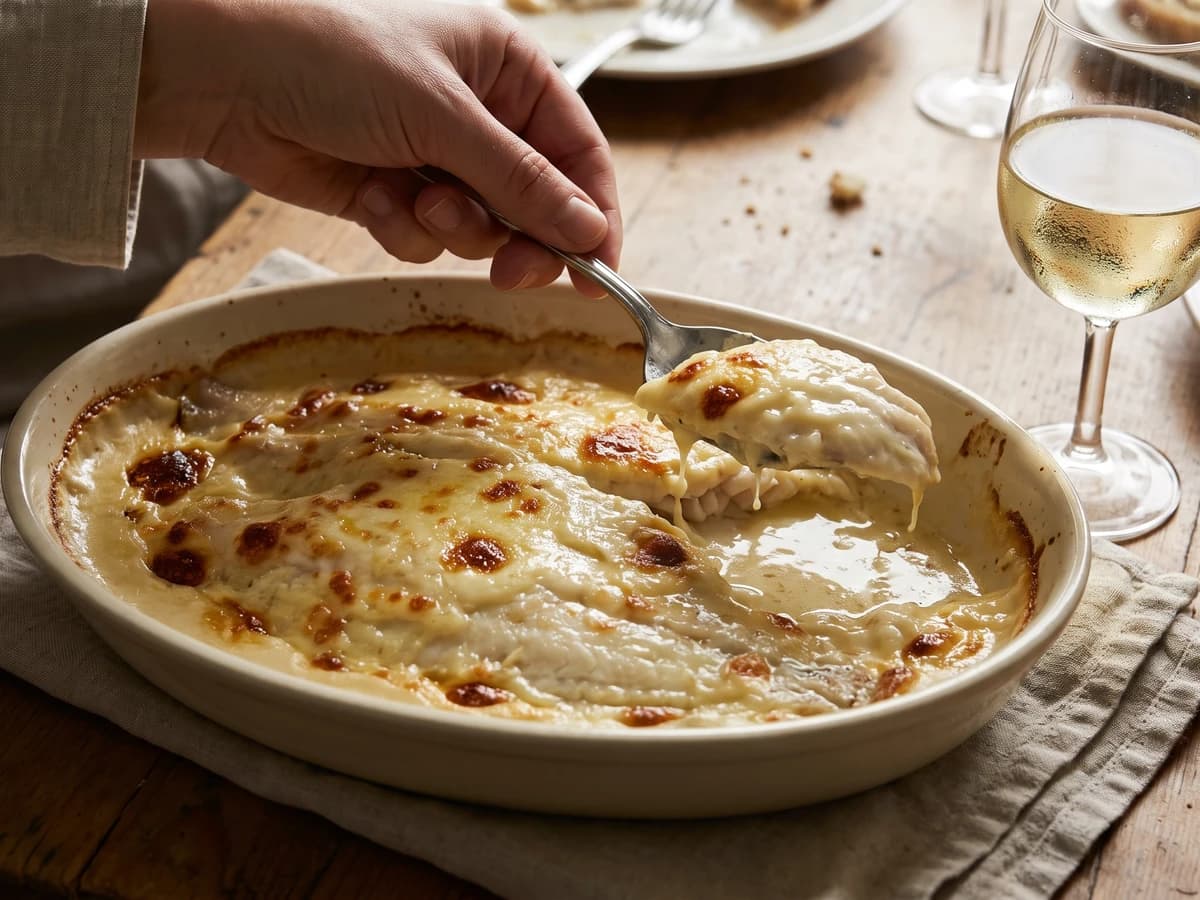
Sole poached at a tremble in fumet, napped with ivory Mornay, scattered with Gruyère and Parmesan, then glazed gold under the broiler: one quiet lesson in sauce, restraint, and heat.
Chef Juliette
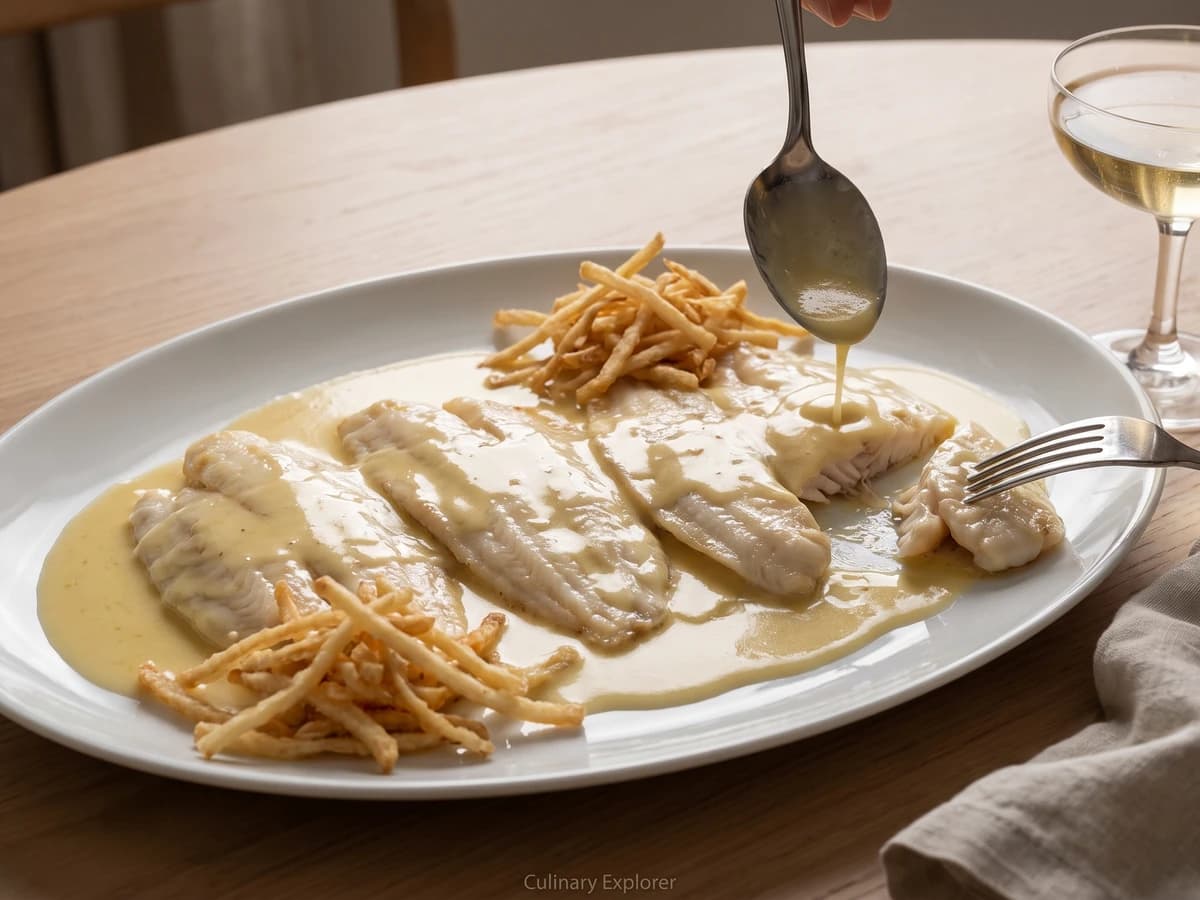
Champagne-poached sole under glossy velouté, with crisp julienne of sole at each side: a celebration dish that teaches reduction, mounting with butter, and timing the garnish at the last possible moment.

Chef Juliette
Sole Colbert turns exact knife work and truly hot fat into a generous dinner-party dish: a crisp golden fish whose bones lift away to make room for melting maître d'hôtel butter.