Chef Juliette
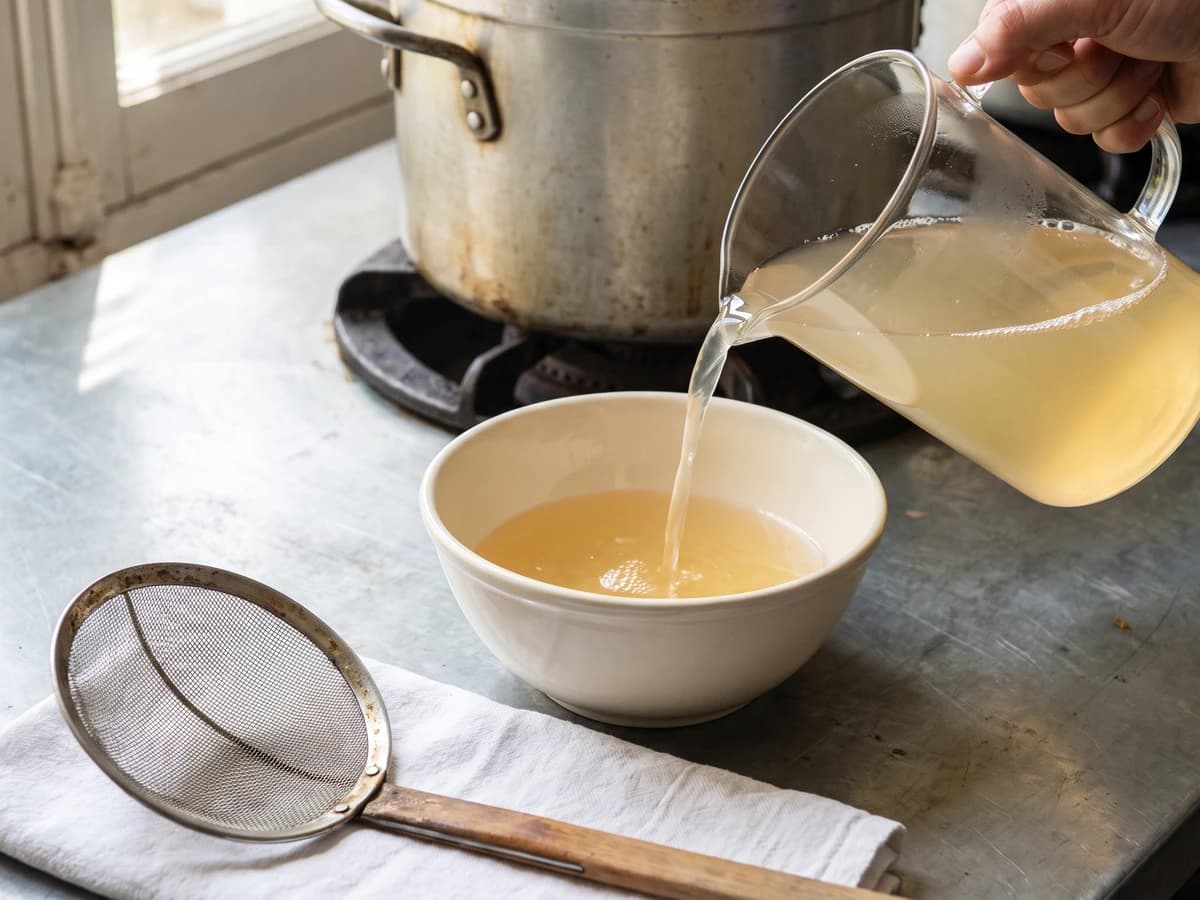
Ordinary or White Consommé
Beef shin, lean beef, and fowl begin in cold water and rise slowly toward a tremble. Skim before the boil, and you learn the quiet discipline that gives every clear French broth its backbone.
A cooking platform built around craft, culture, and the stories behind what we eat.
Created by Chef Juliette
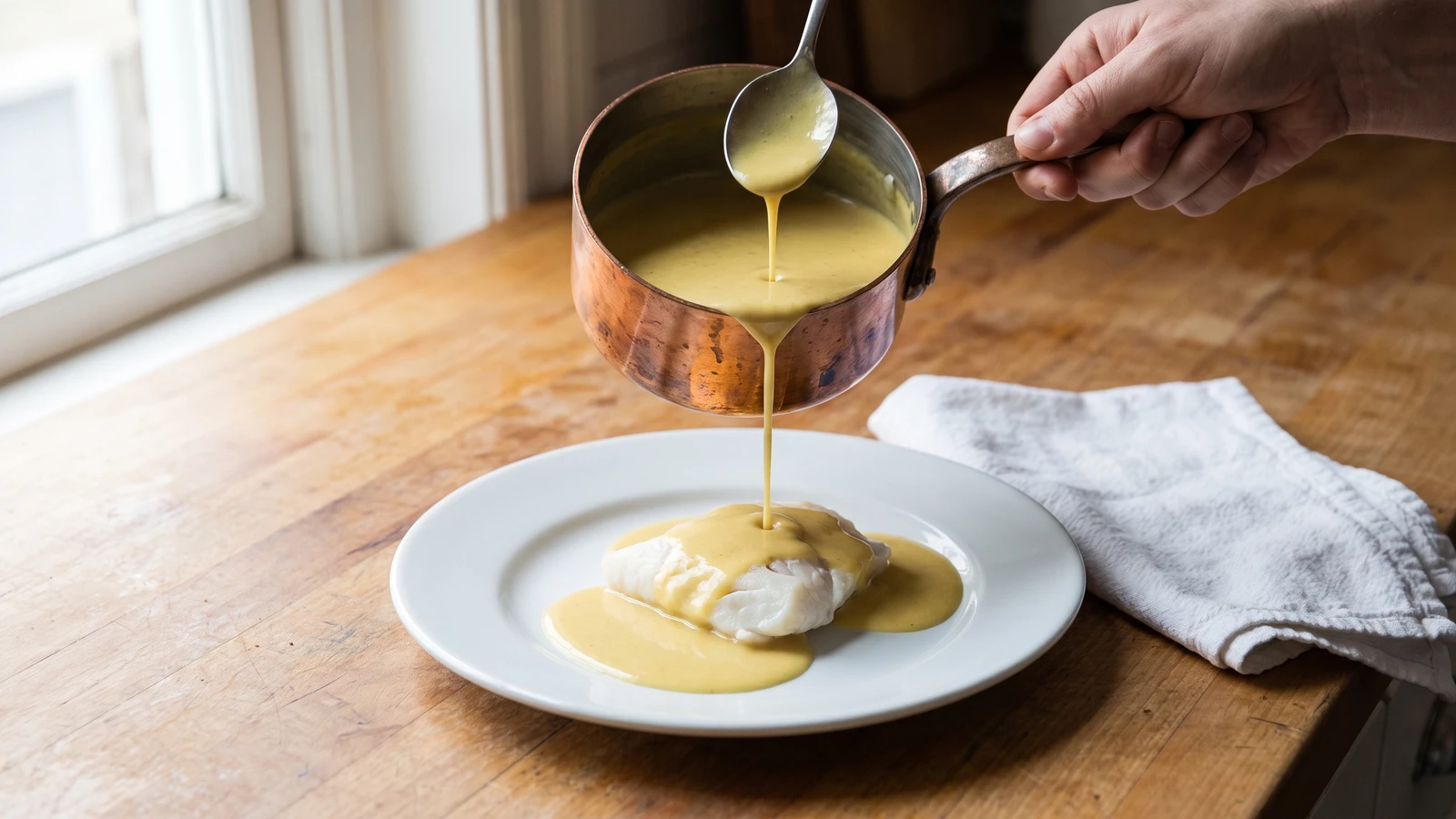
Based on No. 81, Curry Sauce, from Le Guide Culinaire (1907) by Auguste Escoffier
Sauce au Curry teaches the pale roux: bloom the spice without darkening the flour, simmer gently with white stock, then strain until butter-gold and silky enough to cloak fish, poultry, or eggs.
Sauce au Curry teaches the roux blanc, the pale roux, and one truth decides it: the curry needs enough heat to open in the butter, while the flour must cook without taking colour. It is a narrow path, but not a frightening one. Watch the pan rather than the clock, and keep the roux ivory beneath the warm ochre of the spice.
The original method assumed a saucier at the stove, white stock never off the fire, a tammy for straining, and a bain-marie waiting through service. At home, one heavy saucepan does the cooking, warmed stock prevents lumps, and an immersion blender with a fine sieve replaces the tammy honestly. Repeated reheating and indefinite holding were brigade scaffolding; strain once, skim once, and serve. The pale roux and the full three-quarter-hour simmer are the dish, so both stay. One cook, one stove, one evening.
The finished sauce should be supple and butter-gold, carrying onion, celery, mace, and curry without tasting harsh or powdery. Coconut milk may replace exactly one quarter of the stock, as the original variation permits, giving a rounder sauce for fish, poultry, or eggs. The four minutes spent cooking the flour and curry without browning are the minutes that matter most.
Sauce au curry belongs to the Parisian classical sauce repertoire, where curry powder arriving through maritime and colonial trade entered the established French grammar of butter, aromatics, flour, and white stock. It is not a regional Indian curry transferred whole to France: the standardized spice blend, roux-bound body, and strained finish belong to the French sauce kitchen. Coconut milk became an acknowledged variation, replacing one quarter of the liquid to soften the spice without changing the sauce's structure.
Quantity
½ cup (120 ml / 113 g)
Quantity
5⅔ cups (1.34 L / 907 g)
finely minced
Quantity
⅔ cup (160 ml / 76 g)
peeled and finely minced
Quantity
3 cups (710 ml / 302 g)
finely minced
Quantity
3 small sprigs
Quantity
1 small leaf
Quantity
¼ teaspoon (1.25 ml / 0.5 g)
Quantity
1¼ cups (300 ml / 151 g)
Quantity
2⅔ teaspoons (13 ml / 6 g)
Quantity
8 cups (1.9 L / 1.9 kg), or 6 cups (1.4 L / 1.4 kg) when using coconut milk
Quantity
2 cups (475 ml / 480 g), replacing 2 cups of the white stock
Quantity
as needed
| Ingredient | Quantity |
|---|---|
| unsalted butter | ½ cup (120 ml / 113 g) |
| yellow onionsfinely minced | 5⅔ cups (1.34 L / 907 g) |
| parsley rootpeeled and finely minced | ⅔ cup (160 ml / 76 g) |
| celeryfinely minced | 3 cups (710 ml / 302 g) |
| fresh thyme | 3 small sprigs |
| bay leaf | 1 small leaf |
| ground mace | ¼ teaspoon (1.25 ml / 0.5 g) |
| all-purpose flour | 1¼ cups (300 ml / 151 g) |
| mild curry powder | 2⅔ teaspoons (13 ml / 6 g) |
| unsalted white chicken or veal stock | 8 cups (1.9 L / 1.9 kg), or 6 cups (1.4 L / 1.4 kg) when using coconut milk |
| unsweetened full-fat coconut milk (optional) | 2 cups (475 ml / 480 g), replacing 2 cups of the white stock |
| fine sea salt | as needed |
Warm the white stock in a separate saucepan until hot but not boiling. If making the coconut variation, use 6 cups of stock and whisk in the 2 cups of coconut milk. Warm liquid enters a roux smoothly; cold liquid shocks the flour into stubborn little knots.
Melt the butter in a heavy 6-quart saucepan over medium heat. Add the onions, parsley root, celery, thyme, bay, mace, and a small pinch of salt. Cook for 15 to 20 minutes, stirring often, until the vegetables are soft and their edges have taken the faintest gold. Slight browning is correct, dark caramelization is not; the sauce must keep its pale, clean character.
Lower the heat. Sprinkle the flour and curry powder evenly over the vegetables, then stir continuously for about 4 minutes. The mixture will become thick and sandy, and the raw flour smell will give way to warm curry and butter. Keep it ivory beneath the spice. If the pan grows too hot, lift it from the burner and keep stirring; a lightly blond roux remains usable but makes a darker sauce, while anything scorched or acrid must be started again.
Take the pan off the heat and add about one cup of the warm liquid in a slow stream, whisking firmly into the roux. Once perfectly smooth, whisk in the remaining liquid in several additions. If lumps appear, stop pouring and beat the sauce smooth before adding more; if a few persist, use the immersion blender before simmering. Ça se rattrape. Return the pan to the heat, bring the sauce just to a boil, then lower it immediately.
Hold the sauce at a quiet simmer for 45 minutes, with only an occasional bubble breaking the surface. Stir across the bottom every few minutes so the flour cannot settle and catch. The simmer cooks away the last rawness, draws the aromatics into the stock, and rounds the curry; shorten it and the sauce tastes assembled rather than joined.
Remove the thyme and bay leaf. Blend the sauce until the vegetables are finely broken down, then press it through a fine-mesh sieve into a clean saucepan, working firmly with the back of a ladle. This replaces rubbing through a tammy while preserving the same smooth finish. The sauce should be nappé, lightly coating the back of a spoon. If it is too thick, whisk in hot stock a spoonful at a time; if thin, simmer it uncovered for a few minutes.
Reheat the strained sauce gently and skim away any butter that gathers on the surface. Taste and add salt only as needed, since the stock may already carry enough. Serve immediately, or hold briefly in a bain-marie, a hot-water bath, with the sauce pan set inside a larger pan of hot water kept below a simmer. If the sauce forms a skin, whisk it smooth; if it looks greasy, whisk in a spoonful of hot stock. Spoon generously over fish, shellfish, poultry, or egg preparations. À table!
1 serving (about 60g)
Culinary guides, cultural storytelling, and the editorial depth that makes cooking meaningful.
Discover Culinary ExplorerChef Juliette
Beef shin, lean beef, and fowl begin in cold water and rise slowly toward a tremble. Skim before the boil, and you learn the quiet discipline that gives every clear French broth its backbone.
Chef Juliette
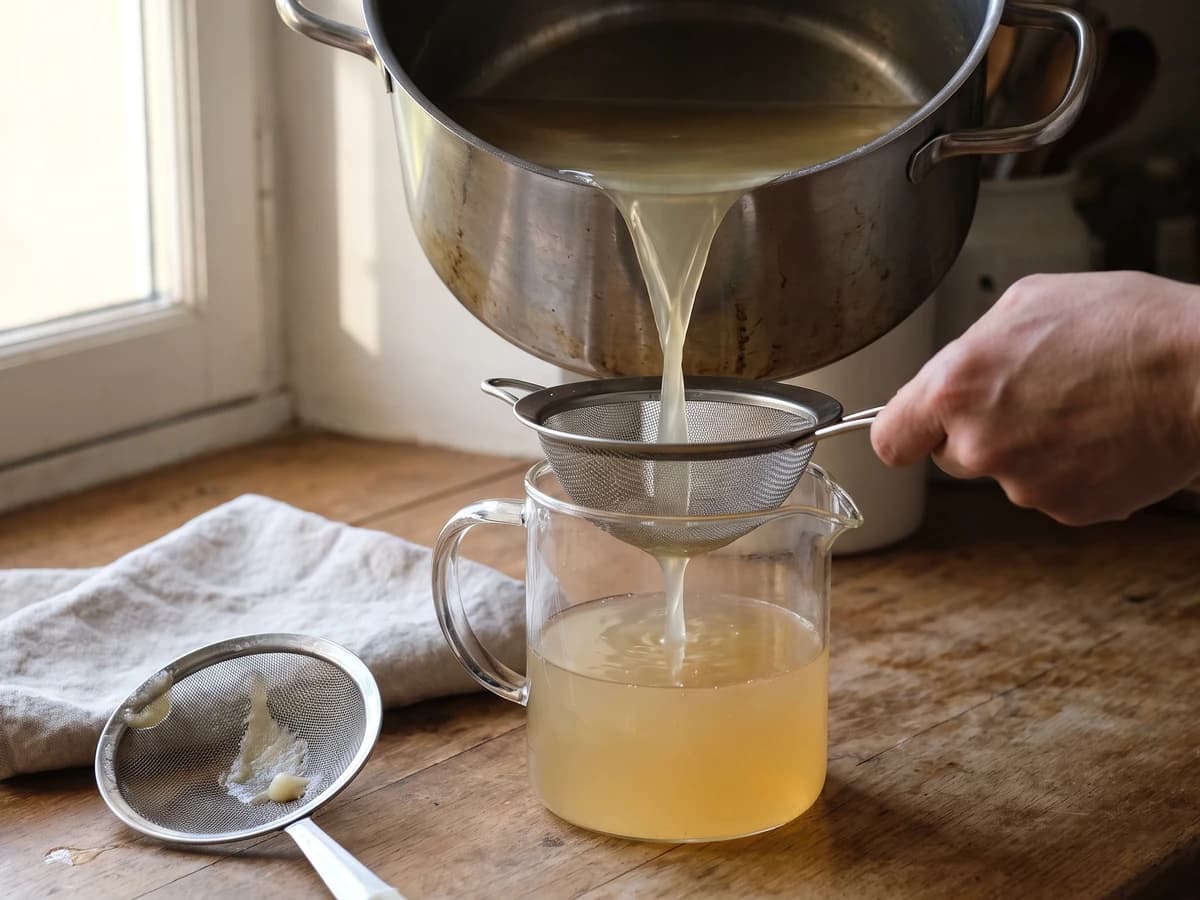
Break the veal bones small, then give them eight hours at a bare tremble. This pale, gelatinous fond becomes the quiet foundation beneath velouté, blanquette, and every sauce that must stay light.
Chef Juliette
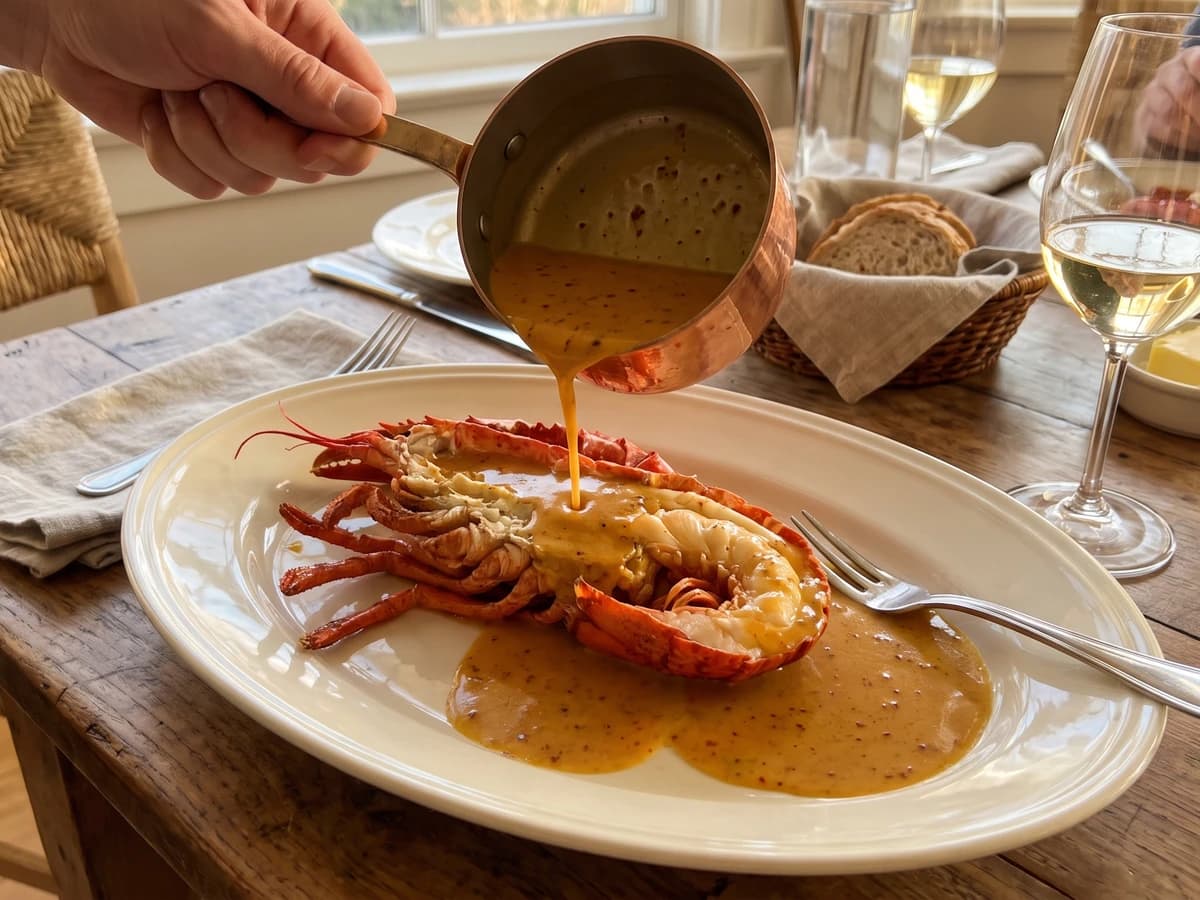
Sauce Orientale concentrates lobster-rich American Sauce with curry, then folds in cream away from the fire: a glossy, gently spiced derivative made for lobster, crayfish, and firm fish.
Chef Juliette
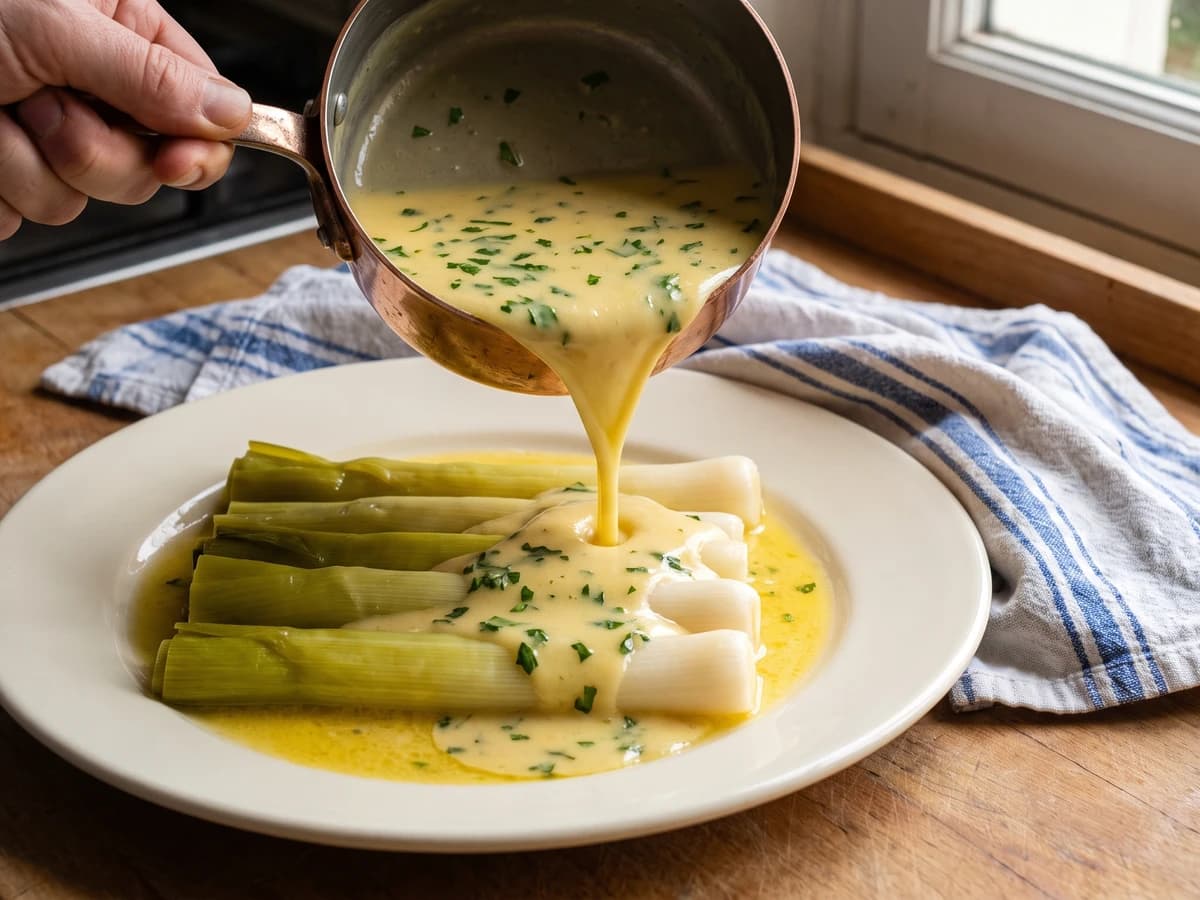
An old lesson in sauce families: Sauce Allemande takes mushroom liquor, then butter, lemon, and parsley, becoming a glossy Poulette for sheep's trotters, leeks, cauliflower, and anything needing gentle richness with a bright edge.