
Chef Juliette
John Dory (St. Pierre)
John Dory has the delicacy of sole and the firmness of turbot. A light flouring, a quick butter sauté, and nut-brown beurre noisette show exactly why looks never mattered.
A cooking platform built around craft, culture, and the stories behind what we eat.
Created by Chef Juliette
Based on No. 779, The Poaching of Fish, from Le Guide Culinaire (1907) by Auguste Escoffier
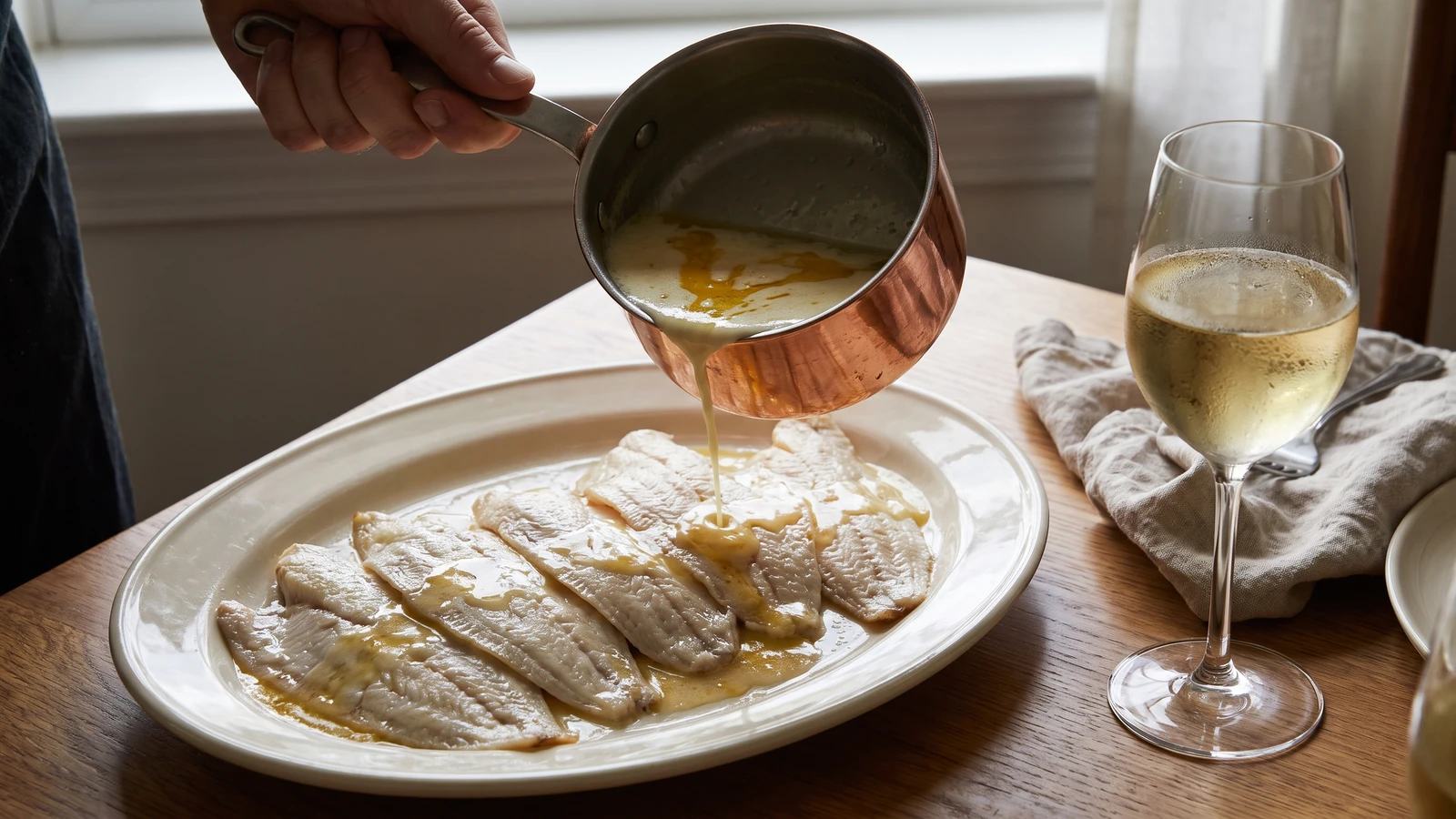
Poisson poché au fumet teaches the quietest rule in fish cookery: use very little perfect fumet, poach gently, then reduce that same liquor into a glossy sauce that naps the fish.
Poisson poché au fumet teaches one true thing: the poaching liquor is already the future sauce. Use very little fumet, make certain it is pale, clean, and free of bitterness, then keep the heat gentle. Weak fumet leaves nothing to reduce; overcooked fumet concentrates every harsh note.
The original method assumed very white stock never off the fire, a saucier ready with the accompanying sauce, and enough hands to baste a whole sole, brill, or small turbot. Here eight fillets cook in one buttered, covered dish, and their liquor becomes a simple sauce with cream and cold butter. The separate sauce station was brigade scaffolding; the shallow poach and reuse of its liquor are the dish itself. The buttered-paper cover goes entirely, as the source advises, and an ovenproof lid or foil becomes its clean home equivalent. One cook, one stove, one evening.
When it is right, the fish parts in moist pearly flakes and the ivory sauce lies over it with a butter-bright gloss. Taste the fumet before touching the pan. If it is bitter, replace it now, because neither cream nor hope will hide it later.
Poisson poché au fumet belongs to classical Parisian service, where sole, brill, and turbot from Channel and Atlantic ports were cooked in shallow liquor, then sent to the saucier so that liquor could strengthen the accompanying sauce. The source's “chicken-turbot” means a small turbot, not poultry, a market-size distinction that shows how precisely fish were once selected. Poaching here never means submerging fish in a cauldron; it means covered, gentle cooking in a mere veil of fumet, with no drop wasted.
Quantity
8 fillets (about 1½ pounds / 680 g total)
pin bones removed
Quantity
4 tablespoons (60 ml / 57 g)
divided, with 3 tablespoons chilled and cubed
Quantity
¾ teaspoon (about 4 ml / 4.5 g)
Quantity
¾ cup (180 ml / 180 g)
Quantity
½ cup (120 ml / 120 g)
with 1 teaspoon held cold for rescuing the sauce if needed
| Ingredient | Quantity |
|---|---|
| skinless sole filletspin bones removed | 8 fillets (about 1½ pounds / 680 g total) |
| unsalted butterdivided, with 3 tablespoons chilled and cubed | 4 tablespoons (60 ml / 57 g) |
| fine sea salt | ¾ teaspoon (about 4 ml / 4.5 g) |
| very white fish fumet | ¾ cup (180 ml / 180 g) |
| heavy creamwith 1 teaspoon held cold for rescuing the sauce if needed | ½ cup (120 ml / 120 g) |
Heat the oven to 325°F (165°C) and warm an oval serving platter. Taste the fish fumet before proceeding. It should be delicate, clean, and faintly sweet, with no bitterness or stale marine smell. If it tastes harsh, replace it; reduction only makes a fault louder.
Butter a shallow ovenproof sauté pan or baking dish with 1 tablespoon (15 ml / 14 g) of the butter. Pat the fillets dry, lay them in a snug single layer, and season evenly with the salt. Pour the fish fumet around the fish, not directly over it; the liquid should make only a shallow veil across the bottom. Cover tightly with the lid or foil. Do not use buttered paper.
Set the covered dish in the oven and poach for 7 minutes. Open it, baste each fillet once with the liquor, then cover and continue for 2 to 5 minutes, depending on thickness. The liquid should barely quiver at the edges, never boil. If it bubbles hard, lift the dish from the oven, lower the temperature by 25°F (15°C), and let the liquor settle before returning it. The fish is ready when the thickest part turns pearly and separates under gentle pressure, or reaches 145°F (63°C).
Lift the fillets carefully with a wide fish spatula and arrange them on the warm platter without stacking. Cover with a warm lid or a loose sheet of foil while the sauce is finished. Strain the poaching liquor through a fine sieve into a small heavy saucepan. Work gently, because properly poached sole is tender enough to break under its own weight.
Bring the strained poaching liquor to a lively simmer and reduce it to about ⅓ cup (80 ml), watching closely during the final minute. Add all but the reserved teaspoon of cream and simmer until the sauce reaches nappe, a consistency that coats the back of a spoon and holds a clean line when traced with a finger. If it becomes too thick or salty, loosen it with a spoonful of cream; if it runs like milk, reduce it a little longer.
Take the saucepan completely off the heat. Monter au beurre, mount with butter, by whisking in the remaining 3 tablespoons (45 ml / 43 g) of chilled butter one cube at a time. Stop when the sauce is smooth, glossy, and softly thickened. Do not boil it again. If it turns oily, ça se rattrape: put the reserved teaspoon of cold cream in a clean bowl, then whisk in the broken sauce gradually until the emulsion comes back together.
Taste once for salt, remembering that the fish was already seasoned. Spoon the sauce generously over every fillet, covering rather than decorating them, and let the excess pool on the platter. Serve immediately on warm plates. À table!
1 serving (about 200g)
Culinary guides, cultural storytelling, and the editorial depth that makes cooking meaningful.
Discover Culinary ExplorerChef Juliette
John Dory has the delicacy of sole and the firmness of turbot. A light flouring, a quick butter sauté, and nut-brown beurre noisette show exactly why looks never mattered.

Chef Juliette
Fresh haddock proves its delicacy in the meunière pan: a fine flour crust, moist pearly flakes, and beurre noisette sharpened with lemon and parsley, ready from one skillet in half an hour.

Chef Juliette
Éperlans à l’Anglaise turns small fish into a lesson in disciplined coating: boned smelts under a close, crisp crumb, pan-fried in clarified butter and finished with bright, half-melted maître d’hôtel butter.

Chef Juliette
Tiny smelts, shallot, mushrooms, white wine, gratin sauce, and fine bread raspings meet a fierce oven, where the fish must turn tender in the same breath the buttered crust bronzes.