
Chef Juliette
John Dory (St. Pierre)
John Dory has the delicacy of sole and the firmness of turbot. A light flouring, a quick butter sauté, and nut-brown beurre noisette show exactly why looks never mattered.
A cooking platform built around craft, culture, and the stories behind what we eat.
Created by Chef Juliette
Based on No. 772, Sardines, from Le Guide Culinaire (1907) by Auguste Escoffier
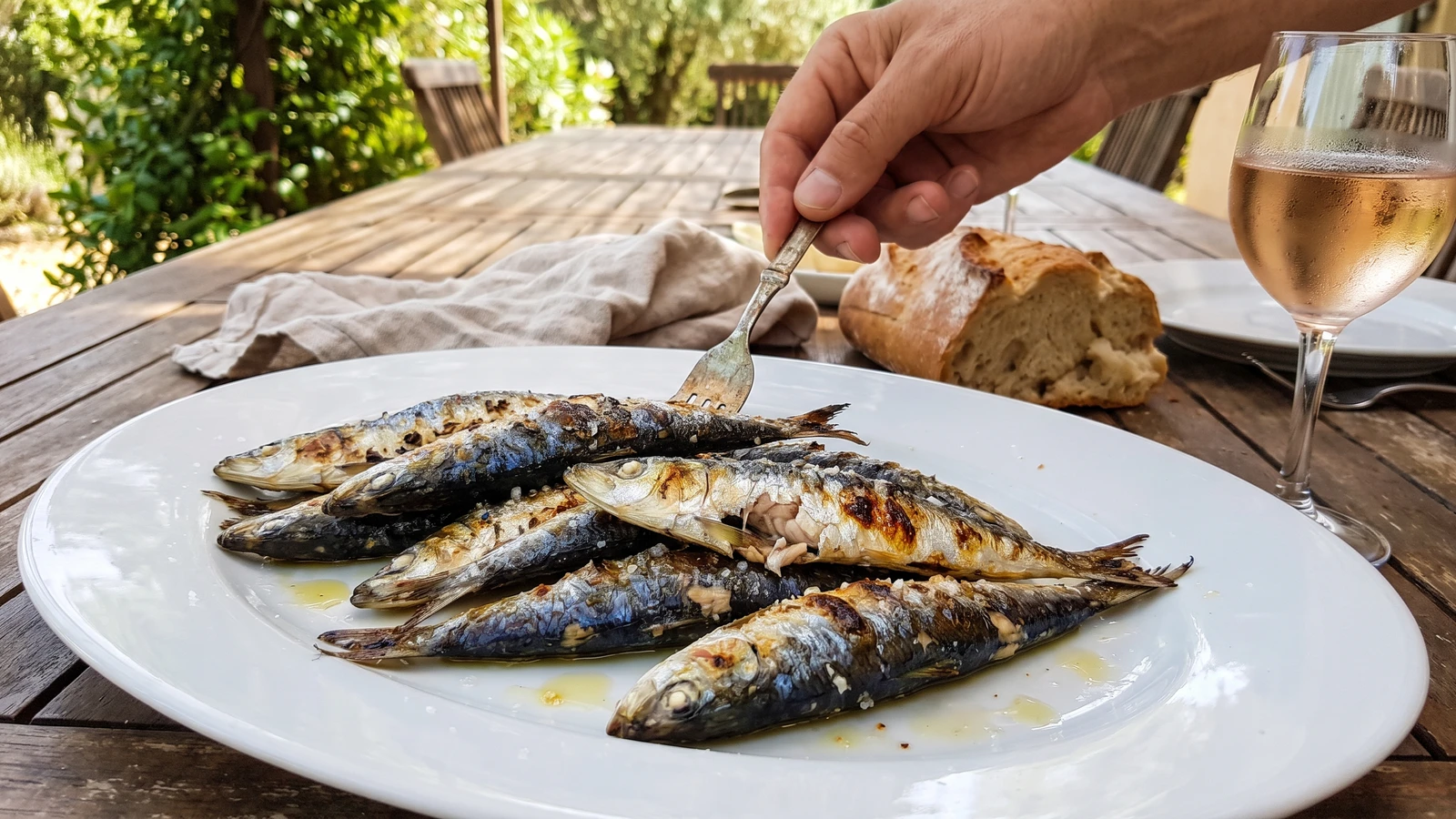
Sardines Grillées teach the discipline of direct heat: dry fish, fierce coals, one clean turn. Their skins blister silver and bronze while the rich flesh stays succulent enough to eat with your fingers.
Sardines Grillées (grilled sardines) teach direct heat in its purest form. A dry fish laid over fierce, clean coals will blister rather than stew, its own oil carrying the taste of the fire into the flesh. Cooking well is not cooking fancy. The discipline lies in leaving the fish alone long enough to brown.
The source entry is not a brigade recipe. It judges sardines generally inferior and directs them toward sprat preparations, with no sauce, sequence, proportion, or referenced preparation to preserve. That judgment is understandable for oily fish held too long, because sardines deteriorate quickly; a well-iced, bright-eyed catch gives the cook different raw material. This version changes the premise, not an unwritten formula: excellent fresh sardines become the main dish.
A port cook could cover a broad brazier with dozens of fish. For four people, 16 sardines and a small charcoal grill are the honest scale; a hinged basket can replace practiced hands, and there is no saucier or stockpot to imitate because the fire builds the flavor. Bulk handling is brigade scaffolding and can go. Salt, dry skin, fierce coals, and one patient turn are the dish and must stay. Dry the fish thoroughly, then wait until the skin releases before turning. That is the step that decides everything.
Sardines grillées are cooked along both French coasts, but the sardinade, a communal sardine grill, belongs especially to the Mediterranean ports of Provence, including Marseille and Martigues, where the fish go whole onto braziers and are eaten outdoors with the fingers. At the shore, sardines landed that morning are often grilled without gutting or scaling; their belly fat bastes the flesh, and a faint bitterness is accepted as part of the taste. As the preparation traveled from quay-side gatherings to home courtyards, gutting market fish became the sensible adaptation, preserving their clean oily richness when catch and fire are no longer side by side.
Quantity
16 medium (about 2 lb 10 oz / 1.2 kg)
gutted; heads, skin, and backbones left on
Quantity
2 teaspoons (10 ml / 12 g)
Quantity
2 teaspoons (10 ml / 9 g)
for oiling the grill grate
| Ingredient | Quantity |
|---|---|
| whole fresh sardinesgutted; heads, skin, and backbones left on | 16 medium (about 2 lb 10 oz / 1.2 kg) |
| fine sea salt | 2 teaspoons (10 ml / 12 g) |
| extra-virgin olive oilfor oiling the grill grate | 2 teaspoons (10 ml / 9 g) |
Light enough hardwood lump charcoal to cover half the grill in one dense layer. When the coals glow red beneath a light gray coating, spread them into a two-zone fire: one fiercely hot side for grilling and one cooler side for managing flare-ups. Set the clean grate about 4 inches (10 cm) above the coals and let it become thoroughly hot, roughly 500 to 550°F (260 to 290°C) over the direct zone.
Keep the sardines cold while the fire matures. Check each belly cavity for remaining innards, rinse only the cavities briefly under cold water if needed, then wipe the fish inside and out. Loose scales can be brushed away with a damp hand; vigorous scraping damages the delicate skin. Lay the sardines on a wire rack and blot them until no moisture marks a fresh towel.
Season the sardines inside and out with all but a small pinch of the salt. Refrigerate them uncovered on the rack for 15 minutes, then blot away any beads of moisture drawn to the surface. This short salage, or dry salting, firms the skin and seasons the flesh without curing it. Do not marinate them. Wet fish steams, and acid makes this tender flesh more likely to break.
Hold a tightly folded towel with long tongs, moisten it lightly with the olive oil, and wipe the hot grate. If using a fish basket, oil its inside instead. Arrange the sardines perpendicular to the grate bars with a little room between them, close the basket without crushing them if using one, and grill uncovered for 2½ to 3 minutes. Do not prod them. The lower skin should bronze and blister, and the flesh along the belly opening will begin turning opaque.
Test one sardine with a wide, thin spatula. If the skin clings, stop and give it another 30 seconds; properly browned fish releases from a clean grate. Ça se rattrape. If a skin tears, support the fish with a second spatula, turn it gently, and finish it on the cooler side so the exposed flesh stays together. Turn every sardine once and grill the second side for 1½ to 2½ minutes. Move the fish temporarily to the cooler zone if dripping oil causes flare-ups, then return them when the flames subside.
Lift the sardines when their skins are silver, bronze, and lightly charred, the flesh at the belly is opaque but still moist, and the backbone loosens easily from the upper fillet. An instant-read thermometer inserted into the thickest fish should register 145°F (63°C). Arrange them immediately on a broad platter and finish with the reserved pinch of salt. At the table, lift away the upper fillet, pull out the backbone in one piece, and eat the lower fillet from the skin. Fingers are entirely correct. À table!
1 serving (about 170g)
Culinary guides, cultural storytelling, and the editorial depth that makes cooking meaningful.
Discover Culinary ExplorerChef Juliette
John Dory has the delicacy of sole and the firmness of turbot. A light flouring, a quick butter sauté, and nut-brown beurre noisette show exactly why looks never mattered.

Chef Juliette
Fresh haddock proves its delicacy in the meunière pan: a fine flour crust, moist pearly flakes, and beurre noisette sharpened with lemon and parsley, ready from one skillet in half an hour.

Chef Juliette
Éperlans à l’Anglaise turns small fish into a lesson in disciplined coating: boned smelts under a close, crisp crumb, pan-fried in clarified butter and finished with bright, half-melted maître d’hôtel butter.

Chef Juliette
Tiny smelts, shallot, mushrooms, white wine, gratin sauce, and fine bread raspings meet a fierce oven, where the fish must turn tender in the same breath the buttered crust bronzes.