Chef Juliette
Ordinary or White Consommé
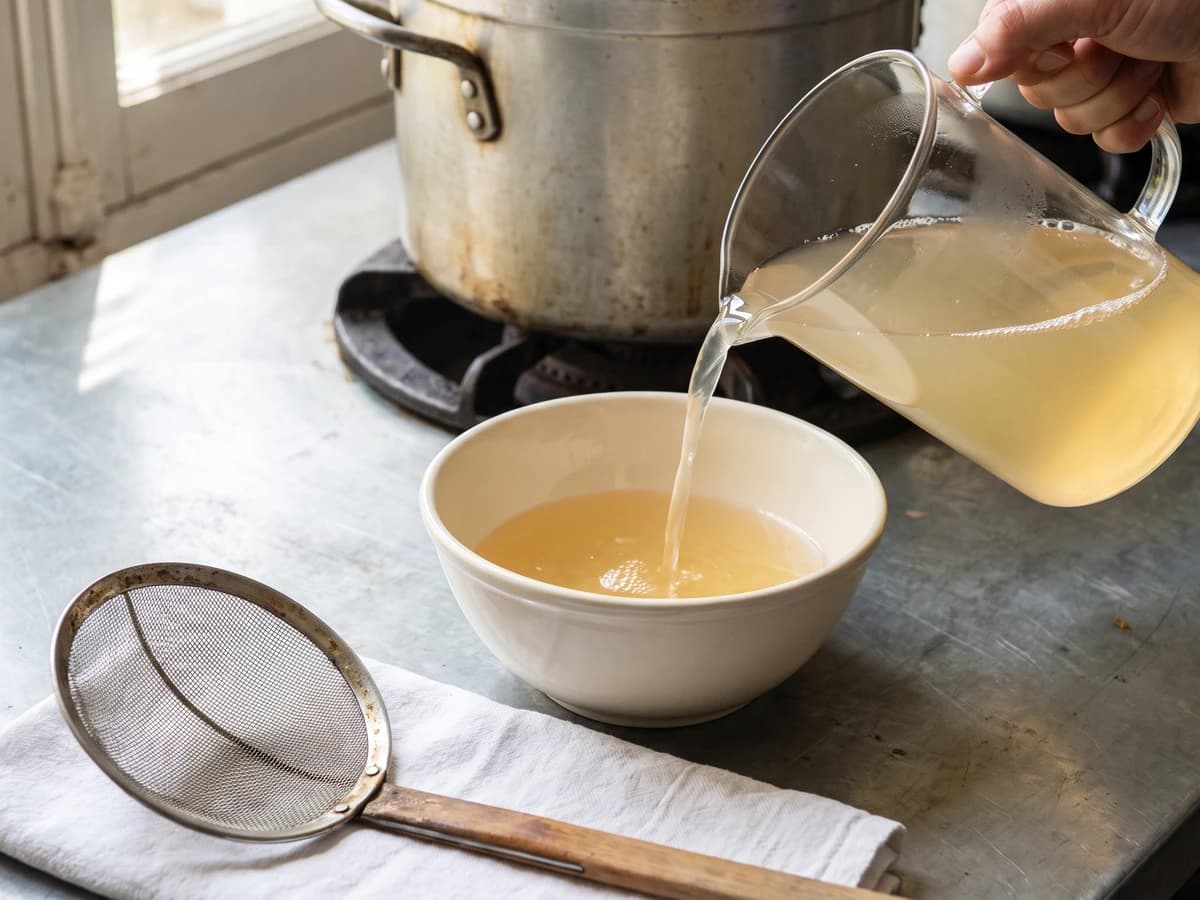
Beef shin, lean beef, and fowl begin in cold water and rise slowly toward a tremble. Skim before the boil, and you learn the quiet discipline that gives every clear French broth its backbone.
A cooking platform built around craft, culture, and the stories behind what we eat.
Created by Chef Juliette
Based on No. 77, “Escoffier” Cherry Sauce, from Le Guide Culinaire (1907) by Auguste Escoffier
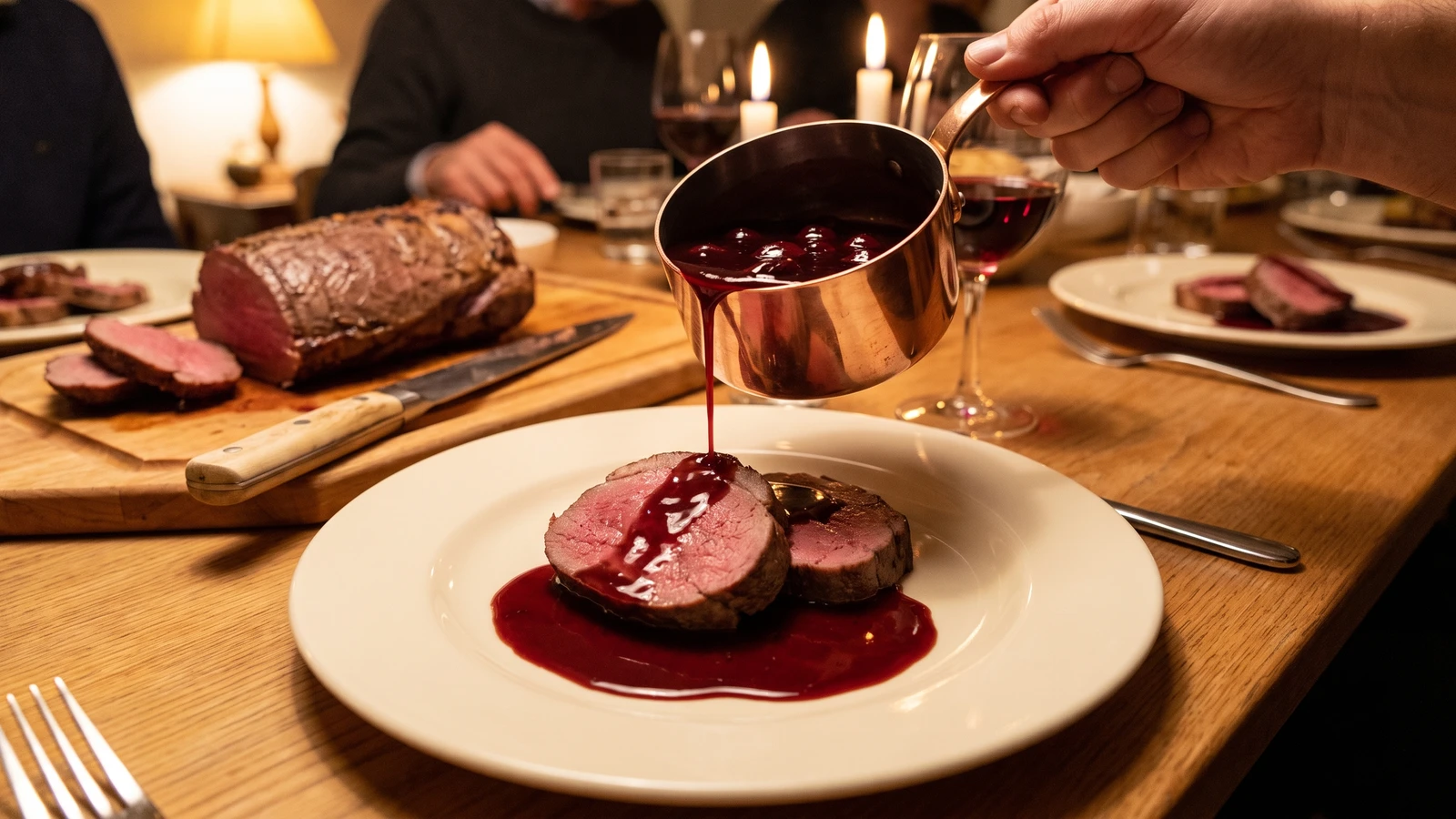
A wine-dark cherry accompaniment for venison and small game, served cold with clean brightness or warmed gently to a gloss, exactly as the source directs and without invented additions.
Sauce aux Cerises « Escoffier » (Escoffier Cherry Sauce) teaches a discipline more demanding than improvisation: when the source gives you a finished preparation, preserve it. The one true thing to know before touching a pan is that this entry concerns service, hot or cold, not the reconstruction of a formula it never supplies.
Many classical sauces assumed a saucier on staff, a stock never off the fire, and equipment built for constant service. This entry assumes something more direct: a ready-made sauce. The honest home equivalent is that same finished preparation, portioned from its container and either served cold or warmed in a small heavy saucepan. Bulk handling is brigade scaffolding and goes; the established sweet-tart balance and its companionship with game are the dish and stay. One cook, one stove, one evening.
There are no original proportions to reduce and no referenced foundation to reproduce, so the home version changes only the batch size and vessel. No fond, roux, wine, spice, additional fruit, or garnish has been invented. The moment that decides the sauce is the warming: keep it below a boil so its dark gloss and clean cherry character remain intact.
Sauce aux Cerises « Escoffier » belongs to the formal French game table rather than to a particular regional larder, with venison and small ground game named as its companions and saddle of venison singled out for special praise. The source preserves a revealing classical practice: certain proprietary condiments were purchased ready-made and judged by their service, so this entry deliberately supplies neither formula nor regional claim. Its use both hot and cold places it somewhere between a composed game sauce and a table condiment.
Quantity
8 cups (1.9 L / approximately 2 kg)
| Ingredient | Quantity |
|---|---|
| ready-made « Escoffier » Cherry Sauce | 8 cups (1.9 L / approximately 2 kg) |
Begin with the ready-made sauce named by the source, fully prepared according to its label. Measure the batch and stir it gently until uniform. This recipe begins at the finished-sauce stage by design; adding cherries, stock, wine, roux, or spices would create another sauce under this one's name.
For cold service, spoon only the amount needed into a sauceboat and stir until smooth and flowing. If refrigeration has made it stiff, let the covered portion lose its deepest chill briefly, following the storage directions on its label, then stir again. Serve it cool, not rigid, so it coats the venison rather than sitting on it.
For hot service, reserve some sauce unheated and place the required portion in a heavy saucepan. Warm it over the gentlest heat, scraping the bottom and corners steadily, until it gleams and falls from the spoon in a broad ribbon. Never boil it. If bubbling tightens the sauce, remove the pan from the heat and whisk in reserved cold sauce one spoonful at a time. If the bottom catches, pour the untouched sauce immediately into a clean pan without scraping the scorched layer. Ça se rattrape.
Set the sauce beside carved venison or small ground game and let each diner take enough to glaze the meat without burying it. A roasted saddle of venison is the source's chosen splendor, particularly with the sauce passed hot in a warmed sauceboat. Serve the cold version from a cool sauceboat when the game itself is presented cold. À table!
1 serving (about 63g)
Culinary guides, cultural storytelling, and the editorial depth that makes cooking meaningful.
Discover Culinary ExplorerChef Juliette
Beef shin, lean beef, and fowl begin in cold water and rise slowly toward a tremble. Skim before the boil, and you learn the quiet discipline that gives every clear French broth its backbone.
Chef Juliette
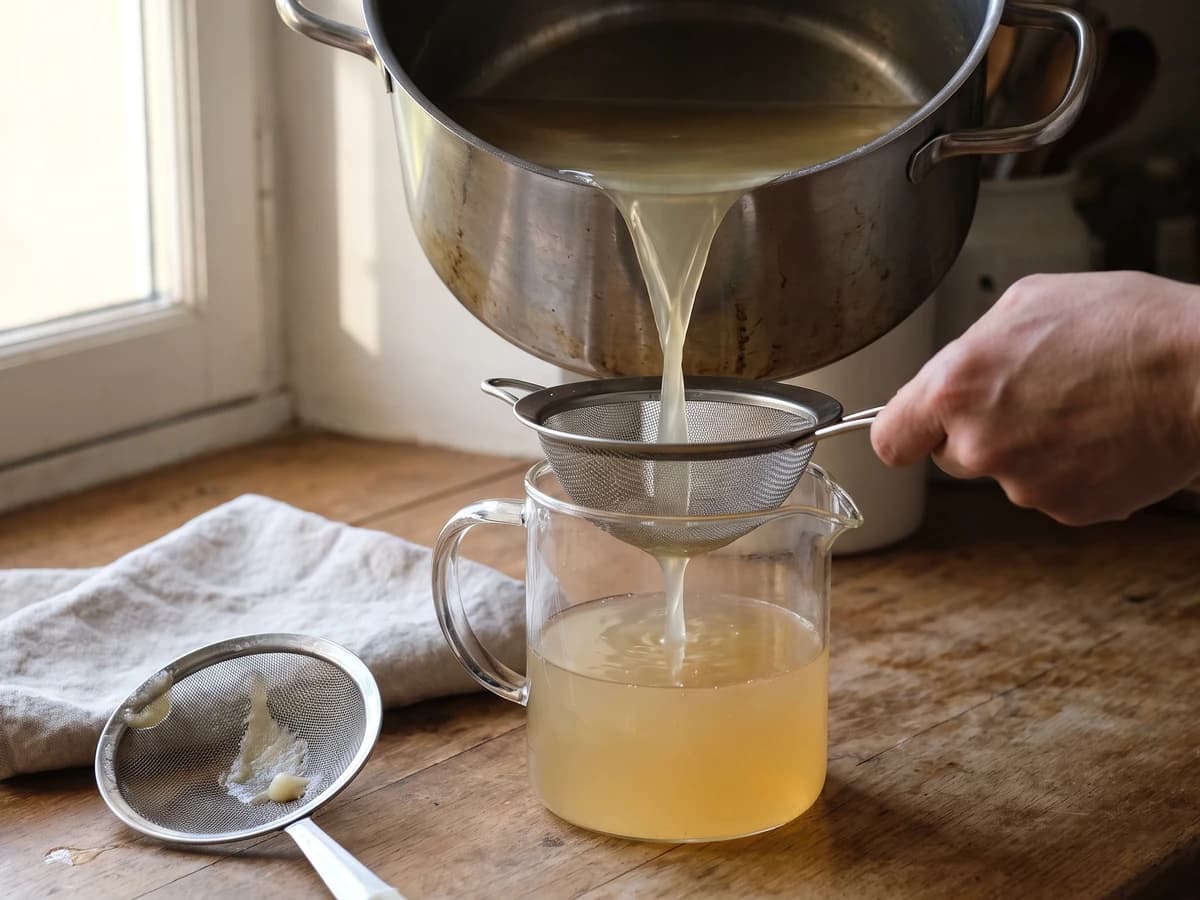
Break the veal bones small, then give them eight hours at a bare tremble. This pale, gelatinous fond becomes the quiet foundation beneath velouté, blanquette, and every sauce that must stay light.
Chef Juliette
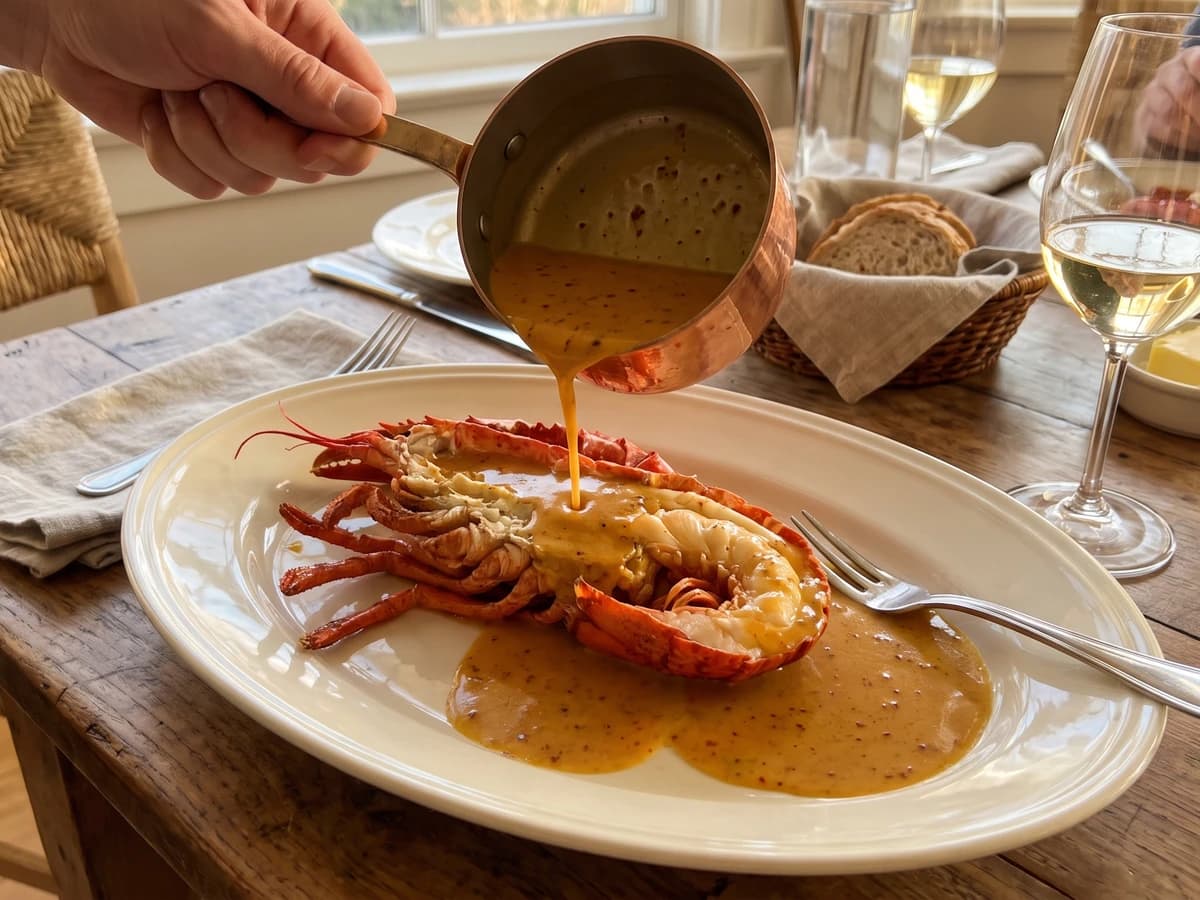
Sauce Orientale concentrates lobster-rich American Sauce with curry, then folds in cream away from the fire: a glossy, gently spiced derivative made for lobster, crayfish, and firm fish.
Chef Juliette
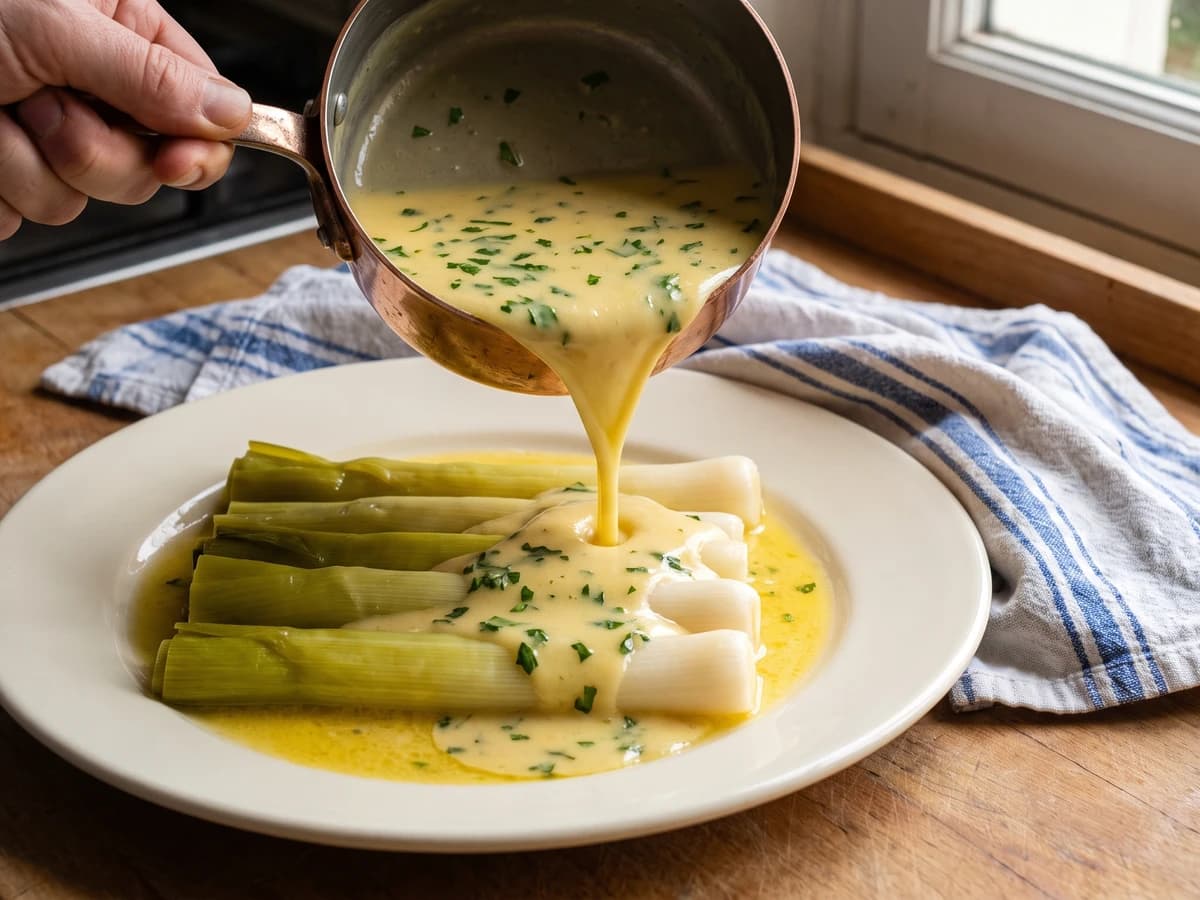
An old lesson in sauce families: Sauce Allemande takes mushroom liquor, then butter, lemon, and parsley, becoming a glossy Poulette for sheep's trotters, leeks, cauliflower, and anything needing gentle richness with a bright edge.