
Chef Juliette
John Dory (St. Pierre)
John Dory has the delicacy of sole and the firmness of turbot. A light flouring, a quick butter sauté, and nut-brown beurre noisette show exactly why looks never mattered.
A cooking platform built around craft, culture, and the stories behind what we eat.
Created by Chef Juliette
Based on No. 768, Mussels, from Le Guide Culinaire (1907) by Auguste Escoffier
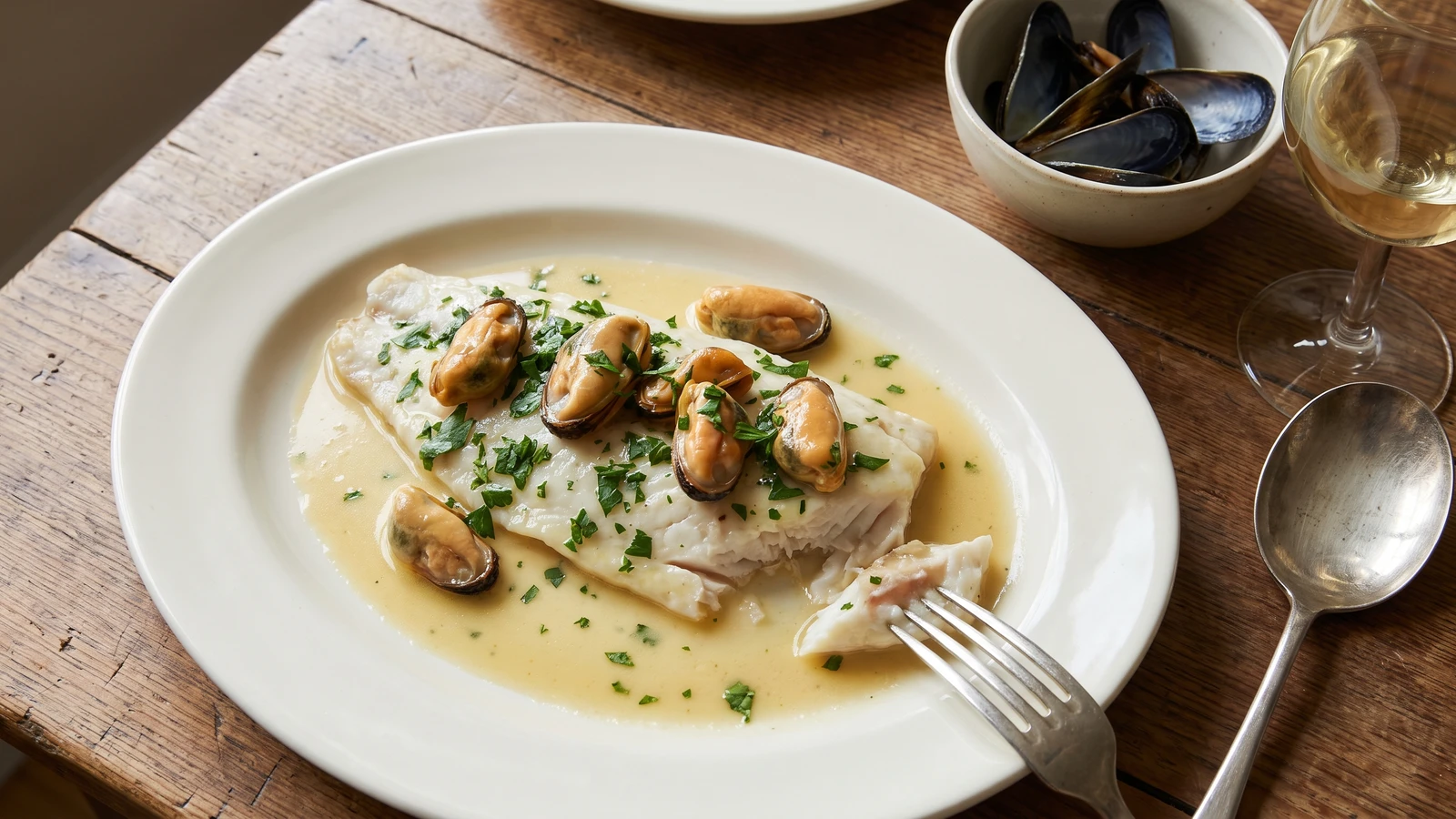
Moules en garniture prove that a garnish can season the whole plate: tender mussels, impeccably filtered briny liquor, and butter, placed over fish only when the sauce is ready.
Moules en garniture (mussels for garnishing fish) teach a quiet classical principle: a garnish must belong to the sauce, not merely sit on the plate. Their flesh crowns the fish, but their filtered liquor does the deeper work, sharpening the sauce with the taste of the sea. The one true thing to know before touching the pan is this: a mussel is done the instant its shell opens.
The book gives only their job, garnish, because its kitchen assumed the fish and sauce were already in motion, a saucier stood at the next station, and a shellfish pan and fine cloth were within reach. At home, one wide lidded pan opens the moules and reduces their liquor, while a damp paper filter stands in for cloth. No stockpot and no salamander are needed. The separate station is brigade scaffolding and goes; the opening, filtering, and last-second warming are the dish and stay. Six hundred eighty grams gives a proper garnish for four fish portions. One cook, one stove, one evening.
These are not a bowl of moules marinière, and turning them into one would ignore the source. They remain a supporting preparation, plump enough to crown the fish and restrained enough to strengthen its sauce. Lift each mussel as it opens, then filter the liquor impeccably. That is the step that matters most.
Moules used as a fish garnish belong to the classical fish kitchens of France's Channel and Atlantic coasts, where Normandy and Brittany had abundant shellfish beside the day's catch. Grand kitchens carried that coastal practice into the national canon by treating mussels not as decoration but as a seasoning garnish, their filtered cooking liquor entering the sauce before their flesh crowned the plate. The terse instruction that they are only used as garnish fixes their classical purpose and distinguishes this preparation from moules marinière served by the bowlful.
Quantity
1½ pounds (680 g)
scrubbed and debearded
Quantity
3 tablespoons (45 ml / 42 g)
divided, with 2 tablespoons kept cold
Quantity
1 large, about ⅓ cup (80 ml / 50 g)
finely minced
Quantity
½ cup (120 ml / 120 g)
Quantity
2 tablespoons (30 ml / 8 g)
stems separated and leaves finely chopped
Quantity
¼ teaspoon (1.25 ml / 0.6 g)
Quantity
Up to 2 tablespoons (30 ml / 30 g)
only if needed to rescue the butter finish
| Ingredient | Quantity |
|---|---|
| live musselsscrubbed and debearded | 1½ pounds (680 g) |
| unsalted butterdivided, with 2 tablespoons kept cold | 3 tablespoons (45 ml / 42 g) |
| shallotfinely minced | 1 large, about ⅓ cup (80 ml / 50 g) |
| dry white wine | ½ cup (120 ml / 120 g) |
| flat-leaf parsleystems separated and leaves finely chopped | 2 tablespoons (30 ml / 8 g) |
| freshly ground black pepper | ¼ teaspoon (1.25 ml / 0.6 g) |
| cold water (optional)only if needed to rescue the butter finish | Up to 2 tablespoons (30 ml / 30 g) |
Rinse the moules briefly under cold running water, scrub away clinging grit, and pull each beard toward the shell hinge. Discard cracked shells and any open mussel that does not close when tapped. Never soak live moules in fresh water; it weakens them and washes away the clean sea liquor this preparation needs.
Melt 1 tablespoon of the butter in a wide lidded sauté pan over medium heat. Add the shallot and parsley stems, then cook for about 2 minutes until the shallot softens without taking colour. Pour in the wine, add the pepper, and bring the cuisson (aromatic cooking liquid) to a full simmer before the moules enter. The lively liquid opens them quickly, which keeps their flesh tender.
Add the moules, cover tightly, and raise the heat to medium-high. Shake the pan once, then cook for 2 minutes. Open the lid and use a slotted spoon to remove every mussel whose shell has opened; cover again and check at 30-second intervals. Do not hold the first ones hostage while waiting for the last. Discard any that remain closed after about 5 minutes.
Pour the pan liquor through a fine-mesh sieve lined with a damp, unscented paper coffee filter. Leave the final spoonful in the pan if it carries visible grit. Shell the moules over their bowl, then pass any collected juice through the same filter. If sediment slips through, let the liquor stand for 2 minutes and decant it slowly through a fresh filter. Ça se rattrape. Cover the mussel meat so its surface does not dry.
Wipe the pan clean and measure ½ cup of the filtered liquor into it, reserving the rest for the accompanying fish sauce. Taste before reducing. If it is pleasantly briny, simmer it to about ⅓ cup; if it is already salty, warm it for only 30 seconds and reduce no further. Take the pan off the heat and monter au beurre (finish by whisking in cold butter), adding the remaining 2 tablespoons a little at a time until the liquor is pale, glossy, and lightly thickened. If the butter separates, move the pan completely off the heat and whisk in 1 teaspoon of cold water before adding any remaining butter.
Return the shelled moules to the glaze and turn them gently for 20 to 30 seconds, only until warm. Do not let them simmer again or they will tighten. Fold in the chopped parsley. Place 6 to 8 moules over each portion of cooked fish, spoon a little glaze around them, and season the fish's finished sauce with the reserved liquor one spoonful at a time. It should taste more of the sea, not more of salt. À table!
1 serving (about 75g)
Culinary guides, cultural storytelling, and the editorial depth that makes cooking meaningful.
Discover Culinary ExplorerChef Juliette
John Dory has the delicacy of sole and the firmness of turbot. A light flouring, a quick butter sauté, and nut-brown beurre noisette show exactly why looks never mattered.

Chef Juliette
Fresh haddock proves its delicacy in the meunière pan: a fine flour crust, moist pearly flakes, and beurre noisette sharpened with lemon and parsley, ready from one skillet in half an hour.

Chef Juliette
Éperlans à l’Anglaise turns small fish into a lesson in disciplined coating: boned smelts under a close, crisp crumb, pan-fried in clarified butter and finished with bright, half-melted maître d’hôtel butter.

Chef Juliette
Tiny smelts, shallot, mushrooms, white wine, gratin sauce, and fine bread raspings meet a fierce oven, where the fish must turn tender in the same breath the buttered crust bronzes.