
Chef Juliette
John Dory (St. Pierre)
John Dory has the delicacy of sole and the firmness of turbot. A light flouring, a quick butter sauté, and nut-brown beurre noisette show exactly why looks never mattered.
A cooking platform built around craft, culture, and the stories behind what we eat.
Created by Chef Juliette
Based on No. 767, Mostele, from Le Guide Culinaire (1907) by Auguste Escoffier
Mostèle from Monaco asks for restraint: a veil of flour, confident butter, one careful turn, then lemon and parsley over flesh so delicate it must be cooked where it lands.
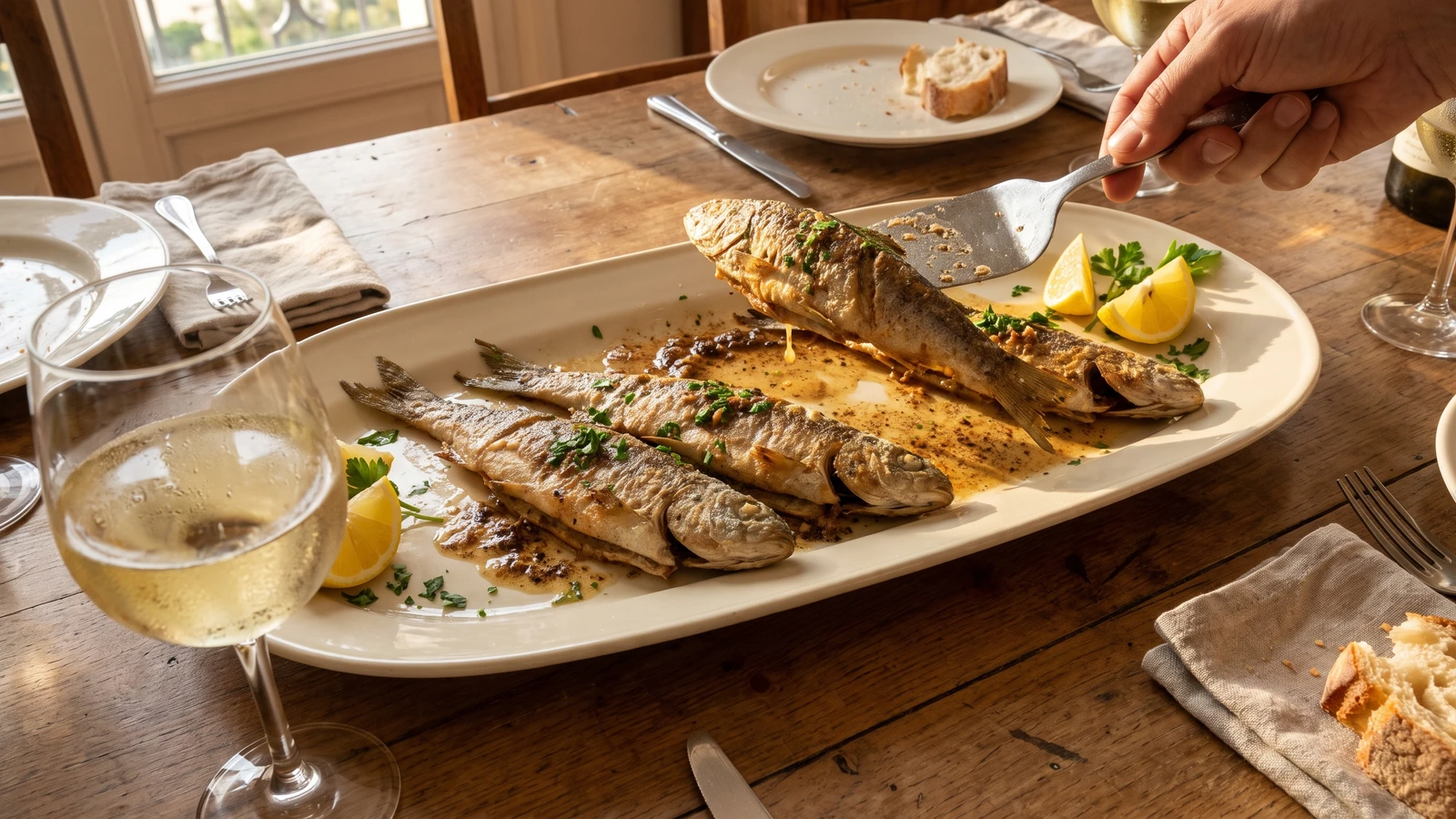
Mostèle à la meunière (delicate Monaco fish, floured and pan-cooked in butter) teaches restraint. The flour must be a veil, the butter lively, and the turn singular. The reward is tender flesh beneath a butter-gold surface, sharpened with lemon and green parsley.
The original assumes none of the usual brigade support: no saucier on staff, no ever-ready stockpot, no salamander. Its real assumption is a cook standing where the fish lands. This version carries meunière through for four, supplying the home proportions the brief entry omits. A fishmonger cleans the catch, clarified butter keeps two skillet batches from scorching, and a warmed platter replaces service hands. Those are scaffolding. Dry fish, flour, butter, beurre noisette (butter cooked until its milk solids are hazelnut brown), lemon, parsley, and immediate service are the dish and must stay. One cook, one stove, one evening.
Everything depends on drying the mostèles completely and flouring them only when the skillet is ready. Damp flour becomes paste, and paste tears when you turn the fish. Dry first, dust lightly, then touch each fish only when necessary.
Mostèle belongs specifically to Monaco in the classical record, where it was eaten near the boats because its fragile flesh would not withstand transport. The preparation traveled farther than the fish: cooks recorded it most often à la meunière or à l’anglaise (egg-and-crumb coated), two quick methods that protect tender flesh without disguising it. Rarity did not make the dish elaborate; geography made freshness the whole luxury.
Quantity
4, about 8 ounces (225 g) each
scaled, gutted, and trimmed of gills and fins
Quantity
1½ teaspoons (7.5 ml / 9 g)
Quantity
½ teaspoon (2.5 ml / 1 g)
Quantity
½ cup (120 ml / 60 g)
Quantity
10 tablespoons (150 ml / 142 g)
divided; 4 tablespoons for clarifying and 6 tablespoons for beurre noisette
Quantity
2; juice amount 3 tablespoons (45 ml / 45 g)
1 juiced and 1 cut into 4 wedges
Quantity
¼ cup (60 ml / 15 g)
finely chopped
| Ingredient | Quantity |
|---|---|
| small whole mostèlesscaled, gutted, and trimmed of gills and fins | 4, about 8 ounces (225 g) each |
| fine sea salt | 1½ teaspoons (7.5 ml / 9 g) |
| finely ground white pepper | ½ teaspoon (2.5 ml / 1 g) |
| all-purpose flour | ½ cup (120 ml / 60 g) |
| unsalted butterdivided; 4 tablespoons for clarifying and 6 tablespoons for beurre noisette | 10 tablespoons (150 ml / 142 g) |
| medium lemons1 juiced and 1 cut into 4 wedges | 2; juice amount 3 tablespoons (45 ml / 45 g) |
| flat-leaf parsleyfinely chopped | ¼ cup (60 ml / 15 g) |
Melt 4 tablespoons of the butter slowly in a small saucepan without stirring. When it separates, skim away the surface foam and pour the clear golden butterfat through a fine strainer, leaving the milky sediment behind. You should have about 3 tablespoons of clarified butter. This small preparation replaces the clarified pan fat a brigade kept ready, and it lets the flour bronze without the butter solids burning.
Inspect the cavities for any remaining blood or scales, then dry the fish meticulously inside and out with clean towels. Warm the serving platter with hot water and dry it just before the fish is cooked. Mostèle cannot tolerate rough handling, so support each fish along its whole length rather than lifting it by the head or tail.
Season the cavities and both sides of the fish with the salt and white pepper. Spread the flour in a shallow dish, pass each mostèle through it, and shake away every loose patch. You want a thin, even veil through which the skin remains visible. If the flour turns damp or clumps, brush it off, dry the fish again, and redust it. Ça se rattrape. Discard the flour after the raw fish has touched it.
Heat half the clarified butter in a 30 cm (12-inch) skillet over medium to medium-high heat until it flows freely and shimmers. Lay in 2 mostèles, intended presentation side down, with room between them. Cook without nudging for 3 to 4 minutes, until the flour is deep butter-gold and the flesh has begun turning opaque at the edges. Turn each fish once, supporting it with a wide fish slice and a second thin spatula, then cook for another 2 to 3 minutes while spooning the butter over the top. The flesh should release easily beside the backbone and reach 145°F (63°C) at its thickest point. Transfer the fish to the warmed platter, wipe away any dark flour crumbs, and repeat with the remaining clarified butter and fish. If a mostèle tears, stop lifting, carry the pieces together on both spatulas, and settle them back into shape on the platter. The beurre noisette will cover the seam, and the fish will taste exactly as it should.
Wipe the skillet clean and add the remaining 6 tablespoons of whole butter. Cook over medium heat, swirling often, as the butter foams and its milk solids turn chestnut brown. The aroma should recall toasted hazelnuts, never bitterness. Pull the pan from the heat immediately. If the colour races too far, pour the amber butter through a fine strainer into a cool bowl, leaving the darkest flecks behind. Ça se rattrape before the butter turns black. Add the lemon juice off the heat, taking care because it will spit, then swirl in the parsley.
Spoon the beurre noisette over the mostèles, letting it pool lightly around them, and set the lemon wedges alongside. Bring the platter straight to the table. Mostèle does not improve by waiting, and neither does meunière. À table!
1 serving (about 250g)
Culinary guides, cultural storytelling, and the editorial depth that makes cooking meaningful.
Discover Culinary ExplorerChef Juliette
John Dory has the delicacy of sole and the firmness of turbot. A light flouring, a quick butter sauté, and nut-brown beurre noisette show exactly why looks never mattered.

Chef Juliette
Fresh haddock proves its delicacy in the meunière pan: a fine flour crust, moist pearly flakes, and beurre noisette sharpened with lemon and parsley, ready from one skillet in half an hour.

Chef Juliette
Éperlans à l’Anglaise turns small fish into a lesson in disciplined coating: boned smelts under a close, crisp crumb, pan-fried in clarified butter and finished with bright, half-melted maître d’hôtel butter.

Chef Juliette
Tiny smelts, shallot, mushrooms, white wine, gratin sauce, and fine bread raspings meet a fierce oven, where the fish must turn tender in the same breath the buttered crust bronzes.