
Chef Juliette
John Dory (St. Pierre)
John Dory has the delicacy of sole and the firmness of turbot. A light flouring, a quick butter sauté, and nut-brown beurre noisette show exactly why looks never mattered.
A cooking platform built around craft, culture, and the stories behind what we eat.
Created by Chef Juliette
Based on No. 766, Lotte, from Le Guide Culinaire (1907) by Auguste Escoffier
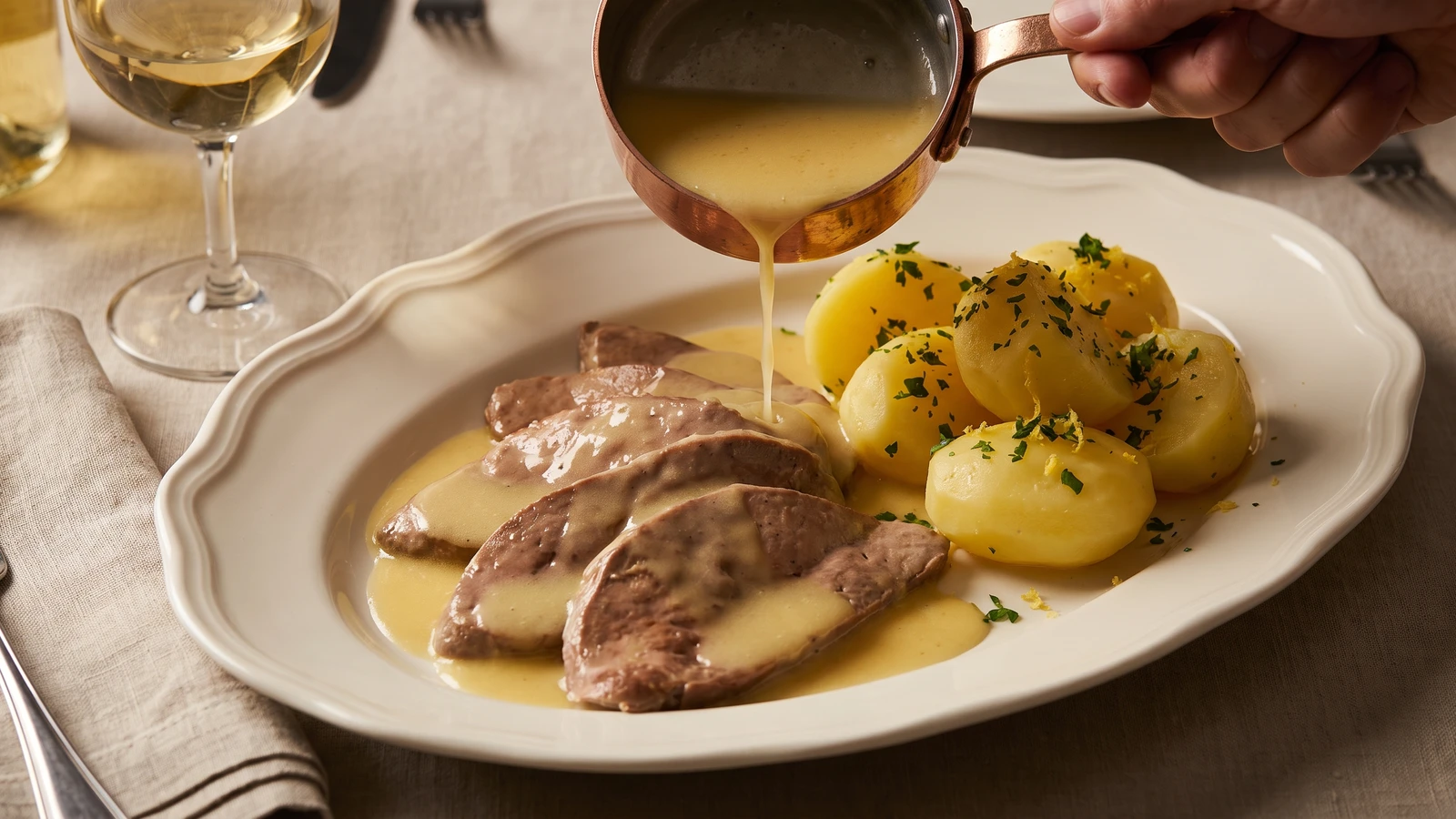
Lotte de rivière teaches the gentlest poach: its rare, foie-like liver is barely set in court-bouillon, then served with butter-mounted liquor and parsley potatoes for a generous special-occasion supper.
Foie de lotte de rivière poché, gently poached freshwater burbot liver, teaches one uncompromising lesson: temperature, not the clock, decides the dish. The liver should emerge creamy, delicate, and barely set, with the richness of foie gras but the clean mineral finish of freshwater fish. Let the poaching liquid boil and that silk tightens into chalk.
The source entry offers no brigade formula at all: no saucier, no stock kept perpetually hot, no salamander, no flavourings, proportions, or cross-referenced preparation. Its judgment is the whole entry, the fish is scarce and the liver is what matters. The honest home translation uses 14 ounces of fishmonger-cleaned liver, a small court-bouillon, an instant-read thermometer, and a cup of the poaching liquor reduced and mounted with real butter. This method is supplied because the entry gives none, while keeping its stated intent squarely at the centre of the plate.
A vat of poaching liquor and a separate sauce station are brigade scaffolding, so they go. The gentle poach is the dish and must stay. Bring the thickest part of the liver to 145°F (63°C), then stop; if the liquid begins to boil, pull the pan from the heat at once and finish more gently. One cook, one stove, one evening.
Here lotte means lotte de rivière, the burbot of the cold lakes and rivers of Savoie and eastern France, not the saltwater monkfish often sold under the same French name. Waterside cooks prized this freshwater fish less for its flesh than for its large, rich liver, which passed from the fisherman's catch into the classical repertory as a delicacy handled with the care given to foie. The source entry's blunt market note preserves that hierarchy: scarcity is the fact, and the liver is the reason the fish enters the kitchen.
Quantity
14 oz (400 g)
fishmonger-cleaned with the gall bladder removed
Quantity
2 cups (475 ml / 490 g)
Quantity
4 cups (950 ml / 950 g)
Quantity
1 cup (240 ml / 235 g)
Quantity
1 (about ½ cup / 80 g)
thinly sliced
Quantity
1 (about 1 cup / 100 g)
rinsed and sliced
Quantity
1 (about ⅓ cup / 50 g)
sliced
Quantity
2
one sliced and one zested and juiced
Quantity
1 small bunch (about 1 packed cup / 30 g)
stems and leaves separated, leaves chopped
Quantity
4 sprigs
Quantity
1
Quantity
1 teaspoon (5 ml / 3 g)
lightly crushed
Quantity
4 teaspoons (20 ml / 24 g)
divided
Quantity
6 cups (1.4 L / 1.4 kg), or enough to cover
Quantity
1¾ lb (800 g)
scrubbed or peeled and halved if large
Quantity
7 tablespoons (105 ml / 100 g)
cubed and divided
| Ingredient | Quantity |
|---|---|
| very fresh freshwater burbot liverfishmonger-cleaned with the gall bladder removed | 14 oz (400 g) |
| cold whole milk | 2 cups (475 ml / 490 g) |
| cold water for the court-bouillon | 4 cups (950 ml / 950 g) |
| dry white wine | 1 cup (240 ml / 235 g) |
| small carrotthinly sliced | 1 (about ½ cup / 80 g) |
| small leek, white and pale green parts onlyrinsed and sliced | 1 (about 1 cup / 100 g) |
| large shallotsliced | 1 (about ⅓ cup / 50 g) |
| lemonsone sliced and one zested and juiced | 2 |
| flat-leaf parsleystems and leaves separated, leaves chopped | 1 small bunch (about 1 packed cup / 30 g) |
| thyme | 4 sprigs |
| bay leaf | 1 |
| black peppercornslightly crushed | 1 teaspoon (5 ml / 3 g) |
| fine sea saltdivided | 4 teaspoons (20 ml / 24 g) |
| cold water for the potatoes | 6 cups (1.4 L / 1.4 kg), or enough to cover |
| small waxy potatoesscrubbed or peeled and halved if large | 1¾ lb (800 g) |
| cold unsalted buttercubed and divided | 7 tablespoons (105 ml / 100 g) |
Confirm that you have freshwater burbot liver, not monkfish liver. Examine it for any green or yellow bile staining; bile is fiercely bitter, so discard a stained lobe rather than trying to wash the flavour away. Cover the liver with the cold milk and refrigerate for 30 minutes, then lift it out, pat it dry, and remove any obvious veins or thin outer membrane with a small sharp knife. Keep the liver cold while you make the court-bouillon, and wash the knife, board, and your hands before continuing.
Combine the 4 cups of water, wine, carrot, leek, shallot, sliced lemon, parsley stems, thyme, bay leaf, peppercorns, and 1 teaspoon of the salt in a nonreactive saucepan. Bring it just to a simmer, then cook gently for 20 minutes so the aromatics perfume the liquid without turning it muddy or bitter. Strain through a fine sieve, pressing nothing, and return the clear court-bouillon to the clean pan.
While the court-bouillon simmers, put the potatoes in a second saucepan with the 6 cups of cold water and 2½ teaspoons of the salt. Bring them up gently and cook until a knife enters without resistance, about 15 to 20 minutes. Drain well, return them to the dry warm pan for a minute, then fold through 2 tablespoons of the butter, the remaining ½ teaspoon salt, half the chopped parsley, and half the lemon zest. Cover and keep warm.
Heat the strained court-bouillon to 176 to 185°F (80 to 85°C), with movement in the liquid but no bubbling boil. Lower in the liver lobes and poach gently, turning once, until the thickest part reaches 145°F (63°C), usually 6 to 10 minutes depending on thickness. Lift each lobe out as it reaches temperature and rest it on a warm plate. If the liquid begins to boil, remove the pan from the heat immediately, lift out the liver, let the court-bouillon fall below 185°F (85°C), then return any undercooked pieces and continue. If a lobe has already tightened, slice it more thinly and sauce it generously; it won't regain its silk, but supper is not lost.
Measure 1 cup (240 ml) of the poaching liquor into a small saucepan and boil it down to ¼ cup (60 ml), tasting near the end so it does not become too salty. Add 1 tablespoon of lemon juice, lower the heat, and whisk in the remaining 5 tablespoons of cold butter one cube at a time. This is monter au beurre, mounting the reduction with butter, and the pan must stay below a simmer so the sauce remains glossy. If it splits, stop. Ça se rattrape: place 1 teaspoon of cold water in a clean pan, then whisk in the broken sauce a spoonful at a time until it gathers again. Taste and add another squeeze of lemon if the richness needs lifting.
Slice the rested liver across the lobes into generous pieces about ½ inch (1.5 cm) thick. The interior should be creamy beige and barely set, with no raw translucence. Arrange it on a warm platter beside the buttered potatoes, spoon the sauce over and around the liver, and finish with the remaining parsley and lemon zest. Bring it directly to the table while the butter still gleams. À table!
1 serving (about 310g)
Culinary guides, cultural storytelling, and the editorial depth that makes cooking meaningful.
Discover Culinary ExplorerChef Juliette
John Dory has the delicacy of sole and the firmness of turbot. A light flouring, a quick butter sauté, and nut-brown beurre noisette show exactly why looks never mattered.

Chef Juliette
Fresh haddock proves its delicacy in the meunière pan: a fine flour crust, moist pearly flakes, and beurre noisette sharpened with lemon and parsley, ready from one skillet in half an hour.

Chef Juliette
Éperlans à l’Anglaise turns small fish into a lesson in disciplined coating: boned smelts under a close, crisp crumb, pan-fried in clarified butter and finished with bright, half-melted maître d’hôtel butter.

Chef Juliette
Tiny smelts, shallot, mushrooms, white wine, gratin sauce, and fine bread raspings meet a fierce oven, where the fish must turn tender in the same breath the buttered crust bronzes.