
Chef Juliette
John Dory (St. Pierre)
John Dory has the delicacy of sole and the firmness of turbot. A light flouring, a quick butter sauté, and nut-brown beurre noisette show exactly why looks never mattered.
A cooking platform built around craft, culture, and the stories behind what we eat.
Created by Chef Juliette
Based on No. 763, Fresh Herrings, from Le Guide Culinaire (1907) by Auguste Escoffier
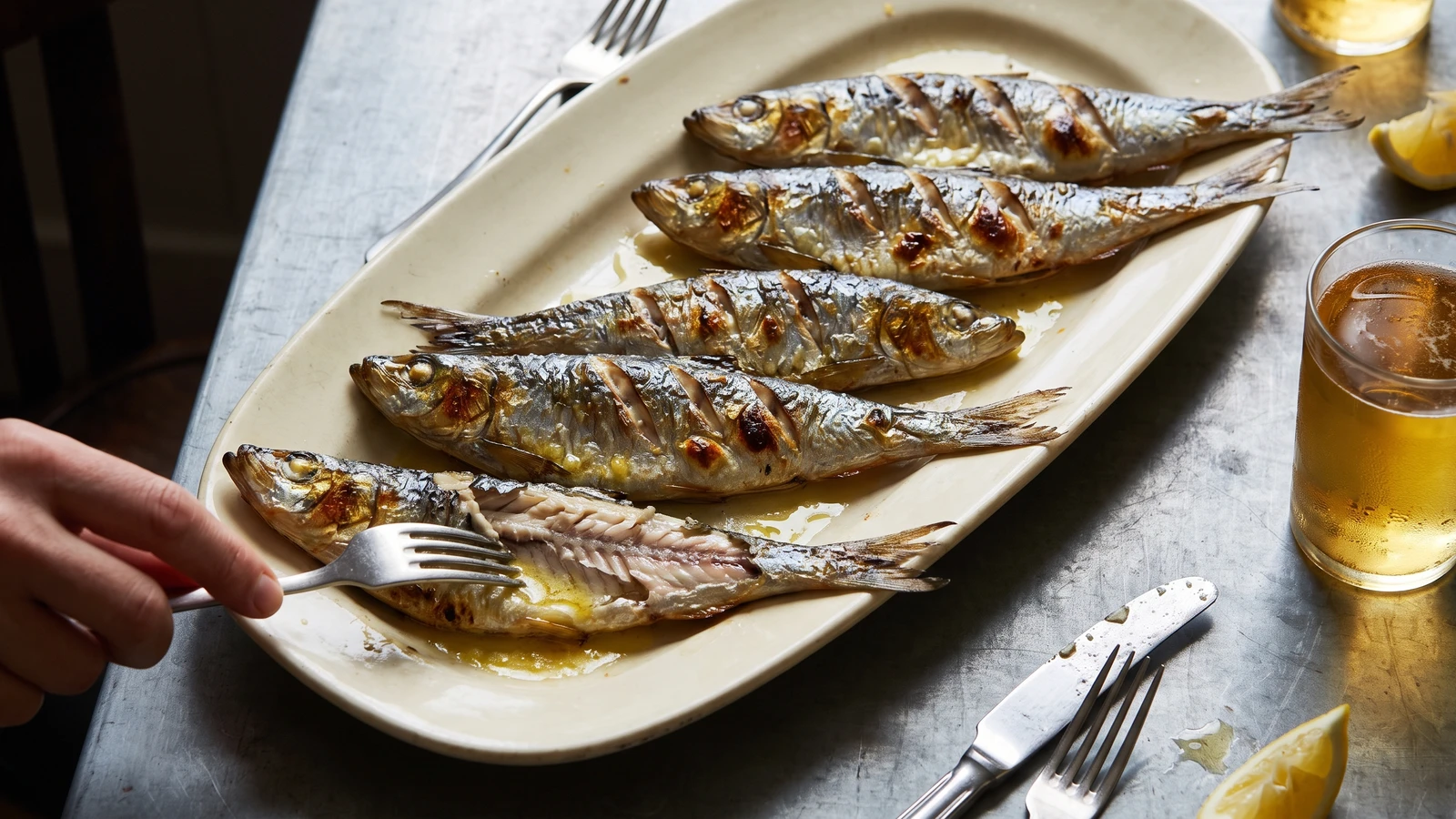
Harengs frais grillés prove that a rich, modest fish needs no flour and no sauce: only dry skin, real butter, fierce heat, and the nerve to leave it alone until it bronzes.
Harengs frais grillés (grilled fresh herrings) teach restraint. This fatty little fish needs no flour, elaborate sauce, or procession of garnishes. It needs a dry surface, real butter, and heat fierce enough to bronze the skin before the tender flesh dries. That is the one true thing to know before touching the pan.
The professional kitchen behind the old entry assumed cooks who already understood a charcoal grill or salamander, and it dismissed much of the fresh fish while admiring its milt. Your high broiler is the honest home equivalent, and eight small herrings replace the brigade batch. No saucier and no stockpot are needed. The great grill and the many hands were scaffolding; drying, buttering, and fast cooking are the dish, so those stay exactly where they belong. One cook, one stove, one evening.
What comes out is generous and direct: silver skin blistered to bronze, pearly flesh rich with its own oil, and hot butter pooling beneath it. Lemon waits at the table, not in a complicated sauce. Dry the fish thoroughly before buttering it. That single step decides the skin.
Fresh herring belongs to France's Channel and North Sea ports, particularly Dieppe in Normandy and Boulogne on the Picard coast, where the catch could pass from boat to grill while its rich flesh was still sweet. Because herring deteriorates quickly, inland tables encountered it more often salted or smoked as the bloaters and kippers praised by professional cookery, while grand kitchens notoriously valued the soft milt and overlooked the abundant fresh fish. Direct grilling with butter preserves the coastal logic: quick cooking, no disguise, and the whole fish served while its skin is still crisp.
Quantity
8 (about 2½ lb / 1.1 kg total)
cleaned, scaled, and fins trimmed, with any milt or roe reserved
Quantity
6 tablespoons (90 ml / 85 g)
melted and divided
Quantity
1½ teaspoons (7.5 ml / 8 g)
Quantity
½ teaspoon (2.5 ml / 1 g)
Quantity
1
cut into wedges
| Ingredient | Quantity |
|---|---|
| small whole fresh herringscleaned, scaled, and fins trimmed, with any milt or roe reserved | 8 (about 2½ lb / 1.1 kg total) |
| unsalted buttermelted and divided | 6 tablespoons (90 ml / 85 g) |
| fine sea salt | 1½ teaspoons (7.5 ml / 8 g) |
| freshly ground black pepper | ½ teaspoon (2.5 ml / 1 g) |
| large lemoncut into wedges | 1 |
Wipe each cavity clean with damp paper towel, removing the dark membrane and any blood along the backbone, but don't soak the fish. Dry the herrings meticulously inside and out, then make two shallow diagonal cuts through the skin on each side without cutting deeply into the flesh. Moisture turns fierce heat into steam and leaves the skin grey; dryness lets it blister and bronze.
Set an oven rack about 4 inches (10 cm) below the broiler and heat the broiler on high. Line a large rimmed sheet pan with foil, fit it with a broiler-safe wire rack, and let the rack heat for 5 minutes. Pull the pan out carefully and brush the rack with 1 tablespoon (15 ml / 14 g) of the melted butter.
Season the cavities and both sides of the fish with the salt and pepper. Brush them all over with 3 tablespoons (45 ml / 43 g) of the melted butter, working a little into the shallow cuts. Do not flour them. Flour is useful for meunière, but beneath a broiler it masks the skin and drinks the herring's abundant fat; butter and direct heat are the method here.
Arrange the herrings on the hot rack with room between them and broil for 4 to 5 minutes, until the upper skin blisters and changes from silver to burnished bronze around the cuts. If the skin darkens before the flesh begins to firm, lower the rack one level. If it remains pale, move it slightly closer for the final minute.
Slide a thin fish spatula beneath each herring and turn it gently, using tongs only to steady the head or tail. If the skin grips the rack, don't wrench it away; give it another 30 seconds, because browned skin usually releases itself. If a patch tears, ça se rattrape: turn the fish with two tools, finish cooking, and cover the exposed flesh with butter at serving. Broil the second side for 3 to 5 minutes, until the flesh beside the backbone is opaque and lifts in moist flakes, or reaches 145°F (63°C). If you reserved milt or roe, brush it with butter, lay it on a small buttered square of foil beside the fish after turning, and cook it for the final 2 to 3 minutes, until opaque and just firm.
Transfer the herrings to a warm oval platter. Warm the remaining 2 tablespoons (30 ml / 28 g) butter just until fluid and spoon it over the bronzed skin, including the cooked milt or roe if you have it. Bring the fish to the table whole with lemon wedges, letting each diner lift the upper fillet, remove the backbone, and claim the lower fillet. Serve immediately. À table!
1 serving (about 190g)
Culinary guides, cultural storytelling, and the editorial depth that makes cooking meaningful.
Discover Culinary ExplorerChef Juliette
John Dory has the delicacy of sole and the firmness of turbot. A light flouring, a quick butter sauté, and nut-brown beurre noisette show exactly why looks never mattered.

Chef Juliette
Fresh haddock proves its delicacy in the meunière pan: a fine flour crust, moist pearly flakes, and beurre noisette sharpened with lemon and parsley, ready from one skillet in half an hour.

Chef Juliette
Éperlans à l’Anglaise turns small fish into a lesson in disciplined coating: boned smelts under a close, crisp crumb, pan-fried in clarified butter and finished with bright, half-melted maître d’hôtel butter.

Chef Juliette
Tiny smelts, shallot, mushrooms, white wine, gratin sauce, and fine bread raspings meet a fierce oven, where the fish must turn tender in the same breath the buttered crust bronzes.