Chef Juliette
Bouillabaisse à la Marseillaise
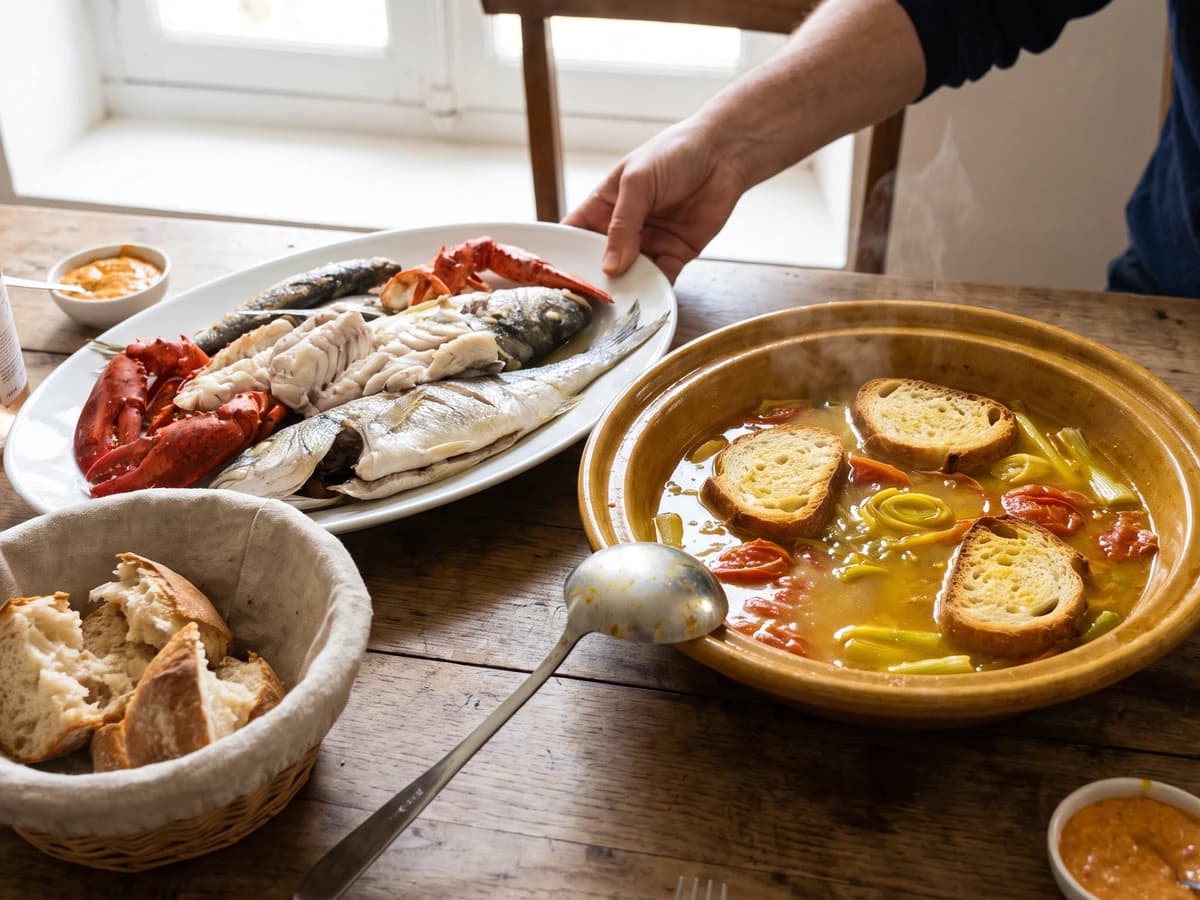
Marseille's great fish stew, saffron-gold and garlic-scented, proves that a hard boil can be the careful choice: it binds olive oil into broth before the whole pot meets bread.
A cooking platform built around craft, culture, and the stories behind what we eat.
Created by Chef Juliette
Based on No. 750, Soupe à la Paysanne, from Le Guide Culinaire (1907) by Auguste Escoffier
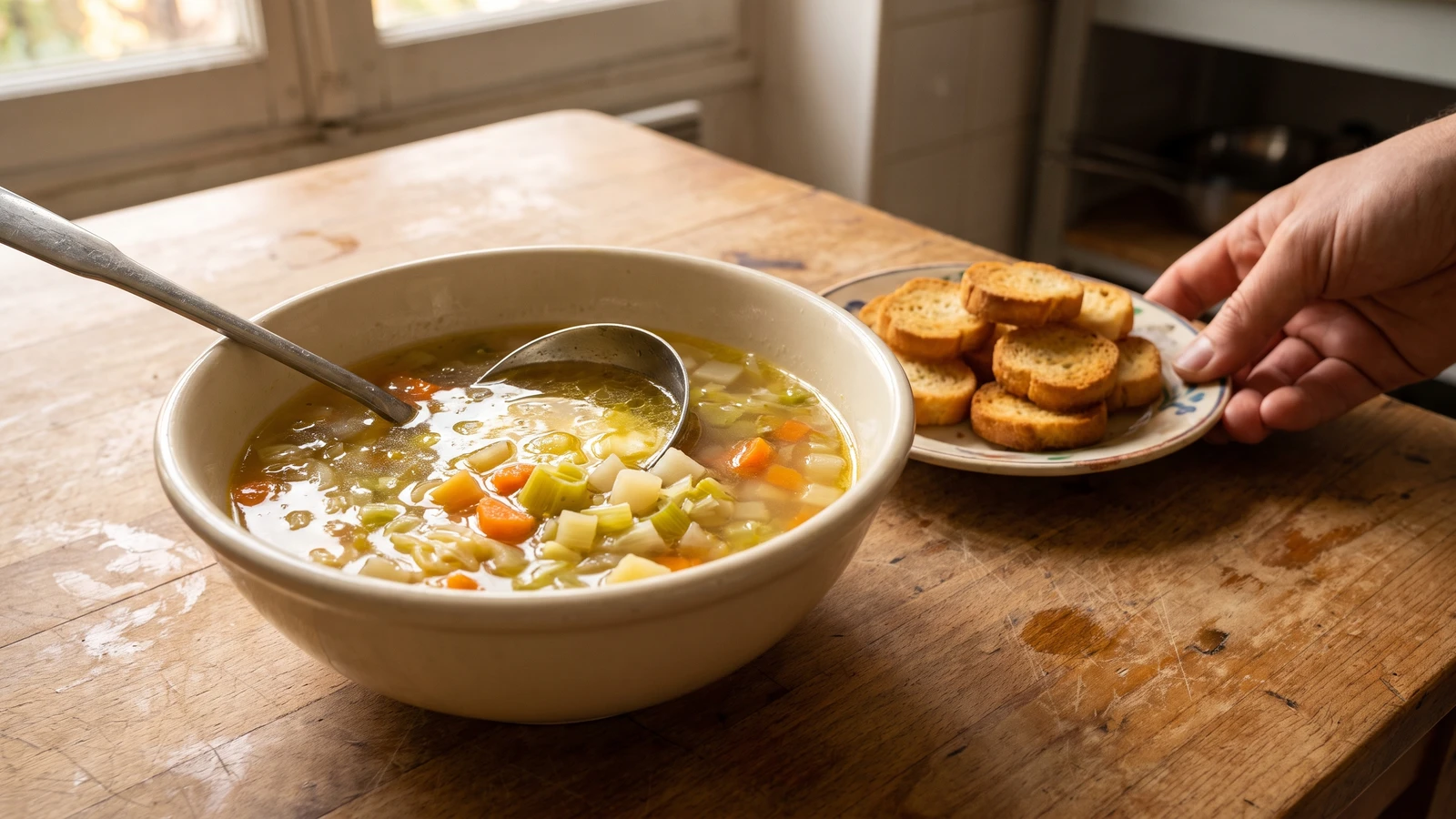
Finely minced garden vegetables first surrender to butter, then simmer in clear consommé until each spoonful is tender but distinct, with crisp flute roundels served apart for crunch.
Soupe à la paysanne (French country vegetable soup) teaches one quiet discipline: suer, to sweat vegetables gently in butter, until their raw edges soften without a single browned corner. That is the one true thing to know before touching the pan. Brown this fine mince and the clear consommé tastes roasted; rush it and the pieces taste raw against the broth.
The classical entry assumes a clear white consommé waiting in the kitchen, several practiced hands for seven neat piles of vegetables, and flute bread ready for service. At home, use a good prepared white chicken consommé, a sharp knife, and one heavy saucepan. The entry is already compact, so I have enlarged it evenly to a useful two-quart pot rather than pretending it began as a brigade kettle. The chopping hands and separate bread service are scaffolding; the butter sweat, the consommé, and the delayed potatoes are the dish. One cook, one stove, one evening.
Cut everything finely and evenly. Cabbage ribbons as wide as a thumbnail and potato dice as large as peas belong to another soup; here every spoonful should carry the whole garden at once. Give your full attention to the suer, because once the butter stays pale and the vegetables turn glossy, the rest is gentle simmering and supper is nearly won.
Soupe à la paysanne belongs to household tables across northern and central France rather than to one claimed province; paysanne here names the mixed garden vegetables and plain service of the country table, not a single regional formula. The classical kitchen carried that frugal soup into its professional repertoire by mincing the vegetables evenly, sweating them in butter, and replacing household pot liquor with clear white consommé. Serving flute roundels separately preserves the old companionship of bread and soup while keeping the broth clear.
Quantity
2 (about ¾ cup / 100 g)
peeled and finely minced
Quantity
2 (about 1 cup / 140 g)
peeled and finely minced
Quantity
2 (about 1½ cups / 160 g)
thoroughly washed and finely minced
Quantity
½ (about 3 tablespoons / 25 g)
finely minced
Quantity
½ (about ½ cup / 75 g)
finely minced
Quantity
4 (about 1 cup / 80 g)
heavy ribs removed and leaves finely minced
Quantity
3½ tablespoons (52 ml / 50 g)
Quantity
6⅓ cups (1.5 L / 1.5 kg)
Quantity
4 (about 1¾ cups / 320 g)
peeled and finely minced
Quantity
1 small loaf (about 7 oz / 200 g)
cut into 16 thin roundels
| Ingredient | Quantity |
|---|---|
| small carrotspeeled and finely minced | 2 (about ¾ cup / 100 g) |
| small turnipspeeled and finely minced | 2 (about 1 cup / 140 g) |
| small leeks, white and pale green partsthoroughly washed and finely minced | 2 (about 1½ cups / 160 g) |
| medium celery stalkfinely minced | ½ (about 3 tablespoons / 25 g) |
| medium yellow onionfinely minced | ½ (about ½ cup / 75 g) |
| large green cabbage leavesheavy ribs removed and leaves finely minced | 4 (about 1 cup / 80 g) |
| unsalted butter | 3½ tablespoons (52 ml / 50 g) |
| white consommé, preferably chicken | 6⅓ cups (1.5 L / 1.5 kg) |
| small waxy potatoespeeled and finely minced | 4 (about 1¾ cups / 320 g) |
| flute (long crisp roll)cut into 16 thin roundels | 1 small loaf (about 7 oz / 200 g) |
Cut the carrots, turnips, leeks, celery, onion, and cabbage into even pieces no larger than ⅛ inch (3 mm). Finely minced does not mean puréed: each vegetable should remain visible, but every spoonful should be able to carry several at once. Keep them together. Cut the potatoes to the same size and hold them separately in cold water so they do not discolor, then drain them thoroughly before they enter the soup.
Melt the butter in a heavy saucepan over low heat. Add the carrots, turnips, leeks, celery, onion, and cabbage, then cover with the lid slightly ajar and suer, gently sweat, for 10 to 12 minutes. Stir often. The vegetables should soften, turn glossy, and smell sweet while the butter stays pale. If tan edges begin to appear, do not surrender the pot. Ça se rattrape: add 2 tablespoons (30 ml / 30 g) of the measured consommé, lower the heat, and scrape the pan clean while that spoonful evaporates.
Pour in the remaining white consommé and scrape the pan floor so every trace of butter joins the broth. Raise the heat and bring the soup just to a boil, then immediately lower it to a gentle simmer. Cook for 4 minutes before adding the potatoes. This brief head start is deliberate: the carrot and turnip need longer than the small potato dice, and adding everything together would leave one hard or the other collapsing.
Drain the potatoes well and add them to the saucepan. Complete the cooking at the barest simmer for 10 to 12 minutes, stirring only once or twice, until the potato and turnip yield cleanly to the point of a knife but still hold their shapes. A hard boil clouds the consommé and batters the fine vegetables. If the potato edges begin shedding starch, remove the pan from the heat and leave it covered for 3 minutes; the retained heat will finish them gently.
Let the soup settle off the heat for 2 minutes, then ladle it into warm bowls, distributing the vegetables generously. Serve the flute roundels separately on a small plate, exactly as the source directs, so each person can bite the crisp bread between spoonfuls without clouding the clear broth. Nothing else belongs on top. À table!
1 serving (about 265g)
Culinary guides, cultural storytelling, and the editorial depth that makes cooking meaningful.
Discover Culinary ExplorerChef Juliette
Marseille's great fish stew, saffron-gold and garlic-scented, proves that a hard boil can be the careful choice: it binds olive oil into broth before the whole pot meets bread.
Chef Juliette
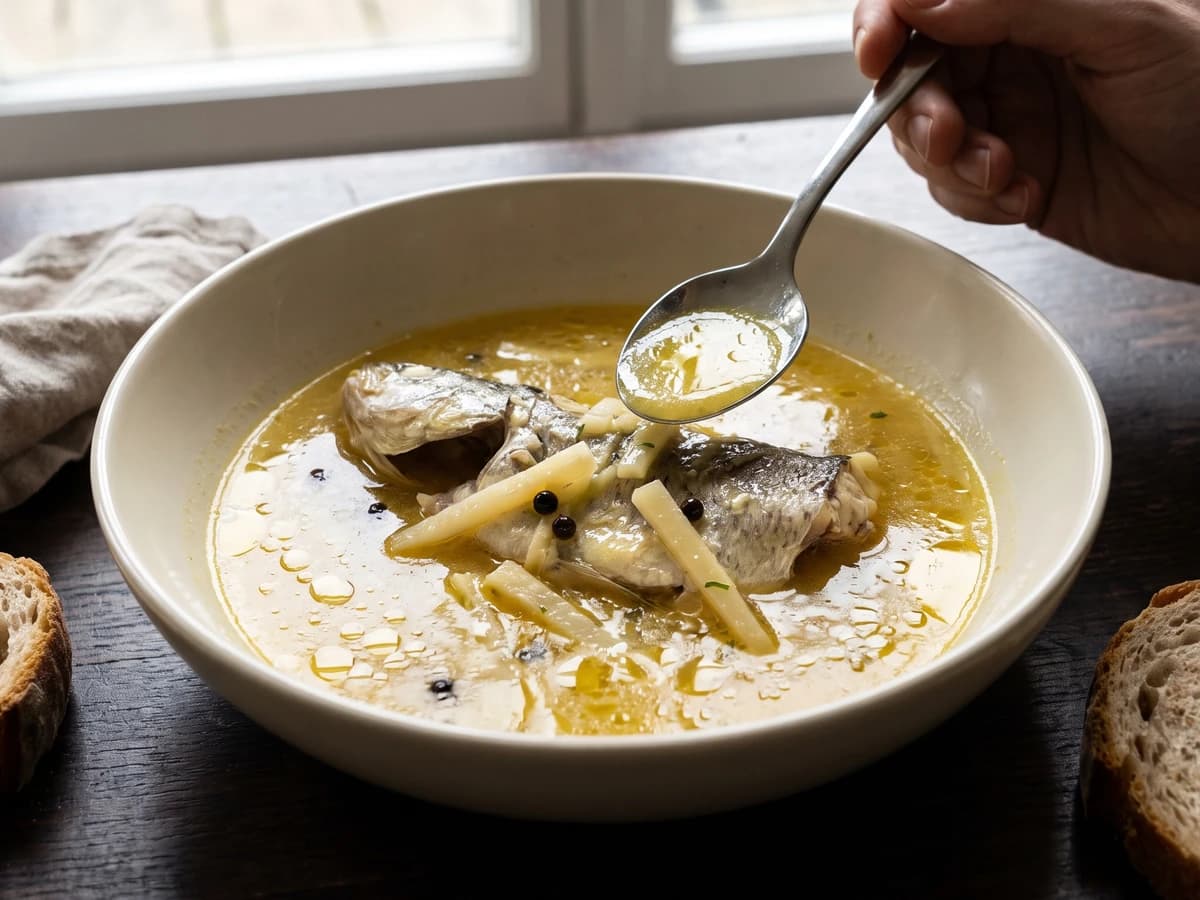
Waterzoi asks fresh, bone-in river fish to thicken its own buttery broth, with parsley root and pepper for company. No flour, no stockpot, just a brisk simmer watched closely.
Chef Juliette
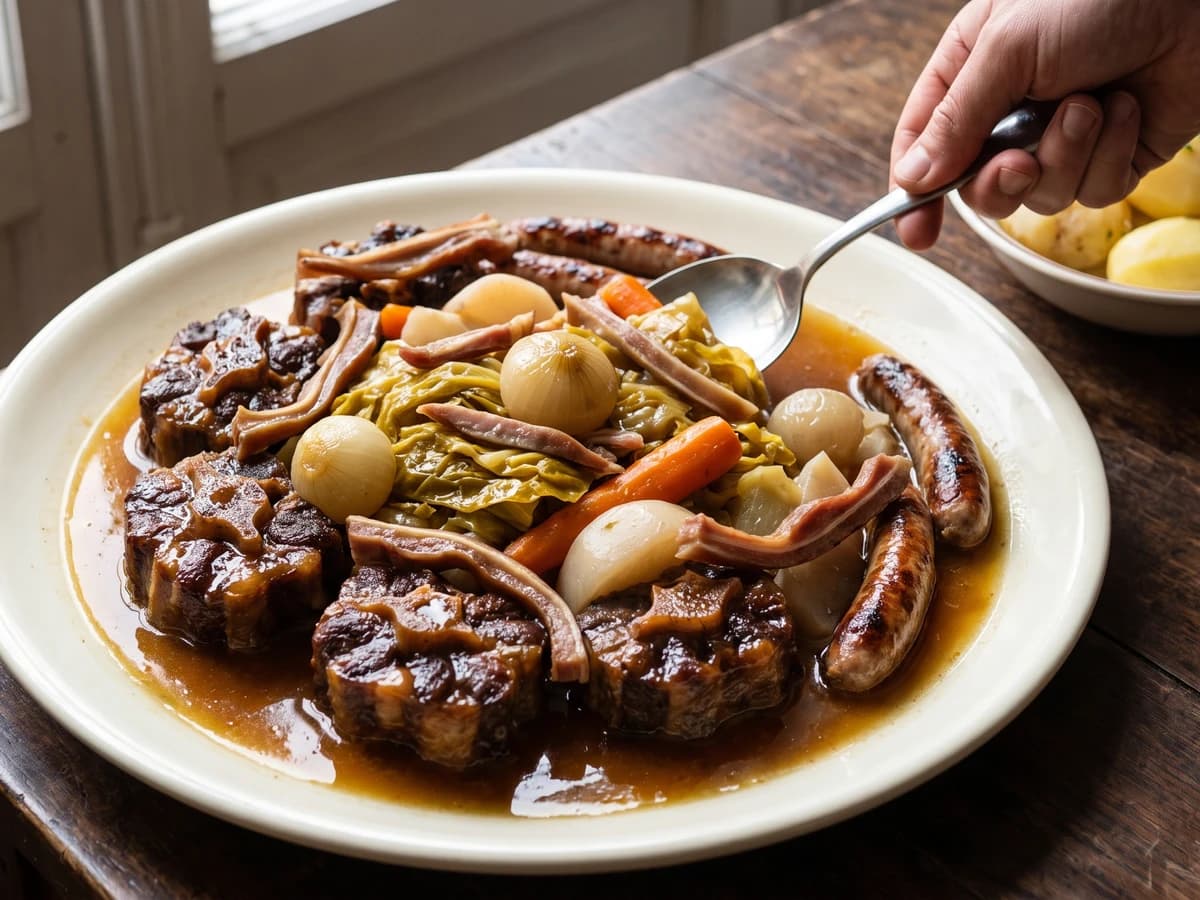
Queue de Bœuf en Hochepot gathers oxtail, pig's trotter and ear, cabbage, roots, and grilled chipolatas around a clear, gelatin-rich broth whose quiet simmer keeps every piece tender and distinct.
Chef Juliette
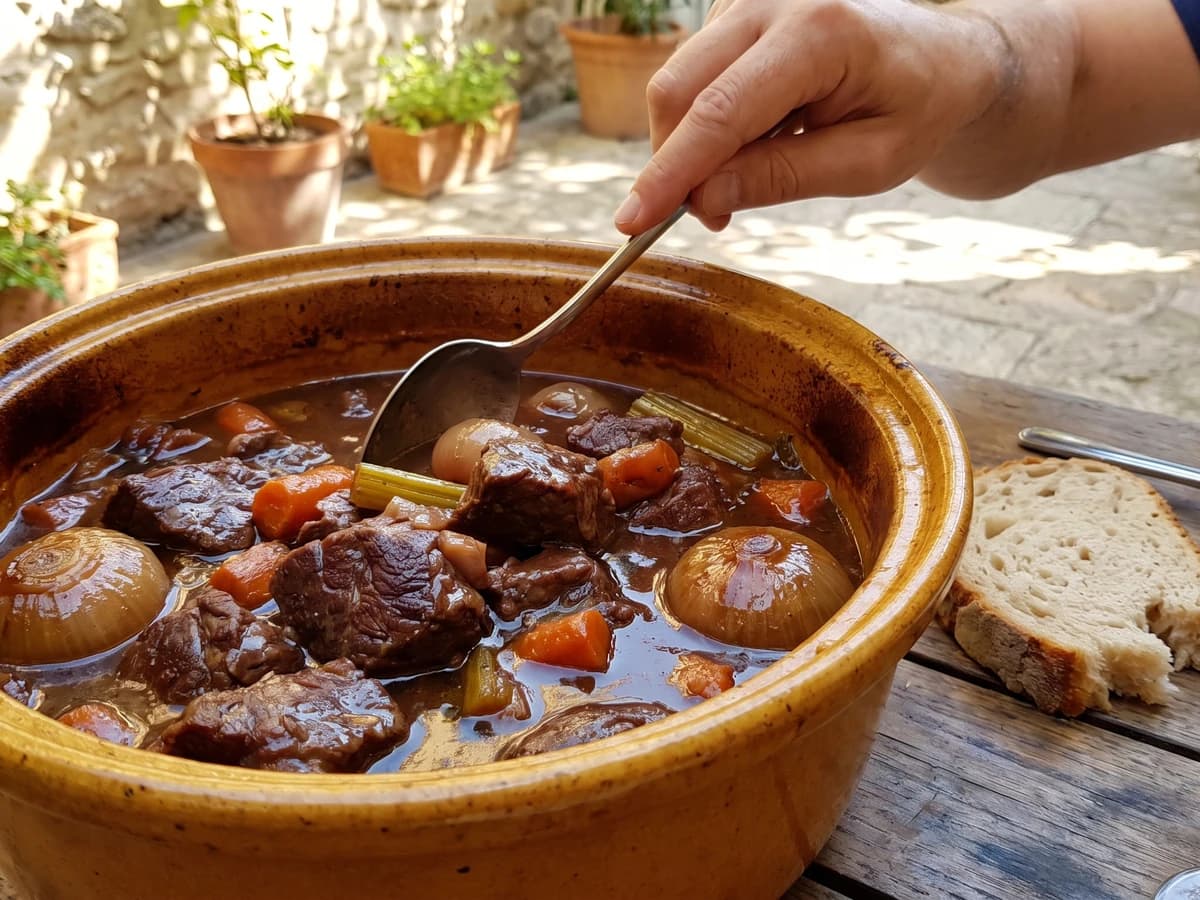
Beef shoulder larded with bacon, sharpened by red wine and vinegar, then sealed with garlic, vegetables, and dry lemon peel until the low oven turns it yielding and the gravy darkly glossy.