Chef Juliette
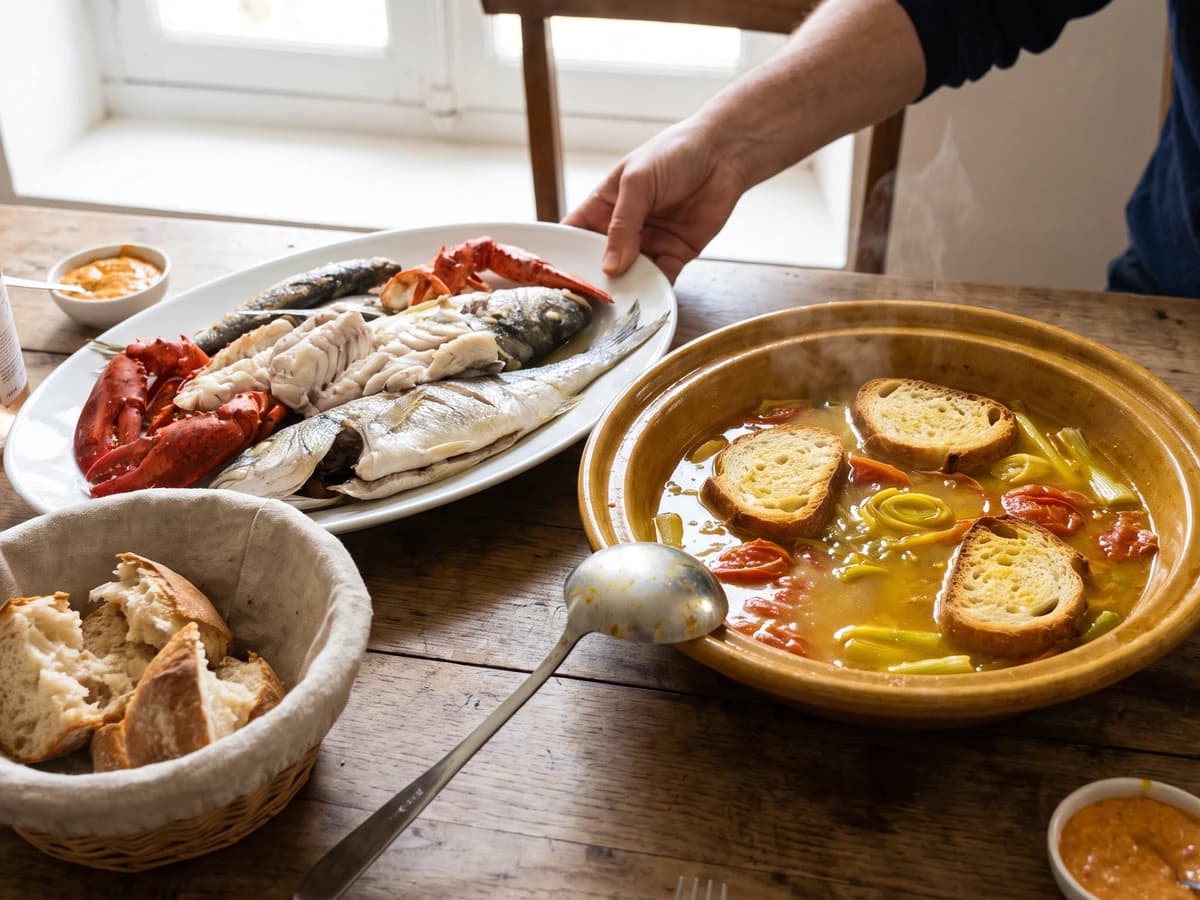
Bouillabaisse à la Marseillaise
Marseille's great fish stew, saffron-gold and garlic-scented, proves that a hard boil can be the careful choice: it binds olive oil into broth before the whole pot meets bread.
A cooking platform built around craft, culture, and the stories behind what we eat.
Created by Chef Juliette
Based on No. 749, Soupe aux Gombos ou Okra, from Le Guide Culinaire (1907) by Auguste Escoffier
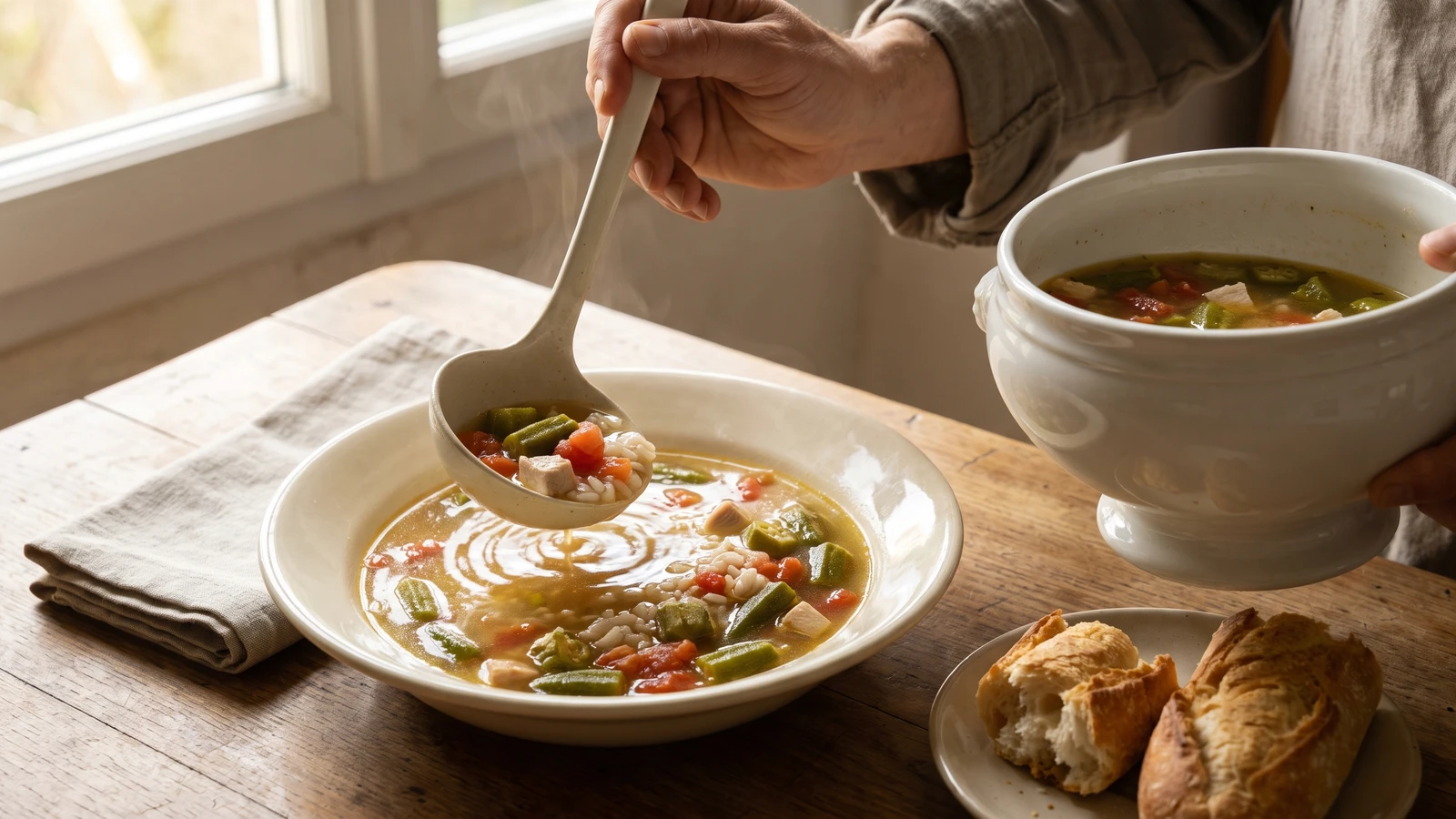
Soupe aux gombos builds body without flour: onion and bacon soften in butter, chicken cooks in clear consommé, then okra, tomato, rice, and Worcestershire make the bowl complete.
Soupe aux gombos ou okra (okra soup) teaches one true thing: okra is the liaison, the natural binder that gives clear consommé a light, silken body without flour. It must cook fully and gently. Leave it half-cooked and it tastes green; stir it furiously and the broth becomes coarse and ropy.
The original assumed a saucier, white chicken consommé never far from the range, and separate hands to bone the chicken, prepare the rice, peel the tomatoes, and skim the pot. Here, every ingredient comes down to three quarters of that brigade quantity, giving about two quarts from a four-quart saucepan. The brigade's continuous skimming and separate garnish station are scaffolding, so they go. The pale sweat, staged simmer, thorough cooking of the okra, and final degreasing are the dish, so they stay. One cook, one stove, one evening.
The finished soup is clear gold beneath its light okra body, with tender green triangles, red tomato concassé, generous chicken dice, and just enough rice to make a weeknight bowl feel complete. The step that matters most is the okra simmer: cook it until truly tender, then let the soup settle and skim before you season.
This particular soupe aux gombos belongs to the exchange between the French classical kitchen and the American Gulf table, especially Louisiana, where okra thickens soups of poultry, pork, tomato, and rice. The word gombo preserves a West and Central African name for okra, a reminder that the ingredient and its thickening practice did not originate in France itself. The classical repertoire recast that American bowl through its own grammar, using white chicken consommé, exact dice, careful skimming, and the option of serving it strained, while keeping Worcestershire as the pointed finish.
Quantity
3 tablespoons (45 ml / 43 g)
Quantity
1 medium (about 1 1/4 cups / 190 g)
finely chopped
Quantity
3 ounces (about 1/2 cup / 85 g)
cut into medium dice
Quantity
12 ounces (about 2 1/4 cups / 340 g)
cut into 1-inch dice
Quantity
6 cups (1.4 liters / 1.4 kilograms)
heated
Quantity
6 ounces (about 2 cups / 170 g)
trimmed and cut into coarse paysanne triangles
Quantity
3 medium (about 2 cups / 360 g)
peeled, seeded, and concassé
Quantity
2 tablespoons (30 ml / 25 g)
Quantity
1/4 teaspoon (1.25 ml / 1.3 g), or a few drops as needed
Quantity
as needed
Quantity
as needed
Quantity
1 cup (240 ml / 240 g)
| Ingredient | Quantity |
|---|---|
| unsalted butter | 3 tablespoons (45 ml / 43 g) |
| yellow onionfinely chopped | 1 medium (about 1 1/4 cups / 190 g) |
| fresh lean bacon or raw hamcut into medium dice | 3 ounces (about 1/2 cup / 85 g) |
| boneless, skinless chicken breastcut into 1-inch dice | 12 ounces (about 2 1/4 cups / 340 g) |
| white chicken consommé or clear low-sodium chicken stockheated | 6 cups (1.4 liters / 1.4 kilograms) |
| fresh okratrimmed and cut into coarse paysanne triangles | 6 ounces (about 2 cups / 170 g) |
| tomatoespeeled, seeded, and concassé | 3 medium (about 2 cups / 360 g) |
| plainly cooked long-grain white rice | 2 tablespoons (30 ml / 25 g) |
| Worcestershire sauce (optional) | 1/4 teaspoon (1.25 ml / 1.3 g), or a few drops as needed |
| fine sea salt | as needed |
| finely ground white pepper | as needed |
| heavy cream (optional) | 1 cup (240 ml / 240 g) |
Score a shallow cross in the base of each tomato, lower them into boiling water for about 20 seconds, then cool them in cold water. Slip off the skins, halve and seed them, then chop them roughly. This is tomato concassé, peeled and seeded tomato cut into rough pieces. Trim the okra caps, pare away any tough shoulders or ridges, and slice the pods diagonally into coarse paysanne triangles. Small tender pods need only trimming; stripping away good flesh would serve nobody. Finish the onion, bacon, chicken, and rice before the butter meets the pan.
Melt the butter in a heavy four-quart saucepan over medium-low heat. Add the onion with a small pinch of salt and suer, meaning sweat it gently without colour, for 6 to 8 minutes, stirring often, until soft and translucent. If the butter begins to brown, lift the pan from the heat and stir in a tablespoon of the warm consommé. Ça se rattrape, provided the onion is only blond; a deeply browned onion cannot be made pale again.
Add the diced bacon or raw ham and cook for 3 minutes, stirring, without crisping or browning it. Add the chicken and raidir, meaning firm the meat gently in the butter, for 4 to 5 minutes. Stir fairly often until every piece looks opaque and slightly tightened at the surface while remaining undercooked inside. Keep the heat moderate. This soup draws its depth from consommé and careful simmering, not a dark fond.
Pour in the hot white chicken consommé or clear chicken stock, scraping the pan floor gently to release its pale savory film. Bring the soup to a boil, then immediately lower the heat until the surface barely trembles. Cover and cook gently for 20 to 25 minutes. A hard boil toughens the chicken, clouds the broth, and beats its fat into the liquid; lower the heat if the lid begins to rattle.
Add the okra and tomato concassé, return the soup to a gentle simmer, and cook partially covered for 18 to 25 minutes, stirring only occasionally. The okra is ready when a triangle yields easily beneath a spoon and the consommé has gained a light, silky body. If it becomes thicker or more ropy than you want, loosen it with warm consommé or water, a quarter cup at a time, and simmer gently for another 3 minutes. Ça se rattrape. Do not whisk it.
Take the pan from the heat and leave it undisturbed for 3 minutes so the fat rises. Skim the surface carefully with a wide spoon or fine skimmer, preserving the broth beneath. If boiling has dispersed the grease into small beads, let the soup stand another 5 minutes before trying again. Taste only after skimming, then add salt, white pepper, and Worcestershire a few drops at a time. The Worcestershire should sharpen the finish without announcing itself.
For the clear version, fold in the plainly cooked rice and warm it for 2 minutes at the barest simmer. For the source's cream finish, first stir in the warmed heavy cream, bring the soup only to the edge of a simmer, then add the rice. Do not boil the creamed soup, since hard heat can dull its smooth texture. Ladle generously into warm bowls, making sure each receives chicken, okra, tomato, and rice. À table!
1 serving (about 350g)
Culinary guides, cultural storytelling, and the editorial depth that makes cooking meaningful.
Discover Culinary ExplorerChef Juliette
Marseille's great fish stew, saffron-gold and garlic-scented, proves that a hard boil can be the careful choice: it binds olive oil into broth before the whole pot meets bread.
Chef Juliette
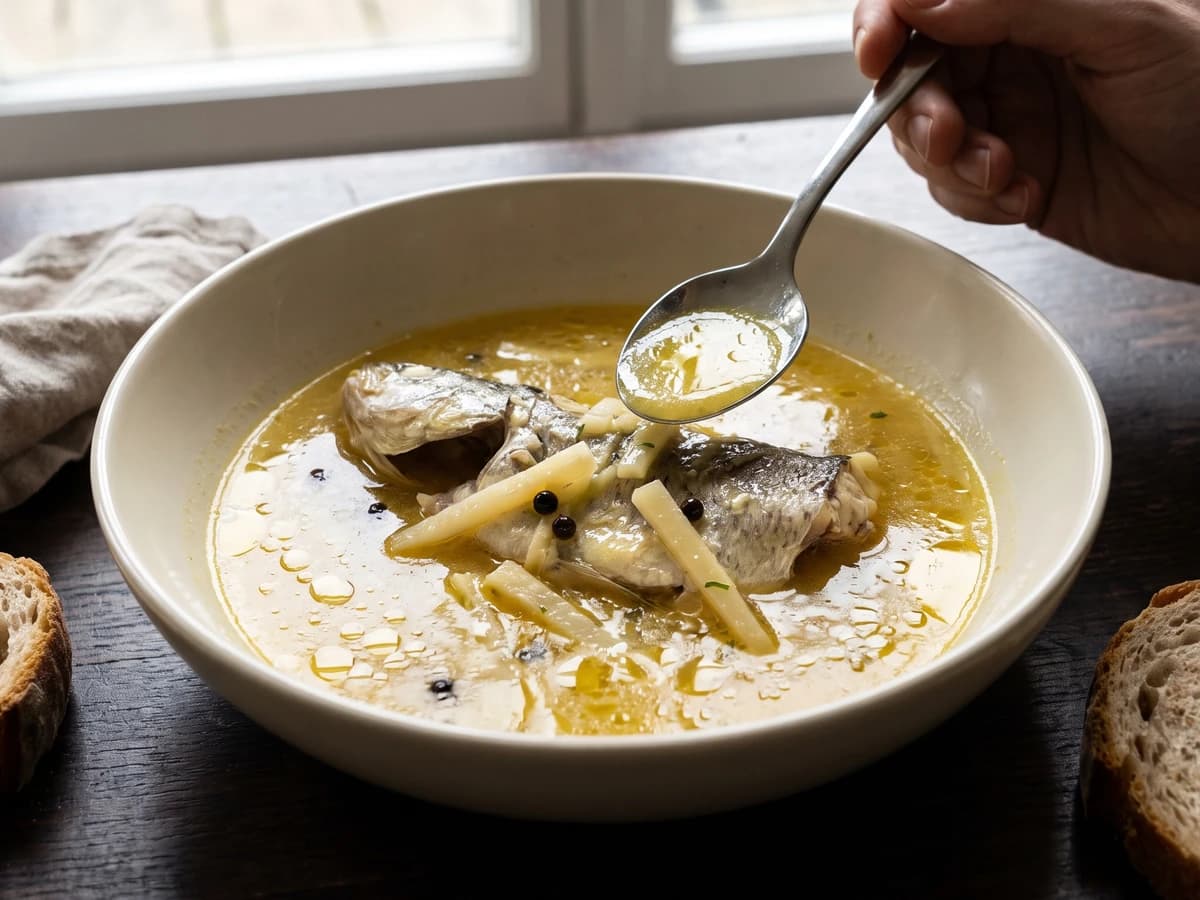
Waterzoi asks fresh, bone-in river fish to thicken its own buttery broth, with parsley root and pepper for company. No flour, no stockpot, just a brisk simmer watched closely.
Chef Juliette
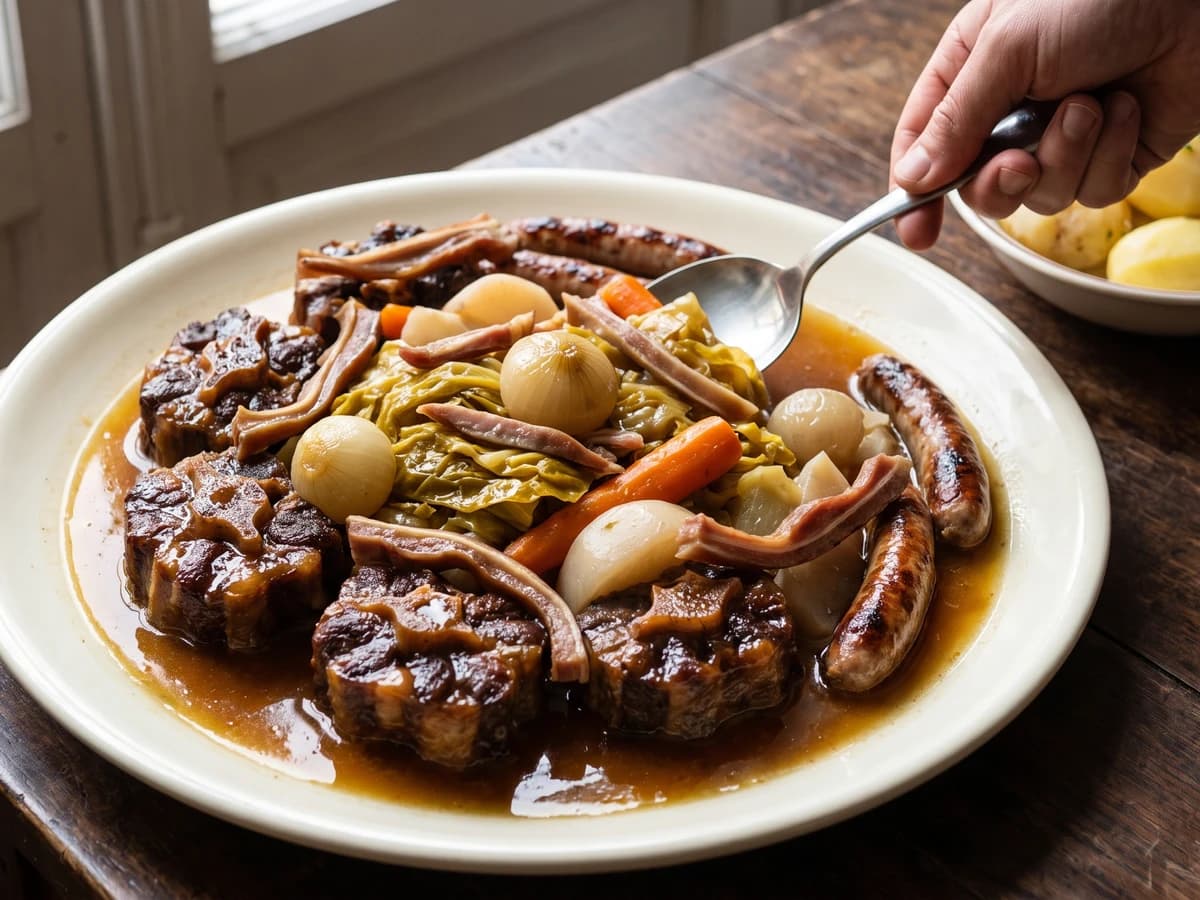
Queue de Bœuf en Hochepot gathers oxtail, pig's trotter and ear, cabbage, roots, and grilled chipolatas around a clear, gelatin-rich broth whose quiet simmer keeps every piece tender and distinct.
Chef Juliette
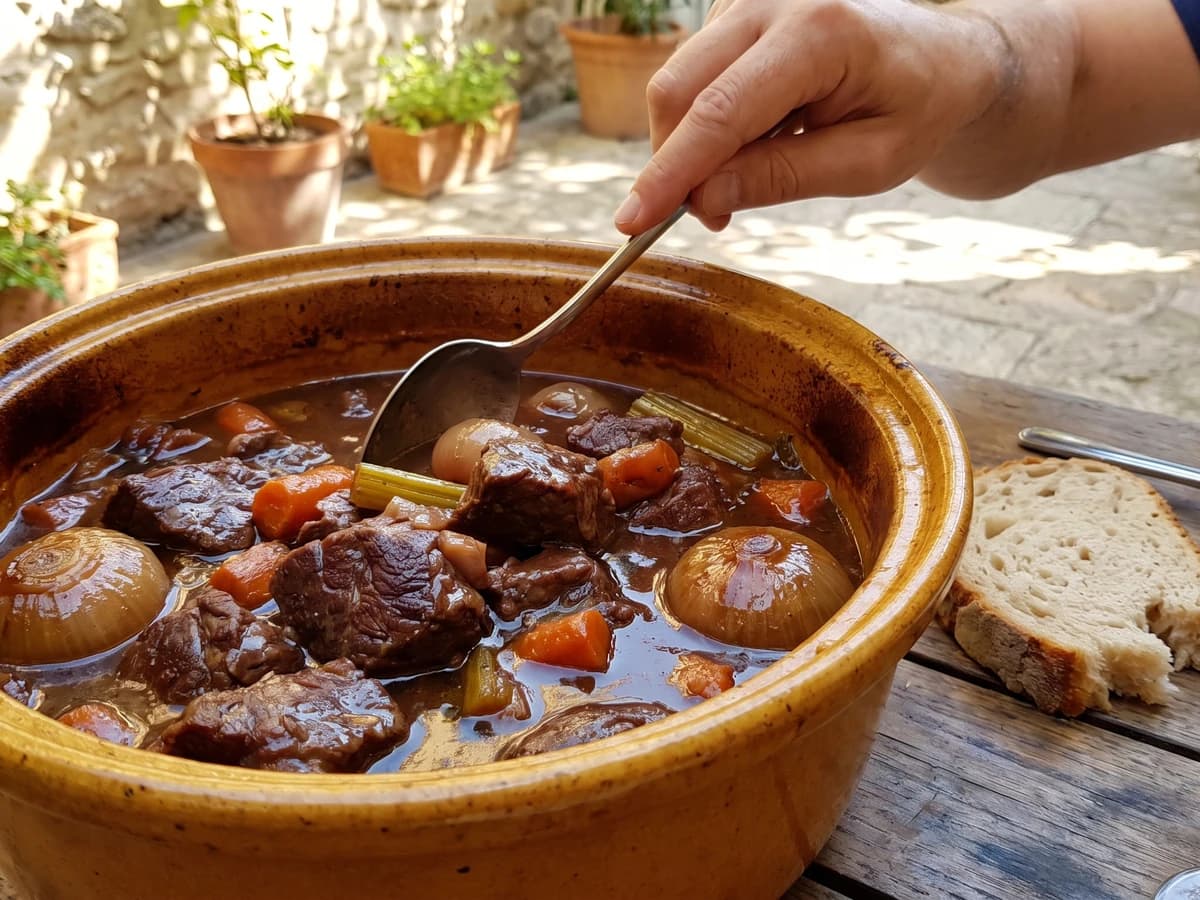
Beef shoulder larded with bacon, sharpened by red wine and vinegar, then sealed with garlic, vegetables, and dry lemon peel until the low oven turns it yielding and the gravy darkly glossy.