Chef Juliette
Bouillabaisse à la Marseillaise
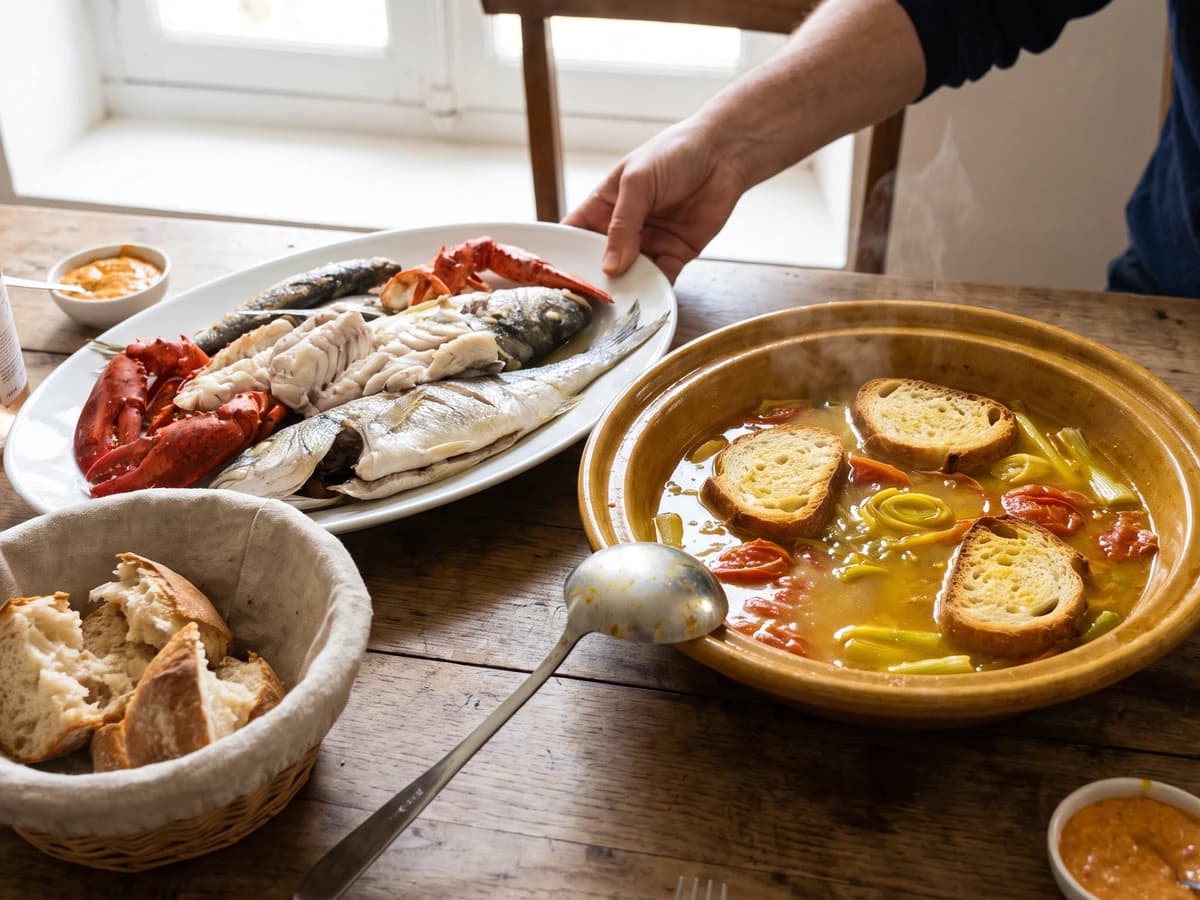
Marseille's great fish stew, saffron-gold and garlic-scented, proves that a hard boil can be the careful choice: it binds olive oil into broth before the whole pot meets bread.
A cooking platform built around craft, culture, and the stories behind what we eat.
Created by Chef Juliette
Based on No. 747, Mille-Fanti, from Le Guide Culinaire (1907) by Auguste Escoffier
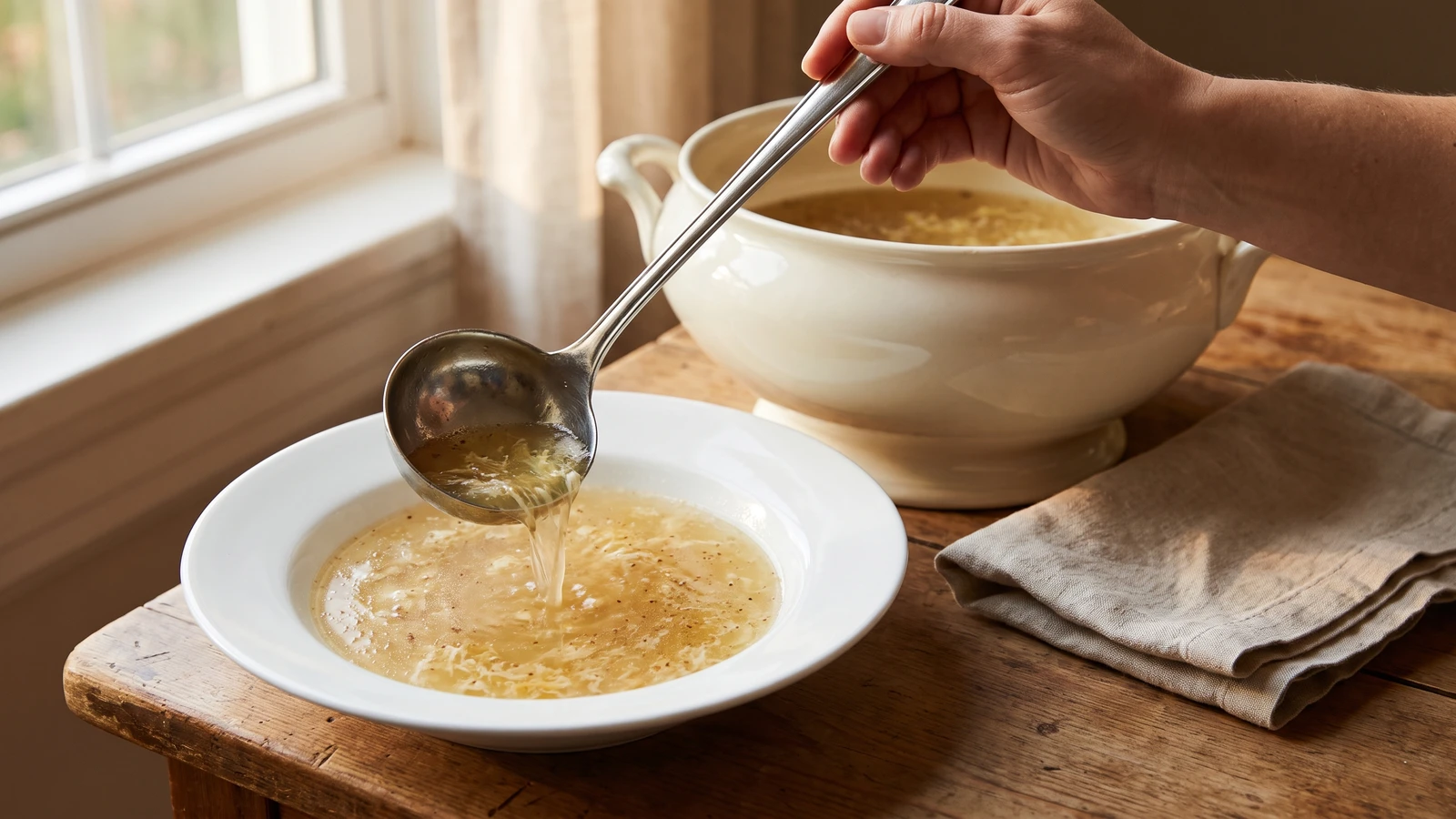
Mille-Fanti draws one clear lesson from the stockpot: add the frothy egg mixture gradually, whisk without pause, and a plain white consommé fills with delicate, savory threads.
Mille-Fanti (egg-thread consommé) teaches the discipline of gradual addition. A frothy mixture of whole egg, fresh breadcrumb, Parmesan, and nutmeg must meet fully boiling white consommé little by little while the whisk keeps moving. That is the one true thing to know before touching the pan. Feed it steadily and the clear broth fills with hundreds of tender threads; hurry the pour and they gather into a raft.
The original entry assumed a stockpot of clarified white consommé never off the fire and a range with a cooler edge for gentle cooking. At home, begin with finished, well-seasoned consommé and move the saucepan to your smallest burner. Clarifying the broth is separate stock-kitchen scaffolding, so it stays outside this entry; no saucier or salamander belongs in this pot. The proportions here double the compact formula exactly to fill a two-quart family soup pot, while its egg, bread, cheese, and broth ratio remains untouched. One cook, one stove, one evening.
The brisk first whisk, the covered seven-to-eight-minute poach, and the final whisk are the dish itself. Don't abbreviate them. The moment that matters is the addition: boiling broth, small spoonfuls, whisk never still.
Mille-fanti belongs to the Italian domestic soup table, in the same family as stracciatella, where eggs and aged cheese turn clear broth into a quick, sustaining first course. French classical kitchens welcomed it into their consommé repertory under its Italian name, refining the broth while preserving the home method of whisking in egg, bread, Parmesan, and nutmeg. It is an Italian guest in the French canon, not the native soup of any French region.
Quantity
8 cups (1.9 L / 1.9 kg)
Quantity
3
at room temperature
Quantity
1½ cups (360 ml / 85 g)
loosely packed
Quantity
½ cup (120 ml / 57 g)
finely grated
Quantity
¼ teaspoon (1.25 ml / 0.5 g)
freshly grated
| Ingredient | Quantity |
|---|---|
| finished, well-seasoned white consommé, preferably chicken or veal | 8 cups (1.9 L / 1.9 kg) |
| large eggsat room temperature | 3 |
| fresh fine breadcrumbs from crustless white breadloosely packed | 1½ cups (360 ml / 85 g) |
| Parmesanfinely grated | ½ cup (120 ml / 57 g) |
| nutmegfreshly grated | ¼ teaspoon (1.25 ml / 0.5 g) |
Pour the finished white consommé into a heavy 4-quart saucepan and bring it to a controlled full boil over medium-high heat. Taste it while it warms. The consommé must already be clear, full-flavored, and properly seasoned, because it carries every other ingredient and there is nowhere for a weak broth to hide.
Beat the whole eggs in a medium bowl until pale, greatly increased in volume, and thick enough that a ribbon falling from the whisk remains visible for a moment. This takes about four minutes with a hand mixer or longer with a balloon whisk. Fold in the fresh breadcrumbs, Parmesan, and nutmeg until evenly combined. The foam will lose some volume and become a thick, aerated batter that falls reluctantly from a spoon. That is exactly right.
Keep the consommé at an active but controlled boil. Whisk briskly with one hand while feeding in the egg batter with the other, no more than a heaped teaspoon at a time, allowing each addition to disperse before the next enters. Work steadily without splashing. If the batter gathers into a large raft, stop adding and whisk directly through it until it breaks into small curds, then resume with smaller additions. Ça se rattrape.
As soon as all the batter is incorporated, move the saucepan to the smallest burner and lower the heat until the soup barely simmers. Cover and cook gently for seven to eight minutes without stirring. This low burner is the home equivalent of moving the old stewpan to the side of the fire. If the boil begins climbing beneath the lid, pull the pan completely off the heat for thirty seconds, then return it to low; a hard boil toughens the egg and destroys the delicate texture.
Uncover the saucepan and whisk for ten to fifteen seconds, just until the cooked egg mixture separates into fine, irregular threads suspended through the consommé. Whisk a little longer if any pieces remain too large, but stop once the texture is even. Ladle immediately into warmed bowls or bring it to the table in a soupière. Don't let the finished soup continue boiling, because the egg toughens and the breadcrumbs keep swelling. À table!
1 serving (about 265g)
Culinary guides, cultural storytelling, and the editorial depth that makes cooking meaningful.
Discover Culinary ExplorerChef Juliette
Marseille's great fish stew, saffron-gold and garlic-scented, proves that a hard boil can be the careful choice: it binds olive oil into broth before the whole pot meets bread.
Chef Juliette
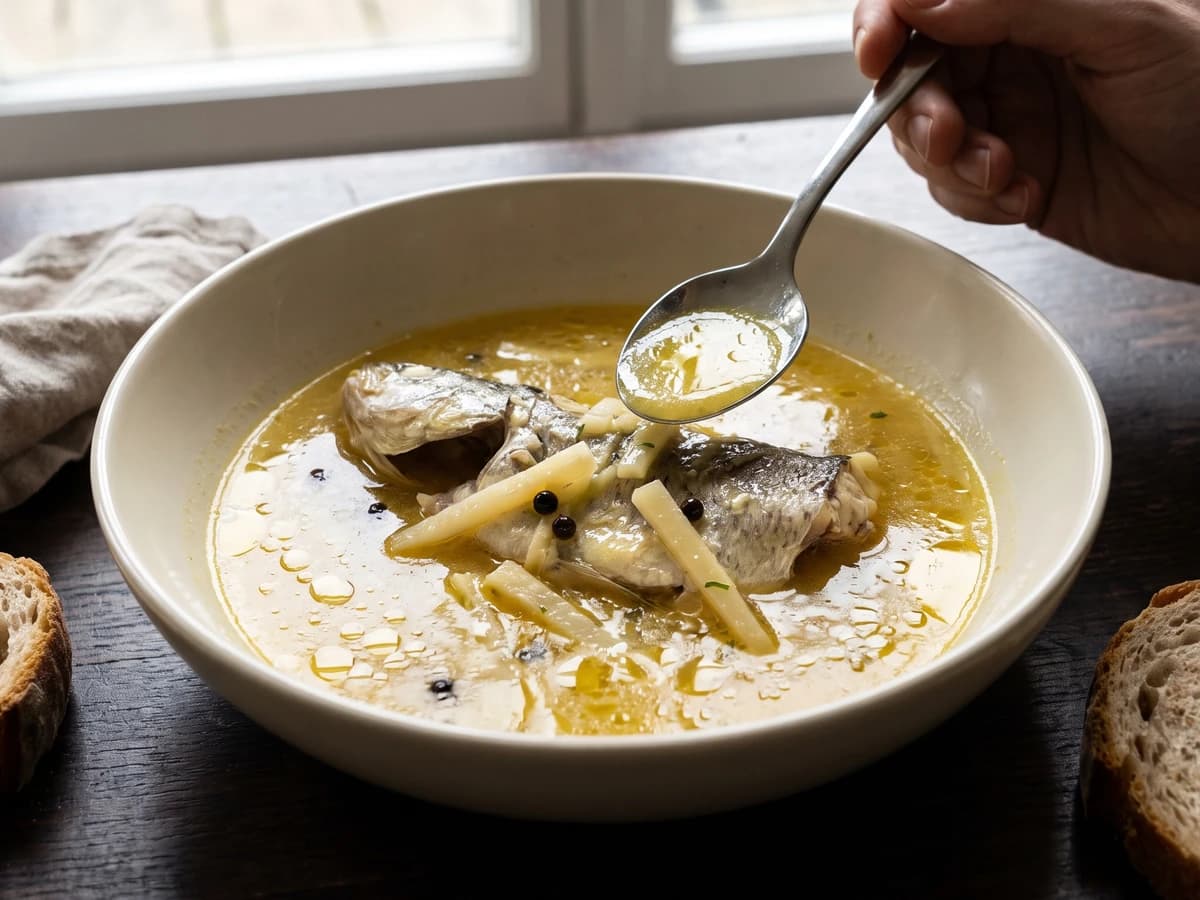
Waterzoi asks fresh, bone-in river fish to thicken its own buttery broth, with parsley root and pepper for company. No flour, no stockpot, just a brisk simmer watched closely.
Chef Juliette
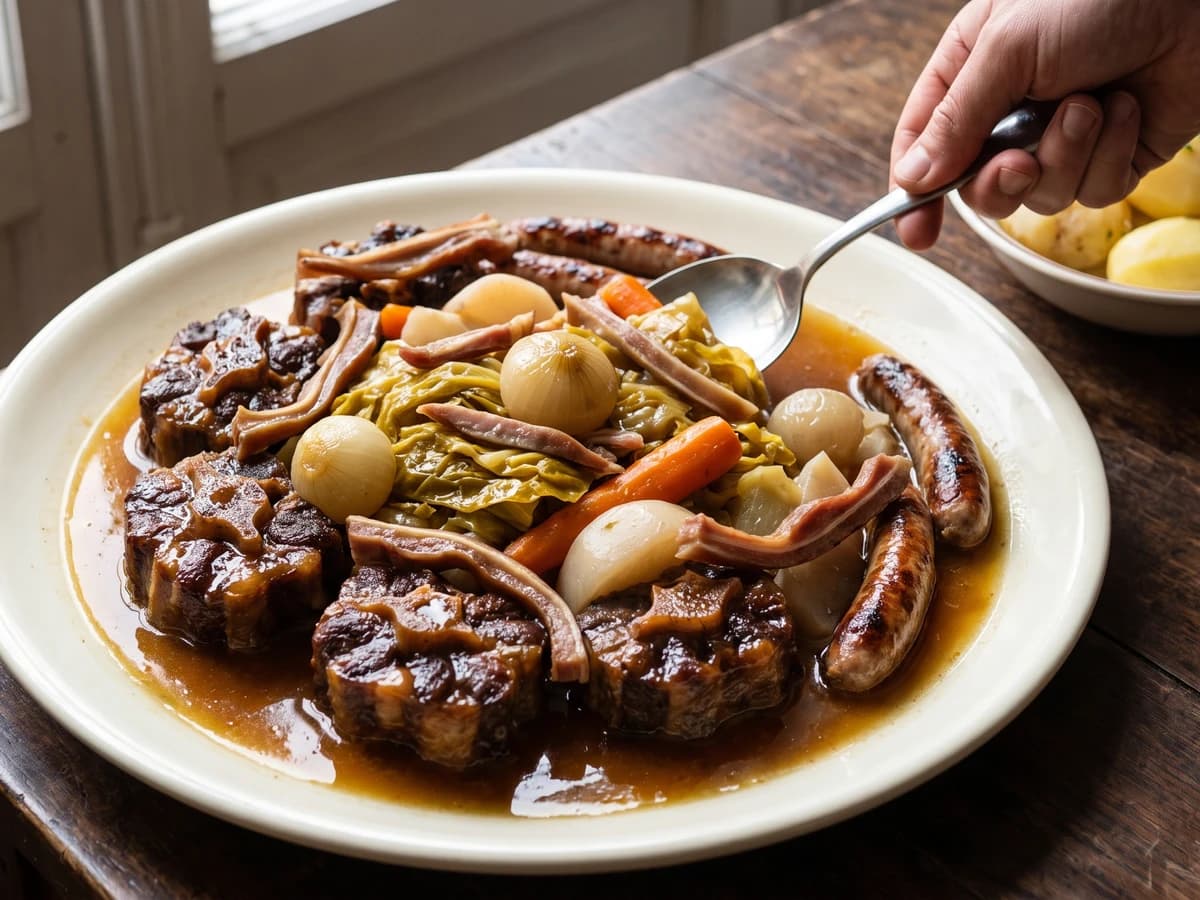
Queue de Bœuf en Hochepot gathers oxtail, pig's trotter and ear, cabbage, roots, and grilled chipolatas around a clear, gelatin-rich broth whose quiet simmer keeps every piece tender and distinct.
Chef Juliette
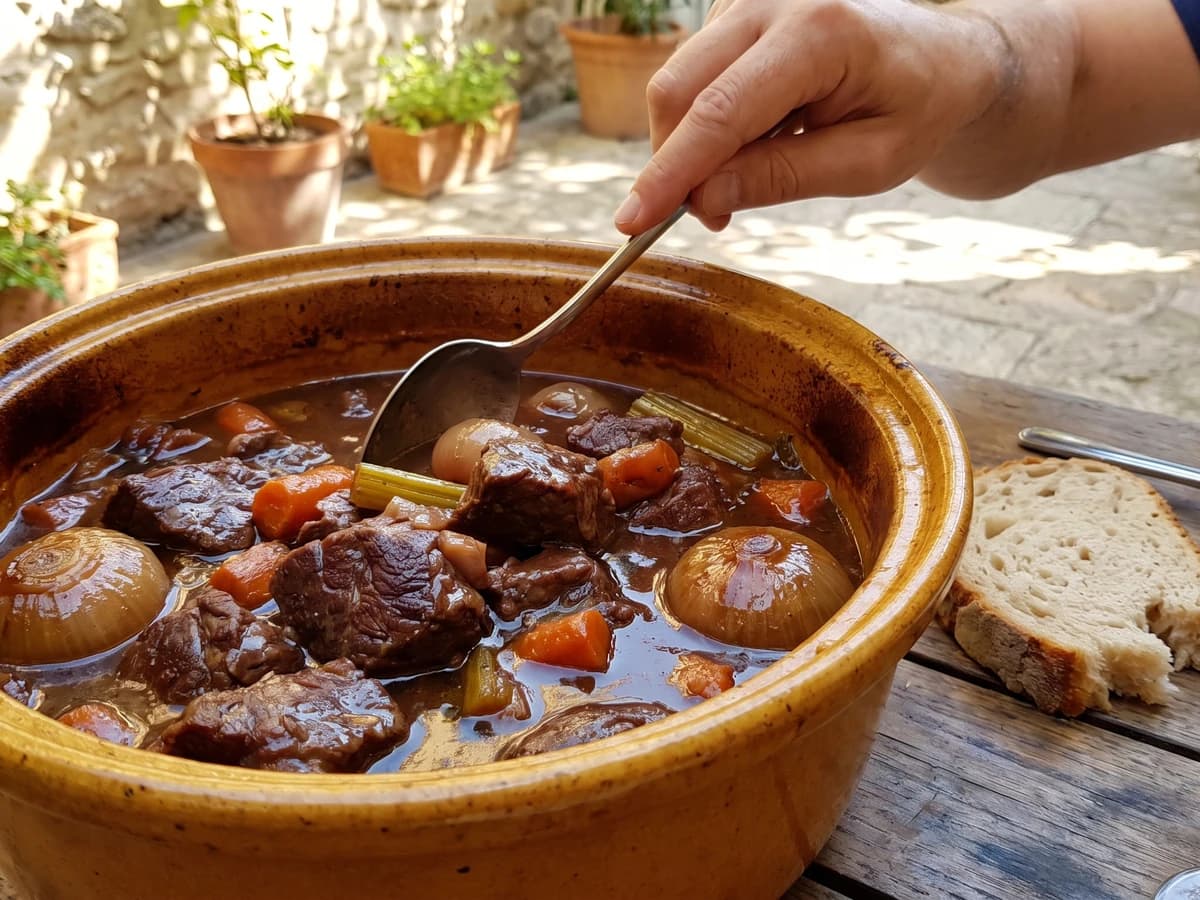
Beef shoulder larded with bacon, sharpened by red wine and vinegar, then sealed with garlic, vegetables, and dry lemon peel until the low oven turns it yielding and the gravy darkly glossy.