Chef Juliette
Bouillabaisse à la Marseillaise
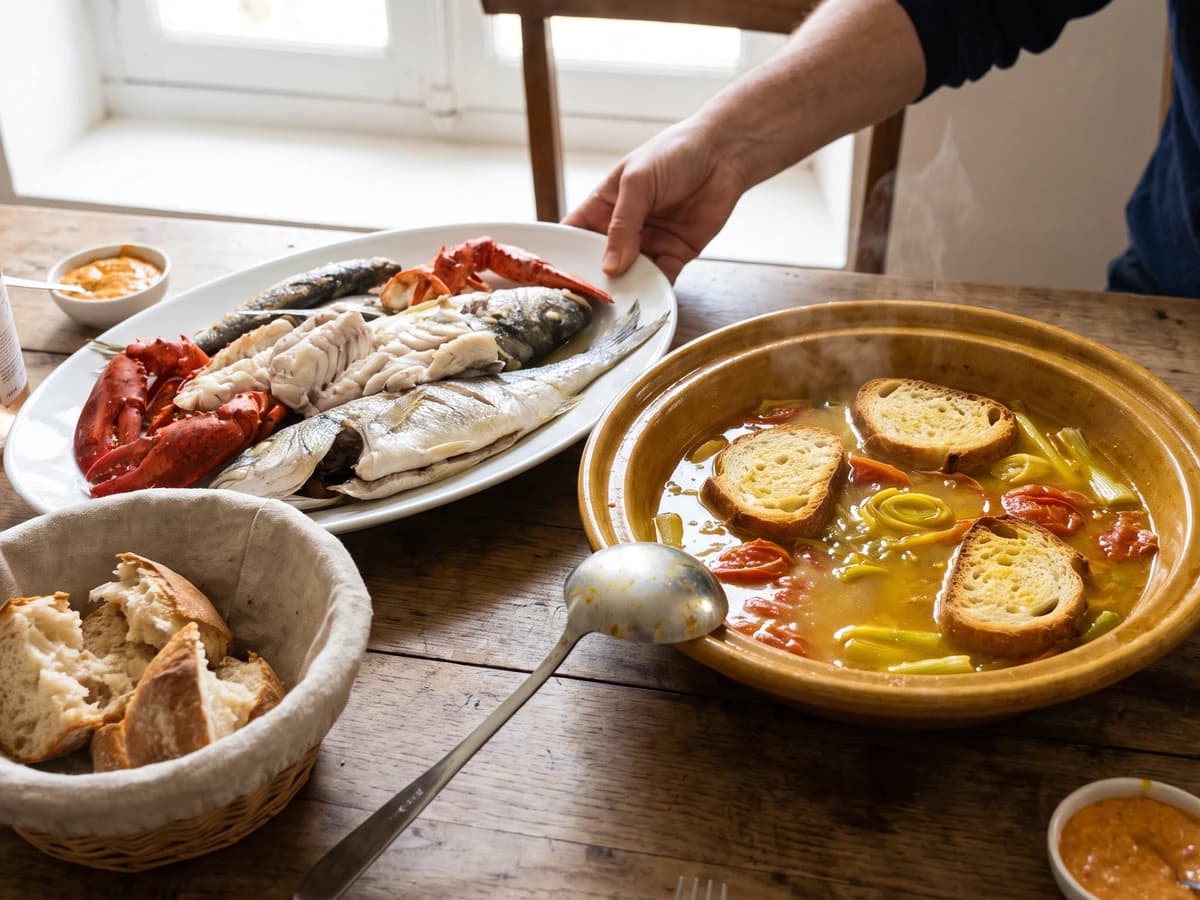
Marseille's great fish stew, saffron-gold and garlic-scented, proves that a hard boil can be the careful choice: it binds olive oil into broth before the whole pot meets bread.
A cooking platform built around craft, culture, and the stories behind what we eat.
Created by Chef Juliette
Based on No. 746, Minestrone, from Le Guide Culinaire (1907) by Auguste Escoffier
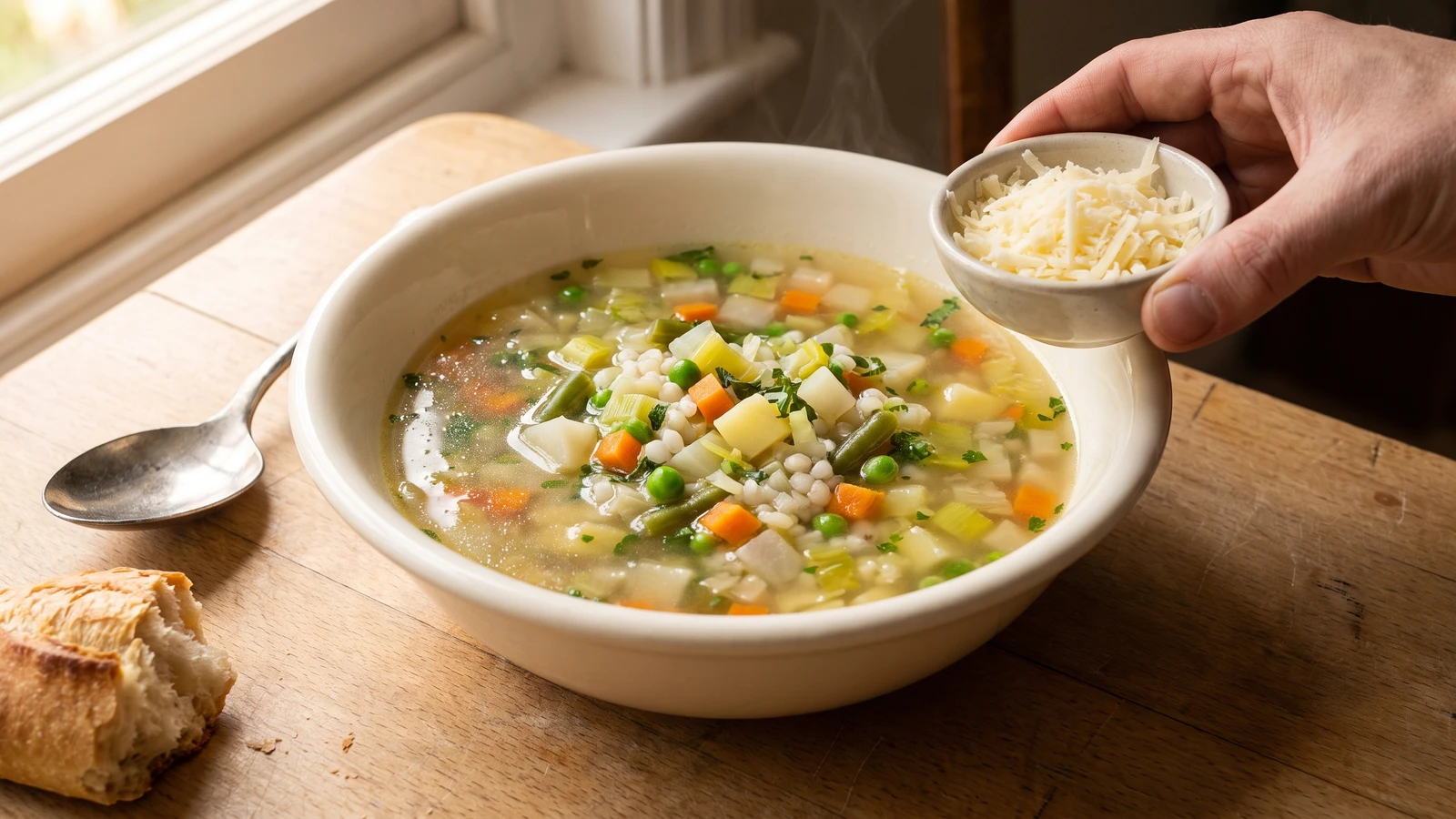
A clear, generous minestrone built in the French classical manner: leeks and bacon first, a fine garden of vegetables next, then rice, garlic, basil, and Gruyère passed separately at the table.
Minestrone teaches the discipline of the cut: when every vegetable is finely and evenly minced, the broth tastes gathered rather than crowded. That is the one true thing to know before you touch the pan. The bacon base and the late garlic, basil, and chervil matter, but the knife decides whether each spoonful holds the whole garden.
The classical entry assumed a stockpot of white consommé never off the fire, fatback firm enough for the grater, and a commis to make small work of the vegetables. Your home equivalent is a finished white chicken consommé or clear pale stock, a sharp knife, and a brief chill for the fatback. The quantities here double the entry's small service measure to yield about two quarts without changing its ratios. The only timing adjustment is for modern very thin macaroni, which enters for the final 8 to 10 minutes because a thirty-minute simmer would turn it to paste.
The finished consommé is brigade scaffolding and may arrive ready for the pot. The bacon foundation, staged vegetables, and last-minute garlic, basil, chervil pluches, and grated fatback are the dish itself, so they stay. Expect a clear golden broth, vegetables tender yet distinct, and rice that gives the soup body without making porridge. Finish all the cutting before the pot goes on; that quiet discipline is the step that decides the bowl.
Minestrone has no single Italian birthplace; it belongs to household cooking across Italy, with Liguria, Lombardy, and Piedmont among the northern traditions that made vegetables and starch into a sustaining pot. In the French classical repertoire, it traveled into the potage course and was recast through white consommé, leeks, unsmoked pork, a fine vegetable mince, and Gruyère passed separately. The common idea that minestrone must be tomato-red is mistaken: this version keeps a pale broth and lets garlic, basil, and chervil arrive only at the finish.
Quantity
⅓ cup (80 ml / 55 g)
finely chopped
Quantity
¼ cup loosely packed (60 ml / 28 g)
finely grated
Quantity
2 cups (480 ml / 220 g), from about 4 small leeks
finely minced
Quantity
⅔ cup (160 ml / 100 g), from about ⅔ medium onion
finely minced
Quantity
7¼ cups (1.7 litres / 1.7 kg), plus up to 1 cup (240 ml / 240 g) more for loosening
Quantity
½ cup (120 ml / 55 g), from about ⅔ medium carrot
finely minced
Quantity
⅔ cup (160 ml / 80 g), from about ⅔ medium turnip
finely minced
Quantity
½ cup (120 ml / 55 g), from about 1 large stalk
finely minced
Quantity
2 cups loosely packed (480 ml / 115 g)
finely minced
Quantity
1½ cups (360 ml / 225 g), from about 2 small potatoes
finely minced
Quantity
¼ cup (60 ml / 40 g)
Quantity
½ cup (120 ml / 65 g)
cut into small diagonal lozenges
Quantity
Scant ½ cup rice (110 ml / 85 g), or 1 cup broken macaroni (240 ml / 85 g)
Quantity
2 small cloves
crushed to a paste
Quantity
6 leaves
finely torn
Quantity
2 teaspoons (10 ml / 1 g)
tender leaf shreds
Quantity
1 tablespoon (15 ml / 7 g)
finely grated
Quantity
1 cup loosely packed (240 ml / 100 g)
freshly grated, for serving separately
| Ingredient | Quantity |
|---|---|
| unsmoked fresh pork bellyfinely chopped | ⅓ cup (80 ml / 55 g) |
| chilled fatbackfinely grated | ¼ cup loosely packed (60 ml / 28 g) |
| small leeks, white parts onlyfinely minced | 2 cups (480 ml / 220 g), from about 4 small leeks |
| onionfinely minced | ⅔ cup (160 ml / 100 g), from about ⅔ medium onion |
| finished white chicken consommé or clear pale chicken stock | 7¼ cups (1.7 litres / 1.7 kg), plus up to 1 cup (240 ml / 240 g) more for loosening |
| carrotfinely minced | ½ cup (120 ml / 55 g), from about ⅔ medium carrot |
| turnipfinely minced | ⅔ cup (160 ml / 80 g), from about ⅔ medium turnip |
| celeryfinely minced | ½ cup (120 ml / 55 g), from about 1 large stalk |
| small green cabbagefinely minced | 2 cups loosely packed (480 ml / 115 g) |
| peeled potatofinely minced | 1½ cups (360 ml / 225 g), from about 2 small potatoes |
| fresh or frozen peas | ¼ cup (60 ml / 40 g) |
| fine green beanscut into small diagonal lozenges | ½ cup (120 ml / 65 g) |
| rice or very thin macaroni | Scant ½ cup rice (110 ml / 85 g), or 1 cup broken macaroni (240 ml / 85 g) |
| garliccrushed to a paste | 2 small cloves |
| sweet basilfinely torn | 6 leaves |
| chervil pluchestender leaf shreds | 2 teaspoons (10 ml / 1 g) |
| chilled fatback for finishingfinely grated | 1 tablespoon (15 ml / 7 g) |
| Gruyèrefreshly grated, for serving separately | 1 cup loosely packed (240 ml / 100 g) |
Prepare every vegetable before heating the pot. Mince the leek, onion, carrot, turnip, celery, cabbage, and potato into even pieces about 2 to 3 mm across, keeping each kind separate. Cut the green beans on the diagonal into little lozenges. Precision matters more than speed: pieces of one size become tender together, while large stray cubes remain hard after the cabbage has surrendered.
Put the chopped fresh pork belly and the first portion of grated fatback into a cold heavy soup pot. Set it over medium-low heat and cook for 4 to 5 minutes, stirring, until the fat melts and the pork begins to color. Add the minced leeks and onion, then cook for 8 to 10 minutes, stirring often, until softened and lightly golden. Brown them patiently, but don't blacken them. If the leek catches, lower the heat immediately and release it with a spoonful of consommé, scraping the sweet browned bits back into the mixture.
Pour in the 7¼ cups of white consommé and scrape up the fond, the savory browned layer on the pot floor. Add the carrot, turnip, celery, cabbage, and potato. Bring the soup just to a simmer, then lower the heat until the surface barely trembles. Cook partially covered for 25 minutes, stirring two or three times. A hard boil clouds the consommé and knocks the finely cut vegetables apart; gentle movement keeps the broth clear and the garden recognizable.
Stir in the peas, green-bean lozenges, and rice. Keep the soup at the same bare simmer for 30 minutes, until the rice is fully tender and the vegetables yield easily without dissolving. If using very thin macaroni, add the peas and beans now but wait until the final 8 to 10 minutes before stirring in the broken pasta. Check it early, because the pieces should be tender, not collapsed into the broth.
A few minutes before serving, stir in the crushed garlic, torn basil, chervil pluches, and finishing tablespoon of grated fatback. Simmer gently for 3 to 4 minutes, just until the fatback disappears and the garlic loses its raw edge. The soup should be generous but clearly brothy. If the rice has swallowed too much liquid, don't fret. Ça se rattrape: add hot consommé a little at a time until the broth moves freely around the vegetables. Taste before reaching for salt, since the consommé and pork may already have supplied enough.
Ladle the minestrone into deep warm bowls, making certain each receives broth, vegetables, and rice in equal measure. Pass the freshly grated Gruyère in a separate bowl so each person adds their own. Don't stir the cheese into the pot; serving it apart preserves the clear broth and the sequence of flavors. À table!
1 serving (about 260g)
Culinary guides, cultural storytelling, and the editorial depth that makes cooking meaningful.
Discover Culinary ExplorerChef Juliette
Marseille's great fish stew, saffron-gold and garlic-scented, proves that a hard boil can be the careful choice: it binds olive oil into broth before the whole pot meets bread.
Chef Juliette
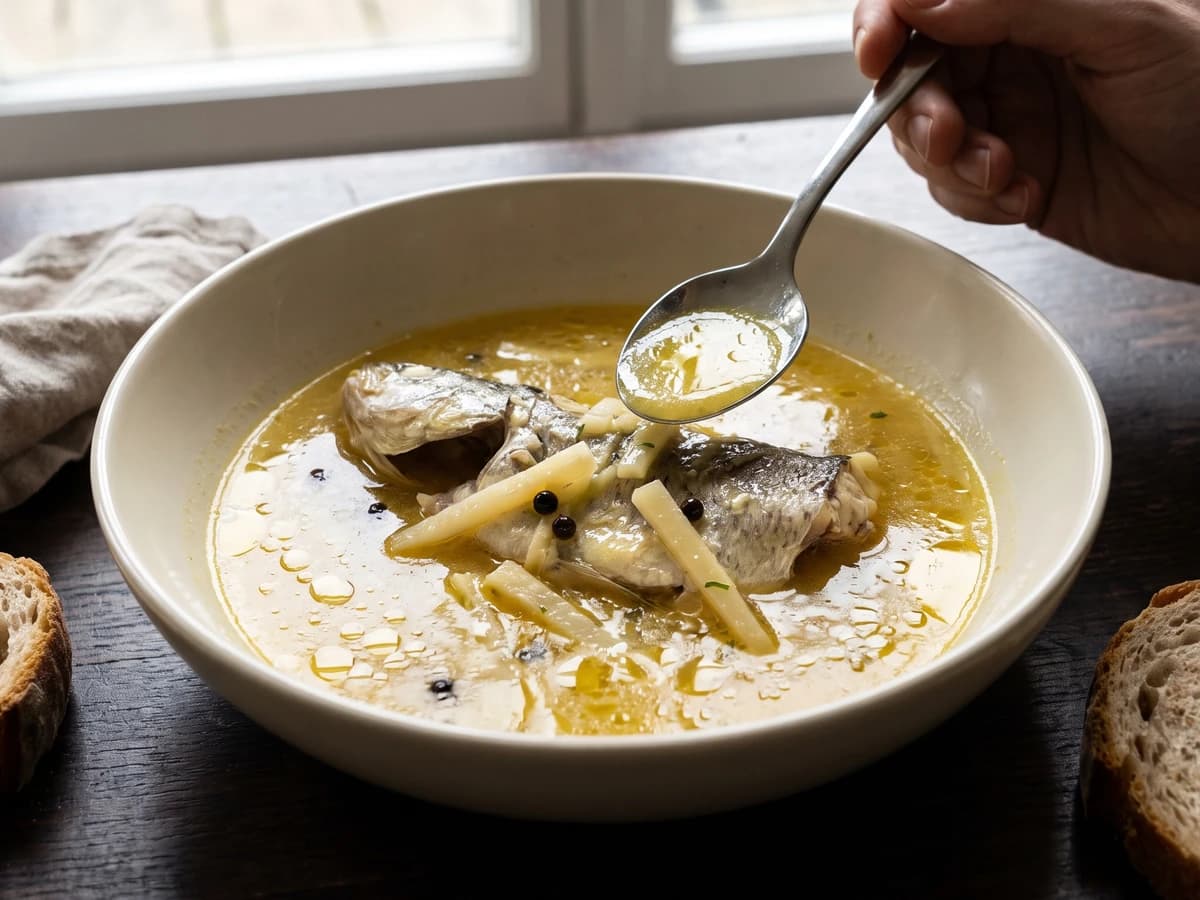
Waterzoi asks fresh, bone-in river fish to thicken its own buttery broth, with parsley root and pepper for company. No flour, no stockpot, just a brisk simmer watched closely.
Chef Juliette
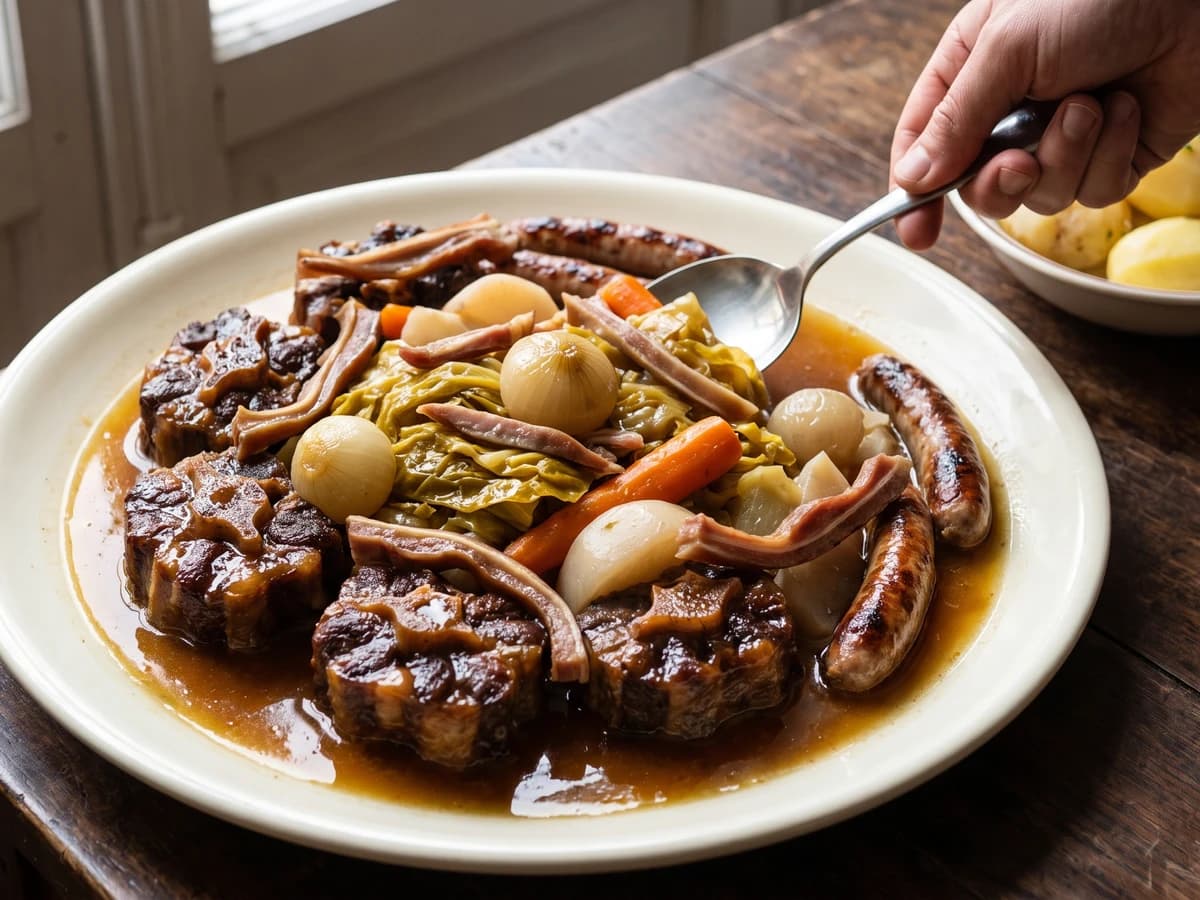
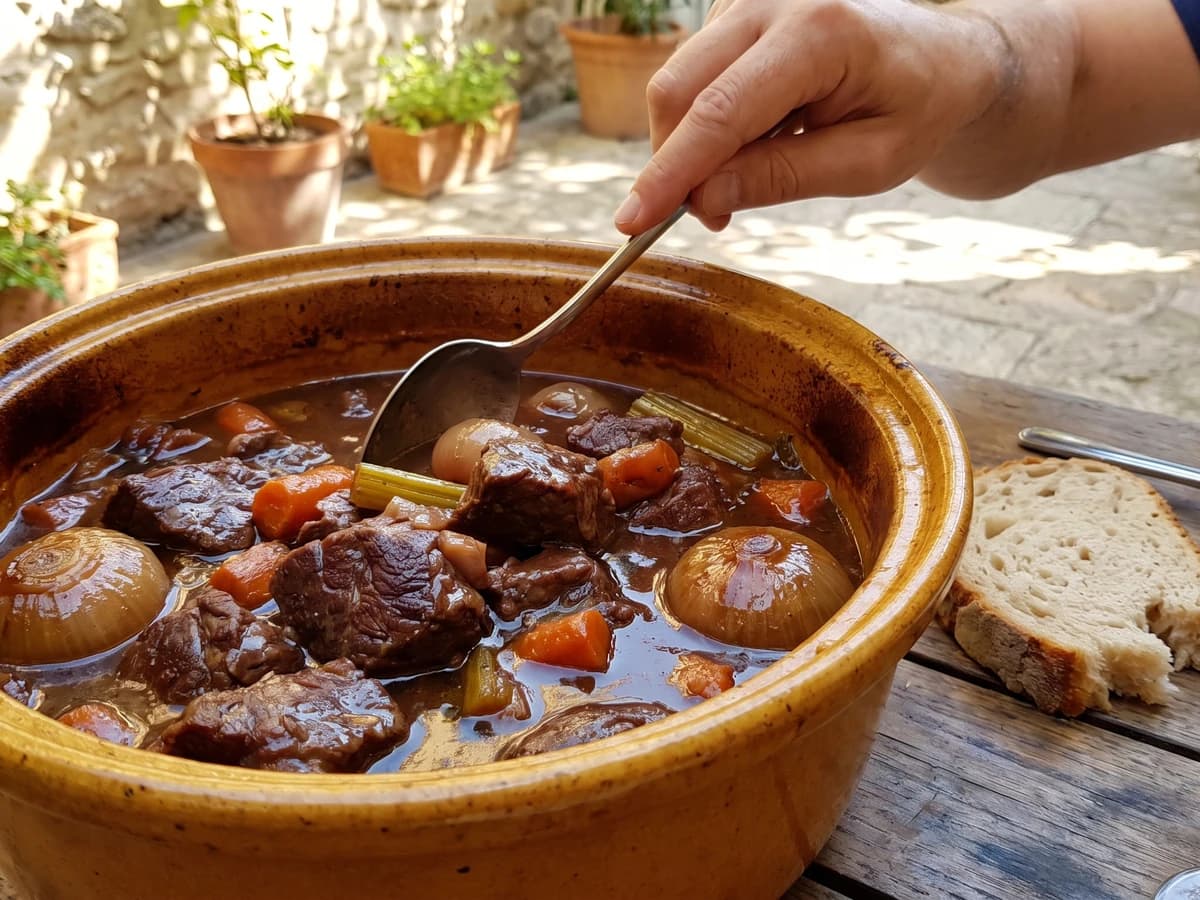
Queue de Bœuf en Hochepot gathers oxtail, pig's trotter and ear, cabbage, roots, and grilled chipolatas around a clear, gelatin-rich broth whose quiet simmer keeps every piece tender and distinct.
Chef Juliette
Beef shoulder larded with bacon, sharpened by red wine and vinegar, then sealed with garlic, vegetables, and dry lemon peel until the low oven turns it yielding and the gravy darkly glossy.