Chef Juliette
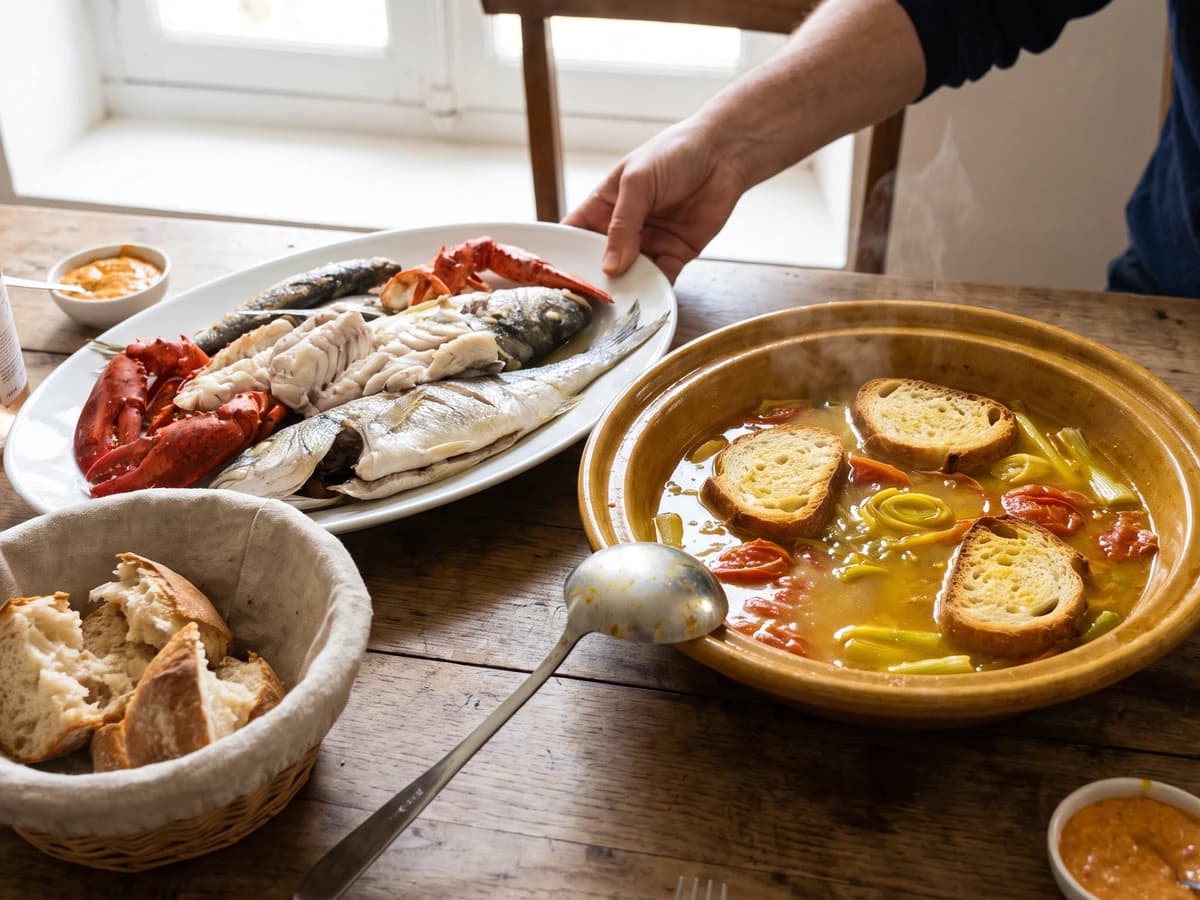
Bouillabaisse à la Marseillaise
Marseille's great fish stew, saffron-gold and garlic-scented, proves that a hard boil can be the careful choice: it binds olive oil into broth before the whole pot meets bread.
A cooking platform built around craft, culture, and the stories behind what we eat.

Created by Chef Juliette
Based on No. 742, Soupe Aux Cerises, from Le Guide Culinaire (1907) by Auguste Escoffier
Soupe aux Cerises turns ripe cherries, cinnamon, lemon, wine, and fécule into a garnet first course, with whole fruit beneath floating Biscottes and the almond perfume once drawn from the stones.
Soupe aux Cerises (cherry soup) teaches restraint with fruit: cook it fast enough to release its flesh, then stop before its perfume and garnet color turn dull. Its body comes from the fine sieve and measured fécule (starch), not cream; the wine enters last, where its fragrance stays alive, and the Biscottes wait in the tureen to drink at their edges.
The book's kitchen assumed two sugar-boilers, a mortar, muslin, and the ease of running both pans at once. For one cook, one stove, one evening, two ordinary saucepans and a fine sieve do the work. The specialized copper and muslin are scaffolding; the brisk eight-minute boil, the sieve, the four-minute fécule finish, and the off-heat wine are the dish. The quantity here is fixed at about 2 quarts, eight first-course bowls, with the book's ratio of cherries, water, wine, starch, and sugar intact.
The book perfumes the wine with crushed cherry stones. Cracking fruit pits at home is the one point that should not travel: damaged kernels can release cyanide, so a measured drop of food-grade bitter almond extract supplies the intended kernel scent without the hazard. Before the cherries meet the pan, set an eight-minute timer. That brief, brisk boil decides whether Soupe aux Cerises tastes vivid or tired.
Soupe aux Cerises belongs to the French classical service table rather than to one regional larder: grand kitchens took the household combination of summer cherries, wine, spice, and dried bread and served it from a tureen as a composed potage. Its sieved fruit, fécule-thickened liquor, stone-perfumed wine, and Biscottes mark the passage from fruit cookery into the formal canon. Despite its modern place among cream soups, it contains no cream; fruit purée and starch make its body.
Quantity
4½ cups whole (1½ lb / 680 g), with 45 cherries reserved (about 1½ cups / 225 g)
stemmed and pitted
Quantity
3⅝ cups (860 ml / 860 g)
Quantity
2 small strips, each 2 by ½ inch / 5 by 1.25 cm (about 3 g total)
cut without white pith
Quantity
1 piece, 1 inch / 2.5 cm long (about 1 g)
Quantity
2⅔ cups (640 ml / about 635 g)
Quantity
⅛ teaspoon (0.6 ml / about 0.5 g)
Quantity
2¼ tablespoons (34 ml / 18 g)
Quantity
3 tablespoons (45 ml / 45 g)
Quantity
1 tablespoon plus ⅜ teaspoon (17 ml / 14 g)
Quantity
8 small (about 2 oz / 55 g)
| Ingredient | Quantity |
|---|---|
| small, fleshy dark cherriesstemmed and pitted | 4½ cups whole (1½ lb / 680 g), with 45 cherries reserved (about 1½ cups / 225 g) |
| hot water | 3⅝ cups (860 ml / 860 g) |
| lemon rindcut without white pith | 2 small strips, each 2 by ½ inch / 5 by 1.25 cm (about 3 g total) |
| cinnamon stick | 1 piece, 1 inch / 2.5 cm long (about 1 g) |
| ruby Port or dry red Bordeaux-style wine | 2⅔ cups (640 ml / about 635 g) |
| food-grade bitter almond extract | ⅛ teaspoon (0.6 ml / about 0.5 g) |
| fécule de maïs (cornstarch) | 2¼ tablespoons (34 ml / 18 g) |
| cold water | 3 tablespoons (45 ml / 45 g) |
| caster sugar | 1 tablespoon plus ⅜ teaspoon (17 ml / 14 g) |
| Biscottes (rusks) | 8 small (about 2 oz / 55 g) |
Stem and pit the cherries over a tray so none of their juice is lost. Reserve 45 of the neatest whole cherries for the garnish and put the remaining fruit and any collected juice into a 4-quart nonreactive saucepan. Discard the pits without cracking or tasting them.
Add the hot water, lemon rind, and cinnamon to the saucepan. Bring rapidly to a full boil, then boil briskly for exactly 8 minutes. Keep the pan lively without letting it splash over. The short cooking must soften and open the cherries while their color remains a vivid garnet; a long, lazy simmer gives a duller soup.
While the cherries cook, pour the Port or Bordeaux-style wine into a second saucepan and bring it just to a full boil. Remove it from the heat immediately, stir in the measured bitter almond extract, cover, and leave it off the fire while the cherries are sieved. Measure the extract rather than pouring by eye; the finished soup should suggest the kernel, never taste of marzipan.
Remove and discard the lemon rind and cinnamon. With a slotted spoon, transfer the cooked cherries to a fine-mesh sieve set over a heatproof bowl, leaving their cooking liquor in the saucepan. Press the softened fruit firmly through the sieve with the back of a ladle, then scrape the thick purée from the underside. Stop when only skins remain. This fine sieving is what gives the soup its smooth body without making it heavy.
Whisk the fécule with the cold water until completely smooth. Bring the cherry cooking liquor back to a lively simmer, whisk the slurry once more, and pour it in slowly while whisking. Boil for 30 seconds, until the liquor turns glossy and lightly thickened, then whisk in the sieved purée. If the fécule forms beads or lumps, take the pan off the heat and pass the base through the cleaned sieve before adding the whole cherries. Ça se rattrape. Add the reserved cherries and caster sugar, return the soup to a quick boil, and cook for exactly 4 minutes. It should lightly coat a spoon but still pour freely; if it tightens too far, loosen it with hot water, one tablespoon at a time.
Take the soup off the heat and pour in the scented wine in a steady stream, stirring gently so the whole cherries remain intact. Do not boil it again; the final wine addition restores the aroma driven away by cooking. Transfer the Soupe aux Cerises to a warmed soupière and add the Biscottes just before carrying it to the table, allowing their rims to soften while their centers keep a little bite. Ladle from the bottom so every bowl receives cherries, soup, and rusk. À table!
1 serving (about 245g)
Culinary guides, cultural storytelling, and the editorial depth that makes cooking meaningful.
Discover Culinary ExplorerChef Juliette
Marseille's great fish stew, saffron-gold and garlic-scented, proves that a hard boil can be the careful choice: it binds olive oil into broth before the whole pot meets bread.
Chef Juliette
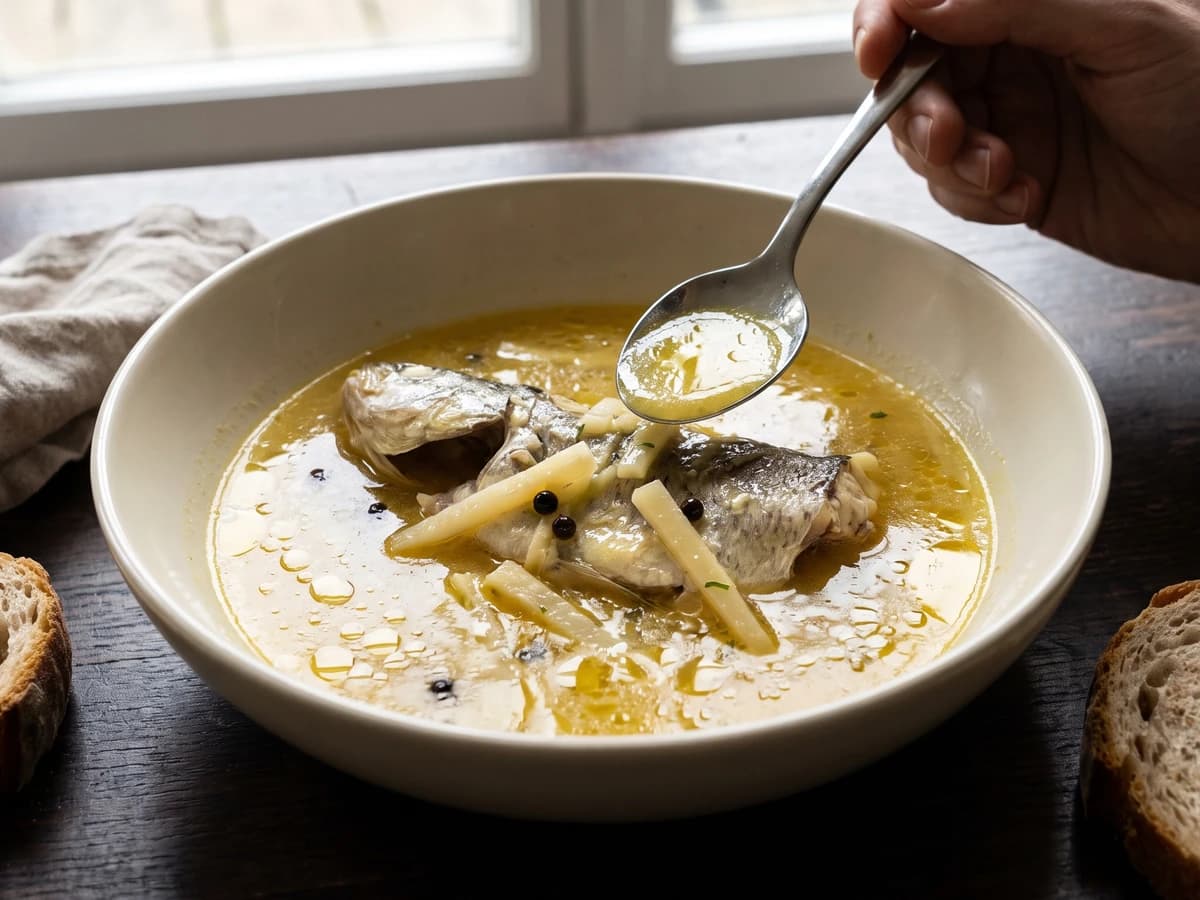
Waterzoi asks fresh, bone-in river fish to thicken its own buttery broth, with parsley root and pepper for company. No flour, no stockpot, just a brisk simmer watched closely.
Chef Juliette
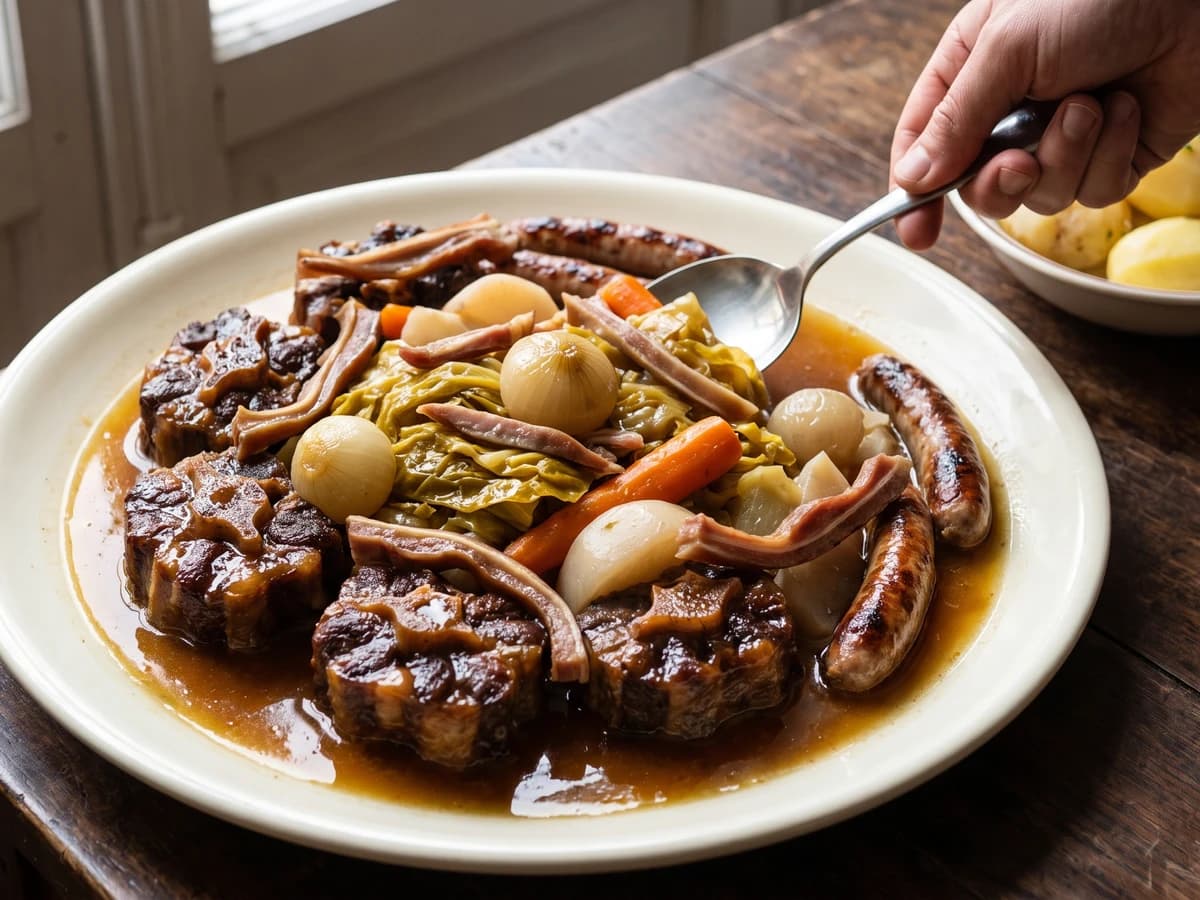
Queue de Bœuf en Hochepot gathers oxtail, pig's trotter and ear, cabbage, roots, and grilled chipolatas around a clear, gelatin-rich broth whose quiet simmer keeps every piece tender and distinct.
Chef Juliette
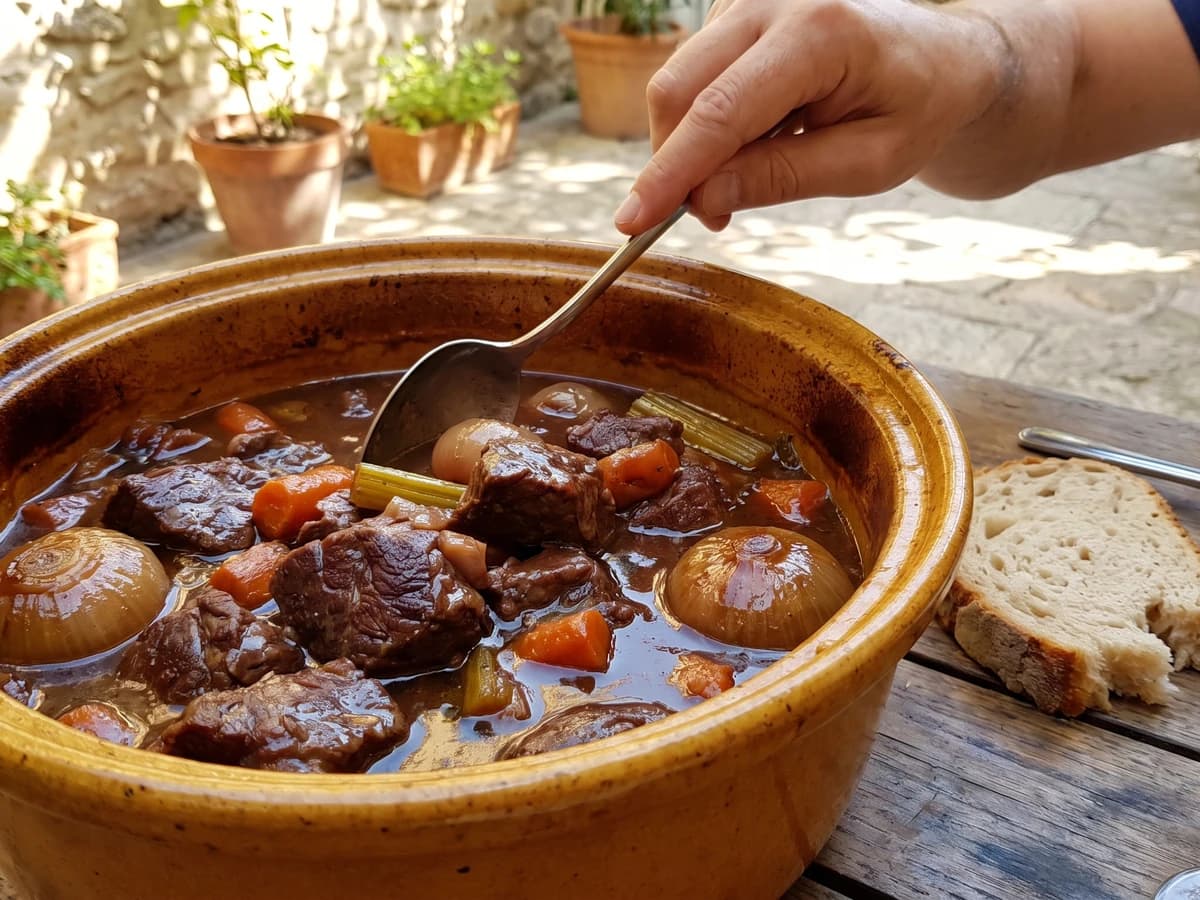
Beef shoulder larded with bacon, sharpened by red wine and vinegar, then sealed with garlic, vegetables, and dry lemon peel until the low oven turns it yielding and the gravy darkly glossy.