Chef Juliette
Bouillabaisse à la Marseillaise
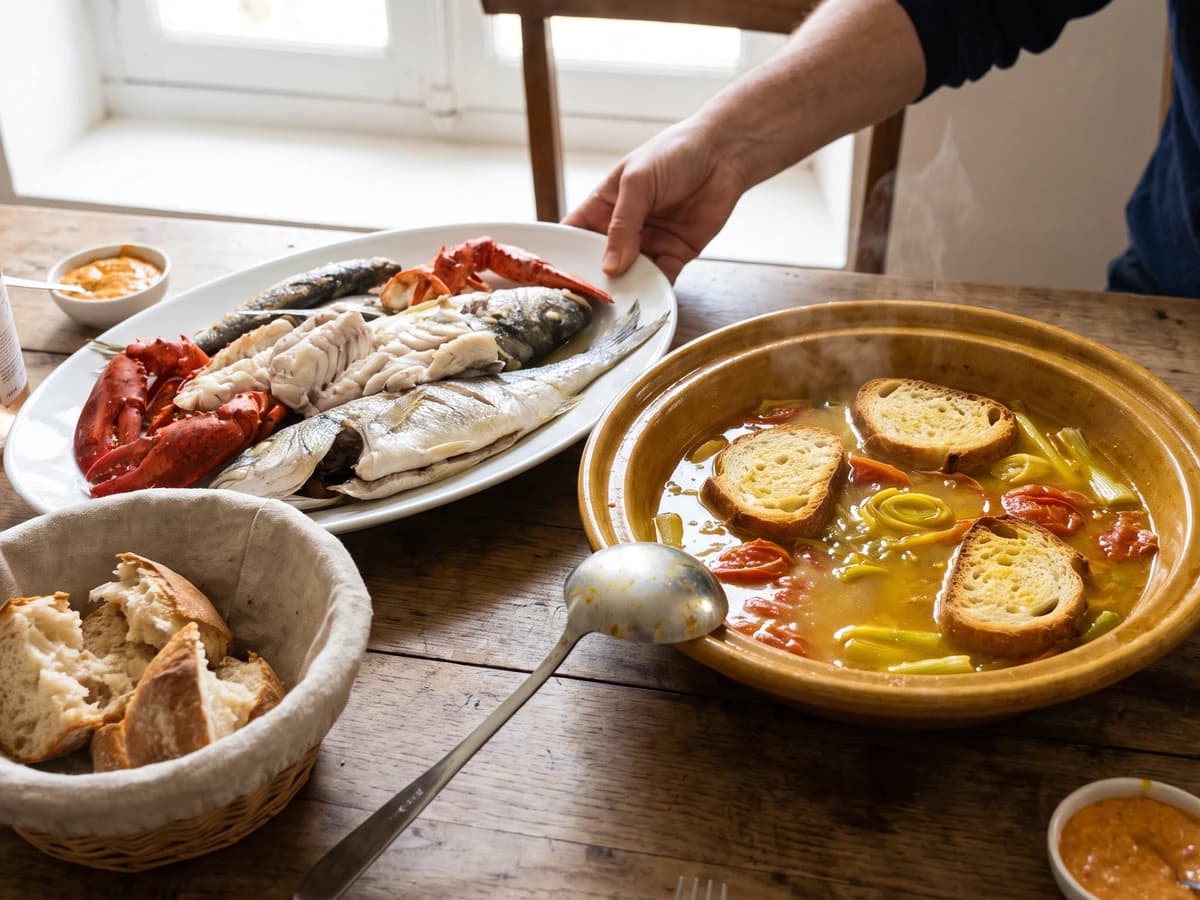
Marseille's great fish stew, saffron-gold and garlic-scented, proves that a hard boil can be the careful choice: it binds olive oil into broth before the whole pot meets bread.
A cooking platform built around craft, culture, and the stories behind what we eat.

Created by Chef Juliette
Based on No. 738, Potage Solférino, from Le Guide Culinaire (1907) by Auguste Escoffier
A market-basket potage with a classical lesson: build sweetness gently in butter, sieve for silk, then finish with potato pearls, green-bean lozenges, chervil, and enough cold butter to make the surface gleam.
Potage Solférino (a sieved leek, tomato, and potato soup) teaches the difference between a vegetable purée and a proper potage: the tamis (fine sieve). The one true thing to know before touching the pan is that its silk comes from passing the vegetables finely, not from cream. The butter supplies richness, but the sieve makes the texture.
The original assumed a saucier on staff, white consommé never off the fire, a cloth tammy, and a spoon-cutter waiting beside the stove. No salamander enters this pot. For one cook, one stove, one evening, a food mill followed by a fine-mesh sieve does the tammy's work, and a small melon baller cuts the twelve potato pearls. The source formula is already close to a two-quart home pot, so its vegetable and butter proportions remain intact; only the vague final quantity of consommé has been given a practical range. Brigade hands are scaffolding. Cooking the garnish separately, sieving the purée, and adding the finishing butter only at service are the dish, and they stay.
Done properly, Solférino is warm coral in the bowl, fluid rather than stodgy, with pale potato balls and green-bean lozenges showing through a butter-bright surface. The step that decides it is the tamis: pass the purée while it is warm, and don't stop at almost smooth.
Potage Solférino belongs to the repertoire of named Parisian potages, its title recalling Solferino in Lombardy, whose battlefield entered public memory across France. The market-basket vegetables are humble, but the classical kitchen gives them formal dress by sieving the purée and adding precisely cut potato balls, green-bean lozenges, and chervil pluches. It is sometimes mistaken for a cream soup, yet its body comes from potato and its richness from butter, not cream.
Quantity
3 tablespoons (45 ml / 42 g)
Quantity
2 medium (about 2 cups / 475 ml / 200 g)
thoroughly washed and thinly sliced
Quantity
1/3 medium (about 1/4 cup / 60 ml / 35 g)
peeled and finely minced
Quantity
1/2 medium (about 1/2 cup / 120 ml / 75 g)
finely minced
Quantity
1 1/3 cups (315 ml / 225 g)
peeled, seeded, well drained, and chopped
Quantity
2 medium (about 2 cups / 475 ml / 340 g)
peeled and thinly sliced
Quantity
6 to 7 cups (1.4 to 1.65 L / 1.4 to 1.65 kg)
divided
Quantity
5 tablespoons (75 ml / 71 g)
cut into small cubes
Quantity
1 large (about 1 1/2 cups / 355 ml / 250 g before cutting)
peeled, for twelve small potato balls
Quantity
2 tablespoons (30 ml / 25 g)
cut diagonally into small lozenges
Quantity
2 tablespoons (30 ml / 3 g)
cut into fine shreds
Quantity
4 cups (950 ml / 950 g)
for cooking the garniture
Quantity
2 teaspoons (10 ml / 12 g), divided, plus more to taste
| Ingredient | Quantity |
|---|---|
| unsalted butter | 3 tablespoons (45 ml / 42 g) |
| medium leeks, white parts onlythoroughly washed and thinly sliced | 2 medium (about 2 cups / 475 ml / 200 g) |
| medium carrotpeeled and finely minced | 1/3 medium (about 1/4 cup / 60 ml / 35 g) |
| yellow onionfinely minced | 1/2 medium (about 1/2 cup / 120 ml / 75 g) |
| pressed tomatoespeeled, seeded, well drained, and chopped | 1 1/3 cups (315 ml / 225 g) |
| floury potatoespeeled and thinly sliced | 2 medium (about 2 cups / 475 ml / 340 g) |
| white consommé or clear unsalted chicken stockdivided | 6 to 7 cups (1.4 to 1.65 L / 1.4 to 1.65 kg) |
| cold unsalted buttercut into small cubes | 5 tablespoons (75 ml / 71 g) |
| large waxy potatopeeled, for twelve small potato balls | 1 large (about 1 1/2 cups / 355 ml / 250 g before cutting) |
| thin French green beanscut diagonally into small lozenges | 2 tablespoons (30 ml / 25 g) |
| chervil pluchescut into fine shreds | 2 tablespoons (30 ml / 3 g) |
| waterfor cooking the garniture | 4 cups (950 ml / 950 g) |
| fine salt | 2 teaspoons (10 ml / 12 g), divided, plus more to taste |
Use a 1/2-inch melon baller to raise twelve neat balls from the waxy potato. Keep them under cold water while you work so they do not darken. Cut the green beans on a sharp diagonal into small lozenges, then pick and finely shred the chervil into pluches. Keep the chervil cool and dry; it goes into the finished soup, never the cooking pot.
Melt the 3 tablespoons butter in a heavy saucepan over low heat. Add the leeks, carrot, and onion with a small pinch of the salt, cover, and étuver, stew gently in butter without colouring, for 10 to 12 minutes. Stir every few minutes. The vegetables should collapse, glisten, and smell sweet while remaining pale. If the butter begins to brown, pull the pan from the heat and stir in a tablespoon of consommé before lowering the flame. Ça se rattrape.
Add the pressed tomatoes and sliced floury potatoes. Turn them through the butter for 2 minutes, then moisten with 1 2/3 cups (395 ml) of the white consommé. Bring the liquid to a bare simmer, cover with the lid slightly ajar, and cook gently for 25 to 30 minutes. The potatoes are ready when they collapse under a spoon and the leeks offer no resistance. If the bottom threatens to catch, add consommé a few spoonfuls at a time; this is a pale vegetable foundation, not a place to chase browned fond.
While the potage simmers, bring the water and 1 teaspoon of the salt to a gentle boil in a small saucepan. Add the potato balls and simmer, never boil hard, for 7 to 10 minutes, until a fine knife enters their centres cleanly. Lift them out carefully. Bring the water back to a lively boil, add the green-bean lozenges, and cook for 2 to 3 minutes, until tender but still distinctly green. Drain and refresh the beans briefly under cold water, then keep both garnishes separate.
Crush the cooked vegetables in their liquid with a potato masher, then pass everything through the fine disk of a food mill. Rub that purée through a fine-mesh sieve with the back of a ladle, working in small batches while it is warm. Leave the dry leek fibres behind. A blender can turn the potato gummy and still leave threads of leek, so the sieve is the honest home equivalent of the old tammy. If the purée cools and becomes stubborn, loosen it with a ladleful of hot consommé and pass it again. If the first result is uneven, rewarm it gently and repeat the sieve. Ça se rattrape.
Return the sieved purée to the clean saucepan. Whisk in the remaining consommé gradually until the soup flows from the ladle in a broad, smooth ribbon and measures about 2 quarts. Bring it to one full boil as the original method directs, then immediately lower the heat and simmer for 3 minutes. If it is too thick, add more consommé; if it is thin, simmer uncovered until it lightly veils the back of a spoon. Taste and correct the salt before adding the finishing butter.
Take the saucepan completely off the heat and wait until the bubbling stops. Monter au beurre, finish by emulsifying the cold butter, whisking in a few cubes at a time until each disappears before adding the next. The potage should turn supple and glossy without becoming greasy. If beads of butter rise to the surface, stop adding butter and whisk in a tablespoon of cold consommé; once the surface is smooth, continue slowly. Never boil the soup after this point or the emulsion will separate.
Warm the potato balls and green-bean lozenges for 30 seconds in a ladleful of the finished potage, then place them in a warmed soupière or divide them among warmed soup plates. Pour over the Solférino and scatter the chervil pluches at the final moment so their fresh anise scent reaches the table intact. Serve immediately. À table!
1 serving (about 240g)
Culinary guides, cultural storytelling, and the editorial depth that makes cooking meaningful.
Discover Culinary ExplorerChef Juliette
Marseille's great fish stew, saffron-gold and garlic-scented, proves that a hard boil can be the careful choice: it binds olive oil into broth before the whole pot meets bread.
Chef Juliette
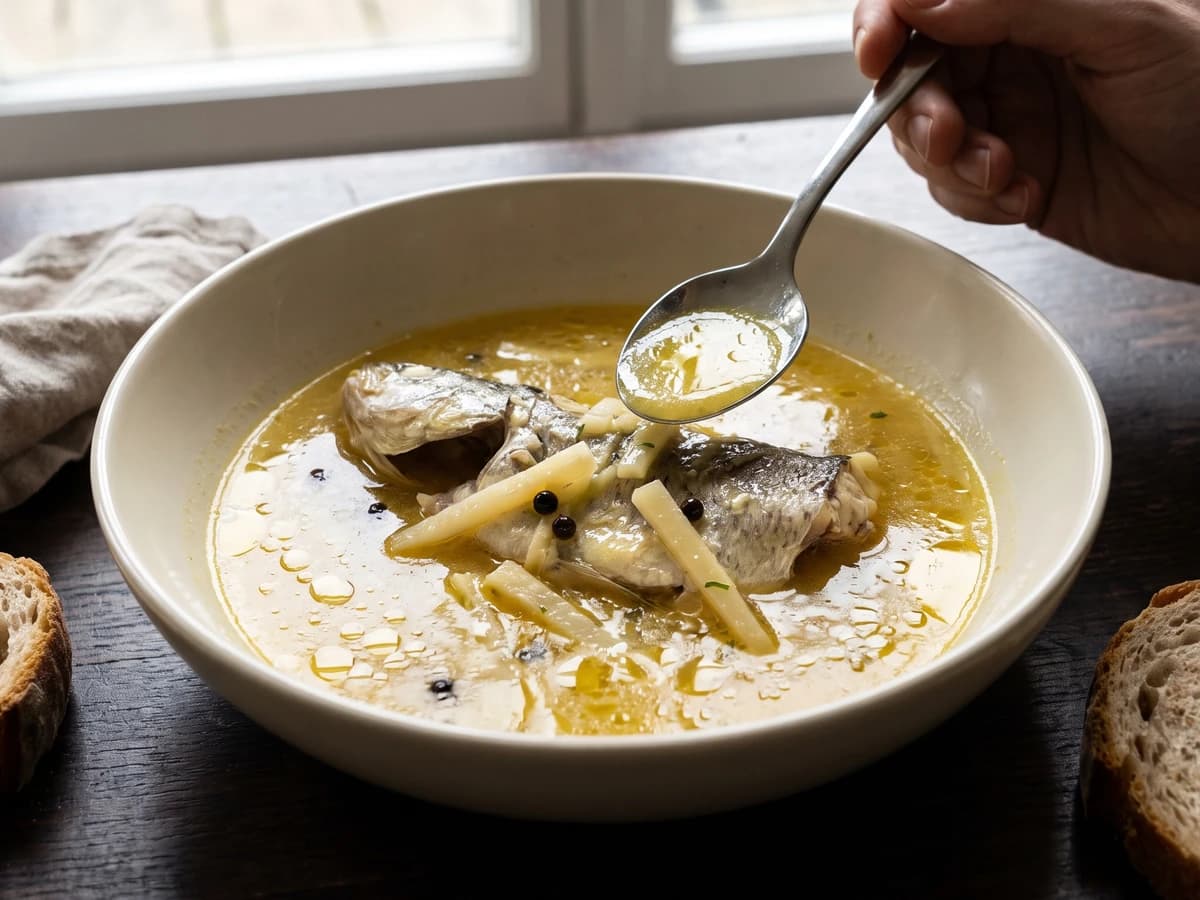
Waterzoi asks fresh, bone-in river fish to thicken its own buttery broth, with parsley root and pepper for company. No flour, no stockpot, just a brisk simmer watched closely.
Chef Juliette
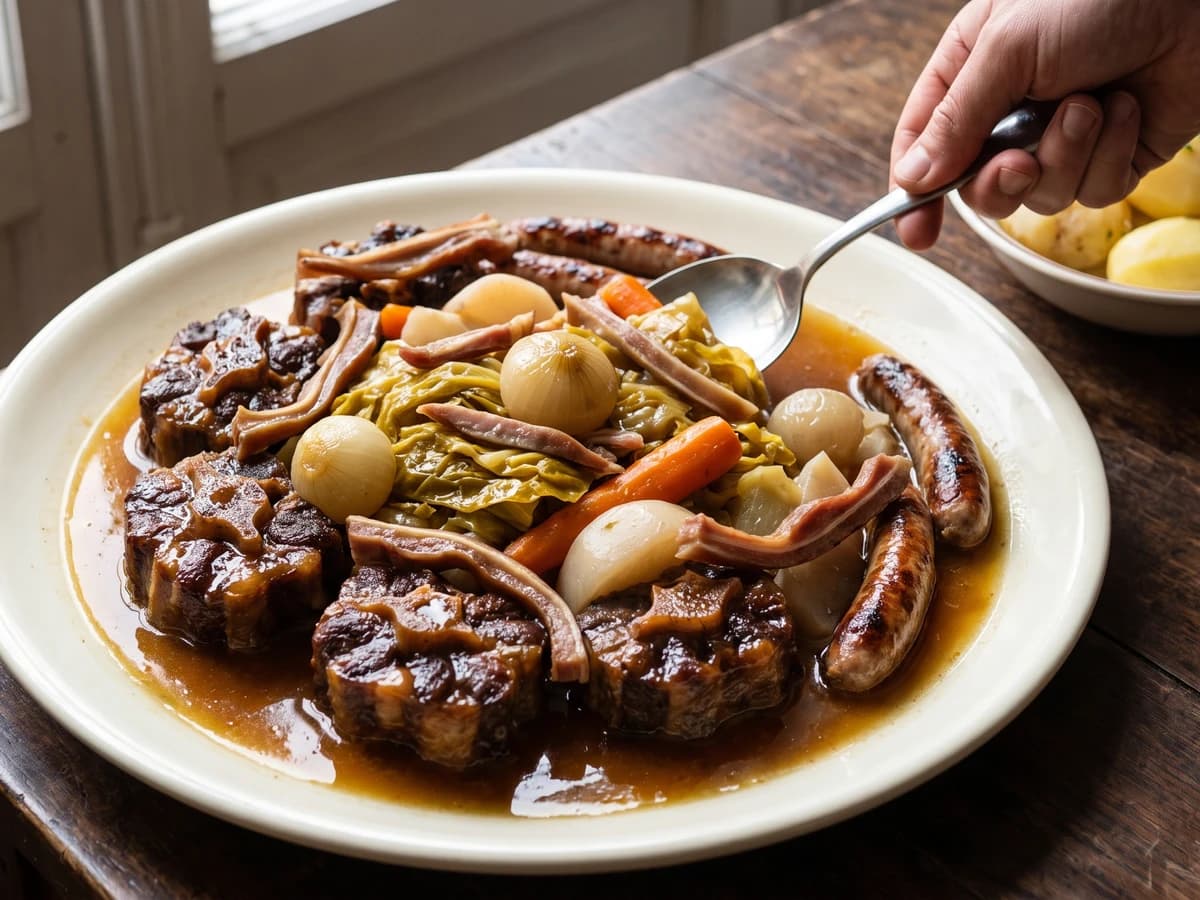
Queue de Bœuf en Hochepot gathers oxtail, pig's trotter and ear, cabbage, roots, and grilled chipolatas around a clear, gelatin-rich broth whose quiet simmer keeps every piece tender and distinct.
Chef Juliette
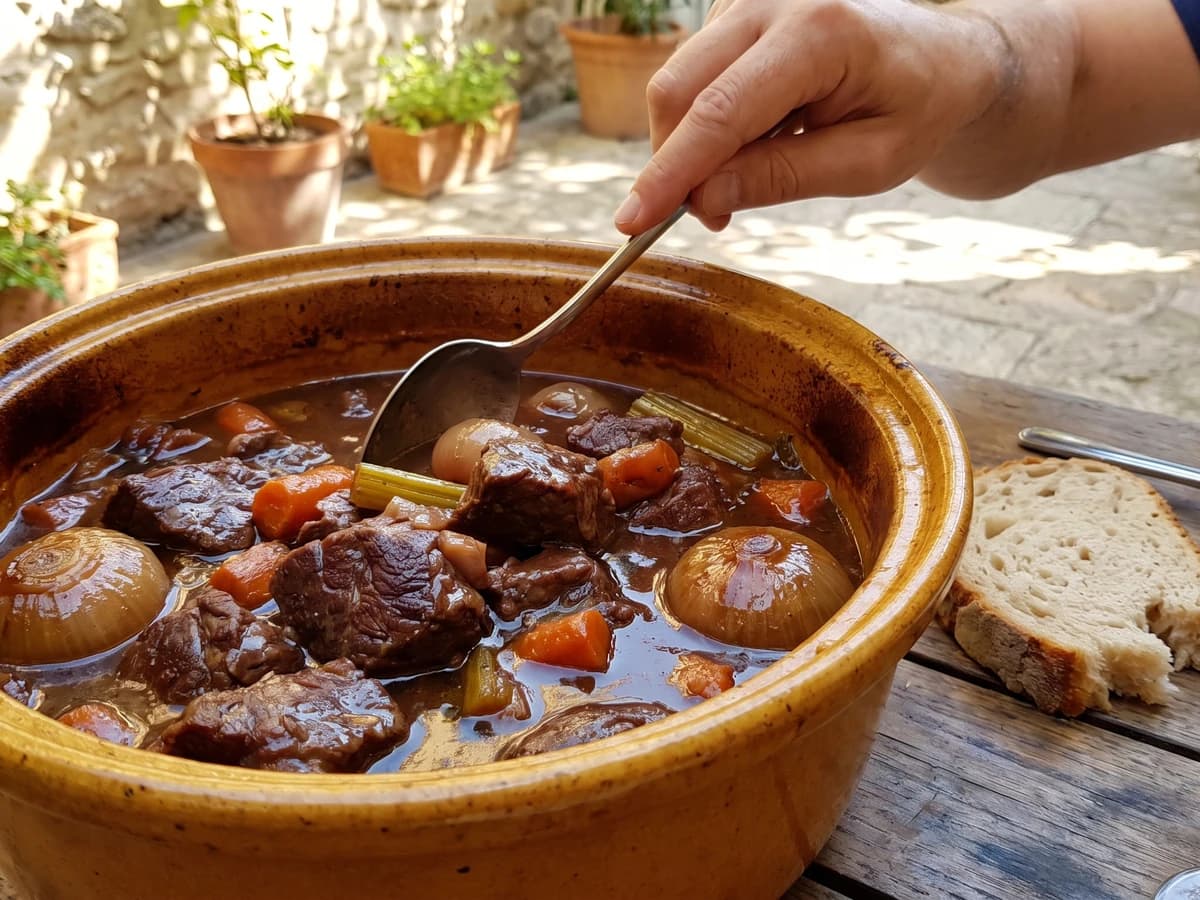
Beef shoulder larded with bacon, sharpened by red wine and vinegar, then sealed with garlic, vegetables, and dry lemon peel until the low oven turns it yielding and the gravy darkly glossy.