Chef Juliette
Bouillabaisse à la Marseillaise
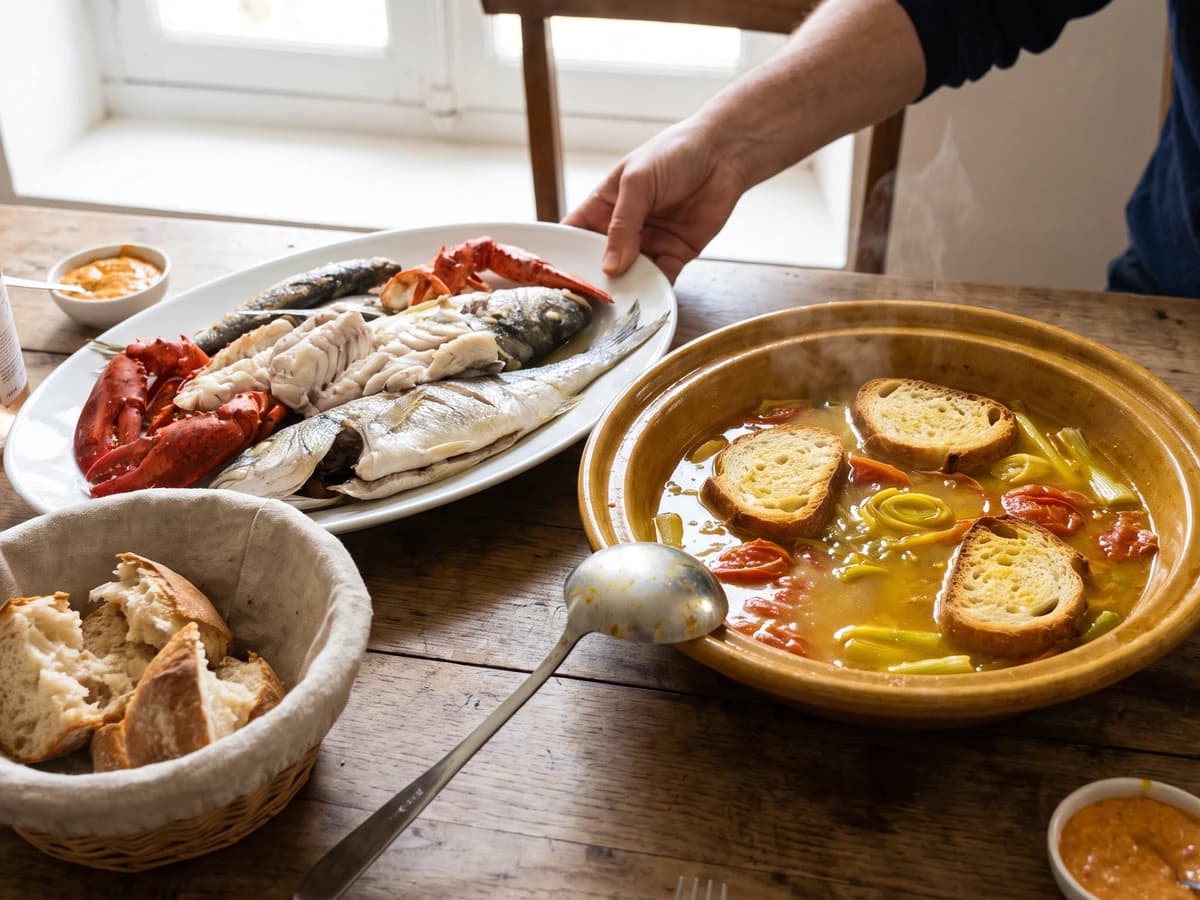
Marseille's great fish stew, saffron-gold and garlic-scented, proves that a hard boil can be the careful choice: it binds olive oil into broth before the whole pot meets bread.
A cooking platform built around craft, culture, and the stories behind what we eat.

Created by Chef Juliette
Based on No. 737, Potage Sigurd, from Le Guide Culinaire (1907) by Auguste Escoffier
Two finished veloutés become one poised soup: potato gives body, tomato gives brightness, and tiny capsicum chicken quenelles bring warmth beneath a final, generous mounting of butter.
Potage Sigurd (Parmentier potato velouté married with tomato velouté and capsicum chicken quenelles) teaches the classical art of composition: two finished soups meet in equal measure, and neither is allowed to disappear. Potato gives body, tomato gives brightness, and the small quenelles supply quiet warmth. The one true thing before touching a pan is this: each velouté must already be correct on its own, because combining two unfinished bases gives you twice the trouble, not one finished soup.
The source assumes a saucier with one pint of Velouté Parmentier and one pint of tomato velouté at hand, plus cold chicken forcemeat ready for twenty quenelles. For this two-quart home batch, every amount is doubled exactly: one quart of each soup, six ounces of forcemeat, two coffeespoonfuls interpreted as two level teaspoons of capsicum, and five ounces of butter. Separate holding pans and a cook assigned to the garnish are brigade scaffolding, so they go; the equal-parts marriage, the poached quenelles, and the last-minute butter finish are the dish, so they stay. One cook, one stove, one evening.
At the table, Potage Sigurd should pour in a pale coral ribbon, glossy with butter, with five pepper-flecked quenelles in each first-course bowl. Once the butter enters, the pot must never boil again. But the step that decides the soup's identity comes first: measure the two finished veloutés in equal volume before they meet.
Potage Sigurd belongs to the named potages of the Parisian grand-hotel table, where a soup's title often signaled a particular combination of established bases and garnish rather than a regional birthplace. Its Norse name is decorative, not geographic: the bowl is French in grammar, joining Parmentier potato velouté to tomato velouté and marking it with capsicum chicken quenelles. It passed readily into home cookery because its complexity is modular, though the two base soups must remain finished preparations rather than being collapsed into one improvised pot.
Quantity
¾ cup (180 ml / 170 g)
Quantity
2 teaspoons (10 ml / 8 g)
seeded and minced nearly to a paste
Quantity
8 cups (1.9 L / 1.9 kg)
for poaching
Quantity
4 cups (960 ml / about 1,000 g)
Quantity
4 cups (960 ml / about 1,000 g)
Quantity
10 tablespoons (150 ml / 142 g)
cut into small cubes
| Ingredient | Quantity |
|---|---|
| cold prepared chicken forcemeat | ¾ cup (180 ml / 170 g) |
| mild fresh red capsicumseeded and minced nearly to a paste | 2 teaspoons (10 ml / 8 g) |
| waterfor poaching | 8 cups (1.9 L / 1.9 kg) |
| prepared Velouté Parmentier | 4 cups (960 ml / about 1,000 g) |
| prepared tomato velouté | 4 cups (960 ml / about 1,000 g) |
| cold unsalted buttercut into small cubes | 10 tablespoons (150 ml / 142 g) |
Measure the finished Velouté Parmentier and tomato velouté separately, using four level cups of each. Keep the chicken forcemeat and cubed butter cold. Set the poaching water over medium heat and bring it to 180°F (82°C), when the surface barely quivers but never boils.
Fold the minced capsicum evenly through the cold chicken forcemeat without beating air into it. Cover and chill for fifteen minutes while the poaching water heats. The forcemeat must remain cold enough to hold a clean shape; if it softens on the spoon, return it to the cold rather than thickening it with flour or crumbs.
Dip two teaspoons in cold water. Take one level teaspoon (5 ml / about 4 g) of forcemeat and turn it between the spoons into a small olive-shaped quenelle. Slide this tester into the barely trembling water and poach it for about four minutes. If it holds and feels lightly springy, shape the remaining mixture into thirty-nine more. If it frays, stop. Ça se rattrape: chill the forcemeat for another fifteen minutes, stir it only until cohesive, and test again.
Poach the quenelles in batches so they have room to move, holding the water between 175°F and 185°F (80°C and 85°C). Turn them once and cook for about four minutes, until gently springy and 165°F (74°C) at the centre. Lift them out with a slotted spoon, moisten them with a spoonful of poaching liquid, and cover. Boiling makes the little quenelles swell roughly and toughen at the edges; patience, not violence.
Pour the Velouté Parmentier and tomato velouté into a heavy saucepan and whisk until the colour is completely even. Heat over medium-low heat, stirring across the pot floor, until the soup reaches a bare simmer. Do not reduce it: the equal proportion and finished consistency of the two veloutés are the structure of Potage Sigurd.
Take the saucepan off the heat. Monter au beurre, finish by whisking in the cold butter, adding it in five portions and letting each disappear before the next goes in. The soup should become satin-glossed and slightly fuller on the spoon. If greasy beads gather at the surface, stop. Ça se rattrape: whisk 1 tablespoon (15 ml / 15 g) cold water with one ladleful of soup in a clean saucepan, then gradually whisk the remaining soup into that new emulsion off the heat. Never boil Potage Sigurd after this finish.
Place five warm capsicum quenelles in each of eight warmed soup bowls, then ladle Potage Sigurd around them so their pepper-flecked tops remain visible. Serve immediately, with no stray herb or decorative flourish competing with the proper garnish. We don't apologize for butter. À table!
1 serving (about 275g)
Culinary guides, cultural storytelling, and the editorial depth that makes cooking meaningful.
Discover Culinary ExplorerChef Juliette
Marseille's great fish stew, saffron-gold and garlic-scented, proves that a hard boil can be the careful choice: it binds olive oil into broth before the whole pot meets bread.
Chef Juliette
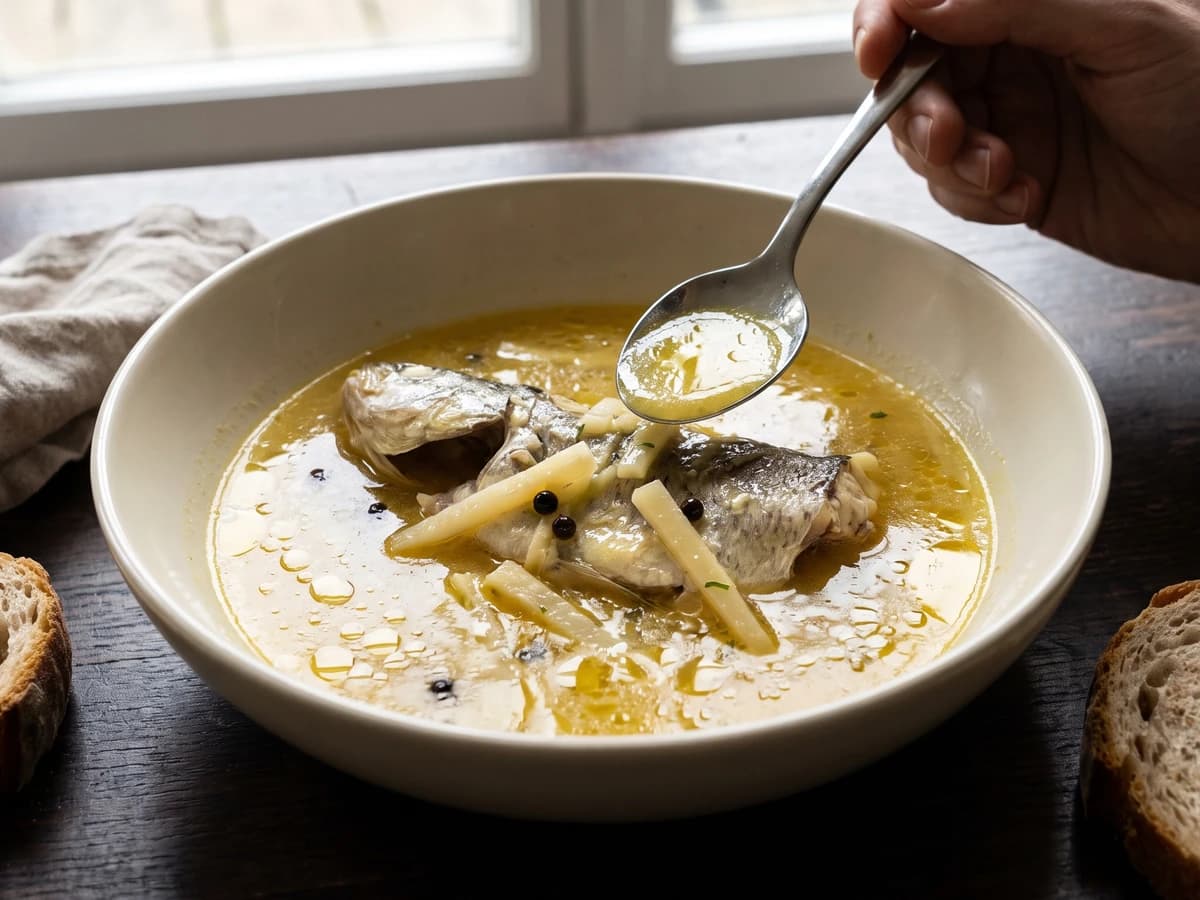
Waterzoi asks fresh, bone-in river fish to thicken its own buttery broth, with parsley root and pepper for company. No flour, no stockpot, just a brisk simmer watched closely.
Chef Juliette
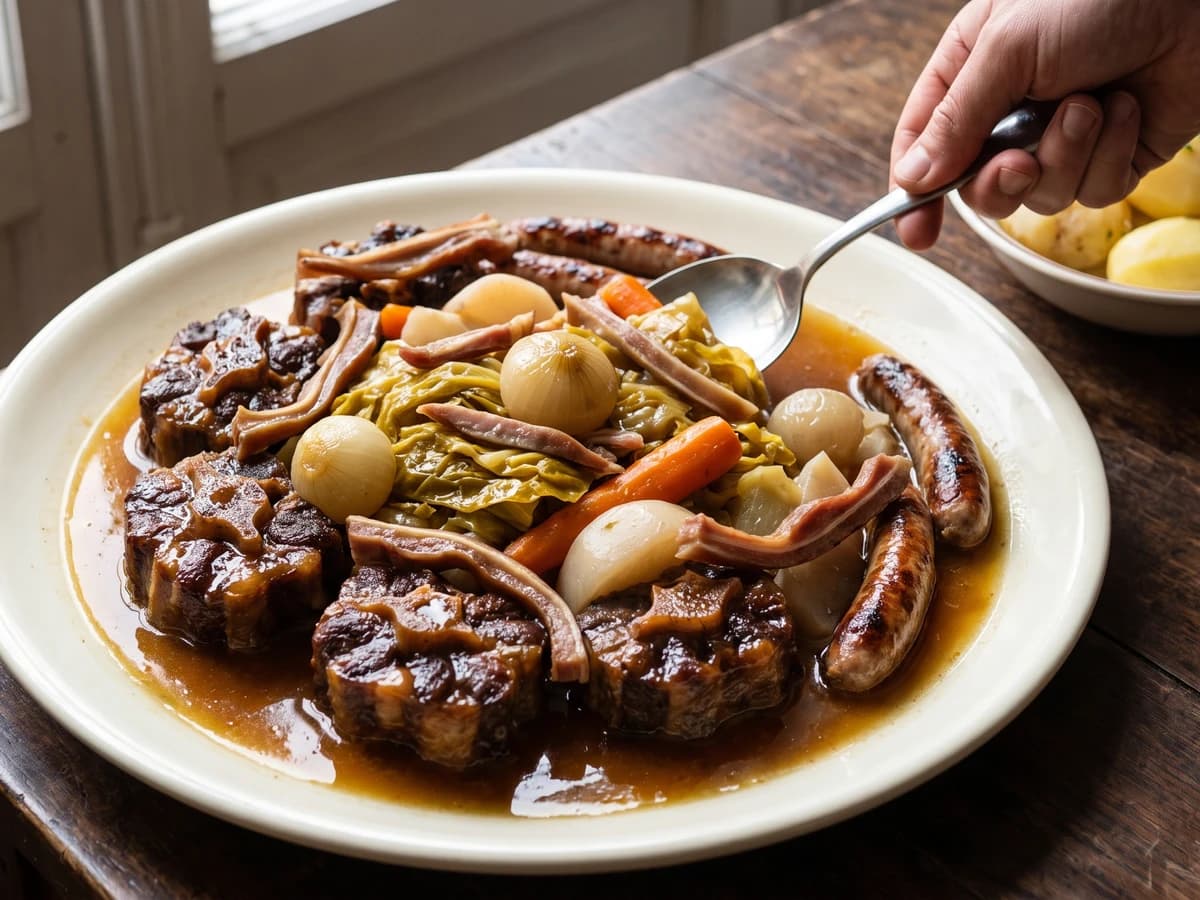
Queue de Bœuf en Hochepot gathers oxtail, pig's trotter and ear, cabbage, roots, and grilled chipolatas around a clear, gelatin-rich broth whose quiet simmer keeps every piece tender and distinct.
Chef Juliette
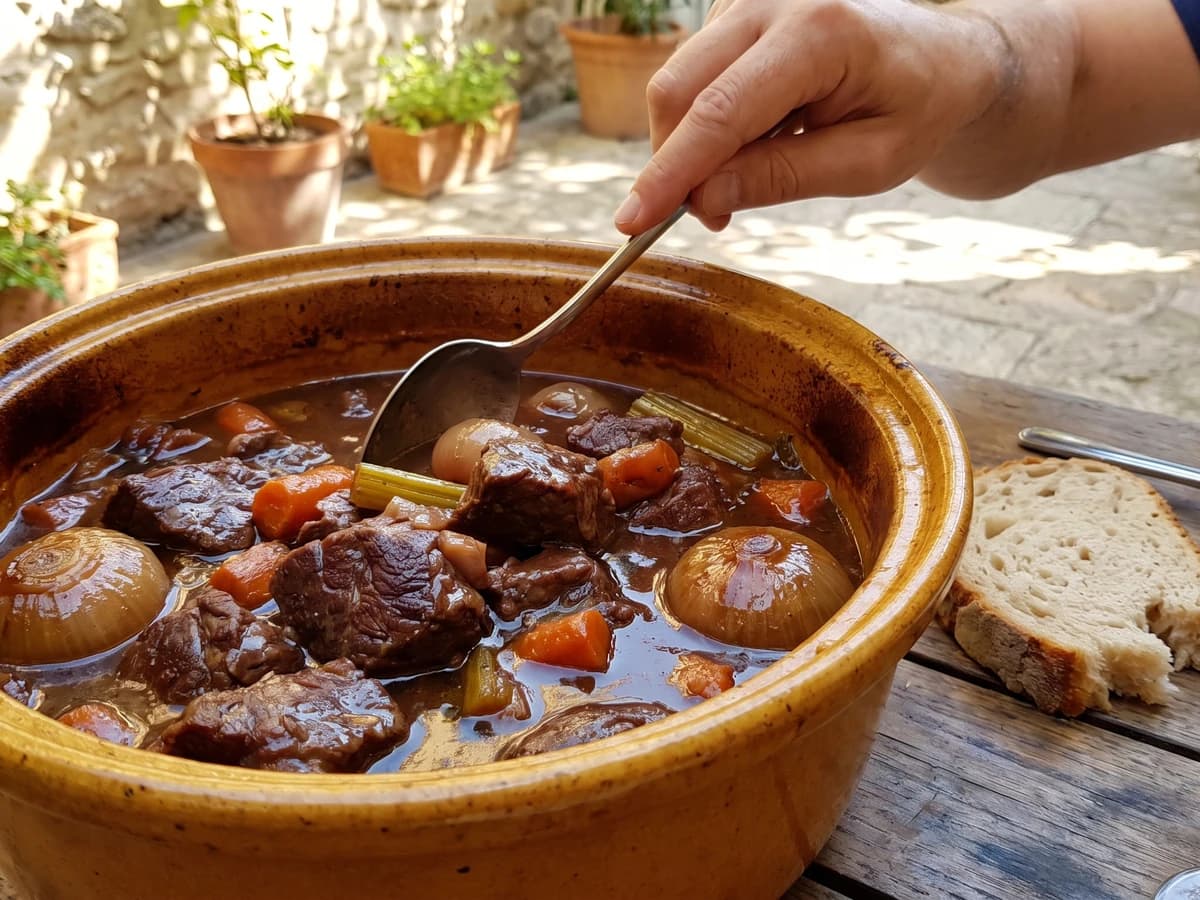
Beef shoulder larded with bacon, sharpened by red wine and vinegar, then sealed with garlic, vegetables, and dry lemon peel until the low oven turns it yielding and the gravy darkly glossy.