Chef Juliette
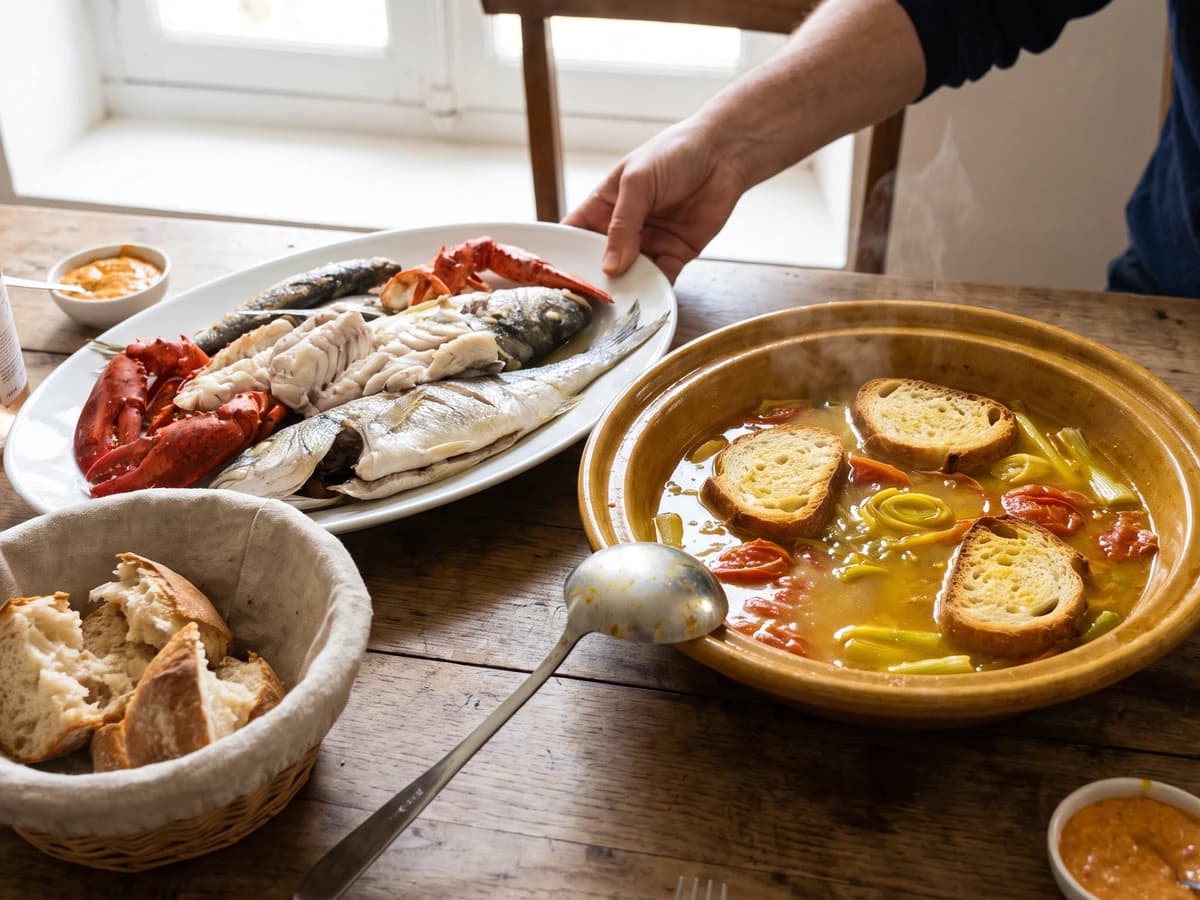
Bouillabaisse à la Marseillaise
Marseille's great fish stew, saffron-gold and garlic-scented, proves that a hard boil can be the careful choice: it binds olive oil into broth before the whole pot meets bread.
A cooking platform built around craft, culture, and the stories behind what we eat.
Created by Chef Juliette
Based on No. 732, Potage Nélusko, from Le Guide Culinaire (1907) by Auguste Escoffier
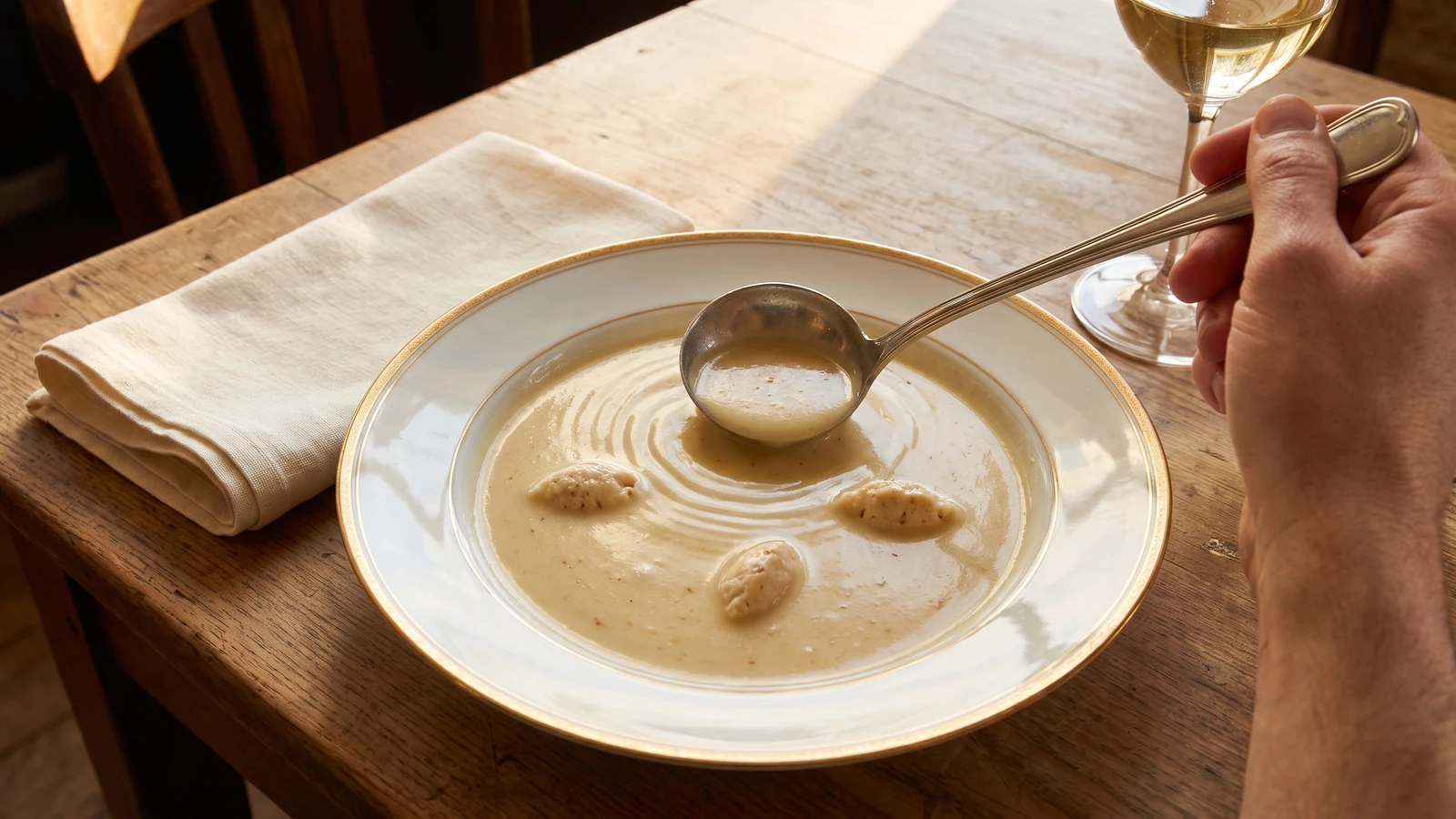
A pale poultry velouté made sumptuous with chicken purée, a silken liaison, and toasted-hazelnut butter, with tiny hazelnut quenelles floating through every ivory bowl at the table.
Potage Nélusko (hazelnut chicken velouté) teaches the discipline of enrichment: a soup can carry roux, Chicken Purée, liaison ordinaire (egg-yolk-and-cream enrichment), and beurre de noisettes (toasted-hazelnut butter) without becoming heavy, provided each layer stays loose enough to receive the next. The one true thing is temperature. Once the liaison enters, the soup must never boil.
The service entry assumed a saucier, liquid Poultry Velouté and Chicken Purée already waiting, a stockpot never off the fire, cold Chicken Forcemeat at hand, and enough hands to shape quenelles on demand. At home, we make only what this pot needs, use a food processor and fine sieve in place of pounding and tamis work, and poach the very small quenelles in one saucepan. The separate bulk batches are brigade scaffolding and can go. The 3:1 velouté-to-purée base, the liaison, the source's 2½ ounces of Hazelnut Butter per four cups of base, and one tablespoon of hazelnut powder per three ounces of forcemeat are the dish, so they stay exactly.
The finished Potage Nélusko should pour like satin, ivory with a butter-gold sheen, while the little chicken-and-hazelnut quenelles remain tender enough to yield to the spoon. Temper the liaison patiently, then finish off the heat; that quiet moment decides the whole pot. One cook, one stove, one evening.
Potage Nélusko belongs to the named potages of the Paris grand-kitchen canon, its title borrowed from a figure familiar on the operatic stage rather than from any French region. Its construction is entirely classical: Poultry Velouté and Chicken Purée take an Ordinary Liaison, then hazelnut appears in both the finishing butter and the Chicken Forcemeat quenelles. As such dishes passed from formal dining rooms into bourgeois cookbooks, Nélusko carried with it the useful grand-kitchen habit of stating one flavor twice, once in the soup and once in the garnish.
Quantity
6½ cups (1.54 L / 1.54 kg)
divided
Quantity
5 tablespoons (75 ml / 70 g)
Quantity
½ cup (120 ml / 65 g)
Quantity
1 large breast (about 8 ounces / 225 g)
Quantity
1 teaspoon (5 ml / 6 g)
divided, plus more only if needed
Quantity
½ teaspoon (2.5 ml / 1 g)
divided
Quantity
5 tablespoons (75 ml / 35 g)
Quantity
6 tablespoons (90 ml / 85 g)
softened
Quantity
1 small breast (about 4 ounces / 115 g)
very cold and diced
Quantity
1
Quantity
2 tablespoons (30 ml / 30 g)
ice-cold
Quantity
4 cups (950 ml / 950 g)
Quantity
1 tablespoon (15 ml / 18 g)
Quantity
1 cup (240 ml / 240 g)
Quantity
5
| Ingredient | Quantity |
|---|---|
| unsalted or low-sodium chicken stockdivided | 6½ cups (1.54 L / 1.54 kg) |
| unsalted butter for the Poultry Velouté | 5 tablespoons (75 ml / 70 g) |
| all-purpose flour | ½ cup (120 ml / 65 g) |
| boneless, skinless chicken breast for the Chicken Purée | 1 large breast (about 8 ounces / 225 g) |
| fine saltdivided, plus more only if needed | 1 teaspoon (5 ml / 6 g) |
| ground white pepperdivided | ½ teaspoon (2.5 ml / 1 g) |
| raw hazelnuts | 5 tablespoons (75 ml / 35 g) |
| unsalted butter for the Hazelnut Buttersoftened | 6 tablespoons (90 ml / 85 g) |
| boneless, skinless chicken breast for the Chicken Forcemeatvery cold and diced | 1 small breast (about 4 ounces / 115 g) |
| large egg white | 1 |
| heavy cream for the Chicken Forcemeatice-cold | 2 tablespoons (30 ml / 30 g) |
| water for poaching the quenelles | 4 cups (950 ml / 950 g) |
| fine salt for the poaching water | 1 tablespoon (15 ml / 18 g) |
| heavy cream for the Ordinary Liaison | 1 cup (240 ml / 240 g) |
| large egg yolks | 5 |
Heat the oven to 350°F (175°C). Toast the hazelnuts for 8 to 10 minutes, until their centers are golden and the aroma is full and nutty. Rub away the loose skins in a clean towel, cool the nuts completely, then pulse them into a fine powder without letting them turn oily. Divide the powder into 3 tablespoons (45 ml / 21 g) for the Hazelnut Butter and 2 tablespoons (30 ml / 14 g) for the quenelles. Work the larger portion thoroughly into the softened butter; the finished Hazelnut Butter weighs 3¾ ounces (106 g), preserving the source ratio exactly.
Reserve ½ cup (120 ml / 120 g) of the chicken stock for adjusting the soup. Bring the remainder to a bare tremble in a heavy saucepan, add the large chicken breast, and hold the liquid between 175°F and 180°F (79°C and 82°C). Poach gently until the center reaches 165°F (74°C), about 18 to 25 minutes depending on its thickness. Lift out the chicken and cover it loosely while you build the velouté; keep the poaching stock hot.
Melt the 5 tablespoons of butter in a clean 4-quart saucepan. Stir in the flour and cook the roux blanc (white roux) for 2 minutes over gentle heat, stirring constantly; it should smell faintly of warm biscuits but take no brown color. Whisk in the hot chicken stock one ladle at a time, making each addition smooth before the next. Bring it to the gentlest simmer and cook for 20 to 25 minutes, skimming the surface and stirring along the bottom. Strain through a fine sieve and measure 5¾ cups (1.36 L). If there is too much, reduce it gently; if there is too little, add some reserved stock. It should veil a spoon lightly, not cling like a finished sauce.
Chop the poached chicken and process it with ½ cup (120 ml) of the velouté until completely smooth. Add more velouté by spoonfuls until the blades carry the purée freely, then press it firmly through the fine sieve. Measure exactly 1½ cups (355 ml) of finished Chicken Purée, loosening it with a little more velouté if necessary. Measure 4½ cups (1.06 L) of the remaining Poultry Velouté into a clean soup pot. These are the source proportions: three parts velouté to one part purée.
Chill the food-processor bowl and blade for 10 minutes. Process the diced raw chicken with the egg white, ¼ teaspoon of the measured salt, and a small pinch of white pepper until the mixture becomes smooth and tacky. With the machine running, pour in the cold cream gradually, stopping as soon as it is absorbed. Press the Chicken Forcemeat through the sieve, then weigh out 6 ounces (170 g). Fold in the reserved 2 tablespoons of hazelnut powder, exactly one tablespoon for every three ounces of forcemeat. Keep it cold. If it becomes loose or glossy from warmth, chill it for 10 minutes before shaping; flour would bind it, but it would also steal the tenderness.
Bring the water and tablespoon of salt to 175°F to 180°F (79°C to 82°C). Using two small spoons or a ½-teaspoon measure, shape the forcemeat into about 24 very small quenelles and lower them into the water in batches. Poach without boiling for 3 to 4 minutes, turning once, until they feel lightly springy and reach 165°F (74°C) at the center. Test the first one before shaping the rest. If it feathers apart, the forcemeat or water is too warm; chill the mixture, lower the heat, and try again. Ça se rattrape. Drain the quenelles and cover them.
Whisk the measured 1½ cups of Chicken Purée into the 4½ cups of Poultry Velouté. Warm the Potage Nélusko slowly, stirring along the bottom, until it reaches about 180°F (82°C) and looks entirely uniform. Taste before adding more salt, since both the stock and poached chicken carry seasoning. Keep the texture fluid; if it has tightened, loosen it with a spoonful of reserved stock.
Whisk the egg yolks and cup of cream together in a bowl. Add about 1 cup (240 ml) of the hot soup in three gradual additions, whisking constantly, then pour the tempered liaison back into the pot. Stir over the lowest heat until the soup reaches 175°F to 180°F (79°C to 82°C) and lightly coats the spoon. Never let it boil. At the first sign of graininess, take the pot off the heat, transfer the soup to a cool bowl, blend briefly, and pass it through the fine sieve before warming it gently again. A slight curdle can be rescued; fully scrambled yolks cannot.
Take the pot completely off the heat. Whisk in the full 3¾ ounces (106 g) of Hazelnut Butter a small piece at a time, letting each disappear before adding the next. If a greasy film forms, whisk in 1 tablespoon of cool reserved stock and blend briefly; the emulsion will come home. Add the quenelles and warm them for 2 minutes over very low heat without simmering. Adjust the salt, white pepper, and consistency, then ladle three quenelles into each generous bowl. The surface should gleam, not swim in fat. À table!
1 serving (about 250g)
Culinary guides, cultural storytelling, and the editorial depth that makes cooking meaningful.
Discover Culinary ExplorerChef Juliette
Marseille's great fish stew, saffron-gold and garlic-scented, proves that a hard boil can be the careful choice: it binds olive oil into broth before the whole pot meets bread.
Chef Juliette
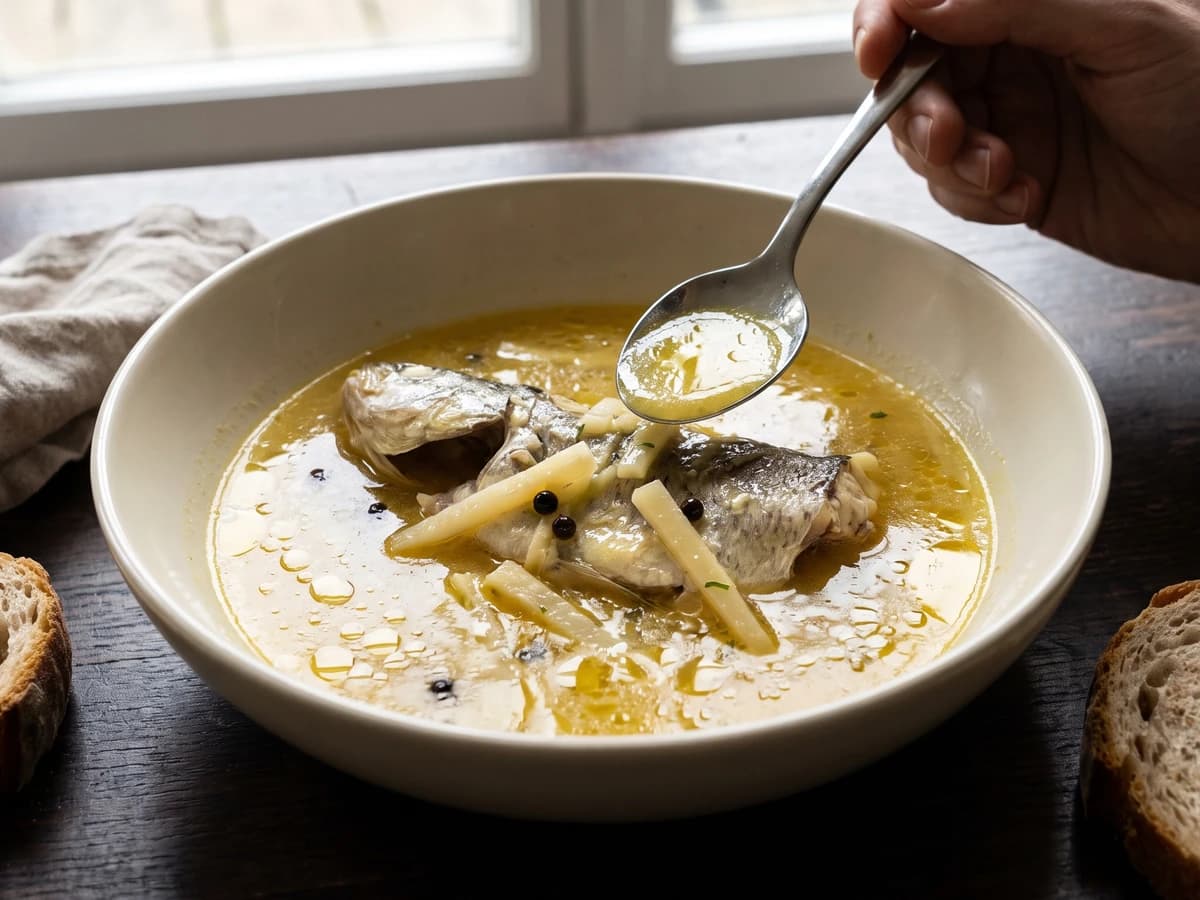
Waterzoi asks fresh, bone-in river fish to thicken its own buttery broth, with parsley root and pepper for company. No flour, no stockpot, just a brisk simmer watched closely.
Chef Juliette
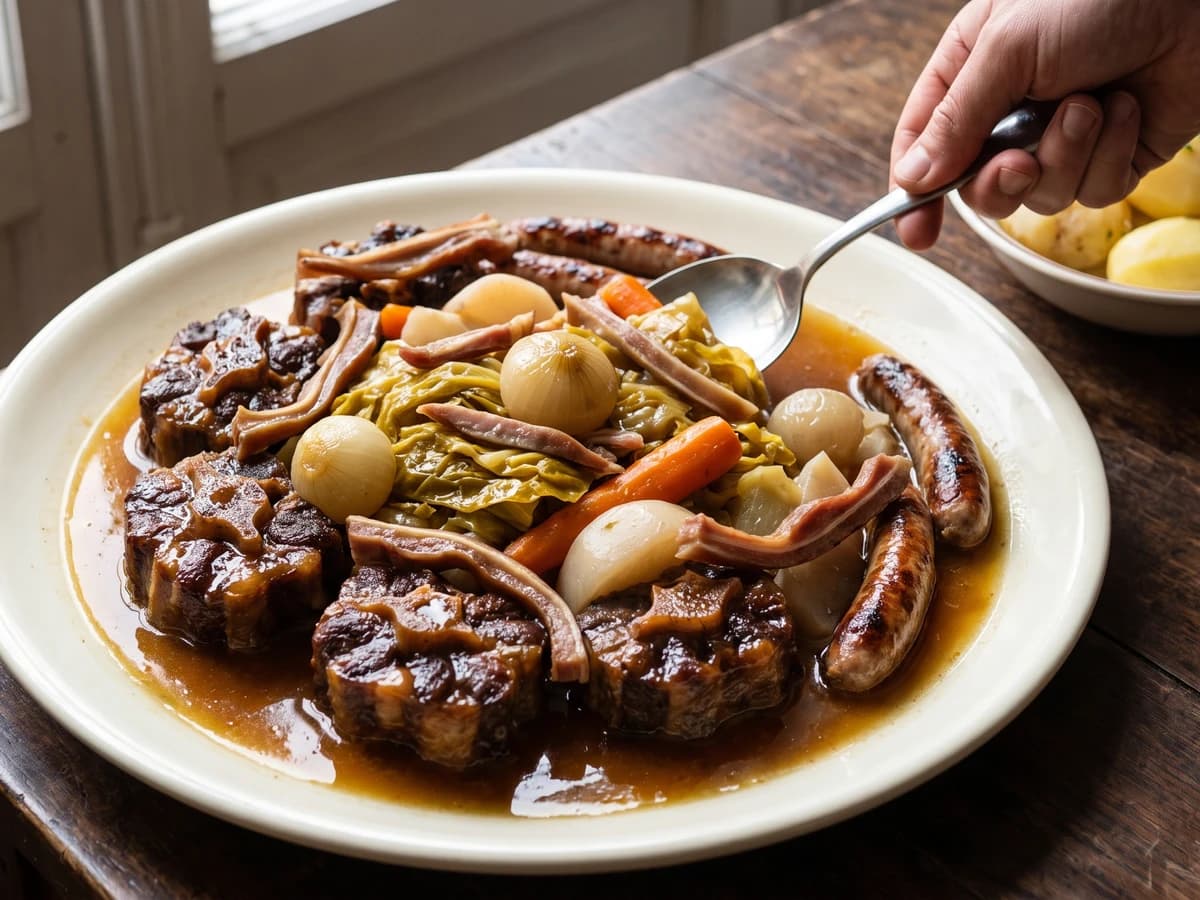
Queue de Bœuf en Hochepot gathers oxtail, pig's trotter and ear, cabbage, roots, and grilled chipolatas around a clear, gelatin-rich broth whose quiet simmer keeps every piece tender and distinct.
Chef Juliette
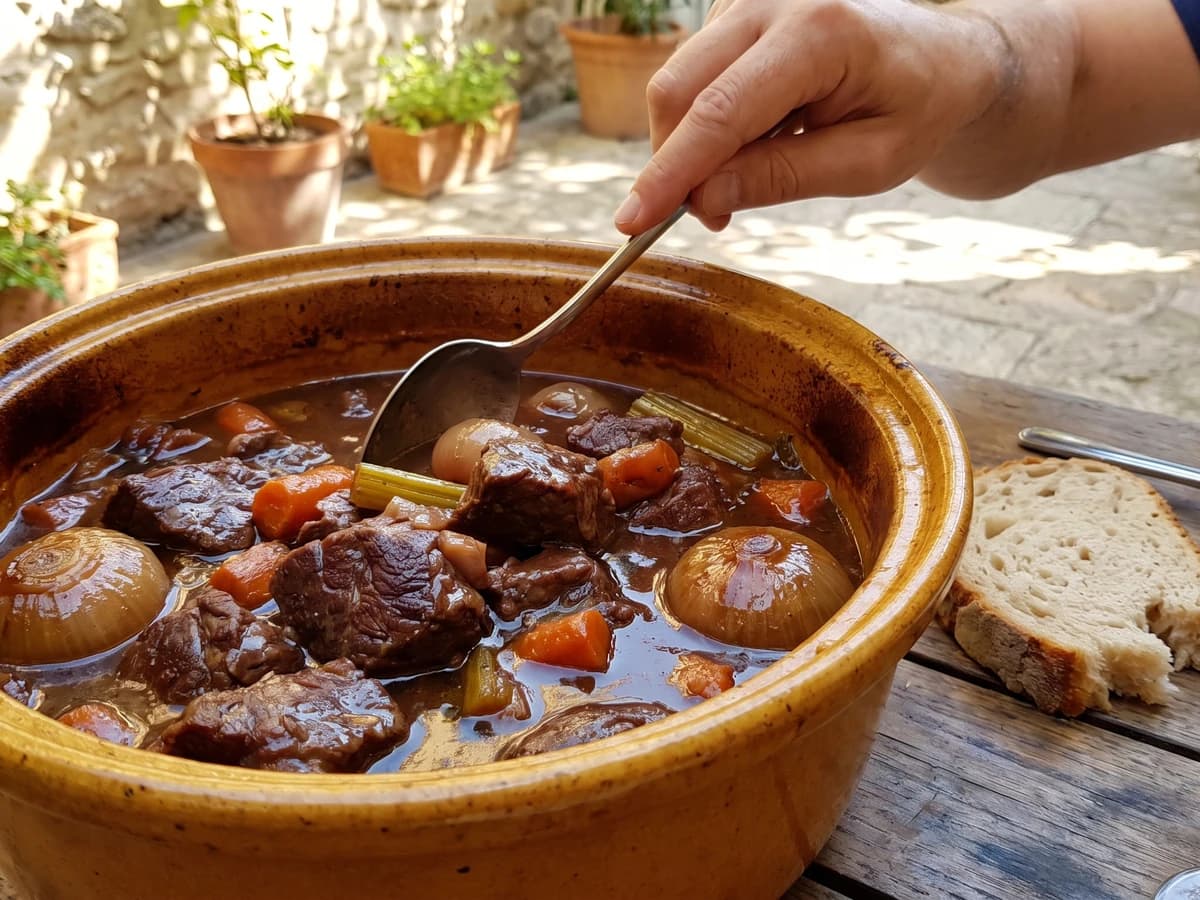
Beef shoulder larded with bacon, sharpened by red wine and vinegar, then sealed with garlic, vegetables, and dry lemon peel until the low oven turns it yielding and the gravy darkly glossy.