Chef Juliette
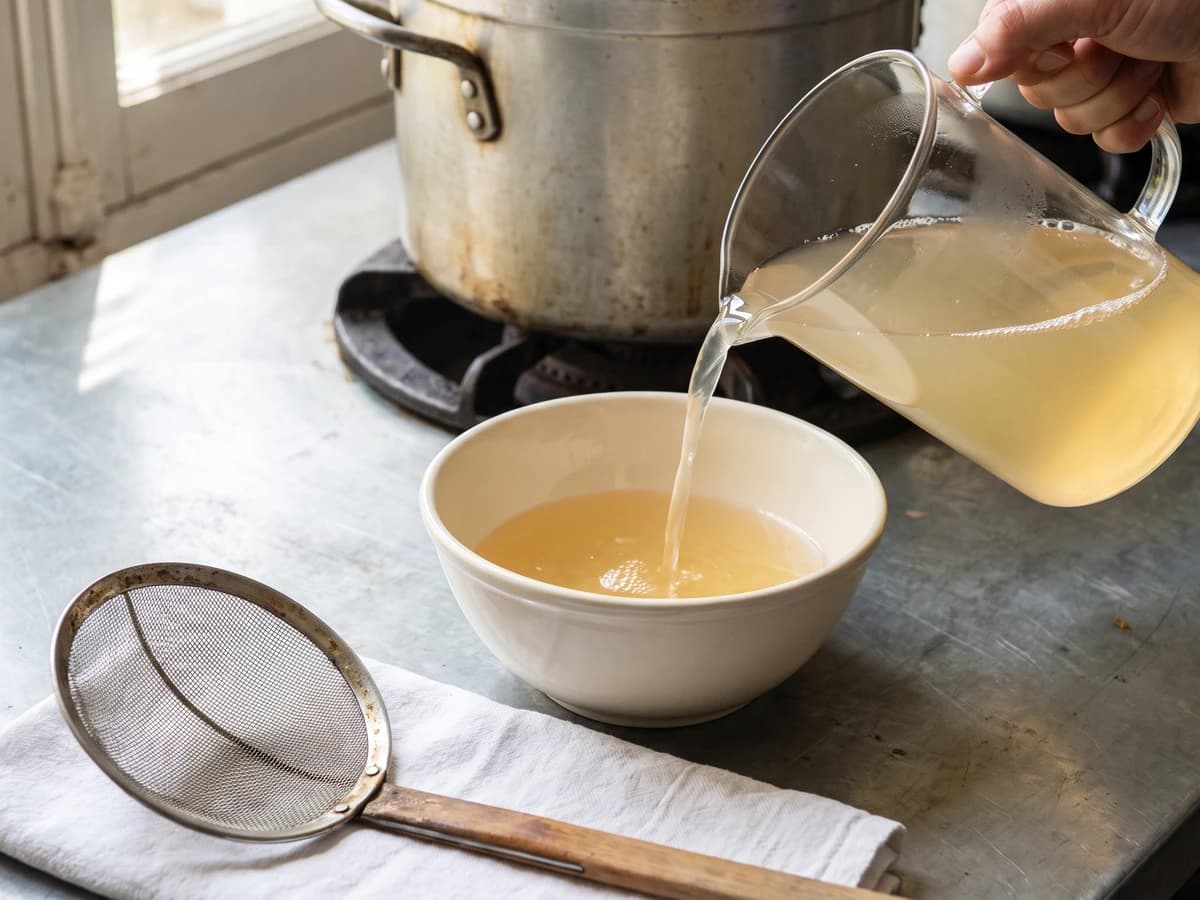
Ordinary or White Consommé
Beef shin, lean beef, and fowl begin in cold water and rise slowly toward a tremble. Skim before the boil, and you learn the quiet discipline that gives every clear French broth its backbone.
A cooking platform built around craft, culture, and the stories behind what we eat.
Created by Chef Juliette
Based on No. 73, Ordinary Chaud-Froid Sauce, from Le Guide Culinaire (1907) by Auguste Escoffier
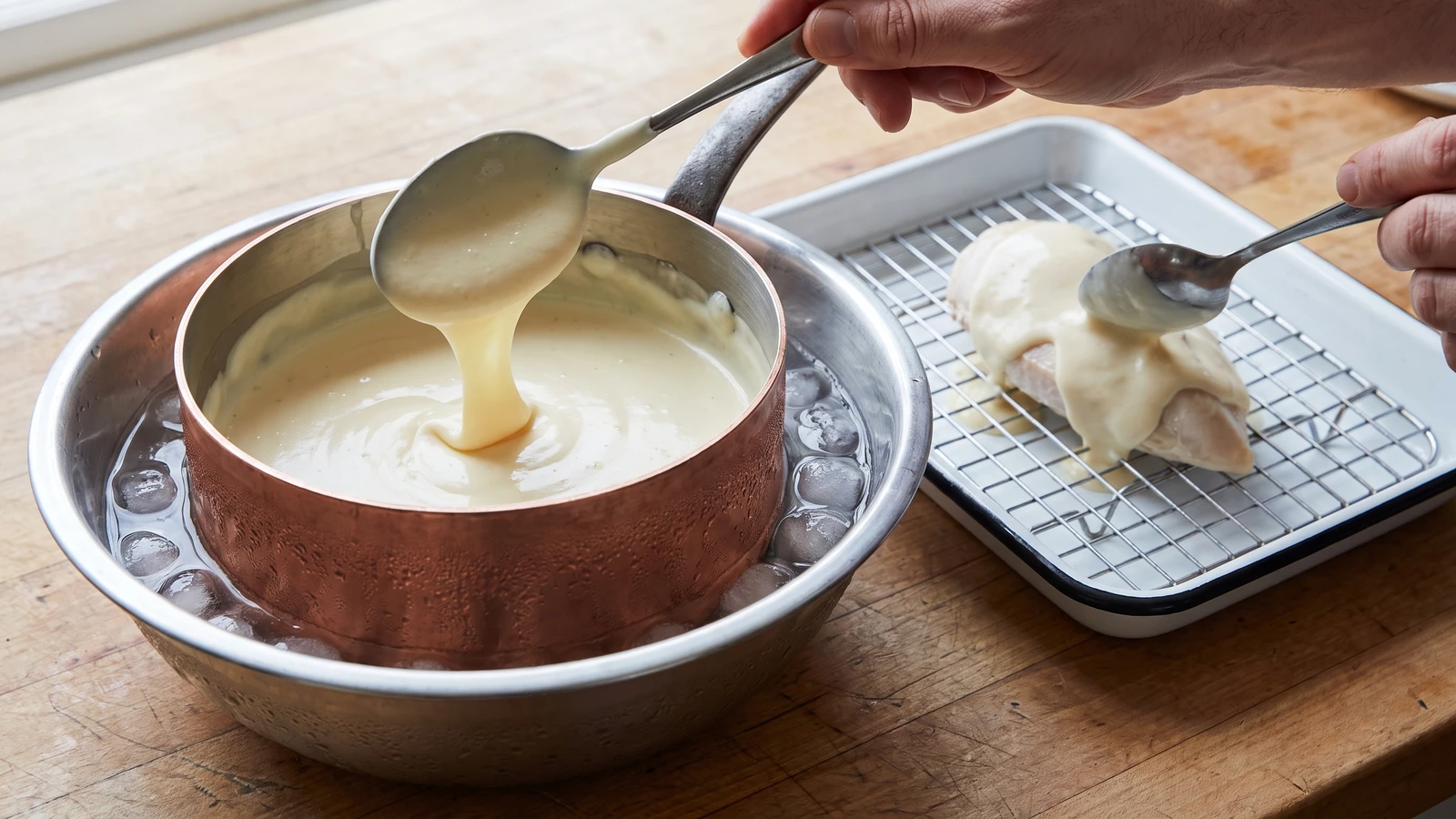
Sauce chaud-froid ordinaire turns Allemande, stock, aspic, and restrained cream into an ivory coating that sets smooth, provided you stir as it cools and catch the proper pouring moment.
Sauce chaud-froid ordinaire (ordinary hot-cold coating sauce) teaches one true thing before you touch a pan: its final texture is decided away from the heat. The reductions build flavour and concentration, but the spoon kept moving as the sauce cools is what gives you an unbroken ivory coat instead of a skin, lumps, and regret.
The source assumes the established white chaud-froid method, a saucier at the stove, clear stock always ready, and another pair of hands available while the sauce cooled. A salamander has no work here; no browning belongs in this pale sauce. At home, a wide heavy pan, a fine sieve, and a bowl nested in ice replace the brigade. The large batch and spare hands were scaffolding. The two reductions and the attentive cooling are the dish, and they stay.
Allemande Sauce replaces velouté here and brings its own liaison, so the source rightly cuts the cream to one-quarter pint. This two-quart home batch doubles that measure with the rest of the formula, preserving the proportion while making enough for a generous dinner-party platter. One cook, one stove, one evening. Set up the ice bath before you light the burner; the cooling stir is the step that matters most.
Chaud-froid belongs to the cold buffet of the Parisian grand kitchen, where poultry, game, fish, and molded garnishes were cooked, chilled, and masked so a platter held its polish through service. Its name describes that passage from hot preparation to cold presentation, not a sauce intended for two serving temperatures. The ordinaire formula is not a lesser version: within the classical sauce family it replaces velouté with enriched Allemande and therefore needs less cream, a distinction that traveled from professional larder work to the bourgeois dinner table.
Quantity
8 cups (1.9 L / 1.95 kg)
Quantity
3 cups (710 ml / 710 g)
Quantity
3 cups (710 ml / 710 g)
cut into small pieces
Quantity
1 cup (240 ml / 240 g)
gently warmed
| Ingredient | Quantity |
|---|---|
| finished Allemande Sauce | 8 cups (1.9 L / 1.95 kg) |
| clear white poultry stock | 3 cups (710 ml / 710 g) |
| soft-set white aspic jellycut into small pieces | 3 cups (710 ml / 710 g) |
| heavy creamgently warmed | 1 cup (240 ml / 240 g) |
Mark the reductions before heat enters the picture. Pour 5½ cups (1.3 L) of water into the empty pan and mark that depth on a straight wooden skewer, then repeat with 8 cups (1.9 L); empty and dry the pan. Set a heatproof bowl inside a larger bowl of ice water, with a flexible spatula ready. The brigade had another pair of hands to stir while the saucier moved on. Your ice bath is the honest equivalent.
Combine the Allemande Sauce and white poultry stock in the wide pan. Bring them slowly to the smallest steady simmer, whisking across the bottom, then reduce to the first mark, 5½ cups (1.3 L), about 40 to 50 minutes. Keep the movement lazy, never rolling. If pale flecks appear, lift the pan off the heat immediately and whisk in 2 tablespoons of the measured cream; pass the sauce through a fine sieve into a clean pan, then continue over gentler heat.
Add the pieces of white aspic jelly and stir until every one has dissolved before pouring in the remaining warm cream. Return the sauce to a gentle simmer and reduce to the second mark, 8 cups (1.9 L), stirring often enough that nothing catches. Hot, it should veil the spoon lightly, not sit on it like paste. Do not chase the final thickness in the pan; the aspic supplies that body as the chaud-froid cools. If it already looks heavy or gluey, whisk in warm water a tablespoon at a time.
Pass the sauce through a dampened fine-mesh sieve into the prepared heatproof bowl. Let it run through under its own weight and resist pressing the residue, which forces coarse particles back into the sauce. Move the bowl immediately into the ice bath. Smoothness now depends as much on cooling as it did on reduction.
Stir continuously with the spatula, scraping the sides and bottom and turning the bowl occasionally so the sauce cools evenly without taking in air. At roughly 24°C (75°F), it will become ivory, glossy, and thick enough to fall from the spoon in a broad ribbon. If a skin or little set lumps form, don't fight them cold. Ça se rattrape: set the bowl over a barely warm bain-marie (water bath), stir only until the sauce loosens, strain it again, and return it to the ice bath with the spoon kept moving.
Set thoroughly chilled, dry cooked poultry, fish, or another cold preparation on a rack over a tray. Spoon the chaud-froid from the centre outward in one continuous pass, allowing the excess to fall away without repeated brushing. Chill for 20 to 30 minutes until set; if a fuller white coat is wanted, apply a second thin layer rather than one heavy one. If holding the sauce itself, transfer it to shallow containers, press parchment directly against the surface, and refrigerate promptly. Rewarm it later over a gentle bain-marie, never a boil. Once the platter is set, À table!
1 serving (about 65g)
Culinary guides, cultural storytelling, and the editorial depth that makes cooking meaningful.
Discover Culinary ExplorerChef Juliette
Beef shin, lean beef, and fowl begin in cold water and rise slowly toward a tremble. Skim before the boil, and you learn the quiet discipline that gives every clear French broth its backbone.
Chef Juliette
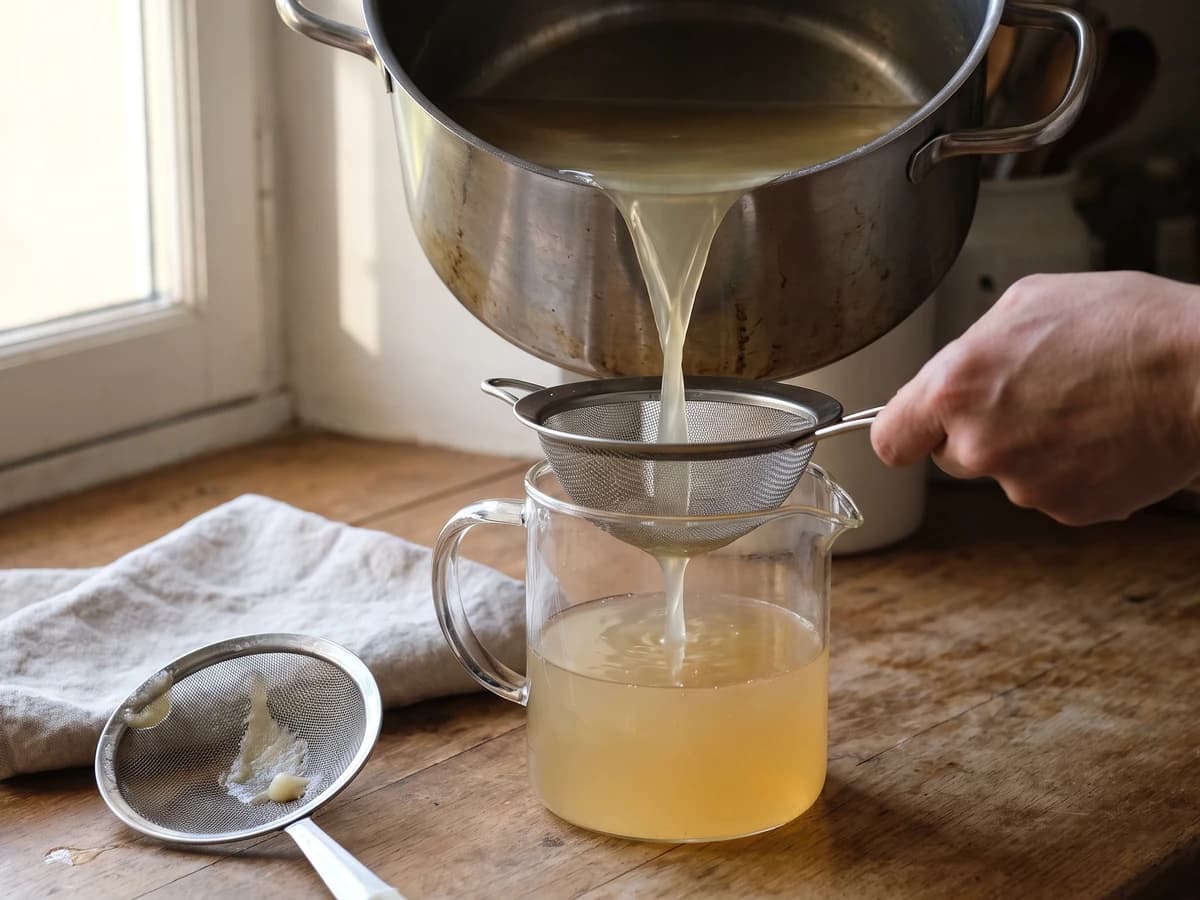
Break the veal bones small, then give them eight hours at a bare tremble. This pale, gelatinous fond becomes the quiet foundation beneath velouté, blanquette, and every sauce that must stay light.
Chef Juliette
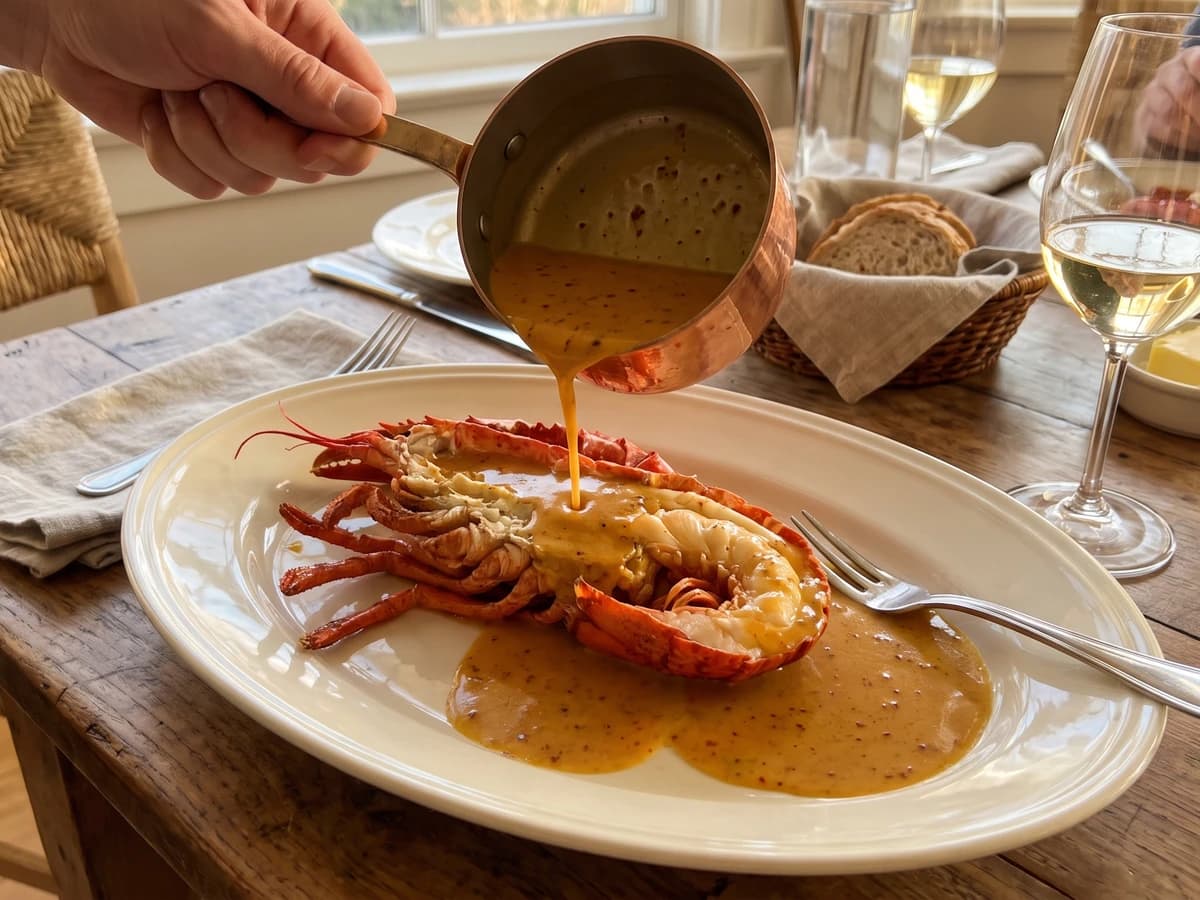
Sauce Orientale concentrates lobster-rich American Sauce with curry, then folds in cream away from the fire: a glossy, gently spiced derivative made for lobster, crayfish, and firm fish.
Chef Juliette
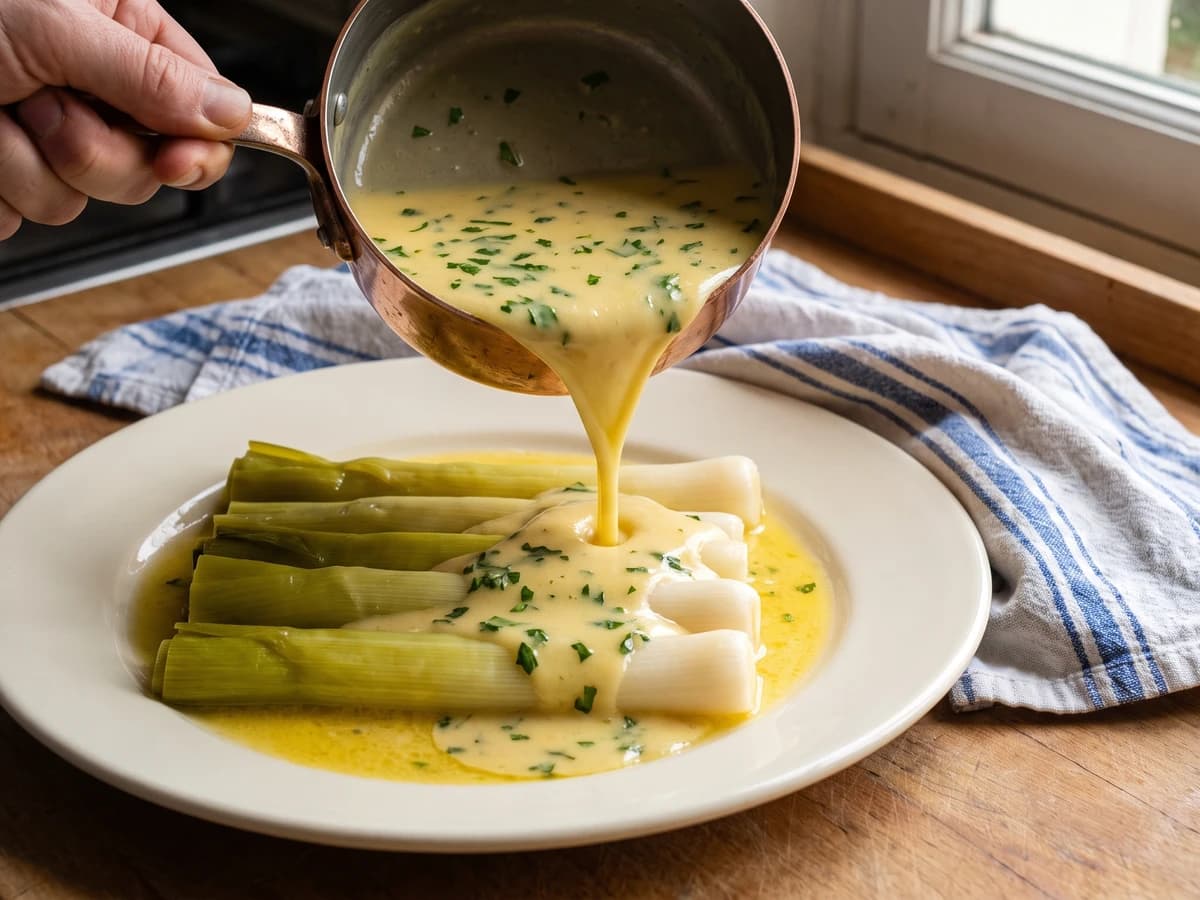
An old lesson in sauce families: Sauce Allemande takes mushroom liquor, then butter, lemon, and parsley, becoming a glossy Poulette for sheep's trotters, leeks, cauliflower, and anything needing gentle richness with a bright edge.