Chef Juliette
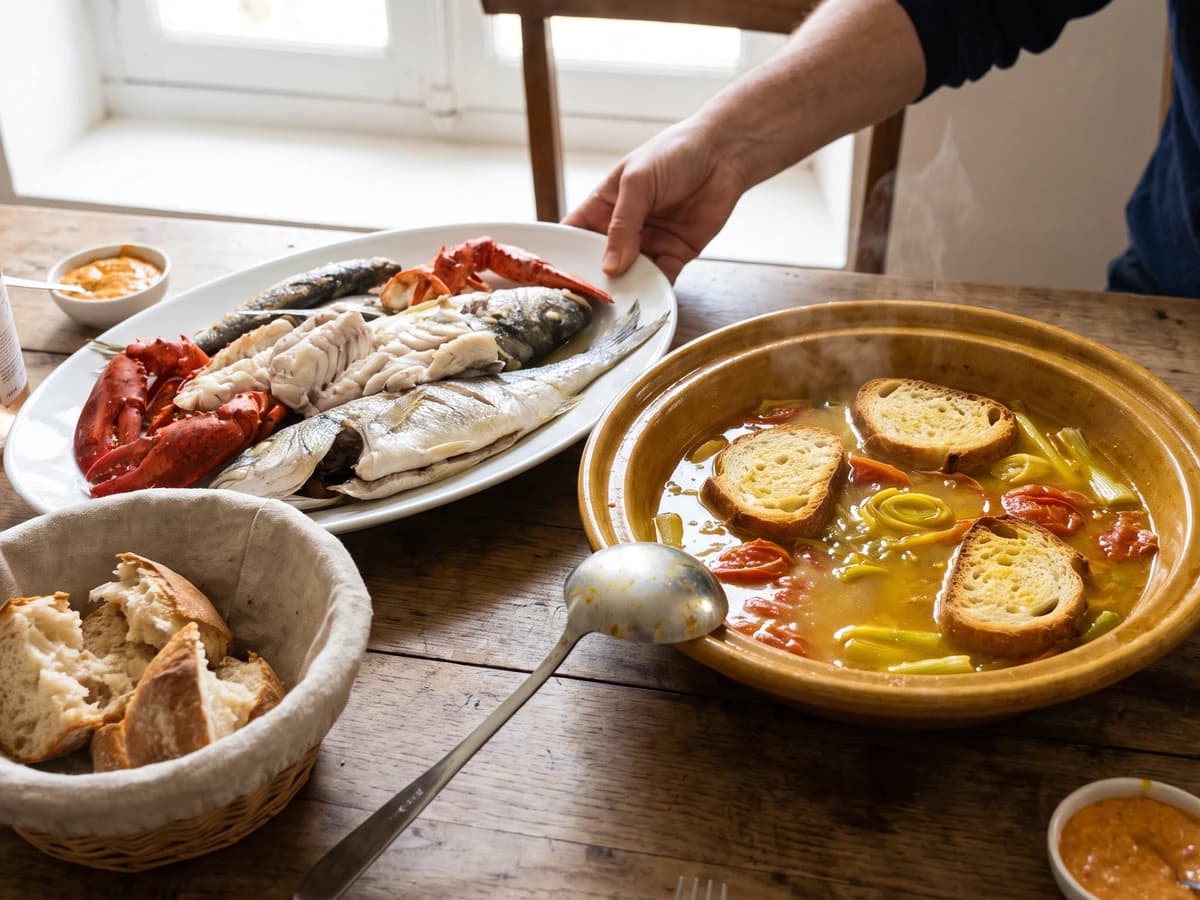
Bouillabaisse à la Marseillaise
Marseille's great fish stew, saffron-gold and garlic-scented, proves that a hard boil can be the careful choice: it binds olive oil into broth before the whole pot meets bread.
A cooking platform built around craft, culture, and the stories behind what we eat.
Created by Chef Juliette
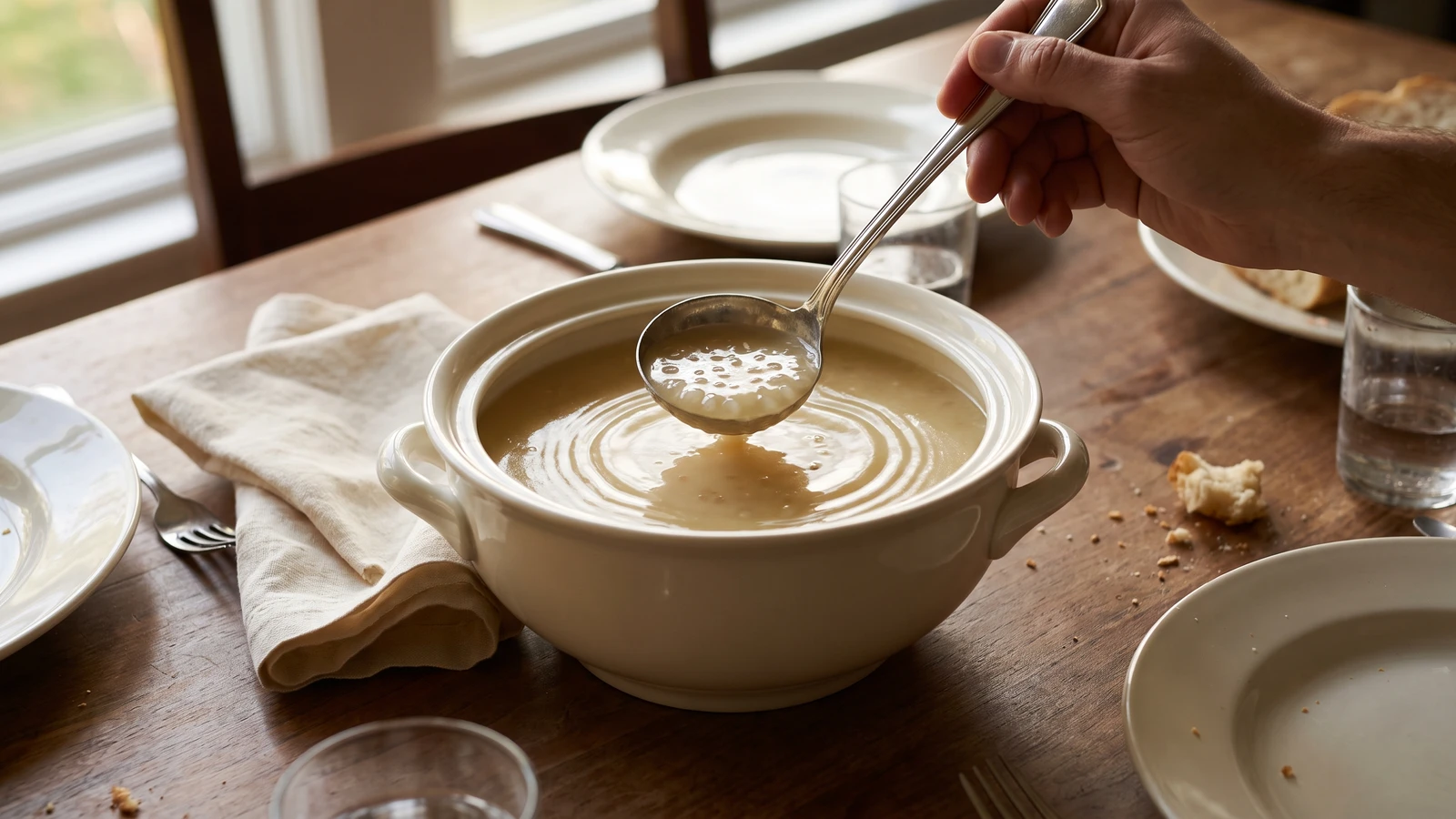
Based on No. 729, Potage Madeleine, from Le Guide Culinaire (1907) by Auguste Escoffier
Three finished purées, artichoke, haricot bean, and Soubise, meet white consommé in exact proportion, then pass through the sieve and take their final gloss from butter, with tender sago in every spoonful.
Potage Madeleine (Madeleine three-purée soup) teaches composition. Artichoke leads, haricot bean gives body, and Soubise brings the quiet sweetness of onion; measured correctly, they stop tasting like separate vegetables and become one rounded, savory whole. The one true thing to know before touching a pan is this: measure the finished purées, not the raw ingredients. Their proportion is the dish.
The source assumes a saucier with three finished purées and white consommé waiting on the stove. At home, one saucepan can cook the components in sequence, a blender replaces the pounding, and a fine-mesh sieve does the final work. A true white consommé is splendid, but pale unsalted chicken stock strained very fine is the honest home equivalent; once opaque purées enter the pot, consommé clarification is brigade scaffolding, while clean flavor and body still matter. The quantities here preserve the source proportions while making about two quarts for one cook, one stove, one evening.
Cooking the components separately, measuring them precisely, passing the combined soup, poaching the sago in stock, and whisking in real butter all stay. Those steps are the dish. Before you begin, set out a measuring jug: measuring the three finished purées is the step that decides Potage Madeleine.
Potage Madeleine belongs to the classical Parisian repertory of named potages, where grand kitchens composed new soups from finished purées and consommés already maintained for service. Its identity is structural rather than regional: unequal measures of artichoke, haricot bean, and Soubise are combined, passed fine, buttered, and garnished with sago. Though often grouped with cream soups, the formula contains no cream; its velvet comes from bean starch, rice-bound Soubise, the sieve, and butter.
Quantity
2 cups (475 ml / 300 g)
thawed and patted dry
Quantity
1 cup (240 ml / 170 g)
drained and rinsed
Quantity
1 cup (240 ml / 150 g)
sliced very thinly
Quantity
1 tablespoon (15 ml / 15 g)
Quantity
2 tablespoons (30 ml / 28 g)
Quantity
7 3/4 cups (1.84 litres / 1.84 kg)
divided
Quantity
1/4 cup (60 ml / 45 g)
Quantity
6 tablespoons (90 ml / 85 g)
cut into small cubes
Quantity
1 teaspoon (5 ml / 6 g), or as needed
| Ingredient | Quantity |
|---|---|
| frozen artichoke bottoms or heartsthawed and patted dry | 2 cups (475 ml / 300 g) |
| cooked white haricot beansdrained and rinsed | 1 cup (240 ml / 170 g) |
| yellow onionsliced very thinly | 1 cup (240 ml / 150 g) |
| white rice | 1 tablespoon (15 ml / 15 g) |
| unsalted butter for the Soubise purée | 2 tablespoons (30 ml / 28 g) |
| lightly seasoned white consommé, or pale unsalted chicken stock strained very finedivided | 7 3/4 cups (1.84 litres / 1.84 kg) |
| small-pearl sago | 1/4 cup (60 ml / 45 g) |
| cold unsalted buttercut into small cubes | 6 tablespoons (90 ml / 85 g) |
| fine salt | 1 teaspoon (5 ml / 6 g), or as needed |
Divide the white consommé before cooking: reserve 3 2/3 cups (870 ml / 870 g) for combining the purées and 1 3/4 cups plus 1 1/2 tablespoons (435 ml / 435 g) for poaching the sago. Keep 2 tablespoons of the sago portion cold. The remaining 2 1/4 cups (535 ml / 535 g) will cook and adjust the three purées. Precise division now keeps the source proportions intact later.
Put the artichokes in the saucepan with 1 cup (240 ml / 240 g) of the component consommé. Cover and simmer gently for 18 to 25 minutes, until every piece crushes readily beneath a spoon. Blend with just enough cooking liquid to make a perfectly smooth purée, then pass it through the fine-mesh sieve. Measure exactly 1 cup plus 3 1/2 tablespoons (290 ml / 290 g). If it is loose, reduce it gently while stirring; if it is too thick to pass, add consommé a spoonful at a time. Keep the measured purée and set any excess aside.
Rinse the saucepan, add the haricot beans and 1/2 cup (120 ml / 120 g) of the component consommé, and simmer for 10 minutes so the beans soften and take up the stock. Blend until creamy, pass through the cleaned sieve, and measure exactly 3/4 cup (174 ml / 174 g). If the purée stands like mashed potato, loosen it with a spoonful of consommé; if it runs, reduce it until it holds a soft mound.
Melt the 2 tablespoons (30 ml / 28 g) butter over low heat. Add the onion and a small pinch of salt, cover, and sweat for about 10 minutes until completely soft but still pale. If a tan edge appears, add a spoonful of consommé and lower the heat at once. Add the rice and the remaining component consommé, about 3/4 cup (175 ml / 175 g), then cover and simmer gently for 20 to 25 minutes, until the rice and onion collapse together. Blend, pass through the sieve, and measure exactly 1/2 cup plus 1 teaspoon (124 ml / 124 g) of Soubise purée. Simmer it a little longer if grains remain; the finished Soubise must be satin-smooth.
Bring the sago portion of consommé, except for the reserved cold spoonfuls, to a bare simmer. Rain in the sago while whisking, then cook gently for 25 to 35 minutes, stirring often, until the pearls are translucent with no more than a tiny white point at their centres. If they clump, remove the pan from the heat and whisk in the reserved cold consommé. Ça se rattrape. Keep the pearls in their poaching liquid so they remain tender.
Whisk the measured artichoke, haricot, and Soubise purées with the reserved 3 2/3 cups (870 ml / 870 g) white consommé. Bring the soup to a full boil once, as the source directs, then immediately lower the heat and simmer for 2 minutes. Pass the combined soup through the cleaned fine-mesh sieve into a clean saucepan. Drain the sago, whisk its savory poaching liquid into the soup, and keep the pearls warm for the garnish. The final passing is not ceremony; it makes three textures read as one.
Bring the soup just below a simmer and taste for salt. Remove it from the heat, then monter au beurre, mount with butter, by whisking in the cold cubes a few at a time until the potage gleams and lightly coats a spoon. Do not boil it after the butter enters. If the surface turns oily, put 2 tablespoons of cold consommé or water in a clean saucepan and whisk in the split soup gradually, one ladle at a time. Ça se rattrape. Divide the translucent sago among warmed bowls or a warmed soupière, ladle over the potage, and serve at once. À table!
1 serving (about 240g)
Culinary guides, cultural storytelling, and the editorial depth that makes cooking meaningful.
Discover Culinary ExplorerChef Juliette
Marseille's great fish stew, saffron-gold and garlic-scented, proves that a hard boil can be the careful choice: it binds olive oil into broth before the whole pot meets bread.
Chef Juliette
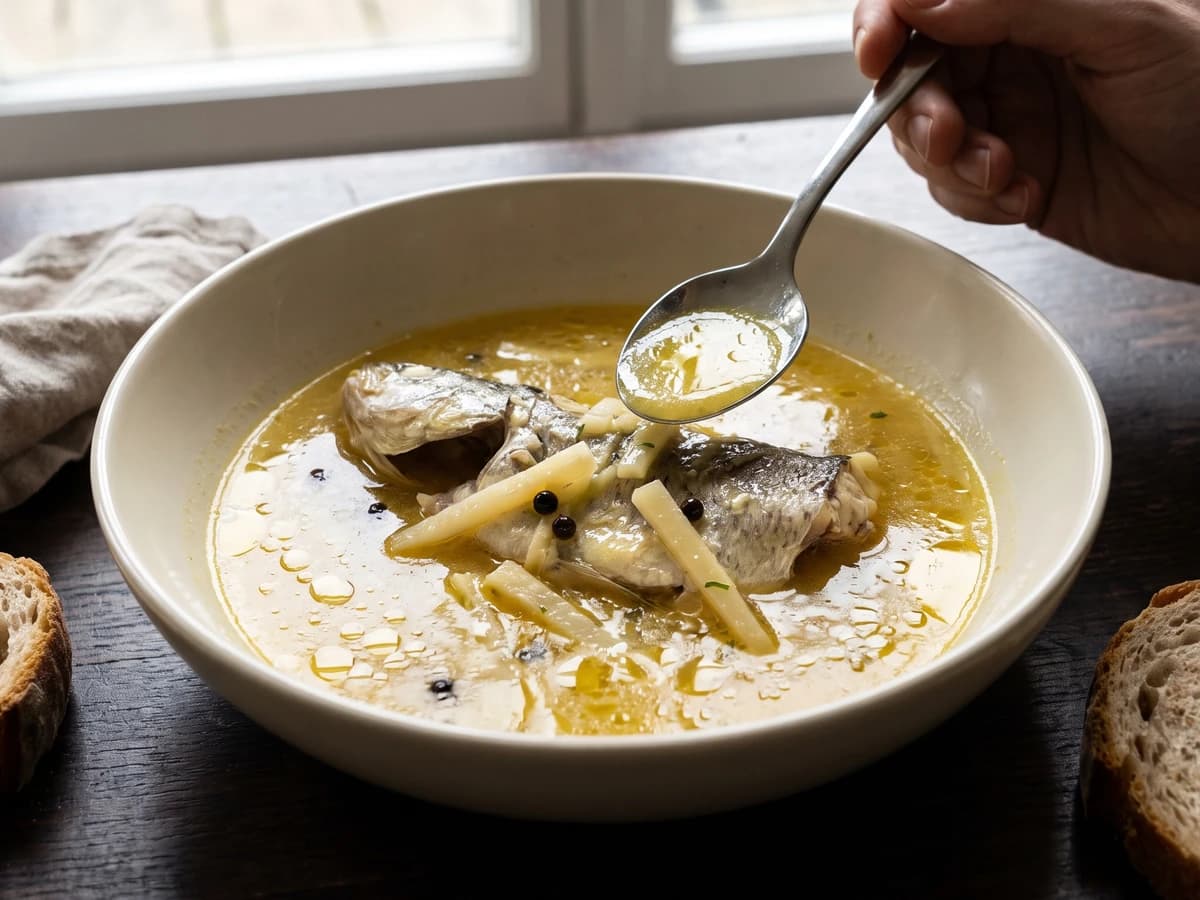
Waterzoi asks fresh, bone-in river fish to thicken its own buttery broth, with parsley root and pepper for company. No flour, no stockpot, just a brisk simmer watched closely.
Chef Juliette
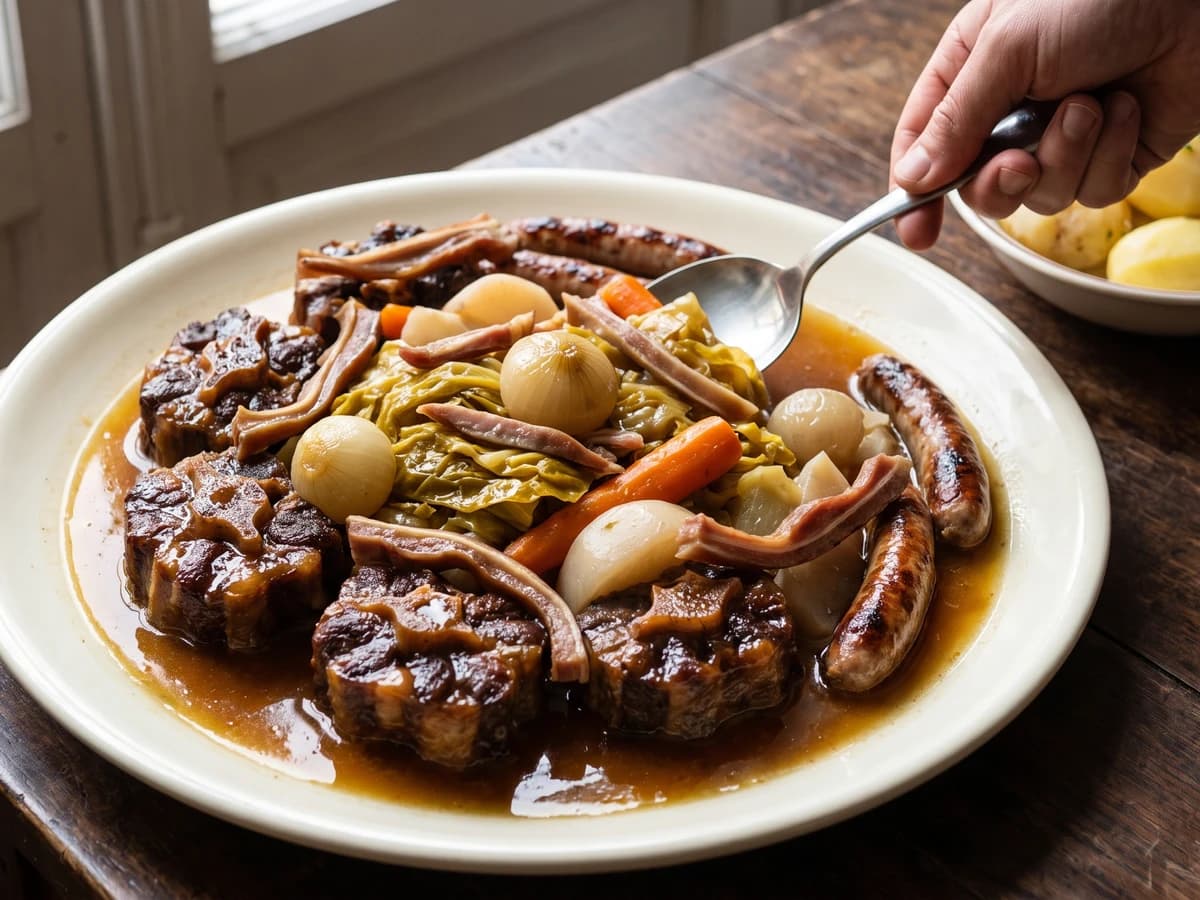
Queue de Bœuf en Hochepot gathers oxtail, pig's trotter and ear, cabbage, roots, and grilled chipolatas around a clear, gelatin-rich broth whose quiet simmer keeps every piece tender and distinct.
Chef Juliette
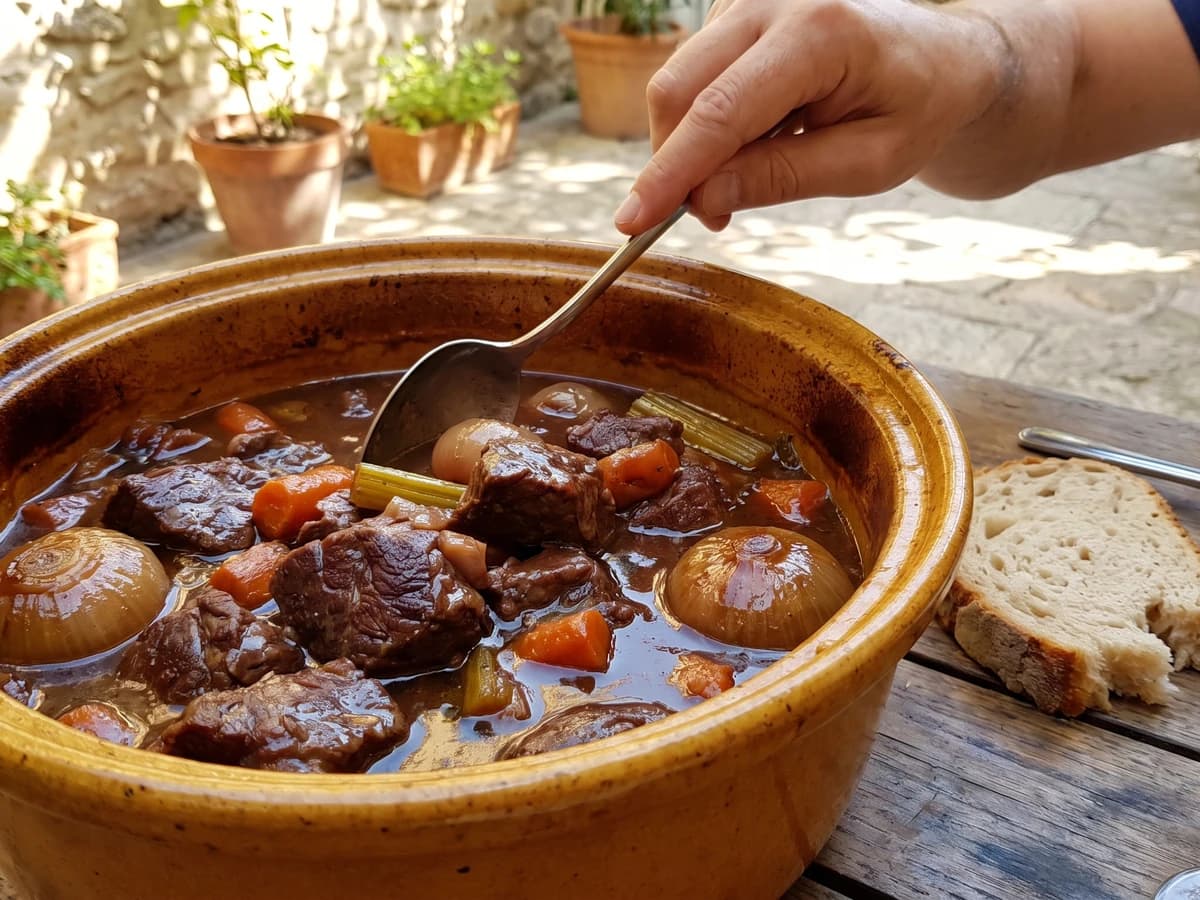
Beef shoulder larded with bacon, sharpened by red wine and vinegar, then sealed with garlic, vegetables, and dry lemon peel until the low oven turns it yielding and the gravy darkly glossy.