Chef Juliette
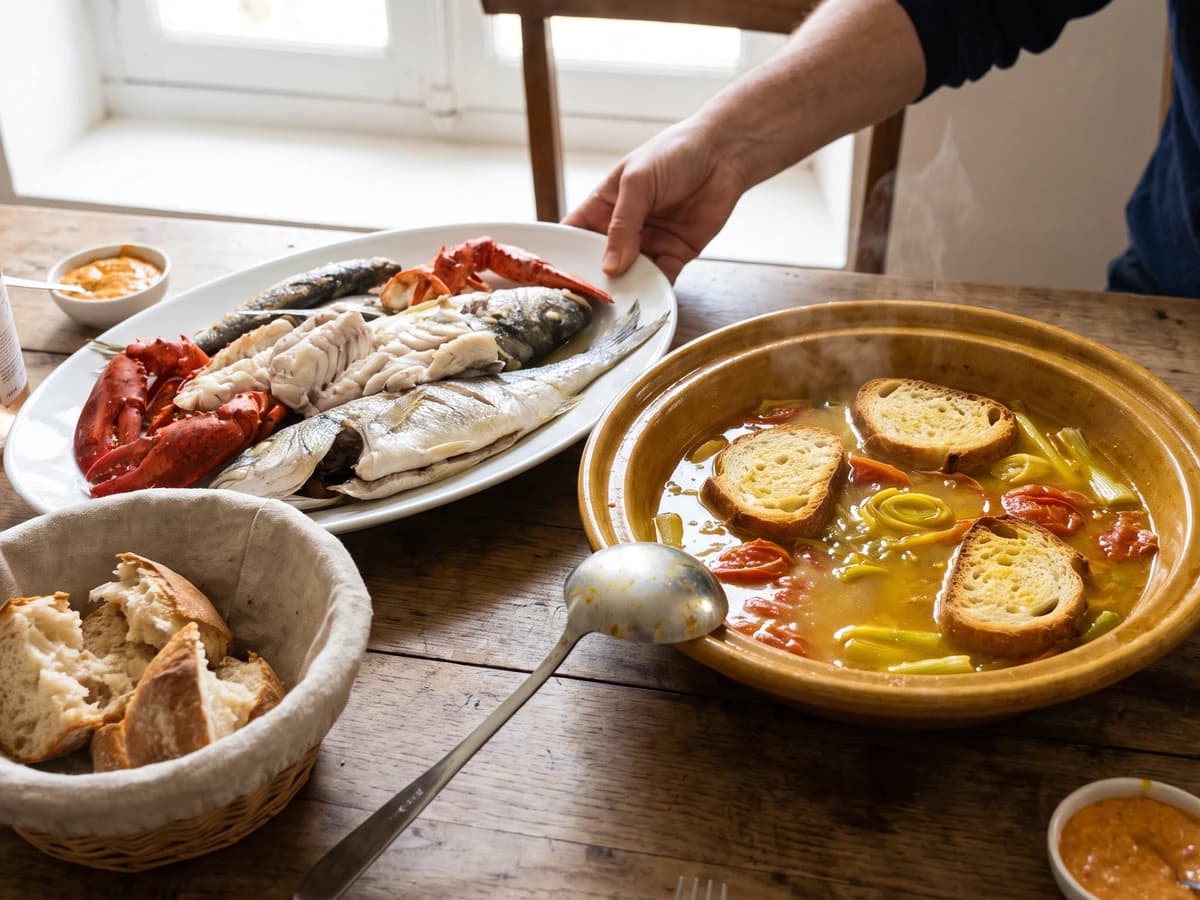
Bouillabaisse à la Marseillaise
Marseille's great fish stew, saffron-gold and garlic-scented, proves that a hard boil can be the careful choice: it binds olive oil into broth before the whole pot meets bread.
A cooking platform built around craft, culture, and the stories behind what we eat.
Created by Chef Juliette
Based on No. 724, Potage Germiny, from Le Guide Culinaire (1907) by Auguste Escoffier
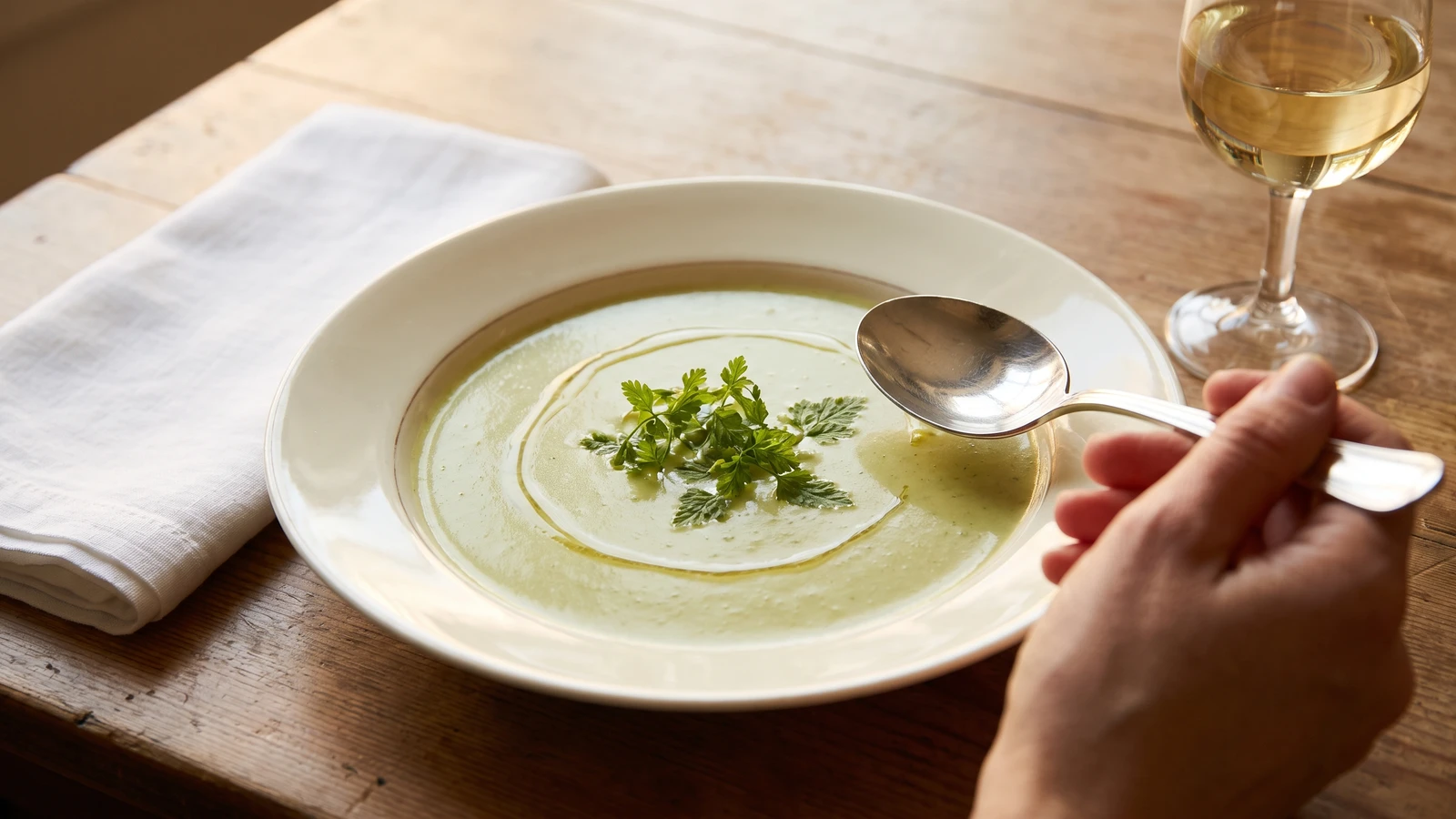
Sorrel melted in butter, clear consommé, and a liaison of yolks and cream: Potage Germiny teaches the gentle heat that turns simple broth silken without letting the custard curdle.
Potage Germiny (sorrel soup bound with egg yolks and cream) teaches the most delicate liaison, the binding of hot liquid with yolks. One true thing decides it: once the liaison enters the saucepan, the soup may approach the simmer, but it must never boil. The yolks should thicken like crème anglaise, giving body without announcing themselves as egg.
The original method assumed a saucier watching the pan, white consommé waiting beside a stockpot that never went cold, and service timed to the minute. At home, one heavy saucepan, a wooden spoon, and an instant-read thermometer do the same work. The separate hands and holding pans were brigade scaffolding and can go; the finished consommé, butter-melted sorrel, last-minute liaison, and cold-butter finish are the dish and must stay. The source proportions are retained in a home batch of about two quarts. One cook, one stove, one evening.
When it lands correctly, the soup is pale green and glossy, sharpened by sorrel but rounded by cream and butter, with fine chervil pluches floating at the surface. Stir continuously through the final thickening and pull the pan at the first tremor around its edge. Those few minutes decide everything.
Potage Germiny belongs to the Parisian grand-kitchen table, where it took the name of the Comte de Germiny and turned the familiar French pairing of sorrel and eggs into a formal first course. It passed through the classical canon as a model for a whole family of delicate vegetable soups. Its structural surprise is that neither roux nor purée supplies the body; the liaison alone thickens it, a method classical cooks also applied to carrot, pea, and asparagus creams.
Quantity
6 packed cups (1.42 L / 170 g)
tough stems removed and cisel into fine shreds
Quantity
2 tablespoons (30 ml / 28 g)
Quantity
6 cups (1.42 L / 1.42 kg)
Quantity
12
Quantity
1 cup (240 ml / 240 g)
cold
Quantity
10 tablespoons (150 ml / 142 g)
cold and cut into small cubes
Quantity
1 loosely packed tablespoon (15 ml / 1 g)
picked into pluches
| Ingredient | Quantity |
|---|---|
| fresh sorrel leavestough stems removed and cisel into fine shreds | 6 packed cups (1.42 L / 170 g) |
| unsalted butter for melting the sorrel | 2 tablespoons (30 ml / 28 g) |
| finished white consommé | 6 cups (1.42 L / 1.42 kg) |
| large egg yolks | 12 |
| heavy creamcold | 1 cup (240 ml / 240 g) |
| unsalted butter for finishingcold and cut into small cubes | 10 tablespoons (150 ml / 142 g) |
| fresh chervilpicked into pluches | 1 loosely packed tablespoon (15 ml / 1 g) |
Wash the sorrel in cold water, dry it thoroughly, and remove any tough stems. Stack several leaves at a time, roll them loosely, and cisel them, cutting crosswise into fine, even shreds. Wet leaves spit in butter and dilute the first stage, so take the drying seriously. Keep the cold finishing butter refrigerated until the final moment.
Melt the 2 tablespoons of butter in a heavy 3-quart saucepan over medium-low heat. Add the sorrel and turn it through the butter for 3 to 5 minutes, until every shred has collapsed into a soft olive-green tangle without browning. This is a fonte, a gentle melting rather than a sauté. If the sorrel begins to catch at the edges, lower the heat and loosen it immediately with a spoonful of the measured consommé.
Pour in the finished white consommé and stir well, lifting any sorrel from the floor of the saucepan. Bring the soup only to a bare simmer and cook for 4 to 5 minutes so the sorrel and consommé become one preparation. Avoid a hard reduction; the consommé is already finished and concentrated, and boiling it down would make the final soup too salty and coarse.
Reserve 2 tablespoons of the cold cream for the possible rescue, then whisk the remaining cream with the egg yolks until perfectly smooth. Take the saucepan off the heat. Stir the soup continuously while pouring in the liaison in a thin, steady stream, then return the pan to the lowest heat you own. Stir in a patient figure eight, scraping the floor and corners, until the soup lightly naps the back of the spoon and reaches 170 to 175°F (77 to 79°C), about 5 to 8 minutes. You may see a faint tremor at the rim, but no bubble should break the surface. If a few tiny grains appear, remove the pan immediately and whisk in the reserved cold cream until smooth. Ça se rattrape. A hard boil produces firm curds that no honest finish can disguise, so stay beside the pan.
Keep the saucepan completely off the heat. If the reserved cream was not needed for rescue, stir it in now. Monter au beurre, finish by stirring in the cold butter a few cubes at a time, allowing each addition to disappear before adding the next. Do not return the soup to the burner; the butter should emulsify into a quiet gloss, not melt into an oily slick. Fold in the chervil pluches, ladle immediately into warmed soup plates, and serve. À table!
1 serving (about 260g)
Culinary guides, cultural storytelling, and the editorial depth that makes cooking meaningful.
Discover Culinary ExplorerChef Juliette
Marseille's great fish stew, saffron-gold and garlic-scented, proves that a hard boil can be the careful choice: it binds olive oil into broth before the whole pot meets bread.
Chef Juliette
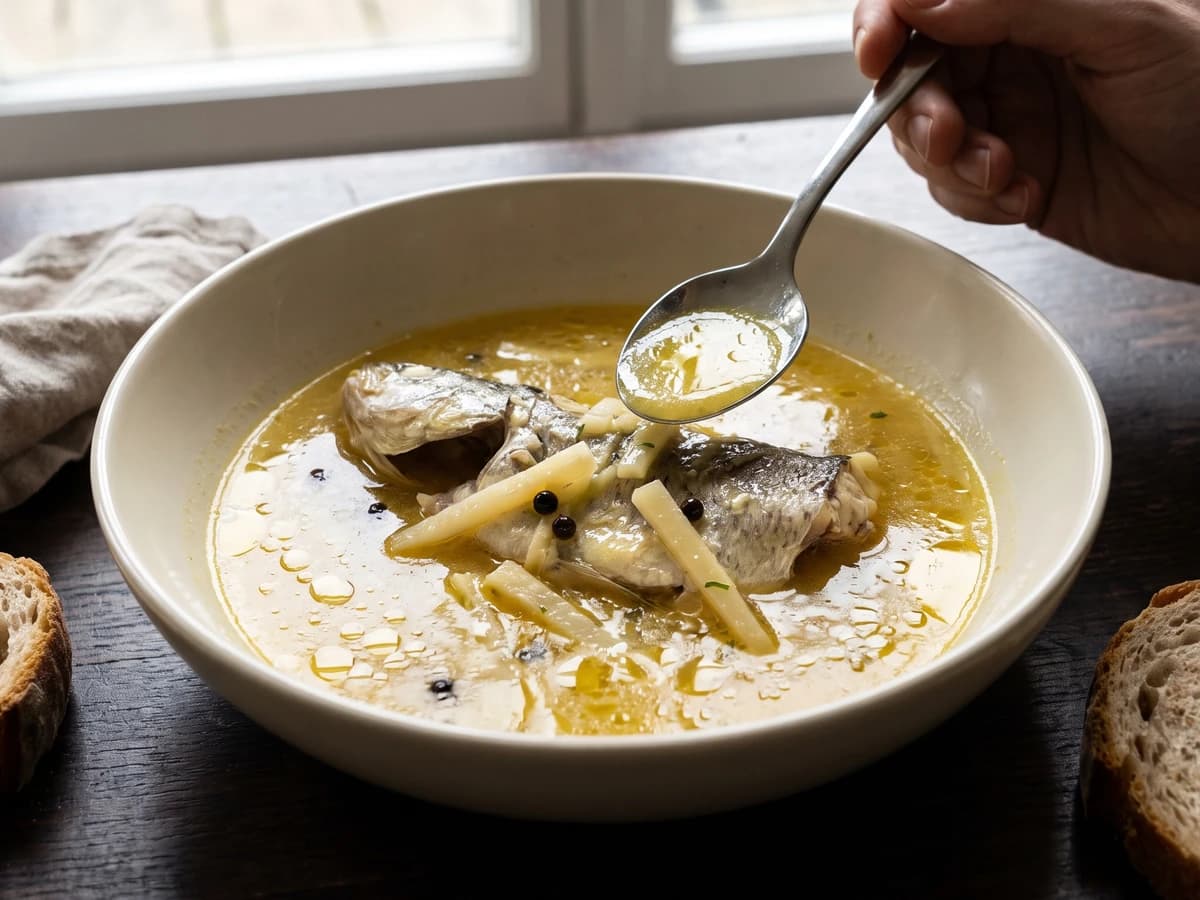
Waterzoi asks fresh, bone-in river fish to thicken its own buttery broth, with parsley root and pepper for company. No flour, no stockpot, just a brisk simmer watched closely.
Chef Juliette
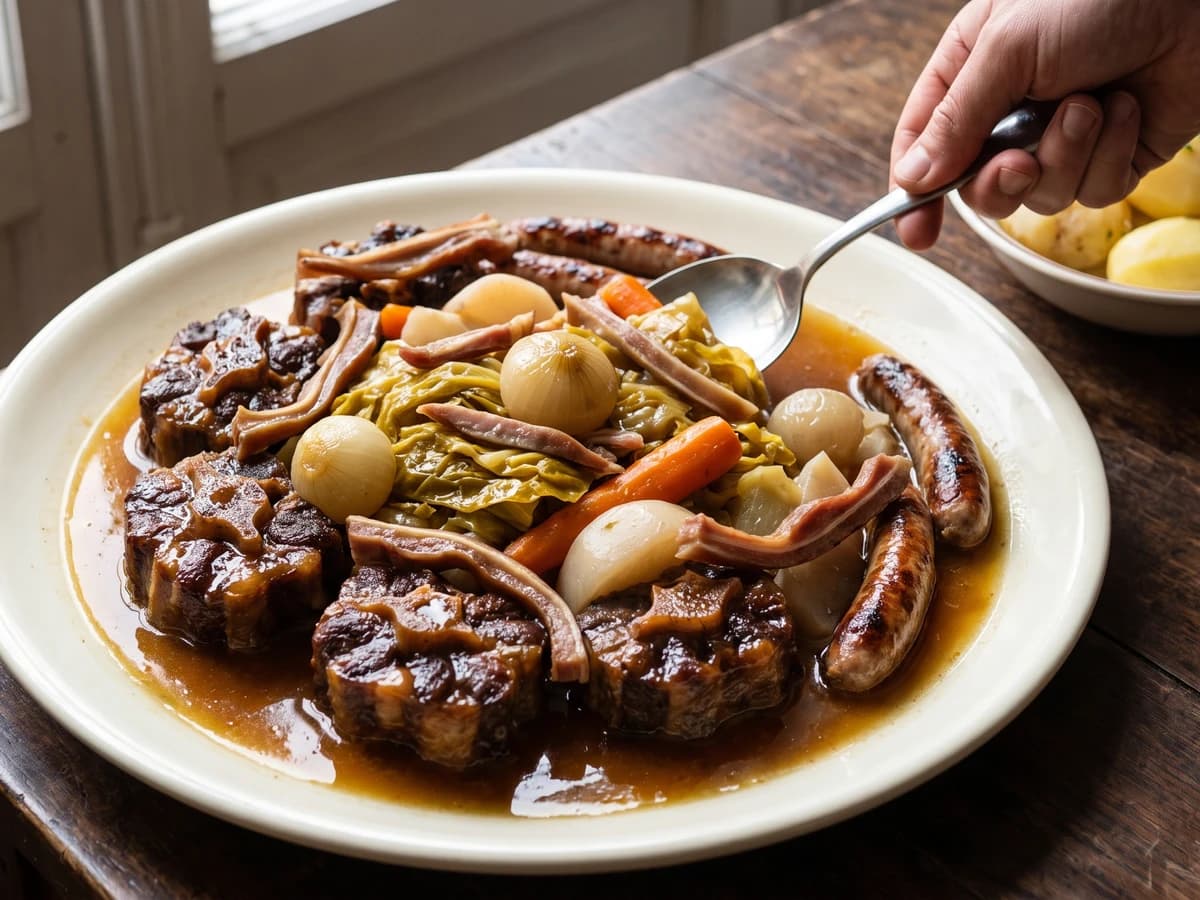
Queue de Bœuf en Hochepot gathers oxtail, pig's trotter and ear, cabbage, roots, and grilled chipolatas around a clear, gelatin-rich broth whose quiet simmer keeps every piece tender and distinct.
Chef Juliette
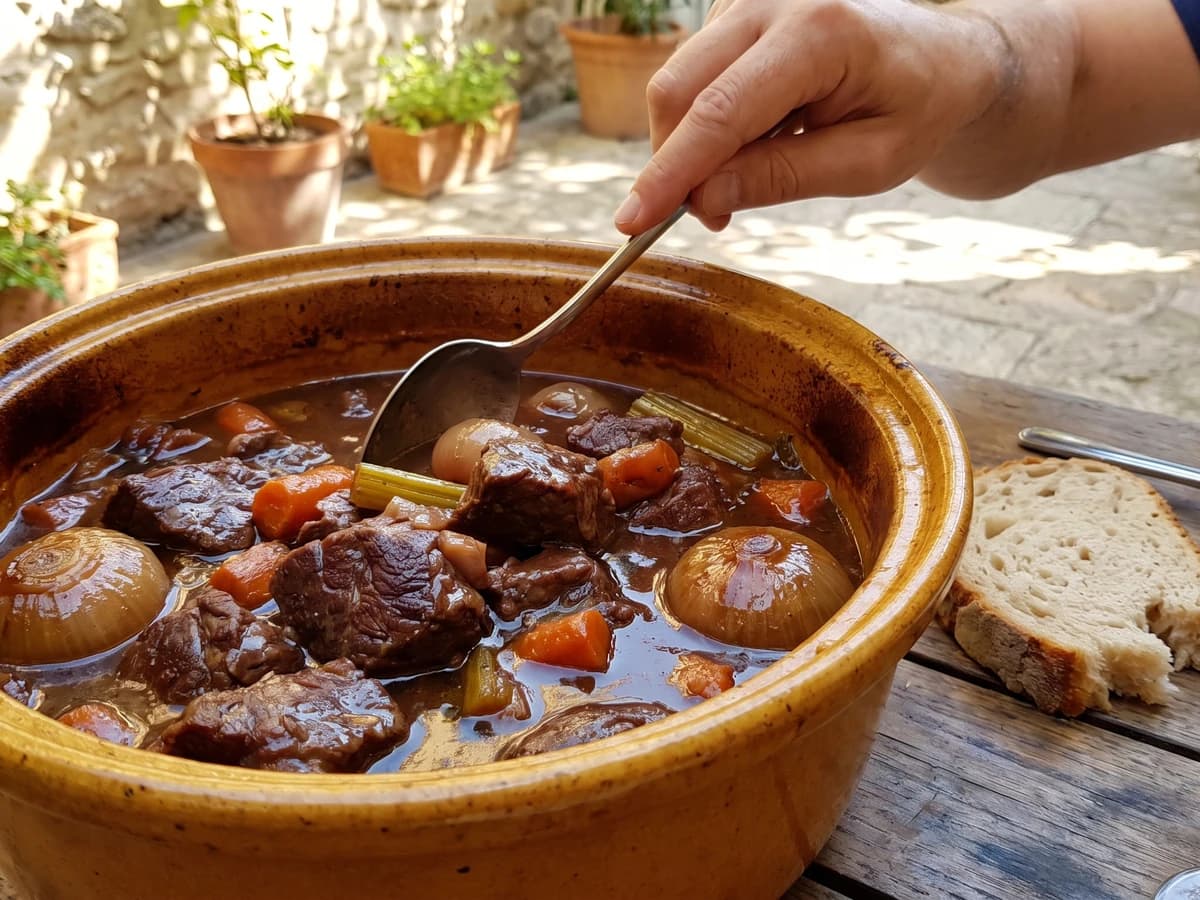
Beef shoulder larded with bacon, sharpened by red wine and vinegar, then sealed with garlic, vegetables, and dry lemon peel until the low oven turns it yielding and the gravy darkly glossy.