Chef Juliette
Bouillabaisse à la Marseillaise
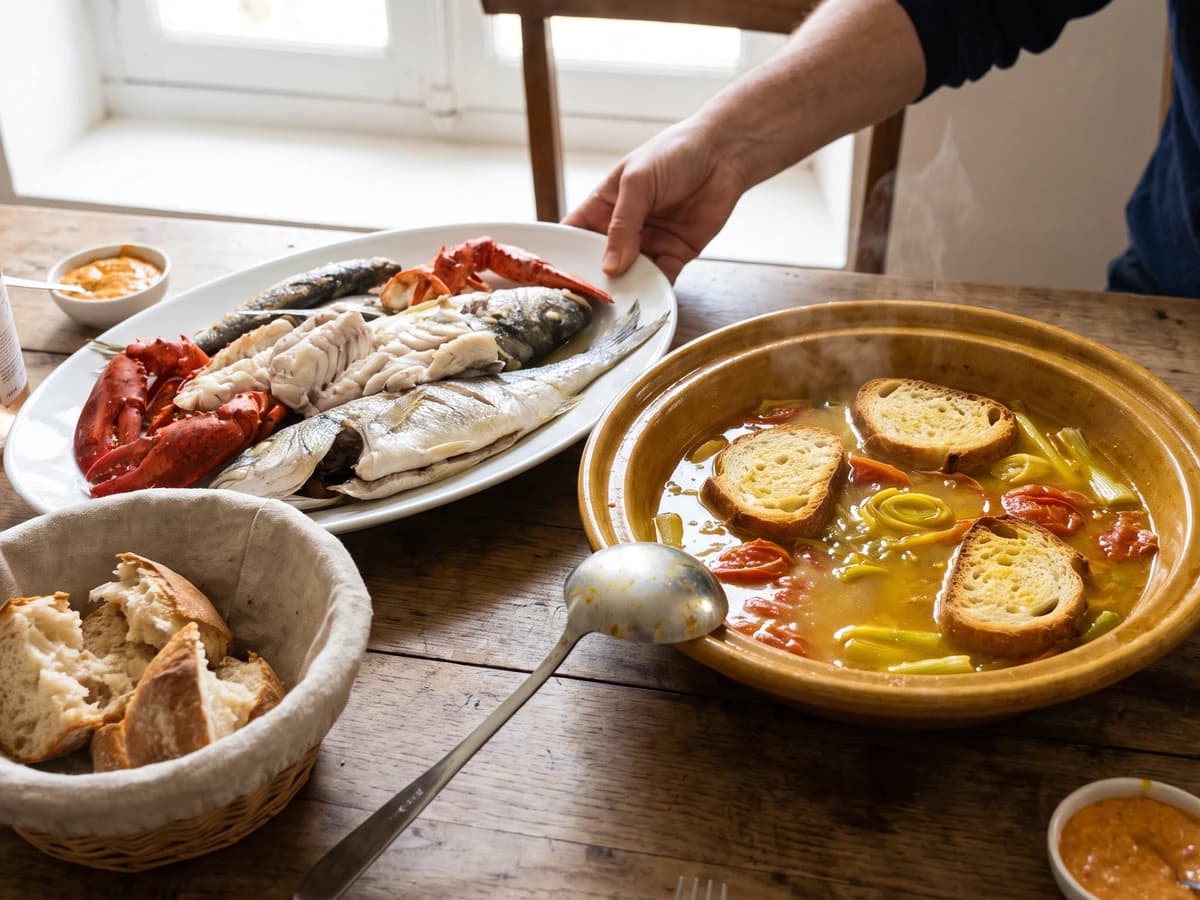
Marseille's great fish stew, saffron-gold and garlic-scented, proves that a hard boil can be the careful choice: it binds olive oil into broth before the whole pot meets bread.
A cooking platform built around craft, culture, and the stories behind what we eat.
Created by Chef Juliette
Based on No. 722, Potage Elisa, from Le Guide Culinaire (1907) by Auguste Escoffier
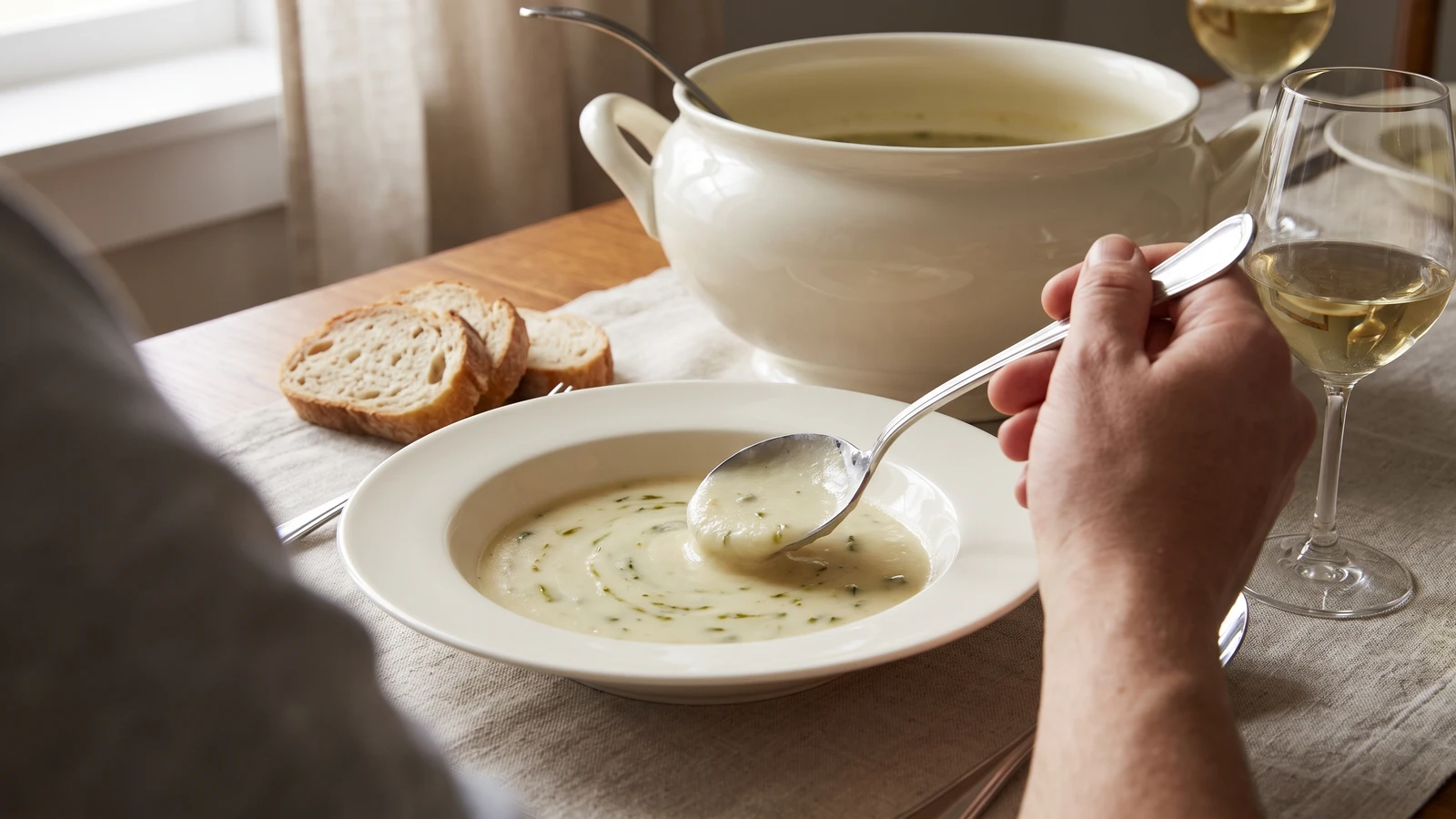
Potage Elisa sets tart sorrel against a satin poultry velouté, then binds the whole with yolks, cream, and cold butter. The lesson is gentle heat: once the liaison enters, the soup must never boil.
Potage Elisa (silken poultry soup with sorrel) teaches the discipline of finishing a bound soup without boiling it. The poultry foundation is mild and rich; the late spoonful of sorrel fondue supplies the tartness that brings it into focus. Know one thing before touching the pan: once the liaison enters, the heat must become gentle.
The original assumed a saucier on staff, finished poultry velouté and white consommé drawn from pots never off the fire, and a tammy for the final silken texture. A home kitchen has those foundations prepared ahead, one heavy saucepan, and a fine-mesh sieve. The salamander, useful elsewhere, has no work in this potage. The quantities here make a two-quart home batch for eight first courses while retaining the book's three-to-one base ratio and proportional finishes. The staffed station and cloth tammy are scaffolding; the velouté, liaison, finishing butter, and last-minute sorrel are the dish.
Temper the yolks slowly, mount the butter away from direct heat, and fold in the fondue only when the bowls are waiting. If the liaison catches, don't pour it out. Ça se rattrape, and the rescue sits exactly where you'll need it. The decisive step remains simple: after the yolks enter, never let the soup boil.
Potage Elisa belongs to the named potages of the Parisian classical repertory, where a standard velouté became a distinct soup through its liaison and final garnish rather than through a new foundation. It moved naturally from grand kitchens to formal household tables because trained cooks already kept poultry stock, consommé, and roux-based velouté as working preparations. The proper name offers no sound regional claim; the recipe itself tells the truth, poultry is the body, while a last spoonful of sorrel fondue cuts its richness.
Quantity
6 cups (1.42 L / about 1.45 kg)
cold or at room temperature
Quantity
2 cups (475 ml / about 475 g)
divided
Quantity
4 (about 70 g)
Quantity
1 cup (240 ml / 240 g)
cold and divided
Quantity
2 packed cups (475 ml / 60 g)
stems removed and leaves finely sliced
Quantity
1 tablespoon (15 ml / 14 g)
Quantity
10 tablespoons (150 ml / 142 g)
diced
Quantity
Up to 1/2 teaspoon (2.5 ml / 3 g)
only if needed
| Ingredient | Quantity |
|---|---|
| finished poultry veloutécold or at room temperature | 6 cups (1.42 L / about 1.45 kg) |
| finished white consommédivided | 2 cups (475 ml / about 475 g) |
| large egg yolks | 4 (about 70 g) |
| heavy creamcold and divided | 1 cup (240 ml / 240 g) |
| fresh sorrel leavesstems removed and leaves finely sliced | 2 packed cups (475 ml / 60 g) |
| unsalted butter, for the sorrel fondue | 1 tablespoon (15 ml / 14 g) |
| cold unsalted butter, for finishingdiced | 10 tablespoons (150 ml / 142 g) |
| fine salt (optional)only if needed | Up to 1/2 teaspoon (2.5 ml / 3 g) |
Set a fine-mesh sieve over a heavy 4-quart saucepan and rub the poultry velouté through it with the back of a ladle. This is the honest home equivalent of the tammy: it removes any grain from the roux without whipping air into the soup. Whisk in all but 2 tablespoons of the white consommé, keeping that small amount cool for the finish.
Whisk the egg yolks in a heatproof bowl with all but 2 tablespoons of the cold cream until perfectly smooth. This is the liaison, the egg-yolk-and-cream binding that gives the potage its final richness. Keep the remaining cream cold; it is both part of the recipe and your insurance if the yolks begin to catch.
Set the saucepan over medium-low heat and stir often, scraping the bottom and corners, until the velouté reaches about 175°F (79°C). The surface should tremble gently at the rim without breaking into bubbles. Remove it from the heat. A hard boil can scorch the roux now and will certainly curdle the liaison later.
Melt the tablespoon of butter in a small skillet over medium-low heat. Add the sliced sorrel and stir for 1 to 2 minutes, just until it collapses into a soft, pulpy fondue. Its green will relax toward olive as its own acidity meets the heat; this is normal. If liquid collects, cook only until it disappears, then take the skillet off the heat before the sorrel dries or loses its tart character.
Whisk about 1 cup of the hot velouté into the liaison a little at a time, beginning with small spoonfuls so the yolks warm gradually. Whisk this tempered mixture back into the saucepan, return it to the lowest heat, and stir constantly until the soup reaches 160 to 165°F (71 to 74°C), about 2 to 4 minutes. It must not simmer. If tiny yellow flecks appear, lift the pan from the heat immediately and whisk in the reserved cold cream, then pass the soup through a clean fine-mesh sieve. Ça se rattrape when caught at the first fleck. If the soup remains smooth, stir in the reserved cream and warm it gently back to temperature.
Take the saucepan completely off the heat. Whisk in the 10 tablespoons of cold butter a few cubes at a time, letting each addition disappear before adding the next. The potage should become glossy and pour in a broad satin ribbon. If an oily ring appears, the pan is too hot; stand it on a cool damp towel and whisk in a teaspoon of the reserved consommé until the emulsion closes again. Add any remaining consommé, taste before correcting the salt, then fold in the sorrel fondue. Ladle into warm bowls at once and do not return the potage to the heat. À table!
1 serving (about 300g)
Culinary guides, cultural storytelling, and the editorial depth that makes cooking meaningful.
Discover Culinary ExplorerChef Juliette
Marseille's great fish stew, saffron-gold and garlic-scented, proves that a hard boil can be the careful choice: it binds olive oil into broth before the whole pot meets bread.
Chef Juliette
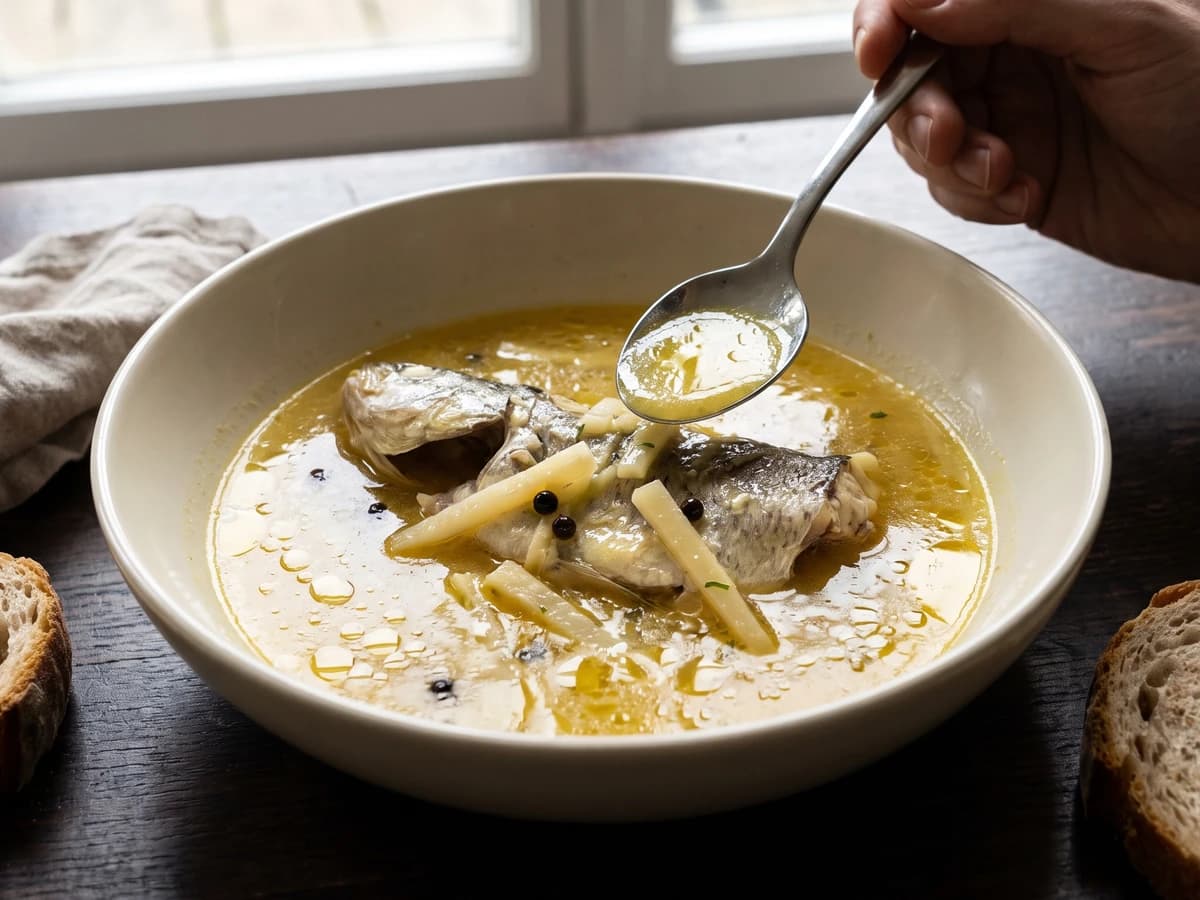
Waterzoi asks fresh, bone-in river fish to thicken its own buttery broth, with parsley root and pepper for company. No flour, no stockpot, just a brisk simmer watched closely.
Chef Juliette
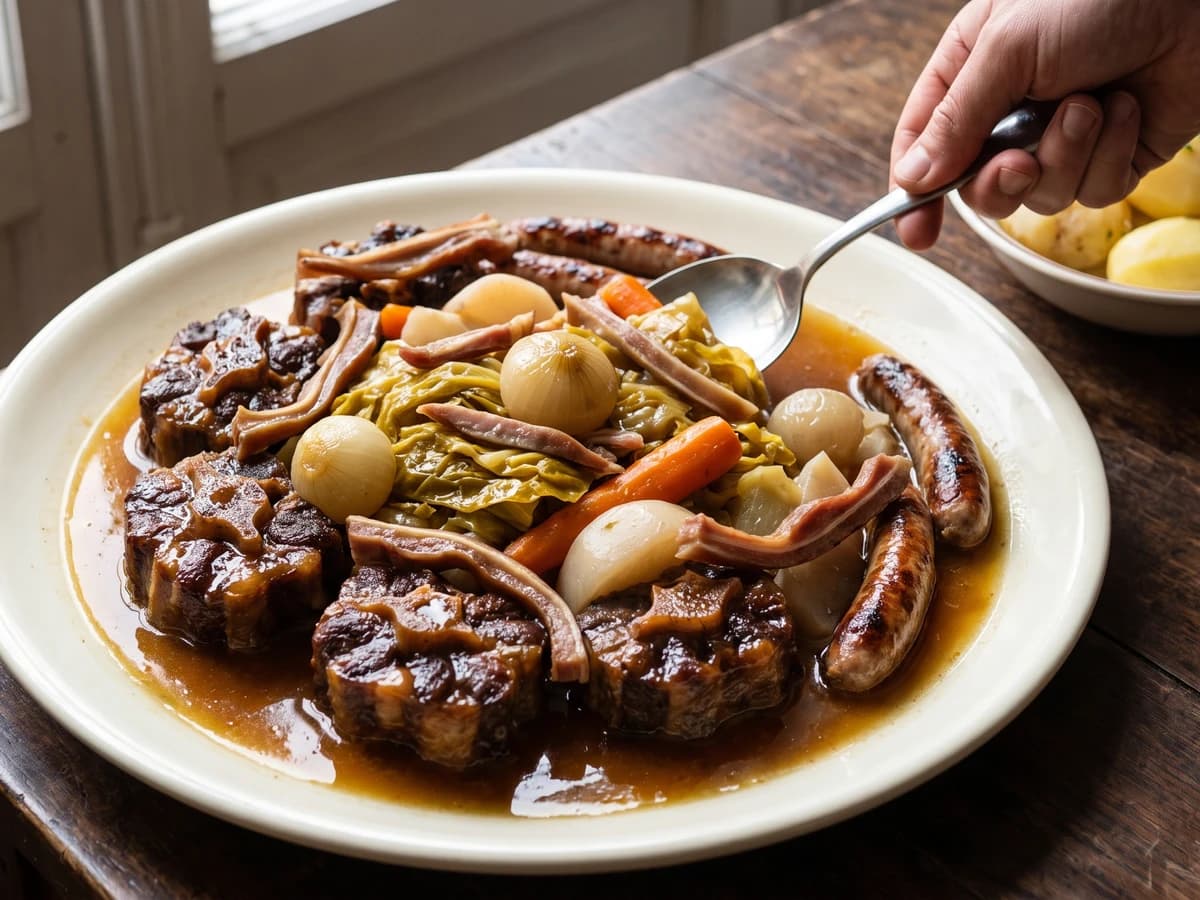
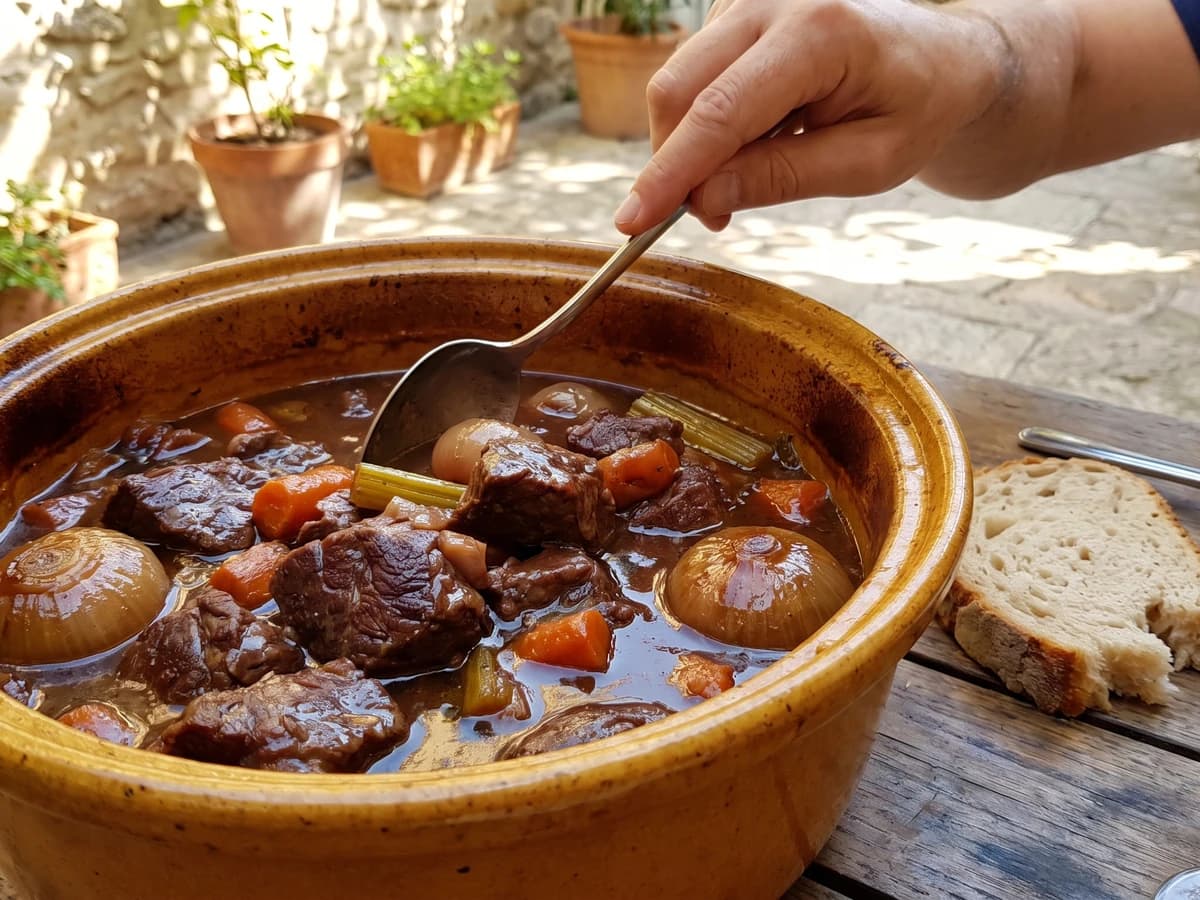
Queue de Bœuf en Hochepot gathers oxtail, pig's trotter and ear, cabbage, roots, and grilled chipolatas around a clear, gelatin-rich broth whose quiet simmer keeps every piece tender and distinct.
Chef Juliette
Beef shoulder larded with bacon, sharpened by red wine and vinegar, then sealed with garlic, vegetables, and dry lemon peel until the low oven turns it yielding and the gravy darkly glossy.