Culinary Explorer

A cooking platform built around craft, culture, and the stories behind what we eat.
Discover Culinary Explorer
Potage à la Diane

Potage à la Diane

Created by Chef Juliette

Based on No. 721, Potage à la Diane, from Le Guide Culinaire (1907) by Auguste Escoffier

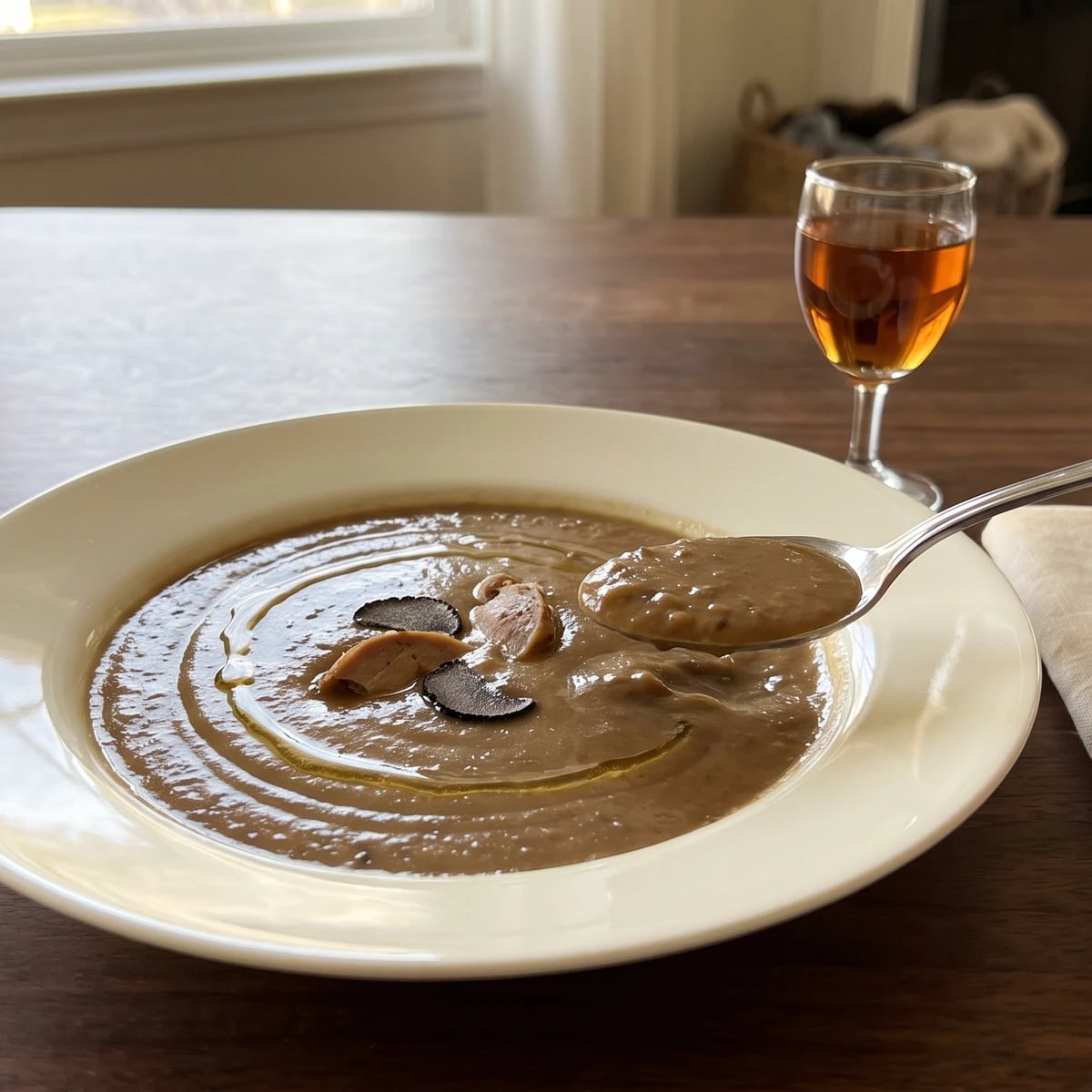
Potage à la Diane turns roast partridge, lentils, game stock, Madeira, and butter into a silken hunt soup, with savory custard crescents and black truffle giving each spoonful its formal grace.

Soups & Stews
French
Dinner Party
Special Occasion
45 min
Active Time
1 hr 45 min cook2 hr 30 min total
YieldAbout 2 quarts (8 first-course servings)

Potage à la Diane (partridge and lentil purée) teaches one lovely piece of classical discipline: the roast is only the beginning, not the finish. Keep the partridges slightly underdone. Their fillets cook again in the royale garnish, while the bodies finish gently with the lentils and game consommé. Roast them through at the start and the soup will taste dry, however much butter follows.

The original kitchen assumed a saucier, game stock never off the fire, a mortar, a tammy, and enough hands to prepare the garnish alongside the soup. For one cook, one stove, one evening, prepared unsalted game stock serves at two strengths, a blender replaces the mortar, and a fine-mesh sieve replaces the tammy. Separate consommé clarification and hand-pounding are brigade scaffolding, so they can go. The under-roasting, second cooking with lentils, thorough sieving, reduced Madeira, and monter au beurre, mounting with butter off the heat, are the dish itself and must stay.

When it is right, the Potage à la Diane is tawny and perfectly smooth, with the deep savor of roast game lifted by Madeira and little crescents of pale royale and black truffle appearing in every spoonful. The step that matters most comes first: pull the partridges while their breasts are still rosy. The pot finishes the cooking.

Potage à la Diane belongs to the formal French game table, particularly the grand kitchens of Paris and the hunting estates that supplied them, rather than to one provincial repertoire. Diane invokes the huntress, and the name signals the dish's partridge, black truffle, Madeira, and precisely cut royale garnish before the first spoonful is served. Despite its modern placement among cream soups, the potage gains its body from pounded game and lentils; cream belongs only to the royale, while sieving and butter provide the soup's silken finish.

The technique, the tradition, and the story behind every dish.

Discover Culinary Explorer

Ingredients

medium oven-ready partridges

Quantity

2, 12 to 14 oz (340 to 400 g) each

small green or brown lentils

Quantity

1⅛ cups (270 ml / 225 g)

picked over and rinsed

cold water

Quantity

4 cups (960 ml / 960 g)

small yellow onion

Quantity

1 (about 4 oz / 115 g)

quartered

small carrot

Quantity

1 (about 2 oz / 60 g)

cut into chunks

bouquet garni of parsley stalks, thyme, and bay leaf

Quantity

1

unsalted butter for roasting

Quantity

1 tbsp (15 ml / 14 g)

softened

game consommé, or clear concentrated unsalted game stock

Quantity

2⅓ cups (560 ml / 560 g)

excellent thin unsalted game stock

Quantity

3½ cups (840 ml / 840 g)

Game Royale garnish

Quantity

1 batch Game Royale (No. 209), made with 3 oz (85 g) reserved roasted partridge fillets

poached according to its own entry and cut into small regular crescents

Madeira

Quantity

½ cup (120 ml / 120 g)

reduced to 2 tbsp (30 ml / 30 g)

cold unsalted butter for finishing

Quantity

4 tbsp (60 ml / 57 g)

cut into small pieces

black truffle

Quantity

12 thin crescents (about 0.3 oz / 8 g)

fine sea salt

Quantity

2 tsp (10 ml / 12 g), divided, plus more as needed

finely ground white pepper

Quantity

½ tsp (2.5 ml / 1 g), divided

Equipment Needed

  • Small metal roasting pan or ovenproof skillet
  • 4-quart heavy saucepan or Dutch oven
  • Instant-read thermometer
  • High-speed blender with vented lid
  • Fine-mesh sieve, 8 to 10 inches wide
  • Small crescent aspic cutter or sharp paring knife
  • 2-quart soup tureen

Instructions

  1. 1

    Cook the lentils

    Put the lentils, cold water, onion, carrot, bouquet garni, and ½ tsp of the salt in a medium saucepan. Bring them slowly to a simmer, skim once, then cook gently for 25 to 30 minutes, until the lentils are tender but not dry or bursting apart. Remove the aromatic garnish and drain the lentils thoroughly, discarding their cooking liquor. If a few lentils split, do not fret; they are destined for the sieve.

  2. 2

    Undercook the partridges

    Heat the oven to 450°F (230°C). Dry the partridges well, season them inside and out with 1 tsp salt and half the white pepper, then rub them with the softened butter. Roast in a snug metal pan for 12 to 16 minutes, turning the pan once, until the skin is richly bronzed but the breast meat remains rosy, around 140°F (60°C) at its thickest point. Rest for 5 minutes, then remove the breast fillets cleanly and reserve 3 oz (85 g) for the Game Royale (No. 209). None of the meat is ready to eat yet; the bodies finish in the pot and the fillets finish during the royale's poaching. If the birds went further than intended, ça se rattrape: shorten their second cooking and keep the liquid below a boil.

  3. 3

    Finish in consommé

    Set the partridge bodies and drained lentils in a heavy 4-quart pot. Pour about ½ cup (120 ml) of the game consommé into the roasting pan and scrape up every bronzed trace of fond, then add this and the remaining consommé to the pot. Bring it to the barest simmer, cover loosely, and cook for 20 to 25 minutes, until the leg meat reaches at least 165°F (74°C) and pulls readily from its joints. Lift out the birds, let them cool just enough to handle, then remove every scrap of meat and discard the skin, bones, and sinew. Search carefully for fine bones before the meat reaches the blender.

  4. 4

    Shape the royale

    Prepare and poach the Game Royale (No. 209) according to its own entry, using the reserved roasted fillets. Let it set and cool enough to cut cleanly, then stamp or slice it into small, regular crescents about ½ inch (1.25 cm) across. Keep the crescents covered so their edges do not dry while the soup is finished.

  5. 5

    Blend and sieve

    Return the boned partridge meat to the lentils and their consommé. Let the mixture cool for 5 minutes, then blend in batches until completely smooth, never filling a blender more than halfway and keeping its vent open beneath a folded towel. Pass the purée through a fine-mesh sieve, pressing firmly with a ladle until only dry fibers remain. This replaces the mortar and tammy without changing their purpose. If the purée fights the sieve or still feels sandy, blend it again with a ladleful of the measured thin game stock and pass it once more. Ça se rattrape.

  6. 6

    Let down the purée

    Return the sieved purée to a clean pot and whisk in the 3½ cups (840 ml) of thin game stock in several additions. Bring it only to a gentle simmer and cook for 10 minutes, skimming any froth, until the soup flows from the ladle in a smooth ribbon and lightly coats a spoon. If it is too thick, loosen it with a little additional hot stock; if it is thin, simmer uncovered for a few minutes. Do not use flour or cream to correct it. The lentils and game are its proper body.

  7. 7

    Reduce the Madeira

    While the purée settles, simmer the Madeira in a small saucepan until exactly 2 tbsp (30 ml) remain. It should smell concentrated and vinous but remain fluid, not sticky. If it catches or turns syrupy, take it off the heat and loosen it with a spoonful of game stock. Do not discard it; ça se rattrape.

  8. 8

    Mount and serve

    Warm a soup tureen and arrange the royale and black truffle crescents in its base. Take the soup off the heat. Monter au beurre, mount it with butter, by whisking in the cold butter a few pieces at a time, then stir in the reduced Madeira. Taste and correct with the remaining salt and white pepper. Never boil after the butter goes in, or the finish may separate; if a greasy sheen appears, whisk in 2 tbsp of cold game stock off the heat until smooth. Pour the soup over the garnishes and serve at once. À table!

Chef Tips

  • Frozen farmed partridge is an honest choice when fresh birds are unavailable. Thaw it slowly in the refrigerator, dry it thoroughly, and inspect the cavity; moisture left on the skin prevents the bronzing that gives the soup its roasted depth.
  • The stock carries nearly the whole dish. Use unsalted game stock if you can. A deeply roasted duck stock is the closest home substitute, though the finished potage will taste rounder and less wild; pale boxed chicken broth has too little backbone.
  • A high-speed blender does the pounding, but the fine-mesh sieve still matters. Blending makes particles smaller; sieving removes the fibers that would otherwise leave the soup rough on the tongue. That distinction is the difference between thick and silken.
  • Use fresh black truffle when it is truly good, or a properly preserved whole black truffle from the classical pantry. Truffle oil does not replace the crescents and brings a perfume the original dish never asked for.
  • Serve the Potage à la Diane as a small first course. A mature red Burgundy has enough woodland depth for the partridge and truffle, while a dry Madeira quietly echoes the finish without making the soup taste sweet.

Advance Preparation

  • Prepare the two strengths of game stock up to 3 days ahead. Reduce a portion for the concentrated consommé stage, keep the remainder thin, and refrigerate both promptly or freeze them in measured containers.
  • The Game Royale (No. 209) may be poached one day ahead, covered, and chilled. Cut the crescents while it is cold for the cleanest edges, then let them lose their chill before the hot soup is poured over them.
  • The puréed and sieved soup base can be made up to 2 days ahead, cooled quickly in a shallow container, and refrigerated without the butter or Madeira. Reheat it gently, then reduce the Madeira and mount with cold butter immediately before serving.

Frequently Asked Questions

Nutrition Information

1 serving (about 240g)

Calories
300 calories
Total Fat
15 g
Saturated Fat
8 g
Trans Fat
0 g
Unsaturated Fat
6 g
Cholesterol
130 mg
Sodium
700 mg
Total Carbohydrates
19 g
Dietary Fiber
2 g
Sugars
2 g
Protein
22 g

Note: Chef personas and recipes are created with AI assistance. Cook with care: follow safe food-handling practices, check doneness with a thermometer when needed, and adapt for allergies and your kitchen.

Where cooking meets culture.

Culinary guides, cultural storytelling, and the editorial depth that makes cooking meaningful.

Discover Culinary Explorer

More from Soups - Thick Soups

Browse the full collection