Chef Juliette
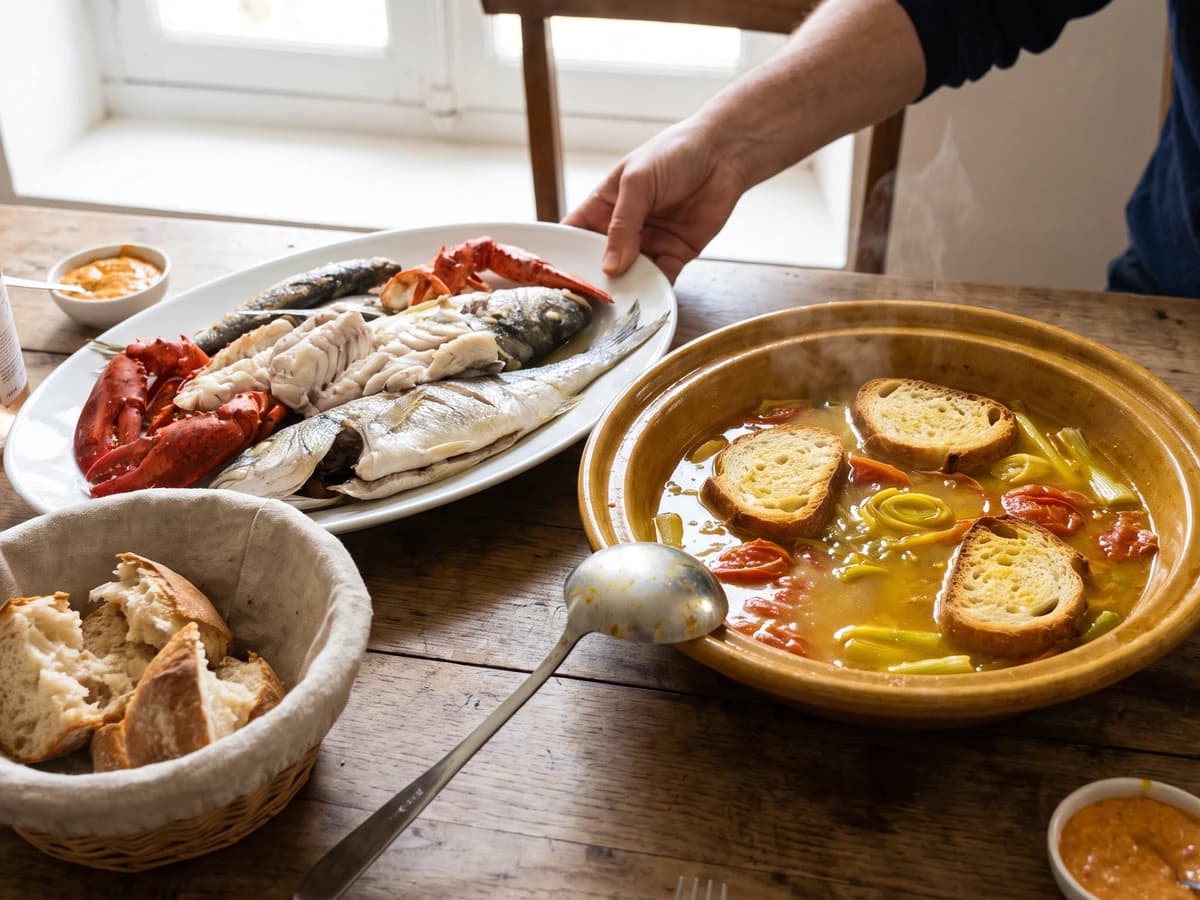
Bouillabaisse à la Marseillaise
Marseille's great fish stew, saffron-gold and garlic-scented, proves that a hard boil can be the careful choice: it binds olive oil into broth before the whole pot meets bread.
A cooking platform built around craft, culture, and the stories behind what we eat.
Created by Chef Juliette
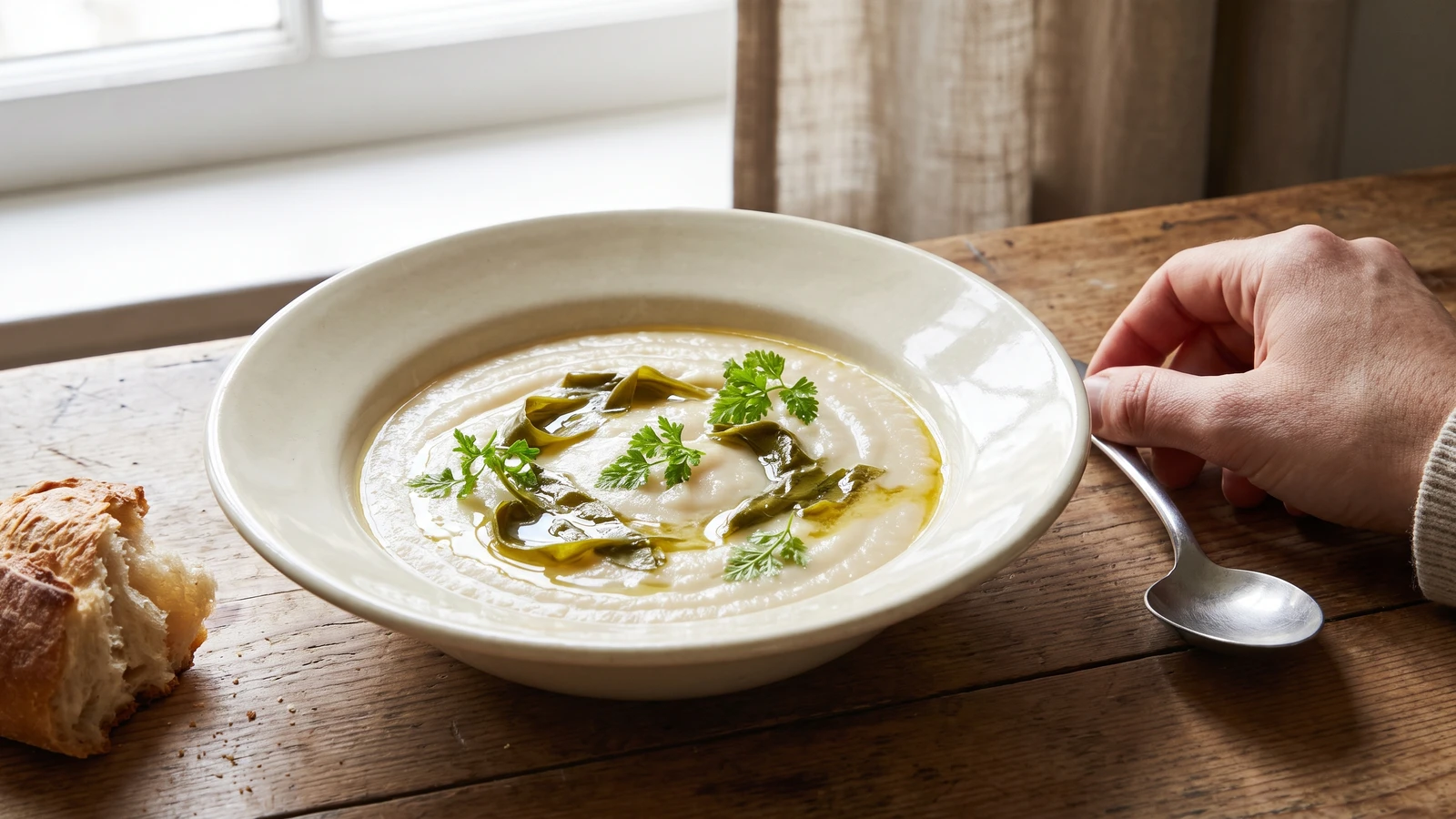
Based on No. 719, Potage Compiègne, from Le Guide Culinaire (1907) by Auguste Escoffier
White beans become a pale, flowing purée under a firm hand with butter, while sorrel cuts through the richness and chervil keeps the finish fresh, precise, and unmistakably Compiègne.
Potage Compiègne (light Soissonnaise white-bean purée with buttered sorrel and chervil) teaches the difference between a purée and a paste. Light, in the classical language, means flowing and delicate, not timidly enriched. The beans give the soup its body, butter gives it sheen, and sorrel keeps every spoonful awake.
The original entry assumes a light Purée Soissonnaise already waiting, a saucier free to pass and butter it at the last moment, and a stockpot never off the fire. At home, good canned white beans and unsalted light stock provide the honest equivalent in one saucepan. The separate purée station is brigade scaffolding and can go; passing the beans until smooth, finishing them generously with real butter, and preserving the exact three tablespoons of buttered sorrel are the dish and must stay. One cook, one stove, one evening.
Make the purée thinner than instinct first suggests, because beans continue to tighten as they stand. The deciding moment comes when you monter au beurre off the heat: whisk in the cold butter until the surface gleams, then never let the soup boil again.
Potage Compiègne belongs to the classical place-name repertory associated with Compiègne in the Oise, while its foundation, Purée Soissonnaise, points east to Soissons and the large white bean long prized there. The name marks a variation rather than a separate farmhouse soup: the Soissonnaise is kept deliberately light, then buttered sorrel and chervil pluches give Compiègne its identity. That tart green finish corrects the notion that a white-bean purée must sit heavily; here the garnish is structural, not decorative.
Quantity
3 cans (15 oz / 425 g each; about 4½ cups / 760 g drained)
drained and rinsed
Quantity
6 to 7 cups (1.4 to 1.65 liters / 1.4 to 1.65 kg)
divided
Quantity
1 medium (about 1 cup / 150 g)
finely diced
Quantity
8 tablespoons (½ cup / 115 g)
divided, with 4 tablespoons chilled and cubed
Quantity
1 small
parsley stems, thyme, and 1 bay leaf
Quantity
1 teaspoon (5 ml / 6 g), plus more as needed
divided
Quantity
¼ teaspoon (1.25 ml / 0.5 g), plus more as needed
Quantity
3 packed tablespoons (45 ml / 10 g)
cisel cut
Quantity
¼ cup (60 ml / 5 g)
loosely packed
| Ingredient | Quantity |
|---|---|
| large white beansdrained and rinsed | 3 cans (15 oz / 425 g each; about 4½ cups / 760 g drained) |
| unsalted light chicken stockdivided | 6 to 7 cups (1.4 to 1.65 liters / 1.4 to 1.65 kg) |
| white onionfinely diced | 1 medium (about 1 cup / 150 g) |
| unsalted butterdivided, with 4 tablespoons chilled and cubed | 8 tablespoons (½ cup / 115 g) |
| bouquet garniparsley stems, thyme, and 1 bay leaf | 1 small |
| fine sea saltdivided | 1 teaspoon (5 ml / 6 g), plus more as needed |
| ground white pepper | ¼ teaspoon (1.25 ml / 0.5 g), plus more as needed |
| fresh sorrel leavescisel cut | 3 packed tablespoons (45 ml / 10 g) |
| chervil pluchesloosely packed | ¼ cup (60 ml / 5 g) |
Wash and dry the sorrel and chervil carefully. Make the cisel, the fine crosswise cut described by the classical vocabulary: stack the sorrel leaves, roll them loosely, and slice them into narrow ribbons without crushing them. Pick the chervil into pluches, the tender leaves and delicate shreds used to finish soups, discarding the coarse stems. Keep both herbs cool until needed.
Melt 2 tablespoons of the butter in a 4-quart saucepan over medium-low heat. Add the onion and a pinch of the measured salt, then sweat it for 8 to 10 minutes until tender and translucent without letting it color. Add the rinsed beans, bouquet garni, and 6 cups of the stock. Bring the pot to a bare simmer and cook for 20 minutes, stirring occasionally, until the onion has disappeared into the broth and the beans taste thoroughly seasoned.
Remove and discard the bouquet garni. Let the soup settle for 5 minutes, then blend until completely smooth, working in batches if using a countertop blender. Never fill a blender more than halfway with hot soup, and keep the lid vented beneath a folded towel. Push the purée through a fine-mesh sieve into a clean saucepan. If it still feels grainy, pass it once more rather than hiding the texture with cream; the smooth, light body is part of the dish.
Return the purée to medium-low heat and add enough reserved stock to make it flow from the ladle in a broad ribbon. It should leave a thin veil on the back of a spoon, never sit in a mound. If it is too thick, add stock a little at a time. If it is too thin, simmer it gently before the finishing butter goes in. Ça se rattrape. Season lightly with salt and white pepper, remembering that the final butter will round the flavors.
Melt 2 tablespoons of the butter in a small skillet over medium-low heat. Add the three tablespoons of cisel-cut sorrel with a small pinch of salt and turn it through the butter for 1 to 2 minutes, just until the ribbons collapse and become tender olive green. Do not brown them. If the butter begins to color, pull the skillet from the heat and stir in a teaspoon of cold stock; ça se rattrape, and the sorrel's clean acidity remains intact.
Bring the purée just to the edge of a simmer, then remove it from the heat. Monter au beurre, mounting with butter, by whisking in the remaining 4 tablespoons of cold butter a few cubes at a time until each addition disappears and the soup becomes glossy. If butter floats in greasy beads, stop adding it and blend in a tablespoon of cold stock with an immersion blender until the emulsion returns. Once mounted, keep the pot warm but never let it boil.
Fold the buttered sorrel and every drop of its butter into the Potage Compiègne, leaving the green ribbons visible rather than blending them away. Taste once more for salt and white pepper, then ladle the soup into warmed bowls and scatter the chervil pluches over each serving at the last moment. Their freshness is brief and that is precisely their charm. À table!
1 serving (about 245g)
Culinary guides, cultural storytelling, and the editorial depth that makes cooking meaningful.
Discover Culinary ExplorerChef Juliette
Marseille's great fish stew, saffron-gold and garlic-scented, proves that a hard boil can be the careful choice: it binds olive oil into broth before the whole pot meets bread.
Chef Juliette
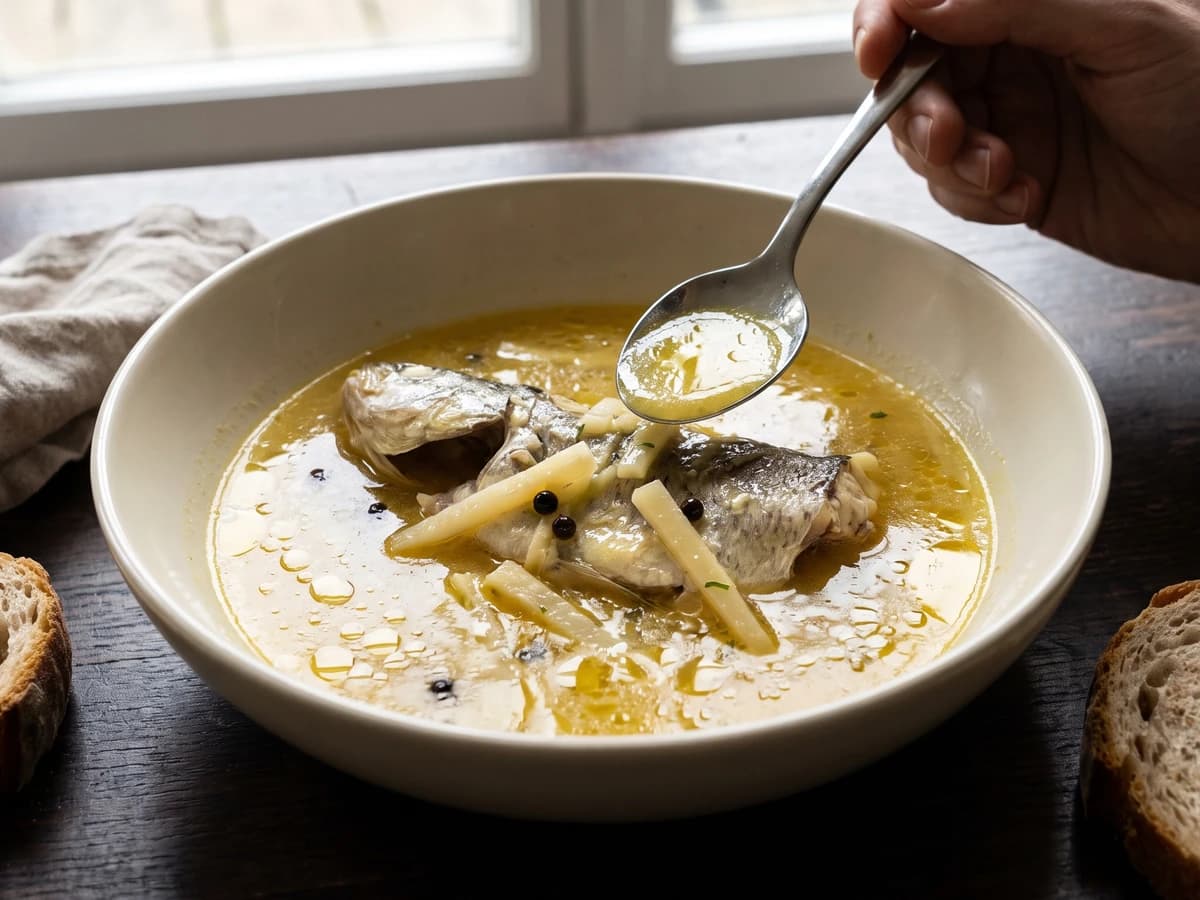
Waterzoi asks fresh, bone-in river fish to thicken its own buttery broth, with parsley root and pepper for company. No flour, no stockpot, just a brisk simmer watched closely.
Chef Juliette
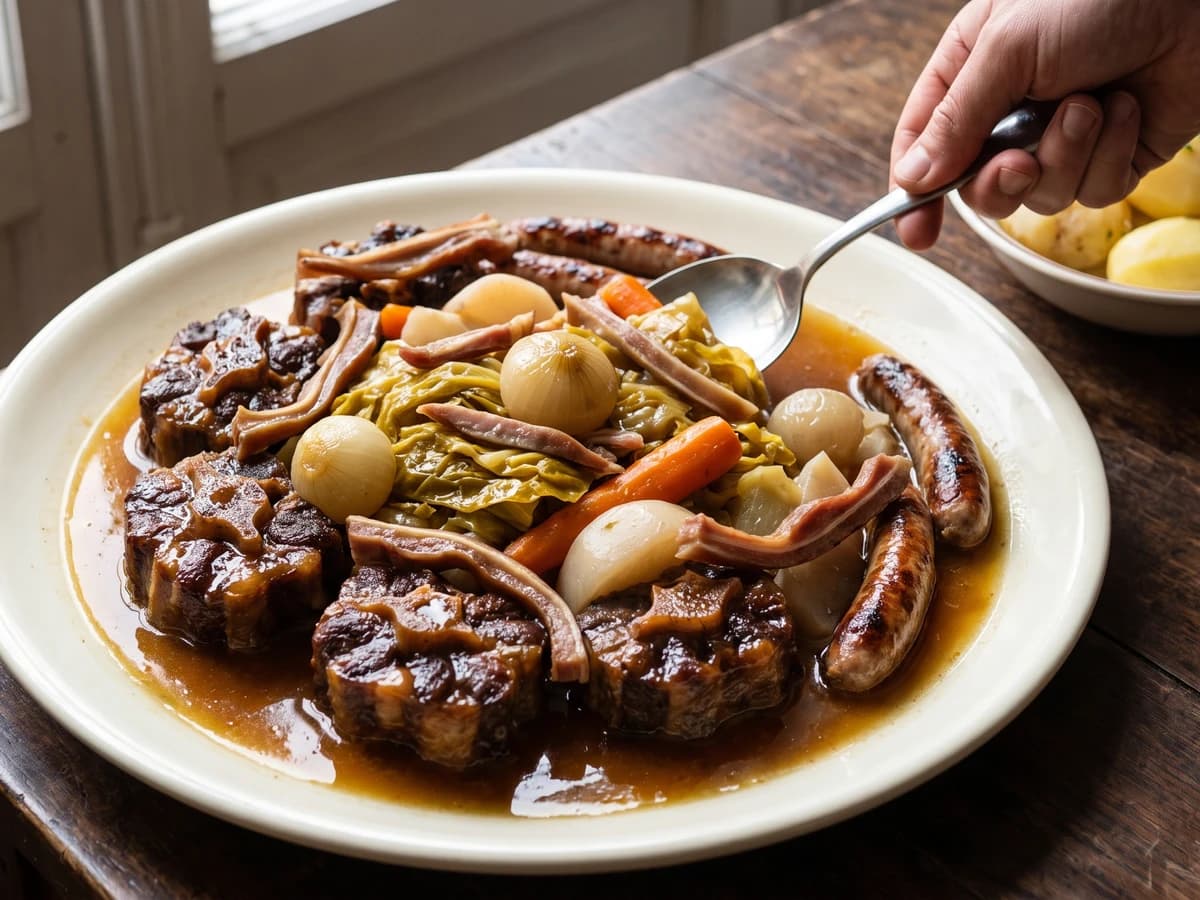
Queue de Bœuf en Hochepot gathers oxtail, pig's trotter and ear, cabbage, roots, and grilled chipolatas around a clear, gelatin-rich broth whose quiet simmer keeps every piece tender and distinct.
Chef Juliette
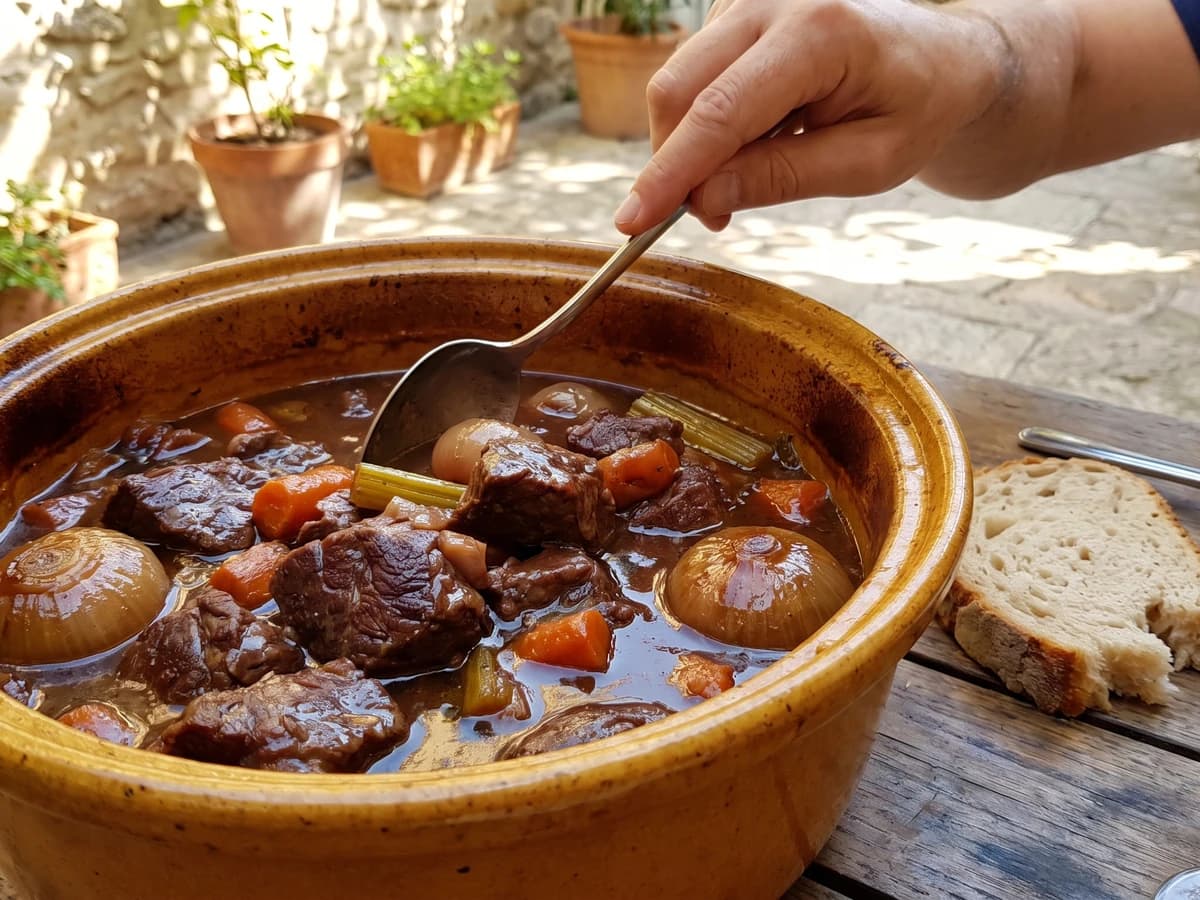
Beef shoulder larded with bacon, sharpened by red wine and vinegar, then sealed with garlic, vegetables, and dry lemon peel until the low oven turns it yielding and the gravy darkly glossy.