
Chef Juliette
Purée de Carottes, otherwise Crécy
Purée de Carottes, otherwise Crécy, turns carrots, butter, rice, and white consommé into a silken soup. The lesson is simple and absolute: blend for smoothness, then sieve for finesse.
A cooking platform built around craft, culture, and the stories behind what we eat.
Created by Chef Juliette
Based on No. 716, Potage Bagration Gras, from Le Guide Culinaire (1907) by Auguste Escoffier
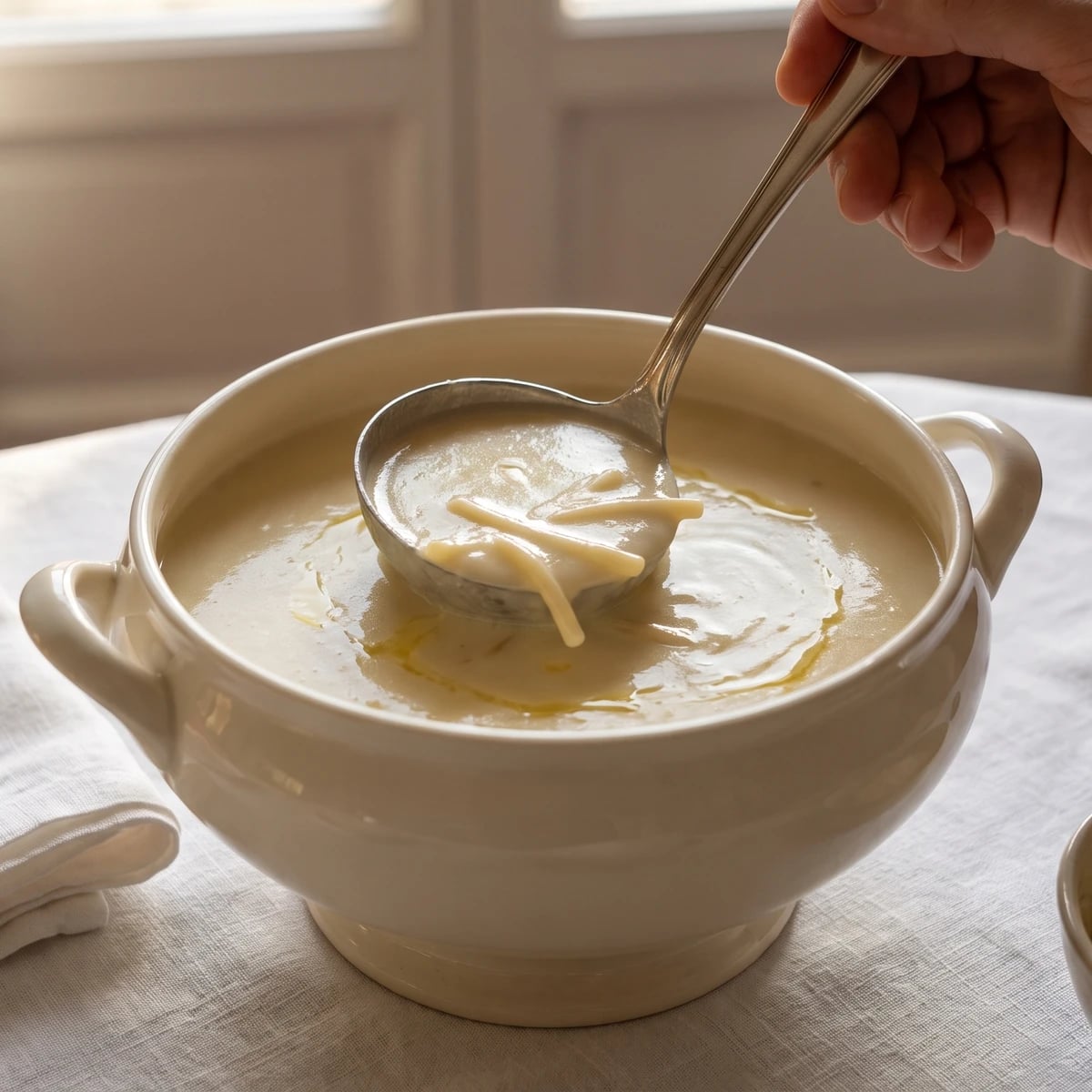
Potage Bagration Gras turns pale veal, velouté, consommé, egg yolks, cream, and butter into an ivory soup of extraordinary depth, with short macaroni in the bowl and grated cheese passed at table.
Potage Bagration Gras (meat-based Bagration veal soup) teaches the quiet boundary between enough heat to bind and enough heat to curdle. Once the liaison, an egg-yolk-and-cream binding, enters the pot, the soup must never boil. Hold that line and you have a pale, satin potage with a fine butter gloss, tender macaroni, and grated cheese waiting at the table.
The original recipe assumed a saucier, thin veal velouté and white consommé always ready, a mortar for pounding the meat, and a tammy cloth with another pair of hands to work it through. At home, the finished foundations wait in measured freezer containers, a blender replaces the mortar, and a fine-mesh sieve replaces the tammy. Those are brigade scaffolding and may go. Raidir the veal without colouring it, pass the purée until truly smooth, and finish with the liaison exactly as written, because those steps are the dish. The proportions here make about two quarts for a home table. One cook, one stove, one evening.
The finished soup should taste first of veal, then cream and butter, never flour or cooked egg. The liaison is the step that decides it: temper patiently, keep the pot below a simmer, and have the courage to stop heating once the soup lightly coats the spoon.
Potage Bagration belongs to Parisian grand cuisine, where French cooks named composed dishes for Prince Pyotr Bagration while keeping their construction firmly within the French sauce families. Its Russian name can mislead: the method is a French veal purée supported by velouté and finished with a liaison, while short macaroni and grated cheese are part of the formula rather than later embellishments. The word gras marks this meat-based version, distinct from the maigre preparation made for non-meat service.
Quantity
13 ounces (370 g)
cut into 1-inch (2.5 cm) dice
Quantity
2 tablespoons (30 ml / 28 g)
for cooking the veal
Quantity
3⅔ cups (870 ml / about 900 g)
Quantity
3 cups (710 ml / 710 g)
divided
Quantity
4
Quantity
⅓ cup (80 ml / 80 g)
Quantity
5 tablespoons (75 ml / 70 g)
cut into small cubes
Quantity
¾ cup (180 ml / 85 g)
broken into short lengths
Quantity
¾ cup (180 ml / 75 g)
finely grated and served separately
Quantity
only as needed
| Ingredient | Quantity |
|---|---|
| very pale veal fillet or boneless veal loincut into 1-inch (2.5 cm) dice | 13 ounces (370 g) |
| unsalted butterfor cooking the veal | 2 tablespoons (30 ml / 28 g) |
| finished thin veal velouté | 3⅔ cups (870 ml / about 900 g) |
| finished white consommédivided | 3 cups (710 ml / 710 g) |
| large egg yolks | 4 |
| heavy cream | ⅓ cup (80 ml / 80 g) |
| cold unsalted buttercut into small cubes | 5 tablespoons (75 ml / 70 g) |
| dry thin macaronibroken into short lengths | ¾ cup (180 ml / 85 g) |
| Gruyère cheesefinely grated and served separately | ¾ cup (180 ml / 75 g) |
| fine salt | only as needed |
Measure the finished thin veal velouté and white consommé before the veal meets the pan. Reserve 2 tablespoons of the consommé in the cold; it will adjust the finished consistency or rescue the liaison if needed. Whisk the egg yolks and cream together until completely smooth, then keep this liaison cold. Break the macaroni into short, spoon-friendly lengths.
Melt the cooking butter in a heavy 4-quart saucepan over medium-low heat. Add the veal in one layer and raidir it, gently stiffening the meat in butter, for 4 to 6 minutes. Turn the dice frequently until every surface is opaque and firm but entirely free of browning. If the butter begins to colour, pull the pan from the heat and add a spoonful of the measured velouté to arrest it. The soup must remain ivory, so patience, not a hotter flame.
Pour in all the thin veal velouté and stir across the bottom of the pan with a flat-ended spoon. Bring it slowly to the barest simmer, then cook gently for 20 to 25 minutes, stirring often, until the veal is tender and the velouté tastes fully joined to it. A roux-bound liquid catches easily. If it scorches, decant the unburned soup into a clean pan without scraping the bottom; the scorched layer stays behind.
Lift the veal into a blender with about 1 cup of the cooking velouté and purée until smooth. Add the remaining velouté gradually and blend again, working in batches with the lid vented and covered by a folded towel. Pass every drop through a fine-mesh sieve into a clean bowl, pressing with a flexible spatula but leaving the dry fibrous residue behind. Rinse the saucepan before returning the strained purée to it. The blender replaces the old mortar, but it does not replace the sieve; that final passing gives the potage its silk.
Whisk the remaining white consommé, except the chilled reserve, into the strained veal purée. Heat gently for 5 to 8 minutes until the surface barely trembles, never boils, and skim away any foam. Taste before adding salt because both finished foundation preparations may already be seasoned. The soup should pour freely while retaining a light, creamy body.
Cook the short macaroni in a separate pan of salted water until tender but still distinct, usually 7 to 9 minutes. Drain it, rinse briefly with hot water to remove clinging starch, and drain again thoroughly. Keep it separate from the soup until serving; left in the pot, macaroni drinks the liquid and turns a satin potage into paste.
Take the soup completely off the heat. Whisk about 1 cup of hot soup into the cold liaison, beginning with several small spoonfuls and then pouring in a thin stream. Whisk the tempered liaison back into the saucepan, return it to the lowest heat, and stir constantly until it reaches 165 to 172°F (74 to 78°C) and lightly coats the spoon, about 3 to 5 minutes. No bubbles. If the soup begins to look grainy, remove it from the heat at once, whisk in the reserved cold consommé, and pass it once more through the clean sieve. Ça se rattrape. A full boil will scramble the yolks beyond rescue, so stop as soon as the binding is smooth.
Off the heat, whisk in the cold butter one cube at a time until each piece disappears and the surface takes on a fine gloss. Use the reserved consommé now if it was not needed earlier and the soup requires loosening. Divide the drained macaroni among warmed soup bowls or place it in a warmed soupière, then ladle over the Potage Bagration Gras. Send the grated Gruyère to the table in a separate bowl, exactly as the dish intends, and serve immediately. À table!
1 serving (about 255g)
Culinary guides, cultural storytelling, and the editorial depth that makes cooking meaningful.
Discover Culinary Explorer
Chef Juliette
Purée de Carottes, otherwise Crécy, turns carrots, butter, rice, and white consommé into a silken soup. The lesson is simple and absolute: blend for smoothness, then sieve for finesse.

Chef Juliette
Purée Crécy meets tender tapioca poached in white consommé, then butter brings the two together. Velours earns its name from the spoon: glossy, softly pearled, and entirely itself.

Chef Juliette
Purée de Céleri-rave turns knobby celeriac into an ivory, butter-glossed soup, its bitterness blanched away, its body supplied by potato, and its sweetness clarified by a patient half-hour of skimming.

Chef Juliette
A pale-green Flamande purée built on fresh Brussels sprouts, butter, white consommé, and potato, passed smooth and milk-finished, with crisp bread dice for the necessary bite.