Chef Juliette
Bouillabaisse à la Marseillaise
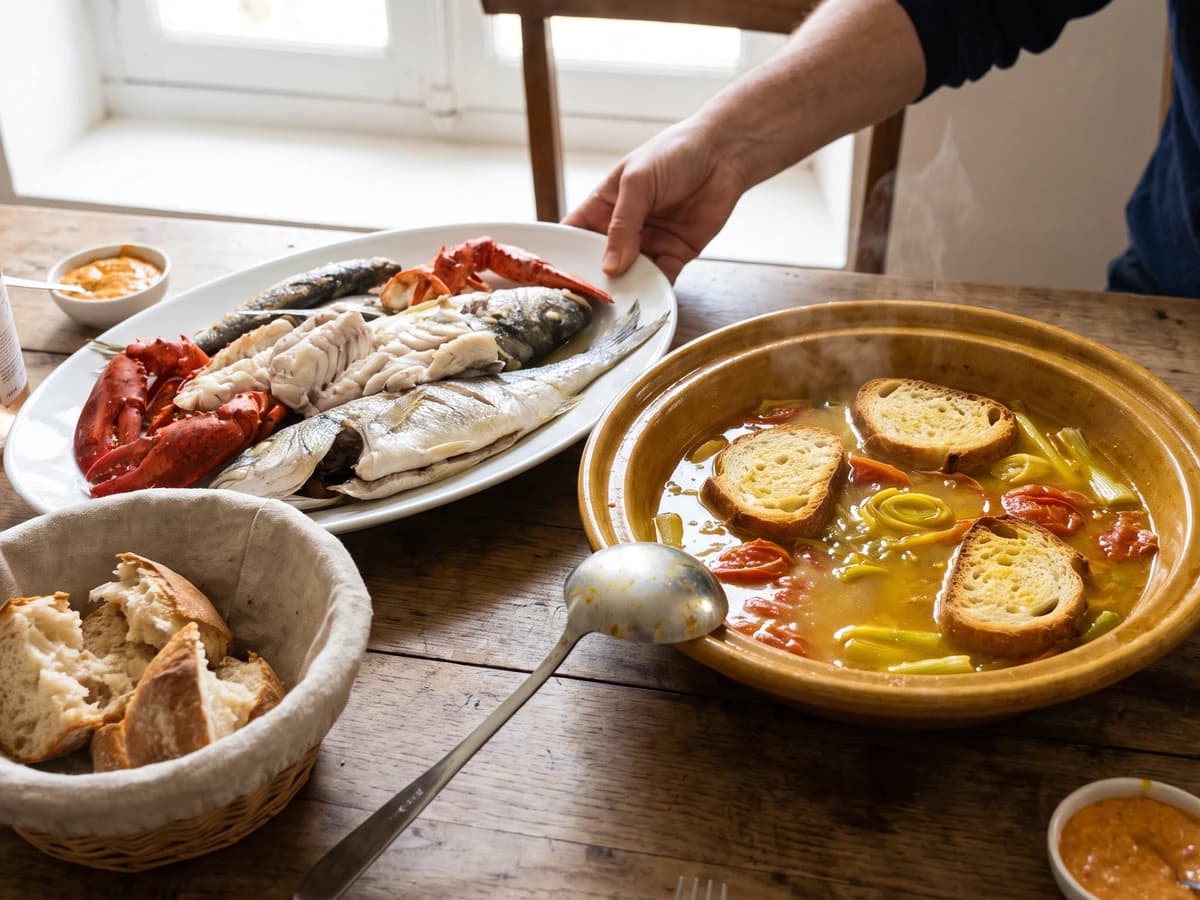
Marseille's great fish stew, saffron-gold and garlic-scented, proves that a hard boil can be the careful choice: it binds olive oil into broth before the whole pot meets bread.
A cooking platform built around craft, culture, and the stories behind what we eat.
Created by Chef Juliette
Based on No. 714, Crème Reine-Margot, from Le Guide Culinaire (1907) by Auguste Escoffier
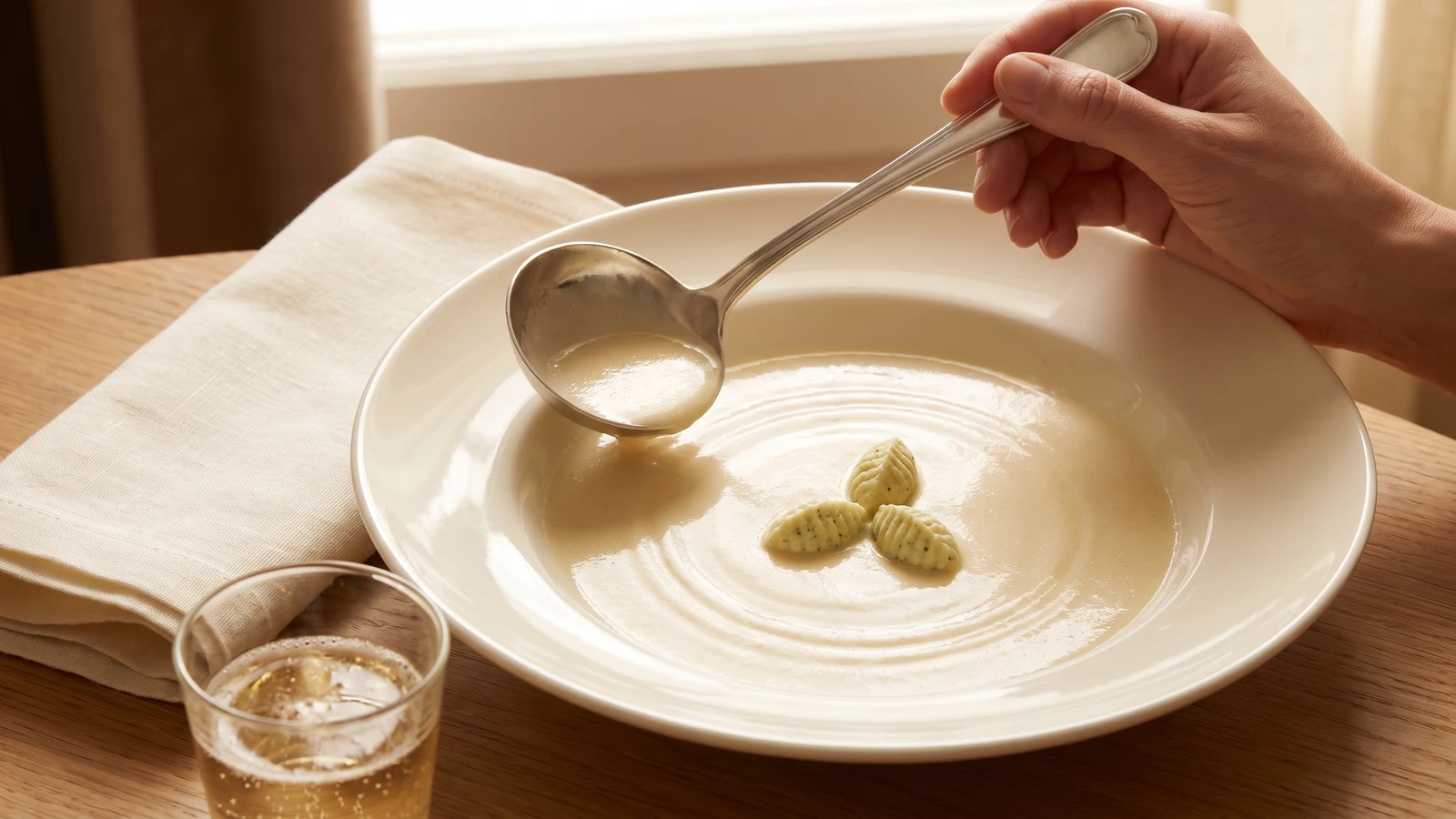
Crème Reine-Margot turns chicken, béchamel, white consommé, almond milk, and cream into a pale silken soup, with tiny pistachio chicken quenelles bringing color, tenderness, and quiet wit.
Crème Reine-Margot (cream of chicken with almond and pistachio quenelles) teaches a severe little lesson: smoothness is built before cream is added. The chicken purée, thin Béchamel, and white consommé must become one body without a grain or lump; almond milk softens the flavor, cream rounds it, and pistachio quenelles bring the quiet green surprise. The one true thing to know before touching a pan is this: the sieve matters more than the cream.
The original formula assumed a saucier with finished Béchamel and white consommé waiting, a stockpot never off the fire, a tammy for rubbing the purée, and another pair of hands shaping the garnish. At home, a fine-mesh sieve replaces the tammy, and a piping bag with a small star tip makes the tiny grooved quenelles without a special mould. I keep the book's exact 2:4:6:1 ratio of chicken purée, Béchamel, consommé, and almond milk, set at about two quarts for eight first-course bowls. The source leaves the finishing cream to the saucier's judgment; I specify ½ cup so the home cook has a dependable starting point. One cook, one stove, one evening.
The hot stockpot and tammy were brigade scaffolding. The separate foundations, the sieving before dilution, the gentle heat, and the quenelles are the dish, so they stay. Rub the chicken and Béchamel through the sieve before the consommé goes in; that single step decides whether Reine-Margot reaches the table as silk or as chicken soup with good intentions.
Crème Reine-Margot belongs to the Parisian grand-kitchen repertoire of potages named for royal and celebrated figures, where a soup's title signaled a precise base and garnish. It sits within the potage à la reine family, poultry worked to velvet and paired with almonds, while pistachio-enriched chicken quenelles distinguish Margot at the table. The name is a culinary dedication, not evidence that Queen Margot was served this exact formula; what endures is the grammar of pale poultry, almond, cream, and a green-flecked garnish.
Quantity
1¼ cups (300 ml / 300 g)
cold
Quantity
2½ cups (600 ml / 620 g)
warm but not hot
Quantity
3¾ cups (900 ml / 900 g)
warm
Quantity
⅝ cup (150 ml / 150 g), prepared within Velouté Dame-Blanche (No. 678)
Quantity
½ cup (120 ml / 120 g)
cold and divided
Quantity
¾ cup (180 ml / 6 oz / 170 g)
very cold
Quantity
¼ cup (60 ml / 2 oz / 57 g)
Quantity
8 cups (1.9 L / 1.9 kg)
for poaching
Quantity
only if needed
| Ingredient | Quantity |
|---|---|
| smooth cooked chicken puréecold | 1¼ cups (300 ml / 300 g) |
| thin Béchamel made with real butterwarm but not hot | 2½ cups (600 ml / 620 g) |
| white chicken consomméwarm | 3¾ cups (900 ml / 900 g) |
| well-strained unsweetened almond milk | ⅝ cup (150 ml / 150 g), prepared within Velouté Dame-Blanche (No. 678) |
| heavy creamcold and divided | ½ cup (120 ml / 120 g) |
| chicken forcemeatvery cold | ¾ cup (180 ml / 6 oz / 170 g) |
| smooth unsweetened pistachio purée | ¼ cup (60 ml / 2 oz / 57 g) |
| waterfor poaching | 8 cups (1.9 L / 1.9 kg) |
| fine sea salt | only if needed |
Let the chicken purée lose its hard refrigerator chill for 10 minutes, then put it in a mixing bowl. Beat in one ladleful of the thin, roux-built Béchamel until no white streaks remain. Add the rest in three portions, working each one fully into the chicken before the next. Adding everything at once leaves little knots of chicken that even cream cannot disguise.
Set a fine-mesh sieve over a clean 4-quart saucepan. Press the chicken and Béchamel mixture through in small batches with a flexible scraper, then scrape the smooth purée clinging to the underside into the pan. Do not skip this because the mixture already looks smooth. A blender can make fibers smaller, but the sieve removes them, and that distinction is the texture of the finished soup.
Set the saucepan over low heat. Whisk in the warm white chicken consommé one ladleful at a time at first, loosening the thick purée without creating lumps, then add the remainder in two steady additions. Stir slowly until the soup is completely uniform and warm. It should lightly veil a spoon but remain fluid enough to pour cleanly; this is a crème, not a sauce.
Fold the pistachio purée into the very cold chicken forcemeat until the color is even, without beating in air. The source is exact here: 1 ounce pistachio purée for every 3 ounces forcemeat, and that proportion stays. Transfer the mixture to a piping bag fitted with a ½-inch open-star tip and chill it for 10 minutes so the grooves hold during poaching.
Bring the water to the barest tremble in a wide pan, then lower the heat. Pipe one short, ¾-inch length of forcemeat over the water and cut it free with a wet paring knife. Poach this tester for 3 to 4 minutes, turning once, until it feels lightly springy and reaches 165°F (74°C) at the center. If its edges feather, the water is too active or the forcemeat has grown warm; lift the pan from the heat, chill the bag for another 10 minutes, and test again. Once it holds neatly, poach about 24 quenelles in small batches and drain them gently.
Reserve 2 tablespoons of the cold cream, then stir the well-strained almond milk prepared within Velouté Dame-Blanche (No. 678) into the soup. Heat gently, stirring across the pan floor, until the surface gleams and pinprick bubbles threaten at the rim. Do not allow it to boil. If it does boil and turns grainy, take it off the heat immediately, whisk in the reserved cold cream, blend briefly with the head kept below the surface, and pass the soup through the clean sieve. Ça se rattrape. Off the heat, whisk in the remaining cream and taste before adding any salt.
Return the drained quenelles to the soup for 30 seconds over the lowest heat, only long enough to warm them. Arrange three tiny grooved quenelles in each warm soup plate and ladle the Crème Reine-Margot around them, keeping their pale pistachio color visible at the surface. Serve at once. À table!
1 serving (about 240g)
Culinary guides, cultural storytelling, and the editorial depth that makes cooking meaningful.
Discover Culinary ExplorerChef Juliette
Marseille's great fish stew, saffron-gold and garlic-scented, proves that a hard boil can be the careful choice: it binds olive oil into broth before the whole pot meets bread.
Chef Juliette
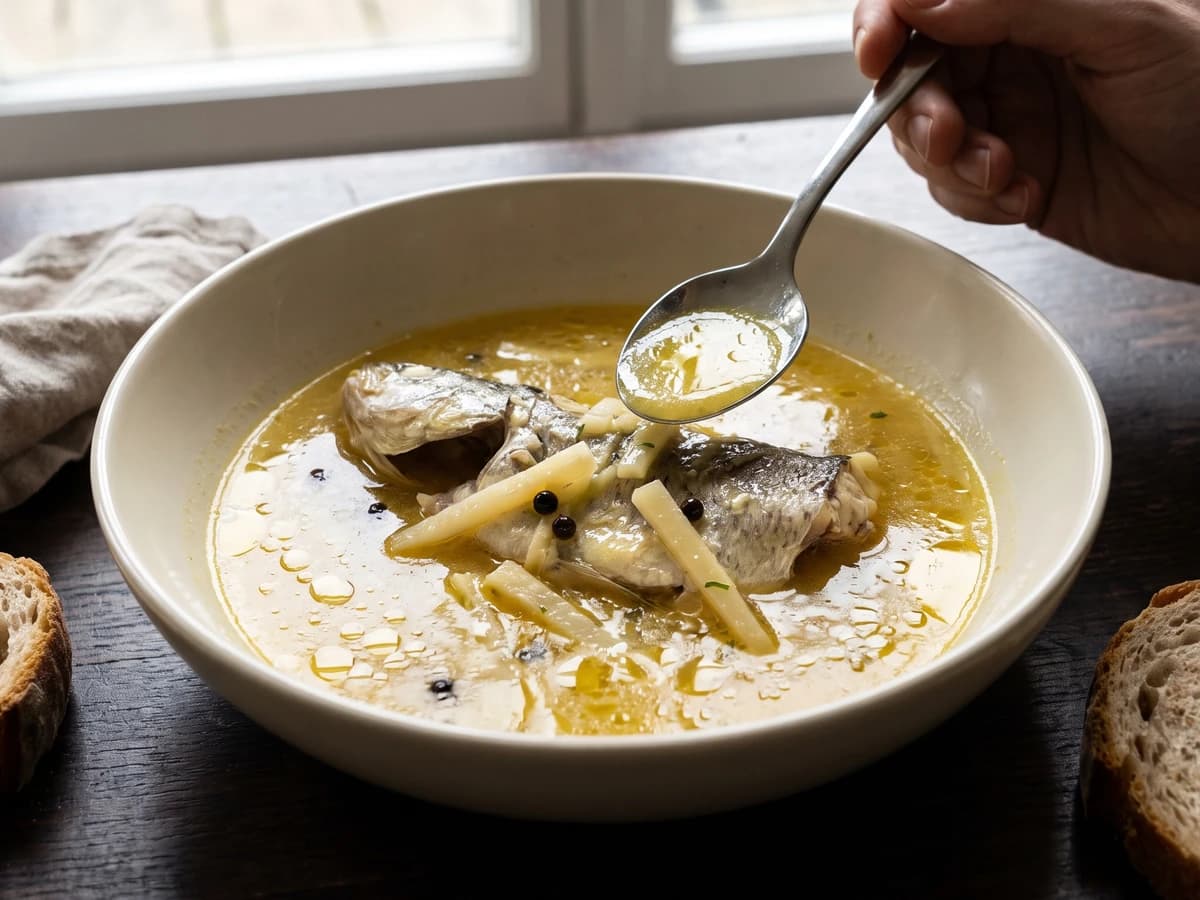
Waterzoi asks fresh, bone-in river fish to thicken its own buttery broth, with parsley root and pepper for company. No flour, no stockpot, just a brisk simmer watched closely.
Chef Juliette
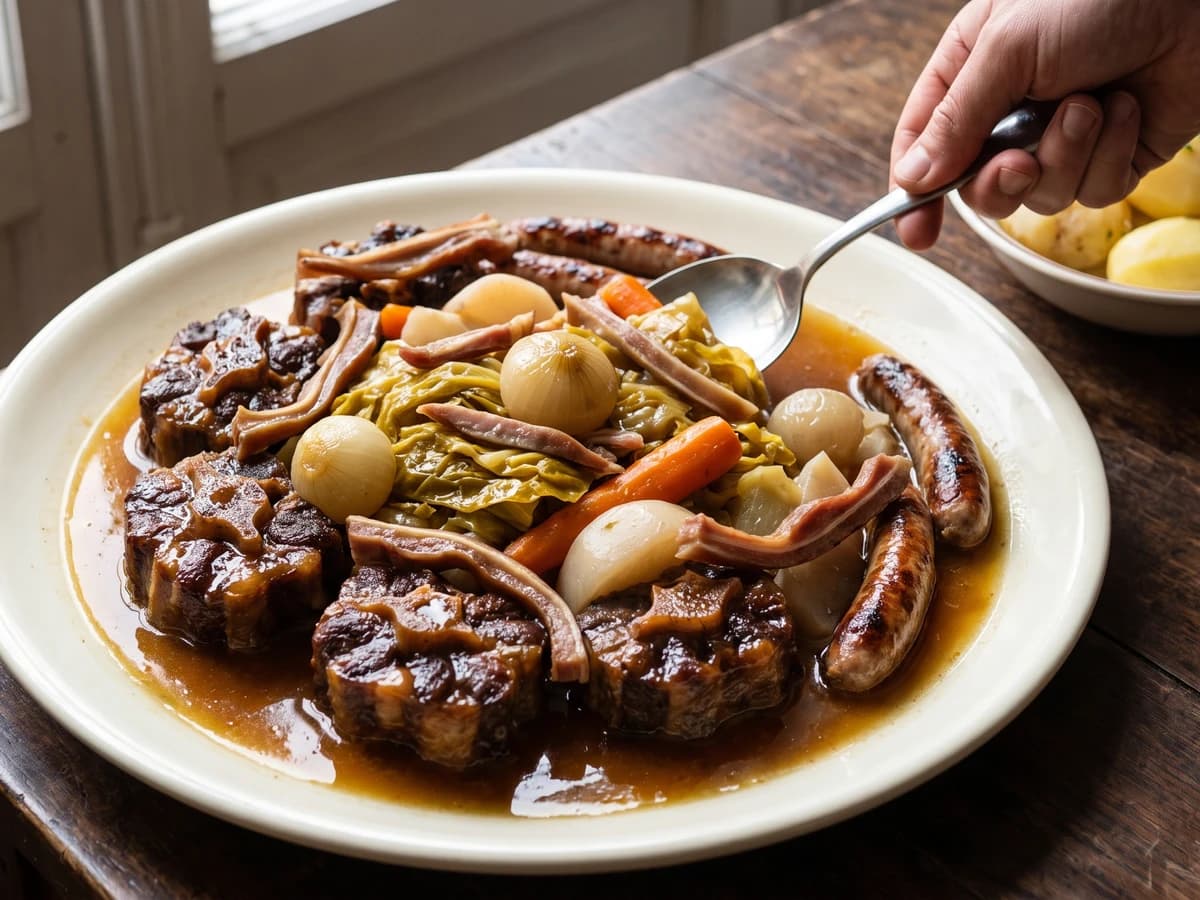
Queue de Bœuf en Hochepot gathers oxtail, pig's trotter and ear, cabbage, roots, and grilled chipolatas around a clear, gelatin-rich broth whose quiet simmer keeps every piece tender and distinct.
Chef Juliette
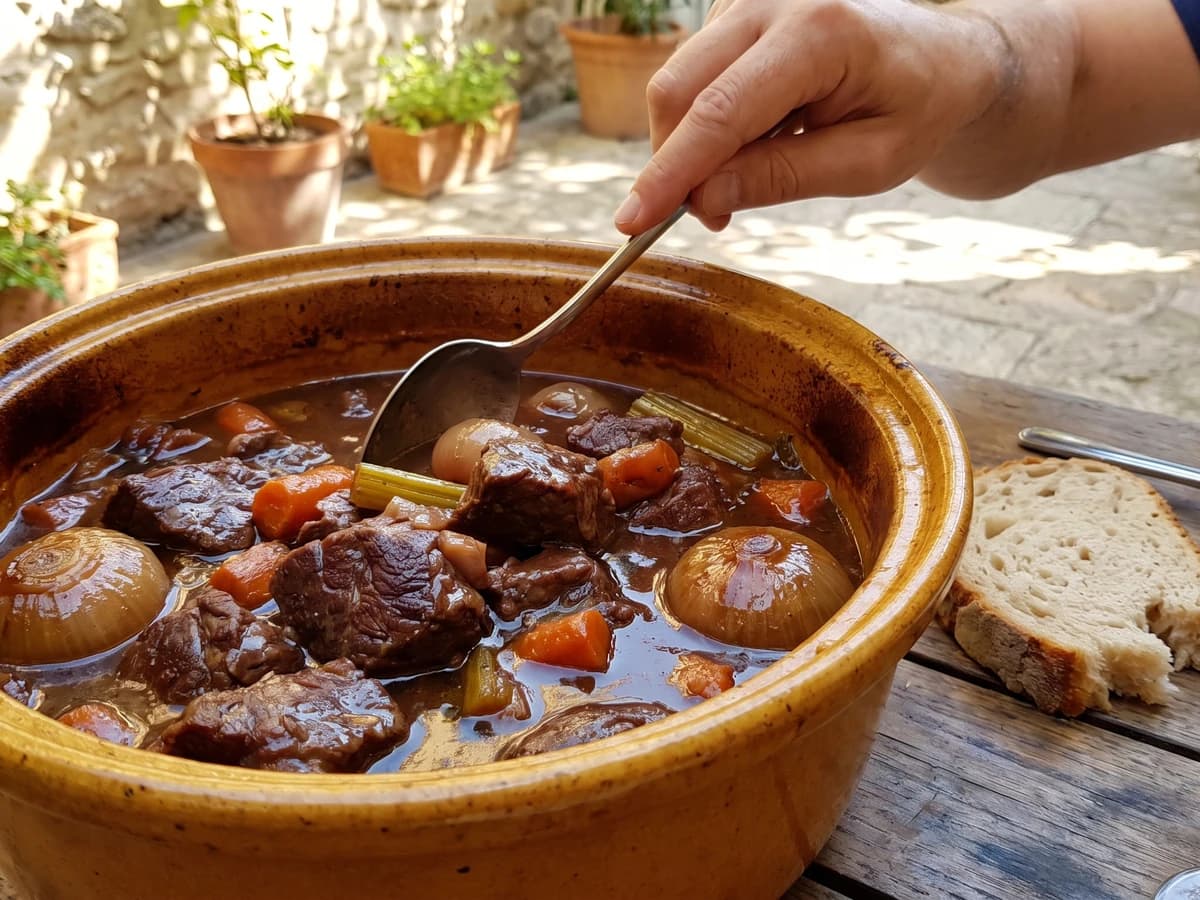
Beef shoulder larded with bacon, sharpened by red wine and vinegar, then sealed with garlic, vegetables, and dry lemon peel until the low oven turns it yielding and the gravy darkly glossy.