Chef Juliette
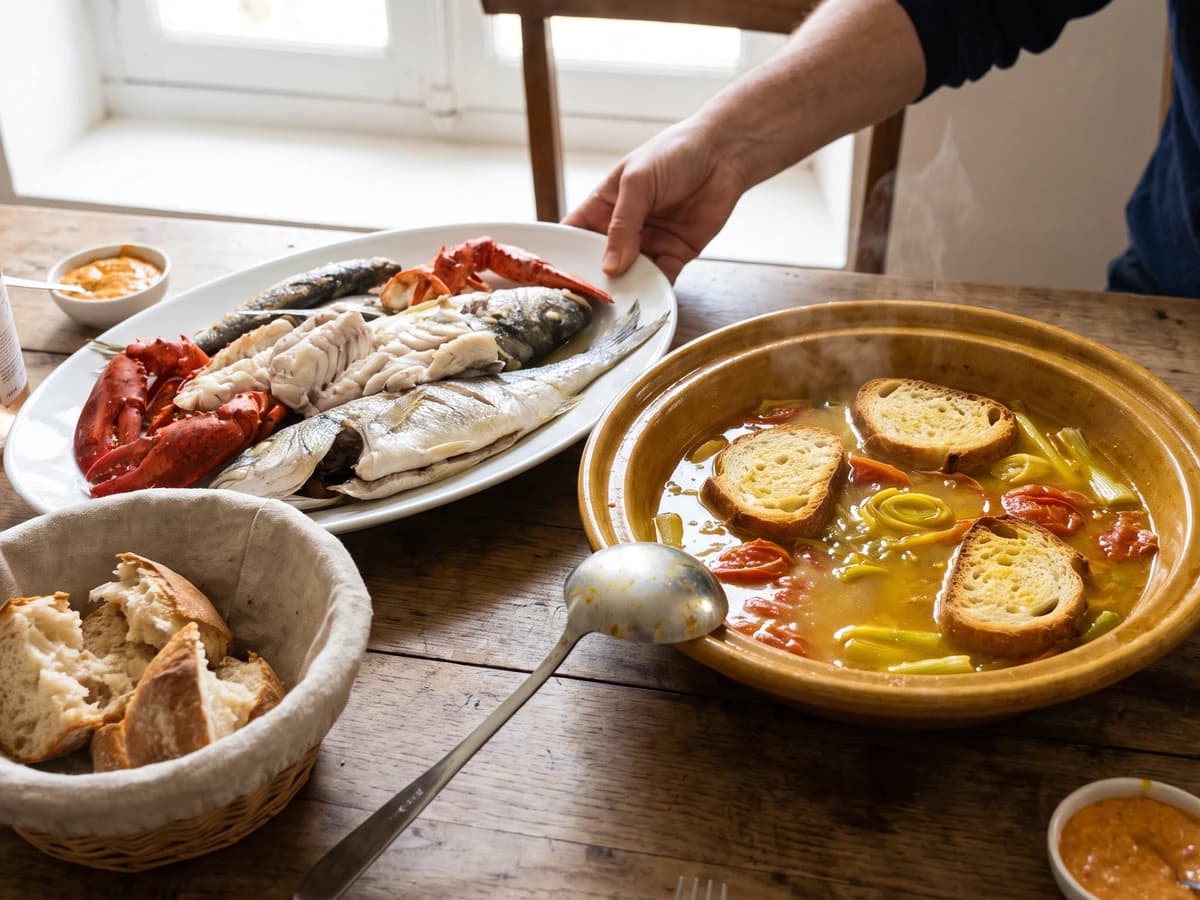
Bouillabaisse à la Marseillaise
Marseille's great fish stew, saffron-gold and garlic-scented, proves that a hard boil can be the careful choice: it binds olive oil into broth before the whole pot meets bread.
A cooking platform built around craft, culture, and the stories behind what we eat.
Created by Chef Juliette
Based on No. 710, Crème d’Oxalis, from Le Guide Culinaire (1907) by Auguste Escoffier
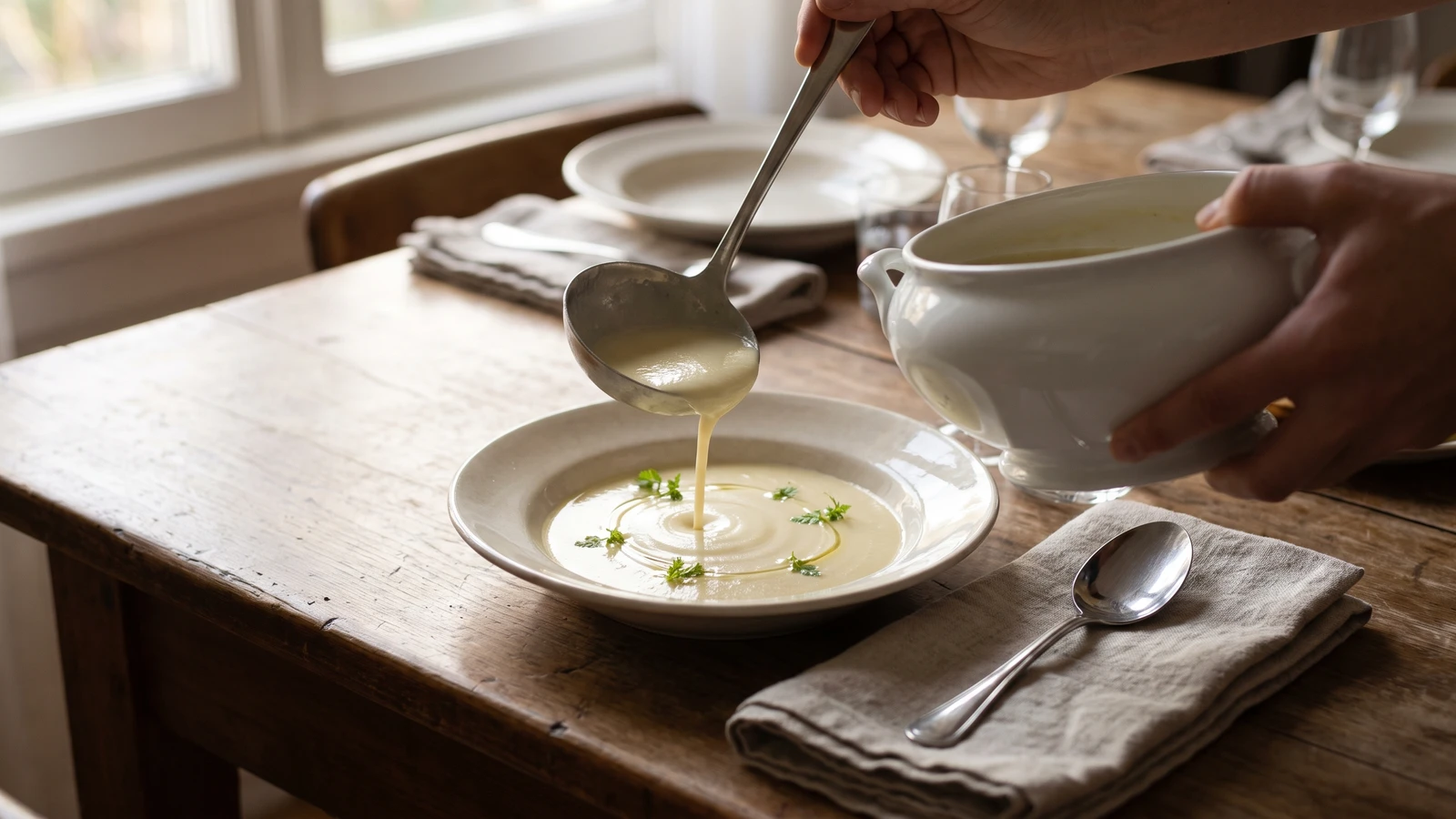
An uncommon classical cream soup where half-cooked oxalis roots finish in béchamel, pass through a fine sieve, and meet white consommé, cream, butter, and chervil in a pale silken bowl.
Crème d’Oxalis (cream of oxalis root) teaches the discipline behind every classical crème: cook the principal ingredient until it yields, pass it fine, then finish without boiling away the delicacy you built. The one true thing to know before touching the pan is this: the roots are only half-cooked in salted water, then made fully tender in Béchamel. Put them into the sauce raw and the Béchamel tightens before their centers surrender; cook them fully in water and their character goes down the drain.
The original assumed a saucier on staff, Béchamel waiting at the stove, white consommé from a stock never off the fire, and a tammy broad enough for service quantities. At home, those two prepared foundations are measured in the book's exact three-to-one proportion, an immersion blender handles the heavy labor, and a fine-mesh sieve supplies the tammy's finish. The separate sauce and stock work is brigade scaffolding and may be done ahead; half-cooking the roots, completing them in Béchamel, and sieving the soup are the dish itself, so they stay. This is the same intent at about two quarts, for one cook, one stove, one evening.
What reaches the table is pale ivory, gently tangy, and satin-smooth, with chervil pluches, tender shreds of leaf, making small green sparks across the surface. Keep the Béchamel below a true boil while the roots finish. That quiet heat is the step that matters most, and if the pan begins to catch, ça se rattrape: transfer the clean upper portion at once and leave the scorched film behind.
Crème d’Oxalis belongs to the Parisian grand-kitchen family of crèmes rather than to a named regional household table, applying the familiar grammar of Béchamel, consommé, cream, and butter to an uncommon market vegetable. Oxalis here means an edible tuber, not casually gathered sorrel-like leaves; the classical glossary describes the vegetable as Mexican, while specialist growers may offer edible tuberous oxalis under names such as oca, making positive identification essential. Its place in the canon shows how unusual produce was made legible through an established soup method, then sieved to the fine texture expected of a crème.
Quantity
12 medium (about 1½ pounds / 680 g)
peeled and sliced ⅛ inch (3 mm) thick
Quantity
2 quarts (1.9 L / 1.9 kg)
Quantity
1 tablespoon (15 ml / 18 g), plus more to taste
Quantity
4½ cups (1.06 L / about 1.10 kg)
warm
Quantity
1½ cups (355 ml / 355 g)
warm
Quantity
¾ cup (180 ml / 180 g)
divided
Quantity
3 tablespoons (45 ml / 42 g)
cut into small cubes
Quantity
¼ cup loosely packed (60 ml / 5 g)
| Ingredient | Quantity |
|---|---|
| cultivated edible oxalis rootspeeled and sliced ⅛ inch (3 mm) thick | 12 medium (about 1½ pounds / 680 g) |
| water | 2 quarts (1.9 L / 1.9 kg) |
| fine sea salt | 1 tablespoon (15 ml / 18 g), plus more to taste |
| prepared Béchamelwarm | 4½ cups (1.06 L / about 1.10 kg) |
| white consomméwarm | 1½ cups (355 ml / 355 g) |
| heavy creamdivided | ¾ cup (180 ml / 180 g) |
| cold unsalted buttercut into small cubes | 3 tablespoons (45 ml / 42 g) |
| chervil pluches | ¼ cup loosely packed (60 ml / 5 g) |
Have the Béchamel and white consommé finished, warm, and ready before beginning. Reserve 2 tablespoons of the cream in the cold for the final adjustment, then warm the remainder gently. Keep everything below a boil; this soup is built from pale, delicate foundations, and hard heat gives dairy a cooked taste before the oxalis has said anything.
Bring the water and measured salt to a gentle boil. Add the sliced oxalis roots and cook for 5 to 8 minutes, until the outer flesh yields when pinched but the center still offers clear resistance to a knife. This is half-cooking, not blanching them for appearance and not cooking them tender. Drain thoroughly and leave them in the colander for 2 minutes so trapped water cannot thin the Béchamel.
Put the warm Béchamel in a heavy saucepan and fold in the drained roots. Cook over the gentlest heat for 15 to 25 minutes, stirring across the pan floor often, until a knife passes through the slices without resistance. The sauce should make only an occasional lazy bubble. If it begins to catch, stop stirring and transfer the clean upper portion to another pan without scraping the bottom. Ça se rattrape, provided the scorched film stays behind.
Blend the roots and Béchamel briefly with an immersion blender until no pieces remain, keeping the head submerged so the soup does not fill with air. Rub the purée through a fine-mesh sieve into a clean bowl, pressing firmly with a flexible scraper or the back of a ladle. The blender replaces the tammy's heavy labor, but the sieve supplies its silken finish and must stay. If the purée is too stiff to pass, work in one spoonful of the measured warm consommé.
Return the sieved purée to the clean saucepan. Whisk in the remaining white consommé gradually, keeping the mixture smooth, then hold it at a bare simmer for 5 minutes. It should coat a spoon lightly while still pouring in an unbroken ribbon. If it seems thin, reduce it now over gentle heat; cream and butter come next, and boiling after that would spoil the finish.
Take the pan off the heat and whisk in the warm cream. Montez au beurre, whisk in the cold butter a few cubes at a time, letting each addition disappear before the next. Taste only now and correct the salt carefully, since both Béchamel and consommé bring seasoning of their own. If a buttery slick appears, remove the pan fully from the heat and whisk in the reserved cold cream until the emulsion closes again.
Ladle the Crème d’Oxalis into warm shallow bowls and scatter the chervil pluches over each serving at the last moment. The surface should be pale ivory and satin-glossed, with the chervil still bright and tender. Serve at once. À table!
1 serving (about 240g)
Culinary guides, cultural storytelling, and the editorial depth that makes cooking meaningful.
Discover Culinary ExplorerChef Juliette
Marseille's great fish stew, saffron-gold and garlic-scented, proves that a hard boil can be the careful choice: it binds olive oil into broth before the whole pot meets bread.
Chef Juliette
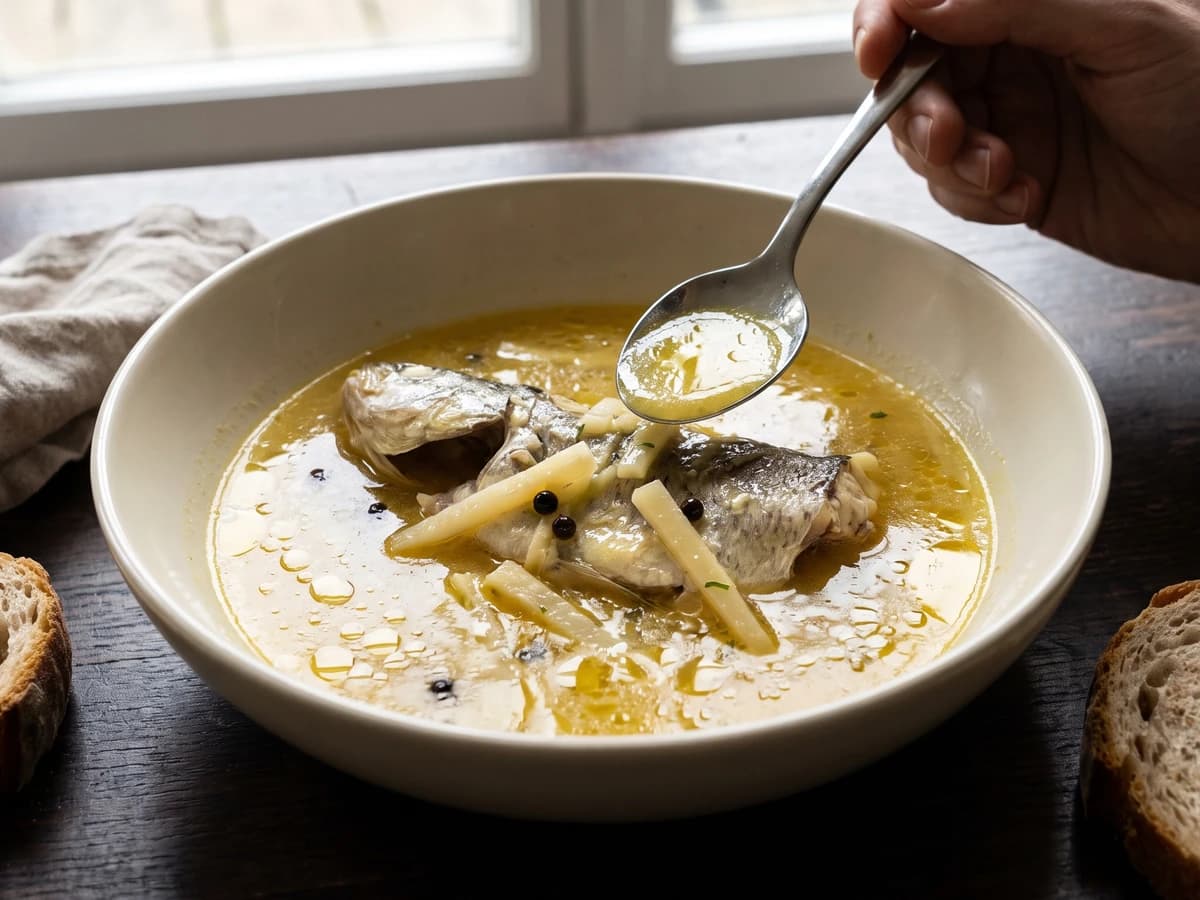
Waterzoi asks fresh, bone-in river fish to thicken its own buttery broth, with parsley root and pepper for company. No flour, no stockpot, just a brisk simmer watched closely.
Chef Juliette
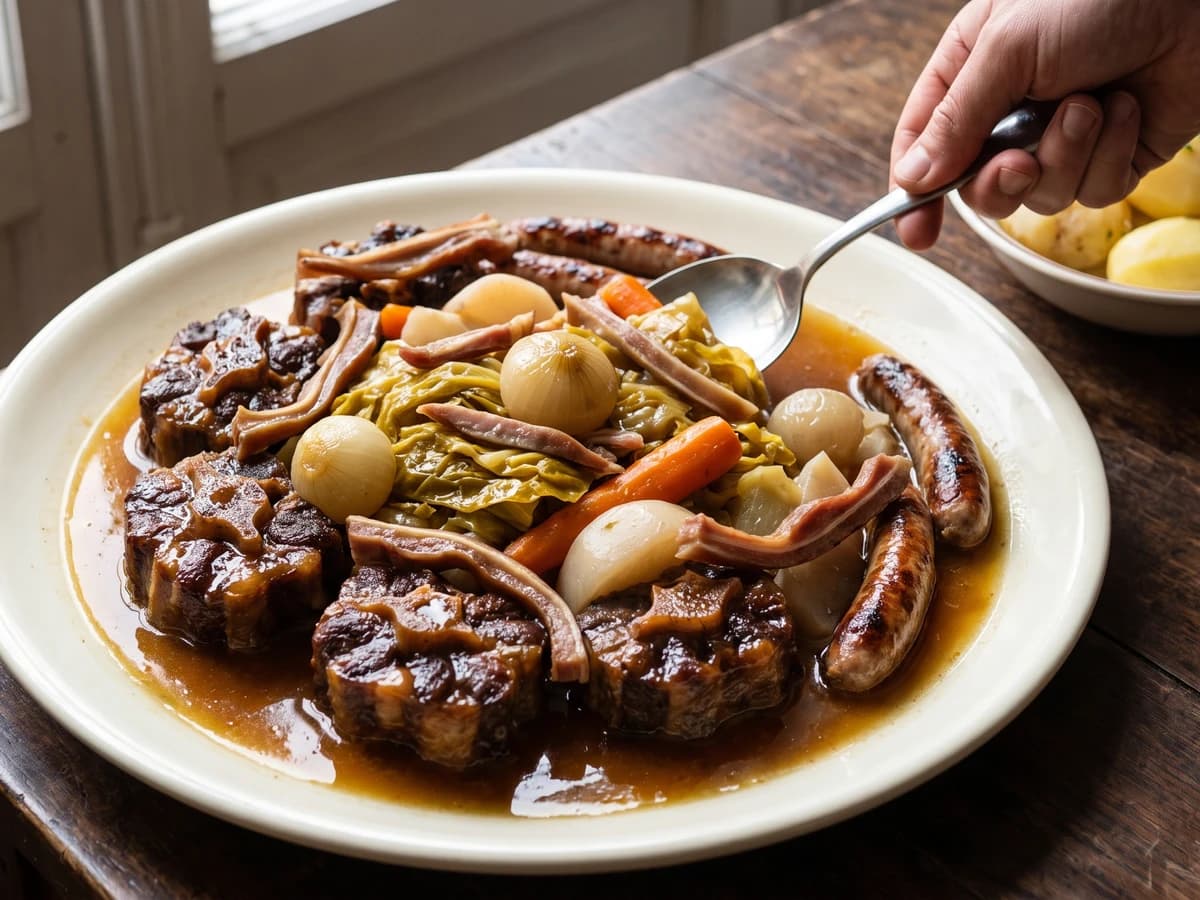
Queue de Bœuf en Hochepot gathers oxtail, pig's trotter and ear, cabbage, roots, and grilled chipolatas around a clear, gelatin-rich broth whose quiet simmer keeps every piece tender and distinct.
Chef Juliette
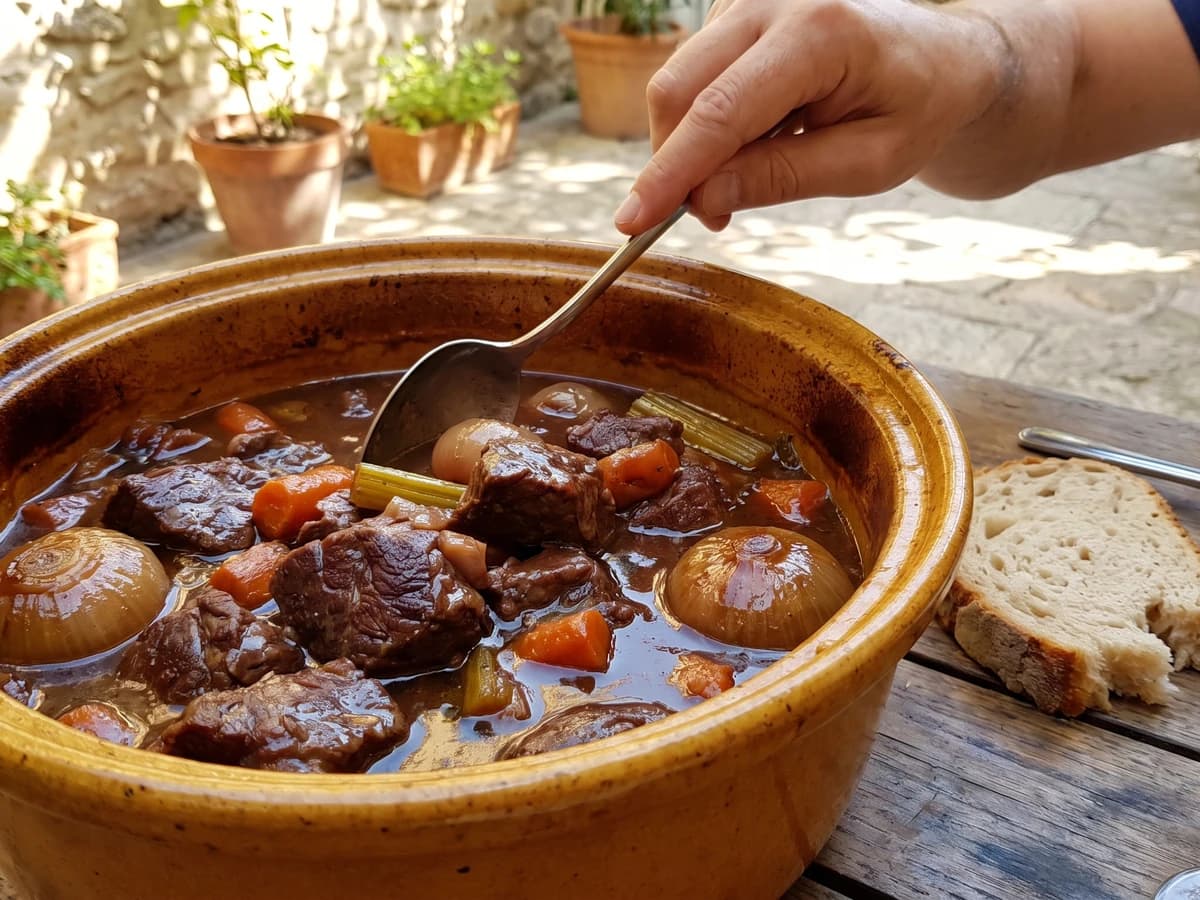
Beef shoulder larded with bacon, sharpened by red wine and vinegar, then sealed with garlic, vegetables, and dry lemon peel until the low oven turns it yielding and the gravy darkly glossy.