Chef Juliette
Bouillabaisse à la Marseillaise
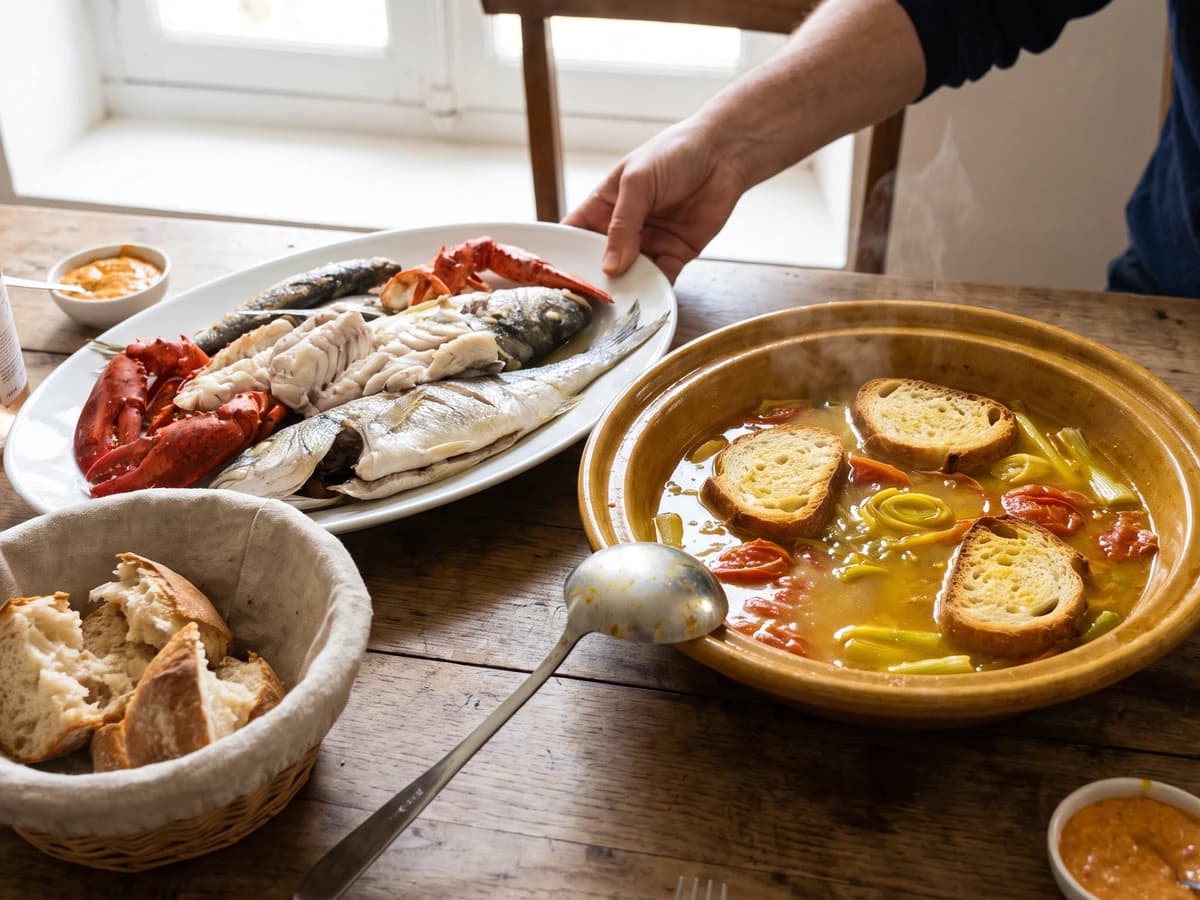
Marseille's great fish stew, saffron-gold and garlic-scented, proves that a hard boil can be the careful choice: it binds olive oil into broth before the whole pot meets bread.
A cooking platform built around craft, culture, and the stories behind what we eat.
Created by Chef Juliette
Based on No. 703, Crème d’Épinards, otherwise Florentine, from Le Guide Culinaire (1907) by Auguste Escoffier
Crème d’Épinards teaches how leaves, Béchamel, and cream become silk: blanch fast, press dry, sieve patiently, then keep a green julienne alive in real butter.
Crème d’Épinards, dite Florentine (Florentine spinach cream soup), teaches one quiet discipline: spinach must lose its own water before Béchamel can carry its flavor. Parboil the leaves fast, cool them, then press until your hands are tired. Leave that water behind and the soup tastes of spinach and cream; carry it into the pan and everything goes thin and dull.
The original formula assumed a saucier with somewhat thin Béchamel already warm, another pair of hands to rub the cooked leaves through a tammy, and brigade quantities ready for service. The surrounding kitchen might have kept a stockpot never off the fire and a salamander overhead, but this entry calls for neither. At home, an immersion blender replaces the arm work and a fine-mesh sieve replaces the tammy; that is scaffolding removed. The quick parboil, the Béchamel foundation, the final sieve, and the buttery spinach julienne remain because they are the dish. The original proportion is held in one two-quart pot. One cook, one stove, one evening.
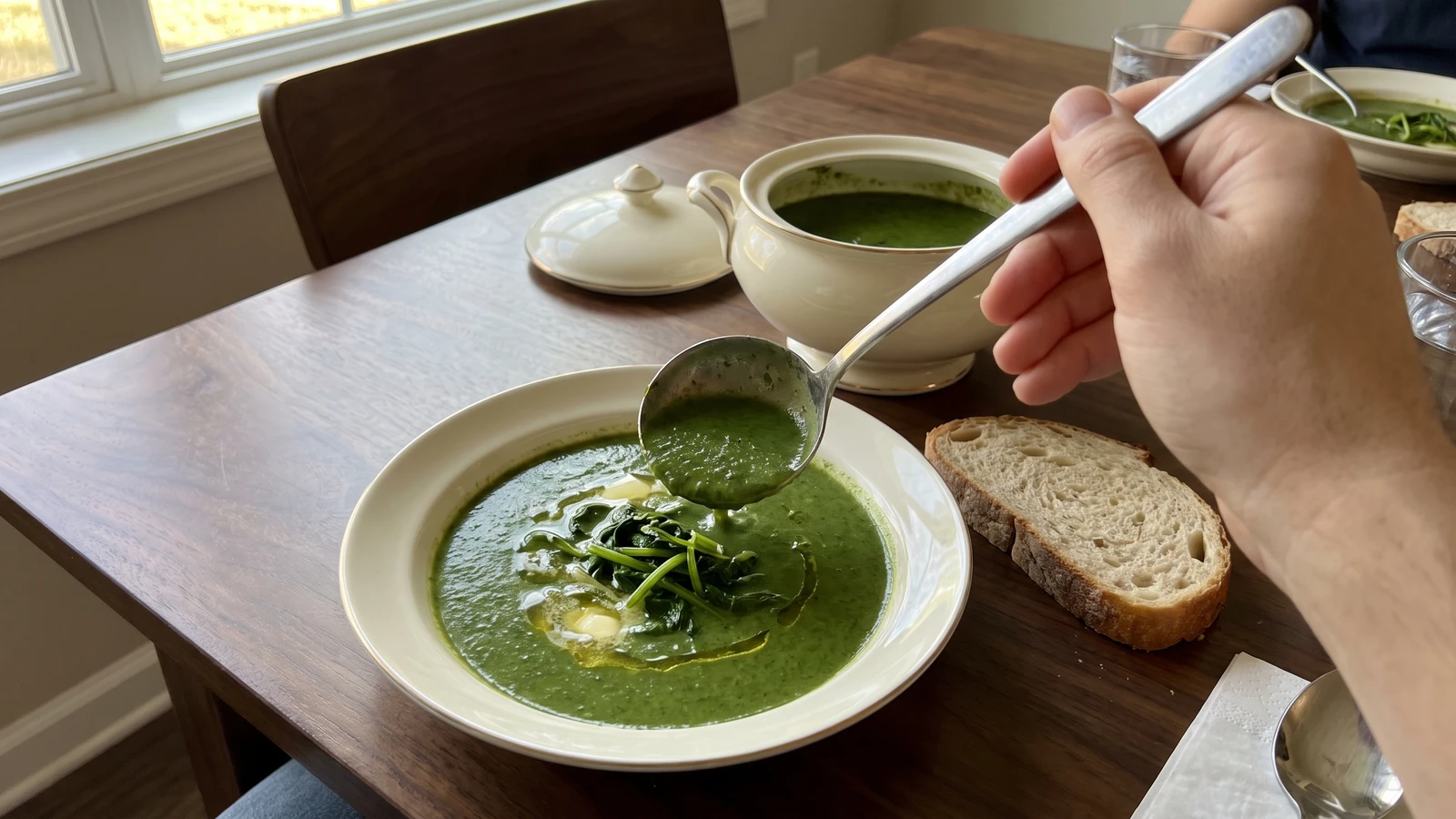
Finished properly, the Crème d’Épinards pours in a smooth green ribbon, softened but not bleached by cream, with darker julienne on top and butter catching the light. The one step that decides it comes before the sauce: blanch quickly, then press the spinach completely dry.
On the Parisian classical table, Crème d’Épinards belonged to the family of vegetable cream soups built on a sauce foundation, passed through a tammy, and softened with fresh cream. From the grand sauce kitchen it moved readily into bourgeois dining rooms, while à la florentine became the canon’s shorthand for spinach, especially alongside eggs and fish. The familiar tale that a Florentine royal bride single-handedly brought spinach cookery to France is tidier than the record; Florentine names the leaf and treatment, not a proven birthplace for every dish carrying the term.
Quantity
About 22 loosely packed cups (5.2 L / 680 g)
well washed, thick stems removed, and roughly shredded
Quantity
About 4 loosely packed cups (950 ml / 115 g)
washed, dried, and kept whole
Quantity
About 2 loosely packed cups (475 ml / 55 g)
thick stems removed
Quantity
4½ cups (1.07 L / about 1.1 kg)
prepared and kept warm
Quantity
1 to 1½ cups (240 to 360 ml / 240 to 360 g)
Quantity
2 tablespoons (30 ml / 28 g)
Quantity
2 tablespoons (30 ml / 36 g), plus more as needed
for the blanching water and final seasoning
| Ingredient | Quantity |
|---|---|
| fresh spinach leaveswell washed, thick stems removed, and roughly shredded | About 22 loosely packed cups (5.2 L / 680 g) |
| fresh spinach leaves for the juliennewashed, dried, and kept whole | About 4 loosely packed cups (950 ml / 115 g) |
| sorrel leaves (optional)thick stems removed | About 2 loosely packed cups (475 ml / 55 g) |
| somewhat thin Béchamelprepared and kept warm | 4½ cups (1.07 L / about 1.1 kg) |
| fresh heavy cream | 1 to 1½ cups (240 to 360 ml / 240 to 360 g) |
| unsalted butter | 2 tablespoons (30 ml / 28 g) |
| fine saltfor the blanching water and final seasoning | 2 tablespoons (30 ml / 36 g), plus more as needed |
Bring a large pot of water to a full boil, salt it, and prepare a large bowl of very cold water. Keep the garnish leaves whole for now. Roughly shred the remaining spinach so it cooks evenly, adding the optional sorrel to this main batch. Sorrel gives a quiet, fresh acidity, but the Crème d’Épinards remains complete without it.
Quickly parboil the shredded spinach in three batches, giving each only 45 to 60 seconds and adding the sorrel during the final 15 seconds. Move each batch immediately into the cold water, then drain it thoroughly. Gather the leaves in a clean towel and twist firmly, then press them in handfuls until no water runs out. This pressing is the dish’s decisive step: wet spinach weakens the Béchamel and leaves the flavor muddy.
Chop the pressed spinach once more, then stir it into the warm, somewhat thin Béchamel. Bring the mixture only to a bare simmer and cook for 8 to 10 minutes, stirring frequently and scraping the bottom. The leaves must finish cooking into the sauce, but a hard boil dulls their color and catches the milk solids against the pan.
Take the pan off the heat and blend with an immersion blender until no distinct pieces remain. Press the purée through a fine-mesh sieve with the back of a ladle, working patiently and scraping the smooth soup from the underside. The blender replaces the brigade’s arm work; the sieve does not disappear, because it removes the last fibers and gives the Crème d’Épinards its proper silk. If the first pass still feels stringy, pass it once more instead of cooking it longer.
Stack the reserved leaves and cut them julienne-fashion into narrow, matchstick-fine strips. Parboil the julienne for 15 seconds, cool it immediately, drain, and press it dry. Melt the butter over gentle heat, add the julienne, and stew it for 2 to 3 minutes, tossing until tender and glossy without browning. If water collects in the pan, raise the heat briefly and toss until it disappears; the garnish must carry butter into the bowl, not blanching water.
Return the sieved soup to gentle heat and whisk in 1 cup of the cream. Add the remainder gradually, using only enough to make about 2 quarts and give the soup a supple consistency that coats a spoon in a soft film but still pours freely. Never boil it after the cream goes in. If it tightens while waiting, take it off the heat and whisk in warm cream one spoonful at a time. Ça se rattrape. Taste for salt, ladle into warm bowls, and divide the buttered spinach julienne across the surface. À table!
1 serving (about 250g)
Culinary guides, cultural storytelling, and the editorial depth that makes cooking meaningful.
Discover Culinary ExplorerChef Juliette
Marseille's great fish stew, saffron-gold and garlic-scented, proves that a hard boil can be the careful choice: it binds olive oil into broth before the whole pot meets bread.
Chef Juliette
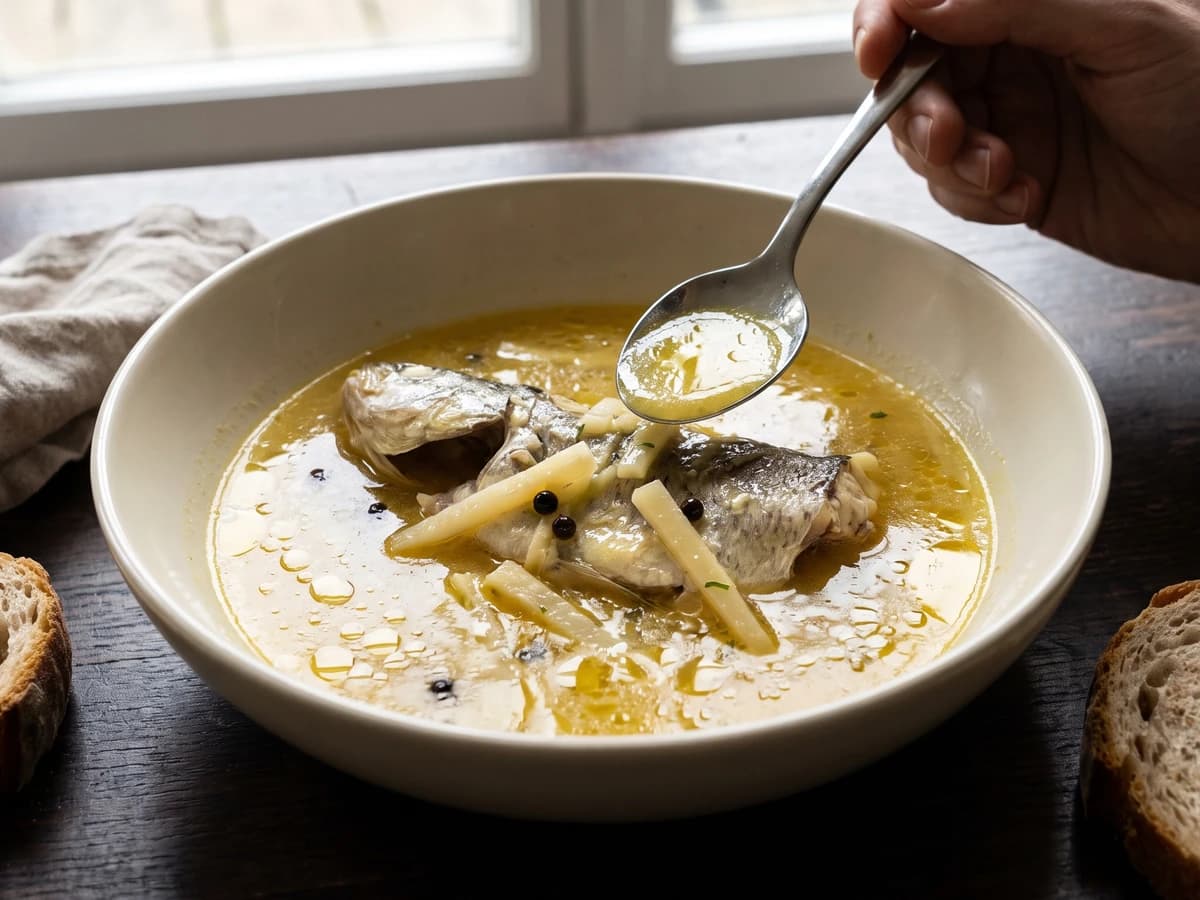
Waterzoi asks fresh, bone-in river fish to thicken its own buttery broth, with parsley root and pepper for company. No flour, no stockpot, just a brisk simmer watched closely.
Chef Juliette
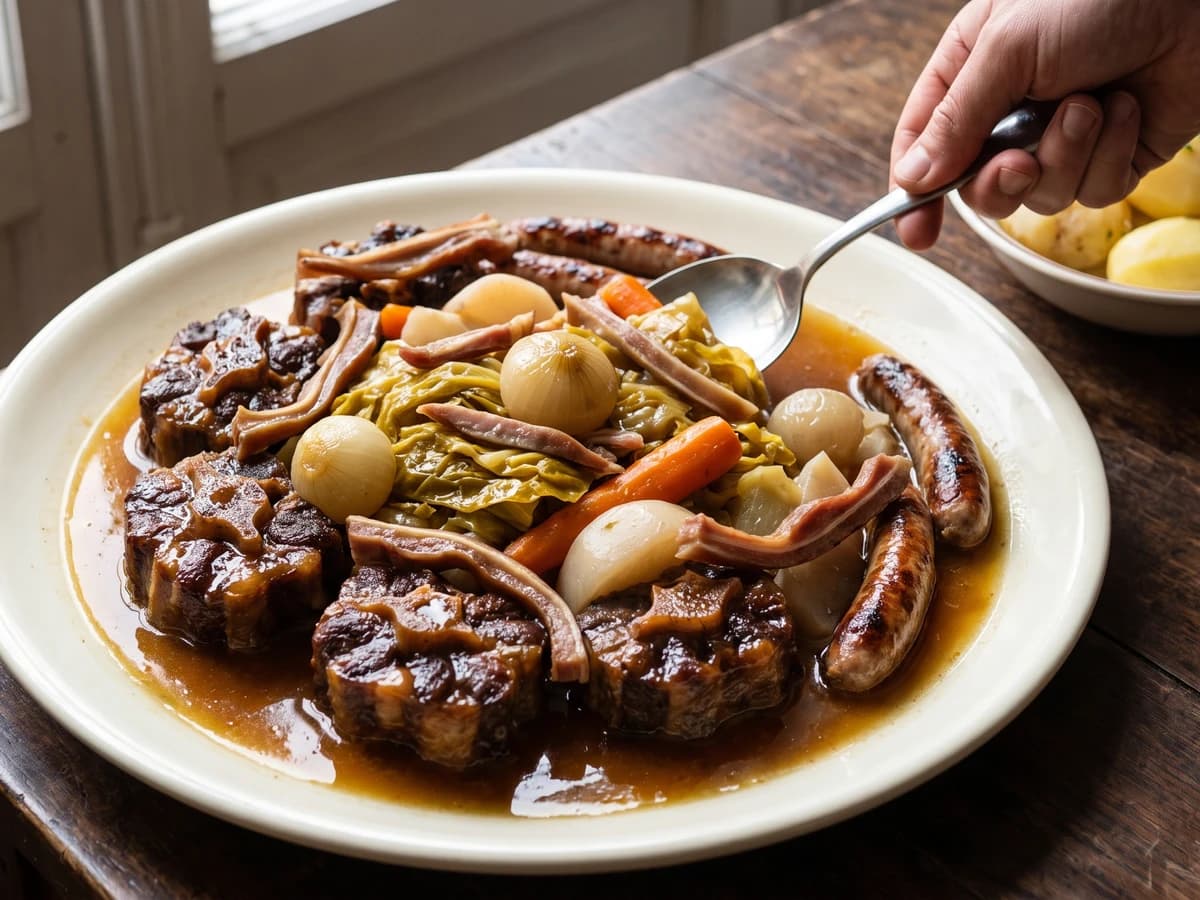
Queue de Bœuf en Hochepot gathers oxtail, pig's trotter and ear, cabbage, roots, and grilled chipolatas around a clear, gelatin-rich broth whose quiet simmer keeps every piece tender and distinct.
Chef Juliette
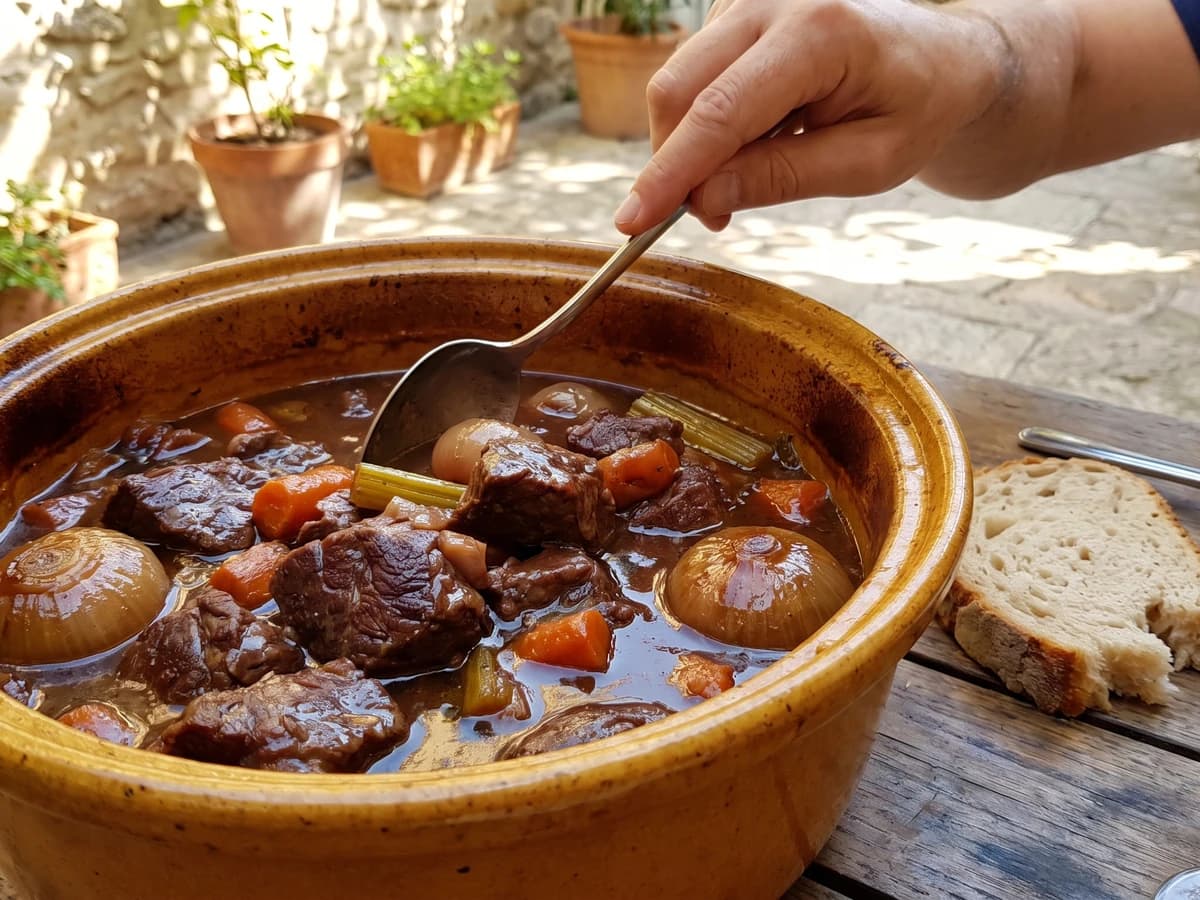
Beef shoulder larded with bacon, sharpened by red wine and vinegar, then sealed with garlic, vegetables, and dry lemon peel until the low oven turns it yielding and the gravy darkly glossy.