Chef Juliette
Bouillabaisse à la Marseillaise
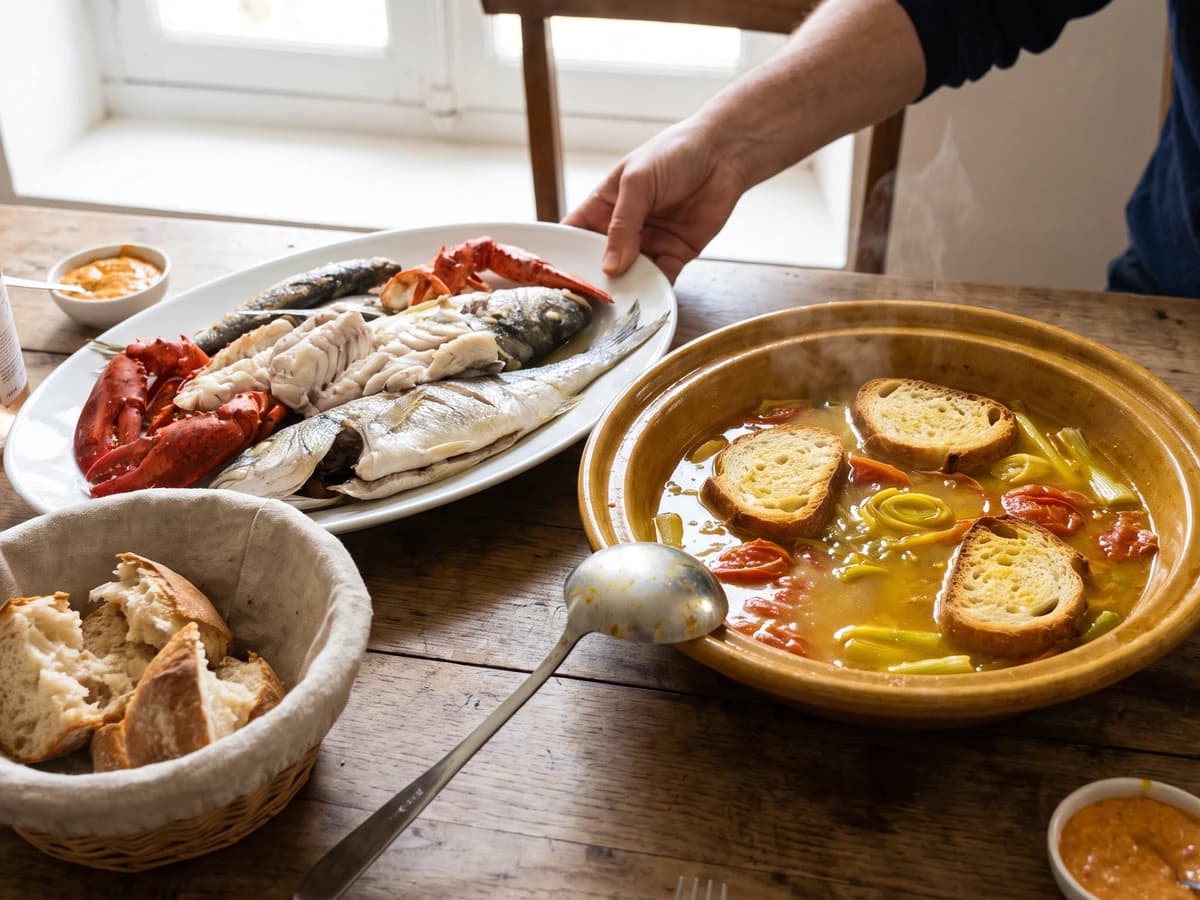
Marseille's great fish stew, saffron-gold and garlic-scented, proves that a hard boil can be the careful choice: it binds olive oil into broth before the whole pot meets bread.
A cooking platform built around craft, culture, and the stories behind what we eat.
Created by Chef Juliette
Based on No. 700, Crème de Céleri, from Le Guide Culinaire (1907) by Auguste Escoffier
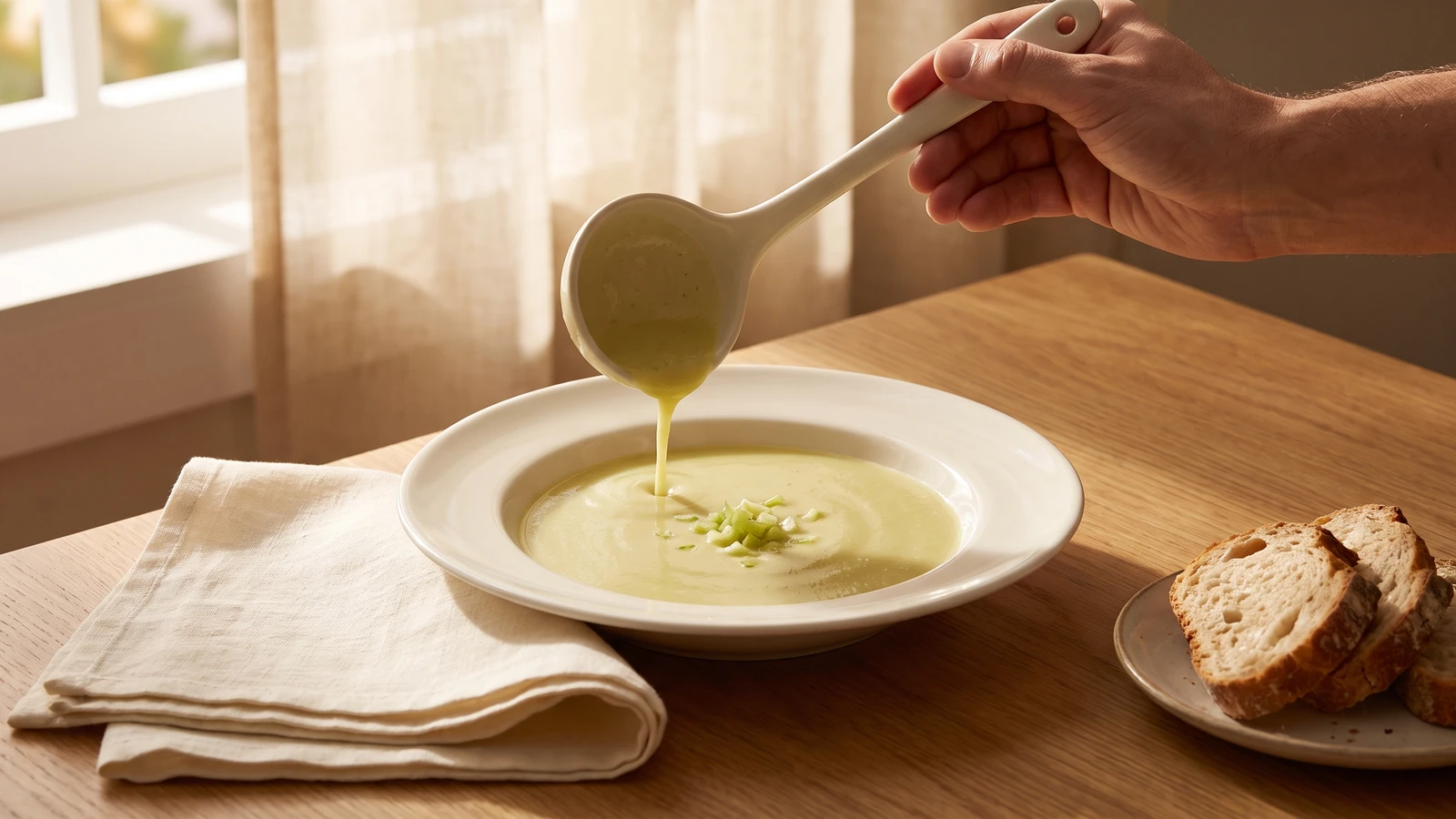
A pale, silken Crème de Céleri in which Béchamel carries the celery, white consommé gives it length, and cream rounds the finish, with a fine brunoise keeping every spoonful alive.
Crème de Céleri (celery cream soup) teaches the first law of a crème: the dairy finish is not the structure. The Béchamel carries it. Before you touch a pan, know that the celery must soften without taking color and cook until its fibers surrender, or no amount of blending will make the soup silken.
The original assumed a saucier on staff, white consommé never off the fire, pale celery grown by blanching, and a tammy large enough for service. Here, finished Béchamel and white consommé remain separate preparations, pale inner celery hearts replace difficult-to-find blanched stalks, and an immersion blender followed by a fine-mesh sieve replaces the tammy. The service pot becomes about two quarts, generous enough for six to eight bowls. One cook, one stove, one evening.
The oversized pot, extra pan transfers, and cloth tammy were brigade scaffolding. The seven-minute parboil, the butter stew, the slow cooking in Béchamel, the fine passing, and the last-minute cream are the dish itself. The final passing matters most: blend for speed, then use the sieve for finesse.
Crème de Céleri belongs to the national French classical potage repertoire, at home in Parisian grand kitchens and bourgeois dining rooms rather than claimed by one region. In this formula, céleri blanc, celery cultivated to remain pale and mild, is softened in butter, carried by Béchamel, and lightened with white consommé. The source's note that it may instead be prepared as a purée or a velouté is precise classification: those names indicate different thickening families, while Béchamel defines this version as a crème.
Quantity
7 cups (1.65 L / 680 g)
tough strings removed and finely minced
Quantity
3 tablespoons (45 ml / 25 g)
cut in brunoise
Quantity
3 tablespoons (45 ml / 43 g)
Quantity
3¾ cups (900 ml / 930 g)
Quantity
1½ cups (360 ml / 360 g)
Quantity
¾ cup (180 ml / 180 g)
Quantity
Up to ½ teaspoon (2.5 ml / 3 g)
| Ingredient | Quantity |
|---|---|
| white celery or pale inner celery heartstough strings removed and finely minced | 7 cups (1.65 L / 680 g) |
| white celery or pale inner celery heartscut in brunoise | 3 tablespoons (45 ml / 25 g) |
| unsalted butter | 3 tablespoons (45 ml / 43 g) |
| prepared Béchamel | 3¾ cups (900 ml / 930 g) |
| prepared white consommé | 1½ cups (360 ml / 360 g) |
| heavy cream | ¾ cup (180 ml / 180 g) |
| fine salt (optional) | Up to ½ teaspoon (2.5 ml / 3 g) |
Bring a large saucepan of water to a boil. Cut the reserved garnish brunoise-fashion, into tiny, even dice about 2 mm across. Lower the brunoise into the water in a small sieve, cook for 90 seconds until tender but still distinct, then cool under cold water and drain well. Add the minced celery to the boiling water and parboil it for 7 to 8 minutes. Drain thoroughly and press gently with the back of a spoon to remove clinging water; moisture left here will dilute the Béchamel later.
Melt the butter in a heavy saucepan over low heat. Add the drained minced celery and stew it gently for 8 to 10 minutes, stirring often, until every piece glistens and smells sweet but remains pale. Do not let the butter or celery brown. Color would muddy both the flavor and the ivory-green appearance this crème should have.
Fold in the prepared Béchamel and bring the mixture to the barest simmer. Cook slowly for 20 to 25 minutes, stirring across the bottom and into the corners every few minutes, until the celery crushes readily beneath the spoon and the Béchamel has taken on its flavor. If the base catches, do not scrape it. Pour the unscorched soup immediately into a clean saucepan and continue over lower heat, leaving the dark film behind. Ça se rattrape, provided you leave the bottom alone.
Take the pan off the heat and blend with an immersion blender until no visible pieces remain. Press the soup through a fine-mesh sieve with a flexible spatula, working in small portions and scraping the smooth purée from the underside. It will pass slowly. That resistance is the celery fiber being removed, and removing it is what separates a proper crème from a merely blended soup.
Return the passed soup to a clean saucepan. Whisk in the prepared white consommé in three additions, smoothing each one completely before adding the next. Heat gently until the surface barely quivers, without allowing it to boil. The soup should pour easily while leaving a light, even veil on the back of a spoon.
When the bowls are warm and the table is ready, lower the heat and stir in the cream. Taste before adding salt, since both the Béchamel and consommé should already be seasoned. Warm the crème through without boiling. If excessive heat makes it look grainy, remove it from the stove, blend briefly, and pass it once more through the clean sieve.
Divide the drained celery brunoise among the warmed bowls, then ladle the Crème de Céleri over it so the little dice remain suspended through each serving. Bring it to the table immediately, while the surface is glossy and the texture is at its lightest. À table!
1 serving (about 250g)
Culinary guides, cultural storytelling, and the editorial depth that makes cooking meaningful.
Discover Culinary ExplorerChef Juliette
Marseille's great fish stew, saffron-gold and garlic-scented, proves that a hard boil can be the careful choice: it binds olive oil into broth before the whole pot meets bread.
Chef Juliette
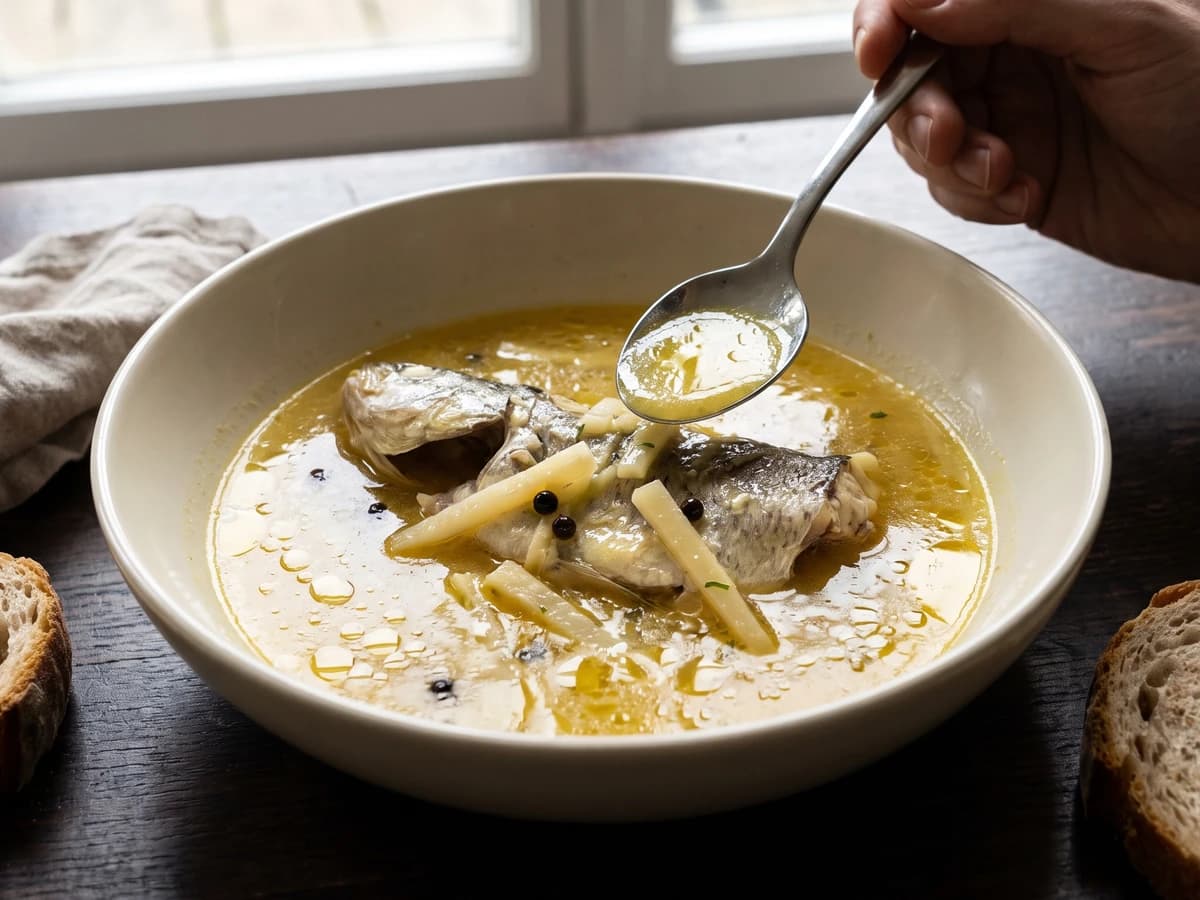
Waterzoi asks fresh, bone-in river fish to thicken its own buttery broth, with parsley root and pepper for company. No flour, no stockpot, just a brisk simmer watched closely.
Chef Juliette
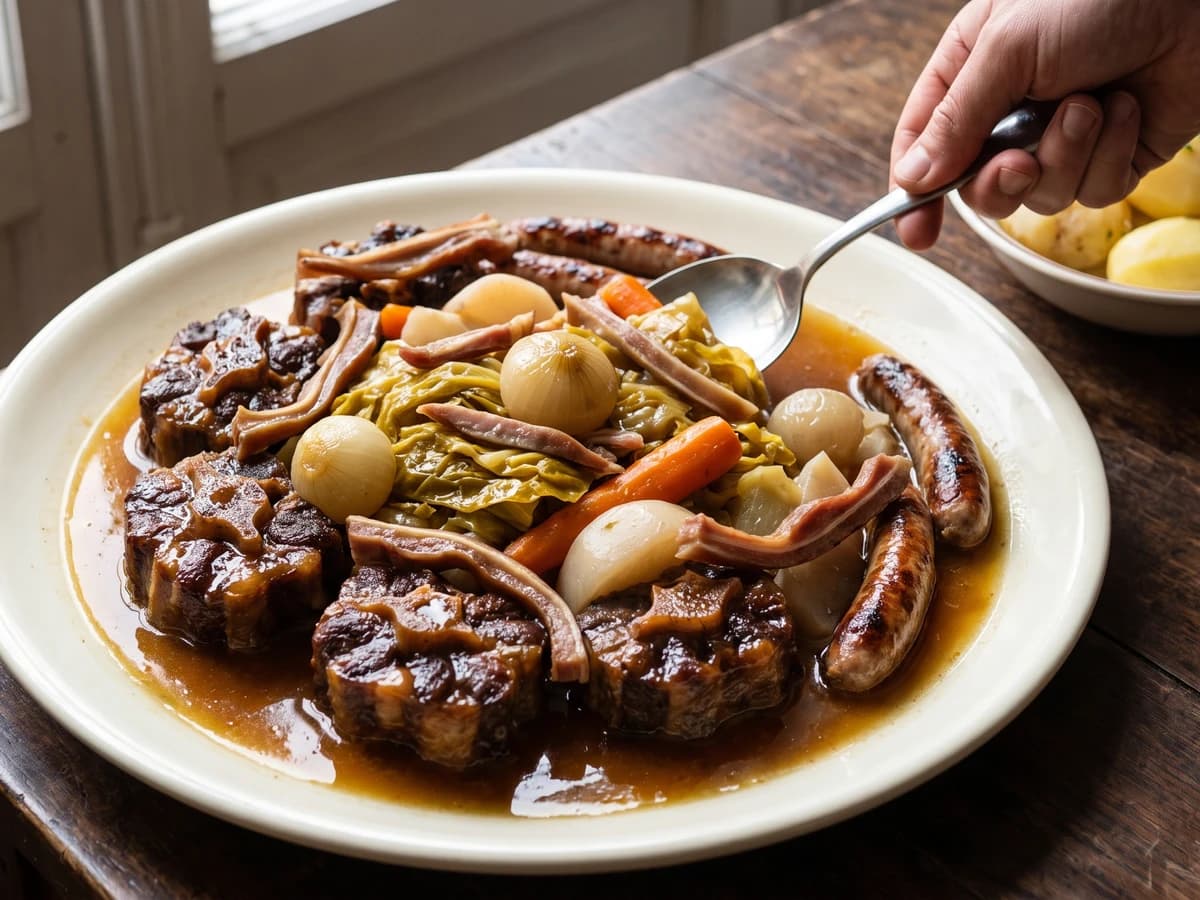
Queue de Bœuf en Hochepot gathers oxtail, pig's trotter and ear, cabbage, roots, and grilled chipolatas around a clear, gelatin-rich broth whose quiet simmer keeps every piece tender and distinct.
Chef Juliette
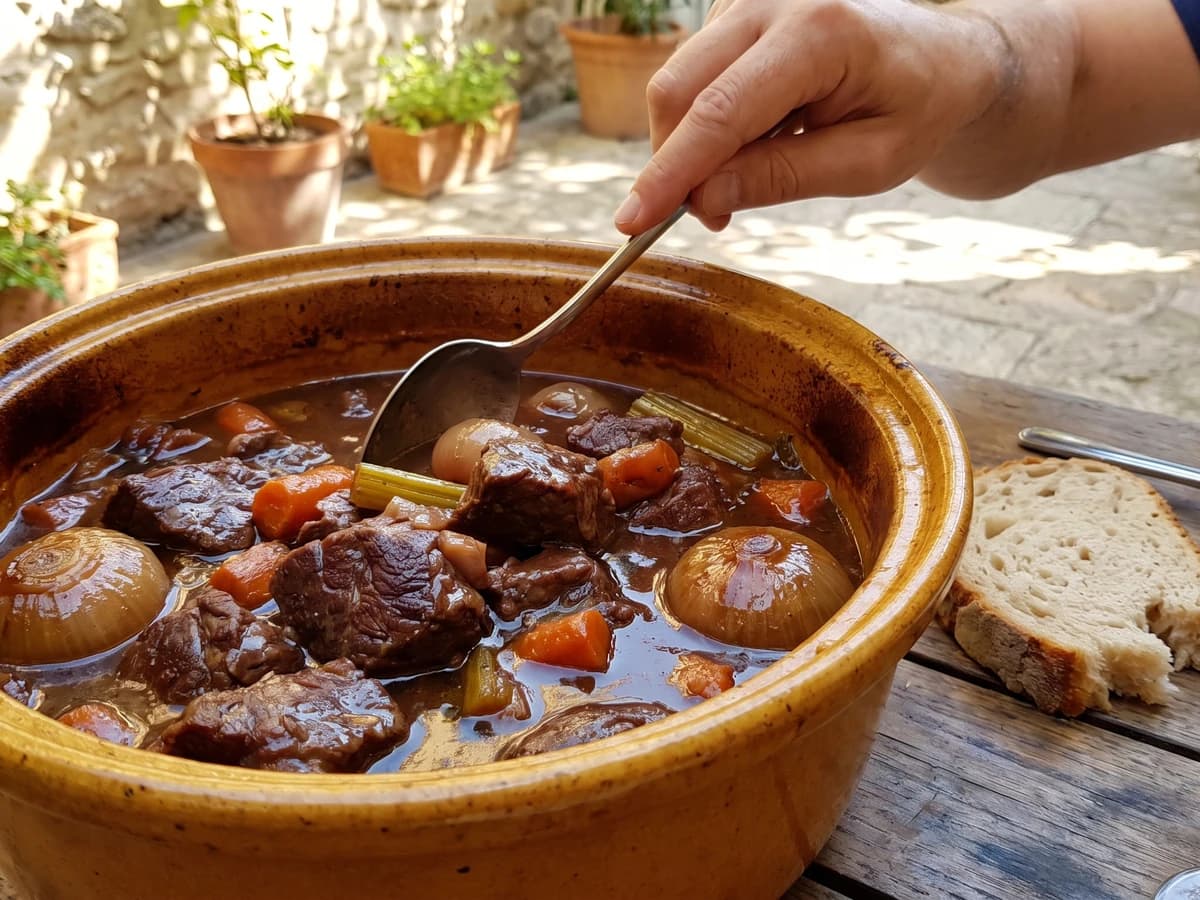
Beef shoulder larded with bacon, sharpened by red wine and vinegar, then sealed with garlic, vegetables, and dry lemon peel until the low oven turns it yielding and the gravy darkly glossy.