Chef Juliette
Ordinary or White Consommé
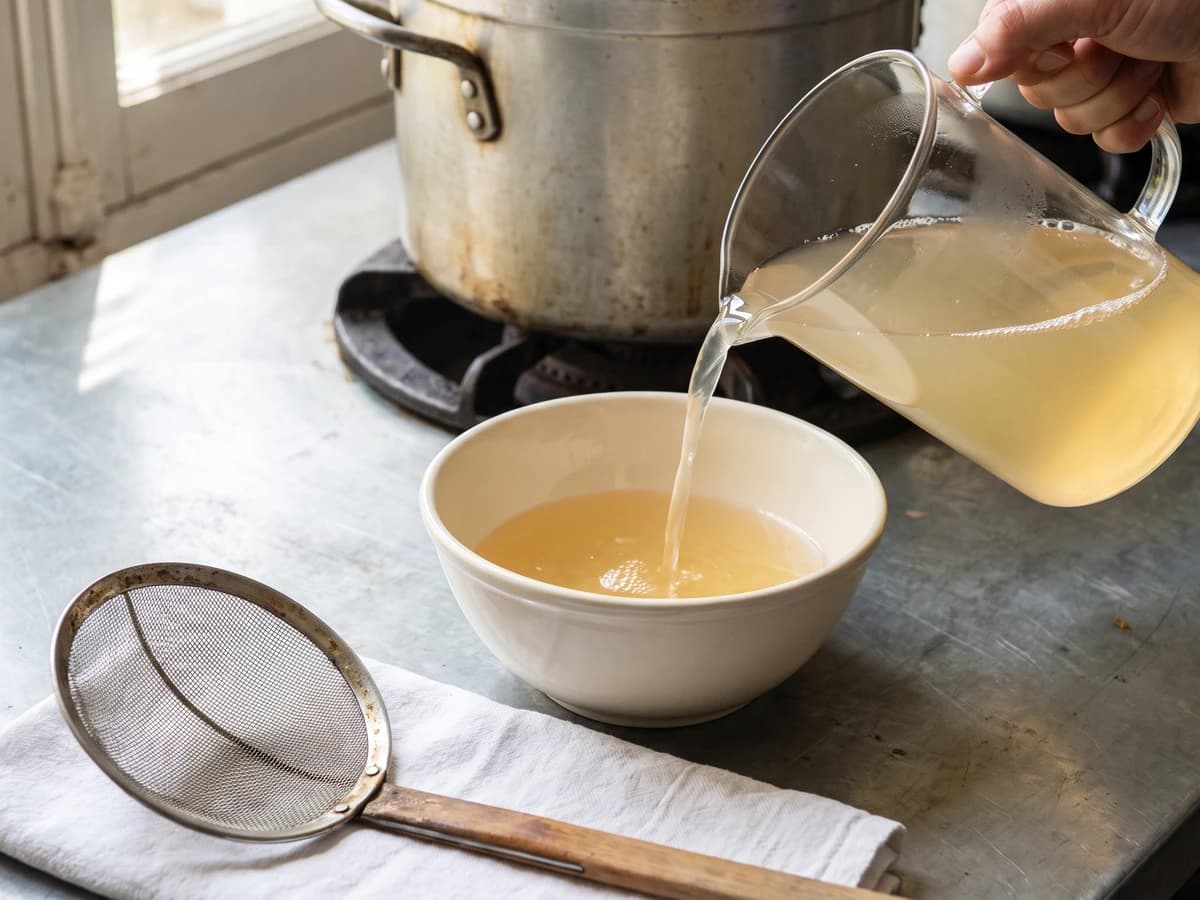
Beef shin, lean beef, and fowl begin in cold water and rise slowly toward a tremble. Skim before the boil, and you learn the quiet discipline that gives every clear French broth its backbone.
A cooking platform built around craft, culture, and the stories behind what we eat.
Created by Chef Juliette
Based on No. 70, Mushroom Sauce, from Le Guide Culinaire (1907) by Auguste Escoffier
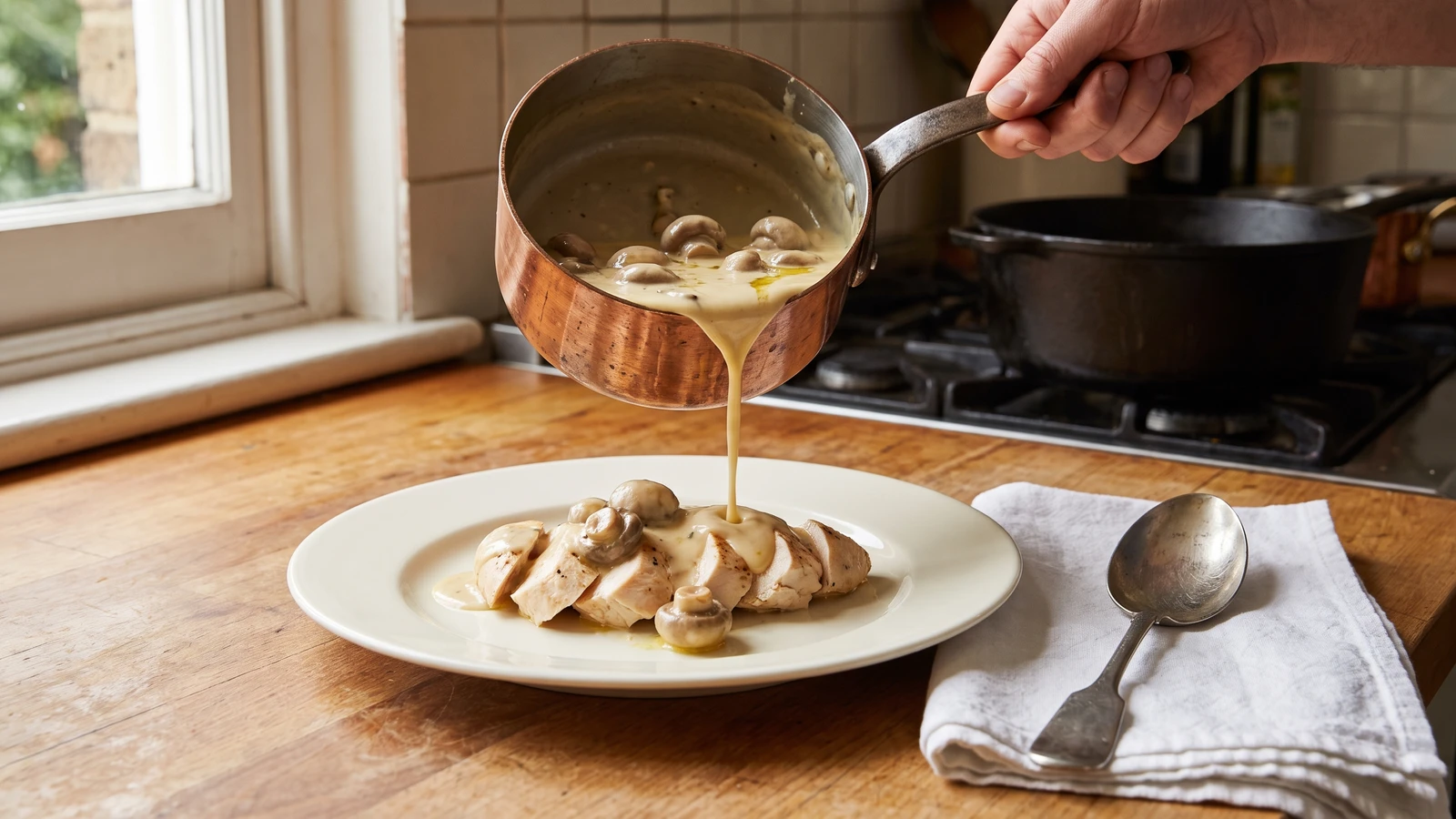
Sauce aux Champignons teaches the discipline of derivatives: keep the base stiff, preserve the mushroom liquor, and add the firm caps late so poultry or fish meets a sauce with body and life.
Sauce aux Champignons (mushroom sauce) teaches a stern, useful truth: the base must begin stiffer than the sauce you want, because mushroom liquor brings flavor and loosens it at once. C'est la même grammaire across the classical derivatives. Build a proper foundation, introduce the defining flavor without drowning it, then finish with enough restraint to preserve both.
The brigade formula assumes a saucier on staff, stock never off the fire, and finished Allemande or fish velouté waiting beside a bowl of decoratively channelled mushroom heads. At home, one prepared base, a covered sauté pan, and a heavy saucepan do the same work. This version keeps the book's exact proportions: eight ounces of mushroom caps and one-fifth pint of their liquor for every pint of base. The channelled decoration is brigade scaffolding, so it may go; the firm caps, captured liquor, and late addition are the dish and must stay.
Cook the mushrooms only until tender at the edges, reserve every drop of their liquor, and return the caps at the finish so they remain plump rather than surrendering themselves to the sauce. Before you touch the pan, test the base: it must coat the spoon heavily, because no amount of hurried boiling will replace that necessary body.
Sauce aux Champignons belongs to the codified kitchens of Paris and the wider French classical table rather than to one regional larder. Its two foundations reveal the sauce station's working logic: poultry received stiff Allemande, fish received egg-thickened fish velouté, and fish fumet could redirect the poultry version when needed. Turned or channelled mushroom heads once displayed the brigade's knife work, but their cooking liquor carried the flavor that made the derivative worth preserving.
Quantity
about 6 cups (1 lb / 454 g)
stems trimmed flush
Quantity
1 cup (240 ml / 240 g)
Quantity
2 tablespoons (30 ml / 28 g)
Quantity
1 tablespoon (15 ml / 15 g)
Quantity
¾ teaspoon (3.75 ml / 4.5 g)
Quantity
4 cups (950 ml / about 960 g)
for the poultry version
Quantity
4 cups (950 ml / about 960 g)
use instead of Allemande for the fish version
Quantity
8
for the fish velouté version
Quantity
up to ½ cup (120 ml / 120 g)
concentrated fish essence, used only when adapting the Allemande version for fish
| Ingredient | Quantity |
|---|---|
| small white button mushroom capsstems trimmed flush | about 6 cups (1 lb / 454 g) |
| water | 1 cup (240 ml / 240 g) |
| unsalted butter | 2 tablespoons (30 ml / 28 g) |
| fresh lemon juice | 1 tablespoon (15 ml / 15 g) |
| fine salt | ¾ teaspoon (3.75 ml / 4.5 g) |
| very stiff Allemande Saucefor the poultry version | 4 cups (950 ml / about 960 g) |
| prepared fish veloutéuse instead of Allemande for the fish version | 4 cups (950 ml / about 960 g) |
| large egg yolksfor the fish velouté version | 8 |
| fish fumet (optional)concentrated fish essence, used only when adapting the Allemande version for fish | up to ½ cup (120 ml / 120 g) |
Wipe the button mushrooms clean and trim each stem flush with its cap. Leave small caps whole and halve only the larger ones so they cook at the same rate. The book calls for turned or channelled heads, decorative knife work suited to a brigade with spare hands. Channel them if the work pleases you, but leaving them neat and whole changes no flavor and preserves the intended shape.
Put the water, butter, lemon juice, and salt into a wide covered sauté pan and bring them to a lively simmer. Add the mushroom caps, cover, and cook for 5 to 7 minutes, turning them once, until tender at the edges but still firm through the center. Drain them immediately through a fine sieve set over a measuring jug and hold the caps aside. Reduce the collected mushroom liquor, uncovered, until exactly ⅘ cup (190 ml / 190 g) remains. This measured liquor preserves the book's ratio and carries more mushroom character than the caps alone.
For poultry, warm the very stiff Allemande Sauce over low heat, whisking steadily. It should hold a broad, heavy coat on the back of a spoon before the liquor enters; if it runs off, reduce it gently now. Whisk in the measured mushroom liquor a little at a time and hold the sauce below a boil until it returns to a smooth nappé, a coating consistency. If it becomes too loose, keep it over the gentlest heat and stir until the excess water leaves. If it tightens too far, loosen it with another spoonful of mushroom liquor or hot water.
For fish, reserve ½ cup (120 ml) of the cold fish velouté and warm the remainder until it barely trembles. Whisk the egg yolks with the reserved velouté, then temper them by adding two ladlefuls of the hot sauce gradually. Return the mixture to the saucepan and stir continuously over low heat until it thickens and reaches about 167°F (75°C), never allowing it to boil. Whisk in the measured mushroom liquor gradually. If egg begins to catch around the pan's edge, remove it from the heat at once, whisk hard with a spoonful of cold velouté, and pass it through the fine sieve. Ça se rattrape.
If you are serving the Allemande version with fish, whisk in fish fumet, the concentrated fish essence named by the formula, one tablespoon at a time. Stop when the sauce tastes clearly suited to fish but still coats the spoon; the required amount depends on the fumet's strength. If it loosens excessively, reduce the sauce gently before returning the mushrooms.
Fold the cooked mushroom caps into the chosen sauce and warm them for no more than 2 minutes. Do not boil them in it. Adding them late keeps their shape and firm bite, which is the one instruction the whole dish rests upon. Taste for salt, then spoon the sauce generously over poached or roasted poultry, or over gently cooked fish. À table!
1 serving (about 60g)
Culinary guides, cultural storytelling, and the editorial depth that makes cooking meaningful.
Discover Culinary ExplorerChef Juliette
Beef shin, lean beef, and fowl begin in cold water and rise slowly toward a tremble. Skim before the boil, and you learn the quiet discipline that gives every clear French broth its backbone.
Chef Juliette
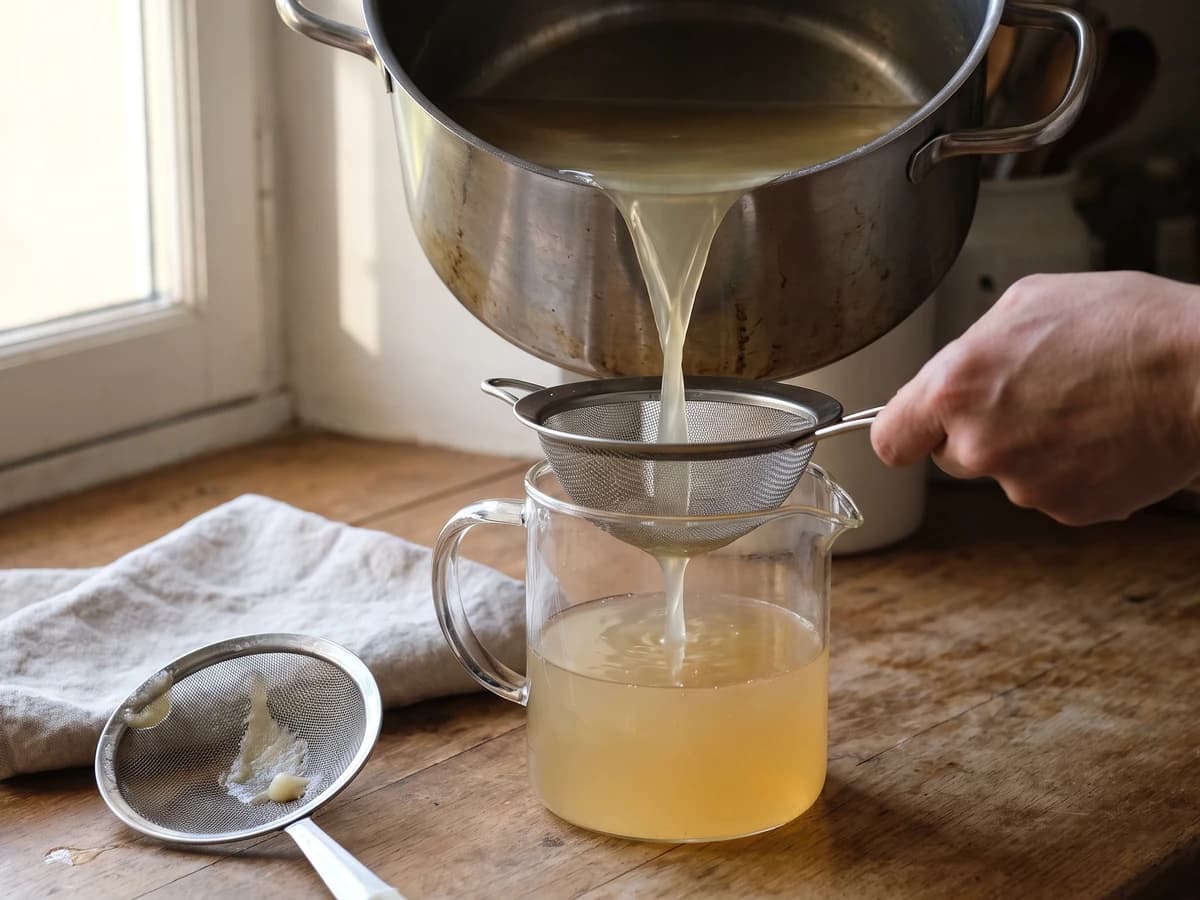
Break the veal bones small, then give them eight hours at a bare tremble. This pale, gelatinous fond becomes the quiet foundation beneath velouté, blanquette, and every sauce that must stay light.
Chef Juliette
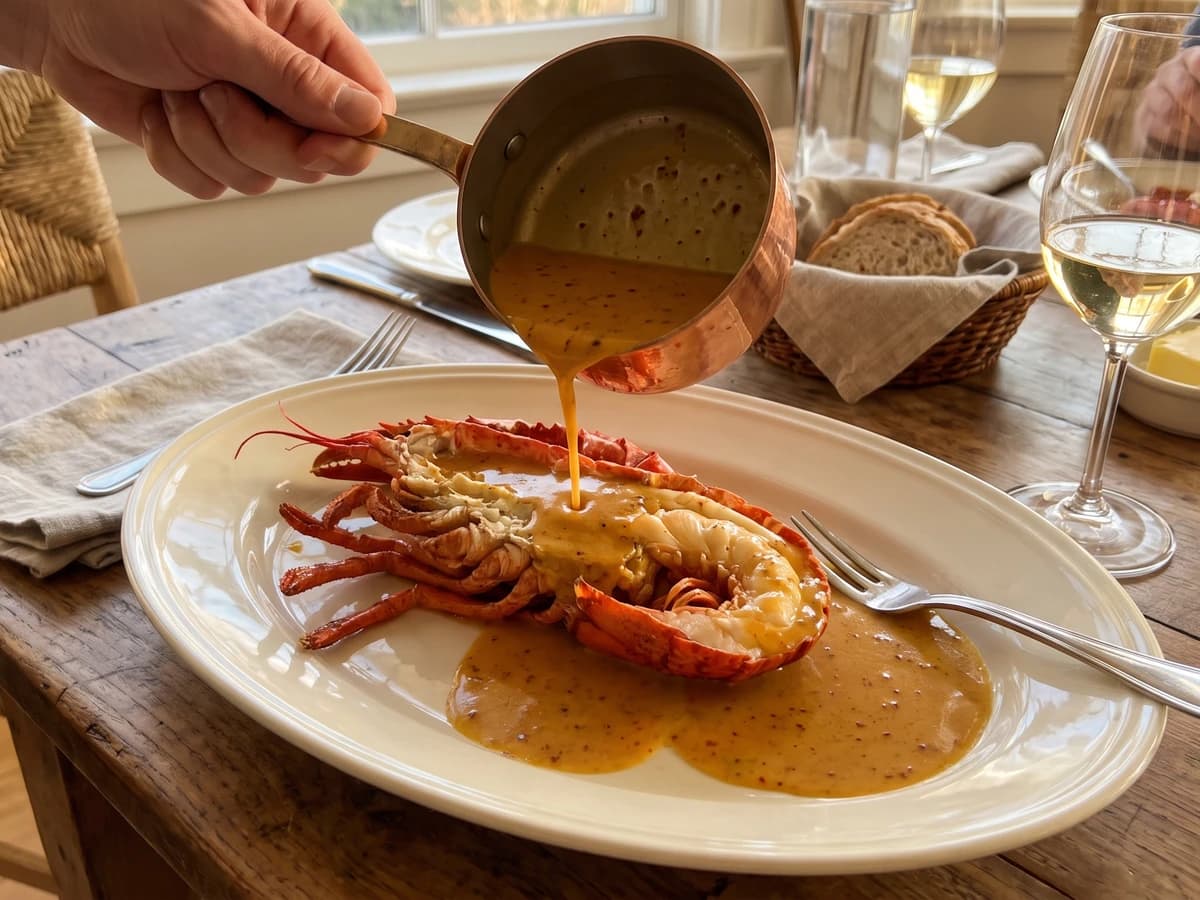
Sauce Orientale concentrates lobster-rich American Sauce with curry, then folds in cream away from the fire: a glossy, gently spiced derivative made for lobster, crayfish, and firm fish.
Chef Juliette
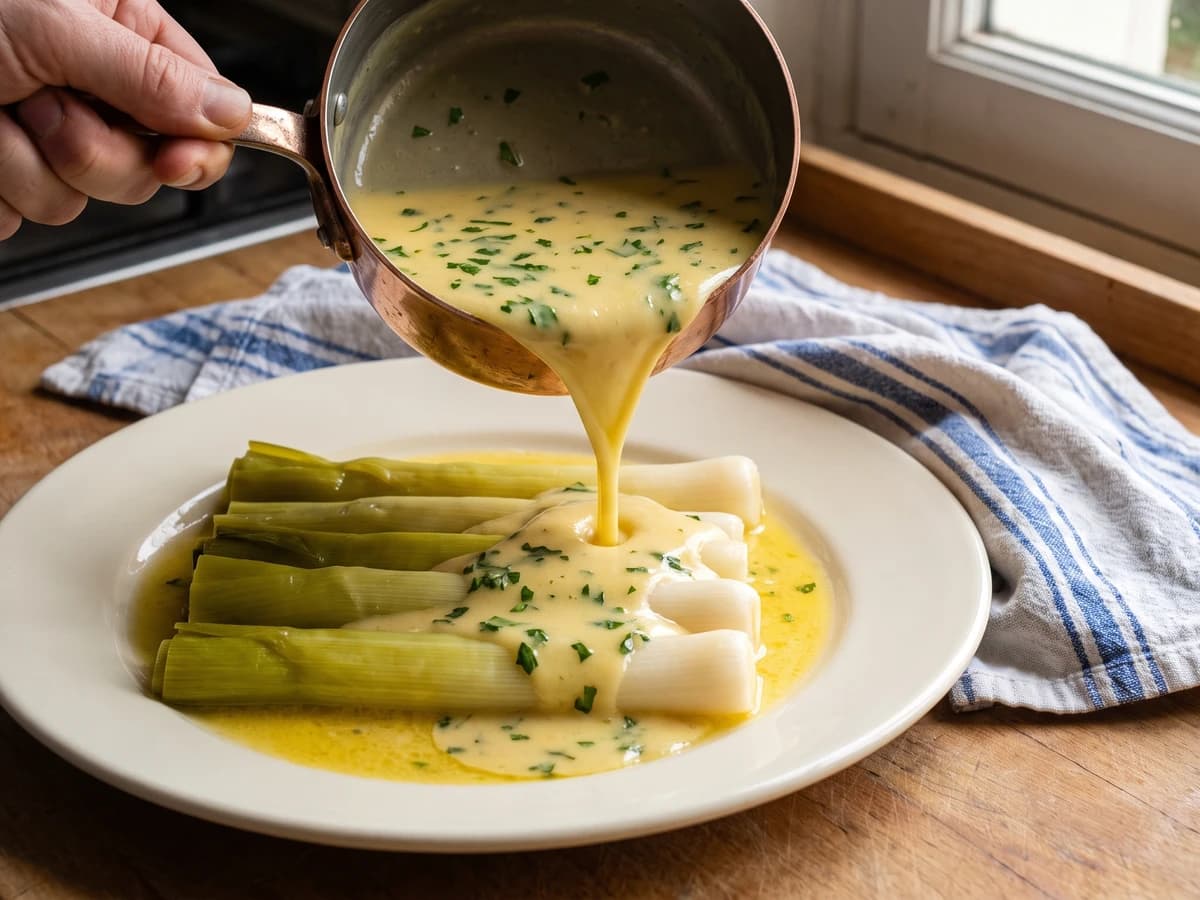
An old lesson in sauce families: Sauce Allemande takes mushroom liquor, then butter, lemon, and parsley, becoming a glossy Poulette for sheep's trotters, leeks, cauliflower, and anything needing gentle richness with a bright edge.