Chef Juliette
Bouillabaisse à la Marseillaise
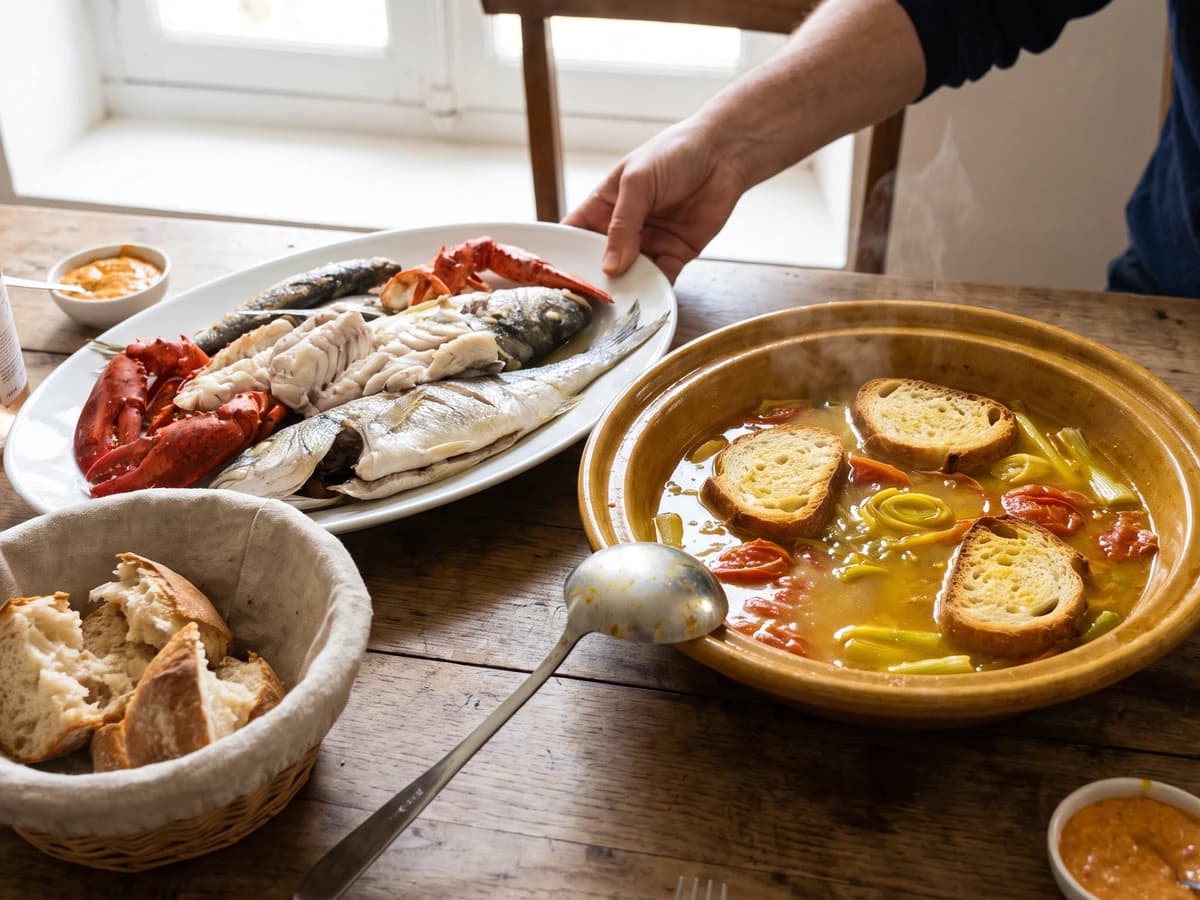
Marseille's great fish stew, saffron-gold and garlic-scented, proves that a hard boil can be the careful choice: it binds olive oil into broth before the whole pot meets bread.
A cooking platform built around craft, culture, and the stories behind what we eat.
Created by Chef Juliette
Based on No. 699, Crème au Blé Vert, otherwise Cérès, from Le Guide Culinaire (1907) by Auguste Escoffier
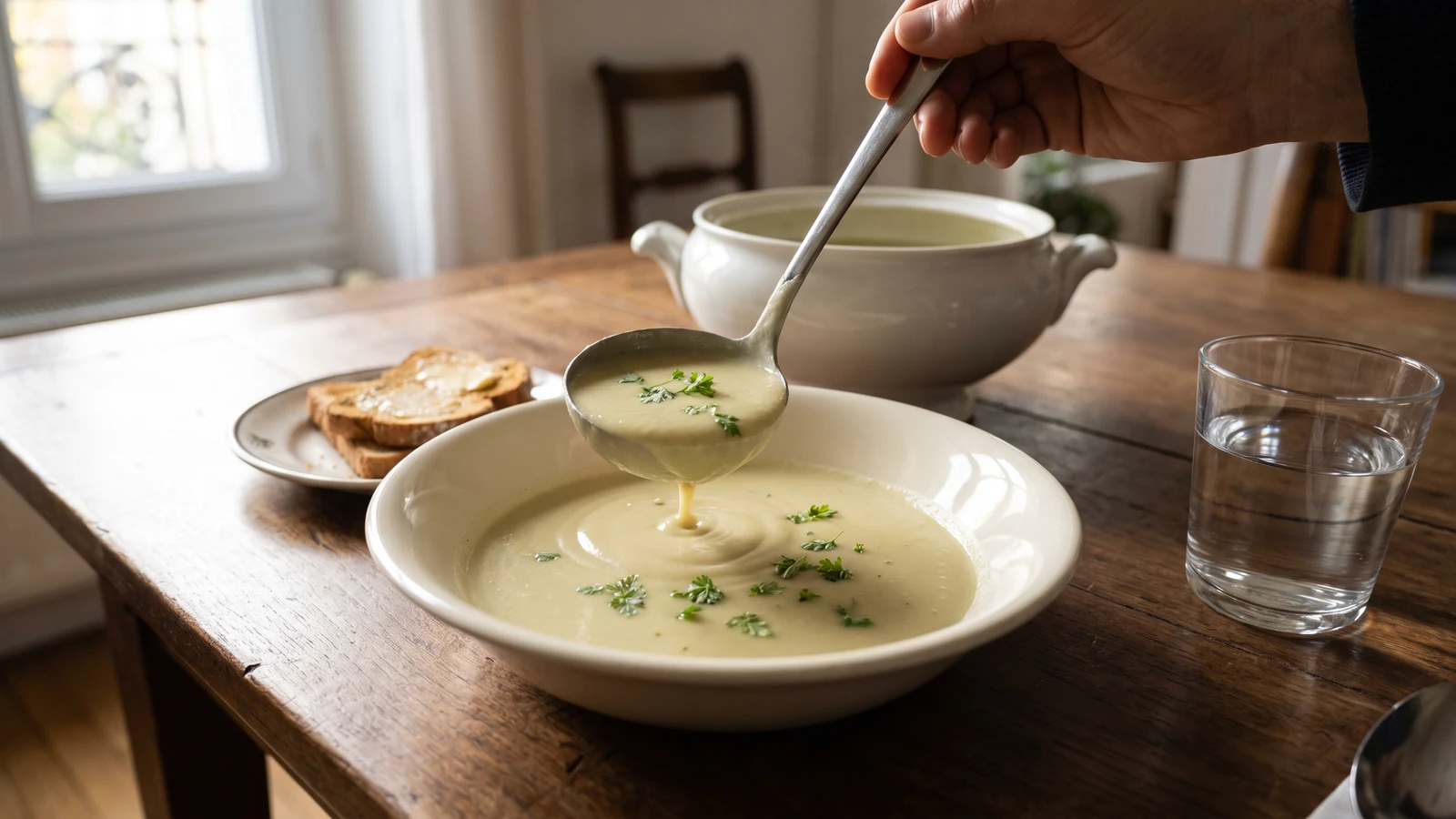
Green wheat softened to tenderness, folded into Béchamel, passed fine, and loosened with white consommé: Cérès teaches that a cream soup becomes silken through patience and the sieve, not a surfeit of cream.
Crème au Blé Vert, dite Cérès (green wheat cream soup), teaches the quiet discipline behind every purée soup: soften the main ingredient completely before asking sauce and sieve to refine it. A sieve can make tender grain silken; it cannot cure a hard center.
The book assumed a saucier with Béchamel ready, white consommé never off the fire, and a tammy with enough hands to keep rubbing grain through it. A home kitchen needs the same foundations, not the staffing: prepare the two finished components ahead, let a blender do the first heavy work, then pass the purée through a fine-mesh sieve. The blender replaces brigade labor; the final sieving stays because it is the dish.
This version halves the book's pound of wheat to eight ounces and keeps every fixed proportion, giving about two quarts for one cook, one stove, one evening. The soup reaches the bowl ivory, glossy, and fluid enough to fall from the ladle in a ribbon, with chervil pluches (small shreds of chervil) on the surface. The four-hour soak is not scaffolding. Keep it, then cook until a kernel crushes to paste between your fingers; that softness decides the whole soup.
Cérès belongs to the Parisian classical table, among the named crèmes and purées organized through a common grammar of cooked ingredient, white sauce, consommé, sieving, and cream. Its title invokes Cérès, the Roman goddess of grain, while its method turns the practical work of soaking dried green wheat into a refined soup course. It is not the property of Normandy, Provence, or Lyon, but a grand-kitchen preparation whose logic translates cleanly to the home saucepan.
Quantity
1¼ cups (300 ml / 225 g)
whole and uncracked
Quantity
8 cups (1.9 L / 1.9 kg)
for soaking
Quantity
½ cup (120 ml / 120 g)
for cooking
Quantity
5½ cups (1.3 L / 1.3 kg)
divided, as needed
Quantity
1¼ cups (300 ml / 315 g)
Quantity
1 cup (240 ml / 240 g)
Quantity
Up to 1 teaspoon (5 ml / 6 g)
only if needed
Quantity
1 tablespoon (15 ml / 2 g)
picked into small shreds for serving
| Ingredient | Quantity |
|---|---|
| dried green wheat berrieswhole and uncracked | 1¼ cups (300 ml / 225 g) |
| cold waterfor soaking | 8 cups (1.9 L / 1.9 kg) |
| cold waterfor cooking | ½ cup (120 ml / 120 g) |
| prepared white consommédivided, as needed | 5½ cups (1.3 L / 1.3 kg) |
| prepared Béchamel | 1¼ cups (300 ml / 315 g) |
| heavy cream | 1 cup (240 ml / 240 g) |
| fine salt (optional)only if needed | Up to 1 teaspoon (5 ml / 6 g) |
| fresh chervil pluchespicked into small shreds for serving | 1 tablespoon (15 ml / 2 g) |
Sort the dried green wheat, rinse it until the water runs mostly clear, and cover it with the soaking water by several inches. Leave it in a cool place for four hours. The grains should swell and lose their chalky appearance while remaining firm. Drain thoroughly; the soaking water has done its work and does not enter the soup.
Put the drained wheat in a heavy saucepan with the cooking water and ½ cup (120 ml / 120 g) of the white consommé. Cover, bring it just to the first tremble, then cook over the gentlest heat for 60 to 75 minutes, stirring every fifteen minutes. It is ready only when a grain crushes into paste between two fingers. If the liquid disappears before the center softens, add reserved consommé two tablespoons at a time and continue. Ça se rattrape. A little extra liquid is harmless; a scorched grain is not.
Stir the prepared Béchamel into the tender wheat. Cook over low heat for ten minutes, stirring across the pan floor, until the mixture is completely united and moves as one thick mass around the spoon. Keep it below a boil. The Béchamel carries butter and milk into every grain and gives the finished soup its body; it is foundation, not decoration.
Purée the hot mixture until no whole kernels remain, working in small batches and venting a countertop blender carefully, or using an immersion blender directly in the saucepan. Press the purée through a fine-mesh sieve or chinois into a clean pot, scraping the underside often. Stop when only dry, fibrous hulls remain. Forcing those through would make the soup coarse. The blender saves the labor once supplied by several hands, but it does not replace the sieve.
Measure the sieved base, then whisk in reserved white consommé gradually until the total volume reaches 7 cups (1.65 L). The correct body is lighter than porridge but fuller than broth: it should coat a spoon with a thin, even film and pour in a continuous ribbon. If it remains heavy, add more consommé by the spoonful. If you add too much, hold the soup uncovered just below a simmer until its body returns. Ça se rattrape.
Set the soup over medium-low heat and stir frequently until thoroughly hot, about eight minutes. Do not let it boil; the surface may quiver, but bubbles should not break through it. Taste before adding salt because both Béchamel and consommé arrive seasoned. If overheating makes the texture look rough, take the pot off the heat, whisk gently, and pass the soup through the clean sieve once more.
Warm the serving bowls. Take the hot soup off the heat and stir in the heavy cream only as you are ready to serve, preserving its fresh richness and pale color. Ladle the Cérès into the bowls and scatter the chervil pluches lightly over each portion. Serve at once. À table!
1 serving (about 245g)
Culinary guides, cultural storytelling, and the editorial depth that makes cooking meaningful.
Discover Culinary ExplorerChef Juliette
Marseille's great fish stew, saffron-gold and garlic-scented, proves that a hard boil can be the careful choice: it binds olive oil into broth before the whole pot meets bread.
Chef Juliette
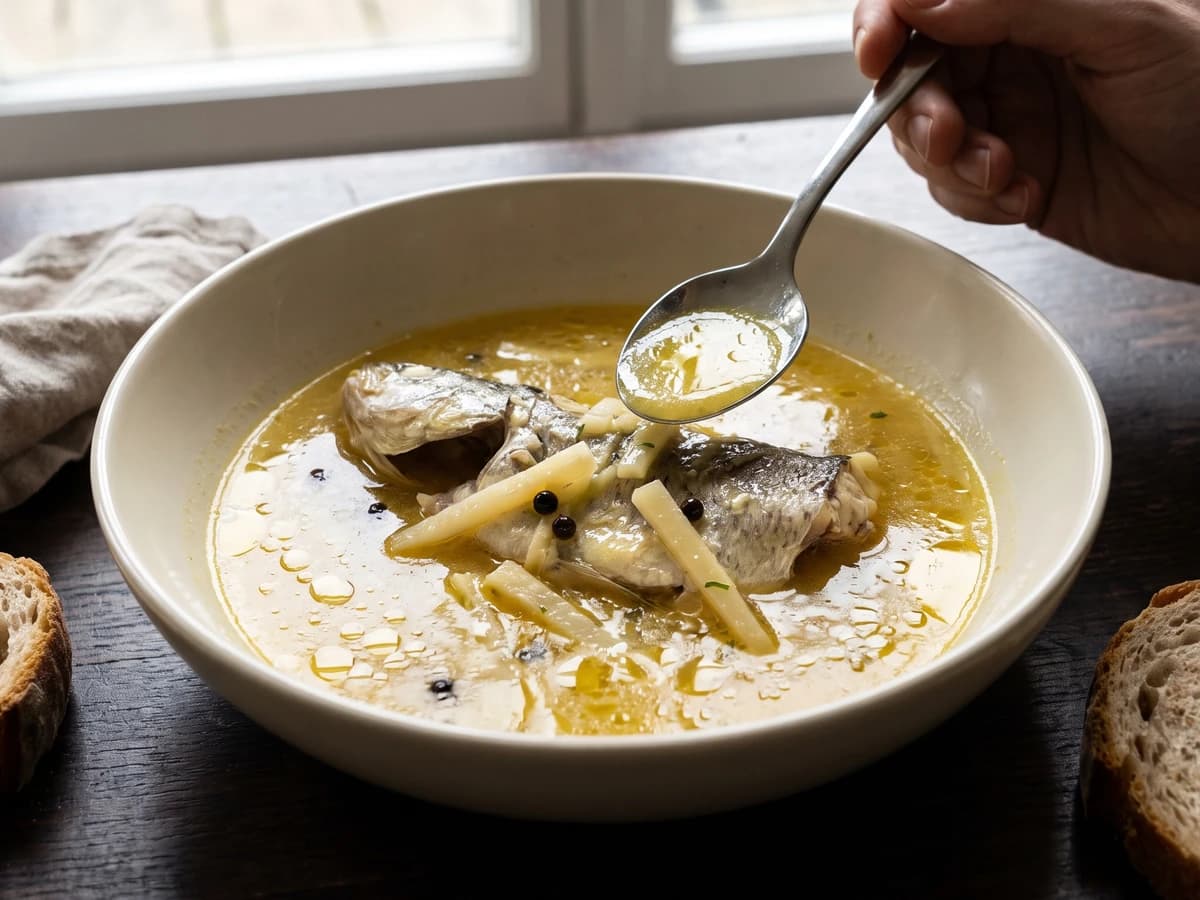
Waterzoi asks fresh, bone-in river fish to thicken its own buttery broth, with parsley root and pepper for company. No flour, no stockpot, just a brisk simmer watched closely.
Chef Juliette
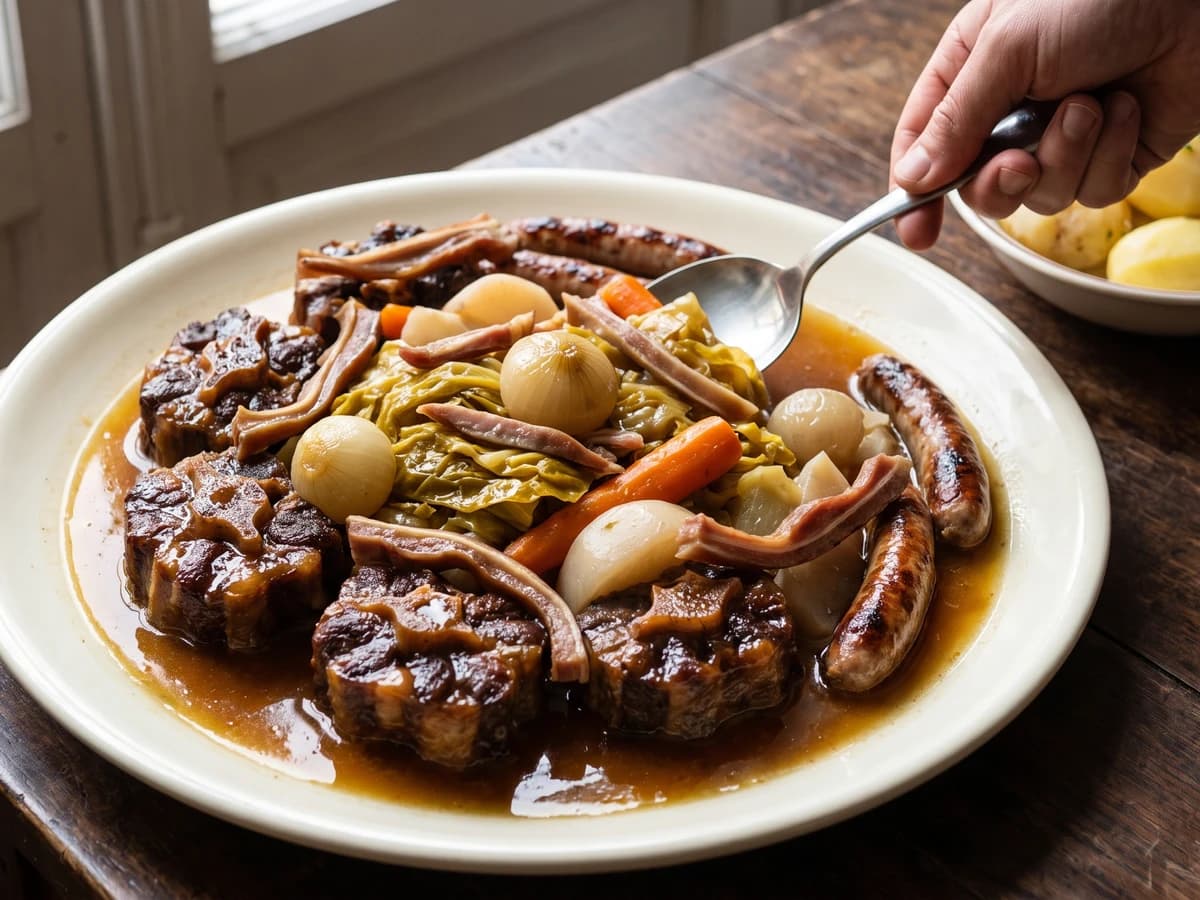
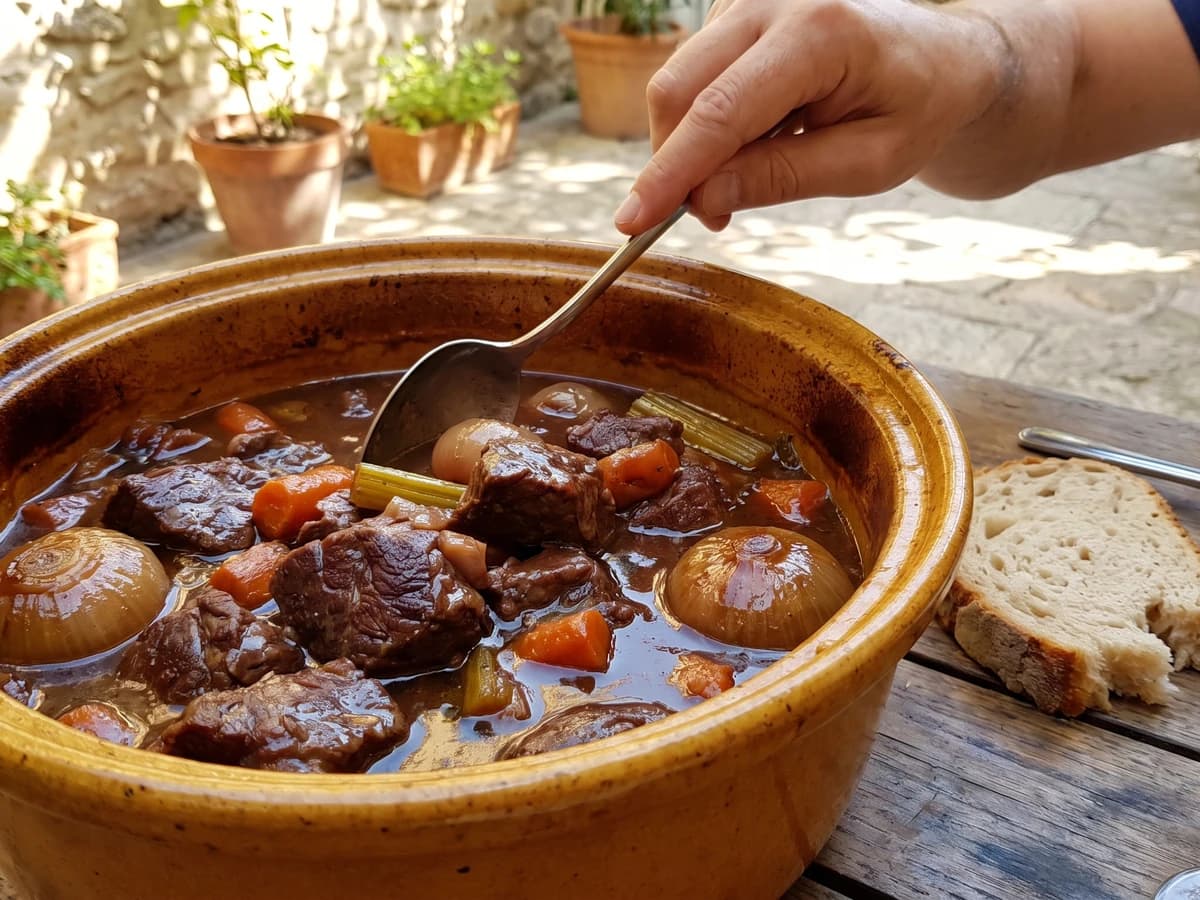
Queue de Bœuf en Hochepot gathers oxtail, pig's trotter and ear, cabbage, roots, and grilled chipolatas around a clear, gelatin-rich broth whose quiet simmer keeps every piece tender and distinct.
Chef Juliette
Beef shoulder larded with bacon, sharpened by red wine and vinegar, then sealed with garlic, vegetables, and dry lemon peel until the low oven turns it yielding and the gravy darkly glossy.