Chef Juliette
Bouillabaisse à la Marseillaise
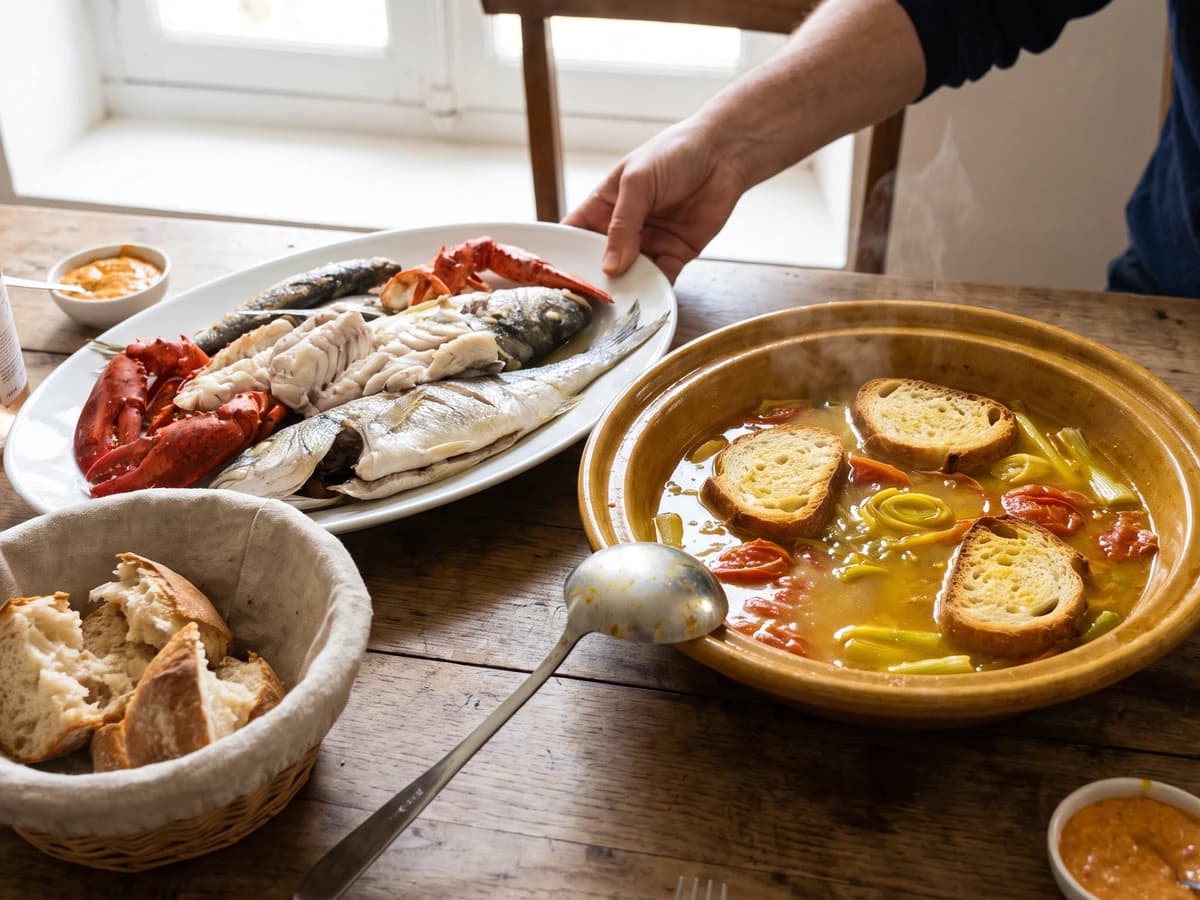
Marseille's great fish stew, saffron-gold and garlic-scented, proves that a hard boil can be the careful choice: it binds olive oil into broth before the whole pot meets bread.
A cooking platform built around craft, culture, and the stories behind what we eat.

Created by Chef Juliette
Based on No. 698, Crème d’Asperges Vertes, from Le Guide Culinaire (1907) by Auguste Escoffier
Green asparagus folded into a silken béchamel and finished with cream, deeper and grassier than Crème Argenteuil, with tender tips held back for the bowl and every fibre strained away.
Crème d’Asperges Vertes (green asparagus cream soup) teaches the discipline of the crème family: the asparagus may give the soup its character, but a pale, supple béchamel gives it grace. Green spears bring a deeper colour and grassier flavour than Crème Argenteuil, yet they cannot disguise a rough foundation. The silk comes from the roux, the blending, and finally the sieve.
The source entry gives this as a one-line variation on Crème Argenteuil, shorthand suited to a brigade where a saucier kept béchamel ready and a tamis stood within reach. At home, you’ll build a smaller thin béchamel in the soup pot and use an immersion blender with a fine sieve. A stockpot never off the fire and a salamander add nothing here. The brigade’s bulk preparation is scaffolding and goes; the pale roux, restrained cooking, straining, and cream finish are the dish and stay. One cook, one stove, one evening.
Keep the roux ivory and whisk in the warm milk gradually. Lumps can be rescued, and the method tells you how, but a browned roux will muddy both the asparagus and the colour. Cooking that roux through without letting it darken is the step that matters most.
Crème Argenteuil belongs to the classical Paris table and takes its name from Argenteuil, northwest of Paris, whose pale asparagus supplied the capital and made the town’s name shorthand for asparagus preparations. Crème d’Asperges Vertes is the canon’s direct green-speared variation: the béchamel method and cream finish remain, while the colour deepens and the flavour turns grassier. Argenteuil names the parent preparation, not permission to treat white and green asparagus as identical.
Quantity
2¼ pounds (1.02 kg)
woody ends removed
Quantity
2 quarts (1.9 L / 1.9 kg)
for blanching
Quantity
1 tablespoon plus 2 teaspoons (25 ml / 30 g)
divided
Quantity
8 tablespoons (120 ml / 113 g)
divided
Quantity
¾ cup (180 ml / 90 g)
Quantity
7 cups (1.65 L / 1.70 kg)
warmed and divided
Quantity
1 cup (240 ml / 238 g)
Quantity
¼ teaspoon (1.25 ml / 0.6 g)
| Ingredient | Quantity |
|---|---|
| green asparaguswoody ends removed | 2¼ pounds (1.02 kg) |
| waterfor blanching | 2 quarts (1.9 L / 1.9 kg) |
| fine sea saltdivided | 1 tablespoon plus 2 teaspoons (25 ml / 30 g) |
| unsalted butterdivided | 8 tablespoons (120 ml / 113 g) |
| all-purpose flour | ¾ cup (180 ml / 90 g) |
| whole milkwarmed and divided | 7 cups (1.65 L / 1.70 kg) |
| heavy cream | 1 cup (240 ml / 238 g) |
| ground white pepper | ¼ teaspoon (1.25 ml / 0.6 g) |
Cut the asparagus tips about 2 inches long and reserve them for the garnish. Peel the lower third of any thick stalks, leave slender ones alone, then slice all the stalks into ½-inch pieces. Discard only the dry, woody ends; the tender lower stalk carries plenty of flavour and belongs in the soup.
Bring the water to a full boil with 1 tablespoon of the salt. Add the reserved tips and cook for 90 seconds to 2 minutes, just until a knife enters with slight resistance and the green looks vivid. Lift them directly into a bowl of iced water, then drain and dry them well. Empty and dry the saucepan so it can become the soup pot.
Warm 6½ cups of the milk until small bubbles gather at the edge; keep the remaining ½ cup cold for adjusting the soup. Melt 6 tablespoons of the butter in a heavy saucepan over medium-low heat. Add the flour and stir continuously for 3 minutes, until the roux looks smooth and foamy and no longer smells raw. It must remain ivory. Colour belongs in other sauces, not this one.
Take the roux off the heat and whisk in the warm milk a ladleful at a time, making each addition smooth before adding the next. Return the pan to gentle heat and bring the béchamel to a bare simmer, whisking across the corners, then cook for 10 minutes until it lightly coats a spoon. If lumps appear, don’t pour it out. Ça se rattrape: take the pan off the heat, blend until smooth, and pass the sauce through the sieve before continuing.
Add the sliced asparagus stalks to the béchamel and hold the soup at the gentlest simmer, uncovered, for 8 to 10 minutes. Stop when a piece crushes easily against the side of the pan. A hard boil or needless extra cooking dulls the green and flattens the fresh flavour; tenderness, not the clock, decides when you move on.
Blend the soup thoroughly with an immersion blender until no visible pieces remain. Pass it through a fine-mesh sieve into a clean saucepan, pressing with the back of a ladle but leaving the final dry tangle of fibres behind. This straining is not brigade ceremony. It is what turns asparagus purée into a crème. If the soup resists the sieve, loosen it with a little of the reserved cold milk rather than forcing the fibres through.
Return the strained soup to low heat and whisk in the cream, white pepper, and enough of the remaining salt to bring the asparagus forward. Heat until the surface gleams and the soup is just below a simmer, then remove it from the heat and whisk in the remaining 2 tablespoons cold butter. Adjust with reserved milk if it sits too heavily on the spoon. If oily beads appear, take the pan off the heat and whisk in a spoonful of cold milk until the emulsion closes again. Warm the asparagus tips in the soup for 30 seconds, divide them among the bowls, and ladle the crème over them. À table!
1 serving (about 245g)
Culinary guides, cultural storytelling, and the editorial depth that makes cooking meaningful.
Discover Culinary ExplorerChef Juliette
Marseille's great fish stew, saffron-gold and garlic-scented, proves that a hard boil can be the careful choice: it binds olive oil into broth before the whole pot meets bread.
Chef Juliette
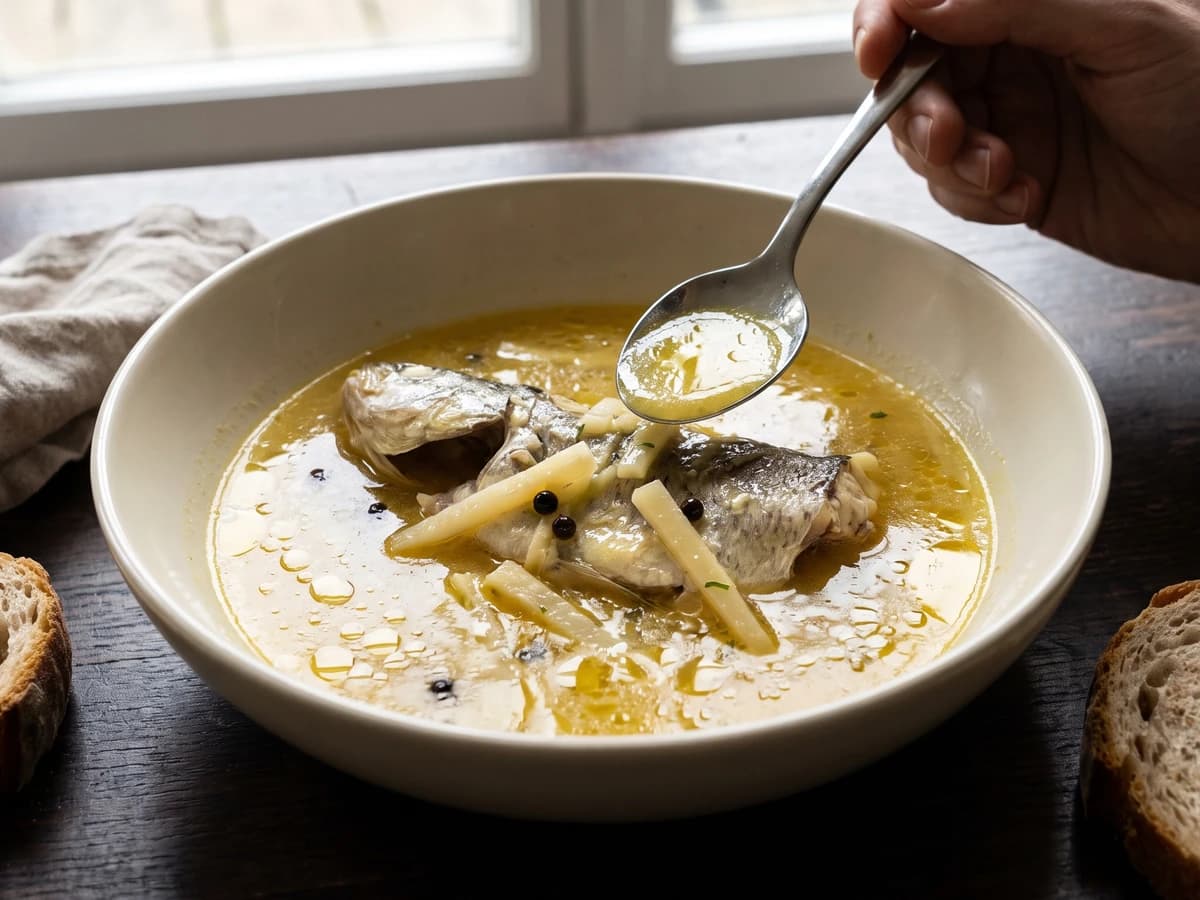
Waterzoi asks fresh, bone-in river fish to thicken its own buttery broth, with parsley root and pepper for company. No flour, no stockpot, just a brisk simmer watched closely.
Chef Juliette
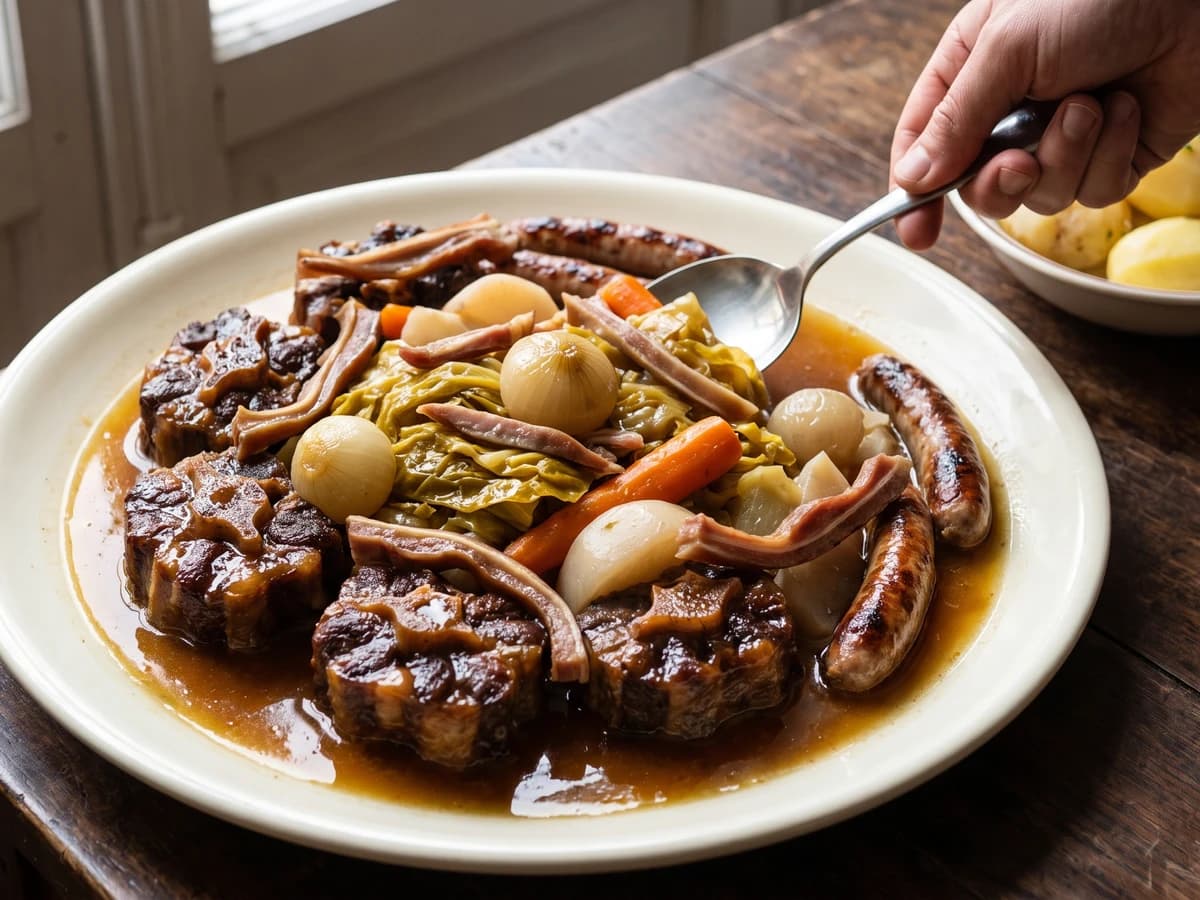
Queue de Bœuf en Hochepot gathers oxtail, pig's trotter and ear, cabbage, roots, and grilled chipolatas around a clear, gelatin-rich broth whose quiet simmer keeps every piece tender and distinct.
Chef Juliette
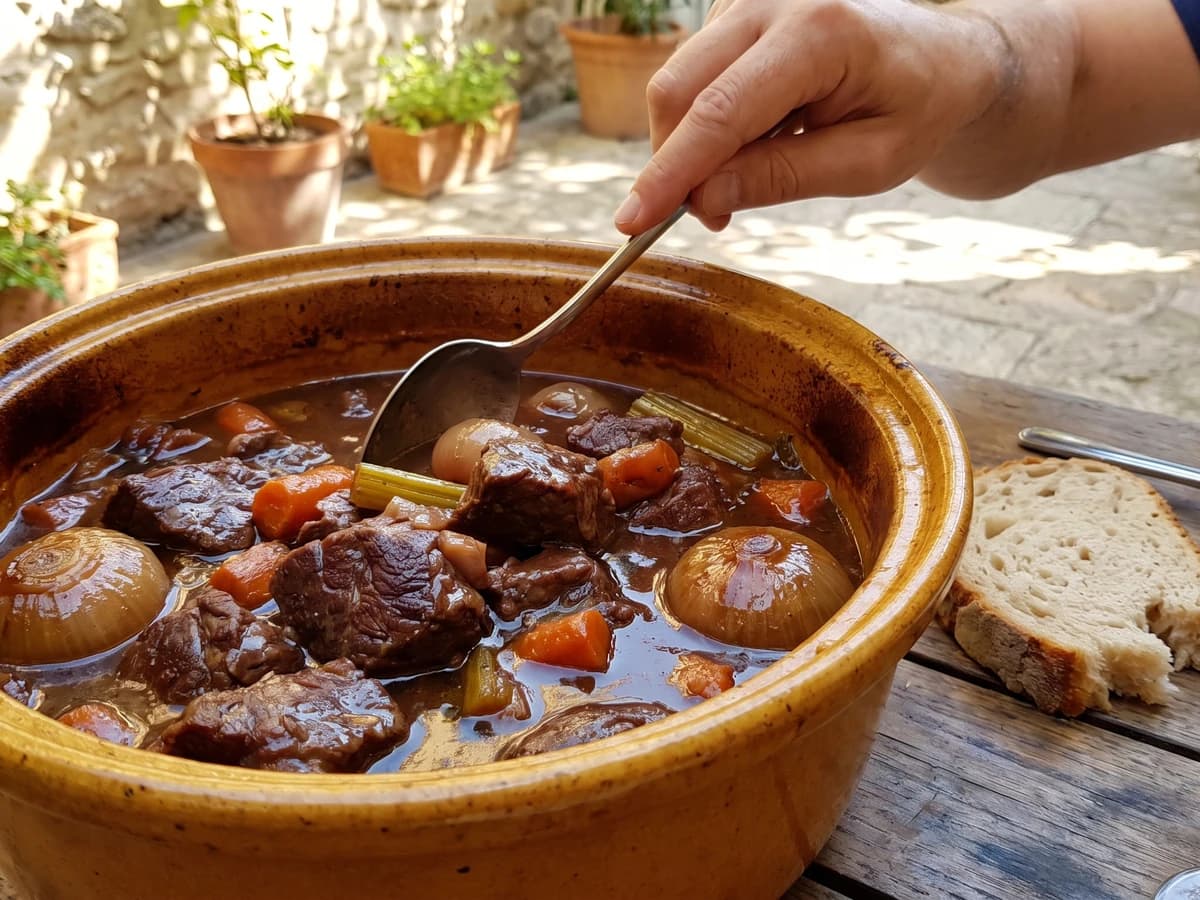
Beef shoulder larded with bacon, sharpened by red wine and vinegar, then sealed with garlic, vegetables, and dry lemon peel until the low oven turns it yielding and the gravy darkly glossy.