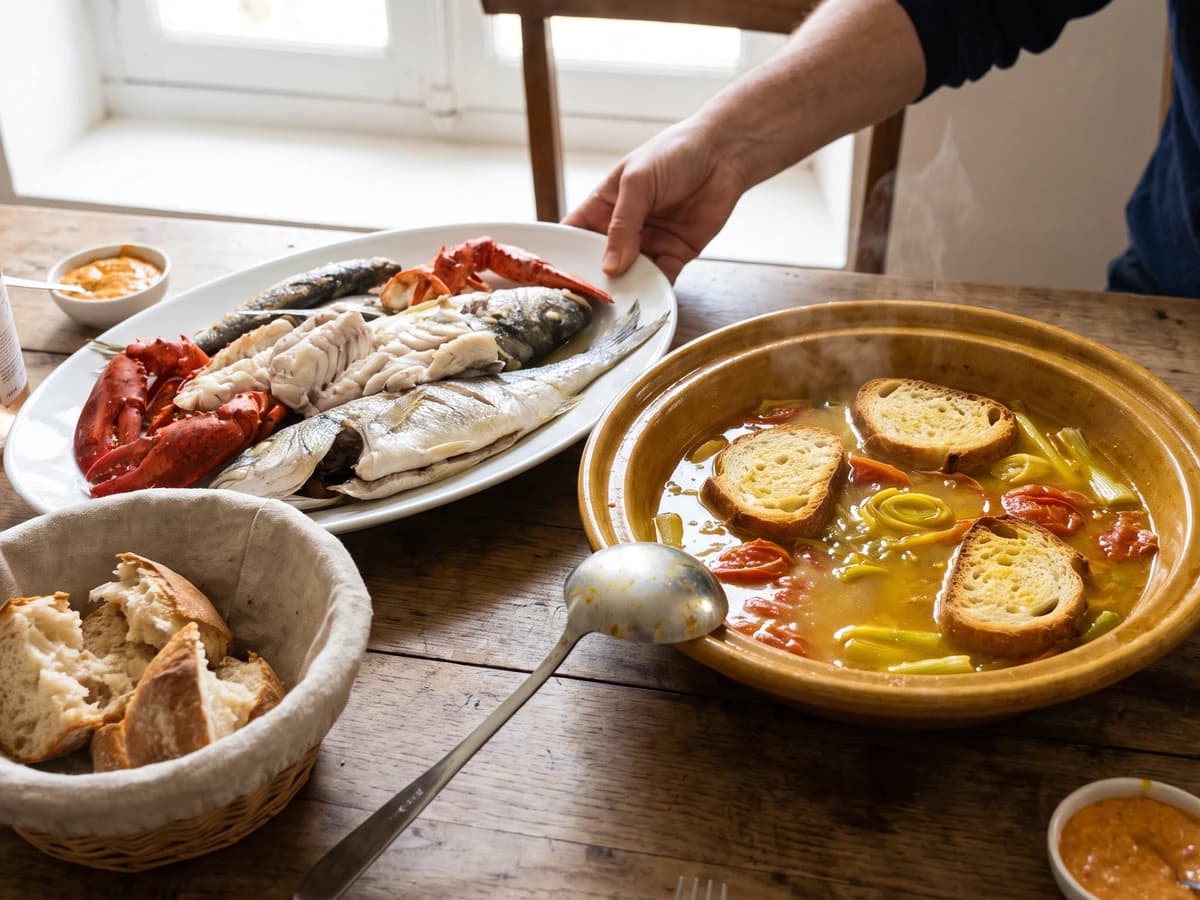
Chef Juliette
Bouillabaisse à la Marseillaise
Marseille's great fish stew, saffron-gold and garlic-scented, proves that a hard boil can be the careful choice: it binds olive oil into broth before the whole pot meets bread.
A cooking platform built around craft, culture, and the stories behind what we eat.

Created by Chef Juliette
Based on No. 694, Velouté au Pourpier, from Le Guide Culinaire (1907) by Auguste Escoffier
Velouté au Pourpier turns a tart garden green into silk: purslane parboiled, butter-stewed, simmered in velouté, sieved fine, and finished with white consommé, egg-and-cream liaison, and cold butter.
Velouté au Pourpier (silken purslane soup) teaches a quiet rule of green soups: cook the leaf enough to surrender its body, but not long enough to surrender its character. Purslane brings a faint tartness and a succulent texture that watercress doesn't; the brief parboil, butter-stew, and exact seven-to-eight-minute simmer turn it gentle without erasing it.
The original formula assumed a saucier at the range, ordinary velouté and white consommé already waiting, and a tammy broad enough to pass a service quantity. At home, the finished bases still matter, but the brigade scaffolding changes: a blender followed by a fine-mesh sieve does the tammy's work, and this batch is scaled to about two quarts. The formula leaves the liaison, the egg-and-cream binding, and final butter to the saucier's hand; I fix those quantities here because one cook should not have to guess. The purslane-to-velouté-to-consommé ratio and the order of cooking do not move. One cook, one stove, one evening.
Watch the seven-to-eight-minute simmer. A hard boil muddies the green and roughens its fresh, tart edge; a bare tremble preserves both, then the sieve and liaison bring the silk. That short, gentle simmer is the step that decides the dish.
Velouté au Pourpier belongs to the Paris-centered classical repertory rather than to a single regional household table. Its governing preparation is Velouté Cressonière (No. 677), but purslane replaces watercress exactly, carrying a kitchen-garden plant often dismissed as a weed through the same butter, velouté, sieve, consommé, and liaison sequence. Despite purslane's warm-weather abundance, this is not a southern olive-oil soup; its grammar is the butter-and-stock grammar of the national grand kitchen.
Quantity
About 20 lightly packed cups (4.7 L / 605 g)
Quantity
About 1¼ lightly packed cups (300 ml / 38 g)
reserved for the garnish
Quantity
2 tablespoons (30 ml / 36 g), plus more only if needed
for the parboiling water
Quantity
¼ cup (60 ml / 57 g)
for stewing the purslane
Quantity
2⅔ cups (630 ml / about 650 g)
Quantity
4 cups (950 ml / about 950 g)
Quantity
3
Quantity
¾ cup (180 ml / 180 g)
divided
Quantity
3 tablespoons (45 ml / 43 g)
cut into small pieces
| Ingredient | Quantity |
|---|---|
| very fresh purslane leaves and tender tips, substituted for the watercress in Velouté Cressonière (No. 677) | About 20 lightly packed cups (4.7 L / 605 g) |
| small purslane leaves and tender tipsreserved for the garnish | About 1¼ lightly packed cups (300 ml / 38 g) |
| fine sea saltfor the parboiling water | 2 tablespoons (30 ml / 36 g), plus more only if needed |
| unsalted butterfor stewing the purslane | ¼ cup (60 ml / 57 g) |
| prepared ordinary velouté | 2⅔ cups (630 ml / about 650 g) |
| prepared ordinary white consommé | 4 cups (950 ml / about 950 g) |
| large egg yolks | 3 |
| heavy creamdivided | ¾ cup (180 ml / 180 g) |
| cold unsalted buttercut into small pieces | 3 tablespoons (45 ml / 43 g) |
Pick over the purslane carefully, keeping only leaves and supple tips; thick stems belong in another pot. Wash it through several changes of cold water because purslane carries grit close to the ground. Bring a large pot of water to a boil and add the salt. Following Velouté Cressonière (No. 677), parboil the garnish leaves for exactly three minutes, lift them into ice water, then drain them well. Parboil the larger quantity for only one minute, just until the leaves relax, and cool it in the same way. Squeeze gently but thoroughly so water doesn't follow the greens into the butter.
Melt the ¼ cup butter in a wide saucepan over medium-low heat without letting it color. Add the larger quantity of drained purslane, cover for one minute, then uncover and stew gently for four to five minutes, stirring often. The leaves should soften, darken slightly, and shine with butter, never fry. If water collects in the pan, uncover and raise the heat briefly until it evaporates; if the butter begins to brown, add a spoonful of the measured velouté and lower the heat. Ça se rattrape.
Stir in the prepared ordinary velouté and bring it only to a bare simmer. Cook for seven to eight minutes, no longer, stirring along the bottom so the thick base cannot catch. The surface should tremble quietly rather than break into a boil. If it boils hard, lift the pan from the heat at once, stir, and return it over a lower flame; catch it quickly and the green remains lively.
Let the mixture settle for two minutes, then blend it in batches until completely smooth. Never fill a blender more than halfway with hot soup, and keep the lid vented beneath a folded towel. Press the purée through a fine-mesh sieve into a clean bowl, working it with the back of a ladle until only dry fibers remain. The tammy was brigade equipment; a blender and fine sieve are its honest home equivalent. The sieve itself is not scaffolding. It is what makes this a velouté rather than a rough green purée.
Return the sieved purée to a clean saucepan and whisk in the prepared ordinary white consommé. Heat it slowly until the surface barely trembles, skimming away any pale foam. Do not reduce it aggressively; the proportion of velouté to consommé gives the soup its balance of body and lightness. Taste before adding salt, since both finished foundations may already be seasoned.
Reserve 2 tablespoons of the cold cream. Whisk the egg yolks with the remaining cream in a heatproof bowl, then slowly whisk in about 1 cup of the hot soup to temper them. Take the saucepan off the heat and whisk the tempered liaison back into it. Return the pan to the lowest heat and stir constantly until the soup lightly coats a spoon and reaches 165 to 170°F (74 to 77°C); it must not simmer. If tiny egg specks appear, remove the pan immediately, whisk in the reserved cold cream, blend briefly, and strain again. Ça se rattrape.
Off the heat, whisk in the cold butter a few pieces at a time until the surface gleams and the soup feels supple on the spoon. Warm the reserved garnish leaves in a ladleful of soup, then divide them among warmed bowls or place them in the soupière before pouring in the velouté. Serve at once. We don't apologize for butter. À table!
1 serving (about 250g)
Culinary guides, cultural storytelling, and the editorial depth that makes cooking meaningful.
Discover Culinary ExplorerChef Juliette
Marseille's great fish stew, saffron-gold and garlic-scented, proves that a hard boil can be the careful choice: it binds olive oil into broth before the whole pot meets bread.
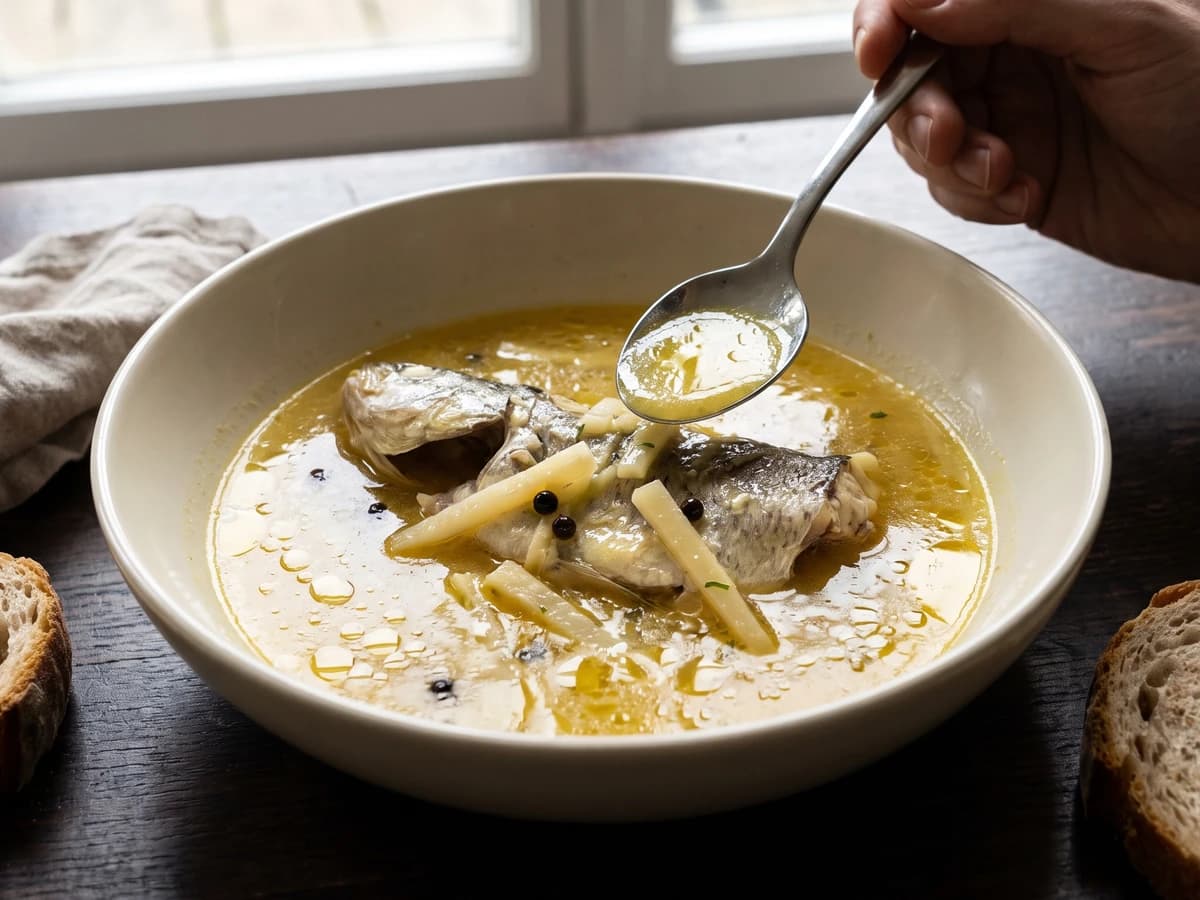
Chef Juliette
Waterzoi asks fresh, bone-in river fish to thicken its own buttery broth, with parsley root and pepper for company. No flour, no stockpot, just a brisk simmer watched closely.
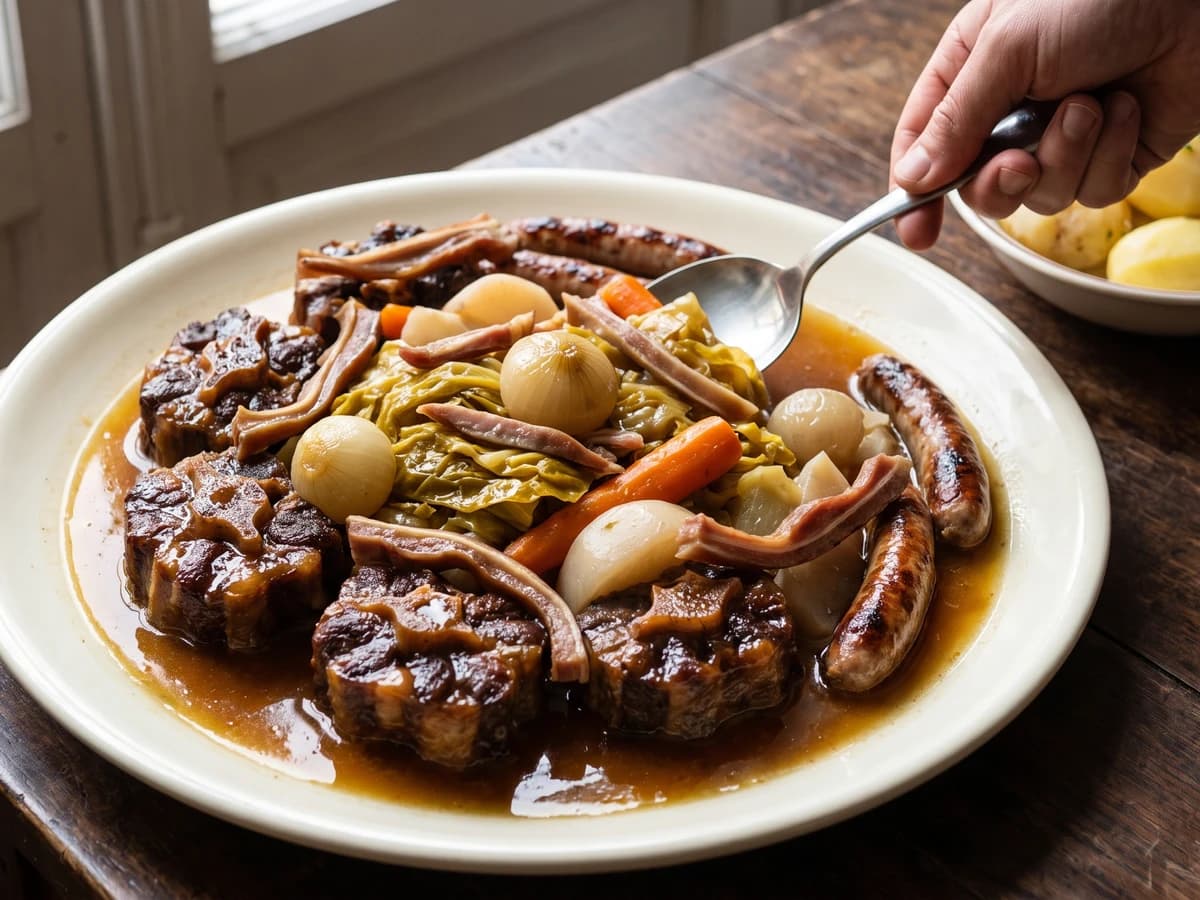
Chef Juliette
Queue de Bœuf en Hochepot gathers oxtail, pig's trotter and ear, cabbage, roots, and grilled chipolatas around a clear, gelatin-rich broth whose quiet simmer keeps every piece tender and distinct.
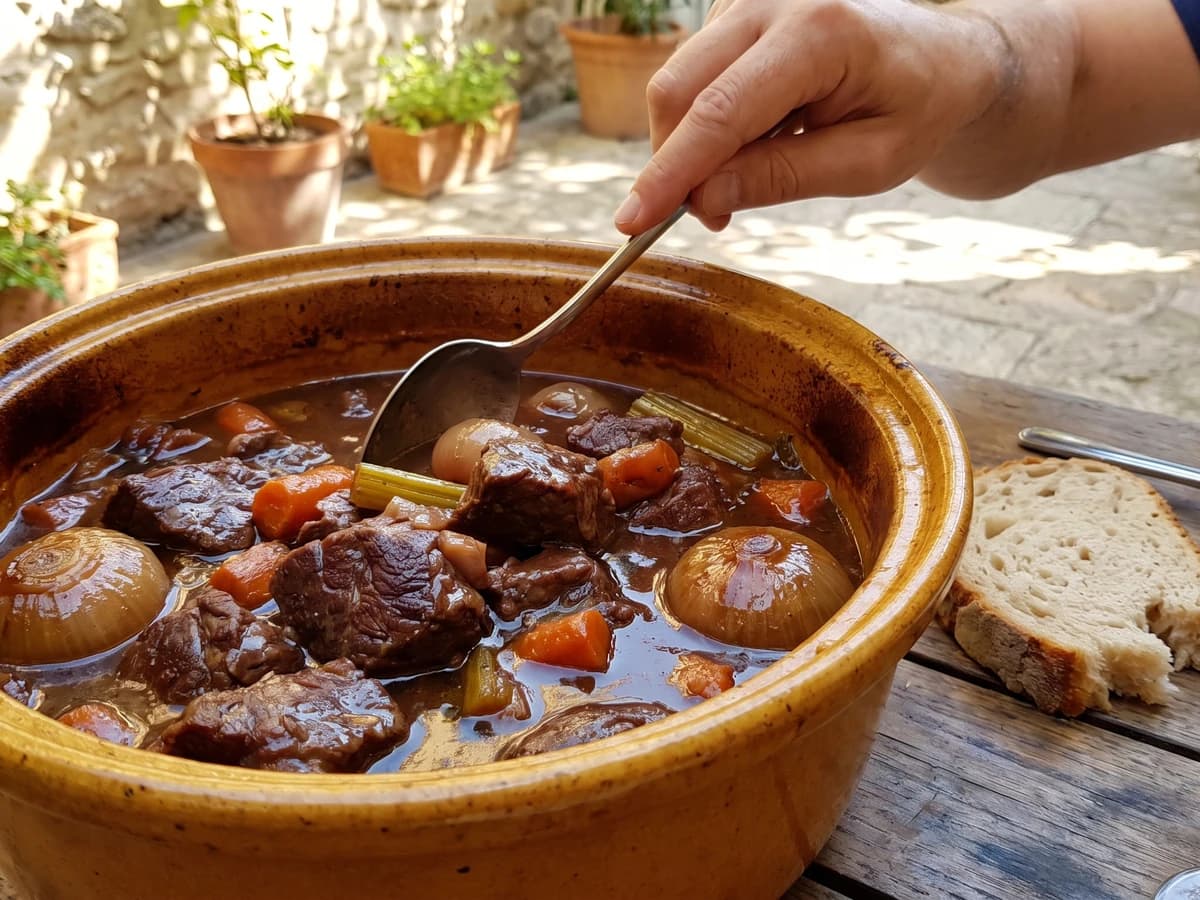
Chef Juliette
Beef shoulder larded with bacon, sharpened by red wine and vinegar, then sealed with garlic, vegetables, and dry lemon peel until the low oven turns it yielding and the gravy darkly glossy.