Chef Juliette
Bouillabaisse à la Marseillaise
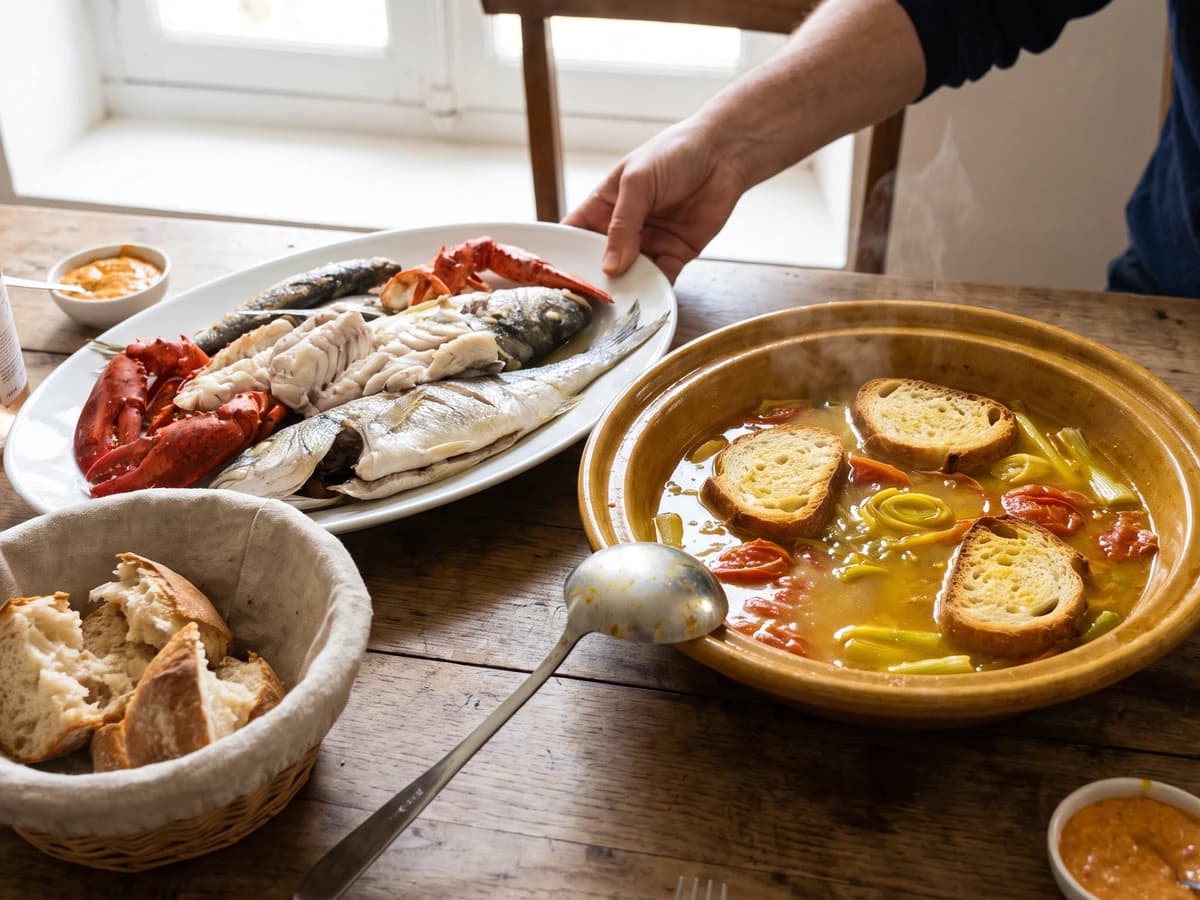
Marseille's great fish stew, saffron-gold and garlic-scented, proves that a hard boil can be the careful choice: it binds olive oil into broth before the whole pot meets bread.
A cooking platform built around craft, culture, and the stories behind what we eat.
Created by Chef Juliette
Based on No. 688, Velouté de Homard au Paprika, from Le Guide Culinaire (1907) by Auguste Escoffier
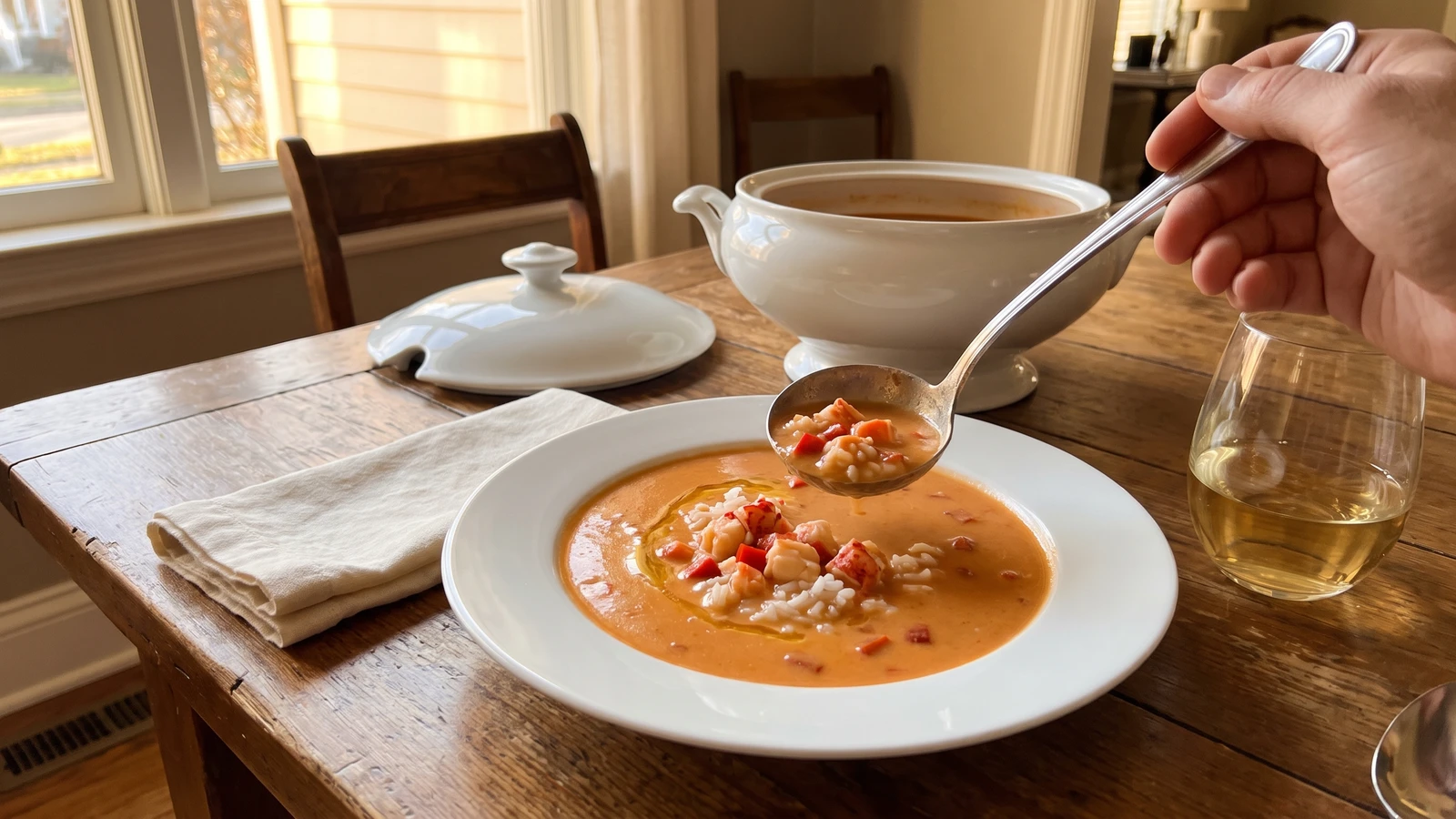
Paprika warms this coral-ivory lobster velouté without scorching it, while the à l’Américaine foundation of tomato, onion, Cognac, and shell liquor gives cream the depth it needs.
Velouté de Homard au Paprika (silken lobster soup warmed with paprika) teaches extraction. The shell must give everything it has before cream enters the pot, and the paprika must warm the lobster without bullying it. Bloom the spice briefly in fat, then meet it promptly with liquid; scorched paprika turns bitter, and cream cannot hide it.
The original assumed a saucier, a stockpot never off the fire, and a mortar with a tamis, a drum sieve, for pounding and passing the shells. At home, a sturdy pot, kitchen shears, a rolling pin, a fine sieve, and good unsalted shellfish stock do the same honest work. This version keeps the source proportions of one medium lobster, two concassed tomatoes, two roughly chopped onions, two spoonfuls of rice, and one of pimento, then scales the finished soup to about two quarts. Repeated passings and the open-flame flourish are brigade scaffolding and can go; shell browning, wine reduction, paprika, roux, and the Cleveland liaison, the egg-yolk-and-cream binding finish, are the dish and stay. One cook, one stove, one evening.
The finished velouté should be coral-ivory, glossy enough to catch the light, with tender lobster dice, grains of rice, and red pimento appearing in every ladleful. The step that decides the pot is the shell extraction: simmer gently, crush firmly, and press for liquor without forcing gritty shell paste through the sieve.
Velouté de Homard au Paprika belongs to the grand Parisian soup repertoire, where Homard à l’Américaine, lobster cooked with tomato, aromatics, wine, and Cognac, was carried into velouté form and finished in the Cleveland manner. The name américaine has long invited an armoricaine counterclaim pointing toward Brittany, but the classical books keep américaine, and the preparation is a grand-kitchen construction rather than a Breton regional soup. Paprika and diced pimento supply warmth and color, while rice and lobster dice preserve the composed garnish expected at the formal table.
Quantity
1 (about 2 lb / 900 g)
dispatched and cut into shell-on pieces immediately before cooking
Quantity
6 tablespoons (90 ml / 85 g)
divided
Quantity
2 tablespoons (30 ml / 28 g)
Quantity
2 medium (about 2 cups / 300 g)
roughly chopped
Quantity
2 medium (about 1/2 cup / 80 g)
roughly chopped
Quantity
2 medium (about 1 1/2 cups / 300 g)
concassed, meaning roughly chopped
Quantity
2 cloves (about 2 teaspoons / 6 g)
crushed
Quantity
1 tablespoon (15 ml / 16 g)
Quantity
2 teaspoons (10 ml / 5 g)
divided
Quantity
1/4 cup (60 ml / 56 g)
Quantity
1 cup (240 ml / 240 g)
Quantity
6 1/2 cups (1.54 L / 1.54 kg)
divided
Quantity
1
Quantity
1/3 cup (80 ml / 40 g)
Quantity
1 1/2 cups (360 ml / 360 g)
divided
Quantity
2 (about 2 tablespoons / 34 g)
Quantity
2 tablespoons (30 ml / 30 g)
cooled
Quantity
1 tablespoon (15 ml / 15 g)
cut into fine dice
Quantity
2 teaspoons (10 ml / 12 g), plus more as needed
divided
Quantity
1/4 teaspoon (1.25 ml / 0.6 g)
| Ingredient | Quantity |
|---|---|
| medium live lobsterdispatched and cut into shell-on pieces immediately before cooking | 1 (about 2 lb / 900 g) |
| unsalted butterdivided | 6 tablespoons (90 ml / 85 g) |
| neutral oil | 2 tablespoons (30 ml / 28 g) |
| yellow onionsroughly chopped | 2 medium (about 2 cups / 300 g) |
| shallotsroughly chopped | 2 medium (about 1/2 cup / 80 g) |
| tomatoesconcassed, meaning roughly chopped | 2 medium (about 1 1/2 cups / 300 g) |
| garliccrushed | 2 cloves (about 2 teaspoons / 6 g) |
| tomato paste | 1 tablespoon (15 ml / 16 g) |
| sweet paprikadivided | 2 teaspoons (10 ml / 5 g) |
| Cognac or good brandy | 1/4 cup (60 ml / 56 g) |
| dry white wine | 1 cup (240 ml / 240 g) |
| unsalted shellfish or fish stockdivided | 6 1/2 cups (1.54 L / 1.54 kg) |
| bouquet garni | 1 |
| plain flour | 1/3 cup (80 ml / 40 g) |
| heavy creamdivided | 1 1/2 cups (360 ml / 360 g) |
| large egg yolks | 2 (about 2 tablespoons / 34 g) |
| cooked white ricecooled | 2 tablespoons (30 ml / 30 g) |
| drained red pimentocut into fine dice | 1 tablespoon (15 ml / 15 g) |
| fine saltdivided | 2 teaspoons (10 ml / 12 g), plus more as needed |
| ground white pepper | 1/4 teaspoon (1.25 ml / 0.6 g) |
Ask the fishmonger to dispatch the lobster just before you leave, or dispatch it immediately before cooking. Twist off the claws, separate the tail, cut the tail through its shell into four thick rounds, split the body lengthwise, and crack each claw once so the cooking liquor can enter. Keep every drop of juice. Dry the shell-on pieces well and season them with 1/2 teaspoon of the salt.
Heat the oil with 2 tablespoons of the butter in a heavy 6-quart pot over medium-high heat. When the butter foams and then quiets, add the lobster in a single layer and sear for 4 to 5 minutes, turning the pieces until the shells are vivid red and their ridges have taken a little bronze. Work in two batches if necessary; crowding traps moisture, and pale shell gives a pale soup. Transfer the pieces and their juices to a bowl.
Lower the heat to medium. Add the onions, shallots, and another 1/2 teaspoon salt to the lobster fat, then cook for 8 to 10 minutes, stirring, until soft and pale gold. Add the garlic and tomato paste and cook for 1 minute. Lower the heat, stir in 1 3/4 teaspoons of the paprika, and give it no more than 20 seconds in the fat. Pull the pot from the heat, add the Cognac without attempting to flame it, then return the pot to the burner and reduce until nearly dry. Add the wine and reduce it by half. Stir in the concassed tomatoes, 5 1/2 cups of the stock, the bouquet garni, the lobster, and all its juices. Hold at a bare tremble for 8 minutes. If the paprika catches and smells acrid before the liquid goes in, transfer the aromatics to a clean pot without scraping the burnt film and continue there. You lose a little fond, not the soup. Ça se rattrape.
Lift out the tail and claw pieces. As soon as they are cool enough to handle, remove the meat, cut it into generous dice, cover it, and keep it cold. Return the emptied shells and any juices to the pot with the body pieces. Simmer uncovered at the gentlest tremble for 25 minutes, then crush the softened shells firmly against the side of the pot with a sturdy rolling pin or potato masher. Let them infuse for 5 minutes more. Strain through a fine-mesh sieve into a measuring jug, pressing the vegetables and shells firmly but stopping before dry shell paste is forced through. Aim for about 6 1/2 cups of strained liquor, adding the reserved stock if needed or reducing briefly if there is too much.
Rinse the pot and melt the remaining 4 tablespoons butter over medium-low heat. Whisk in the flour to make a blond roux, the butter-and-flour thickener, and cook it for about 3 minutes until it smells faintly of biscuits but has taken no brown color. Add the strained lobster liquor a ladleful at a time, whisking each addition smooth before the next. Bring the velouté to a bare simmer and cook for 15 minutes, whisking occasionally and skimming away any foam. It should lightly coat the back of a spoon while still pouring freely. If it tightens too far, loosen it with a little stock; if small lumps remain, pass it once through the clean sieve.
Whisk the egg yolks with 1 1/4 cups of the cream in a heatproof bowl. Slowly whisk in about 2 cups of the hot velouté, one ladleful at a time, then take the pot off the heat and whisk the tempered liaison back into it. Return the pot to its lowest heat and stir for 3 to 5 minutes, until glossy and slightly fuller, but never let it boil. If the surface shows beads of fat or the texture turns grainy, take it off the heat at once, whisk in the reserved cold cream, blend briefly, and strain. Ça se rattrape. When smooth, season with the white pepper, the remaining salt as needed, and the reserved paprika only if the warmth needs sharpening.
Fold the lobster dice, the 2 tablespoons of cooked rice, and the 1 tablespoon of diced pimento into the velouté. Warm for 2 to 3 minutes over very low heat, stirring gently so the lobster stays tender and the liaison never approaches a boil. Taste once more for salt. Ladle into warmed bowls or bring the velouté to the table in a soupière, making certain every serving receives lobster, rice, and pimento. À table!
1 serving (about 240g)
Culinary guides, cultural storytelling, and the editorial depth that makes cooking meaningful.
Discover Culinary ExplorerChef Juliette
Marseille's great fish stew, saffron-gold and garlic-scented, proves that a hard boil can be the careful choice: it binds olive oil into broth before the whole pot meets bread.
Chef Juliette
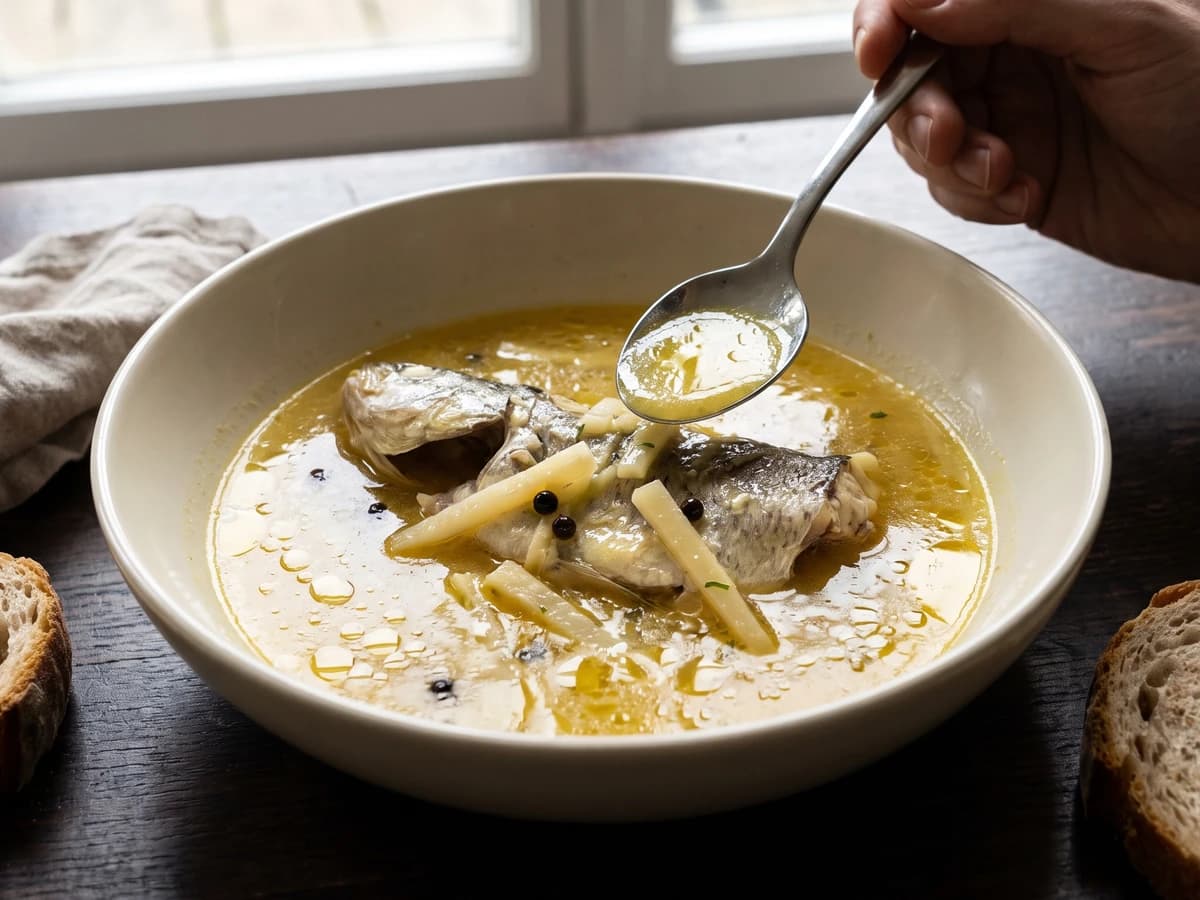
Waterzoi asks fresh, bone-in river fish to thicken its own buttery broth, with parsley root and pepper for company. No flour, no stockpot, just a brisk simmer watched closely.
Chef Juliette
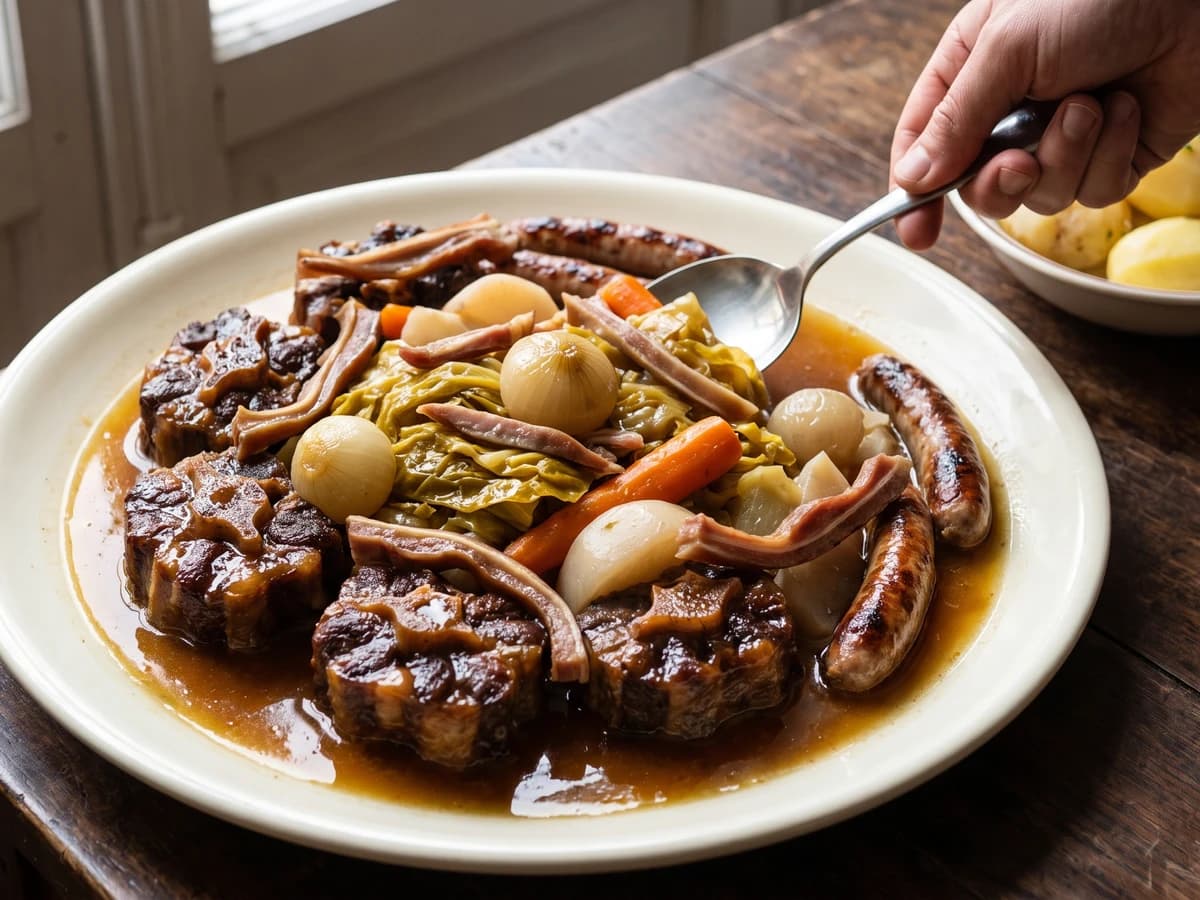
Queue de Bœuf en Hochepot gathers oxtail, pig's trotter and ear, cabbage, roots, and grilled chipolatas around a clear, gelatin-rich broth whose quiet simmer keeps every piece tender and distinct.
Chef Juliette
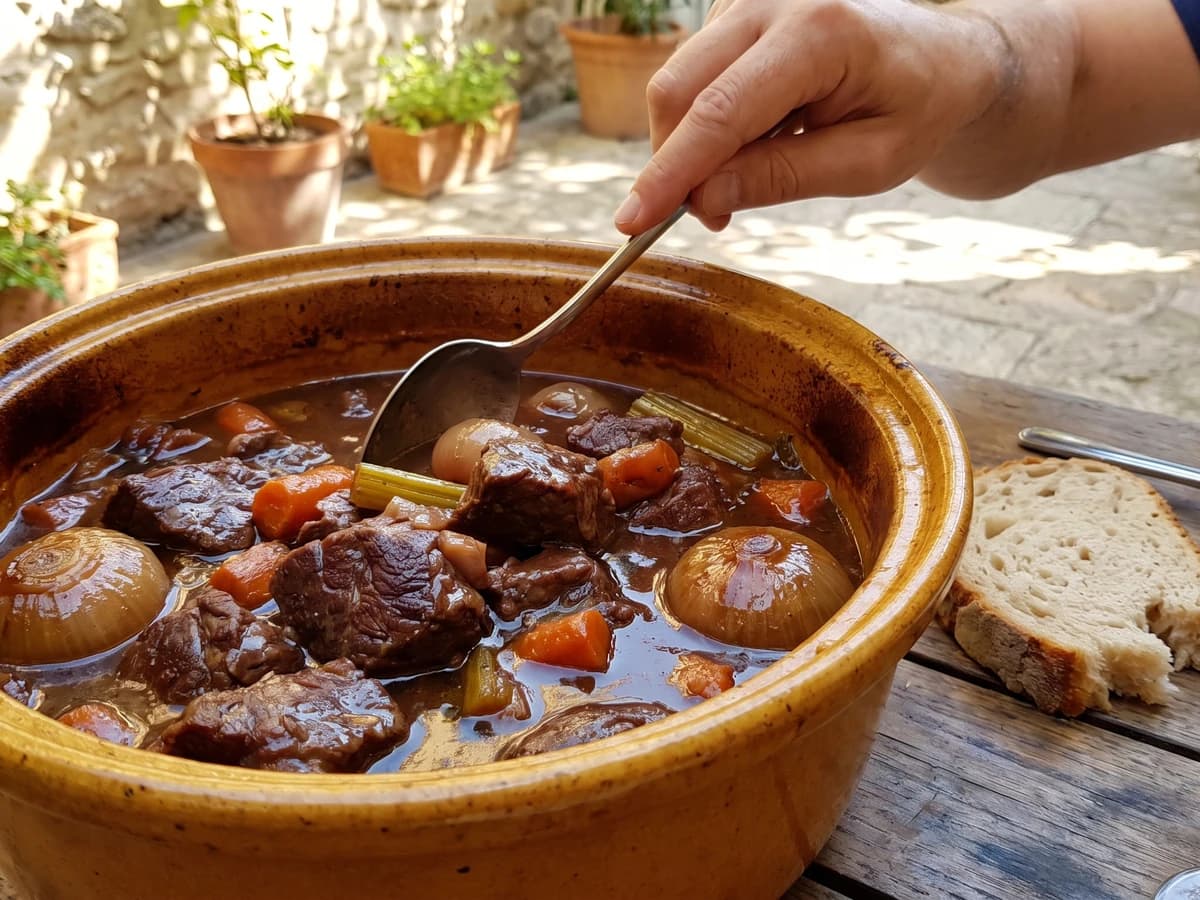
Beef shoulder larded with bacon, sharpened by red wine and vinegar, then sealed with garlic, vegetables, and dry lemon peel until the low oven turns it yielding and the gravy darkly glossy.