Chef Juliette
Bouillabaisse à la Marseillaise
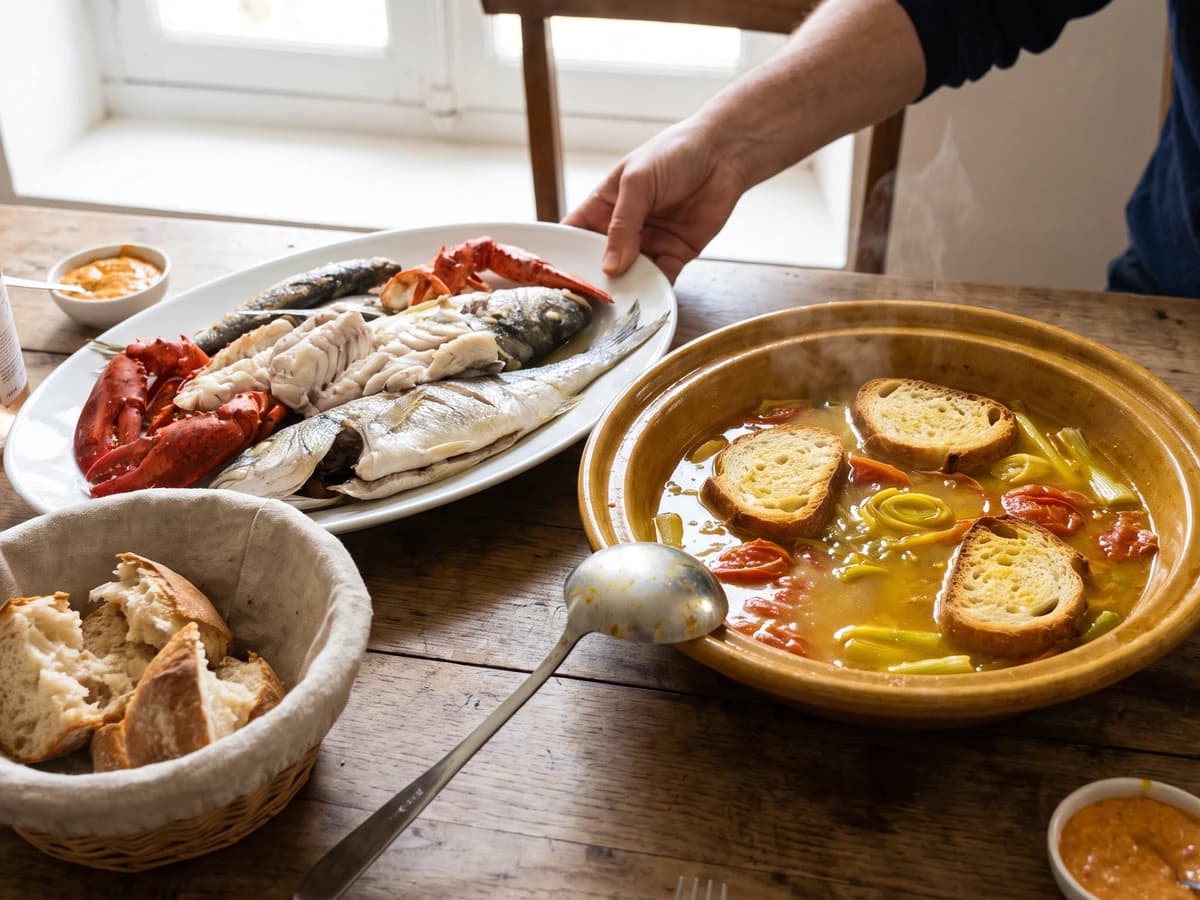
Marseille's great fish stew, saffron-gold and garlic-scented, proves that a hard boil can be the careful choice: it binds olive oil into broth before the whole pot meets bread.
A cooking platform built around craft, culture, and the stories behind what we eat.
Created by Chef Juliette
Based on No. 687, Velouté de Homard à l’Orientale, from Le Guide Culinaire (1907) by Auguste Escoffier
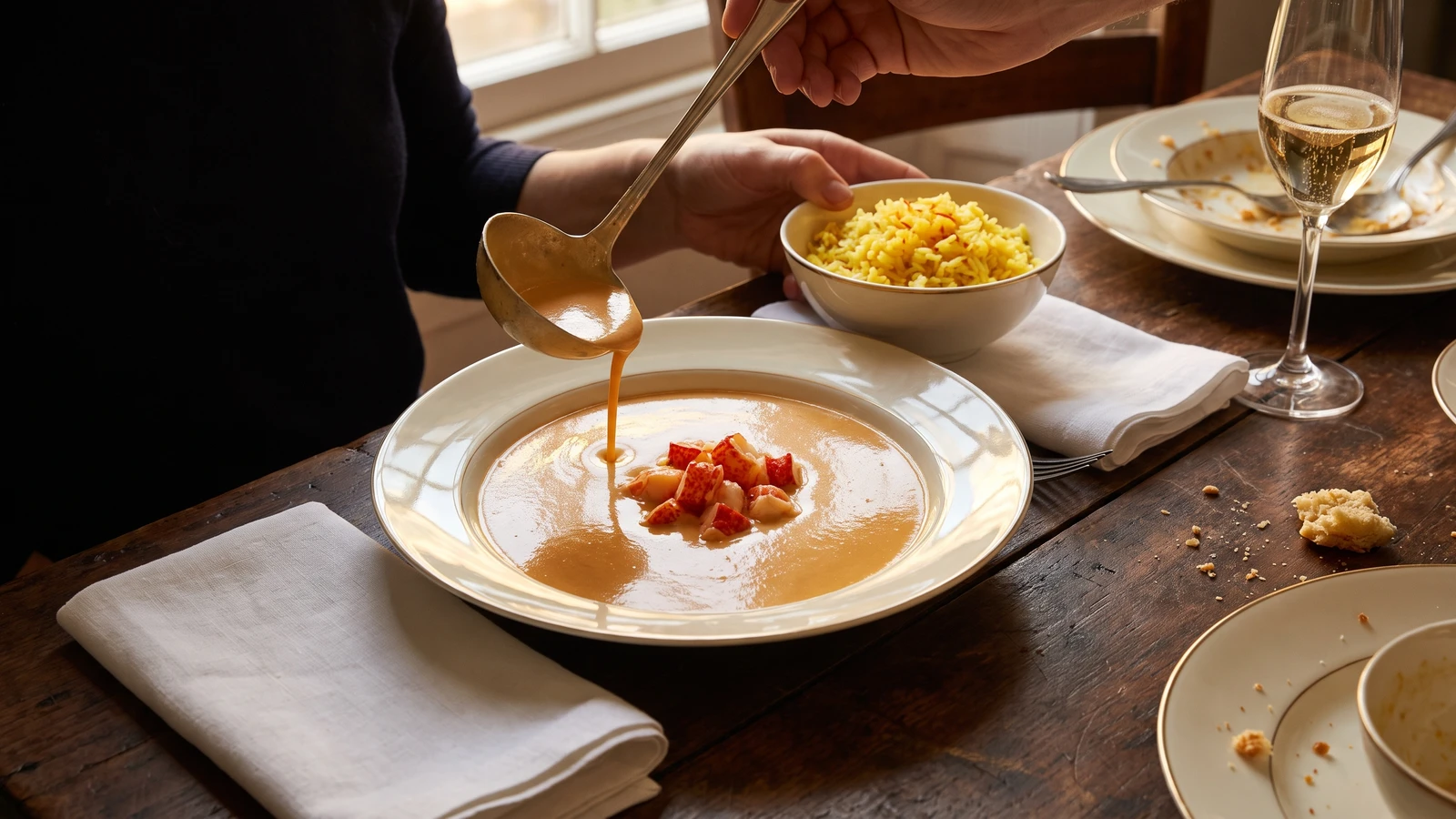
A curry-warmed lobster velouté built from a Newburg-style lobster base, twice strained to silk, then mounted with butter and finished with tail dice and rice à l’Indienne served apart.
Velouté de Homard à l’Orientale (lobster velouté with curry and rice) teaches extraction followed by restraint. The one true thing is this: take every sweet, mineral note from the lobster shell, then remove every grain of shell before the soup returns to heat. The final bowl should be ivory-coral, taste unmistakably of lobster, and carry just enough curry to warm the sauce without obscuring it.
The source formula assumed a saucier, an ordinary velouté and consommé kept ready by the stove, a mortar for the shell, and a tammy for the final pass. At home, build the light velouté in the soup pot, crush and pulse the shell in a sturdy processor, then pass the purée first through a sieve and again through the same sieve lined with damp muslin. Homard à la New-burg (with raw lobster) (No. 948) remains a finished component, as the book intended. The formula’s medium lobster and one-quart velouté already make a sensible home batch, so I preserve that ratio and stop at about two quarts, eight first-course bowls. One cook, one stove, one evening.
The separate sauce station and cloth tammy are scaffolding. The curry-seasoned lobster base, pounded shell, two passes, and three-ounce butter finish are the dish, and they stay. The final reheat decides it: once the velouté is strained, keep it below a boil and mount the cold butter only off the heat.
Velouté de Homard à l’Orientale belongs to the Parisian grand-kitchen canon, where the French velouté and bisque system met a Newburg lobster preparation that had traveled from New York dining rooms. In that vocabulary, à l’Orientale meant curry seasoning and rice à l’Indienne, not a claim to any one Asian cuisine; the name records the French kitchen’s colonial idea of the East more clearly than the foodways it borrowed from. What fixed the dish in the canon was its structure: lobster and its sauce pounded with shell, folded into a light velouté, twice strained, and mounted with butter just before service.
Quantity
1 prepared batch Homard à la New-burg (with raw lobster) (No. 948), made from 1 medium lobster (about 1½ pounds / 680 g)
with its sauce and all shells retained
Quantity
2 teaspoons (10 ml / 5 g)
Quantity
3 tablespoons (45 ml / 42 g)
Quantity
⅓ cup (80 ml / 40 g)
Quantity
4 cups (950 ml / 970 g)
warmed
Quantity
Up to 2 cups (475 ml / 485 g)
warmed, with 1 tablespoon kept cold for rescue if needed
Quantity
6 tablespoons (90 ml / 85 g)
diced
Quantity
1 tablespoon (15 ml / 12 g)
rinsed
Quantity
2 cups (475 ml / 475 g)
for cooking the rice
Quantity
1 teaspoon (5 ml / 6 g), divided, plus more as needed
Quantity
⅛ teaspoon (0.6 ml / 0.3 g)
| Ingredient | Quantity |
|---|---|
| Homard à la New-burg (with raw lobster) (No. 948)with its sauce and all shells retained | 1 prepared batch Homard à la New-burg (with raw lobster) (No. 948), made from 1 medium lobster (about 1½ pounds / 680 g) |
| mild curry powder | 2 teaspoons (10 ml / 5 g) |
| unsalted butter for the roux | 3 tablespoons (45 ml / 42 g) |
| all-purpose flour | ⅓ cup (80 ml / 40 g) |
| light unsalted chicken stockwarmed | 4 cups (950 ml / 970 g) |
| clear chicken consomméwarmed, with 1 tablespoon kept cold for rescue if needed | Up to 2 cups (475 ml / 485 g) |
| cold unsalted butter for finishingdiced | 6 tablespoons (90 ml / 85 g) |
| long-grain white ricerinsed | 1 tablespoon (15 ml / 12 g) |
| waterfor cooking the rice | 2 cups (475 ml / 475 g) |
| fine sea salt | 1 teaspoon (5 ml / 6 g), divided, plus more as needed |
| ground white pepper | ⅛ teaspoon (0.6 ml / 0.3 g) |
Bring the water and half the measured salt to a full boil in a small saucepan. Add the rice and cook uncovered until tender but still intact, about 10 to 12 minutes. Drain it thoroughly and spread it over a plate so the grains dry separately instead of settling into a clump. Measure 2 tablespoons (30 ml / about 28 g) of cooked rice for service; this is the rice à l’Indienne, plain, distinct, and ready to be served apart.
Prepare the Homard à la New-burg (with raw lobster) (No. 948) according to its own entry, retaining every piece of shell rather than discarding it. Stir the curry powder into its warm lobster sauce and hold it over gentle heat for 2 minutes so the spice loses its raw edge. Reserve several neat slices of tail meat, cut them into small dice, and keep them covered for the garnish. Set the remaining lobster meat, all the sauce, and the shells aside together.
Melt the 3 tablespoons butter in a heavy 4-quart saucepan. Stir in the flour and cook this roux blond, a pale roux, for 3 minutes over gentle heat without allowing it to brown. Whisk in the warm stock a little at a time, making each addition smooth before the next. Bring it to the barest simmer and cook for 20 minutes, skimming any foam. It should coat the spoon with a light film, not sit on it like gravy; the source asks for a velouté kept somewhat light because the lobster sauce and finishing butter still have body to contribute.
Let the lobster mixture cool until warm rather than scalding. Enclose the shells in a heavy food-storage bag and crack them thoroughly with a rolling pin, then snip any large sections into smaller pieces with kitchen shears. Working in batches, pulse the crushed shells, remaining lobster meat, curry-seasoned sauce, and about 1 cup of the light velouté in a sturdy food processor until reduced to a gritty, thick purée. If the machine labors, stop and crush the shells more finely before continuing. Combine the purée with the remaining velouté.
Press the mixture firmly through a fine-mesh sieve into a clean bowl, using the back of a ladle to extract the liquid from the shell. Rinse the sieve, line it with damp muslin or two layers of damp cheesecloth, and pass the soup through again. Press gently on this second pass, but stop when the residue becomes dry and chalky. That last paste is shell grit, not hidden flavor. The mortar and tammy have changed; the essential double straining has not.
Return the strained velouté to a clean saucepan. Add the warm consommé ½ cup at a time, using only what is necessary to give the soup a flowing, light-cream consistency and bring the yield close to 2 quarts. Warm it gently to 170 to 180°F (77 to 82°C), with movement at the surface but no bubbling, then season with the remaining salt as needed and the white pepper. If too much consommé slips in, hold the soup uncovered just below a simmer until it returns to the proper body. Correct the texture now, before the finishing butter goes in.
Take the saucepan completely off the heat. Monter au beurre, mount with butter, by whisking in the cold diced butter a few pieces at a time until each addition disappears and the surface takes on a deep, even gloss. Never return the finished velouté to a boil. If oily beads appear, stop. Ça se rattrape: put the reserved tablespoon of cold consommé in a clean warm bowl, whisk in one ladle of the troubled soup until smooth, then gradually whisk in the rest.
Warm the reserved lobster-tail dice for a few seconds in a ladleful of velouté, without letting it simmer, then divide the dice among warmed soup plates. Ladle in the velouté so the lobster just breaks the glossy surface. Fluff the 2 tablespoons of rice à l’Indienne into a small warmed bowl and serve it apart, allowing each guest to add a few distinct grains at the table. À table!
1 serving (about 240g)
Culinary guides, cultural storytelling, and the editorial depth that makes cooking meaningful.
Discover Culinary ExplorerChef Juliette
Marseille's great fish stew, saffron-gold and garlic-scented, proves that a hard boil can be the careful choice: it binds olive oil into broth before the whole pot meets bread.
Chef Juliette
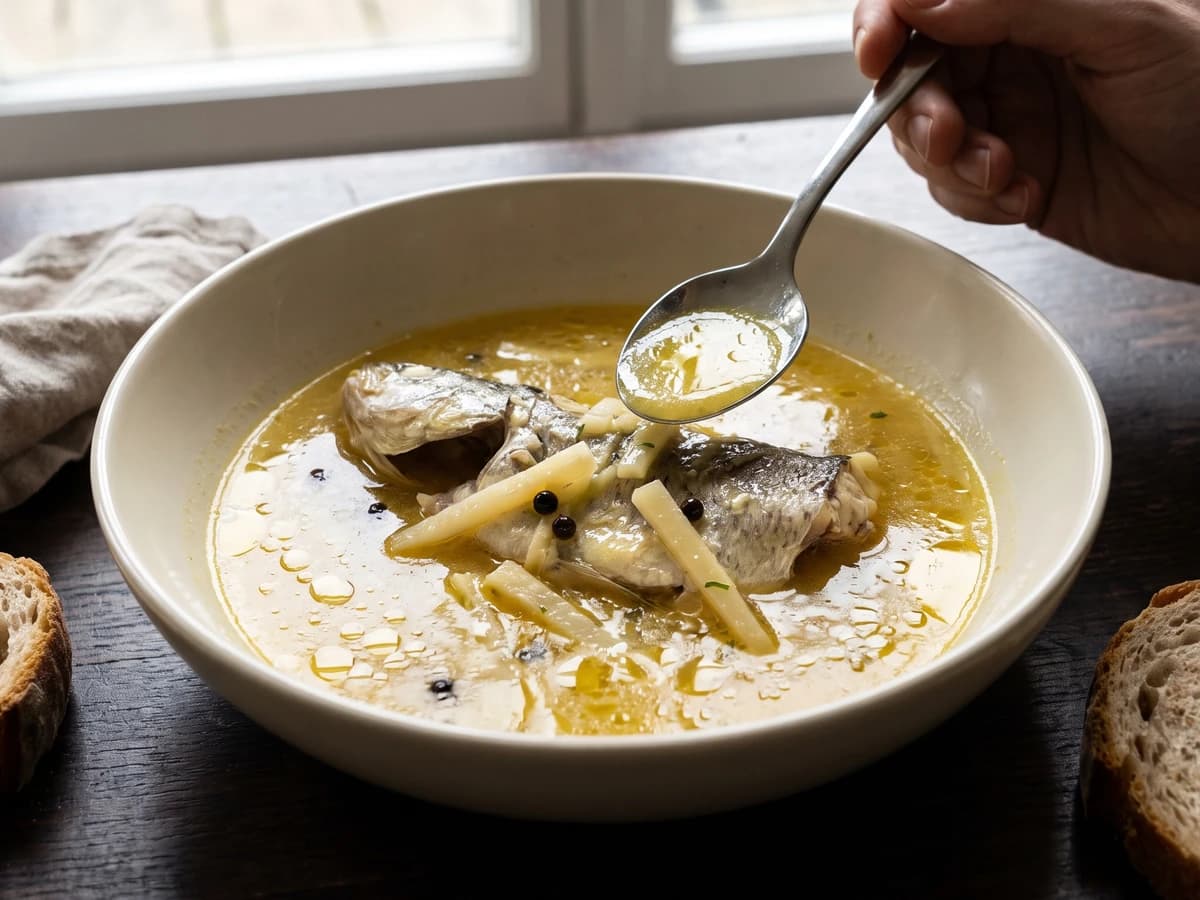
Waterzoi asks fresh, bone-in river fish to thicken its own buttery broth, with parsley root and pepper for company. No flour, no stockpot, just a brisk simmer watched closely.
Chef Juliette
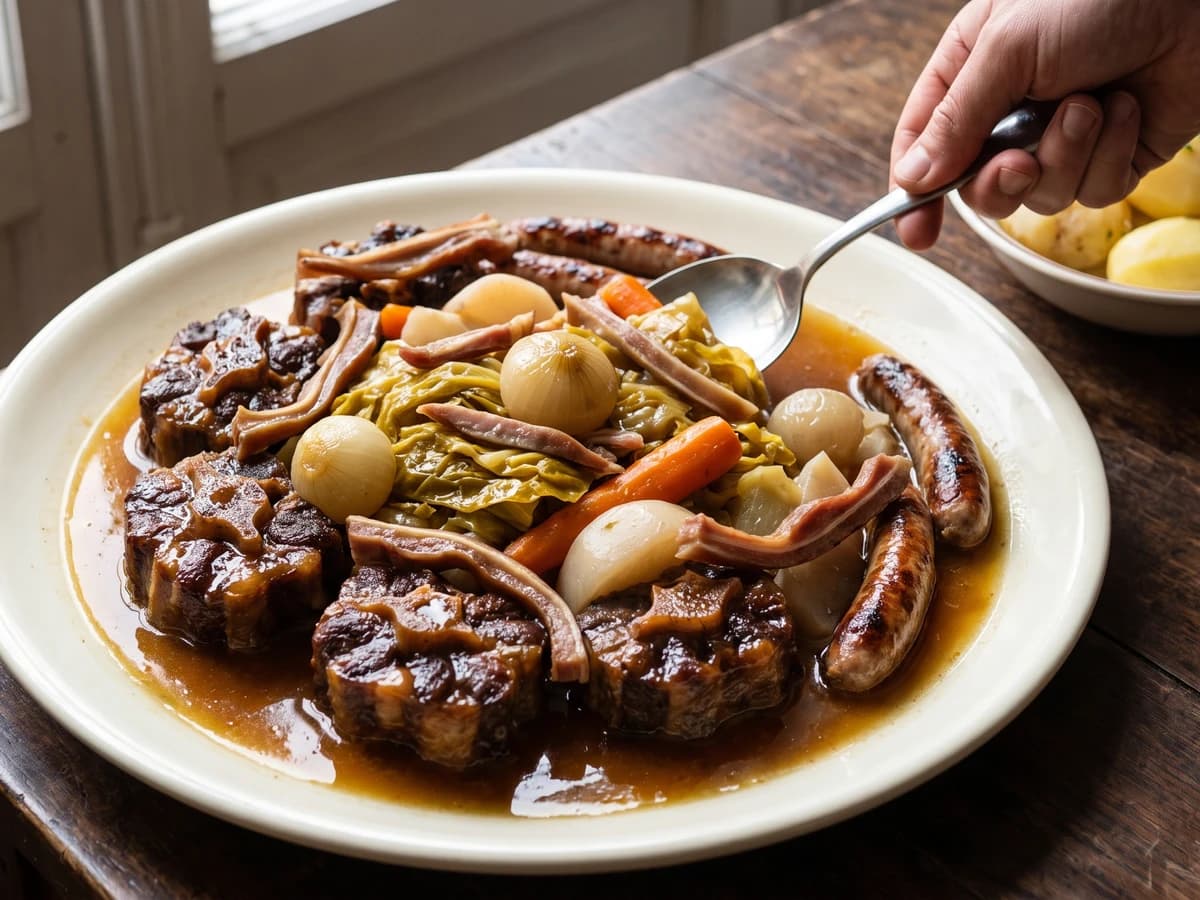
Queue de Bœuf en Hochepot gathers oxtail, pig's trotter and ear, cabbage, roots, and grilled chipolatas around a clear, gelatin-rich broth whose quiet simmer keeps every piece tender and distinct.
Chef Juliette
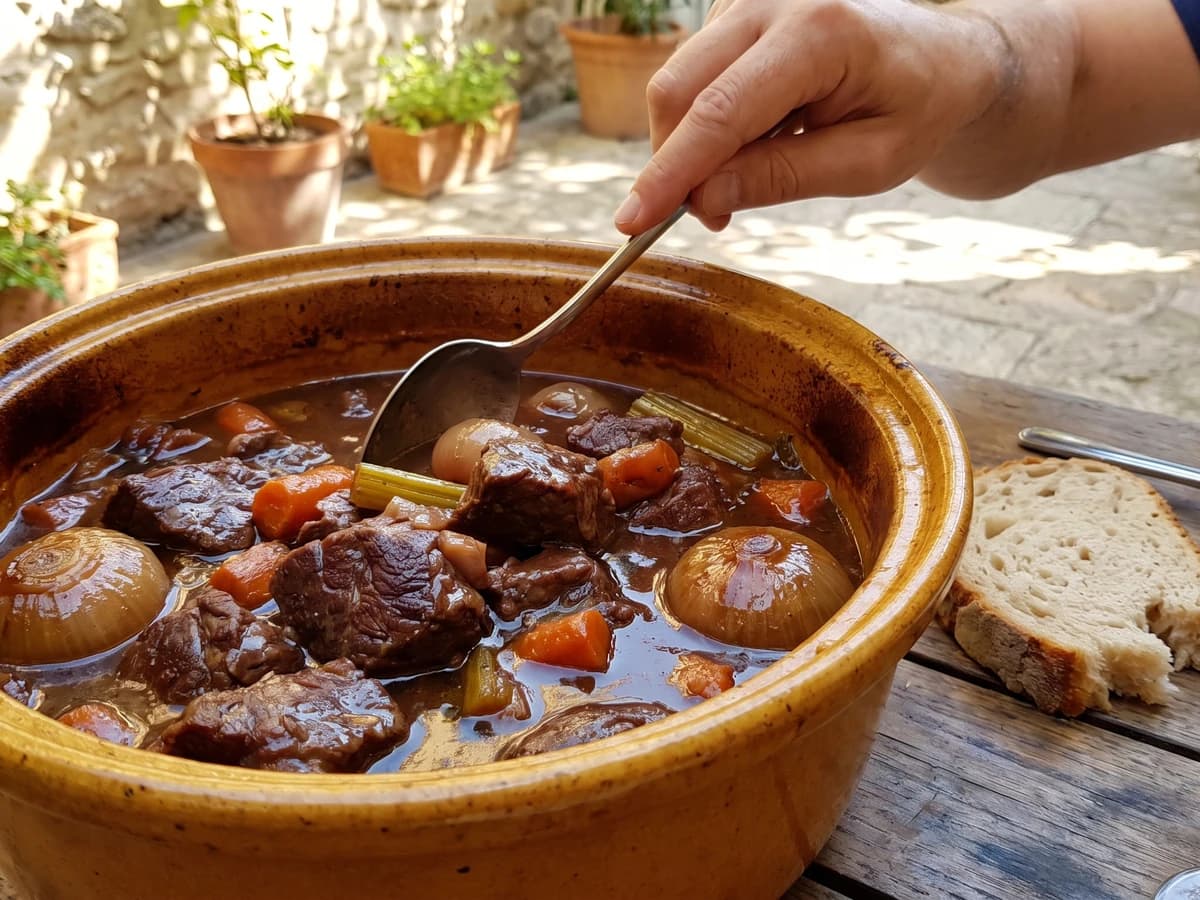
Beef shoulder larded with bacon, sharpened by red wine and vinegar, then sealed with garlic, vegetables, and dry lemon peel until the low oven turns it yielding and the gravy darkly glossy.