Chef Juliette
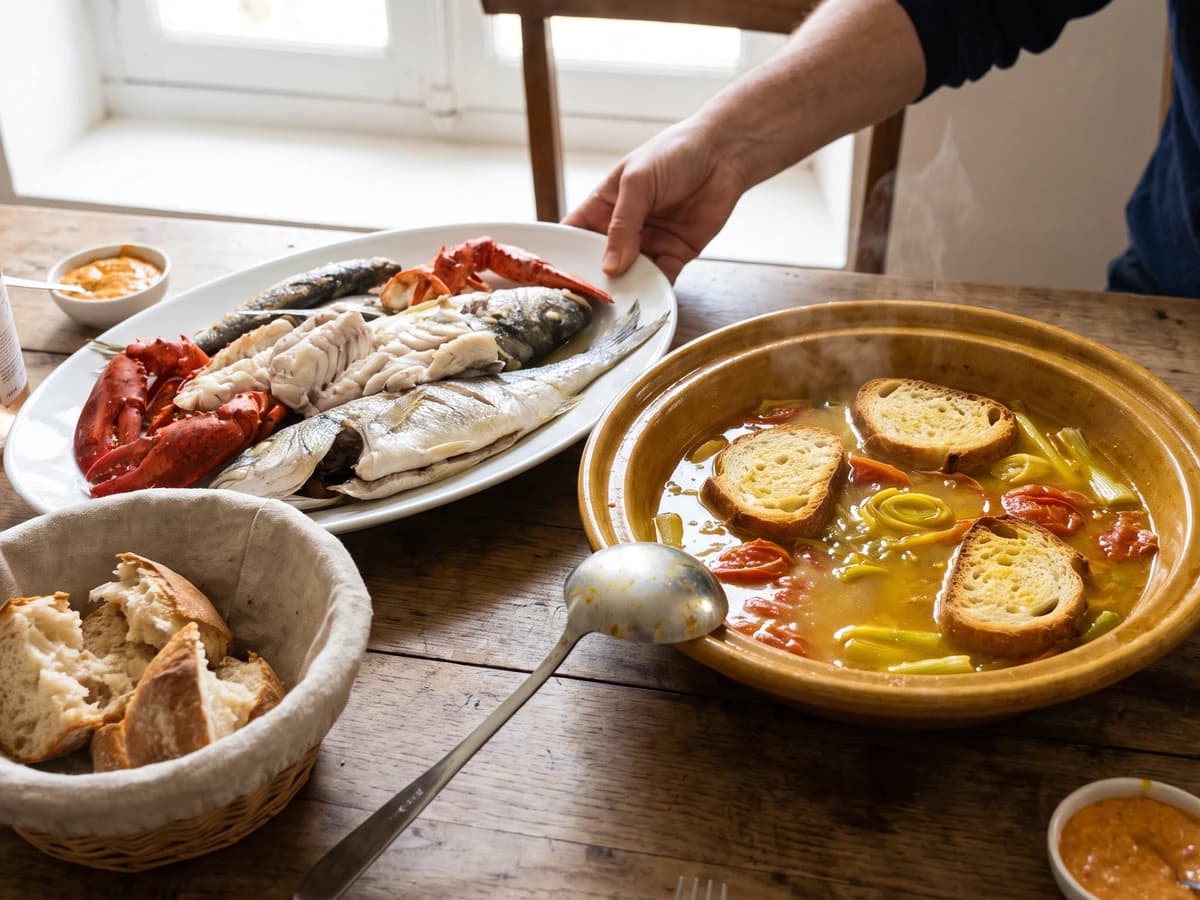
Bouillabaisse à la Marseillaise
Marseille's great fish stew, saffron-gold and garlic-scented, proves that a hard boil can be the careful choice: it binds olive oil into broth before the whole pot meets bread.
A cooking platform built around craft, culture, and the stories behind what we eat.

Created by Chef Juliette
Based on No. 685, Velouté de Homard à Cleveland, from Le Guide Culinaire (1907) by Auguste Escoffier
Lobster à l’Américaine gives this velouté its whole foundation: sweet meat, pounded shell, tomato-rich sauce, consommé, and cold butter strained into a silken special-occasion soup.
Velouté de Homard à Cleveland (Cleveland-style silken lobster soup) teaches one uncompromising thing: the shell is not refuse, it is half the flavor. The meat gives sweetness, but pounding the cooked lobster with its shell, marrying it to Ordinary Velouté and the lobster's à l’Américaine sauce, then straining with patience is what makes the soup taste whole rather than merely rich.
The original assumed a saucier on staff, a pot of Ordinary Velouté prepared beforehand, clear consommé never off the fire, a mortar, and a tammy. At home, the brigade's division of labor is scaffolding: make or thaw the canonical foundations before dinner, replace the mortar with a sturdy processor, and use two increasingly fine sieves instead of the tammy. We cut nothing from the extraction, the sieving, or the final butter, because those steps are the dish. One cook, one stove, one evening.
Done properly, the velouté is coral-ivory, satiny and deeply lobster-sweet, with bright tomato and tender lobster interrupting the smoothness. The step that decides it comes before final heating: work the shell-rich mixture through the first sieve, then pass it through the finest sieve without forcing brittle shards. Be patient there. Everything after is gentleness and butter.
Velouté de Homard à Cleveland belongs to the Parisian grand-kitchen repertoire, where geographical appellations often named a fixed composition rather than a regional household soup; Cleveland here does not make it an Ohio tradition. Its backbone is homard à l’Américaine, the tomato and shell preparation long entangled with the rival name à l’armoricaine, folded into the velouté family and finished as a formal potage. What appears to be a cream soup is built without added cream: sieved shell, sauce, consommé, velouté, and mounted butter make the satin.
Quantity
2, about 1¼ pounds (570 g) each, or 1 medium lobster, about 2½ pounds (1.1 kg)
Quantity
1 full preparation made from the lobsters above
all meat and sauce retained
Quantity
4 cups (950 ml / about 980 g)
prepared beforehand
Quantity
1 to 3 cups (240 to 710 ml / about 245 to 725 g)
kept hot, as needed
Quantity
6 tablespoons (90 ml / 85 g)
diced
Quantity
½ tablespoon (7.5 ml / 8 g)
cut into fine dice
Quantity
1 teaspoon (5 ml / 5 g)
for softening the tomato
Quantity
as needed
| Ingredient | Quantity |
|---|---|
| small live lobsters | 2, about 1¼ pounds (570 g) each, or 1 medium lobster, about 2½ pounds (1.1 kg) |
| Lobster à l’Américaineall meat and sauce retained | 1 full preparation made from the lobsters above |
| Ordinary Veloutéprepared beforehand | 4 cups (950 ml / about 980 g) |
| consommékept hot, as needed | 1 to 3 cups (240 to 710 ml / about 245 to 725 g) |
| cold unsalted butterdiced | 6 tablespoons (90 ml / 85 g) |
| peeled and seeded tomato pulpcut into fine dice | ½ tablespoon (7.5 ml / 8 g) |
| unsalted butterfor softening the tomato | 1 teaspoon (5 ml / 5 g) |
| fine salt | as needed |
Have the Ordinary Velouté prepared and keep the consommé hot but below a boil. Prepare the Lobster à l’Américaine from the lobsters according to its own entry, retaining every spoonful of sauce and every piece of shell. Let the lobster cool only until it can be handled safely; warm meat and shell are easier to work than refrigerator-cold pieces.
Lift the lobster meat from its shell. Reserve about one-quarter of the neatest tail and claw meat, roughly ½ cup (120 ml / about 70 g), and cut it into small, even dice for serving. Keep it covered. The remaining meat is not garnish, however handsome it looks; it must be pounded with the shell because its sweetness belongs inside the soup.
Cut the lobster shells into small pieces with sturdy kitchen shears, then crack the thickest joints under a folded towel with a mallet. Working in batches, pulse the shell with the remaining lobster meat in a heavy-duty processor, adding only a spoonful of the à l’Américaine sauce when the blades need help turning. Process until the mixture is a fine, damp paste. The machine replaces the mortar, but not the extraction the mortar performed; the shell must be broken finely enough to surrender its flavor.
Scrape the lobster paste into the Ordinary Velouté and stir until evenly dispersed. Add all the remaining sauce from the Lobster à l’Américaine only after the paste and velouté are combined, preserving the source's sequence. Work carefully around the processor bowl and saucepan; the flavor clinging to their sides belongs in the soup.
Press the mixture through a sturdy medium-fine sieve with the back of a ladle, working until the residue looks dry. Pass the collected soup through a second, very fine sieve into a clean heavy saucepan. This second pass is the honest home equivalent of the tammy, a fine cloth sieve. If the soup still feels gritty between two fingers, pass it through the fine sieve again. Ça se rattrape. Never force sharp shell fragments through merely to claim a little more volume.
Set the strained base over gentle heat and stir continuously with a flat-edged spoon that reaches the corners of the pan. Heat until thoroughly hot, but do not allow even a rolling bubble. If the bottom catches, stop stirring and pour the unscorched soup into a clean saucepan without scraping the base; the burnt layer stays behind.
Add the hot consommé a ladle at a time until the velouté flows from the spoon in a broad ribbon and measures about 8 cups (1.9 liters). The exact amount depends on how far the à l’Américaine sauce reduced, which is why the source calls for the required quantity rather than a fixed measure. Taste only after thinning, then add salt if needed.
Pass the hot velouté once more through the very fine sieve into a clean, warm saucepan. This final straining is not ceremony. It catches any fine shell sediment loosened during heating and gives the soup the polished texture its name promises. Hold it over the lowest heat while you prepare the garnish, without letting it boil.
Melt the teaspoon of butter in a small pan over low heat. Add the tomato dice and turn them through the butter for 30 to 60 seconds, just until glossy and beginning to soften at the edges. The source's half-melted tomato is neither raw garnish nor cooked sauce; each dice should still hold its shape.
Take the velouté completely off the heat. Monter au beurre (finish by emulsifying cold butter): whisk in the 6 tablespoons of cold diced butter a few pieces at a time until the surface gleams and the soup feels satin-smooth. If it turns oily, stop adding butter and whisk in 1 tablespoon of cold consommé until it closes again, then continue more slowly. Never boil it after this point. Divide the lobster and tomato dice among warm soup plates, ladle the velouté around them, and serve at once. À table!
1 serving (about 240g)
Culinary guides, cultural storytelling, and the editorial depth that makes cooking meaningful.
Discover Culinary ExplorerChef Juliette
Marseille's great fish stew, saffron-gold and garlic-scented, proves that a hard boil can be the careful choice: it binds olive oil into broth before the whole pot meets bread.
Chef Juliette
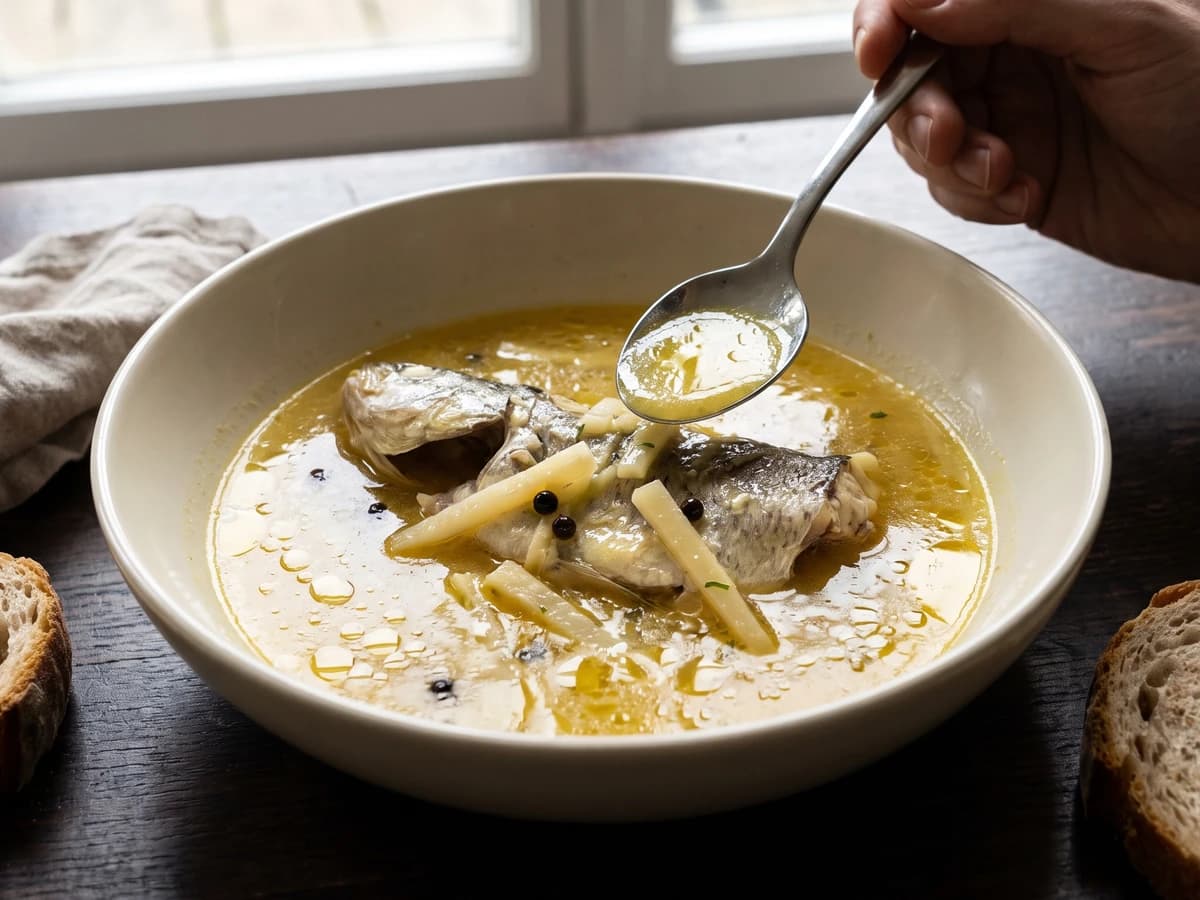
Waterzoi asks fresh, bone-in river fish to thicken its own buttery broth, with parsley root and pepper for company. No flour, no stockpot, just a brisk simmer watched closely.
Chef Juliette
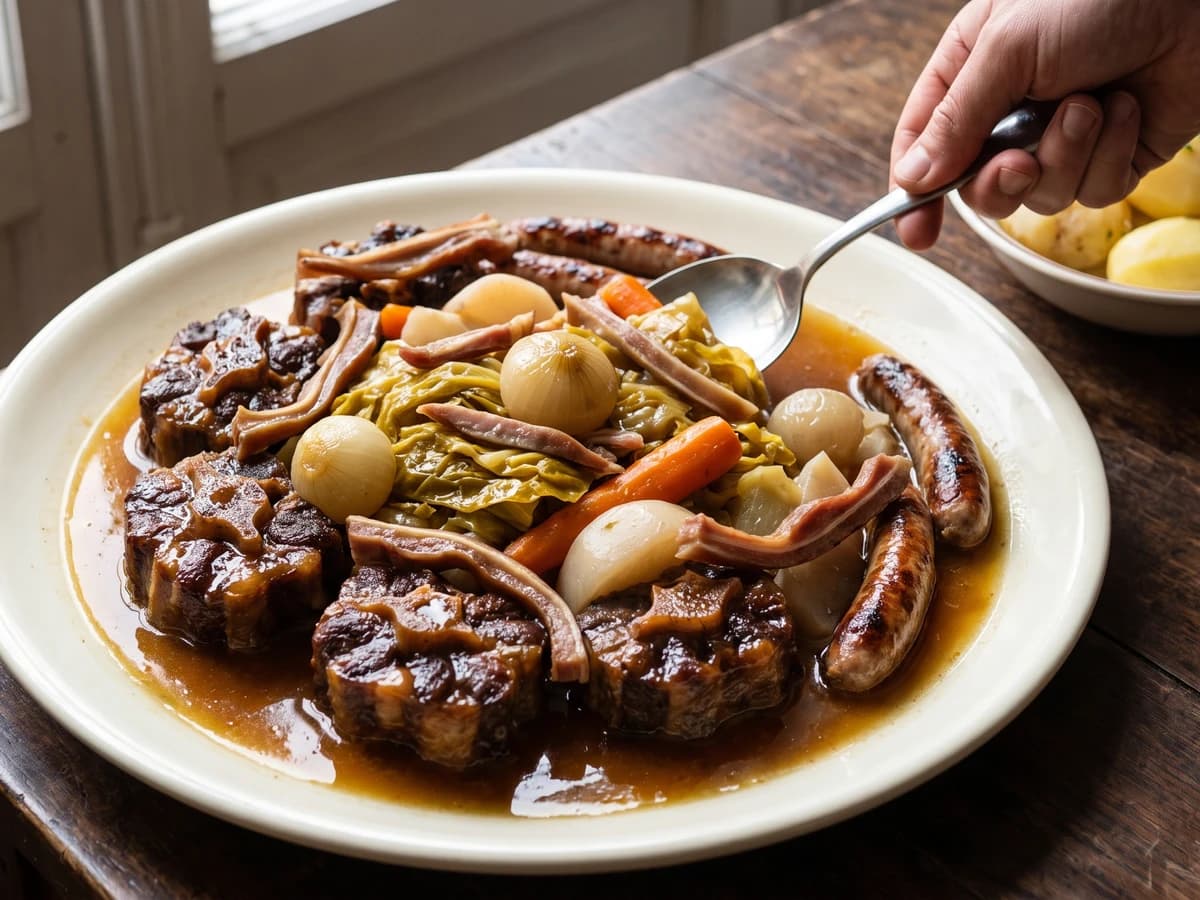
Queue de Bœuf en Hochepot gathers oxtail, pig's trotter and ear, cabbage, roots, and grilled chipolatas around a clear, gelatin-rich broth whose quiet simmer keeps every piece tender and distinct.
Chef Juliette
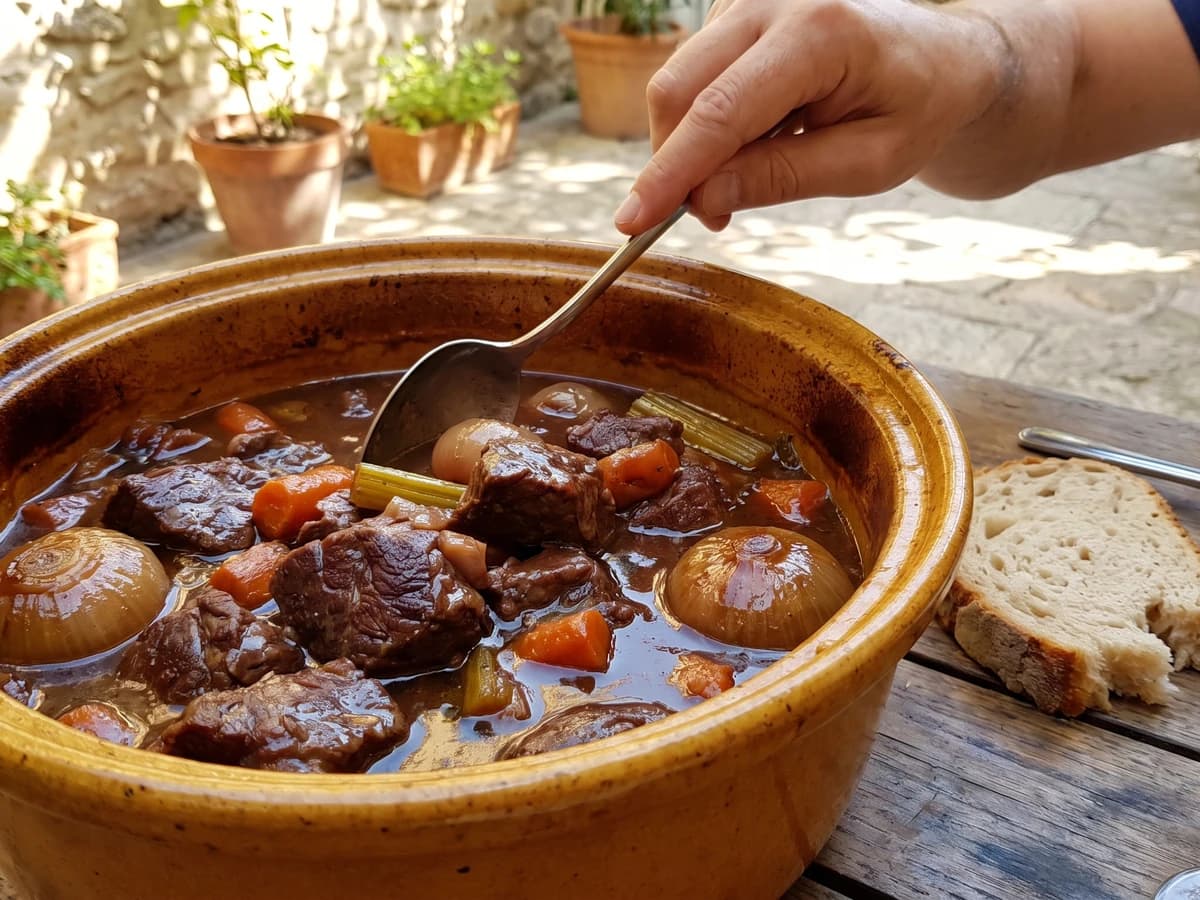
Beef shoulder larded with bacon, sharpened by red wine and vinegar, then sealed with garlic, vegetables, and dry lemon peel until the low oven turns it yielding and the gravy darkly glossy.