Chef Juliette
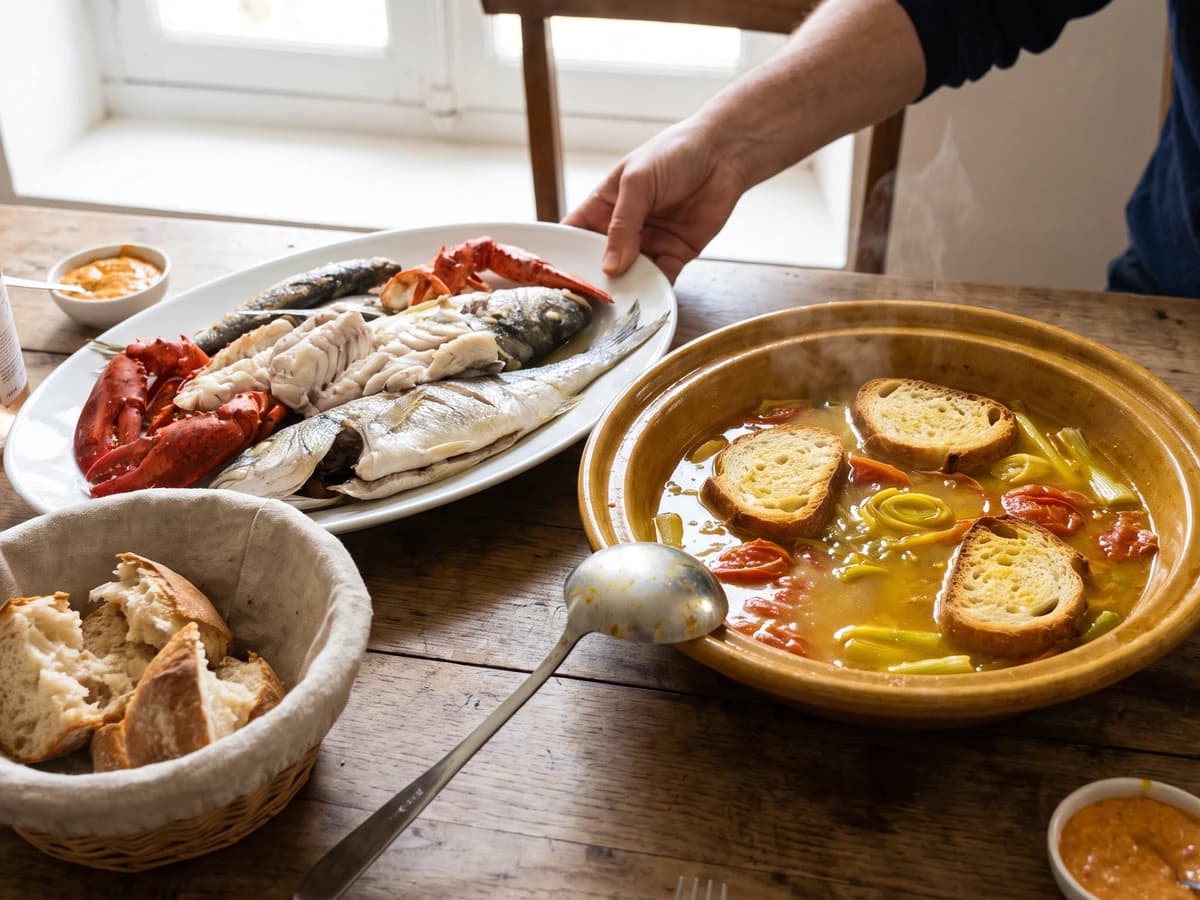
Bouillabaisse à la Marseillaise
Marseille's great fish stew, saffron-gold and garlic-scented, proves that a hard boil can be the careful choice: it binds olive oil into broth before the whole pot meets bread.
A cooking platform built around craft, culture, and the stories behind what we eat.

Created by Chef Juliette
Based on No. 682, Velouté d’Éperlans Princesse, from Le Guide Culinaire (1907) by Auguste Escoffier
Velouté d’Éperlans Princesse turns a silken smelt soup into occasion food with twelve crayfish-butter quenelles and bright asparagus tips, preserving the grand garnish for one cook and one stove.
Velouté d’Éperlans Princesse (smelt velouté in the Princesse manner) teaches that delicacy is built by control, not timid seasoning. The one true thing to know before touching a pan is that the heat must stay gentle from beginning to end: a hard boil roughens the smelt, bursts the quenelles, and scrambles the liaison.
The classical formula could say "the same as above" because it assumed a saucier, prepared forcemeat, crayfish butter, and a stockpot never off the fire. Here, clean unsalted fish stock replaces that standing pot, a food processor replaces repeated pounding, and the brigade quantity becomes about two quarts. Those repeated bowls and extra hands were scaffolding. The twelve quenelles, their crayfish butter, and one tablespoon of green asparagus tips per quart are the dish, so all three stay exactly where they belong. One cook, one stove, one evening.
The finished velouté should be ivory and supple, carrying the clean sweetness of smelt beneath little coral-touched quenelles and vivid asparagus. Before the pan heats, chill the processor bowl and the fish thoroughly. Cold forcemeat is the step that decides whether those twelve quenelles swell tender or break apart.
Velouté d’Éperlans Princesse belongs to the Parisian grand-kitchen branch of the French canon, where a fish velouté could be promoted by changing its garnish rather than rebuilding its foundation. In this entry, Princesse is not a claim of royal origin: it means twelve little smelt quenelles enriched with crayfish butter and very green asparagus tips, a precise service garnish. The dish shows how cooks carried humble, quick-spoiling smelt from the fish market into the formal dining room without disguising its flavor.
Quantity
1 pound 5 ounces (600 g)
pin bones removed and divided
Quantity
12 (about 12 ounces / 340 g)
shells reserved and tail meat saved for another use
Quantity
6 tablespoons (90 ml / 85 g)
Quantity
1/4 cup (60 ml / 60 g)
Quantity
6 tablespoons (90 ml / 85 g)
divided
Quantity
1 cup (240 ml / 100 g)
thinly sliced
Quantity
1/2 cup (120 ml / 75 g)
finely sliced
Quantity
1/2 cup (120 ml / 60 g)
Quantity
8 cups (1.9 L / 1,900 g)
Quantity
1 (about 2 tablespoons / 30 g)
divided
Quantity
1 1/4 cups (300 ml / 300 g)
divided
Quantity
4 (about 1/3 cup / 72 g)
Quantity
2 tablespoons (30 ml / 20 g)
Quantity
2 teaspoons (10 ml / 12 g), plus more as needed
divided
Quantity
1/4 teaspoon (1.25 ml / 0.6 g)
| Ingredient | Quantity |
|---|---|
| skinless smelt filletspin bones removed and divided | 1 pound 5 ounces (600 g) |
| small unseasoned cooked whole crayfishshells reserved and tail meat saved for another use | 12 (about 12 ounces / 340 g) |
| unsalted butter for the crayfish butter | 6 tablespoons (90 ml / 85 g) |
| cold water | 1/4 cup (60 ml / 60 g) |
| unsalted butter for the veloutédivided | 6 tablespoons (90 ml / 85 g) |
| white leekthinly sliced | 1 cup (240 ml / 100 g) |
| shallotsfinely sliced | 1/2 cup (120 ml / 75 g) |
| all-purpose flour | 1/2 cup (120 ml / 60 g) |
| unsalted fish stock | 8 cups (1.9 L / 1,900 g) |
| large egg whitedivided | 1 (about 2 tablespoons / 30 g) |
| cold heavy creamdivided | 1 1/4 cups (300 ml / 300 g) |
| large egg yolks | 4 (about 1/3 cup / 72 g) |
| small asparagus tips | 2 tablespoons (30 ml / 20 g) |
| fine sea saltdivided | 2 teaspoons (10 ml / 12 g), plus more as needed |
| ground white pepper | 1/4 teaspoon (1.25 ml / 0.6 g) |
Remove the crayfish tail meat and refrigerate it for another dish. Crush the shells and claws with a mortar or rolling pin, then combine them with 6 tablespoons butter in a small saucepan. Cook over very low heat for 10 minutes, stirring, until the butter turns coral and smells distinctly of shellfish without browning. Add the cold water and hold at a bare simmer for 5 minutes. Strain through a fine sieve into a bowl set over ice, pressing the shells firmly. When the butter gathers on top and becomes just firm, lift it off and wipe away the water clinging underneath. Measure 2 tablespoons (30 ml / 28 g) for the forcemeat and keep it cool but pliable.
Bring a small pan of well-salted water to a boil. Blanch the asparagus tips for 45 to 60 seconds, only until tender at the cut end and brilliantly green, then transfer them directly to ice water. Drain and dry them well. The source gives one tablespoon per quart, so this two-quart velouté receives exactly two tablespoons; more would turn a precise garnish into an asparagus soup.
Chill the processor bowl and blade for 15 minutes. Put 5 1/4 ounces (150 g) of the smelt and 1/2 teaspoon salt in the cold bowl, then process until the fish becomes smooth and tacky. Reserve 1 teaspoon of the egg white for adjustment, then blend in the remainder, followed by the measured crayfish butter. With the machine pulsing, add 1/4 cup (60 ml / 60 g) of the cold cream gradually, reserving 1 tablespoon if the paste needs loosening later. Stop as soon as the forcemeat is pearly and holds a soft peak. Press it once through a fine sieve, cover directly against the surface, and chill for 20 minutes.
Warm 3 cups (710 ml / 710 g) of the fish stock in a wide pan until it barely trembles, about 175 to 180°F (79 to 82°C). Shape one test quenelle between two damp teaspoons and poach it gently. If it frays, first lower the heat, then chill the forcemeat for another 15 minutes; if it remains loose, blend in the reserved teaspoon of egg white. If the test is rubbery, fold in the reserved tablespoon of cream. Ça se rattrape. Shape exactly twelve small ovals and poach them in two batches for 6 to 8 minutes, turning once, until tender and cooked through to 145°F (63°C). Lift them into a shallow dish with a little poaching liquid, cover, and strain the remaining liquid back into the unused stock.
Melt 2 tablespoons (30 ml / 28 g) of the velouté butter in a heavy saucepan over low heat. Add the leek, shallots, and 1/4 teaspoon salt. Cover and sweat for 8 to 10 minutes, stirring occasionally, until completely tender and translucent but without a trace of browning. Color would muddy both the ivory appearance and the clean flavor of the finished soup.
Add the remaining 4 tablespoons (60 ml / 57 g) velouté butter, then stir in the flour. Cook this roux gently for 3 minutes, stirring constantly, so the flour loses its raw smell but stays pale. Gradually whisk in 7 cups (1.65 L / 1,650 g) of the warm fish stock, reserving the final cup for adjustment. Bring the velouté only to a bare simmer and cook for 20 minutes, skimming any film from the surface. The roux is not brigade scaffolding. It is the foundation that gives this soup its body, and it must cook fully.
Add the remaining 15 3/4 ounces (450 g) smelt fillets to the velouté and hold at a bare simmer for 4 to 5 minutes, until the flesh is opaque and separates under the spoon. Purée until very smooth, then pass the soup through a fine sieve into a clean saucepan. Press gently rather than grinding the dry pulp through, which would make the texture chalky. Measure the strained base and reduce it gently, or add reserved stock, until you have 6 3/4 cups (1.6 L / about 1,600 g).
Reserve 2 tablespoons (30 ml / 30 g) of the remaining cold cream. Whisk the egg yolks with the other 7/8 cup (210 ml / 210 g) cream in a bowl, then whisk in two ladlefuls of hot velouté a little at a time. Return this liaison to the saucepan over the gentlest heat and stir constantly until the soup lightly naps the back of a spoon and reaches 165 to 170°F (74 to 77°C). Do not let it simmer. If the first fine grains appear, remove the pan at once, whisk in the reserved cold cream, blend briefly, and strain. Ça se rattrape at that first warning; a liaison allowed to boil and scramble fully cannot be made silken again. Season with the white pepper and enough remaining salt to bring the smelt forward.
Slip all twelve quenelles into the finished velouté and warm them over very low heat for 2 to 3 minutes without simmering. Add the asparagus tips for the final 30 seconds so they remain very green. Transfer the soup to a warm soupière or divide it among warm bowls, making certain every serving receives quenelle and asparagus. Bring it directly to the table. À table!
1 serving (about 245g)
Culinary guides, cultural storytelling, and the editorial depth that makes cooking meaningful.
Discover Culinary ExplorerChef Juliette
Marseille's great fish stew, saffron-gold and garlic-scented, proves that a hard boil can be the careful choice: it binds olive oil into broth before the whole pot meets bread.
Chef Juliette
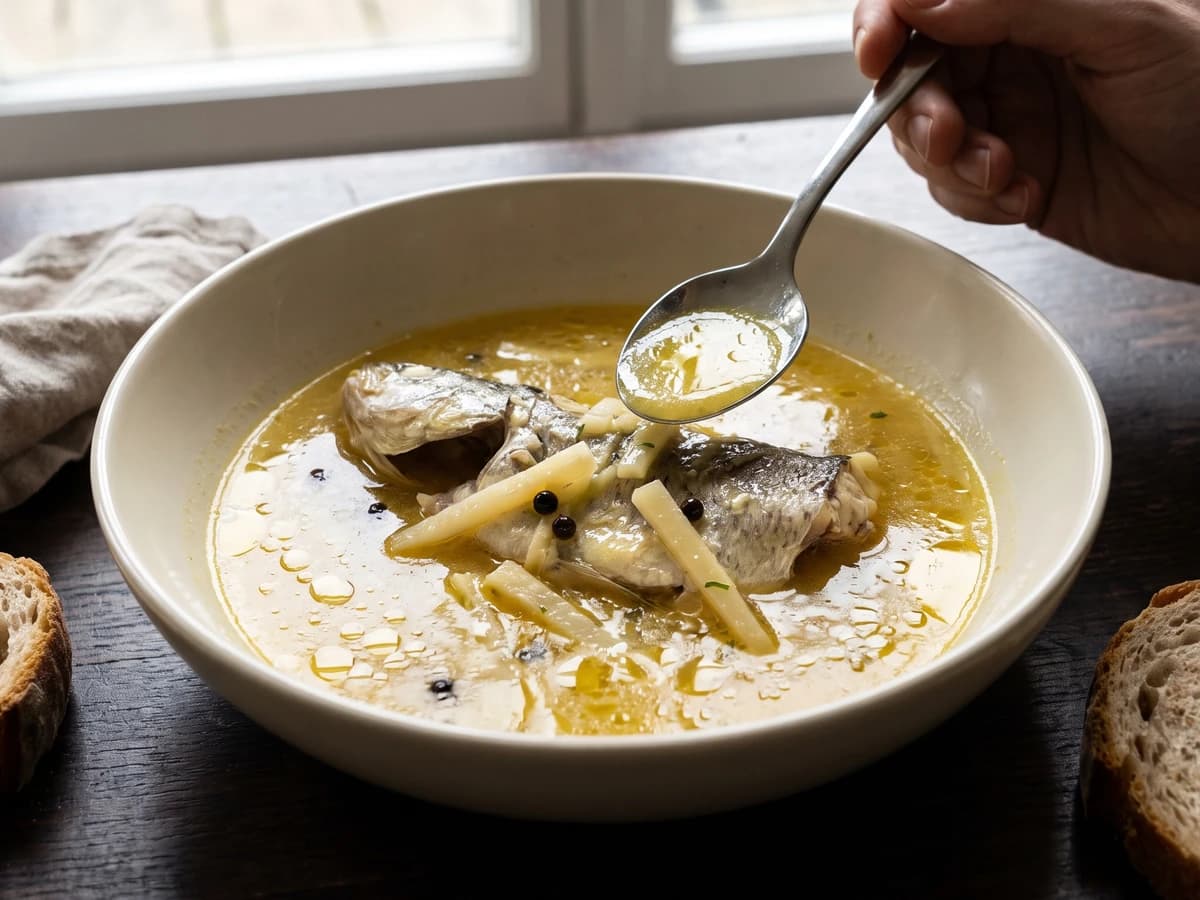
Waterzoi asks fresh, bone-in river fish to thicken its own buttery broth, with parsley root and pepper for company. No flour, no stockpot, just a brisk simmer watched closely.
Chef Juliette
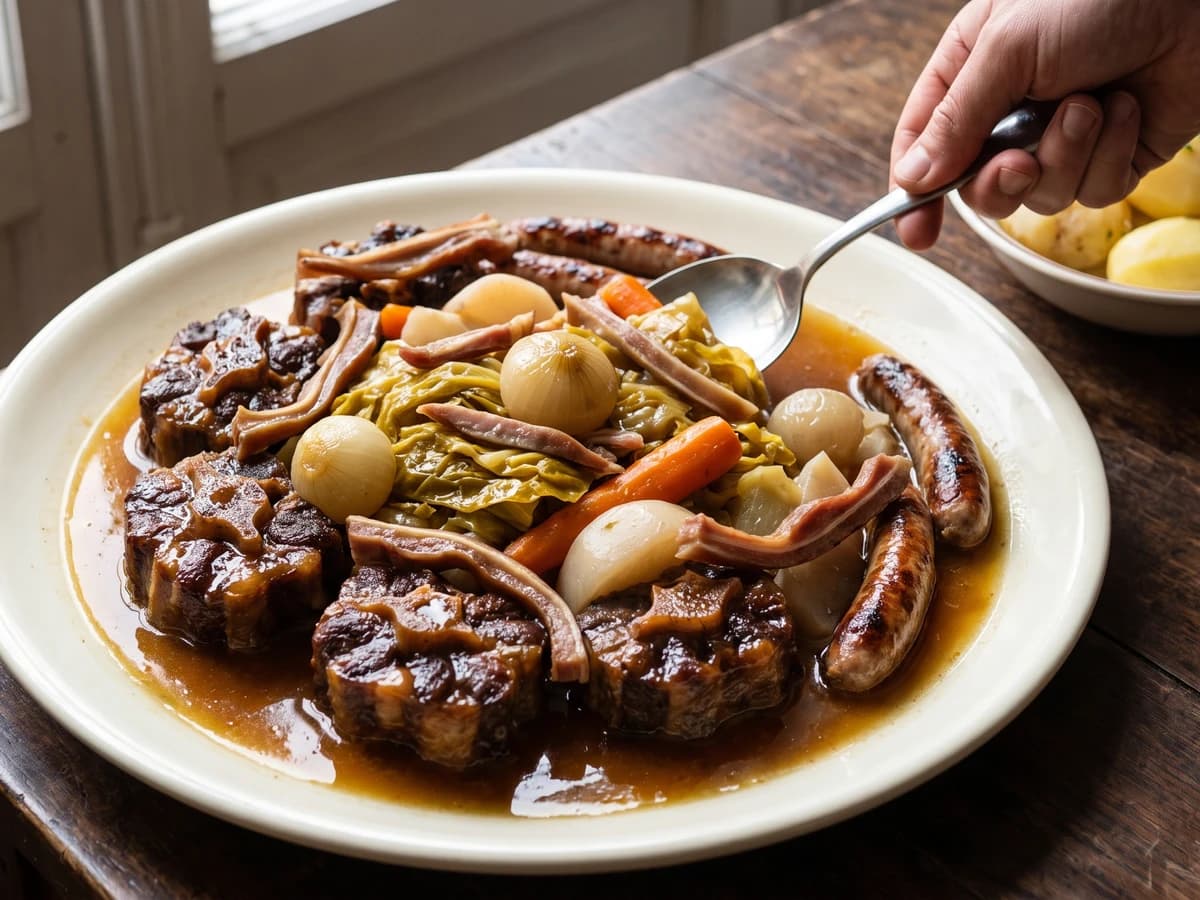
Queue de Bœuf en Hochepot gathers oxtail, pig's trotter and ear, cabbage, roots, and grilled chipolatas around a clear, gelatin-rich broth whose quiet simmer keeps every piece tender and distinct.
Chef Juliette
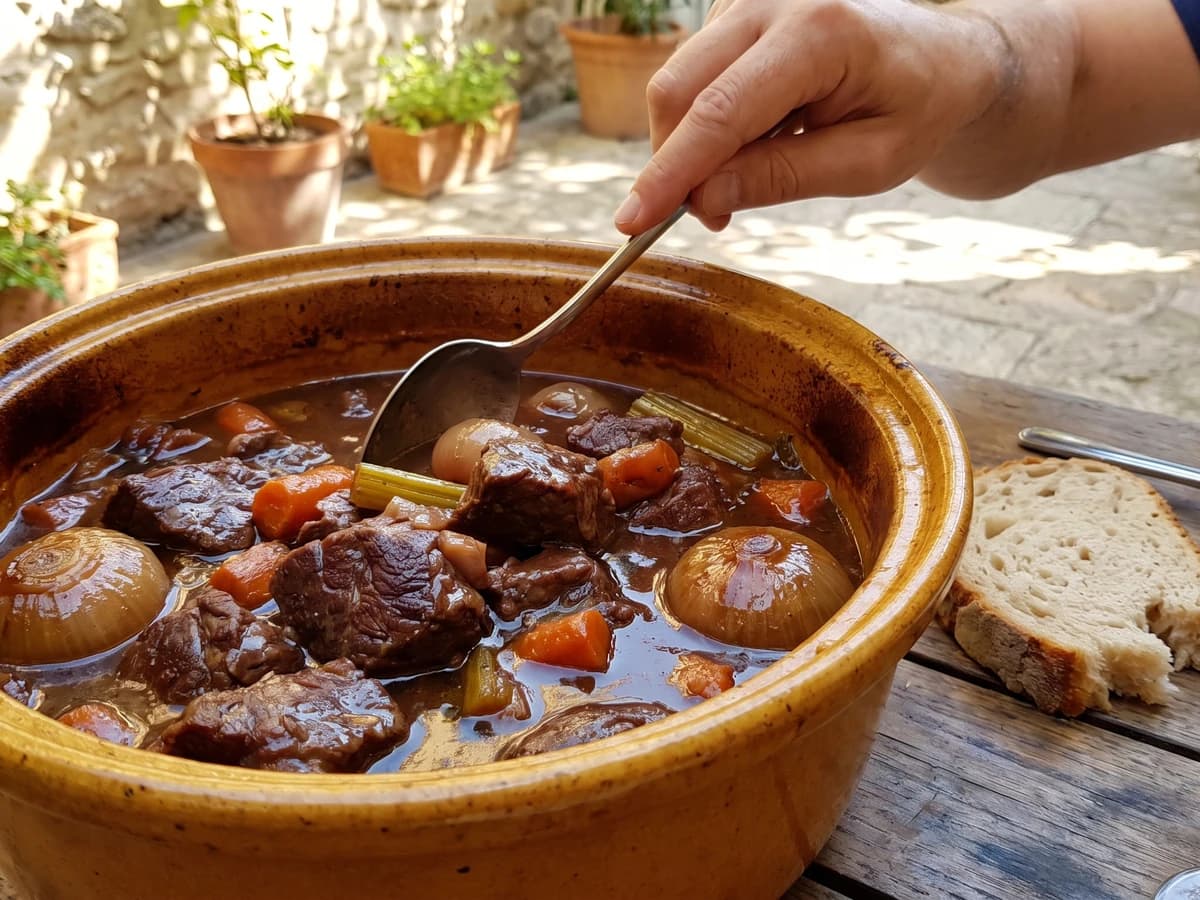
Beef shoulder larded with bacon, sharpened by red wine and vinegar, then sealed with garlic, vegetables, and dry lemon peel until the low oven turns it yielding and the gravy darkly glossy.