Chef Juliette
Bouillabaisse à la Marseillaise
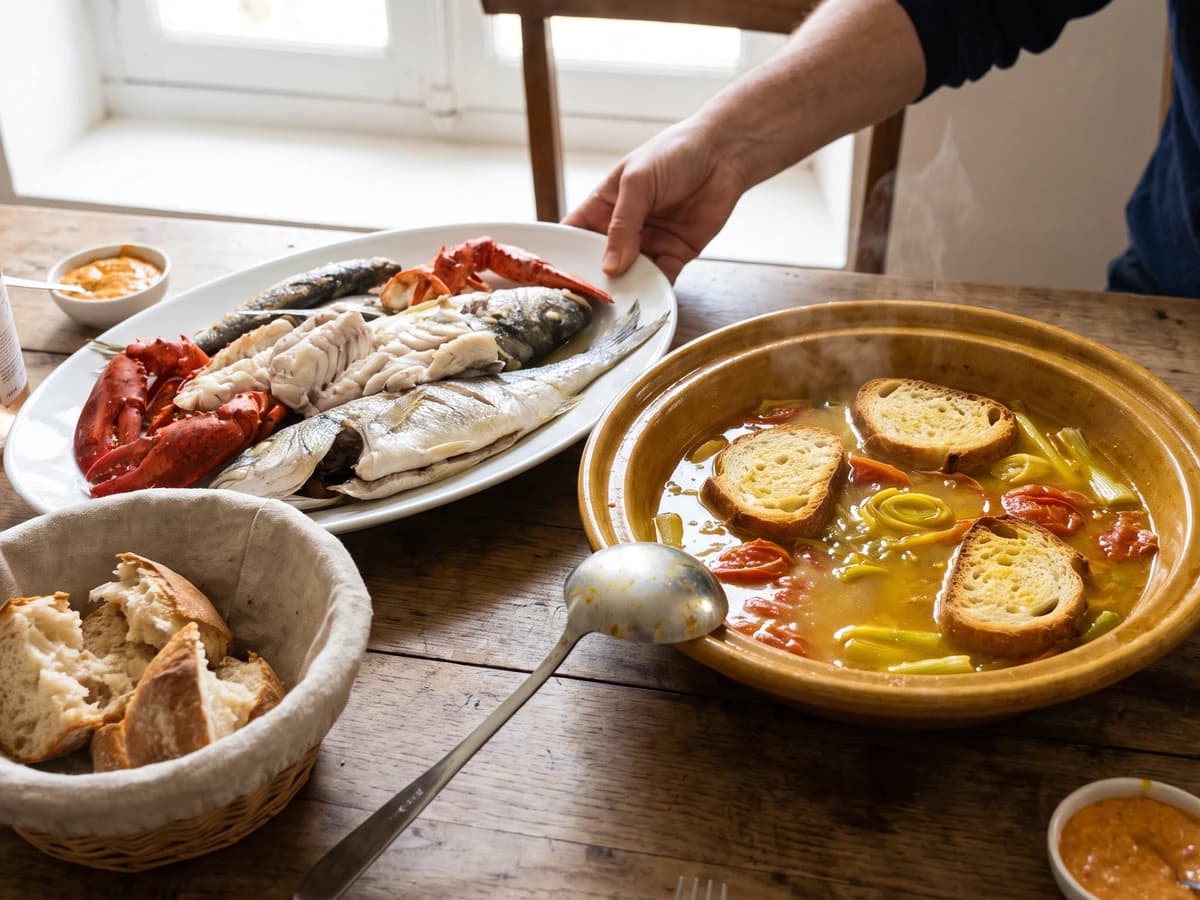
Marseille's great fish stew, saffron-gold and garlic-scented, proves that a hard boil can be the careful choice: it binds olive oil into broth before the whole pot meets bread.
A cooking platform built around craft, culture, and the stories behind what we eat.
Created by Chef Juliette
Based on No. 680, Velouté d’Éperlans, from Le Guide Culinaire (1907) by Auguste Escoffier
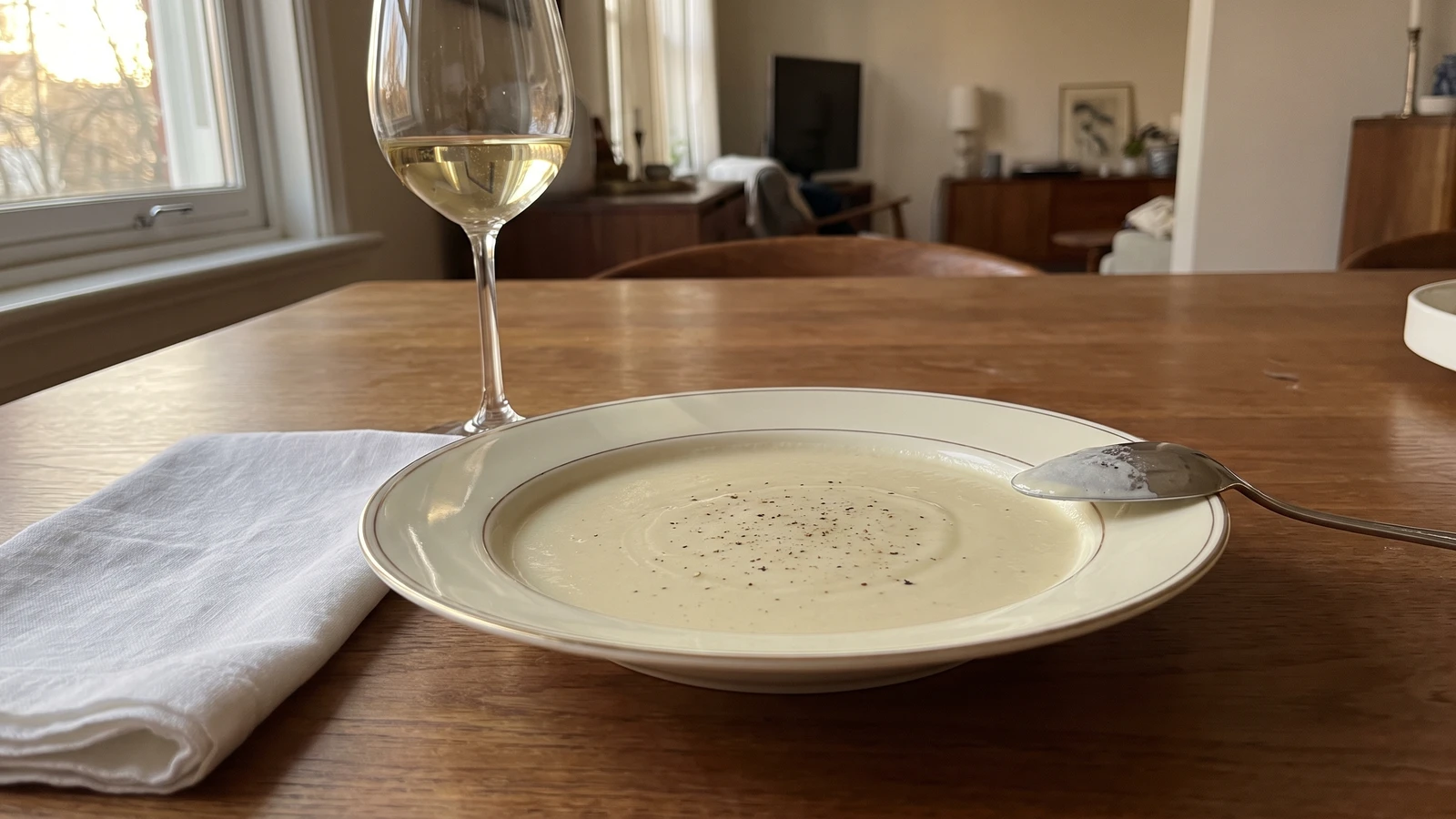
Smelt perfumes this silken panada-bound velouté while sole keeps it gentle; a quick sieve, a careful liaison, and service inside thirty minutes preserve its ivory body and clean finish.
Velouté d’Éperlans (smelt velouté) teaches restraint. Smelt must perfume the bowl, never occupy it: keep its flesh below one-third of the fish and let mild sole provide the body. The panada, a bread-and-milk foundation, softens the flavor without burying it beneath another layer of fish stock.
The original assumed a saucier on staff, white stock never off the fire behind a prepared ordinary thin velouté, a mortar for pounding the fish, and a tammy cloth waiting beside the stove. At home, begin with that velouté already made, replace the mortar with a small processor and the tammy with a fine-mesh sieve. The standing stockpot and hand-pounding are brigade scaffolding and can go; the panada, the smelt-to-sole proportion, the fine straining, and the liaison, an egg-yolk-and-cream binding, are the dish and must stay. One cook, one stove, one evening.
Arrange every ingredient before the milk heats. Once cooking begins, Velouté d’Éperlans must reach the table inside thirty minutes or its clean flavor dulls and the liaison risks turning. That swift finish is the step that matters most.
Velouté d’Éperlans belongs to the Parisian classical repertory of potages veloutés, where strongly scented smelt from northern rivers and estuaries were refined for the formal table. Its cleverness lies in proportion: smelt supplies less than a third of the flesh, sole or dory supplies the body, and a milk panada quiets the whole. Despite the name, the soup is not thickened with fish velouté, which would double the marine flavor and upset the balance the preparation was designed to protect.
Quantity
4 cups (950 ml / 980 g)
Quantity
2½ loosely packed cups (600 ml / 140 g)
crusts removed and crumbled
Quantity
¼ teaspoon (1.25 ml / 1.5 g), plus only if needed
Quantity
⅛ teaspoon (0.6 ml / 0.3 g)
crushed to a fine mignonette
Quantity
4 tablespoons (60 ml / 57 g)
Quantity
¼ cup (60 ml / 40 g)
finely chopped
Quantity
5 ounces (140 g)
pin bones removed
Quantity
1 pound (455 g)
cut into pieces
Quantity
2 tablespoons (30 ml / 30 g)
Quantity
2 cups (475 ml / 500 g)
warmed
Quantity
4
Quantity
1 cup (240 ml / 240 g)
kept cold
Quantity
⅓₂ teaspoon (0.15 ml / 0.1 g)
Quantity
6 tablespoons (90 ml / 85 g)
cut into small cubes
| Ingredient | Quantity |
|---|---|
| whole milk | 4 cups (950 ml / 980 g) |
| stale white bread crumbcrusts removed and crumbled | 2½ loosely packed cups (600 ml / 140 g) |
| fine salt | ¼ teaspoon (1.25 ml / 1.5 g), plus only if needed |
| black peppercornscrushed to a fine mignonette | ⅛ teaspoon (0.6 ml / 0.3 g) |
| unsalted butter for stewing | 4 tablespoons (60 ml / 57 g) |
| onionfinely chopped | ¼ cup (60 ml / 40 g) |
| skinless smelt filletspin bones removed | 5 ounces (140 g) |
| skinless sole fillets, or John Dorycut into pieces | 1 pound (455 g) |
| fresh lemon juice | 2 tablespoons (30 ml / 30 g) |
| prepared ordinary thin velouté made with light white poultry or veal stockwarmed | 2 cups (475 ml / 500 g) |
| large egg yolks | 4 |
| heavy creamkept cold | 1 cup (240 ml / 240 g) |
| cayenne pepper | ⅓₂ teaspoon (0.15 ml / 0.1 g) |
| cold unsalted butter for finishingcut into small cubes | 6 tablespoons (90 ml / 85 g) |
Set the warm ordinary thin velouté, fish, bread, seasonings, and finishing ingredients beside the stove. Reserve 2 tablespoons of the cold cream for the final adjustment or a rescue. Warm the serving bowls with hot water, then dry them just before service. Once the milk begins heating, work without interruption; this soup loses more by waiting than it gains from another minute in the pan.
Bring the milk just to a boil in a 4-quart saucepan. Lower the heat immediately, add the crumbled bread, salt, and mignonette, then stir for 4 to 5 minutes until the bread has swollen and dispersed into a thin, smooth porridge. Keep it pale and fluid. A hard boil catches milk on the pan floor and gives the entire soup a scorched taste.
While the panada cooks, melt the 4 tablespoons butter in a wide sauté pan over low heat. Add the onion and cook for 2 minutes without coloring it. Add the smelt, sole, and lemon juice, turning the pieces through the butter. Cover and stew gently for 3 to 4 minutes, just until the flesh turns opaque and yields under a spoon. Browning is not wanted here; color would roughen a soup whose character should remain pale and delicate.
Transfer the fish, onion, and every drop of buttery cooking liquor to a small food processor. Process only until the fish forms a smooth paste, scraping the bowl once. This replaces pounding in a mortar without changing the intent. Stir the paste into the hot panada, add the warm ordinary thin velouté, and bring the mixture to the barest simmer for 2 minutes.
Blend the soup until completely smooth, keeping the head of an immersion blender submerged so it doesn't whip in air. Press it at once through the fine-mesh sieve into a clean saucepan, working with the back of a ladle until only dry fibers remain. The tammy cloth of the grand kitchen produced extraordinary fineness but demanded time and another pair of hands; one careful pass through a good sieve is the honest home equivalent.
Whisk the egg yolks with the cream, except the reserved 2 tablespoons. Whisk in one ladleful of hot soup, then a second, and pour this tempered liaison back into the saucepan. Stir constantly over low heat until the soup grows slightly fuller and coats the spoon, ideally 170 to 175°F (77 to 80°C). Never let it boil. If tiny curds appear, pull the pan from the heat at once, whisk in the reserved cold cream, blend briefly, and strain again. Ça se rattrape. Add the cayenne, taste for salt, then remove the pan from the heat and whisk in the cold butter cube by cube until the surface gleams. Pour into the warm bowls immediately. À table!
1 serving (about 250g)
Culinary guides, cultural storytelling, and the editorial depth that makes cooking meaningful.
Discover Culinary ExplorerChef Juliette
Marseille's great fish stew, saffron-gold and garlic-scented, proves that a hard boil can be the careful choice: it binds olive oil into broth before the whole pot meets bread.
Chef Juliette
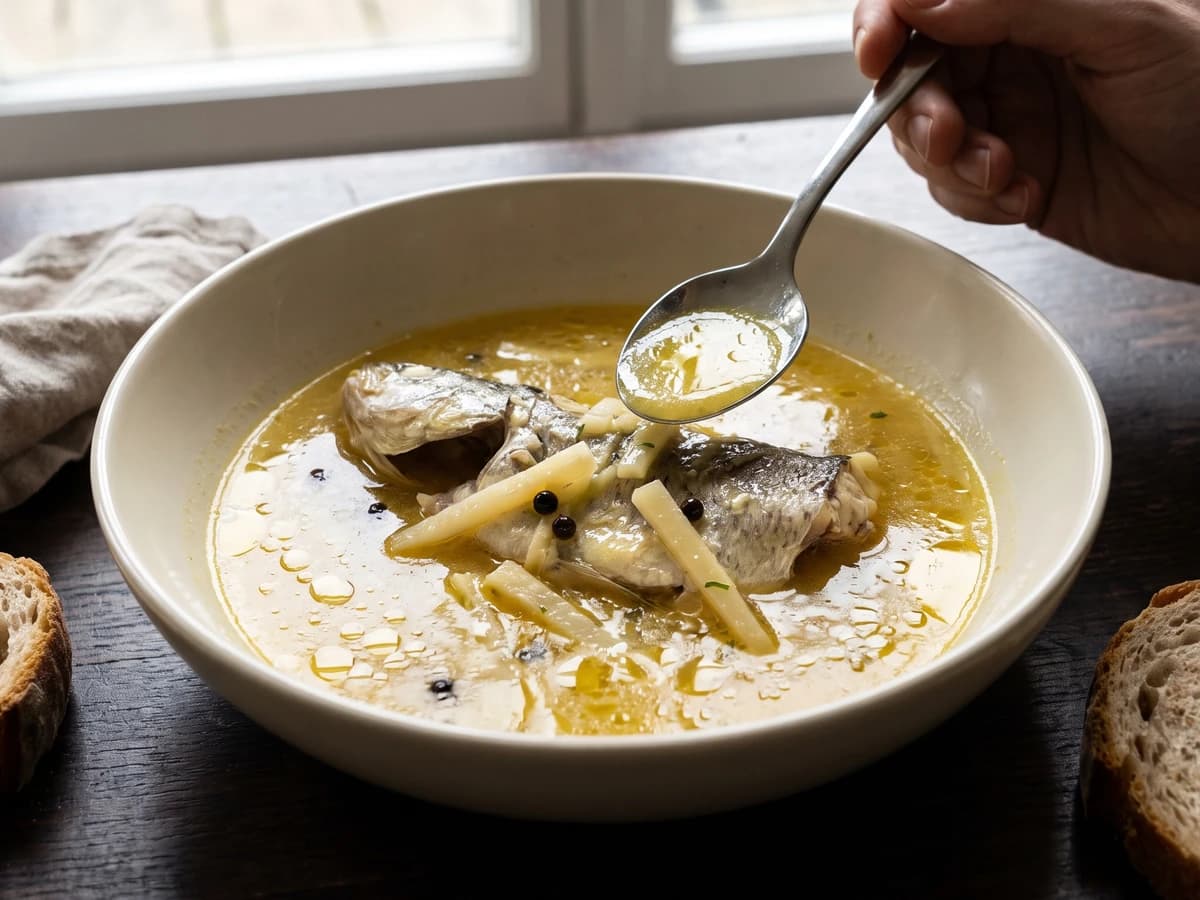
Waterzoi asks fresh, bone-in river fish to thicken its own buttery broth, with parsley root and pepper for company. No flour, no stockpot, just a brisk simmer watched closely.
Chef Juliette
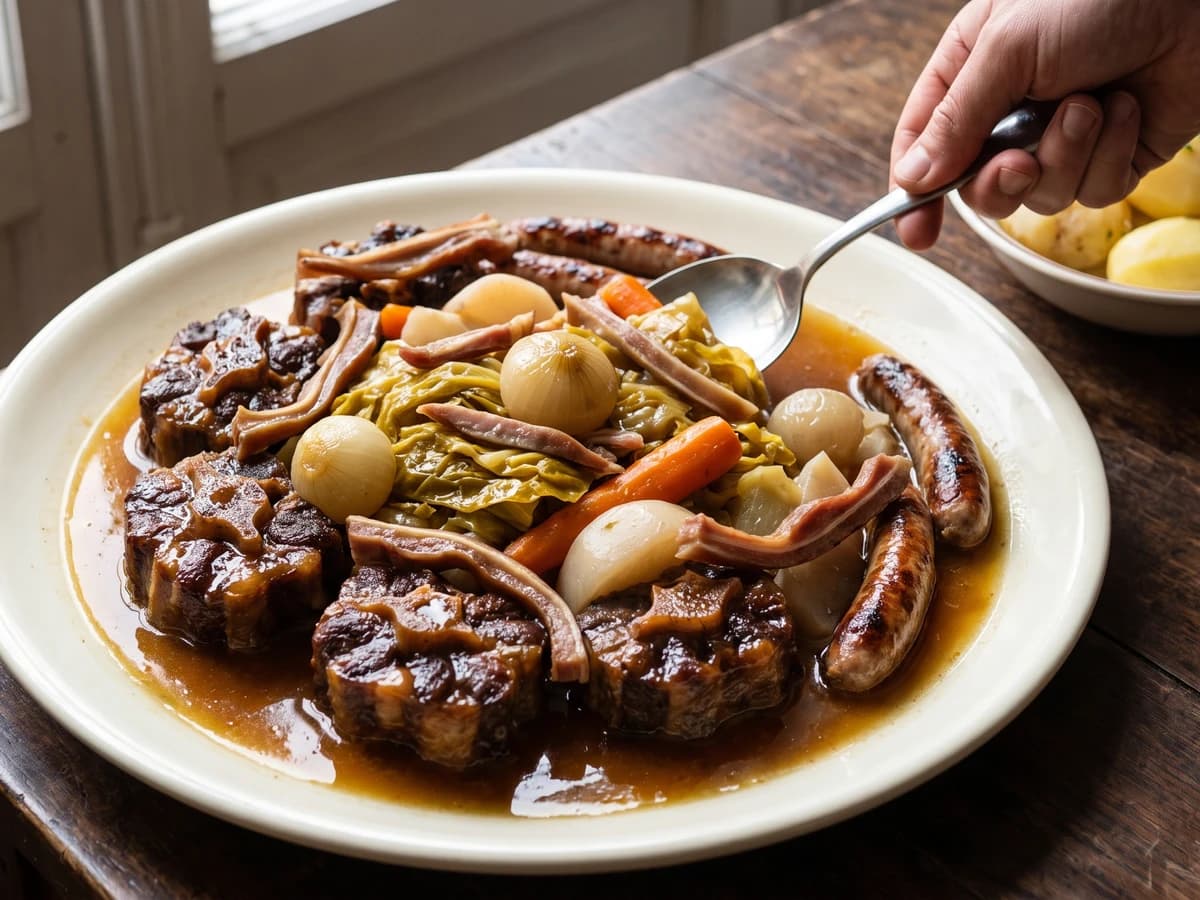
Queue de Bœuf en Hochepot gathers oxtail, pig's trotter and ear, cabbage, roots, and grilled chipolatas around a clear, gelatin-rich broth whose quiet simmer keeps every piece tender and distinct.
Chef Juliette
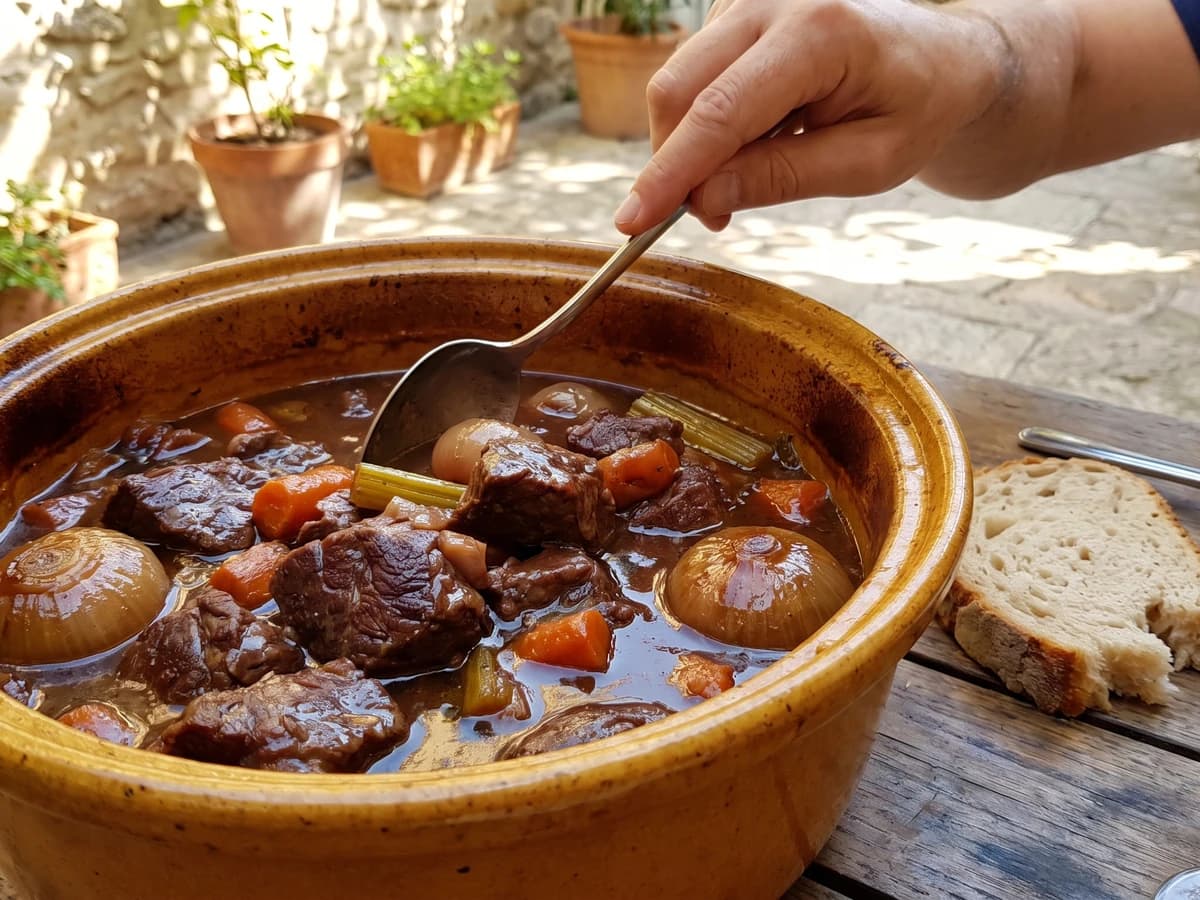
Beef shoulder larded with bacon, sharpened by red wine and vinegar, then sealed with garlic, vegetables, and dry lemon peel until the low oven turns it yielding and the gravy darkly glossy.