Chef Juliette
Bouillabaisse à la Marseillaise
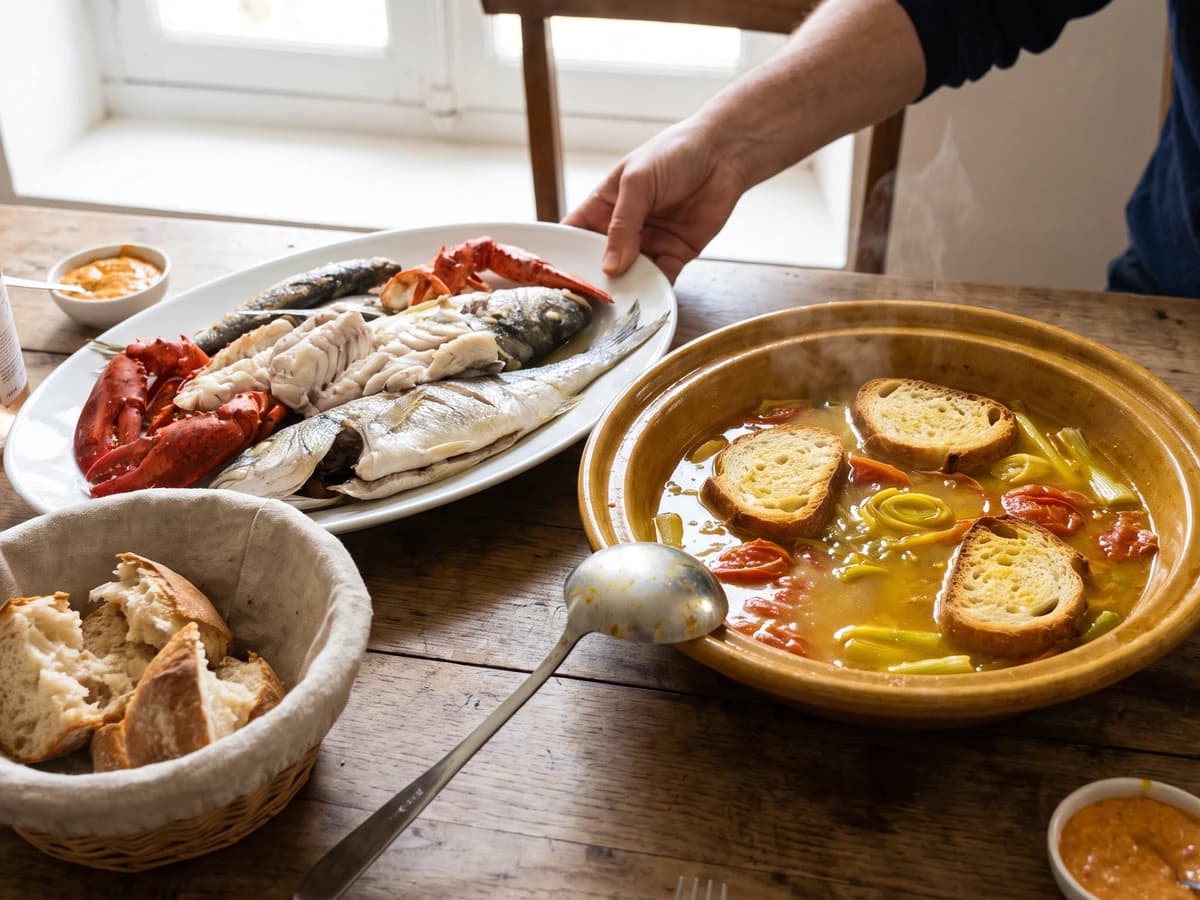
Marseille's great fish stew, saffron-gold and garlic-scented, proves that a hard boil can be the careful choice: it binds olive oil into broth before the whole pot meets bread.
A cooking platform built around craft, culture, and the stories behind what we eat.
Created by Chef Juliette
Based on No. 676, Velouté au Concombres, otherwise Danoise, from Le Guide Culinaire (1907) by Auguste Escoffier
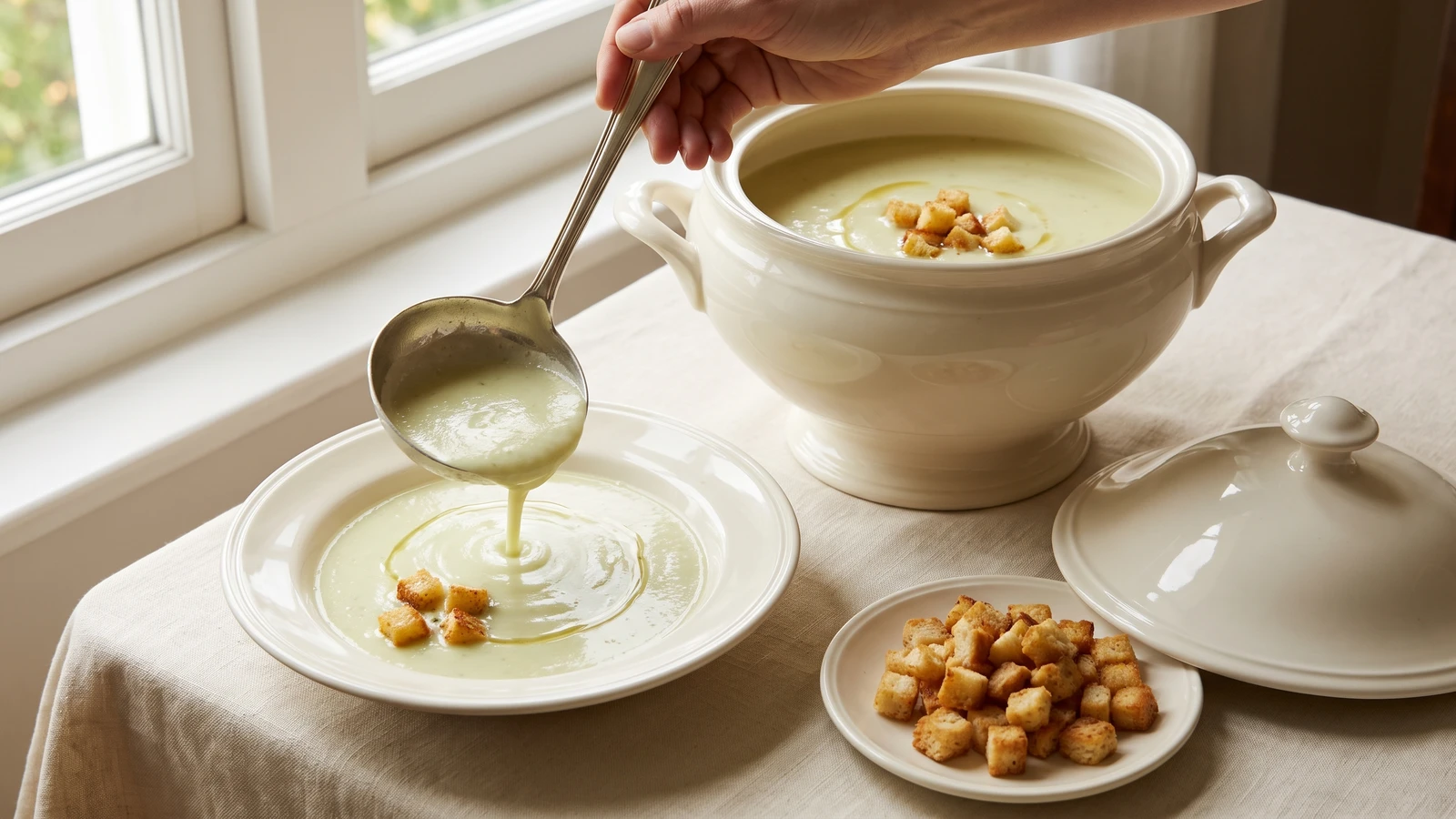
Cucumber, butter, velouté, and speed: Danoise teaches the light hand behind a white soup, sieved to silk and bound with liaison before golden croûtons meet the bowl.
Velouté au Concombres, otherwise Danoise (cucumber velouté bound with an egg-yolk-and-cream liaison), teaches one clean principle: cucumber must cook quickly or its fresh character collapses into flat vegetable sweetness. The soup should be pale, silken, and unmistakably cucumber, with butter underneath and golden croûtons giving the spoon a little resistance.
The original entry assumed a saucier preparing ordinary velouté alongside the cucumbers, white consommé never far from the fire, and a tammy ready for passing. At home, prepare those two canonical bases from their own recipes before beginning, then use a sturdy fine-mesh sieve in place of the tammy. This version makes about two quarts and moves the parallel sauce work ahead, because one cook cannot mind three preparations at once. That simultaneous work was brigade scaffolding. Stewing the cucumber in butter, passing it smooth, and adding the liaison only at service are the dish, so they stay.
One cook, one stove, one evening. Keep the cucumber stage short, then guard the liaison. The one step that matters most is simple: after the egg yolks and cream go in, never let Danoise boil.
Velouté au Concombres, called Danoise in the classical repertory, belongs to the Parisian grand-kitchen family of named potages, where a principal vegetable was folded into prepared velouté and finished à la minute with liaison. The label Danoise does not establish a Danish household origin; it is a repertory name for a thoroughly French sequence that passed readily into cuisine bourgeoise once cooks kept velouté and consommé ready. Unlike chilled cucumber soups, this potage is served hot, with its freshness protected by brief cooking rather than coldness.
Quantity
2 large, enough to yield 1 lb (454 g) after trimming
peeled, halved, seeded, and finely minced
Quantity
6 tablespoons (90 ml / 85 g)
divided
Quantity
2 cups (480 ml / about 500 g)
prepared as its own finished component
Quantity
4 to 4½ cups (960 ml to 1.08 L / 960 to 1,080 g)
prepared as its own finished component and kept hot
Quantity
4
Quantity
¾ cup (180 ml / 180 g)
Quantity
2 tablespoons (30 ml / 30 g)
kept cold for rescuing the liaison
Quantity
2 cups (480 ml / 120 g)
cut into ¼-inch (6 mm) dice
Quantity
as needed
| Ingredient | Quantity |
|---|---|
| English cucumberspeeled, halved, seeded, and finely minced | 2 large, enough to yield 1 lb (454 g) after trimming |
| unsalted butterdivided | 6 tablespoons (90 ml / 85 g) |
| ordinary veloutéprepared as its own finished component | 2 cups (480 ml / about 500 g) |
| white consomméprepared as its own finished component and kept hot | 4 to 4½ cups (960 ml to 1.08 L / 960 to 1,080 g) |
| large egg yolks | 4 |
| heavy cream | ¾ cup (180 ml / 180 g) |
| cold heavy cream (optional)kept cold for rescuing the liaison | 2 tablespoons (30 ml / 30 g) |
| firm white bread or pain de miecut into ¼-inch (6 mm) dice | 2 cups (480 ml / 120 g) |
| fine salt | as needed |
Melt 2 tablespoons of the butter in a wide skillet over medium heat. Add the bread dice in one layer and toss them steadily until every face is crisp and evenly golden, 5 to 7 minutes. Lift the croûtons onto a towel and leave them uncovered; enclosing them while warm softens the crust you have just earned.
Peel the cucumbers completely, split them lengthwise, and scrape away the wet seed cores with a teaspoon. Weigh 1 pound of the firm flesh, then mince it finely and evenly. Removing the seeds is not decoration: the watery centres dilute the velouté and force a longer cooking time, which costs the cucumber its freshness.
Melt 3 tablespoons of the butter in a 4-quart heavy saucepan over medium-low heat. Add the minced cucumber with a small pinch of salt, cover, and étuver, meaning stew gently in butter without browning, for 4 to 5 minutes. Stir twice. The cucumber should glisten and soften at the edges while keeping its pale colour. If liquid floods the pan, uncover it and raise the heat briefly until the excess cooks away; do not wait for colour.
Stir in the ordinary velouté and bring the mixture promptly to a gentle simmer. Cook for 6 to 8 minutes, stirring often, just until the cucumber is completely tender. This quick completion is the governing principle of the dish: prolonged simmering does not deepen cucumber, it erases it.
Set a sturdy fine-mesh sieve over a heatproof bowl and rub the hot soup through with a ladle or flexible scraper. This replaces the old tammy while preserving its purpose, removing cucumber fibres without abandoning the body of the velouté. If the pulp refuses to pass, it is slightly undercooked; return it to the pan with one ladleful of white consommé, simmer for 2 minutes, and try again.
Return the sieved soup to the clean saucepan and stir in 3½ cups of the hot white consommé. Add more gradually until the soup pours freely but still leaves a light veil on the back of a spoon, using enough to bring the finished quantity close to 2 quarts. Bring it only to a bare simmer and taste for salt. If it seems thin, correct it now with a brief reduction; once the liaison enters, boiling is forbidden.
Whisk the egg yolks and ¾ cup heavy cream together in a large bowl. Temper the liaison by whisking in about 1½ cups of hot soup, half a cup at a time, then lower the heat and stir the tempered mixture back into the saucepan. Heat gently, stirring constantly, until the soup gains a soft satin body and reaches about 165°F (74°C). Do not boil it. If the surface begins to look grainy, pull the pan from the heat immediately, whisk in the optional cold cream, and strain it into a clean warm pan. Ça se rattrape. Whisk in the remaining tablespoon of butter.
Taste once more for salt and loosen the soup with a little reserved hot consommé if it has tightened while waiting. Ladle Danoise immediately into a warm soupière or warm bowls and scatter the butter-fried croûtons over each serving at the last moment, while they are still crisp. À table!
1 serving (about 240g)
Culinary guides, cultural storytelling, and the editorial depth that makes cooking meaningful.
Discover Culinary ExplorerChef Juliette
Marseille's great fish stew, saffron-gold and garlic-scented, proves that a hard boil can be the careful choice: it binds olive oil into broth before the whole pot meets bread.
Chef Juliette
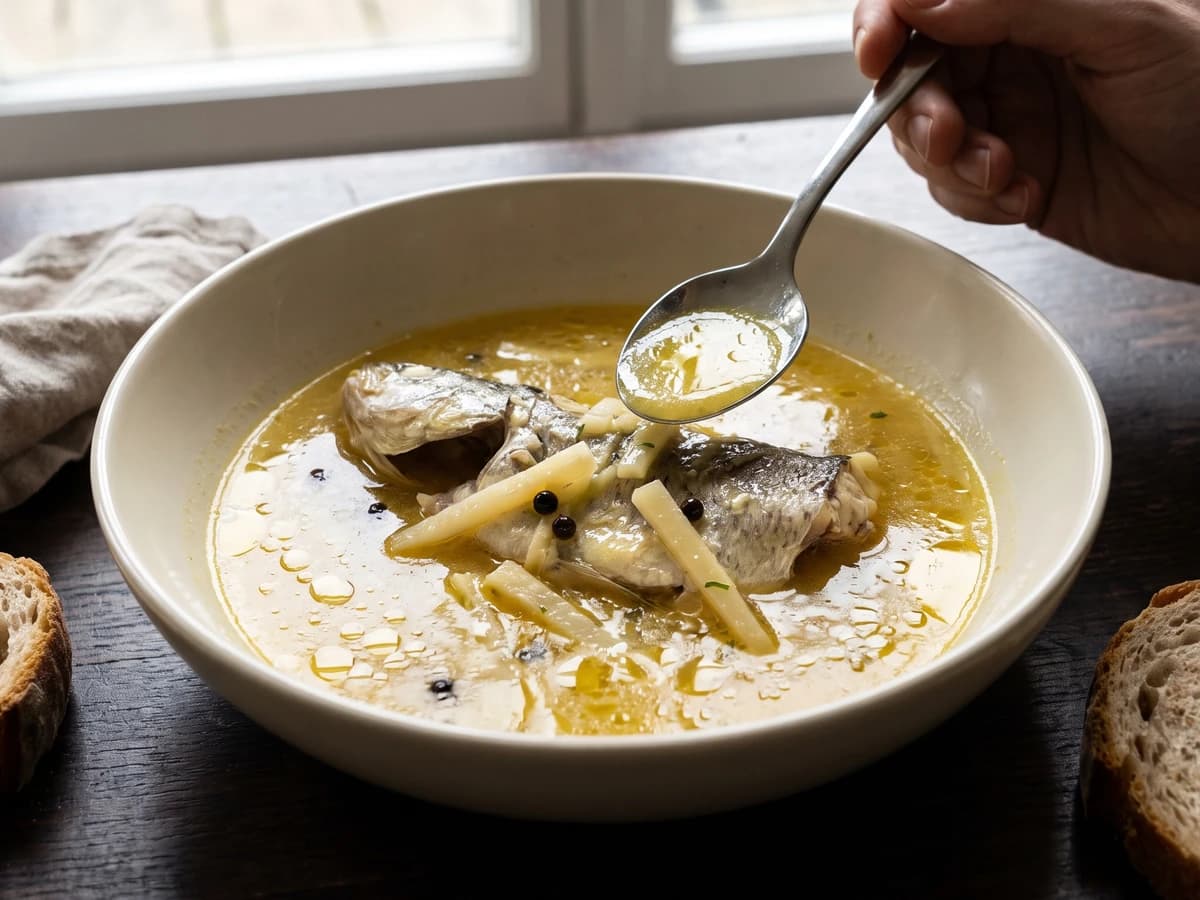
Waterzoi asks fresh, bone-in river fish to thicken its own buttery broth, with parsley root and pepper for company. No flour, no stockpot, just a brisk simmer watched closely.
Chef Juliette
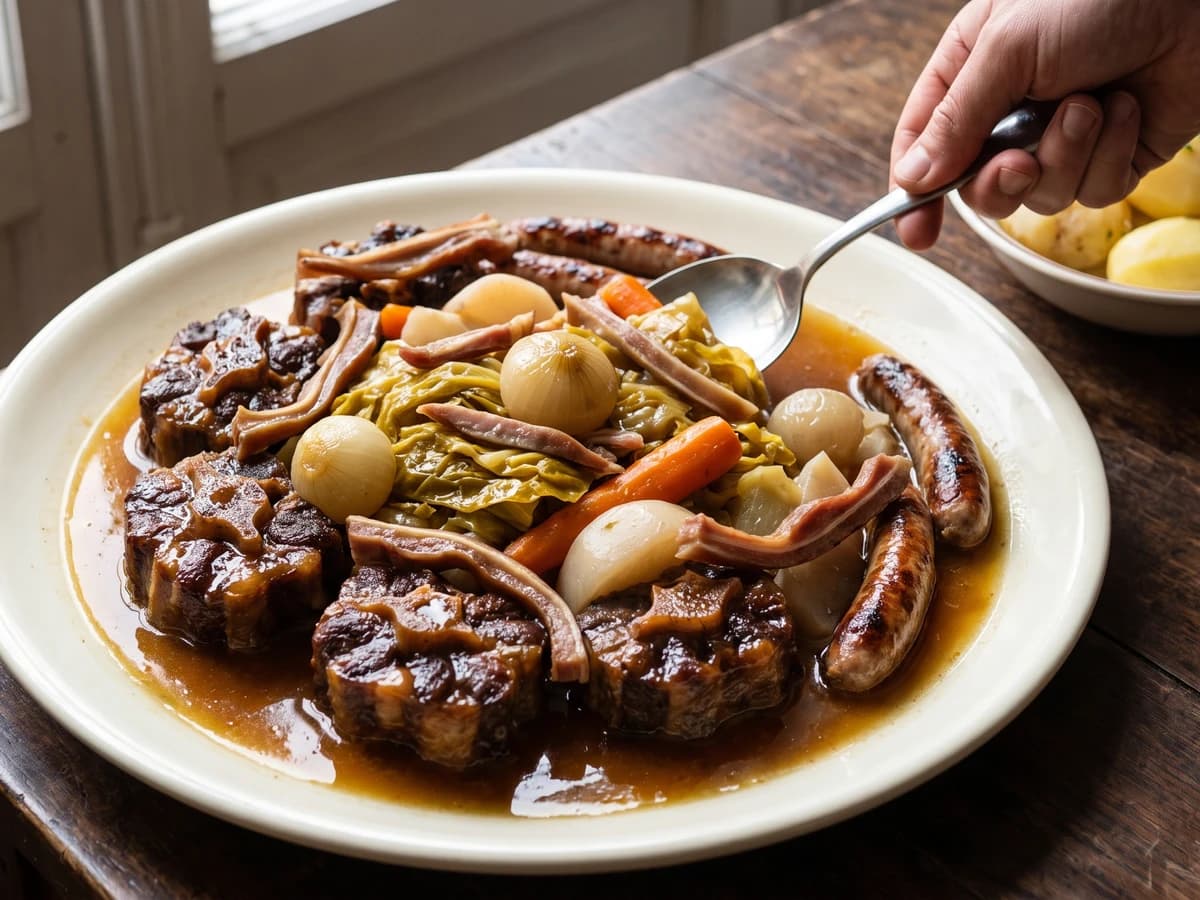
Queue de Bœuf en Hochepot gathers oxtail, pig's trotter and ear, cabbage, roots, and grilled chipolatas around a clear, gelatin-rich broth whose quiet simmer keeps every piece tender and distinct.
Chef Juliette
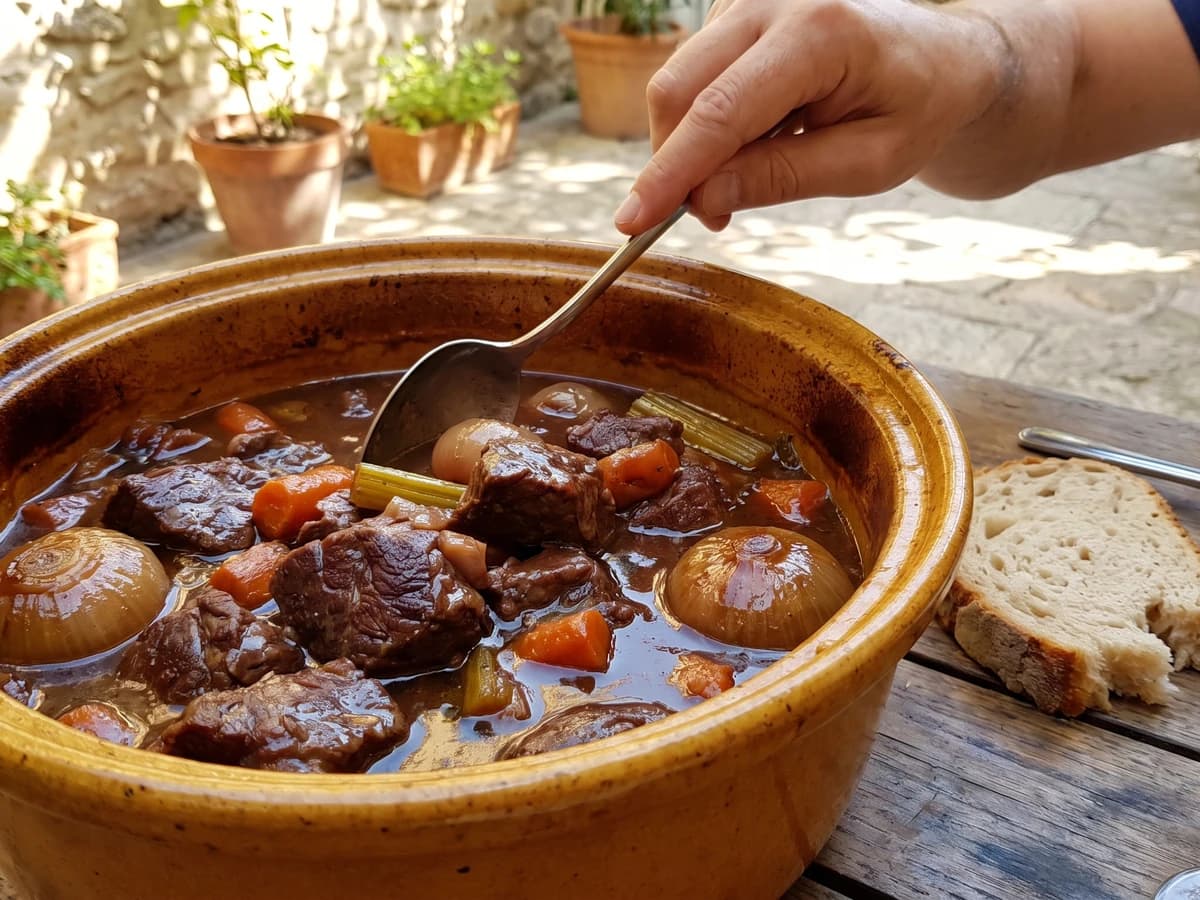
Beef shoulder larded with bacon, sharpened by red wine and vinegar, then sealed with garlic, vegetables, and dry lemon peel until the low oven turns it yielding and the gravy darkly glossy.