Chef Juliette
Bouillabaisse à la Marseillaise
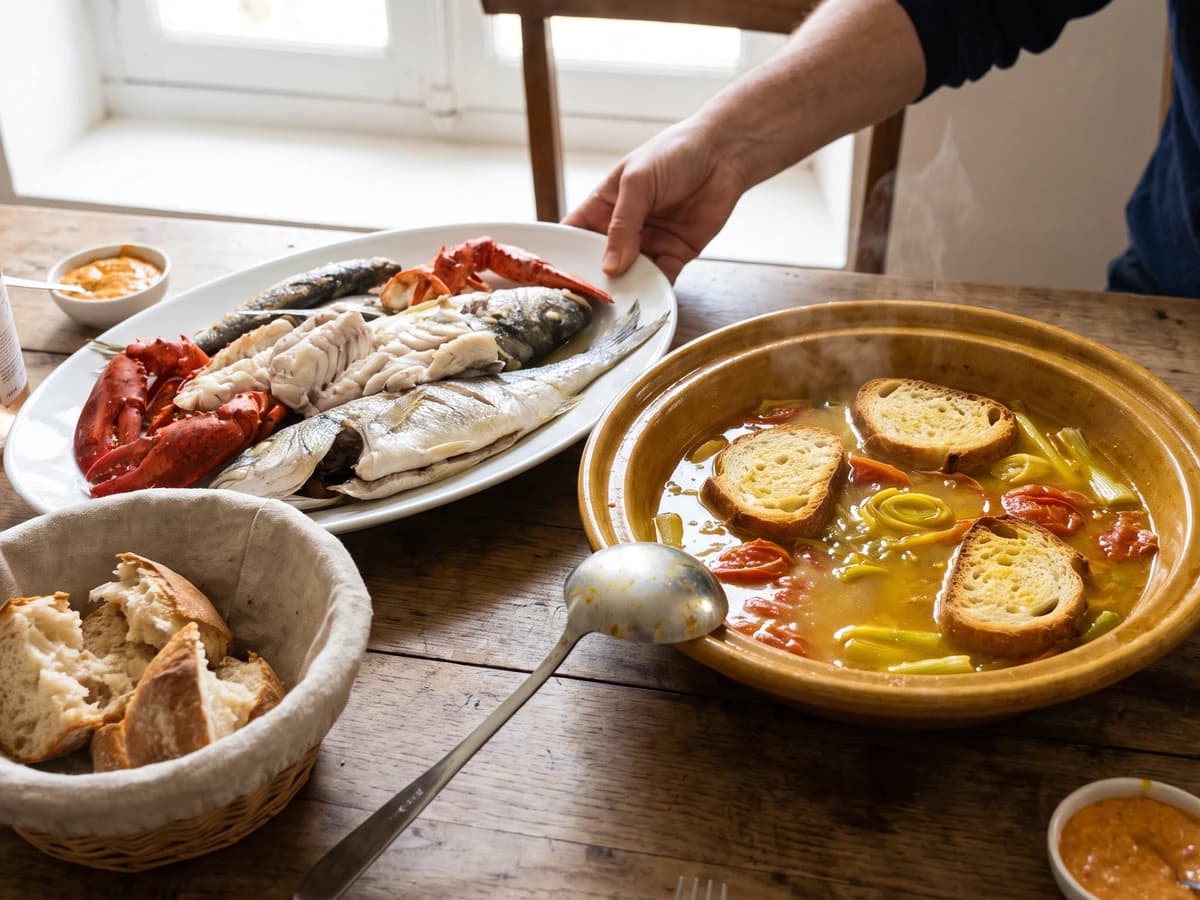
Marseille's great fish stew, saffron-gold and garlic-scented, proves that a hard boil can be the careful choice: it binds olive oil into broth before the whole pot meets bread.
A cooking platform built around craft, culture, and the stories behind what we eat.

Created by Chef Juliette
Based on No. 672, Velouté de Blanchaille au Currie, from Le Guide Culinaire (1907) by Auguste Escoffier
Velouté de Blanchaille au Currie turns tiny fish, saffron, curried onion, and cream into a silken first course in twenty minutes. Speed is not convenience here, it is the discipline that keeps the liaison whole.
Velouté de Blanchaille au Currie (whitebait velouté with curry) teaches a severe little discipline: once the fish enters the pot, the soup moves only forward, through sieve, liaison, tureen, table. The blanchailles, soft bread, egg yolks, and cream give it body without roux, while onion, currie powder, and saffron tint the velouté a quiet gold. The one true thing is speed. If you intend to hold it, cook another soup.
The old kitchen assumed a saucier fixed to the pan, a hair sieve ready, and a salamander drying buttered bread while another pair of hands warmed the tureen. It did not assume stock; this formula deliberately begins with boiling water, and changing that would obscure its clean fish flavor. At home, a kettle, immersion blender, fine-mesh sieve, and toaster do the same work. To give the requested two-quart yield, every stated proportion is doubled together, so the original ratios and sequence remain untouched. One cook, one stove, one evening.
The extra hands and obsolete tools are scaffolding, so they can go. The ten-minute bread boil, brisk cooking of very fresh whitebait, fine pass, liaison (egg-and-cream finish), and service without pause are the dish, so they stay. Measure everything and set the sieve over a clean pan before the onion touches butter; that handoff from fish pot to finished velouté is the step that matters most.
Velouté de Blanchaille au Currie belongs to the Parisian grand-kitchen repertoire, where the formal soup course drew tiny market fish together with currie powders carried into French cooking through Anglo-Indian trade. Blanchaille is not one species but a fishmonger's collective name for very small juvenile fish, and forcing them through a hair sieve turned bones, skin, bread, and liquid into a smooth potage. Despite its name, this is not a sauce velouté diluted with fish stock: boiling water, bread, and the fish provide its body, followed by a liaison of yolks and cream.
Quantity
6 tablespoons (90 ml / 85 g)
divided: 4 tablespoons for the soup and 2 tablespoons for the bread
Quantity
1½ cups (375 ml / 170 g)
finely chopped
Quantity
1 teaspoon (5 ml / 2 g)
Quantity
7¼ cups (1.7 liters / 1.7 kg)
boiling
Quantity
1 small bundle
parsley stems, thyme, and bay leaf
Quantity
½ teaspoon (2.5 ml / 3 g), plus more only if needed
Quantity
1 generous pinch (about 30 threads / 0.15 g)
Quantity
2 packed cups (500 ml / 115 g)
crusts removed and torn
Quantity
about 4 cups loosely packed (1 liter / 680 g)
quickly rinsed and thoroughly drained
Quantity
6
Quantity
scant 1 cup (225 ml / 225 g)
kept cold
Quantity
8 thin slices (about 60 g total)
dried and buttered for serving
| Ingredient | Quantity |
|---|---|
| unsalted butterdivided: 4 tablespoons for the soup and 2 tablespoons for the bread | 6 tablespoons (90 ml / 85 g) |
| yellow onionfinely chopped | 1½ cups (375 ml / 170 g) |
| mild curry powder | 1 teaspoon (5 ml / 2 g) |
| waterboiling | 7¼ cups (1.7 liters / 1.7 kg) |
| bouquet garniparsley stems, thyme, and bay leaf | 1 small bundle |
| fine sea salt | ½ teaspoon (2.5 ml / 3 g), plus more only if needed |
| saffron | 1 generous pinch (about 30 threads / 0.15 g) |
| pain viennois or unsweetened fine-crumbed white breadcrusts removed and torn | 2 packed cups (500 ml / 115 g) |
| very fresh whitebaitquickly rinsed and thoroughly drained | about 4 cups loosely packed (1 liter / 680 g) |
| large egg yolks | 6 |
| heavy creamkept cold | scant 1 cup (225 ml / 225 g) |
| day-old pain viennois or fine-crumbed white breaddried and buttered for serving | 8 thin slices (about 60 g total) |
Bring the measured water to a full boil in a kettle. Set the fine-mesh sieve over the clean saucepan, warm the soup tureen with hot water, and whisk the yolks with all but 2 tablespoons of the cold cream; return that bowl and the reserved cream to the cold. Toast the 8 bread slices until dry and pale gold, brush them with 2 tablespoons of the butter, then empty and dry the tureen and arrange the bread inside. Keep the whitebait cold. Once the onion enters the pan, the clock is running.
Melt the remaining 4 tablespoons butter in the heavy saucepan over medium-low heat. Add the onion and cook for 2 to 3 minutes, stirring steadily, until supple and translucent but not golden. Stir in the curry powder for 20 seconds, just until fragrant. If an edge begins to color, pull the pan from the heat and add a spoonful of the boiling water at once; it cannot erase the brown, but it stops the browning before it overtakes this pale soup.
Pour in the boiling water, then add the bouquet garni, salt, saffron, and torn bread. Bring the mixture to an active boil and cook uncovered for exactly 10 minutes, stirring twice and pressing the bread against the side of the pan so it dissolves into the liquid. If bread settles onto the bottom, scrape it free and moderate the heat slightly, but keep a true boil rather than a timid simmer.
Add the cold, well-drained whitebait all at once and raise the heat. Return the soup to a brisk boil as quickly as possible, then cook for 90 seconds to 2 minutes, stirring once, until the tiny fish are opaque and break readily beneath the spoon. Remove the bouquet garni. The fish are minute and cook through quickly; extending this stage makes their flavor coarse and steals the time needed for straining and liaison.
Take the pot from the heat. Submerge the immersion blender fully and blend for 20 to 30 seconds, until the soup looks uniform. Pass it immediately through the prepared fine-mesh sieve into the clean saucepan, pressing firmly with a ladle until only dry, gritty bones and skin remain; do not force the last sharp grit through. The hair sieve was equipment, but the fine pass is not optional. It is what turns whole blanchaille into velouté.
Whisk about 1 cup of the hot strained soup gradually into the yolk-and-cream mixture. Pour this tempered liaison back into the saucepan in a thin stream while stirring continuously. The residual heat should thicken the soup enough to leave a light coat on the spoon; it should remain between 160 and 170°F (71 and 77°C), never boil. If it is cooler, set it over low heat and stir without stopping. At the first grainy flecks or greasy separation, remove it from the heat, whisk in the reserved cold cream, blend for 5 seconds, and pass it once more. Ça se rattrape. If it remains smooth, stir in the reserved cream off the heat.
Taste once and correct the salt only if needed. Pour the velouté directly over the dried buttered bread in the warm tureen and carry it straight to the table. Do not cover it, hold it beside the stove, or plan to reheat it; the liaison and puréed fish will turn if left waiting. Ladle it while the surface is still glossy. À table!
1 serving (about 250g)
Culinary guides, cultural storytelling, and the editorial depth that makes cooking meaningful.
Discover Culinary ExplorerChef Juliette
Marseille's great fish stew, saffron-gold and garlic-scented, proves that a hard boil can be the careful choice: it binds olive oil into broth before the whole pot meets bread.
Chef Juliette
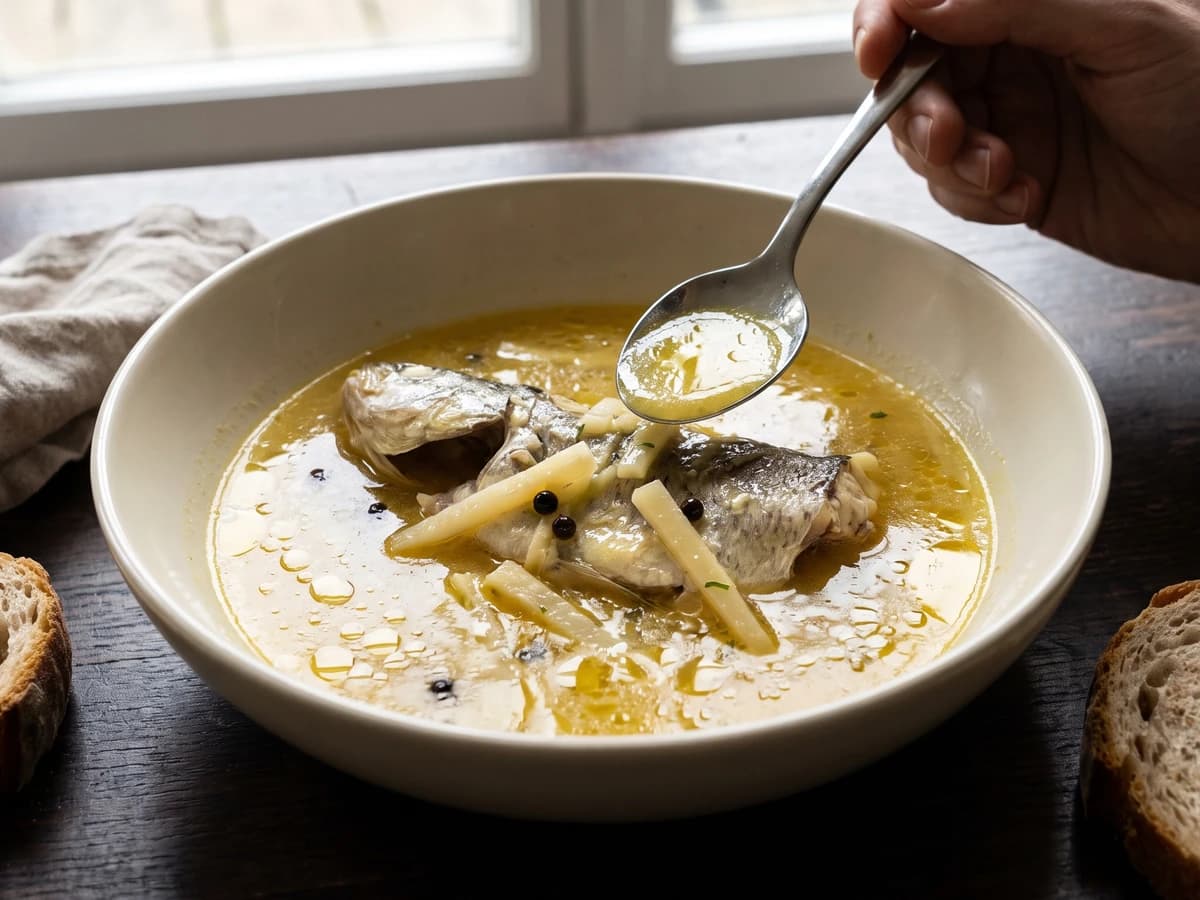
Waterzoi asks fresh, bone-in river fish to thicken its own buttery broth, with parsley root and pepper for company. No flour, no stockpot, just a brisk simmer watched closely.
Chef Juliette
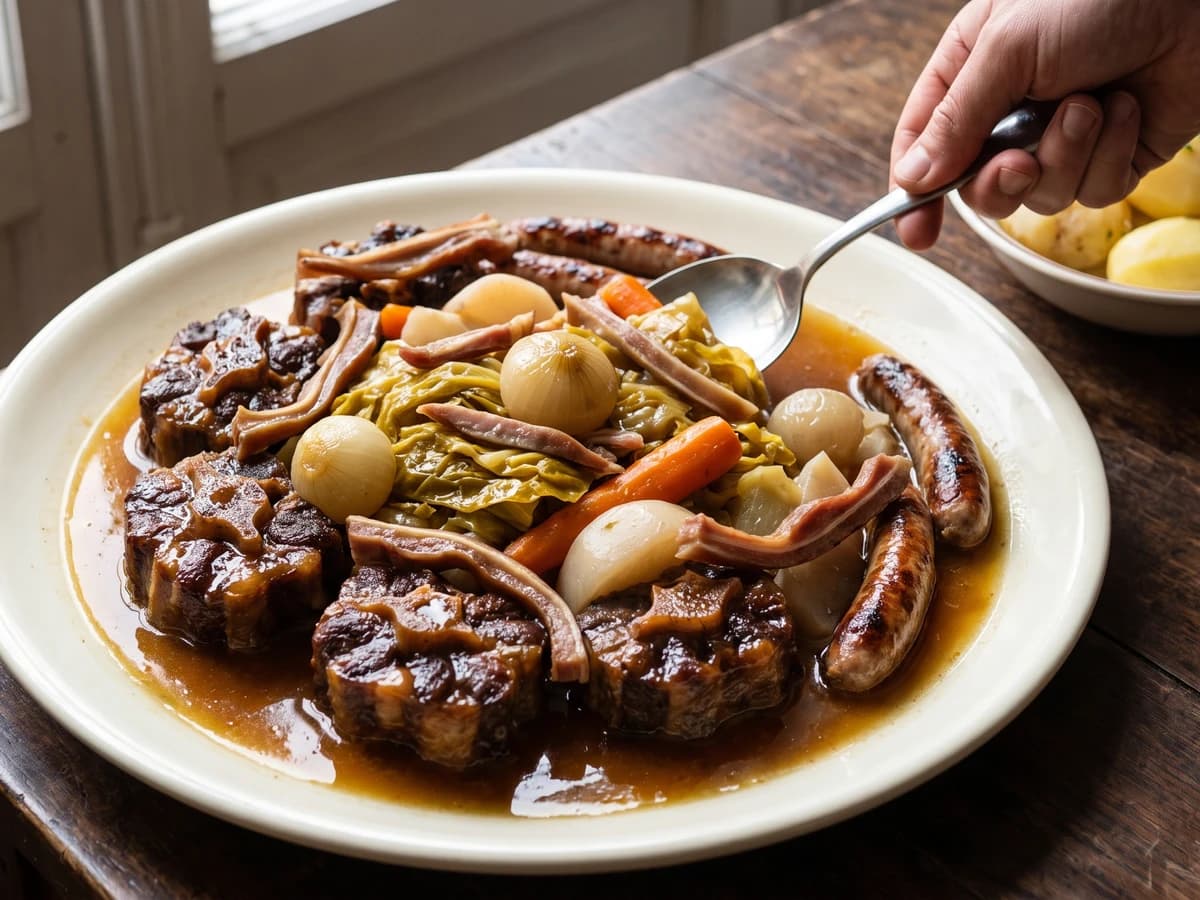
Queue de Bœuf en Hochepot gathers oxtail, pig's trotter and ear, cabbage, roots, and grilled chipolatas around a clear, gelatin-rich broth whose quiet simmer keeps every piece tender and distinct.
Chef Juliette
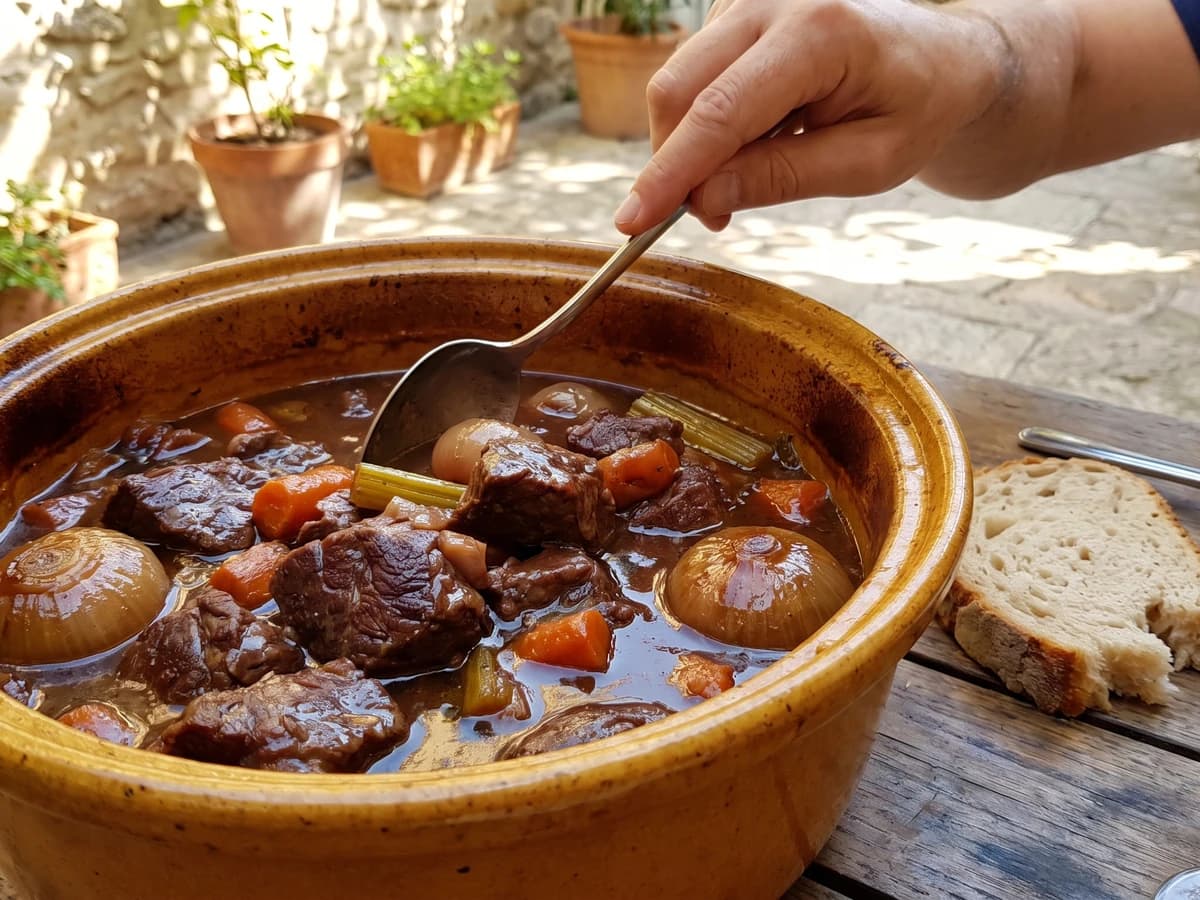
Beef shoulder larded with bacon, sharpened by red wine and vinegar, then sealed with garlic, vegetables, and dry lemon peel until the low oven turns it yielding and the gravy darkly glossy.