Chef Juliette
Ordinary or White Consommé
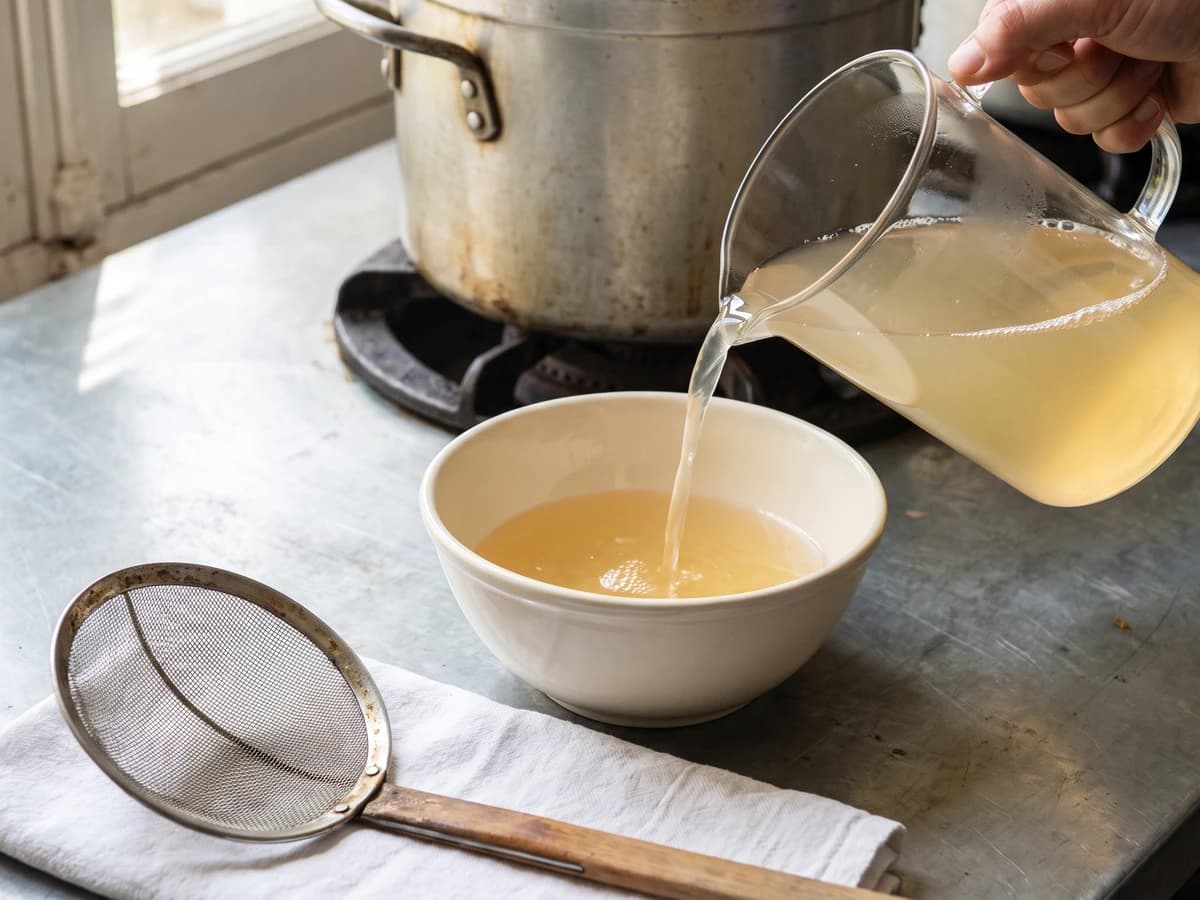
Beef shin, lean beef, and fowl begin in cold water and rise slowly toward a tremble. Skim before the boil, and you learn the quiet discipline that gives every clear French broth its backbone.
A cooking platform built around craft, culture, and the stories behind what we eat.
Created by Chef Juliette
Based on No. 67, Bonnefoy Sauce, or White Bordelaise Sauce, from Le Guide Culinaire (1907) by Auguste Escoffier
The white Bordelaise that teaches reduction and emulsion: shallot and Bordeaux drawn nearly dry, velouté simmered gently, then cold butter mounted off the fire for a pale sauce with a confident gloss.
Sauce Bonnefoy (white Bordelaise sauce) teaches the difference between reducing wine and merely boiling it away. The wine and shallots must arrive together at presque à sec, almost dry, while the shallots remain pale and glossy. That near-dry reduction is the one true thing to understand before you touch the pan. Leave too much wine and the finished sauce tastes loose; scorch the shallots and bitterness follows them all the way to the table.
The book's formula assumed a saucier at the stove, Velouté ready from stock never off the fire, and a tammy for the final straining. A salamander has no work here. Your honest equivalents are prepared Velouté, a small heavy saucepan, and a fine-mesh sieve. I have halved the quantities to make enough for four while keeping every proportion intact. The brigade's holding and repeated finishing were scaffolding and can go; the twenty-minute simmer, the sieving, and the off-fire butter are the dish itself and must stay. One cook, one stove, one evening.
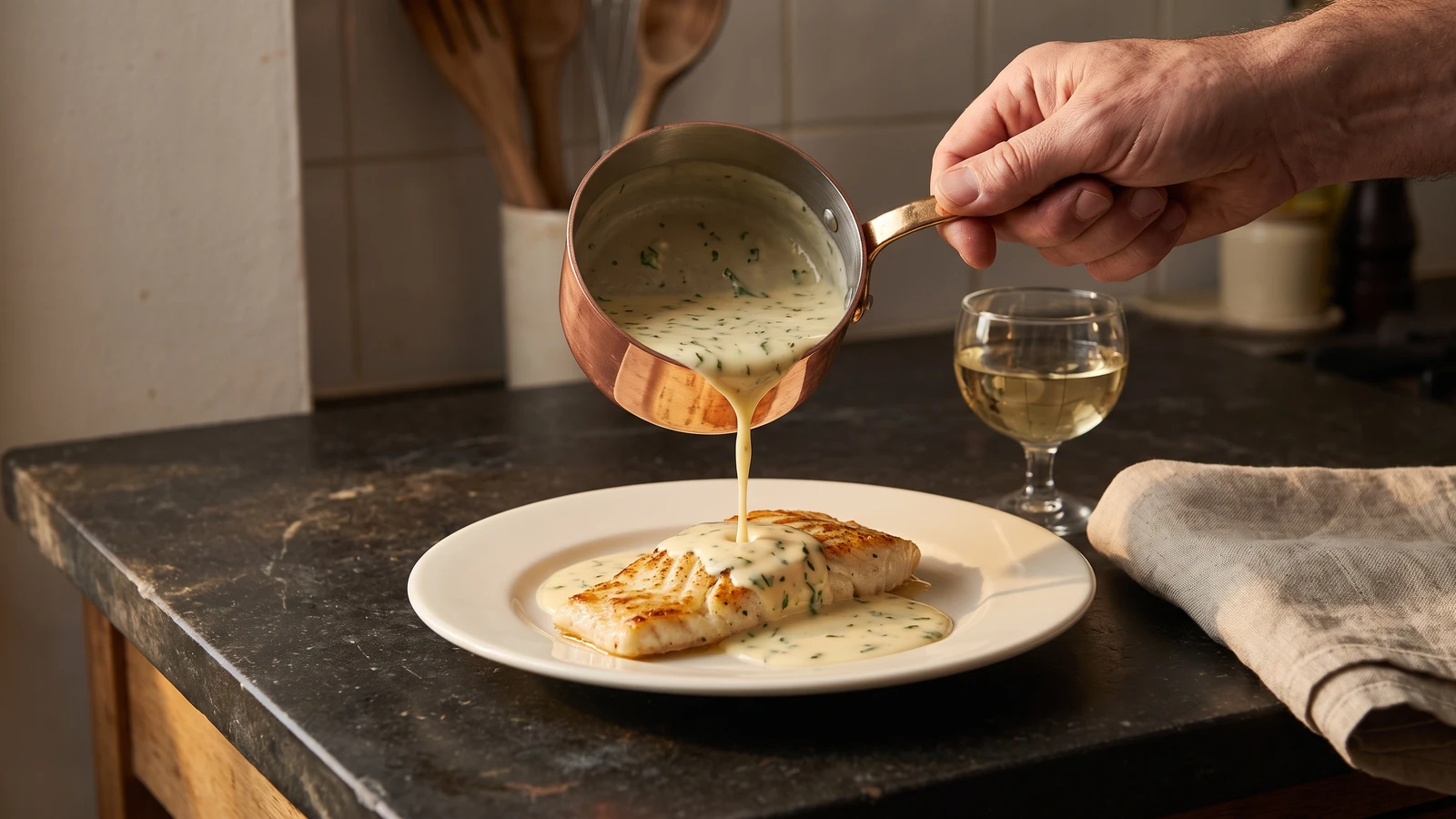
When it is right, Sauce Bonnefoy is pale ivory with a butter gloss, a concentrated breath of Bordeaux, and small green sparks of tarragon. Mount the butter away from the fire and never let the finished sauce boil. Before you begin, choose a pan small enough for the wine to reduce without exposing the shallots to a broad, scorching floor.
Sauce Bonnefoy belongs to the Bordeaux-inflected branch of the classical sauce canon, drawing its identity from white wines such as Graves or Sauterne rather than the red wine commonly associated with Bordelaise. Its alternate name, white Bordelaise, corrects the notion that every Bordelaise must be dark and enriched with marrow: this derivative of Velouté is pale, butter-mounted, and scented with tarragon. It passed from Bordeaux wine cookery into the grand sauce repertoire, then returned naturally to the grill alongside fish and white meats.
Quantity
¼ cup (60 ml / 28 g)
very finely minced
Quantity
½ cup (120 ml / 120 g)
Quantity
¼ cup (60 ml / 60 g)
gently warmed
Quantity
6 tablespoons (90 ml / 85 g)
cut into 12 small cubes
Quantity
1 teaspoon (5 ml / 1 g)
finely chopped
Quantity
1 tablespoon (15 ml / 15 g)
for rescuing the emulsion
| Ingredient | Quantity |
|---|---|
| shallotsvery finely minced | ¼ cup (60 ml / 28 g) |
| Graves, Sauterne, or another excellent white Bordeaux | ½ cup (120 ml / 120 g) |
| prepared Veloutégently warmed | ¼ cup (60 ml / 60 g) |
| cold unsalted buttercut into 12 small cubes | 6 tablespoons (90 ml / 85 g) |
| fresh tarragon leavesfinely chopped | 1 teaspoon (5 ml / 1 g) |
| ice-cold water (optional)for rescuing the emulsion | 1 tablespoon (15 ml / 15 g) |
Warm the prepared Velouté gently, keeping it below a simmer. Cut the cold butter into twelve small, even cubes and return it to the cold while you mince the tarragon. Set a fine-mesh sieve over a heatproof bowl. Once the wine begins reducing, the sauce moves quickly, so have every finishing element within reach.
Put the minced shallots and white Bordeaux in a small heavy saucepan. Bring to a lively simmer, then lower the heat and reduce until the wine is presque à sec, almost dry. The shallots should remain pale and moist, with only a glossy film of wine moving across the pan when it is tilted. This is the step that decides the sauce. If the liquid disappears before the shallots soften but nothing has browned, add a tablespoon of the same wine and continue more gently. If the shallots scorch, begin the reduction again; burnt wine cannot be reasoned with.
Add the warm prepared Velouté and scrape the bottom of the pan thoroughly. Bring the sauce to the barest simmer and cook for twenty minutes, stirring occasionally and keeping the heat low enough that only a few bubbles disturb the surface. It should become concentrated and coat the back of a spoon without turning pasty. If it tightens before the full simmer is complete, loosen it with a teaspoon of warm water and lower the heat.
Rub the sauce through the fine-mesh sieve with a flexible spatula, pressing the softened shallot thoroughly against the mesh. The sieve is the home equivalent of the book's tammy and preserves the intended smoothness without changing the method. Scrape the underside of the sieve into the bowl, because that clinging spoonful carries both body and flavor.
Return the strained sauce to the clean pan and warm it only until comfortably hot, then take it completely off the fire. Monter au beurre means mounting with butter: whisk in one cold cube at a time, allowing each to disappear before adding the next. Keep the pan off the heat. If the butter begins collecting in oily beads, stop immediately. Ça se rattrape: whisk a teaspoon of ice-cold water in a clean bowl, then whisk in the broken sauce one spoonful at a time until it becomes glossy again. Never boil it after the butter goes in.
Fold in the chopped tarragon and taste the sauce. A properly seasoned Velouté should carry the seasoning, so adjust only if your base requires it. Serve Sauce Bonnefoy immediately over grilled fish, chicken, or veal, spooning it generously enough to pool beside the meat. If it must wait, hold it for no more than ten minutes in a warm place and whisk it once before serving. À table!
1 serving (about 30g)
Culinary guides, cultural storytelling, and the editorial depth that makes cooking meaningful.
Discover Culinary ExplorerChef Juliette
Beef shin, lean beef, and fowl begin in cold water and rise slowly toward a tremble. Skim before the boil, and you learn the quiet discipline that gives every clear French broth its backbone.
Chef Juliette
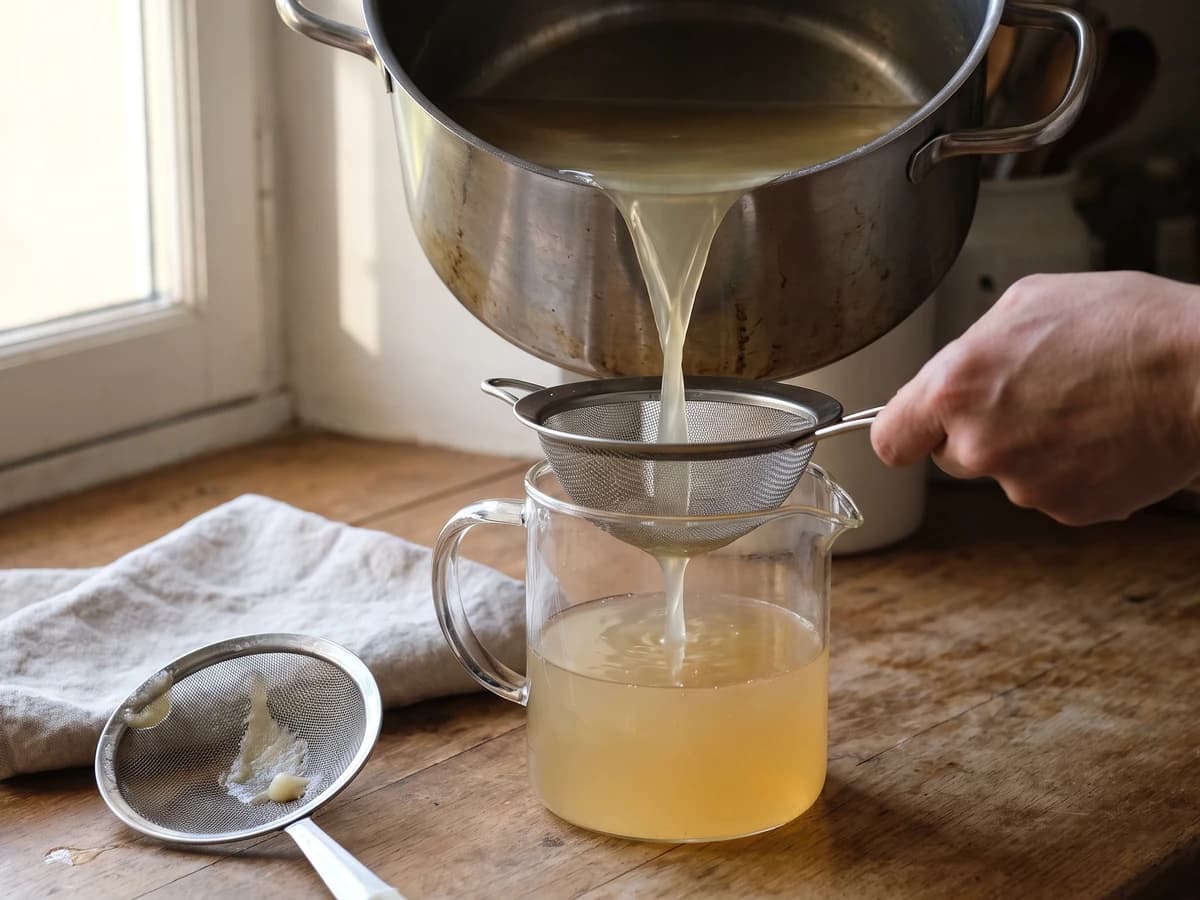
Break the veal bones small, then give them eight hours at a bare tremble. This pale, gelatinous fond becomes the quiet foundation beneath velouté, blanquette, and every sauce that must stay light.
Chef Juliette
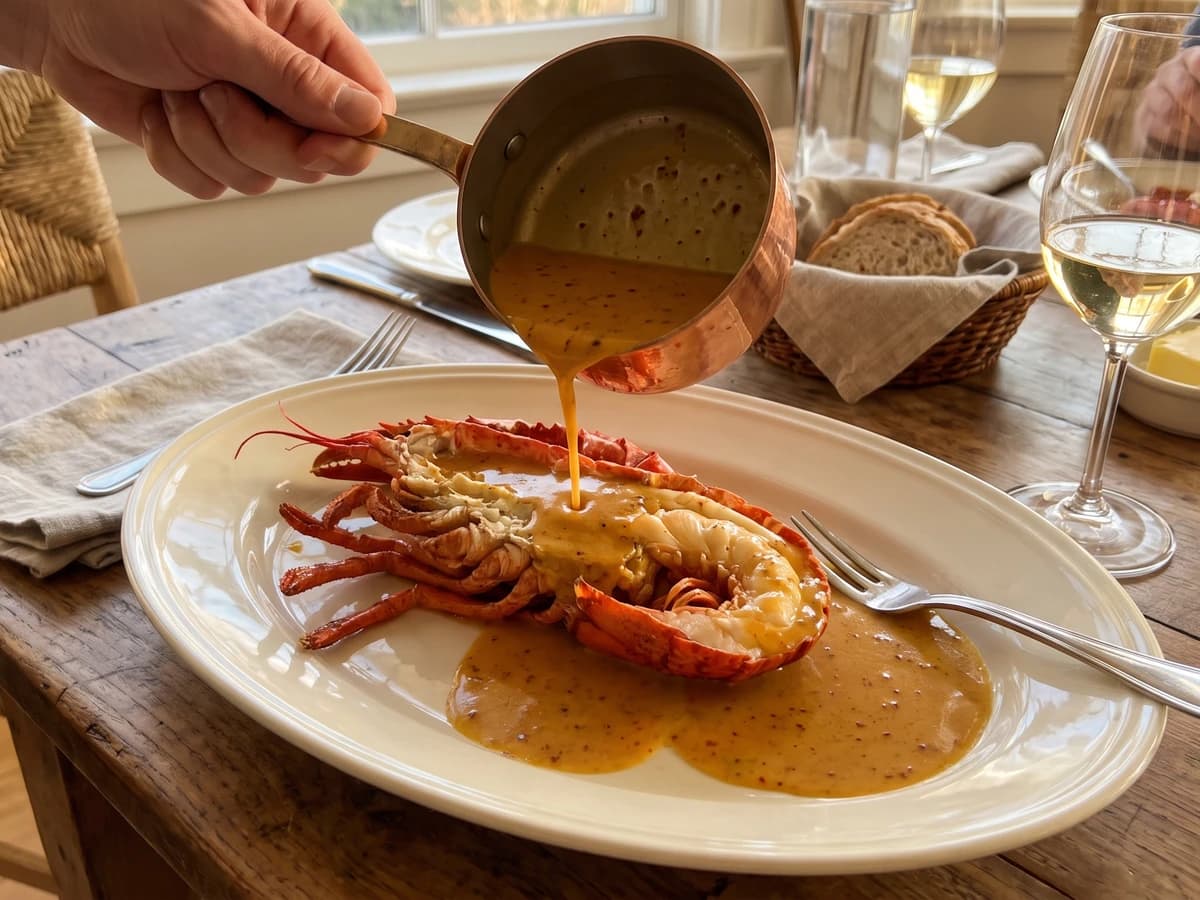
Sauce Orientale concentrates lobster-rich American Sauce with curry, then folds in cream away from the fire: a glossy, gently spiced derivative made for lobster, crayfish, and firm fish.
Chef Juliette
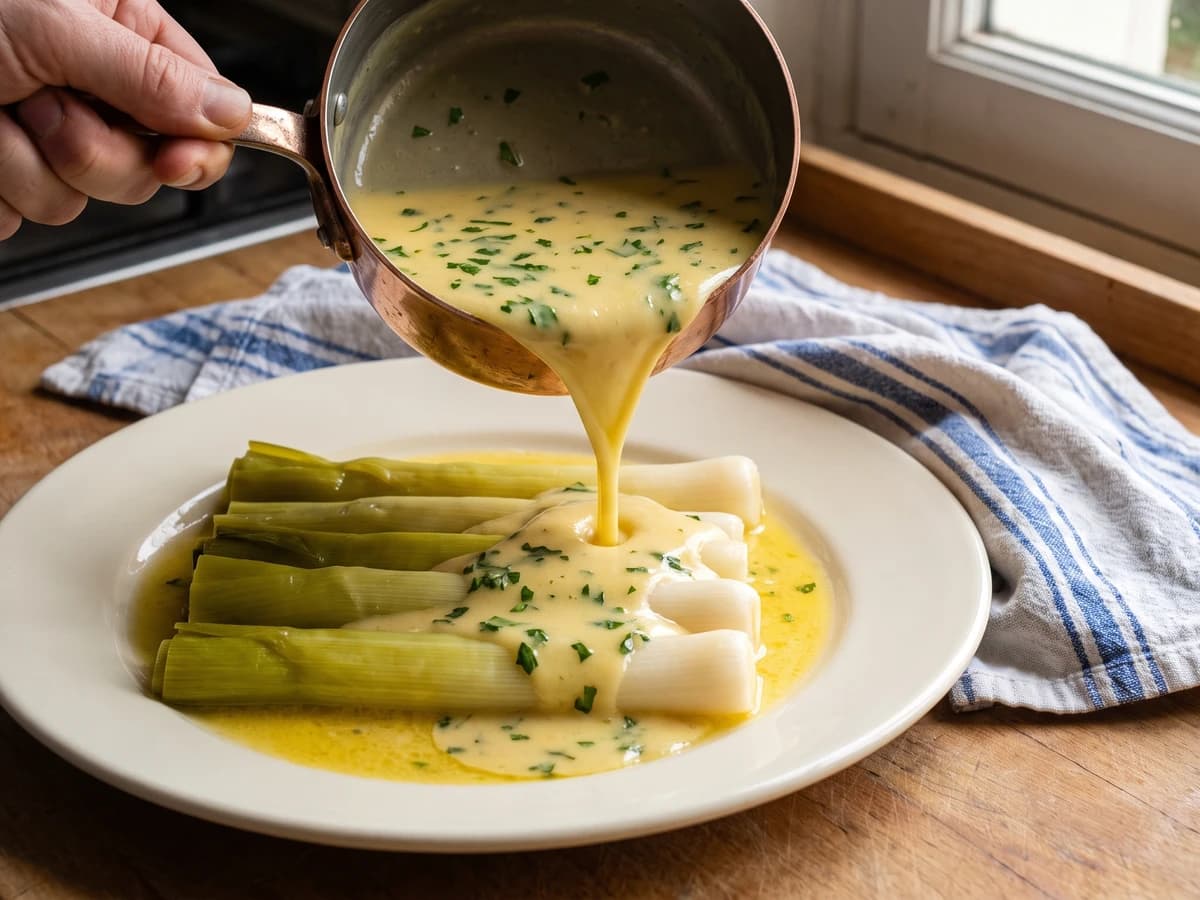
An old lesson in sauce families: Sauce Allemande takes mushroom liquor, then butter, lemon, and parsley, becoming a glossy Poulette for sheep's trotters, leeks, cauliflower, and anything needing gentle richness with a bright edge.