Chef Juliette
Bouillabaisse à la Marseillaise
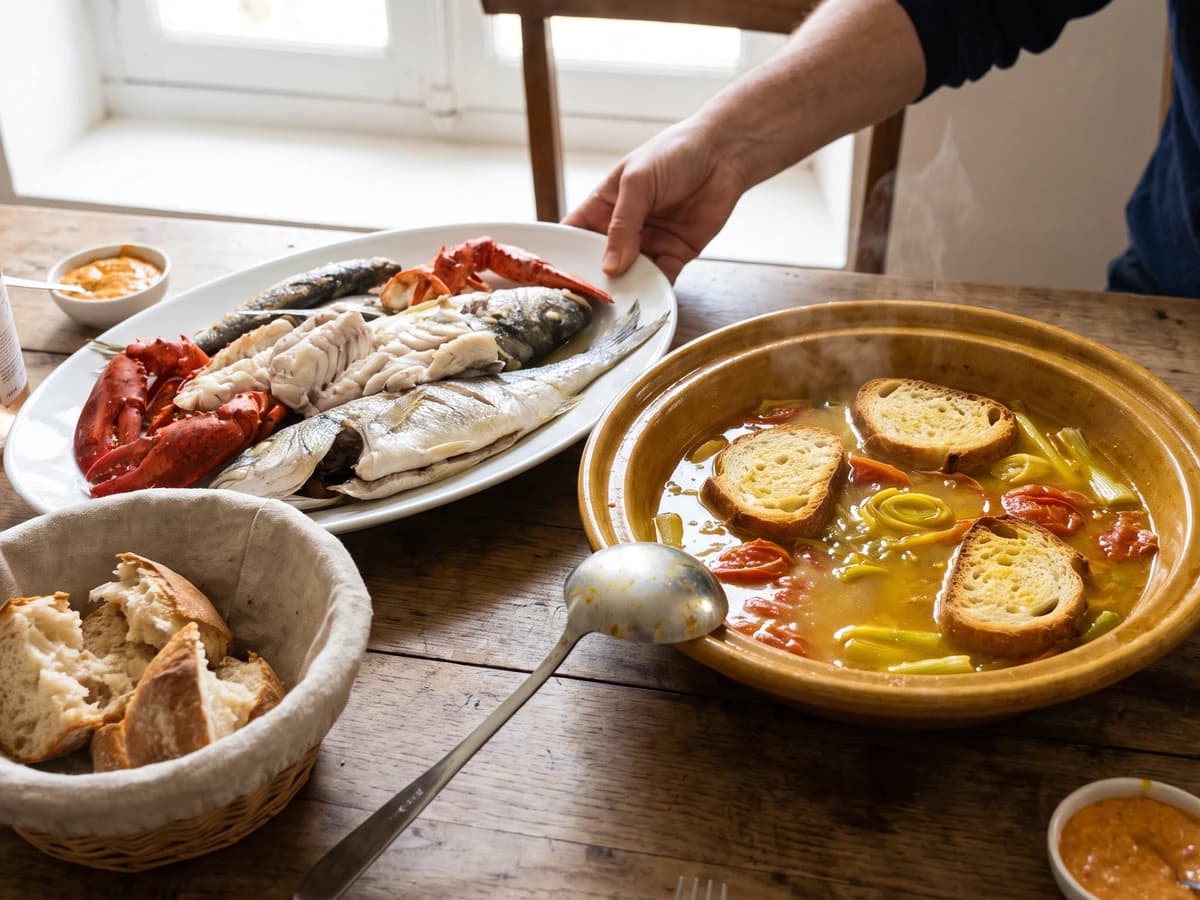
Marseille's great fish stew, saffron-gold and garlic-scented, proves that a hard boil can be the careful choice: it binds olive oil into broth before the whole pot meets bread.
A cooking platform built around craft, culture, and the stories behind what we eat.

Created by Chef Juliette
Based on No. 668, Coulis de Lapereau au Currie, from Le Guide Culinaire (1907) by Auguste Escoffier
Coulis de Lapereau au Currie, pale with cream and warm with curry, is sieved smooth, skimmed clean, and served with tender rabbit and Rice à l'Indienne apart.
Coulis de Lapereau au Currie (curried young-rabbit coulis) teaches one true thing: a delicate soup gains depth through patient clarification, not furious reduction. The rabbit must simmer gently, and the strained coulis must be skimmed until its flavour is clean and its surface gleams. Let either pot boil hard and you drive fat and impurities back into the liquid.
The original recipe assumed a saucier free to skim for twenty minutes, a stockpot of white consommé never off the fire, and another pair of hands tending the rice. At home, nine measured cups of consommé replace the endless stockpot, a fine-mesh sieve replaces the tammy, and the Rice à l'Indienne cooks while the coulis despumates. The proportions fill one home tureen, about two quarts for eight first-course bowls. One cook, one stove, one evening.
The brigade's extra pans and constant hands are scaffolding and can go. The sequence cannot: raidir the rabbit in butter, cook it with its aromatics, build the curried onion base with fécule, sieve, despumate, then add cream only at the finish. The step that decides the dish is the twenty-minute despumation, so keep the surface barely moving and the skimming spoon close.
Coulis de Lapereau au Currie belongs to the Parisian grand-kitchen repertory, where game soups were refined by straining, skimming, and a final measure of cream. Curry circulated through French saucepans by way of Anglo-Indian trade and British table practice, which explains its place beside consommé, butter, and a separately served Rice à l'Indienne. Here coulis does not mean a raw vegetable purée, but a smooth, concentrated soup whose clarity of flavour comes from the tammy and patient despumation.
Quantity
4 hind legs from 2 rabbits (about 2½ pounds / 1.1 kilograms)
butcher-cut into small bone-in pieces
Quantity
4 tablespoons (60 milliliters / 56 grams)
divided
Quantity
½ cup (120 milliliters / 65 grams)
cut into thin roundels
Quantity
1 cup (240 milliliters / 150 grams)
cut into thin roundels
Quantity
1 small bouquet
tied
Quantity
9 cups (2.13 liters / about 2.13 kilograms)
divided
Quantity
¼ cup (60 milliliters / 40 grams)
finely chopped
Quantity
1 tablespoon (15 milliliters / 8 grams)
Quantity
1½ tablespoons (22 milliliters / 12 grams)
Quantity
½ cup (120 milliliters / 120 grams)
Quantity
½ cup (120 milliliters / 112 grams)
Quantity
2 quarts (1.9 liters / 1.9 kilograms)
Quantity
1 tablespoon (15 milliliters / 18 grams), plus more only if needed
divided
| Ingredient | Quantity |
|---|---|
| young wild rabbit hind legsbutcher-cut into small bone-in pieces | 4 hind legs from 2 rabbits (about 2½ pounds / 1.1 kilograms) |
| unsalted butterdivided | 4 tablespoons (60 milliliters / 56 grams) |
| carrotcut into thin roundels | ½ cup (120 milliliters / 65 grams) |
| yellow onion for the cooking liquorcut into thin roundels | 1 cup (240 milliliters / 150 grams) |
| bouquet garni of parsley stems and celery leavestied | 1 small bouquet |
| white consommé or clear low-sodium chicken stockdivided | 9 cups (2.13 liters / about 2.13 kilograms) |
| yellow onion for the curry basefinely chopped | ¼ cup (60 milliliters / 40 grams) |
| potato starch or fécule | 1 tablespoon (15 milliliters / 8 grams) |
| mild curry powder | 1½ tablespoons (22 milliliters / 12 grams) |
| heavy cream | ½ cup (120 milliliters / 120 grams) |
| long-grain white rice | ½ cup (120 milliliters / 112 grams) |
| water for cooking the rice | 2 quarts (1.9 liters / 1.9 kilograms) |
| fine sea saltdivided | 1 tablespoon (15 milliliters / 18 grams), plus more only if needed |
Ask the butcher to cut the hind legs through the joints and heavier bones into small pieces; a home knife is not the tool for chopping rabbit bone. Pat every piece dry. Measure 8 cups of the white consommé into a heavy saucepan and reserve the remaining 1 cup for the despumation.
Melt 2 tablespoons of the butter over medium heat until it foams. Add the rabbit in one uncrowded layer, working in batches if necessary, and raidir it, meaning firm the surface in hot butter without developing the dark crust wanted for a brown braise. Turn the pieces until they are opaque and faintly golden on every side, about 5 minutes per batch. If the butter begins to brown quickly, pull the pan from the heat and add the next cold pieces; their temperature will calm it.
Put all the rabbit into the heavy saucepan with the carrot roundels, onion roundels, bouquet garni, and 8 cups of white consommé. Bring the liquid slowly to the first tremble, then lower the heat and skim away the grey foam that rises. Cook uncovered at the barest simmer for 50 to 65 minutes, until the meat is tender and registers at least 160°F or 71°C near the bone. A hard boil emulsifies fat into the liquor, so keep only an occasional bubble breaking the surface.
Lift out the rabbit and strain the cooking liquor through a fine sieve into a clean vessel, pressing nothing at this stage. Discard the carrot, onion, and bouquet garni. When the rabbit is cool enough to handle, remove the meat carefully from the bones and cut 36 very small, neat slices, about 225 grams in all. Moisten them with 2 tablespoons of the strained liquor, cover, and keep warm. Check carefully for fine bones.
Melt the remaining 2 tablespoons butter in a clean saucepan over medium-low heat. Add the finely chopped onion and cook until soft and lightly golden, about 6 minutes. Sprinkle over the fécule and curry powder, then stir for 1 minute so the starch loses its raw taste and the curry opens in the butter without scorching. Add the strained rabbit liquor a ladleful at a time, whisking each addition smooth before the next. If the starch gathers into lumps, take the pan off the heat and whisk in one ladleful of cool liquor; the sieve will catch what remains.
Bring the coulis to a boil while whisking, then immediately lower it to a gentle simmer for 7 to 8 minutes. Pass it through a fine-mesh sieve into a clean, narrow saucepan, pressing the softened onion through with the back of a ladle. The original tammy gave an exceptionally fine texture; a good metal sieve is its honest home equivalent.
Hold the sieved coulis at the faintest simmer for 20 minutes. Skim the surface repeatedly with a small ladle, adding 1 or 2 tablespoons of the reserved consommé down the side of the pan every few minutes; the fresh liquid encourages foam and fat to gather where you can remove them. Do not stir. If the coulis boils hard and clouds, take it off the heat for 3 minutes, return it to a lower flame, and resume skimming. Ça se rattrape.
While the coulis despumates, rinse the rice until the water runs clear. Bring the 2 quarts water and 1 tablespoon salt to a boil, add the rice, and cook uncovered until tender but still separate, about 11 to 13 minutes. Drain thoroughly, return it to the dry warm pan over the lowest heat for 1 minute, and shake gently until the surface moisture disappears. This is Rice à l'Indienne in the classical service: loose, dry grains presented separately, not left to swell in the soup.
Take the coulis off the heat. Whisk a ladleful into the cream, then return the warmed cream mixture to the saucepan in a thin stream. Add the rabbit slices and warm them gently without allowing the soup to boil. If the cream begins to look grainy, remove the pan from the heat at once and whisk in a tablespoon of cool reserved consommé. Taste before adding salt, since a properly seasoned consommé may need none. Ladle into warm bowls and pass the Rice à l'Indienne separately. À table!
1 serving (about 240g)
Culinary guides, cultural storytelling, and the editorial depth that makes cooking meaningful.
Discover Culinary ExplorerChef Juliette
Marseille's great fish stew, saffron-gold and garlic-scented, proves that a hard boil can be the careful choice: it binds olive oil into broth before the whole pot meets bread.
Chef Juliette
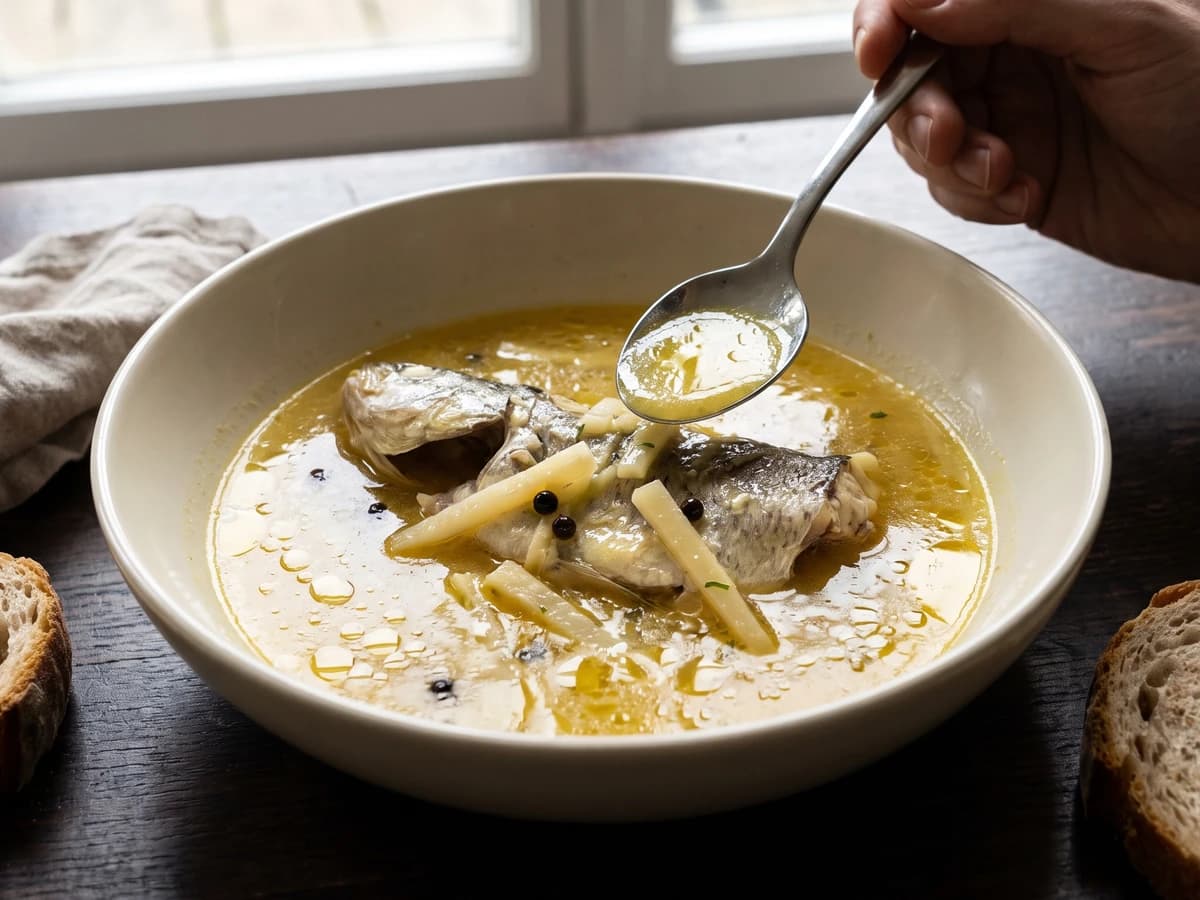
Waterzoi asks fresh, bone-in river fish to thicken its own buttery broth, with parsley root and pepper for company. No flour, no stockpot, just a brisk simmer watched closely.
Chef Juliette
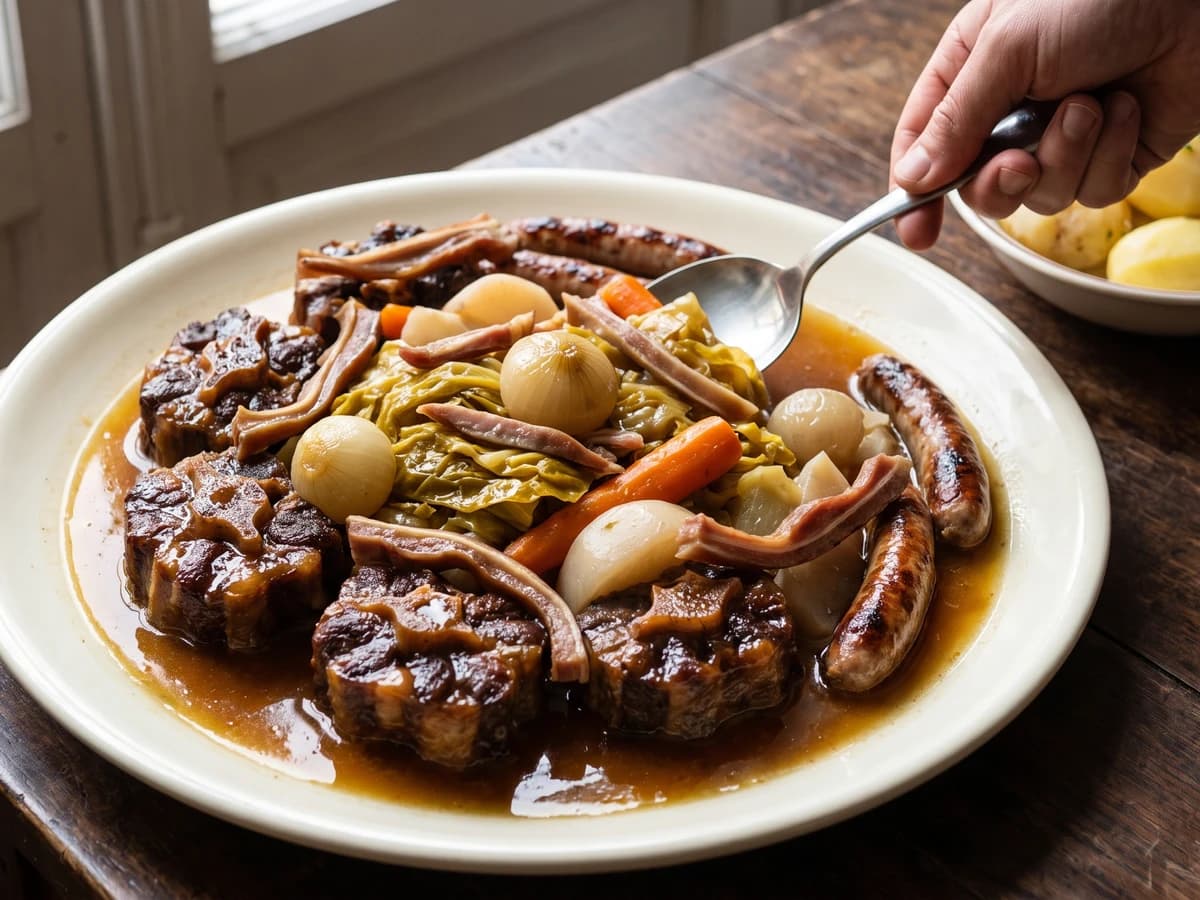
Queue de Bœuf en Hochepot gathers oxtail, pig's trotter and ear, cabbage, roots, and grilled chipolatas around a clear, gelatin-rich broth whose quiet simmer keeps every piece tender and distinct.
Chef Juliette
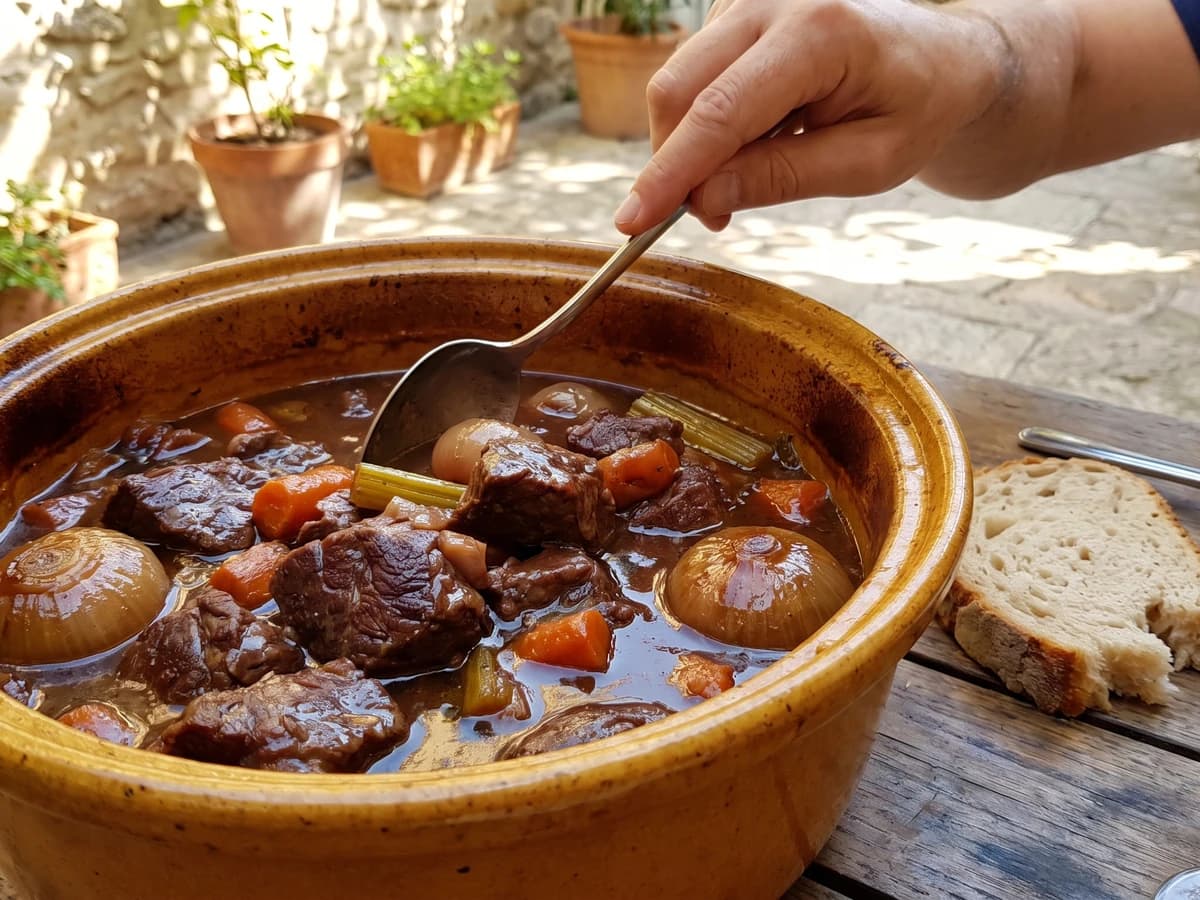
Beef shoulder larded with bacon, sharpened by red wine and vinegar, then sealed with garlic, vegetables, and dry lemon peel until the low oven turns it yielding and the gravy darkly glossy.