Chef Juliette
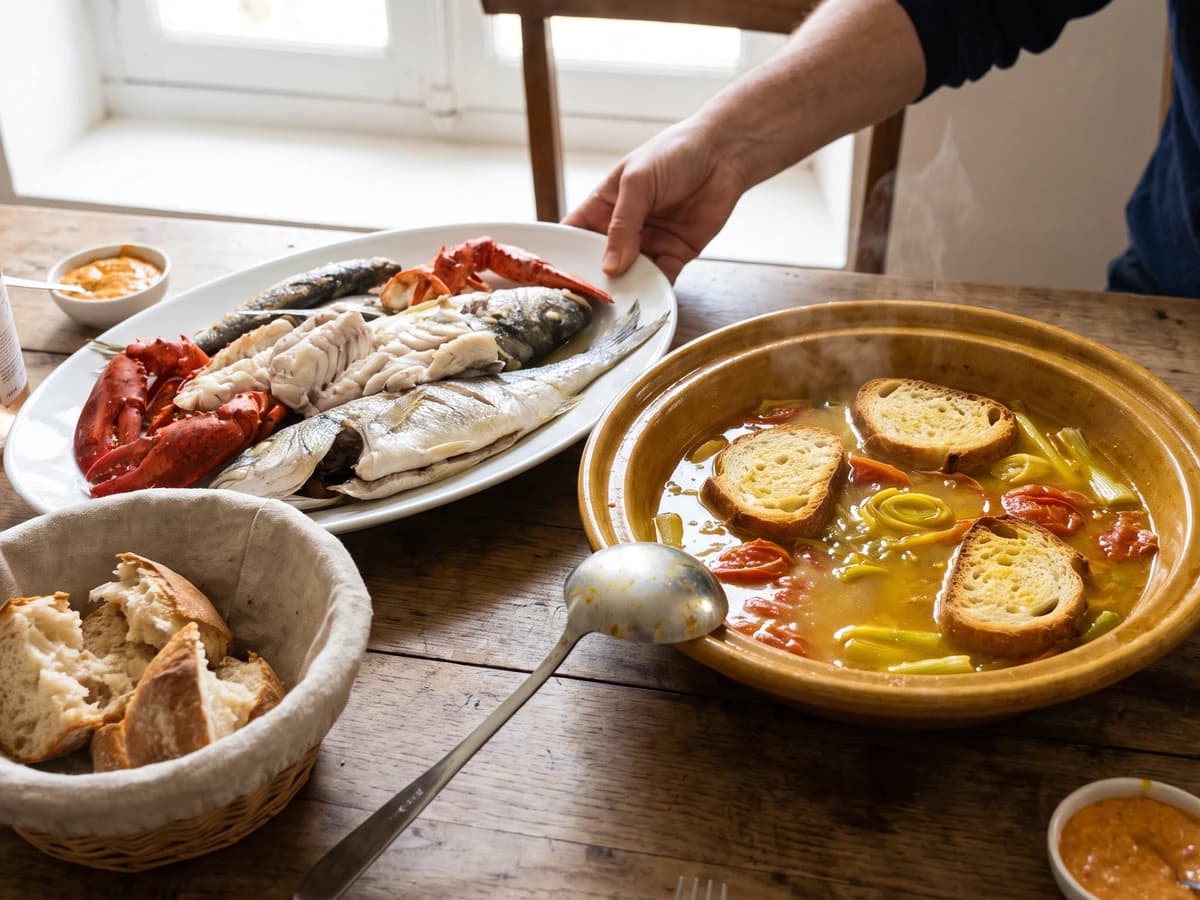
Bouillabaisse à la Marseillaise
Marseille's great fish stew, saffron-gold and garlic-scented, proves that a hard boil can be the careful choice: it binds olive oil into broth before the whole pot meets bread.
A cooking platform built around craft, culture, and the stories behind what we eat.

Created by Chef Juliette
Based on No. 661, Purée de Topinambour, otherwise Palestine, from Le Guide Culinaire (1907) by Auguste Escoffier
A pale, satin-smooth purée of Jerusalem artichokes, butter, and toasted filberts, built on white stock and finished with crisp bread dice: a quiet lesson in tenderness, sieving, and restraint.
Purée de Topinambour, dite Palestine (silken Jerusalem artichoke soup), teaches one uncompromising thing: the tubers must be completely tender before they meet the sieve. A knife should pass through without the smallest catch. Any firmness left in those knobbly slices returns as grain in the bowl, and no amount of butter can disguise it.
The brigade formula assumed a saucier, white consommé never off the fire, and a tammy broad enough to process a service batch. At home, a good pale chicken stock stands in for clarified consommé because this purée is opaque by design; a blender and fine-mesh tamis (sieve) replace the tammy. Clarification and extra hands are brigade scaffolding and can go. The butter-stewing, five toasted filberts, thorough sieving, cold fécule (potato starch) slurry, and final monter au beurre (whisking in cold butter off the heat) remain, because they are the dish.
The source quantity settles neatly into one home batch, so its proportions are kept rather than shrunk for show. Only the unsized finishing butter and crouton garnish are given practical amounts: enough butter for a quiet gleam, enough bread dice to keep every bowl lively. One cook, one stove, one evening. The decisive moment comes before blending: simmer until the topinambours collapse under a fork.
Purée de topinambour dite Palestine belongs to the Parisian classical repertoire of named potages, where vegetable purées passed from bourgeois household pots into grand dining rooms through consommé, the tamis, and a buttered finish. Palestine is menu-room wordplay on the Jerusalem artichoke, not a claim of Levantine origin; the tuber reached France from North America and became topinambour through a separate naming confusion. This formula's five toasted filberts are restrained and deliberate: they disappear through the sieve, leaving nuttiness rather than a visible garnish.
Quantity
About 6 cups (1.4 L / 2 lb / 910 g)
scrubbed, peeled, and sliced ⅛ inch (3 mm) thick
Quantity
2 tablespoons (30 ml / 28 g)
Quantity
5 nuts (about 1 tablespoon / 15 ml / 7 g)
toasted, skinned, and finely crushed
Quantity
2⅓ cups (570 ml / 570 g)
Quantity
½ cup plus 1 tablespoon plus 1 teaspoon (140 ml / 145 g)
Quantity
1 tablespoon (15 ml / 8 g)
Quantity
2 tablespoons (30 ml / 28 g)
diced
Quantity
2 cups (480 ml / 100 g)
crusts removed and cut into ¼-inch (6 mm) dice
Quantity
3 tablespoons (45 ml / 42 g)
Quantity
Up to ½ teaspoon (2.5 ml / 3 g), as needed
| Ingredient | Quantity |
|---|---|
| Jerusalem artichokesscrubbed, peeled, and sliced ⅛ inch (3 mm) thick | About 6 cups (1.4 L / 2 lb / 910 g) |
| unsalted butter for stewing | 2 tablespoons (30 ml / 28 g) |
| raw filberts or hazelnutstoasted, skinned, and finely crushed | 5 nuts (about 1 tablespoon / 15 ml / 7 g) |
| white chicken consommé or well-made pale chicken stock | 2⅓ cups (570 ml / 570 g) |
| cold whole milk | ½ cup plus 1 tablespoon plus 1 teaspoon (140 ml / 145 g) |
| potato starch (fécule) | 1 tablespoon (15 ml / 8 g) |
| cold unsalted butter for finishingdiced | 2 tablespoons (30 ml / 28 g) |
| day-old firm white breadcrusts removed and cut into ¼-inch (6 mm) dice | 2 cups (480 ml / 100 g) |
| unsalted butter for frying the bread dice | 3 tablespoons (45 ml / 42 g) |
| fine sea salt (optional) | Up to ½ teaspoon (2.5 ml / 3 g), as needed |
Set the filberts in a small dry skillet over medium-low heat. Toss them frequently until their skins darken in spots and the nuts smell warm and biscuit-like, about 4 minutes. Rub away the loose skins in a folded towel, then crush the nuts almost to a powder. Torrefied means deeply toasted, not scorched; blackened nuts will make the whole pot bitter.
Scrub and peel the Jerusalem artichokes, trimming away any dark crevices, then slice them evenly about ⅛ inch (3 mm) thick. Keep the prepared slices covered as you work so they don't discolor. Evenness matters more than elegance: thin slices become tender together, while thick stray pieces remain fibrous.
Melt the stewing butter in a heavy 4-quart saucepan over medium-low heat. Add the sliced topinambours and a small pinch of salt, cover, and cook gently for 10 to 12 minutes, stirring every few minutes, until their edges look translucent but take no brown color. Add the crushed filberts and stir for 1 minute. If the butter begins to brown, lower the heat and add a spoonful of the measured consommé to stop it; the flavor should be sweet and nutty, never roasted.
Pour in the white chicken consommé or pale stock and scrape the saucepan clean as it comes to a bare simmer. Partially cover and cook gently for 25 to 35 minutes. The topinambours are ready only when a slice collapses under a fork and offers no firm center. If the liquid drops before that point, add hot water a few tablespoons at a time and keep cooking; tenderness decides the purée, not the clock.
Blend the soup directly in the saucepan until no visible pieces remain, keeping the blender head submerged. Pass it through a sturdy fine-mesh sieve into a clean bowl, pressing with a ladle until only a little dry fiber remains. If the pulp clogs the mesh and refuses to pass, return it to the blender with a ladleful of the strained liquid, blend longer, and try again. Ça se rattrape. The sieve is not ceremony here; it removes the fibers that separate a silken purée from a merely blended soup.
Wipe out the skillet and melt the crouton butter over medium heat until its foam subsides. Add the bread dice in an even layer and toss frequently until every side is crisp and biscuit-gold, 5 to 7 minutes. Transfer them to an absorbent towel and keep them uncovered. Covering warm croutons traps moisture and softens the crust.
Return the strained purée to the clean saucepan. Whisk the fécule into the cold milk until completely smooth, scraping the bottom because potato starch settles quickly. Bring the purée to a gentle simmer, whisk in the slurry, and let it reach its first clear bubble; cook for 30 seconds, then lower the heat. A long boil weakens potato starch. If small lumps appear, take the pan off the heat, blend briefly, and pass the purée through the sieve once more.
Remove the saucepan from the heat and whisk in the cold finishing butter a few pieces at a time until the surface looks smooth and softly glossy. Taste before adding salt, especially if the consommé was already seasoned. If a yellow slick appears, the purée was too hot; whisk in 1 tablespoon of cold water off the heat until the emulsion returns. Ladle generously into warm bowls and scatter the fried bread dice over each serving at the last moment. À table!
1 serving (about 225g)
Culinary guides, cultural storytelling, and the editorial depth that makes cooking meaningful.
Discover Culinary ExplorerChef Juliette
Marseille's great fish stew, saffron-gold and garlic-scented, proves that a hard boil can be the careful choice: it binds olive oil into broth before the whole pot meets bread.
Chef Juliette
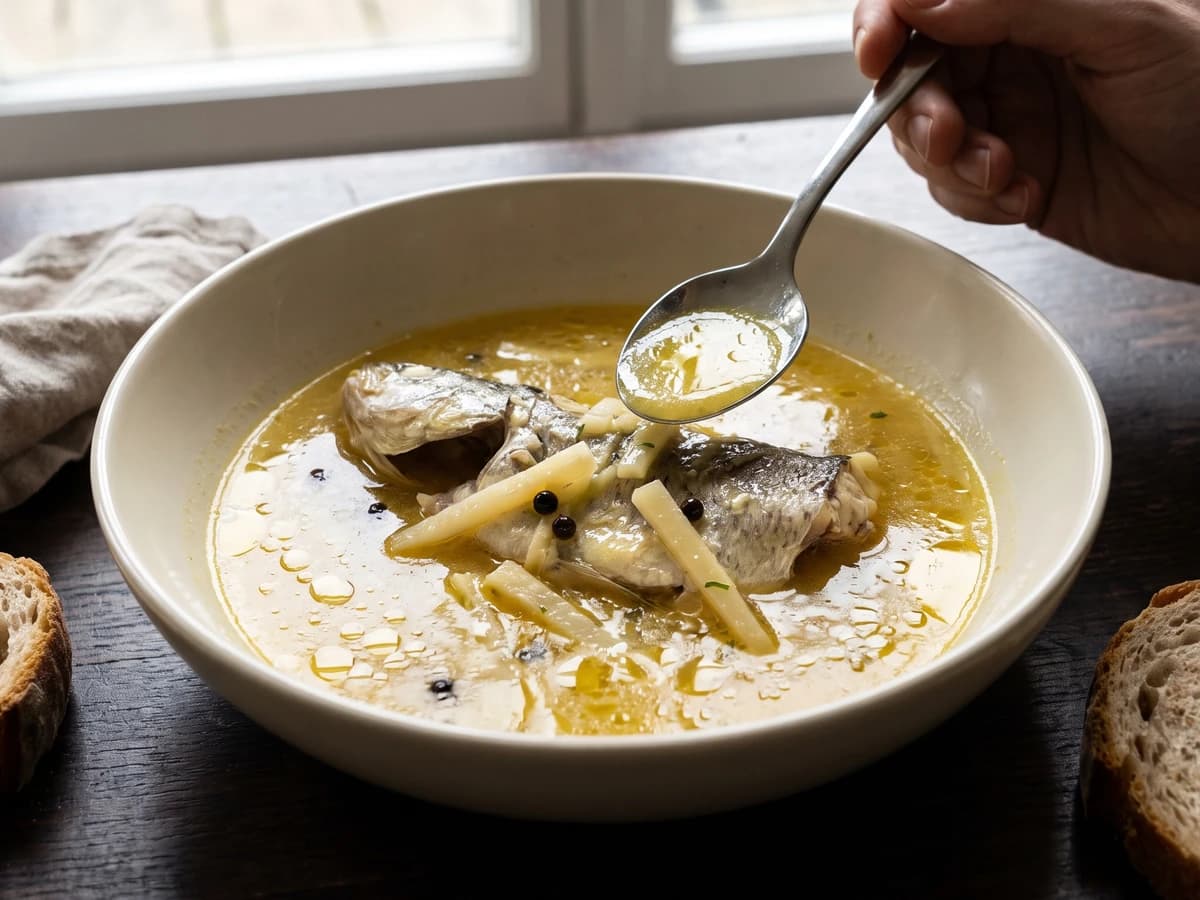
Waterzoi asks fresh, bone-in river fish to thicken its own buttery broth, with parsley root and pepper for company. No flour, no stockpot, just a brisk simmer watched closely.
Chef Juliette
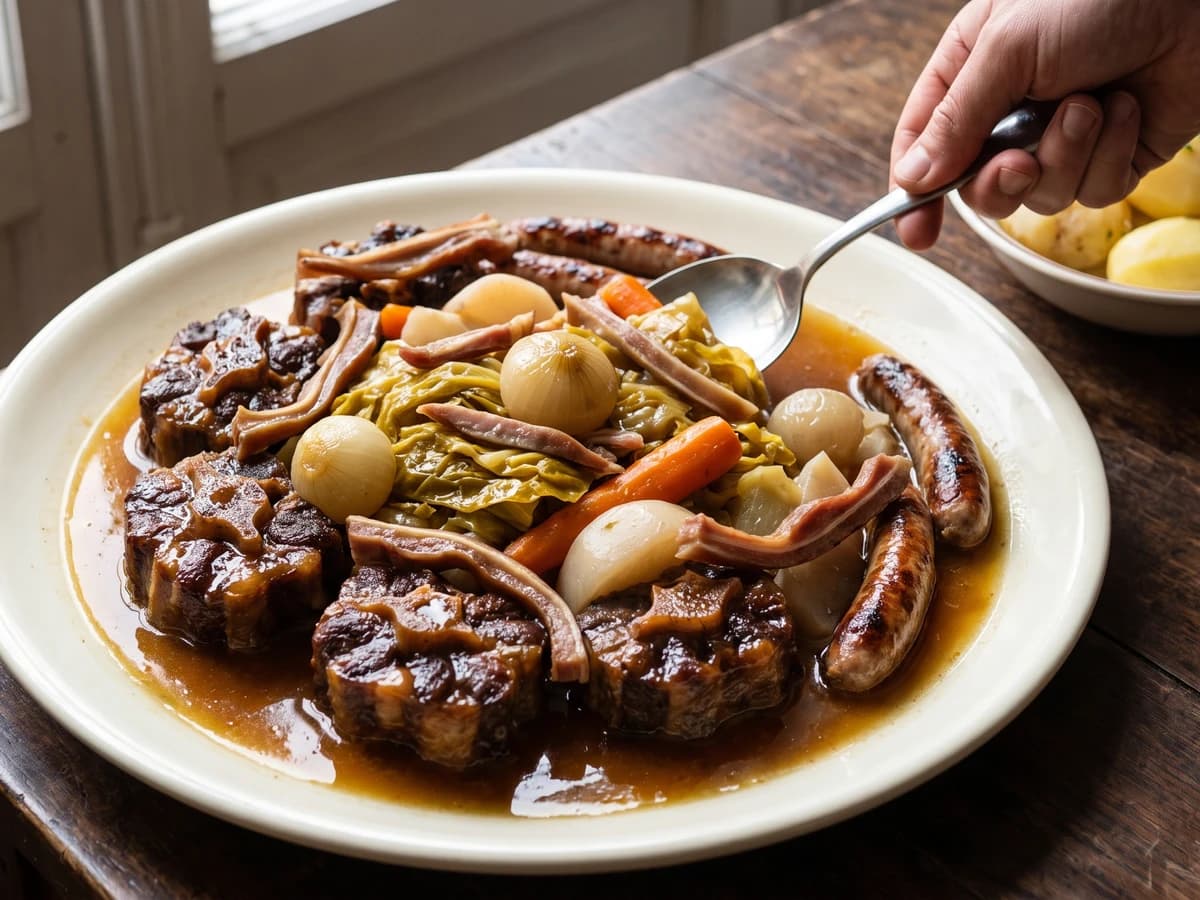
Queue de Bœuf en Hochepot gathers oxtail, pig's trotter and ear, cabbage, roots, and grilled chipolatas around a clear, gelatin-rich broth whose quiet simmer keeps every piece tender and distinct.
Chef Juliette
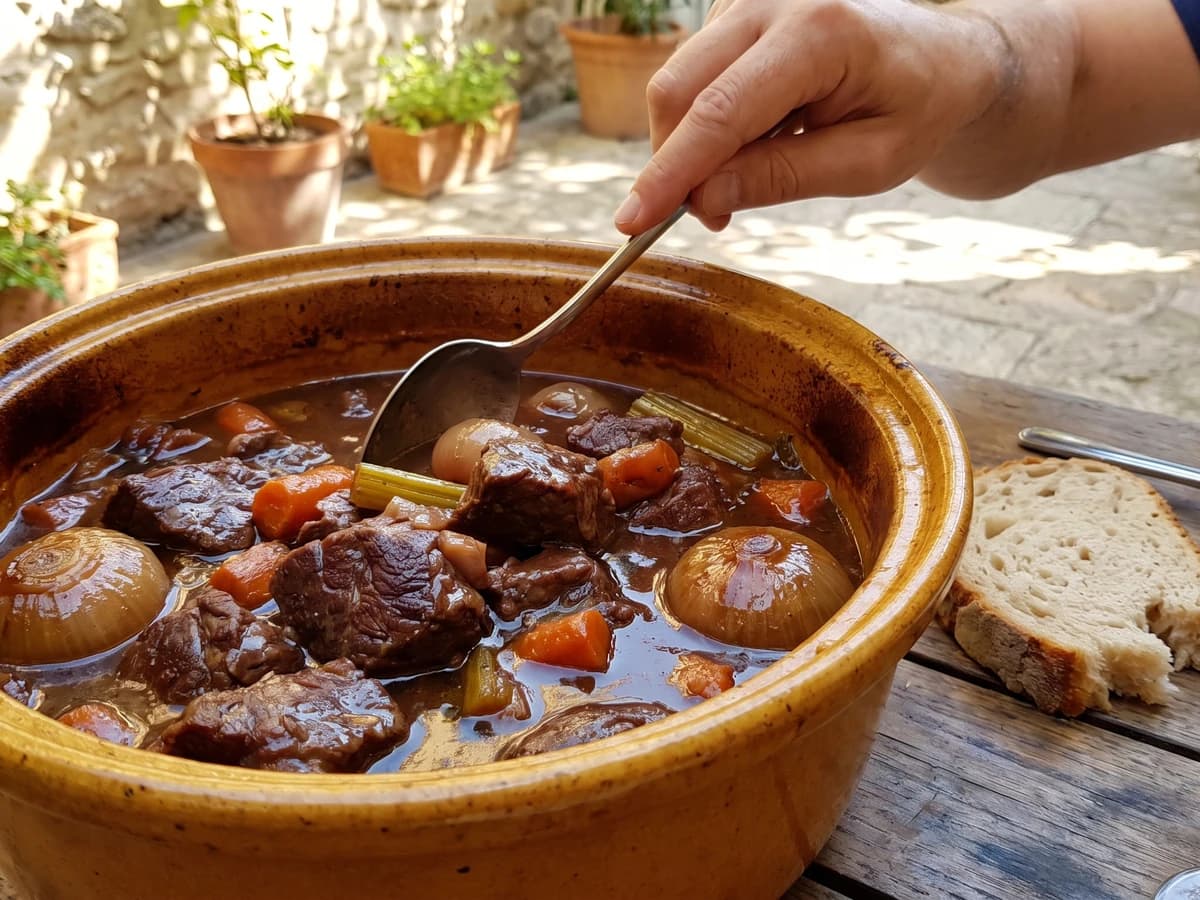
Beef shoulder larded with bacon, sharpened by red wine and vinegar, then sealed with garlic, vegetables, and dry lemon peel until the low oven turns it yielding and the gravy darkly glossy.